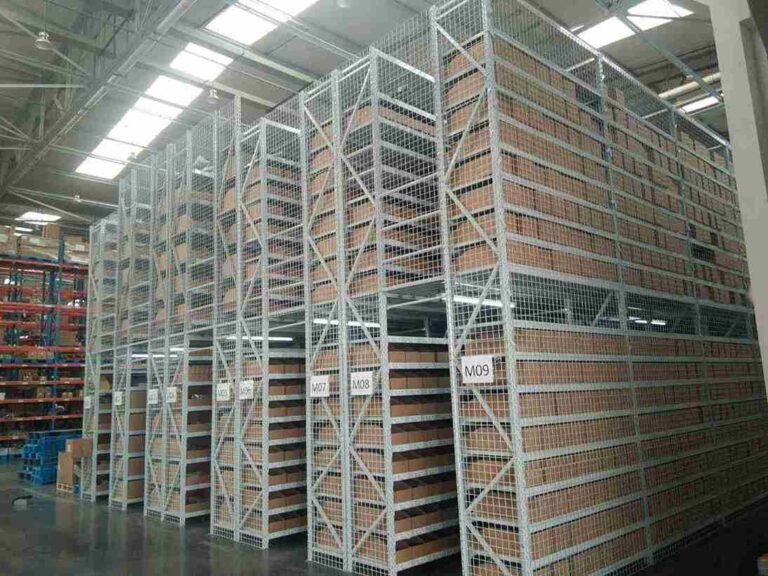
📐 "First 50 Enterprise Queries Get Custom 3D Warehouse Design" Plan


The Global Warehouse Space Crisis and the VNA Racking Systems Solution
A fundamental shift is underway in industrial and commercial logistics across Southeast Asia, the Middle East, Africa, and Latin America. As manufacturing output grows, e-commerce penetration deepens, and consumer expectations for rapid delivery escalate, the pressure on storage infrastructure has become a critical bottleneck. The core challenge is unequivocal: space is finite, but demand is not. Building outward is often prohibitively expensive or geographically impossible in congested urban industrial zones.
The only viable direction for expansion is upward and inward. This reality has propelled VNA racking systems from a niche, high-tech solution to a mainstream operational necessity for competitive businesses. These systems are engineered to transform cubic air space into highly organized, accessible, and efficient storage, directly addressing the pain points of cost, scalability, and productivity. This definitive guide explores the multifaceted role of VNA racking systems in emerging markets, providing a masterclass in their strategic deployment, technical nuances, and economic justification.
It is crafted not as a sales pitch, but as a strategic framework for logistics directors, warehouse operators, and business owners who view their storage infrastructure as a source of competitive advantage rather than a static cost center.

The Anatomy of Efficiency: Deconstructing the VNA Racking Systems Ecosystem
A successful implementation of VNA racking systems hinges on understanding it not as a product, but as a fully integrated ecosystem. Each component must be engineered to interact with precision, reliability, and safety. A failure in any single element compromises the entire system’s integrity and ROI.
The Structural Spine: Precision Engineered Racking for VNA Applications
The racking structure in a VNA racking system is fundamentally different from conventional pallet racking. It is the foundational grid upon which all efficiency gains are built. Key differentiators include:
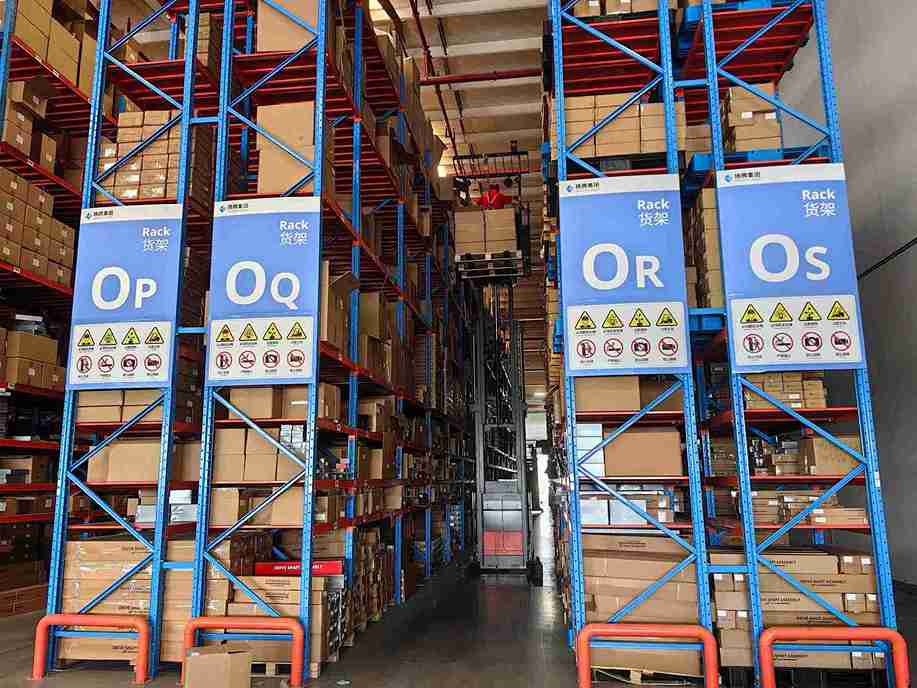
Ultra-Narrow Aisle Configuration: Aisles are typically reduced to widths between 1.6 to 1.8 meters, a design made possible only by the elimination of forklift turning radii. This configuration is the primary driver of the dramatic storage density increase that defines VNA racking systems.
High-Stability Upright Design: Upright frames are manufactured from high-tensile steel with reinforced column sections. Their design prioritizes vertical rigidity and resistance to dynamic forces generated by high-lift operations within such confined spaces. Tolerances are measured in millimeters, not centimeters.
Integrated Guidance Interface: Perhaps the most critical feature is the integrated guide rail base. A hardened steel rail is affixed to the warehouse floor and often structurally connected to the base of the racking uprights. This rail provides the physical channel that guides the specialized forklifts, ensuring perfect alignment and preventing contact between the vehicle and the racking—a non-negotiable safety and asset-protection feature.
Enhanced Beam Specifications: Load beams are designed for minimal vertical deflection under maximum capacity. This is crucial in VNA racking systems where clearances are tight, and any beam sag can interfere with the smooth travel of the forklift mast or the safe placement of pallets.
The Dynamic Component: Specialized VNA Forklifts (Turret Trucks)
The racking design dictates the vehicle. Standard counterbalance or reach trucks cannot operate in the confines of a VNA racking system. The specialized equipment falls into two main categories, both integral to the system’s operation:
Man-Down Turret Trucks: In this configuration, the operator remains in a fixed cabin at floor level. The forklift’s fork assembly is mounted on a rotating turret that can turn 180 degrees, allowing it to deposit or retrieve pallets from either side of the aisle without the truck itself turning. This enables the absolute narrowest aisle widths and is the workhorse for high-density unit load storage and retrieval.
Man-Up Turret Trucks or VNA Order Pickers: Here, the operator’s platform ascends with the forks. This design is optimal for case-picking operations from pallets stored at height, commonly required in e-commerce fulfillment or distribution centers handling a high volume of SKUs. It combines the density of VNA racking systems with efficient manual picking processes.
These are not merely adapted forklifts; they are sophisticated, computer-guided vehicles. Modern VNA turret trucks feature programmable height preselection, integrated Warehouse Management System (WMS) terminals, RFID location verification, and advanced energy management systems. Their selection—considering lift height, capacity, power type, and guidance technology—is a decision with decades-long implications.
The Unseen Critical Element: Warehouse Floor Specifications
The performance and longevity of VNA racking systems are inextricably linked to the quality of the warehouse floor. This is the most common and costly oversight in project planning. The system demands an exceptionally flat surface, typically specified with an FF (Floor Flatness) rating of 50 or better and an FL (Floor Levelness) rating tailored to the racking layout. An inadequate floor causes excessive vibration, accelerates wear on vehicle guidance systems and racking rails, leads to premature component failure, and poses a significant safety risk. Therefore, a comprehensive floor survey and potential corrective grinding or super-flat topping are essential prerequisites for any VNA racking systems project.
The Compelling Economic and Operational Rationale for VNA Racking Systems in Emerging Markets
The adoption of VNA racking systems in growth economies is driven by a powerful convergence of economic and operational factors that make the investment not just logical, but imperative for scaling businesses.
Capital and Real Estate Optimization
In cities like Manila, Jakarta, Lagos, or Bogotá, the cost of industrial land and construction is soaring. VNA racking systems directly combat this by enabling storage capacity increases of 40% to 60% within the same building envelope. This allows companies to:
Defer or eliminate capital expenditure on new warehouse construction.
Maximize the ROI on existing property by radically increasing its storage utility.
Establish logistics hubs in prime locations closer to urban centers, reducing last-mile delivery costs and times—a decisive advantage in the e-commerce sector.
Enhanced Operational Control and Accuracy
The structured nature of VNA racking systems inherently promotes organization and discipline. Operated in concert with a modern WMS, these systems enforce strict put-away and retrieval routines. Every pallet position is precisely defined, and vehicle guidance ensures operators go to the exact location. This dramatically reduces mis-ships, lost inventory, and picking errors, leading to higher customer satisfaction and lower reverse logistics costs. In markets where supply chain transparency and reliability are becoming key differentiators, the accuracy afforded by VNA racking systems is a tangible competitive tool.
Labor and Energy Productivity Gains
A single VNA turret truck operator can achieve significantly higher throughput than an operator in a conventional wide-aisle setup. Travel distances are shorter, and the guided, automated functions of the truck (like height preselection) reduce cycle times and operator fatigue. Furthermore, these systems utilize high-efficiency electric vehicles. Compared to a fleet of diesel-powered forklifts in a large warehouse, VNA racking systems offer substantial savings in energy cost per pallet moved, a critical factor as energy prices fluctuate.
Inherent Safety and Damage Reduction
Safety is paramount. The guided rail system physically prevents the vehicle from colliding with the racking structure, eliminating a major cause of rack damage and potential collapse. The vehicles themselves are equipped with comprehensive safety packages, including travel speed reduction at aisle ends, blue safety lights, and proximity sensors. This creates a more controlled and safer working environment, reducing accident rates and associated downtime.
Strategic Scalability and Automation Readiness
Implementing VNA racking systems is a future-proof investment. The infrastructure created—the precise rack grid, the guided paths, and the WMS integration—lays the perfect foundation for incremental automation. The same aisles can later be serviced by automated guided vehicles (AGVs) or transitioned into a fully automated storage and retrieval system (AS/RS). This scalability protects the initial investment and provides a clear pathway for technological evolution as business needs grow and labor dynamics shift.

Navigating the Implementation Journey: A Phased Methodology for VNA Racking Systems Success
The transition to VNA racking systems is a significant operational transformation. Its success depends on meticulous, phase-gated project management. Rushed or poorly planned implementations are the primary source of failure and unmet expectations.
Phase 1: Foundational Analysis and Data Collection
This phase is diagnostic. It involves a deep dive into the company’s logistics profile: SKU dimensions and weights, inventory turnover rates (ABC analysis), current and projected throughput volumes, order profiles, and growth forecasts. This data is the bedrock of all subsequent design decisions for the VNA racking systems.
Phase 2: Conceptual Design and Dynamic Simulation
Engineers use the collected data to create multiple 3D layout concepts for the VNA racking systems. These models are then subjected to simulation software that mimics weeks or months of operational activity. This “digital twin” testing identifies potential bottlenecks, optimizes vehicle fleet size, and validates throughput capacity before any physical work begins, de-risking the project.
Phase 3: Technical Site Qualification
A team of specialists assesses the physical site. This includes evaluating building column grids, roof clearances, sprinkler system layouts, and, most critically, conducting a laser-based floor flatness survey. This phase determines if the building is suitable for VNA racking systems or what structural/floor modifications are required.
Phase 4: Integrated System Specification and Procurement
Based on the validated design, a complete, integrated specification is finalized. This includes:
The detailed structural drawings and bill of materials for the VNA racking systems.
The technical specifications for the VNA turret trucks (capacity, lift height, guidance type, power system).
The scope of work for WMS integration and any necessary IT infrastructure.
Specifications for ancillary equipment like rack protectors, aisle end guards, and signage.
Phase 5: Installation, Commissioning, and Load Testing
Installation follows a strict sequence: floor preparation, precision installation of the racking using laser alignment tools, fitting of the guide rails, and finally, introduction of the vehicles. Commissioning is not merely a test run; it involves programming the vehicles, integrating them with the WMS, and conducting formal load tests to certify the VNA racking systems perform to design specifications.
Phase 6: Organizational Readiness and Training
Technology is only half the solution. Comprehensive, hands-on training is provided for operators, maintenance technicians, and warehouse supervisors. New Standard Operating Procedures (SOPs) are developed and socialized to ensure the workforce is fully prepared to operate and maintain the new VNA racking systems safely and efficiently.
Phase 7: Performance Management and Continuous Support
Post-go-live, key performance indicators (KPIs) are established and monitored: system uptime, picks per hour, energy consumption, and accuracy rates. A structured maintenance program and accessible technical support ensure the VNA racking systems continue to deliver peak performance over their entire lifecycle.

Financial Modeling: Quantifying the Return on Investment for VNA Racking Systems
The capital investment for VNA racking systems is substantial. Justification, therefore, must be rooted in a robust Total Cost of Ownership (TCO) and Return on Investment (ROI) analysis that captures both hard savings and strategic value.
Direct Cost Savings:
Real Estate Avoidance/Cost Reduction: The most significant line item. Calculated as the cost of additional square meters of warehouse space NOT needed.
Labor Productivity: Fewer vehicles and operators required to achieve the same or higher throughput.
Energy Efficiency: Lower kilowatt-hour consumption per pallet moved compared to traditional internal combustion engine fleets.
Inventory Shrinkage: Reduced loss from misplacement or damage.
Lower Insurance Premiums: Potential reductions due to enhanced safety features and reduced risk of rack collapse.
Revenue-Enabling and Strategic Value:
Increased Throughput Capacity: Ability to handle higher volumes within the same shift, supporting business growth.
Improved Service Levels: Faster and more accurate order fulfillment leading to higher customer retention and potential for premium service offerings.
Enhanced Agility: Ability to store more SKUs in a prime location, allowing for quicker response to market trends.
A well-modeled financial analysis for VNA racking systems in emerging markets often reveals a compelling payback period of 2 to 4 years, after which the system generates continuous net savings and value. The analysis must be contextual, incorporating local costs for space, labor, and energy.
Sector-Specific Applications: Tailoring VNA Racking Systems to Industry Needs
The versatility of VNA racking systems is demonstrated by their successful adaptation across diverse industries, each with unique requirements.
Third-Party Logistics (3PL) and Distribution Centers: For 3PLs, storage density is directly proportional to profitability. VNA racking systems allow them to maximize the rentable pallet positions within a fixed building, serving multiple clients with diverse inventory in a highly organized manner. The accuracy is critical for billing and inventory integrity.
Food, Beverage, and Cold Storage: In cold storage and freezer facilities, where energy costs are the largest operational expense, maximizing storage density is a survival imperative. VNA racking systems are engineered for these environments with special steel grades and lubricants. The reduced air volume in the high-density aisles minimizes cold air loss when doors are opened, leading to substantial energy savings.
Manufacturing and Automotive: Supporting lean manufacturing and Just-in-Time (JIT) processes requires efficient buffer and raw material storage. VNA racking systems provide high-density storage for production parts, tires, or components with the selectivity needed for precise sequencing, all within close proximity to production lines.
Retail and E-Commerce Fulfillment: The combination of high-density bulk storage (using man-down trucks) and efficient case picking from height (using man-up order pickers) makes VNA racking systems an ideal solution for the vast SKU counts and rapid turnover characteristic of modern retail and e-commerce logistics.
The Future Trajectory: VNA Racking Systems as the Bridge to Full Automation
The logical evolution of VNA racking systems points toward increasing levels of automation, making them a strategically sound, future-proof investment.
From Guided to Autonomous: The existing guidance infrastructure (rails or optical markers) provides the perfect pathway for autonomous mobile robots (AMRs) or automated guided vehicles (AGVs). The next generation of VNA racking systems is being designed with “automation-ready” interfaces, allowing for a phased migration from manned to unmanned operation within the same racking footprint.
Integration with Broader Automation: VNA racking systems do not exist in isolation. They are increasingly integrated with automated conveyor systems for inbound/outbound sorting, robotic palletizers, and automated packing stations. This creates a continuous, high-throughput material flow from receiving to shipping, with the VNA racking systems acting as the dynamic, high-density heart of the operation.
Data-Driven Optimization: Modern VNA racking systems, through their integrated WMS and vehicle telematics, generate vast amounts of operational data. Advanced analytics can use this data to continuously optimize storage location assignments (put-away logic), predict maintenance needs, and further refine throughput, pushing efficiency beyond initial design parameters.
Conclusion: Embracing High-Density Storage as a Strategic Imperative
In the competitive landscapes of the world’s most dynamic emerging economies, logistical excellence is a non-negotiable pillar of business success. The constraint of limited physical space is not a barrier to growth but a catalyst for innovation and operational refinement. VNA racking systems represent a mature, proven, and economically compelling technology paradigm that directly converts spatial constraints into strategic advantages of density, speed, and control.
The journey to implementing VNA racking systems is one of detailed planning, cross-functional collaboration, and technical precision. It requires a partner with not only product knowledge but also deep regional experience—an understanding of local construction practices, supply chains, labor skills, and operational challenges. For businesses in Southeast Asia, the Middle East, Africa, and Latin America looking to scale efficiently, reduce operational costs, and build a resilient, future-ready supply chain, the investment in VNA racking systems is an investment in foundational capacity. It is a decision that moves storage from the background of operations to the forefront of strategic planning, enabling businesses to master their space and, in doing so, master their market.
Frequently Asked Questions (FAQs)
Q1: How does the operational noise level of a VNA racking system compare to a traditional warehouse with internal combustion forklifts?
A: VNA racking systems offer a significantly quieter working environment. The primary source of noise in a traditional warehouse is often the combustion engine of propane or diesel forklifts. VNA turret trucks are purely electric, producing minimal operational sound, primarily from wheel friction and hydraulic pumps. This noise reduction contributes to better working conditions, improved communication among staff, and may help in complying with local environmental or workplace regulations, especially in urban or mixed-use zones.
Q2: What happens if the guidance system (e.g., wire or optical tape) fails in a VNA racking system? Can operations continue?
A: This is a critical contingency. In wire-guided systems, a break in the wire will stop the magnetic signal, typically causing the vehicle to halt automatically for safety. Operations cannot continue in guided mode. However, most modern VNA turret trucks have a manual override or “free-steer” mode that allows a trained operator to slowly and carefully navigate the aisle without guidance in an emergency to retrieve a critical load or move the vehicle out for repair. This mode is strictly for emergencies under strict SOPs due to the high risk of rack collision. Optical systems may offer more robustness to minor tape damage. Redundancy and rapid response maintenance agreements are key.
Q3: Are VNA racking systems suitable for warehouses with a high proportion of cross-docking or very fast-moving goods where long-term storage is minimal?
A: The suitability of VNA racking systems depends more on the volume and selectivity needs than solely on storage duration. For very high-throughput cross-docking, where pallets are moved directly from inbound to outbound doors, the density of VNA racking systems may not be the primary benefit. However, if the operation involves a high-volume, high-SKU sortation process where pallets need to be staged, consolidated, or held for short periods before shipping, the selectivity and organization of VNA racking systems can be highly advantageous. They provide rapid, WMS-directed access to any specific pallet in the staging area, which can streamline consolidation processes.
Q4: How does the resale value or relocatability of VNA racking systems compare to standard racking if we move facilities?
A: VNA racking systems are typically considered a semi-permanent capital installation. While the racking itself is demountable and relocatable, the process is more complex and costly than with standard racking due to the need for precision re-alignment and the critical integration with the guide rails and floor. The guide rails are often grouted or chemically anchored into a specific floor. Relocating the system requires careful decommissioning, transportation, and most importantly, ensuring the new facility’s floor meets the exacting flatness requirements. The specialized VNA turret trucks retain value as mobile assets. Economically, it is often more effective to design the VNA racking systems for the long term in a strategic location.
Q5: Can VNA racking systems be effectively combined with other storage media like mezzanines or mobile racking in the same warehouse?
A: Absolutely. Hybrid warehouse designs are often the most space-efficient. VNA racking systems can be deployed in the primary bulk storage area. Adjacent zones with lower throughput or for storing smaller items can utilize mezzanines for value-added services (like kitting or packing) or mobile racking for archive storage. The key is a holistic material flow design. For example, bulk pallets are retrieved from the VNA racking systems and brought to a pick-face on a mezzanine level for order consolidation. This approach tailors the storage technology to the specific activity profile, maximizing overall facility efficiency.
If you require perfect CAD drawings and quotes for warehouse racking, please contact us. We can provide you with free warehouse racking planning and design services and quotes. Our email address is: jili@geelyracks.com