📐 "First 50 Enterprise Queries Get Custom 3D Warehouse Design" Plan


The Strategic Imperative of a Master Racking System Layout Planning Guide
In the globalized supply chain arena, where margins are perpetually squeezed and customer expectations for speed are relentless, the warehouse has evolved from a passive storage cost center into a critical strategic asset. For companies scaling operations across the dynamic markets of Southeast Asia, the Middle East, Africa, and Latin America, the difference between market leadership and operational stagnation often lies within four walls. The single most powerful tool to unlock potential, drive down logistics costs, and create an agile, scalable operation is a professionally engineered, data-driven racking system layout planning guide.
A generic, off-the-shelf storage solution is a profound liability. It leads to chronic inefficiencies: wasted vertical space, congested aisles, excessive travel time for pickers, slow order fulfillment, and an inability to adapt to growth or seasonal peaks. Conversely, a custom racking system layout planning guide serves as the foundational blueprint for operational excellence. It is a comprehensive document that translates business objectives—increased storage density, faster throughput, reduced labor costs, seamless automation integration—into a precise, actionable physical plan.
This definitive guide does not merely suggest where to place racking; it provides a holistic framework for designing a warehouse that functions as a synchronized, high-velocity engine for commerce. For logistics managers, operations directors, and business owners, possessing such a planning guide is the first non-negotiable step in transforming logistics from a challenge into a formidable competitive advantage.

Chapter 1: Deconstructing the Anatomy of a World-Class Racking System Layout Planning Guide
A superior racking system layout planning guide transcends being a simple drawing. It is a multi-faceted operational manifesto, born from a rigorous process and embodying core engineering and logistical principles.
1.1 The Foundational Triad: Space, Access, and Flow
Every effective racking system layout planning guide must solve the intricate puzzle balancing three competing forces: volumetric efficiency, product accessibility, and material flow velocity. A truly professional planning guide achieves this not through compromise, but through intelligent, data-informed zoning and system selection.
Volumetric Efficiency (Cube Utilization): This measures the percentage of a facility’s total cubic volume occupied by inventory. A skilled guide will specify the exact mix of storage media—such as selective pallet racking for high-turnover SKUs, push-back racking for medium-density storage, and drive-in racking for high-density, lower-turnover pallets—to maximize storage within the building envelope. The guide provides calculations on potential storage position gains compared to a non-optimized layout.
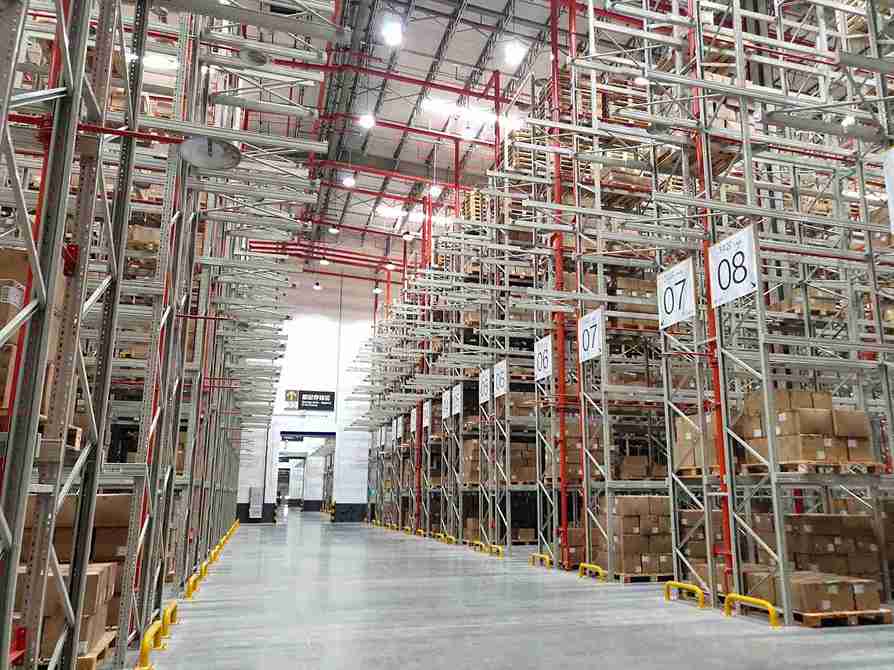
Accessibility & Pick Velocity: The speed of retrieval is paramount. A proficient racking system layout planning guide strategically positions fast-moving ‘A’ class SKUs in the ‘golden zone’—waist-to-shoulder height within easily accessible aisles. It dictates aisle widths based on the material handling equipment (e.g., 1.8m for a very narrow aisle (VNA) forklift, 1.5m for certain AGVs), directly impacting pick rates and labor productivity.
Unidirectional, Bottleneck-Free Flow: The hallmark of a superior layout planning guide is the establishment of a logical, straight-line product journey from receiving to dispatch. It clearly delineates zones for receiving, put-away, storage, picking, packing, and shipping, ensuring minimal cross-traffic and congestion. This flow design is the backbone of throughput capacity.
1.2 The Critical Data Inputs: Fuel for the Planning Engine
A custom racking system layout planning guide cannot be created in a vacuum. Its accuracy and effectiveness are directly proportional to the quality and depth of data provided. Reputable consultants will insist on a comprehensive data package, which forms the very foundation of a reliable planning guide:
Complete SKU Profile: Detailed dimensions (pallet, case, unit), weight, and packaging specifications for every item.
Inventory Velocity Analysis: A dynamic ABC classification based on movement frequency, which directly informs slotting strategies within the layout plan.
Order Profile Analysis: Data on average order lines, picks per order (full pallet, case, each), and seasonal fluctuations. This determines picking methodologies (discrete, batch, wave) and technology requirements outlined in the guide.
Growth Projections: A 3-5 year forecast of SKU proliferation and inventory volume to ensure the racking system layout is scalable from day one.
1.3 Integrating Safety and Compliance from the Ground Up
A responsible racking system layout planning guide embeds safety and regulatory compliance into its core design, not as an afterthought. For operations in regions with evolving standards, this is a critical differentiator.
Structural Engineering for Local Conditions: The guide must specify racking designs and anchorage details that account for local seismic activity (critical in many Asian and Latin American countries), wind loads (for mezzanines), and comply with international standards like FEM 10.2.02 or RMI.
Operational Safety Design: It will mandate clear aisle markings, adequate lighting levels, protective column and end-of-aisle guards, proper clearances for fire sprinklers, and dedicated pedestrian walkways. A well-crafted planning guide inherently reduces the risk of accidents and product damage.
Regulatory Adherence: An expert guide demonstrates awareness of local fire codes, building regulations, and labor safety laws pertinent to the specific market, whether in the UAE, Vietnam, Nigeria, or Brazil.
Chapter 2: The Step-by-Step Methodology Behind a Professional Racking System Layout Planning Guide
The creation of a transformative racking system layout planning guide follows a meticulous, phased methodology. This process ensures no operational stone is left unturned and that the final output is both visionary and pragmatically executable.
2.1 Phase One: Deep-Dive Discovery and Current State Analysis
The journey begins with immersive fact-finding. This phase involves on-site audits (or advanced virtual surveys using laser scanning), workflow shadowing, and stakeholder interviews. The goal is to map the current state with precision, identifying pain points such as receiving dock bottlenecks, excessive travel distances in the picking zone, or underutilized vertical space. Simultaneously, a detailed building audit captures column spacing, floor flatness, ceiling height, door locations, and power infrastructure. This comprehensive analysis forms the “problem statement” that the custom racking system layout planning guide will solve.
2.2 Phase Two: Macro-Flow Design and Conceptual Zoning
Before sketching a single rack, master planners develop a high-level flow diagram. This macro-view of the racking system layout planning guide defines the relationship between major functional zones. It answers fundamental questions: How will goods flow from the receiving dock to their primary storage location? How are they replenished to forward picking areas? How do picked orders consolidate and move to dispatch? This stage ensures the planning guide establishes a logical, efficient footprint that supports the operational workflow, not hinders it.
2.3 Phase Three: Detailed Engineering, Simulation, and Visualization
This is where the racking system layout planning guide takes its definitive form. Utilizing advanced warehouse design software (like AutoCAD, SketchUp, or specialized tools such as CADprof), engineers execute detailed planning.
Precision System Specification: The guide specifies exact racking types, configurations, beam levels, upright frames, and accessories for each zone. It provides precise aisle width calculations, pallet position counts, and load-bearing diagrams.
3D Modeling and Walkthroughs: Stakeholders can explore a photorealistic 3D model of the proposed warehouse. This visualization within the planning guide is invaluable for understanding spatial relationships, operator ergonomics, and overall workflow.
Discrete-Event Simulation: The most advanced racking system layout planning guide employs simulation software (e.g., FlexSim, AnyLogic) to digitally stress-test the design. It can model peak season volumes, different labor schedules, or equipment failures, providing data-driven confidence in the plan’s resilience before any capital is committed.
2.4 Phase Four: Automation and Technology Integration Strategy
A forward-looking racking system layout planning guide is conceived with technology integration as a core principle, not a future retrofit. It provides a clear pathway for innovation.
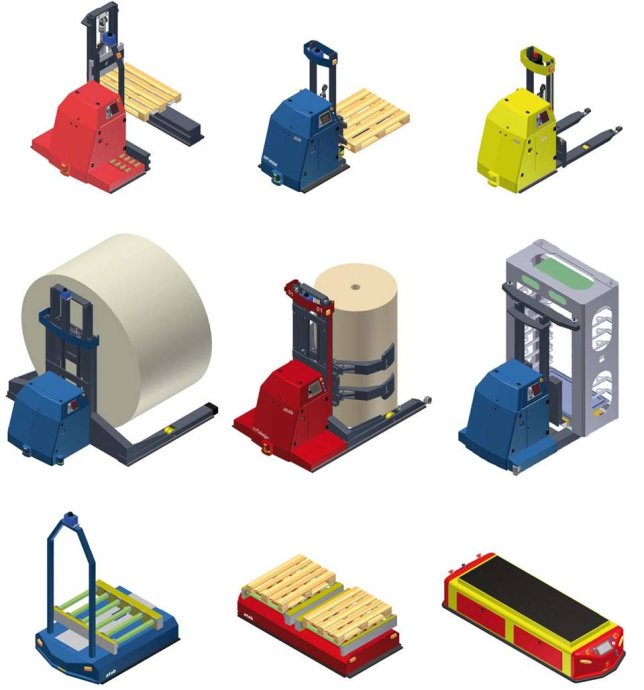
AGV/AMR-Ready Layouts: The guide will design aisles and pickup/drop-off (P&D) points compatible with Automated Guided Vehicles or Autonomous Mobile Robots, specifying navigation paths (magnetic tape, LiDAR) and charging station locations.
AS/RS (Automated Storage and Retrieval System) Foundation: For high-density, high-throughput applications, the layout planning guide serves as the blueprint for stacker crane runways, transfer car locations, and the integration points between the automated racking and the WMS/WCS (Warehouse Control System).
Conveyor and Sortation Integration: It details the routing for conveyor systems, sortation loops, and mezzanine structures, ensuring these automated elements are seamlessly woven into the fabric of the overall racking system layout.
2.5 Phase Five: The Implementation Roadmap and Business Justification
The final deliverable of a comprehensive racking system layout planning guide is a complete project dossier. It includes:
Phased Installation Plan: A step-by-step sequence to implement the new layout with minimal operational disruption.
Detailed Bill of Materials (BOM): A transparent list of all racking components, safety accessories, and related hardware.
Return on Investment (ROI) Analysis: A quantified business case projecting gains in storage capacity (%), labor productivity (orders/person/hour), picking accuracy, and overall operational cost savings, directly attributed to the new layout plan.
Chapter 3: Tailoring the Racking System Layout Planning Guide to Regional and Industrial Realities
A premier racking system layout planning guide demonstrates its expertise through localization and specialization. The challenges in a humid, multi-story facility in Bangkok differ vastly from those in a vast, dust-prone warehouse in Riyadh or a seismically active zone in Chile.
3.1 Regional Adaptations in the Planning Guide
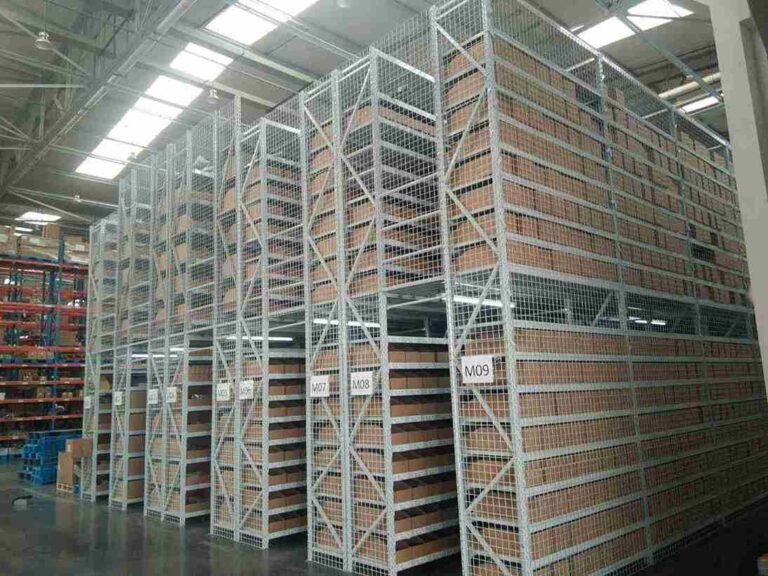
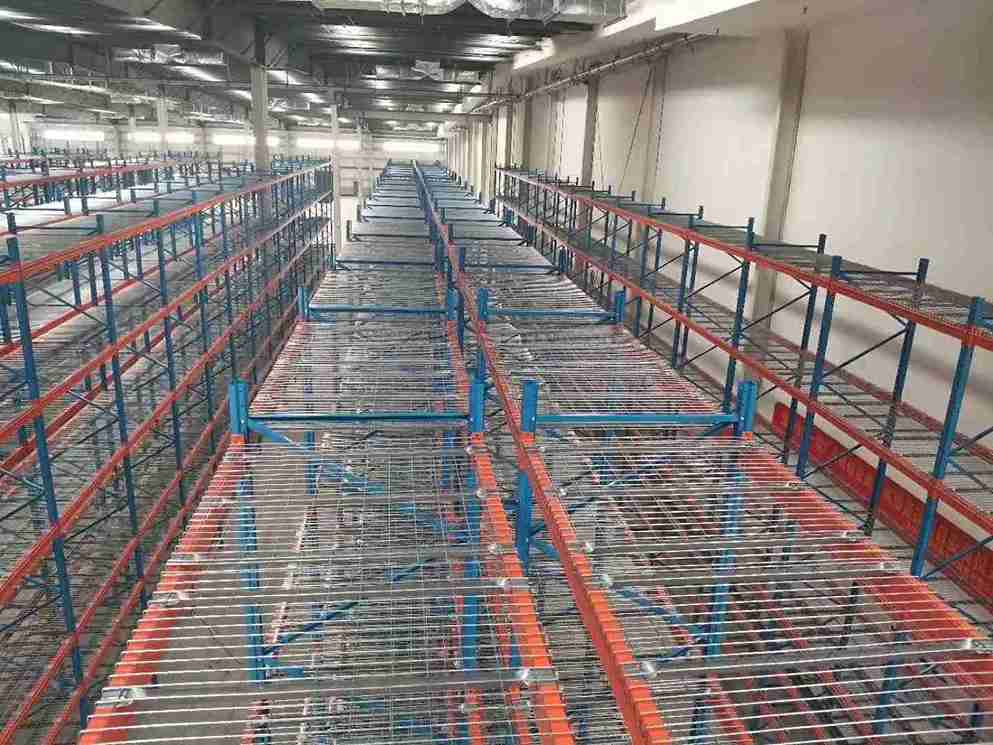
Southeast Asia Focus: A guide for this region must address high humidity and temperatures, often recommending hot-dip galvanized racking finishes. With frequent lower clear heights, it might prominently feature mezzanine floor designs to double usable space. For the booming e-commerce sector, the guide would emphasize scalable, high-speed carton flow picking zones.
Middle East & North Africa Considerations: Here, the racking system layout planning guide must account for extreme heat, fine sand, and dust. Recommendations would include specific filtration systems for automation, climate control strategies for certain storage zones, and designs for sprawling, high-bay distribution centers capable of handling high-value goods.
Sub-Saharan Africa & Latin America Specifics: The guide needs to accommodate variable infrastructure, sometimes designing for less grid-dependent operations or specifying more robust, easily maintained equipment. In Latin America, detailed seismic engineering and racking anchorage specs become a non-negotiable section of the layout planning guide.
3.2 Industry-Specific Blueprints
E-commerce/3PL Fulfillment Guide: This variant of the racking system layout planning guide is obsessed with pick-face density and order consolidation speed. It centers on zones of carton flow racks, shelving, and vertical lift modules (VLMs), intricately linked by a sophisticated conveyor and sortation network detailed in the plan.
Cold Storage & Food & Beverage Guide: In this sector, the planning guide is governed by thermodynamics. It prioritizes maximizing pallet positions within the expensive refrigerated cube using high-density systems like dynamic pallet shuttle racks, while enforcing strict FIFO with pallet flow lanes. It includes specifics on insulated decking and airflow management.
Manufacturing & Raw Materials Guide: This guide focuses on supporting production line efficiency. It incorporates cantilever racking for long materials, dedicated small parts storage with bin systems, and layouts that facilitate kitting and Just-in-Time (JIT) delivery via integrated AGV pathways.
Conclusion: The Strategic Dividend of a Professionally Crafted Racking System Layout Planning Guide
In the competitive landscapes of emerging global markets, operational excellence in logistics is not a luxury—it is a fundamental prerequisite for survival and growth. The decision to invest in a meticulous, custom racking system layout planning guide represents a strategic commitment to that excellence. This document is far more than an equipment list or a floor plan; it is a validated roadmap to lower operational costs, enhanced agility, superior customer service, and scalable growth.
Attempting to navigate warehouse design with a piecemeal approach or generic templates inevitably leads to embedded inefficiencies and costly future re-engineering. The data-driven methodology, regional expertise, and technological foresight encapsulated within a professional racking system layout planning guide provide the clarity and confidence needed to make transformative capital investments. It transforms the warehouse from a source of daily friction into a demonstrable engine of profitability and competitive edge. For any business serious about dominating its supply chain, the development of such a guide is the indispensable first move.
Frequently Asked Questions (FAQs)
1. How often should a business review and potentially update its racking system layout planning guide?
A dynamic business should formally review its racking system layout planning guide at least annually, or immediately following any significant change in operation. Triggers for a review include a sustained 15-20% growth (or decline) in inventory volume, a major shift in product lines or SKU characteristics, a change in order profile (e.g., moving from bulk to e-commerce), or the adoption of new material handling technology. A good guide is designed with modularity in mind, but regular reviews ensure the layout continues to reflect operational reality.
2. What are the most common costly mistakes made when companies attempt an internal racking layout plan without a professional guide?
The most frequent and costly errors include: underestimating the importance of precise load dimensions and weights, leading to underspecified racking; failing to properly account for required clearances for sprinklers, lighting, and HVAC; designing aisles too narrow for the turning radius of actual equipment; neglecting workflow logic, creating cross-traffic and bottlenecks; and overlooking future growth, resulting in a layout that cannot be expanded economically. A professional racking system layout planning guide systematically eliminates these risks through experience and analysis.
3. Can a professional racking system layout planning guide be developed effectively for a business using a third-party logistics (3PL) provider’s facility?
Absolutely, and it is highly advisable. A bespoke planning guide for a 3PL space ensures the storage solution is optimized for the client’s specific inventory and velocity, not a generic one-size-fits-all approach. It provides a clear benchmark for performance, can be used to negotiate service level agreements (SLAs) based on efficient layouts, and ensures the client’s operational requirements are physically supported within the shared space. The guide becomes a key tool for partnership management.
4. What role does Warehouse Management System (WMS) data play in validating the assumptions within a racking system layout planning guide?
Historical WMS data is the most valuable fuel for creating an accurate guide. It provides empirical evidence on seasonality, exact pick frequencies (validating ABC analysis), travel distances, and dwell times. Post-implementation, WMS data is used to validate the planning guide’s projections by measuring improvements in key metrics like picks per hour, travel time reduction, and put-away cycle times. The synergy between the physical layout plan and the digital WMS is where maximum efficiency is realized.
5. For a multi-client or multi-tenant warehouse, how does a racking system layout planning guide manage segregation and security while maintaining overall efficiency?
A sophisticated planning guide for such facilities employs strategic zoning. It uses distinct racking bays, separate mezzanine sections, or even different racking systems per client to create physical and visual segregation. The guide will design dedicated access aisles for each tenant where required, while optimizing shared main thoroughfares and receiving/dispatch zones for overall flow efficiency. Security considerations, like segregated fencing or gated sections, are integrated into the layout plan from the outset, balancing operational isolation with shared infrastructure efficiency.
If you require perfect CAD drawings and quotes for warehouse racking, please contact us. We can provide you with free warehouse racking planning and design services and quotes. Our email address is: jili@geelyracks.com