📐 "First 50 Enterprise Queries Get Custom 3D Warehouse Design" Plan















Maximize Storage Density: A Strategic Guide to the Real System Cost Per Square Meter
In the competitive landscapes of industrial and logistics hubs from Jakarta to Johannesburg, Mexico City to Dubai, a silent revolution is redefining the very economics of storage. The traditional metric of success—simply having enough floor space—is now a relic of a bygone era. The new gold standard, the critical KPI that separates market leaders from the struggling, is the comprehensive understanding and optimization of the system cost per square meter.
This is not a simple calculation of racking price divided by floor area. It is a sophisticated, holistic financial model that encapsulates the total cost of ownership of a warehouse’s entire storage ecosystem. It factors in the immense, often wasted value of cubic air space, the relentless drain of labor-intensive operations, and the hidden opportunity cost of slow fulfillment.
For executives and operations managers, mastering the system cost per square meter is the key to unlocking unprecedented efficiency, scalability, and profitability. This definitive guide delves deep into the strategies and technologies that can transform this critical metric from a burdensome expense into a powerful competitive weapon.
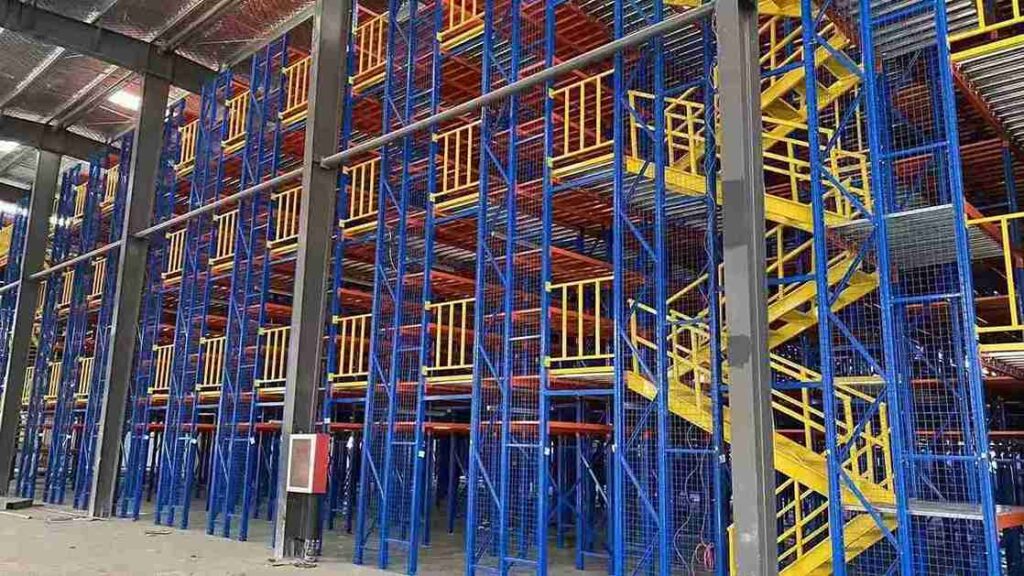
Beyond the Price Tag: Why the Real System Cost Per Square Meter is Your Most Important Metric
The initial quotation for pallet racking or a fleet of forklifts is a deceptive figure. It represents only a fraction of the true financial picture. The real system cost per square meter is a dynamic value that reveals the operational and economic performance of your storage operation over its entire lifecycle. Focusing solely on upfront equipment cost is like judging an aircraft by the price of its seats alone, ignoring the engines, avionics, and fuel efficiency that determine its real value and cost to operate.
A low upfront investment in wide-aisle, low-height storage inevitably leads to a perpetually high system cost per square meter. Why? Because it condemns the facility to underutilize its most valuable asset: its building volume. Every cubic meter of empty air above the racking represents capital tied up in land, construction, and utilities that is yielding no return.
Conversely, a strategically planned, higher-investment system that fully utilizes the building’s cube through automation and high-density storage actively works to drive down the long-term system cost per square meter. The goal is not to minimize the initial invoice, but to minimize the total cost per stored pallet and per order shipped over the next decade. This paradigm shift is fundamental to thriving in today’s market.

The Anatomy of a Holistic System Cost Per Square Meter Calculation
To effectively manage and optimize the system cost per square meter, one must first understand its core components. The formula is more than arithmetic; it is a strategic framework for decision-making.
Total System Cost Per Square Meter = (Total Capital Expenditure + Total Annual Operational Expenditure) / (Effective Storage Positions x Operational Throughput)
Let’s deconstruct this formula to reveal the powerful levers at your disposal.
Deconstructing Total Capital Expenditure (CAPEX)
This extends far beyond the basic storage hardware. A comprehensive CAPEX analysis for calculating the true system cost per square meter includes:
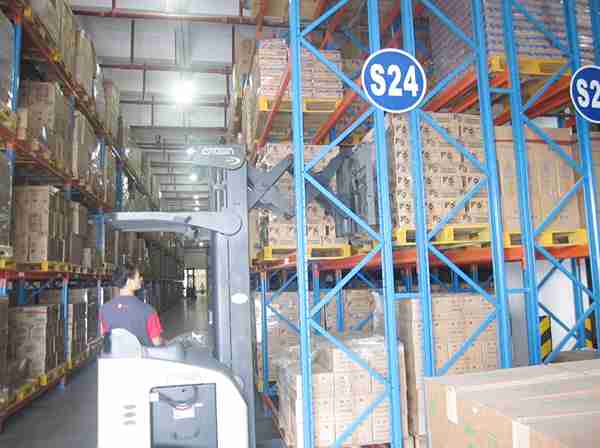
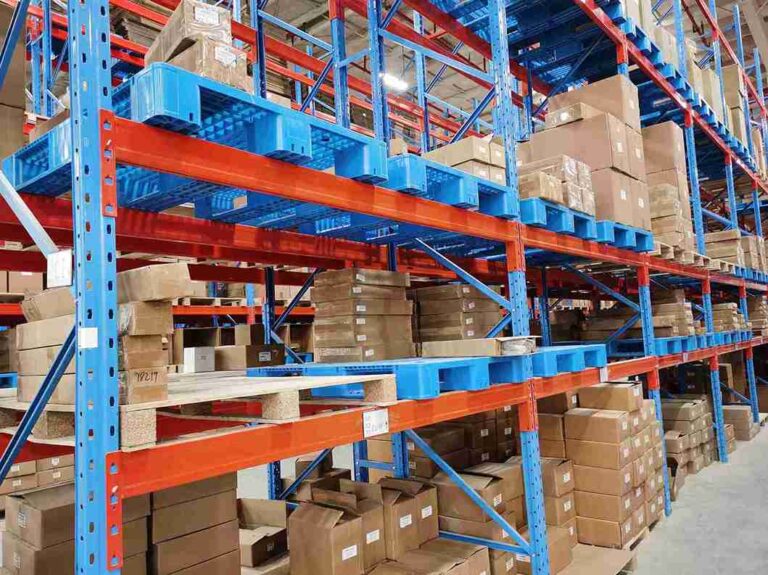
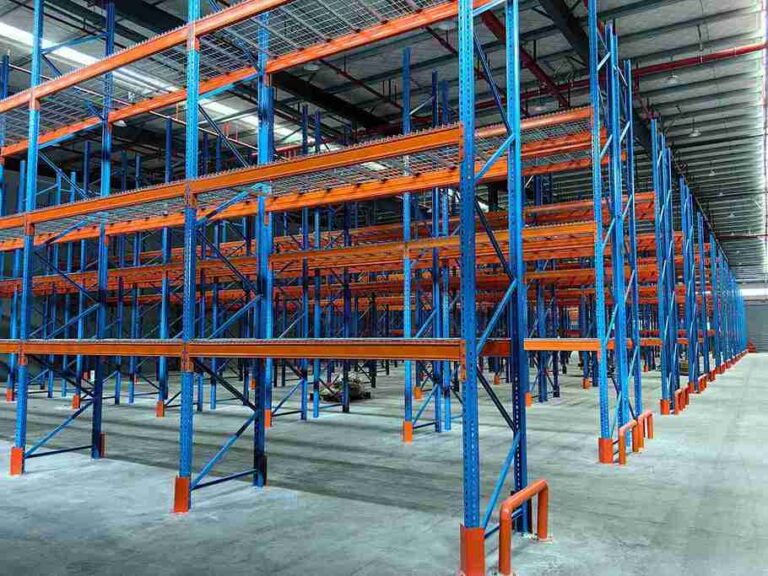
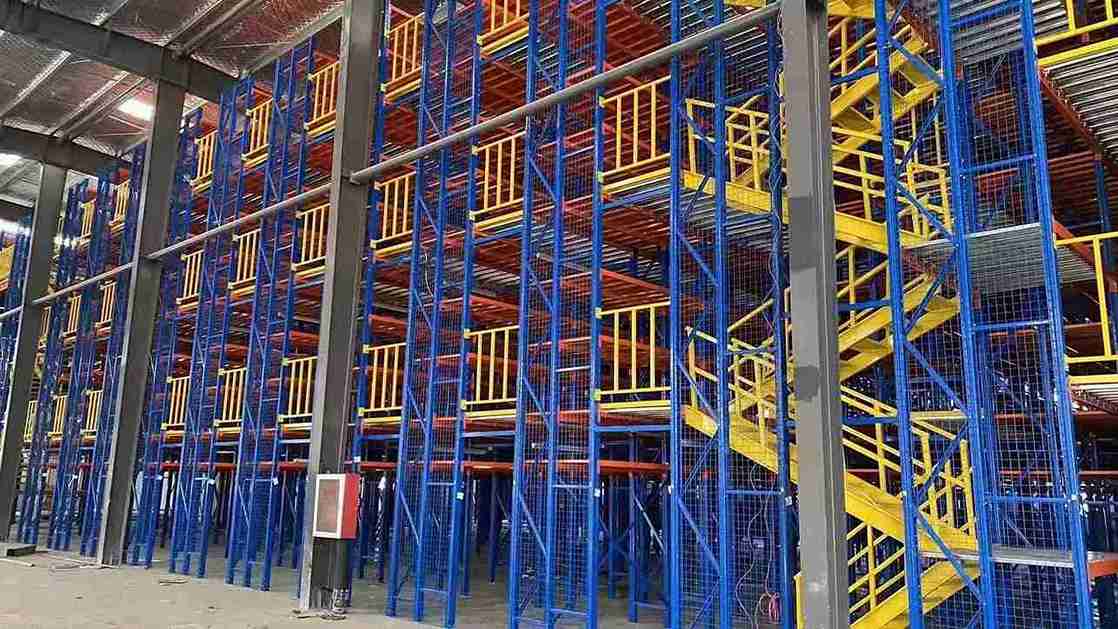
Core Storage Infrastructure: This encompasses the warehouse racking system itself—be it selective pallet racking, drive-in racking, or more advanced push back racking—and any mezzanine floors that create additional levels.
Automation and Mobility: The investment in AGV forklifts, automated guided vehicles, stacker cranes for AS/RS, and automated sortation systems. This is the muscle of the modern warehouse.
The Digital Brain: The cost of the Warehouse Management System (WMS) and control software is non-negotiable. This software is the central nervous system that ensures all physical components work in harmony to optimize the system cost per square meter.
Integration and Implementation: Professional fees for system design, civil engineering (e.g., floor reinforcement), installation, and commissioning are integral to the initial system cost per square meter.
Infrastructure Upgrades: Electrical work for charging stations, enhanced data networks, and specialized lighting for automated areas all contribute to the capital outlay.
Unpacking Total Annual Operational Expenditure (OPEX)
This is where the long-term battle to reduce the system cost per square meter is won or lost. OPEX is the recurring cost of running the system day-in and day-out.
Labor Costs: This is typically the largest OPEX factor. A manual warehouse with a high system cost per square meter will have substantial costs for forklift operators, pickers, and supervisors, including salaries, benefits, training, and the high cost of turnover. Automation directly and dramatically attacks this cost component.
Energy Consumption: The system cost per square meter is influenced by electricity for lighting, climate control, and powering automation. Modern, efficient systems, especially those with reduced lighting needs in automated areas, can lower this cost per unit stored.
Maintenance and Repairs: Scheduled, predictive maintenance for automated systems is a predictable, manageable cost. In contrast, the unscheduled downtime and racking damage from manual forklift operations create volatile and hidden costs that inflate the effective system cost per square meter.
Insurance and Taxes: A safer, more secure automated facility with less product damage and lower risk of workplace accidents can lead to reductions in insurance premiums, positively affecting the annual system cost per square meter.

The Direct Correlation Between Storage Density and System Cost Per Square Meter
Storage density is the single most powerful variable for controlling the system cost per square meter. Density is the art and science of storing the maximum number of pallets or cartons within a given cubic volume. Increasing density directly deflates the system cost per square meter by allocating the fixed and variable costs of the building and its operations across a much larger number of storage positions.
Consider a facility with a 5,000 sqm footprint and a 12-meter clear height. A traditional wide-aisle system might utilize only 5 meters of height, effectively ignoring 3,500 cubic meters of potential space. Its system cost per square meter per pallet position is high because the building’s cost is amortized over fewer units. A high-density system that uses the full 12-meter height might double or triple the number of pallet positions. Even with a higher initial CAPEX, the system cost per square meter allocated to each pallet position plummets, creating a far more efficient and profitable asset.
The Technology Spectrum: Solutions for Driving Down the System Cost Per Square Meter
A range of technologies exists to boost density and efficiency. The optimal choice depends on product profile, throughput requirements, and SKU variety, but the ultimate goal for each is a lower total system cost per square meter.
Narrow Aisle & Very Narrow Aisle (VNA) Solutions
By simply reducing forklift aisle widths, these systems instantly reclaim floor space for storage, directly improving the system cost per square meter.
Impact on System Cost: They offer a significant increase in storage positions for a moderate increase in equipment investment (specialized forklifts). This makes them a highly effective first step in reducing the system cost per square meter. When VNA racking is designed to be “automation-ready,” it provides a clear, low-risk pathway to future upgrades with automated stacker cranes, further enhancing long-term gains on the system cost per square meter.
High-Density Dynamic Storage: Push Back & Pallet Shuttle
These systems attack wasted space in the depth dimension, storing pallets multiple deep.
Push Back Racking: A LIFO system that is excellent for boosting density and improving the system cost per square meter for products with medium turnover.
Pallet Shuttle System: A revolutionary technology that uses a battery-powered shuttle to store and retrieve pallets within a deep storage lane. Its ability to operate in very high-bay configurations and its compatibility with FIFO and LIFO make it a powerhouse for minimizing the system cost per square meter, especially in cold storage where space efficiency is paramount.
The Apex of Efficiency: Automated Storage and Retrieval Systems (AS/RS)
AS/RS represents the ultimate integration of height, density, and speed to achieve the lowest possible operational system cost per square meter.
How it Redefines Cost: While the capital expenditure for a unit-load AS/RS or mini-load system is substantial, its impact on the long-term system cost per square meter is transformative. It maximizes cubic space utilization to an unparalleled degree, often exceeding 90% of the available building volume. Furthermore, it delivers massive, sustained reductions in labor, energy per pick, and product damage. For high-volume, high-value operations, the system cost per square meter of an AS/RS over a 7-year period is frequently unbeatable.
The Indispensable Role of Software in Managing the System Cost Per Square Meter
Hardware creates the potential for a low system cost per square meter; software actualizes it. A Warehouse Management System (WMS) is the command center that ensures every physical asset is used to its maximum potential.
Optimized Space Utilization: The WMS dynamically assigns put-away locations based on product dimensions and velocity, ensuring the storage cube is always filled in the most efficient way possible, directly controlling the system cost per square meter.
Labor and Automation Directives: It creates optimal pick paths for personnel and sends precise retrieval commands to AS/RS cranes and AGV forklifts, minimizing wasted movement and maximizing throughput—a key factor in the throughput component of the system cost per square meter.
Data-Driven Continuous Improvement: The WMS provides the analytics to identify bottlenecks, monitor performance, and make informed decisions for further optimizing the system cost per square meter.
A Practical Model: Quantifying the Reduction in System Cost Per Square Meter
Let’s model a scenario for a growing distribution center in Southeast Asia.
Baseline: Traditional Warehouse (5,000 SQM, 8m clear height utilized)
Storage Positions: 4,000
Total Annual OPEX (Labor-heavy): $450,000
Calculated Annual System Cost Per Square Meter (OPEX-focused): $450,000 / 5,000 sqm = $90/sqm
Upgraded Scenario: High-Density Pallet Shuttle with AGV Integration (Same 5,000 SQM, 11m clear height utilized)
Storage Positions: 9,500 (137% increase)
Total Annual OPEX (Automation-driven): $180,000 (60% reduction)
Calculated Annual System Cost Per Square Meter (OPEX-focused): $180,000 / 5,000 sqm = $36/sqm
This dramatic 60% reduction in the operational component of the system cost per square meter is compounded by the fact that the facility can now handle more than double the inventory. The cost to store each individual pallet plummets, showcasing a vastly improved system cost per square meter performance. When the capital investment is amortized over the increased capacity and lower OPEX, the total system cost per square meter tells a compelling story of financial prudence and strategic growth.
A Partner in Optimization: Engineering a Lower System Cost Per Square Meter
Achieving a truly optimized system cost per square meter is not a product purchase; it is a strategic partnership. It requires a provider with deep expertise in logistics engineering, automation integration, and lifecycle cost analysis. The process begins with a meticulous audit of your current operations—SKU data, flow rates, growth projections, and pain points. Through advanced modeling and simulation, different scenarios can be projected, revealing the precise impact on your future system cost per square meter for various technology solutions. This data-driven approach moves the conversation beyond vague promises to concrete, quantifiable outcomes, ensuring that every investment is strategically aligned with the goal of minimizing the total system cost per square meter.

Conclusion: Mastering Your Metrics for Market Leadership
In the global race for logistics efficiency, the most successful organizations will be those that have moved beyond superficial cost assessments. They will be the ones who have embraced the system cost per square meter as their north star, guiding every investment in infrastructure and technology. By focusing on this holistic metric, businesses can transform their warehouses from static, costly liabilities into dynamic, profit-driving assets. The journey to a lower system cost per square meter is a journey toward greater resilience, scalability, and market dominance. It is an investment not just in metal and software, but in a fundamentally more intelligent and profitable way of doing business.
Frequently Asked Questions (FAQs)
1. How does the volatility of labor markets in emerging economies impact the calculation of the system cost per square meter?
Labor volatility is a critical reason why the system cost per square meter model is so essential. Rising wages, high turnover, and training costs introduce significant uncertainty and risk into the OPEX side of the equation. Automation, while a higher CAPEX, effectively converts a volatile, rising variable cost (labor) into a stable, predictable, and often declining fixed cost (equipment amortization and maintenance). This dramatically de-risks your long-term system cost per square meter and provides a shield against labor market fluctuations.
2. Can a high-density system actually improve our company’s sustainability profile, and how is that reflected in the system cost per square meter?
Absolutely. A lower system cost per square meter is frequently aligned with a lower carbon footprint. High-density systems consume less energy per pallet stored for lighting and climate control. Automated systems are often more energy-efficient in their movements than their manual counterparts. Furthermore, by avoiding the need to build a new, larger warehouse, you save the immense embodied carbon of new construction. While the direct monetary savings on energy contribute to a lower OPEX in the system cost per square meter calculation, the sustainability benefits enhance brand value and corporate responsibility, which are increasingly important intangible assets.
3. Our facility has uneven or weak flooring. How does this affect the feasibility and cost of implementing a system designed to lower the system cost per square meter?
Floor conditions are a fundamental part of the CAPEX calculation for the system cost per square meter. High-density and automated systems, particularly AS/RS and VNA, require very flat and strong floors. A detailed site survey is the first step in any project. The cost of necessary civil engineering work—such as laser grinding or installing a super-flat topping slab—must be included in the initial project budget.
While this adds to the upfront system cost per square meter, it is a non-negotiable investment for system integrity and performance. Omitting it leads to operational failures and a much higher long-term system cost per square meter due to downtime and equipment wear.
4. For a multi-national company, is it better to standardize on one system globally or to tailor solutions to each region, and how does that impact the overall system cost per square meter?
The goal is strategic consistency, not rigid standardization. The core principle—aggressively managing the system cost per square meter—should be global. However, the optimal technological solution to achieve this will vary based on local factors like labor costs, land prices, building regulations, and the skill level of the available workforce.
A solution that delivers the best system cost per square meter in Germany may not be optimal in Vietnam. A skilled partner will help you develop a regional technology strategy that applies the same rigorous financial modeling (the system cost per square meter) to select the right local solution, ensuring global best practices are adapted for local economic realities.
5. How do we justify the capital investment in a high-density automation project to our finance department, using the language of the system cost per square meter?
The justification comes from presenting a comprehensive business case framed around the total system cost per square meter, not just the equipment price. This involves:
Modeling the Status Quo: Clearly articulate the current system cost per square meter, highlighting the high and rising OPEX of the labor-intensive model.
Projecting the Future State: Present the proposed solution’s projected system cost per square meter, showing the dramatic reduction in OPEX and the increased capacity.
Calculating the Payback: Use the difference in the system cost per square meter to calculate a clear Return on Investment (ROI) and payback period.
Quantifying Soft Benefits: Assign monetary value to “soft” benefits like improved accuracy (fewer shipping errors), reduced damage (lower inventory write-offs), and enhanced scalability (avoided cost of a new building). By framing the investment as a strategic initiative to control and reduce the total system cost per square meter, you align the project with the finance department’s core goal of maximizing long-term shareholder value and operational efficiency.
Welcome to contact us, if you need warehouse rack CAD drawings. We can provide you with warehouse rack planning and design for free. Our email address is: jili@geelyracks.com