📐 "First 50 Enterprise Queries Get Custom 3D Warehouse Design" Plan


Maximize AGV and Unit Load Efficiency with Heavy-Duty Single C Beam Racking Systems
In the high-stakes world of modern logistics, the seamless dance of Automated Guided Vehicles (AGVs) and robotic forklifts represents the pinnacle of operational ambition. However, this sophisticated automation is only as reliable as the static infrastructure that supports it. The critical, yet often underestimated, backbone of any automated storage and retrieval system is its racking. Standard roll-formed rack beams, while adequate for manual operations, frequently become the primary bottleneck in a dynamic, automated environment.
Their inherent tendency to deflect under constant, heavy loads creates a cascade of misalignments that disrupt AGV docking protocols, decimate throughput, and introduce significant safety hazards. This operational vulnerability is precisely where the engineered superiority of Heavy-Duty Single C Beam Racking establishes itself as an indispensable component. This discussion delves into the multifaceted advantages of Single C Beam Racking, illustrating how its robust design is not merely a storage solution but a strategic investment in achieving unparalleled AGV efficiency, protecting automation assets, and building a resilient, high-throughput logistics operation.

The Unseen Automation Bottleneck: Why Standard Racking Fails AGV Systems
The integration of AGVs into a warehouse is a transformative step, but it often reveals the hidden weaknesses of existing storage infrastructure. The assumption that any racking can support automated systems is a costly misconception.
The Critical Issue of Beam Deflection and AGV Docking Precision
AGVs operate on a doctrine of digital precision. Their navigation and lifting mechanisms are programmed to execute tasks within millimeter-level tolerances. Standard roll-formed beams, however, introduce a variable that this digital precision cannot always accommodate: vertical deflection. Under full load, these beams exhibit a noticeable sag, which may seem insignificant on an engineering drawing but is catastrophic in practice.
Misaligned Pallets and Failed Docking: A sagging beam alters the final resting position of a pallet. An AGV, arriving at its pre-programmed coordinates, finds the pallet displaced. This leads to aborted pickup attempts, with forks scraping against pallet faces, causing product damage and forcing the AGV’s control system to enter a error-recovery cycle.
Systemic Throughput Decay: Each failed docking attempt is not an isolated incident. It triggers a sequence of recalculations, reattempts, or manual interventions. Across a fleet of AGVs, these micro-delays accumulate, creating a substantial drag on the system’s overall throughput, effectively nullifying the speed benefits the automation was intended to provide.
Accelerated AGV Wear and Tear: The jarring impact of misaligned engagements places immense stress on the AGV’s lifting mechanics, sensors, and structural components. This results in more frequent breakdowns, higher maintenance costs, and a reduced operational lifespan for these high-value assets. The implementation of Single C Beam Racking is designed to eradicate this problem at its source, providing a consistently rigid and level platform that guarantees docking precision.
Inadequate Dynamic Load Capacity and the Specter of Structural Failure
Automated warehouses operate at a pace and intensity far beyond manual facilities. The dynamic forces imposed by AGVs—the rapid insertion and retraction of forks, the sudden starting and stopping of heavy loads—create a more punishing environment than static storage.
Dynamic vs. Static Load Ratings: A standard beam rated for a 2,500 kg static load may be dangerously inadequate for the same weight when subjected to the repetitive, impact-like forces of AGV interactions. This can lead to metal fatigue over time, a failure mode that is often sudden and catastrophic.
Safety as a Foundational Principle: A structural failure in an automated warehouse is not merely an operational hiccup; it is a severe safety crisis. The collapse of a beam can destroy inventory, cripple AGVs, and create a deadly environment for personnel. The financial, operational, and reputational damage can be irrecoverable. The design philosophy behind Heavy-Duty Single C Beam Racking incorporates a significant safety factor that explicitly accounts for the rigors of automated material handling, making it the responsible choice for risk-averse operations.
Engineering Superiority: The Anatomy of a Heavy-Duty Single C Beam
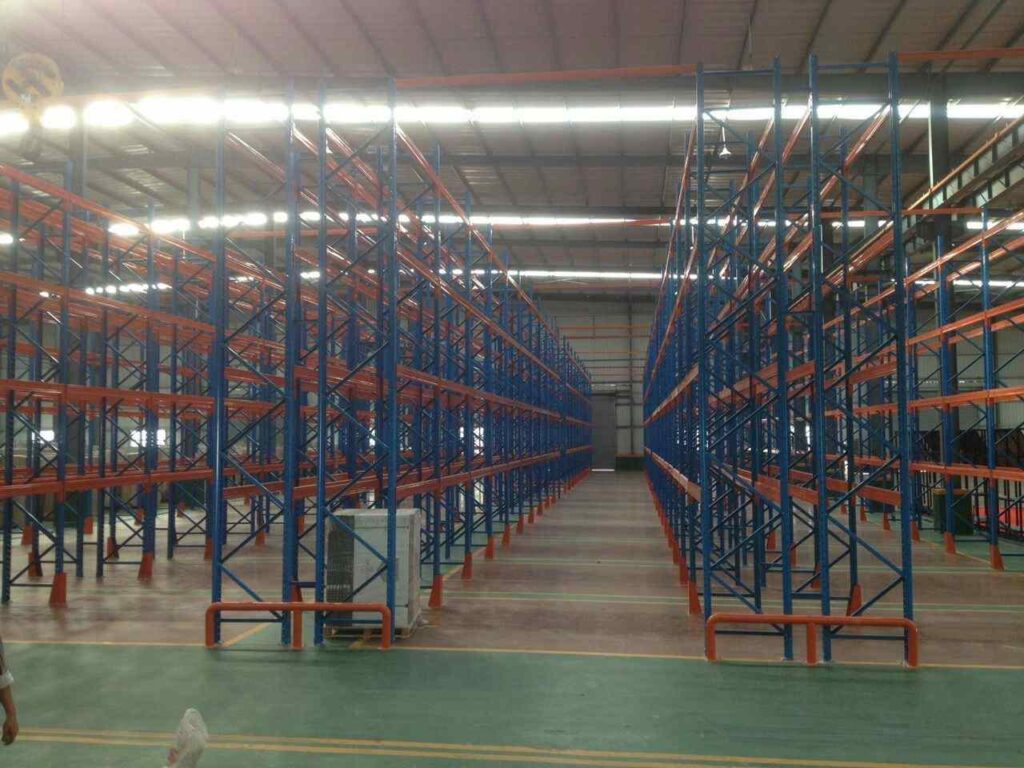
The distinction between Single C Beam Racking and conventional alternatives is rooted in fundamental differences in material science, structural design, and manufacturing integrity. It is a component engineered for active performance, not passive storage.
High-Tensile Steel and Robust Structural Design
The journey to superior performance begins with the raw material. Beams for Single C Beam Racking are typically fabricated from high-tensile steel, which possesses a superior strength-to-weight ratio compared to the milder, low-carbon steel used in standard roll-formed beams. This inherent material strength is the first line of defense against permanent deformation. The signature “C” profile is a critical structural innovation.
This shape provides exceptional resistance to both vertical deflection (sagging) and torsional forces (twisting), ensuring the beam’s geometry remains stable and true under maximum capacity. The result is a rock-solid shelf that presents a consistent, reliable target for AGVs, ensuring operational harmony shift after shift.
Precision Tolerances and Weld-Free Construction for Flawless Integration
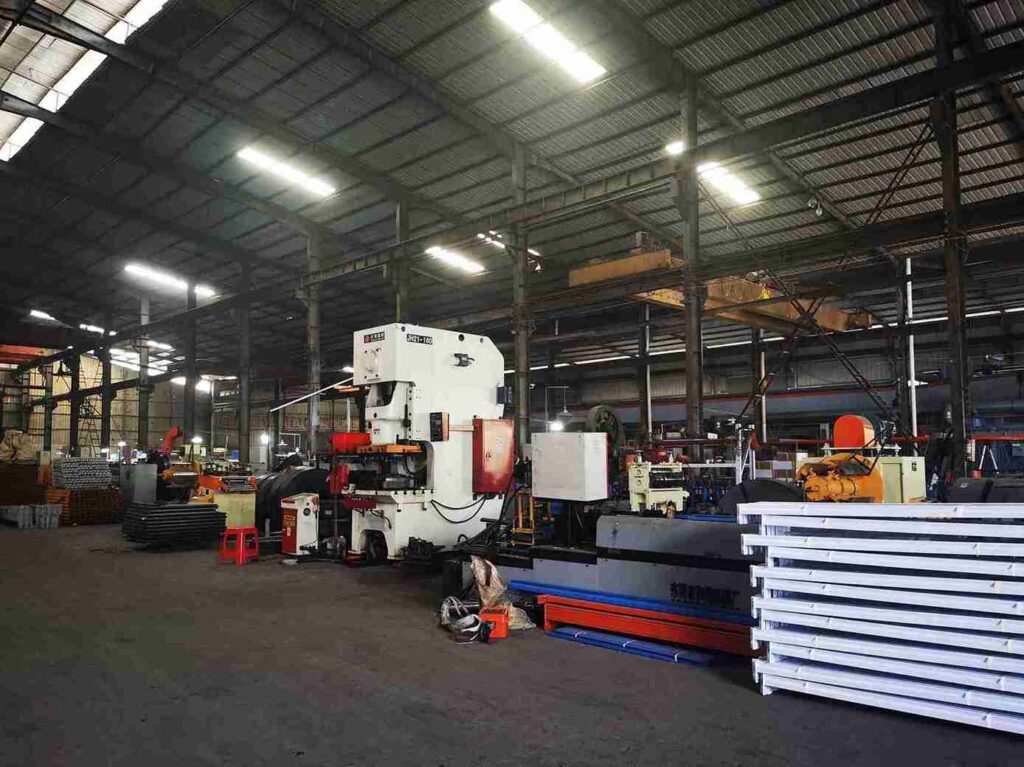
Consistency is the lingua franca of automation. Mass-produced roll-formed beams can suffer from dimensional variances that, while minor, are significant at the scale of AGV precision. In contrast, the manufacturing process for Single C Beam Racking adheres to exceptionally tight tolerances. This guarantees that every beam of a specific model is dimensionally identical, which simplifies AGV system programming and ensures uniform performance across the entire storage facility.
Furthermore, the cold-forming or press-breaking techniques used in producing Single C Beam Racking often result in a clean, weld-free final product. This eliminates potential stress points and failure points (weld cracks) and provides a smoother surface that prevents snagging and damage to both pallets and the sensitive components of AGVs.
Direct Benefits: How Single C Beam Racking Supercharges Your AGV Operations
The integration of a purpose-built Single C Beam Racking system translates into direct, measurable improvements across every key performance indicator of an automated warehouse.
Maximizing Uptime and System Throughput
In automation, uptime is profitability. By eliminating the primary cause of docking failures—beam deflection—Single C Beam Racking ensures that AGV tasks are completed on the first attempt. This seamless interaction minimizes aborted missions and system errors, keeping the entire AGV fleet in a state of continuous, productive motion. The cumulative effect is a direct and significant increase in the facility’s pallet-in/pallet-out throughput. This enhanced performance is a direct result of the reliability inherent in the Single C Beam Racking design.
Enhancing System-Wide Safety and Protecting Capital Investment
A rigid, dependable racking system is the most effective risk mitigation strategy in an automated facility. The immense strength and minimal deflection of Heavy-Duty Single C Beam Racking instill operational confidence, ensuring the storage infrastructure can handle dynamic loads without risk of collapse. This proactive approach to safety protects personnel, safeguards inventory, and, crucially, shields the massive capital investment tied up in the AGV fleet itself. Preventing collisions and load failures directly translates into lower long-term maintenance costs and a maximized operational lifespan for the automation equipment, a key financial benefit of adopting Single C Beam Racking.
Enabling Higher Storage Density and Optimized Cube Utilization
The superior load-bearing characteristics of Single C Beam Racking often allow for longer unsupported spans or safe operation at higher capacities compared to standard beams. This provides warehouse planners and engineers with greater flexibility when designing high-density storage layouts, such as those for very-narrow-aisle (VNA) systems that are exclusively serviced by AGVs. Companies can confidently maximize the use of their valuable cubic space without sacrificing the speed or safety of their automated retrieval processes, a strategic advantage made possible by the strength of Single C Beam Racking.

Synergy in Action: Single C Beams and Different AGV/Unit Load Types
The versatility of the Single C Beam Racking system allows it to be perfectly tailored to work in harmony with a wide spectrum of automation technologies and load types.
Perfect Partnership with Pallet-Handling AGVs
For AGVs dedicated to transporting standard pallets, the unwavering stability and consistent height offered by Single C Beam Racking are non-negotiable. This guarantees flawless fork entry and exit, which is especially critical in double-deep or push-back configurations where precision is paramount to prevent damaging adjacent loads or the racking itself. The reliability of Single C Beam Racking makes these complex, high-density layouts viable and efficient.
Optimized for Complex Unit Load Handling Systems
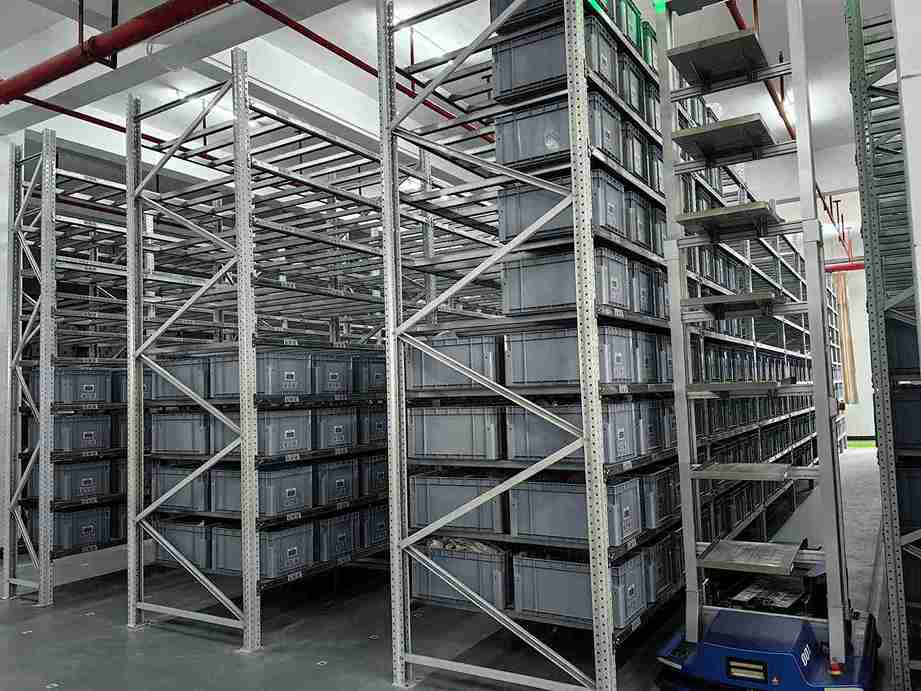
Modern logistics often involves handling custom unit loads beyond standard pallets—including cages, plastic totes, and specialized containers. The clean, robust, and adaptable design of Single C Beam Racking provides the ideal support structure for these often irregular and heavy loads. The system’s inherent flexibility allows for precise configuration of beam levels and spacing to match unique unit load dimensions, creating a tailor-made, high-efficiency environment for automated handling. The strength of Single C Beam Racking ensures these non-standard loads are supported securely.
Beyond AGVs: The Holistic Impact of Single C Beam Racking on Your Automated Warehouse
The performance benefits of implementing a robust Single C Beam Racking system create a positive ripple effect across other critical areas of an automated facility, enhancing the entire ecosystem.
Creating a Stable Foundation for ASRS and Pallet Shuttle Systems
In the realm of fully automated storage, Automated Storage and Retrieval Systems (ASRS) and Pallet Shuttle Systems represent the apex of density and speed. These systems place the highest possible demands on racking integrity, with retrieval machines and shuttles operating at high velocities on integrated rails. The absolute precision, minimal deflection, and structural rigidity of Single C Beam Racking are fundamental prerequisites for these applications. They ensure the smooth, accurate, and vibration-free travel of the retrieval machinery throughout the entire rack structure, making Single C Beam Racking the backbone of high-performance ASRS.
Seamless Integration with Conveyor and Sortation Systems
The journey of a unit load frequently involves transitions between storage and conveyance. The stability provided by Single C Beam Racking at these critical hand-off points is essential. A stable load on a rigid beam allows for a smooth and predictable transfer onto conveyor belts or sortation systems. This stability prevents jams, mis-sorts, and product falls that can paralyze an entire distribution line. The role of Single C Beam Racking in ensuring flow continuity cannot be overstated.
The Global Standard: Deploying Reliable Single C Beam Racking Solutions Worldwide
Logistics is a global industry, and operational environments present unique challenges. From the high humidity of Southeast Asia to the dusty conditions of the Middle East and the variable climates of Latin America, storage infrastructure must be built to endure. Single C Beam Racking is engineered with this global perspective. The high-quality steel and advanced protective finishes, such as tough powder coatings, are specified to resist corrosion, abrasion, and chemical exposure in diverse climates. This commitment to durability ensures the long-term structural integrity and performance of Single C Beam Racking anywhere in the world, providing peace of mind for international operators.
Making the Strategic Shift: A Guide to Implementing Single C Beam Racking
Transitioning to a superior racking infrastructure is a strategic project that requires careful planning. A phased and professional approach ensures a seamless transition and maximizes return on investment.
Comprehensive Facility Audit and Load Analysis: The process begins with a deep analysis of the current layout, AGV fleet specifications, load profiles (including weight and dimensions), and future throughput goals. This data forms the basis for a custom engineering design.
Customized Engineering Design and Certification: Providers of high-quality Single C Beam Racking do not just sell components; they deliver a certified structural solution. Using advanced engineering software, the system is modeled to meet all national and local safety standards and to integrate perfectly with automation pathways.
Phased Installation with Minimal Operational Disruption: Expert installers understand that warehouses cannot afford prolonged downtime. They develop phased installation plans, often working during off-hours or in designated zones, to keep the business operational throughout the upgrade process.
AGV Re-calibration and System Performance Validation: Post-installation, collaboration with the automation team is crucial. AGV pathways and docking parameters are fine-tuned to the new, perfectly level and rigid environment of the Single C Beam Racking. The entire system is then put through a validation cycle to ensure peak performance before final handover.
Conclusion: Building the Intelligent Foundation for Tomorrow’s Warehouses
In the final analysis, the pursuit of warehouse automation is an end-to-end endeavor. True, transformative efficiency is only realized when every component of the ecosystem is engineered to the same high standard of performance and reliability. The storage infrastructure is an active, critical participant in the material flow, not a passive backdrop.
By specifying Heavy-Duty Single C Beam Racking, logistics managers and engineers make a strategic investment in the reliability, safety, and peak performance of their automated operations. They are building a foundation that not only maximizes the return on their current AGV fleet but is also robust enough to support the next generation of automation technology. The decision to implement Single C Beam Racking is the definitive step in future-proofing logistics operations and securing a lasting competitive advantage in the fast-paced world of global supply chains.
Frequently Asked Questions (FAQs)
Q1: How does the cost of Single C Beam Racking compare to standard roll-formed beams, and what is the true ROI?
While the initial purchase price of Single C Beam Racking is typically higher, the Total Cost of Ownership (TCO) is significantly lower, delivering a compelling and rapid ROI. The true return is calculated through quantifiable metrics: a drastic reduction in AGV downtime, lower maintenance costs for both racking and AGVs, the elimination of product damage from misdocks, and the increased revenue generated by higher system throughput. Investing in Single C Beam Racking is an investment in operational predictability and long-term risk mitigation.
Q2: Can your Single C Beam systems be retrofitted into our existing racking framework?
In a majority of cases, yes. Retrofit projects, where existing beams are replaced with heavy-duty Single C Beam Racking while retaining the upright frames (after a rigorous inspection), are a common and highly cost-effective strategy. This approach allows for a significant upgrade in system performance and AGV compatibility without the expense and disruption of a complete system tear-down and rebuild.
Q3: What specific load capacity and deflection tolerances can you guarantee with Single C Beam Racking?
Professional suppliers provide certified engineering data. High-performance Single C Beam Racking typically guarantees minimal deflection, often adhering to a strict L/360 standard (the beam span divided by 360) or better under full load. This is often half the deflection of standard beams. Load capacities are explicitly defined in structural drawings and can readily exceed 3,000 kg per beam in demanding automated applications, with custom Single C Beam Racking solutions capable of handling even greater weights.
Q4: Do you offer custom beam lengths and special profiles for non-standard pallets or unit loads?
Absolutely. Customization is a fundamental service offered by leading Single C Beam Racking manufacturers. They regularly produce beams in non-standard lengths and can engineer special profiles, reinforced designs, or add-on features (like guide flanges or integrated sensors) to accommodate unique unit loads and specific automation interfaces, ensuring perfect compatibility and performance.
Q5: How does your racking system integrate with warehouse management system (WMS) data for inventory tracking?
Single C Beam Racking provides the physical precision that makes digital inventory tracking accurate and reliable. The unwavering consistency of beam levels and locations means that the slot location data in a WMS corresponds perfectly to the physical world. This eliminates location errors and ensures that AGVs retrieve the correct inventory every time, forming the foundational layer for achieving true, real-time inventory visibility, which is a core benefit of a well-integrated Single C Beam Racking system in an automated environment.
If you require perfect CAD drawings and quotes for warehouse racking, please contact us. We can provide you with free warehouse racking planning and design services and quotes. Our email address is: jili@geelyracks.com