📐 "First 50 Enterprise Queries Get Custom 3D Warehouse Design" Plan


Unlocking Warehouse Density and Driving Down Costs: The Strategic Imperative of Reach Trucks for Narrow Aisle Applications
For logistics managers, warehouse operators, and supply chain executives across the dynamic markets of Africa, Latin America, Southeast Asia, and beyond, the operational landscape is defined by a pressing paradox: the need to accommodate relentless growth within the constraints of soaring real estate costs and tightening margins. The traditional model of expansive, low-bay warehouses served by counterbalance forklifts is no longer a viable economic formula. In its place, a more intelligent, dense, and responsive storage strategy has emerged as the cornerstone of modern logistics—a strategy fundamentally powered by the specialized application of reach trucks for narrow aisle configurations.
This comprehensive exploration delves beyond mere equipment specification. It presents a holistic operational philosophy where the reach trucks for narrow aisle systems are the critical linchpin in a transformative approach to warehouse design. This methodology directly targets and systematically dismantles the largest cost centers in a facility: wasted space, inefficient labor deployment, excessive energy consumption, and preventable inventory damage.
For businesses navigating the unique infrastructural and market challenges of emerging economies, mastering the deployment of reach trucks for narrow aisle environments is not an incremental upgrade; it is a strategic imperative for resilience, scalability, and sustained profitability. The following analysis provides a detailed roadmap for this transformation.

The Economic Anatomy of Warehouse Inefficiency in Growth Markets
Before a solution can be fully appreciated, one must first understand the acute nature of the problem. In regions experiencing rapid commercial and industrial expansion, warehouse inefficiencies are magnified, creating a significant drag on competitiveness.
The Space Squeeze: Real Estate as a Primary Cost Driver.
In bustling urban corridors from Lagos to São Paulo to Jakarta, the cost of industrial land and construction has skyrocketed. Leasing or building additional square footage to accommodate growth is often the most capital-intensive and slowest option available. Every aisle that is wider than necessary, every vertical meter of unused clear height, represents a permanent, recurring financial drain. The foundational logic of deploying reach trucks for narrow aisle operations is to attack this cost driver head-on by radically increasing storage density within the existing envelope, thereby slashing the cost per pallet position and deferring or eliminating the need for expensive expansion.
Labor Dynamics: Scarcity, Skill Gaps, and Productivity Leaks.
The challenge of recruiting, training, and retaining skilled forklift operators is universal, but particularly acute in fast-growing markets where demand outstrips supply. High turnover rates lead to constant retraining cycles, while operator error in congested, wide-aisle environments results in chronic rack damage, product loss, and safety incidents. The design and operational characteristics of reach trucks for narrow aisle work inherently mitigate these issues. Their intuitive control systems, enhanced visibility, and stability-focused design lower the barrier to operational proficiency, allowing managers to build a more stable, productive, and safer workforce with reduced training overhead and lower damage-related costs.
The Hidden Tax of Energy and Maintenance.
A standard internal combustion forklift operating in a conventional warehouse spends a disproportionate amount of its duty cycle simply traversing wide aisles to reach its storage or retrieval point. This translates directly into high fuel consumption, significant engine wear, and substantial exhaust emissions. In contrast, electric-powered reach trucks for narrow aisle applications are designed for efficiency within a condensed footprint. Their travel distances are shorter, their regenerative braking systems recapture energy, and their electric powertrains offer far lower energy costs per pallet moved. This results in dramatically reduced operating expenses and a smaller carbon footprint—a consideration increasingly important for multinational corporations operating in these regions.
Inventory Integrity: The Silent Profit Erosion.
Inaccurate inventory and damaged goods are silent killers of profitability. Wide, chaotic aisles contribute directly to misplaced pallets, incorrect picks, and collisions. A storage system engineered around reach trucks for narrow aisle principles brings discipline and systematization. Each pallet has a dedicated, addressable location within a structured racking system. This order is the essential prerequisite for implementing effective Warehouse Management System (WMS) control, leading to a step-change improvement in inventory accuracy, order fulfillment rates, and customer satisfaction.
Reach Trucks for Narrow Aisle Systems: A Technical Deep Dive
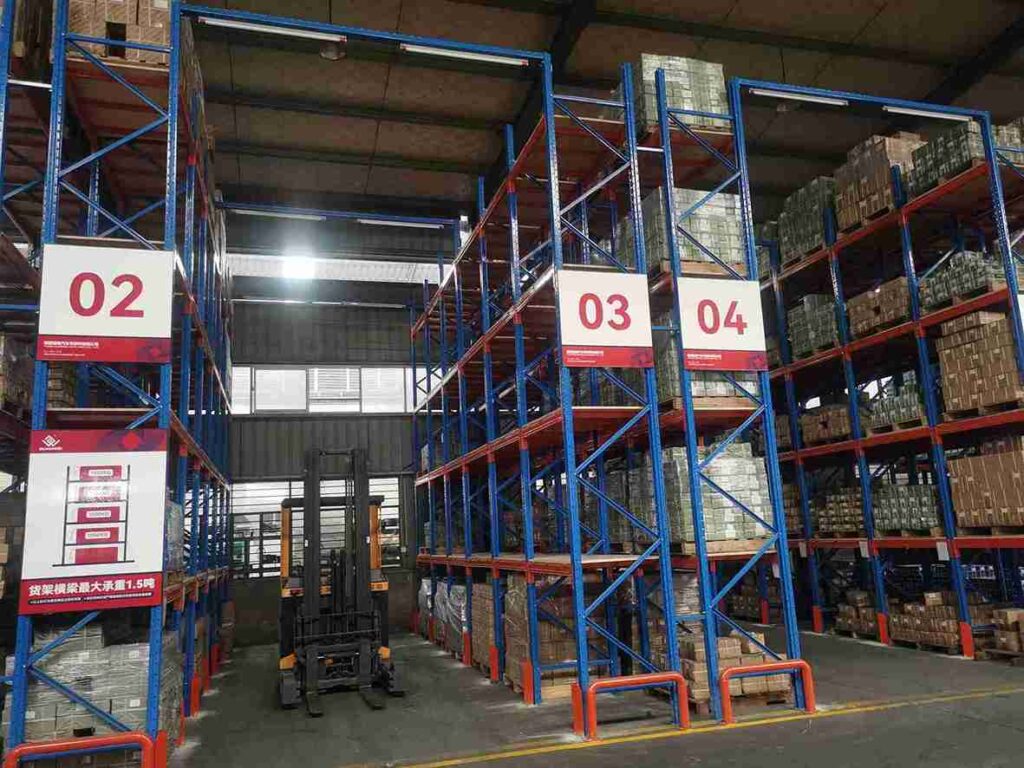
Understanding the precise mechanics and capabilities of this equipment is crucial for informed decision-making. A reach truck for narrow aisle duty is a specialized piece of materials handling equipment engineered for a singular purpose: to place and retrieve unit loads in storage aisles where a counterbalance truck cannot operate efficiently or safely.
Core Operating Principle: The Reach Mechanism.
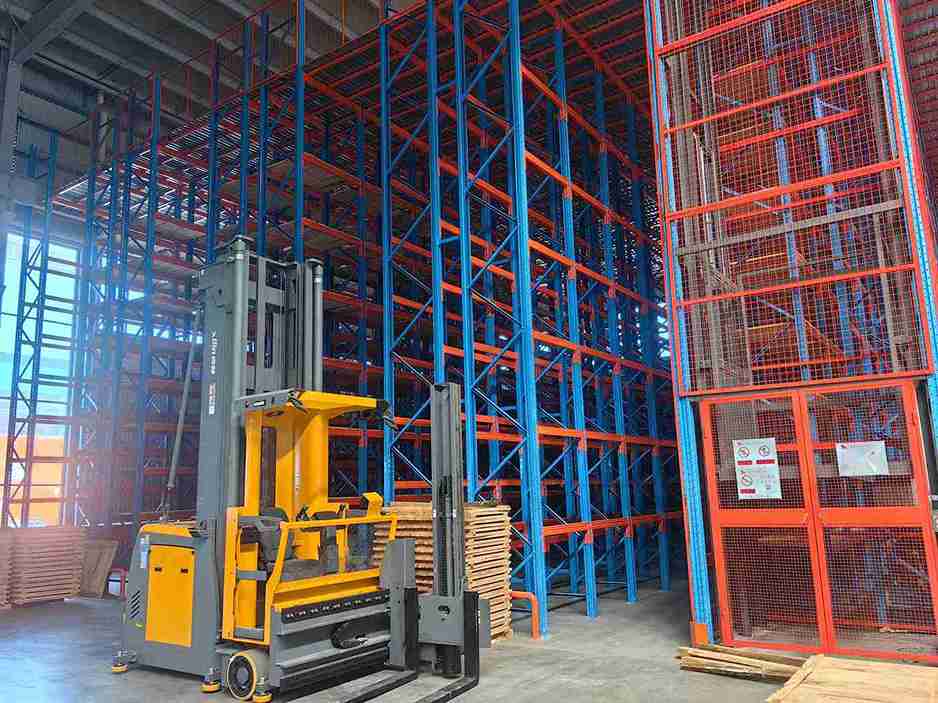
The defining feature that enables the narrow aisle capability is the reach mechanism itself. Unlike a counterbalance truck which requires space to turn and position its entire mass perpendicular to the rack face, a reach truck for narrow aisle work keeps its body within the aisle. Its forks extend forward (or “reach”) from the truck’s chassis to engage the load. This allows the machine to service storage locations while operating in aisles as narrow as 1.8 to 2.3 meters for standard pallets, compared to the 3.5 meters or more required by a counterbalance model. This fundamental design principle is what unlocks the dramatic gains in storage density.
Critical Design Considerations for Demanding Environments.
Not all reach trucks for narrow aisle applications are created equal, especially when destined for the challenging conditions found in many global markets. Specifying the right configuration is paramount:
Mast and Carriage Integrity: Equipment must be built for high-cycle, multi-shift operations. This demands robust mast designs with high-quality roller bearings and carriage structures that resist deflection under load, ensuring precision and longevity.
Environmental Hardening: Electronics must be protected against pervasive dust in arid regions and high humidity in tropical climates. Sealed controllers, conformal-coated circuit boards, and corrosion-resistant components are non-negotiable for reliable uptime.
Power and Drive Systems: Three-phase AC drive motors are now the standard for reach trucks for narrow aisle operations, offering superior torque, smoother control, and higher energy efficiency compared to older DC systems. The integration of regenerative braking is a key feature, converting braking energy back into battery charge.
Operator-Centered Design: The cabin is the productivity cockpit. Features such as full-color multi-function displays, intuitive hydraulic control levers, adjustable seating, and 360-degree visibility are not luxuries; they are tools that reduce fatigue, minimize errors, and maximize safe throughput per shift.
Synergy with High-Density Storage Configurations.
The true power of reach trucks for narrow aisle strategies is realized when the truck is perfectly matched to the storage infrastructure. These trucks are the ideal partners for:
Selective Pallet Racking (Narrow-Aisle Variant): The most common and flexible solution, allowing direct access to every pallet.
Double-Deep Racking: Utilizing reach trucks for narrow aisle systems equipped with telescoping forks or shuttle devices to store two pallets deep, effectively doubling storage density while maintaining good selectivity.
Pallet Flow Systems: Reach trucks for narrow aisle loading positions feed dynamic FIFO lanes, ideal for high-turnover or date-sensitive goods common in the food and beverage sectors prevalent in these markets.
Quantifying the Transformation: The Pathway to 30%+ Operational Savings
The claim of significant cost reduction is not theoretical; it is a measurable outcome derived from interconnected efficiencies. Consider a comparative model between a legacy warehouse and one optimized for reach trucks for narrow aisle.
Scenario Analysis: Legacy vs. Optimized Warehouse
A facility covering 12,000 square meters with a clear height of 8 meters stores approximately 9,600 pallets using counterbalance trucks in 3.6-meter aisles (density: ~0.8 pallets/sqm).
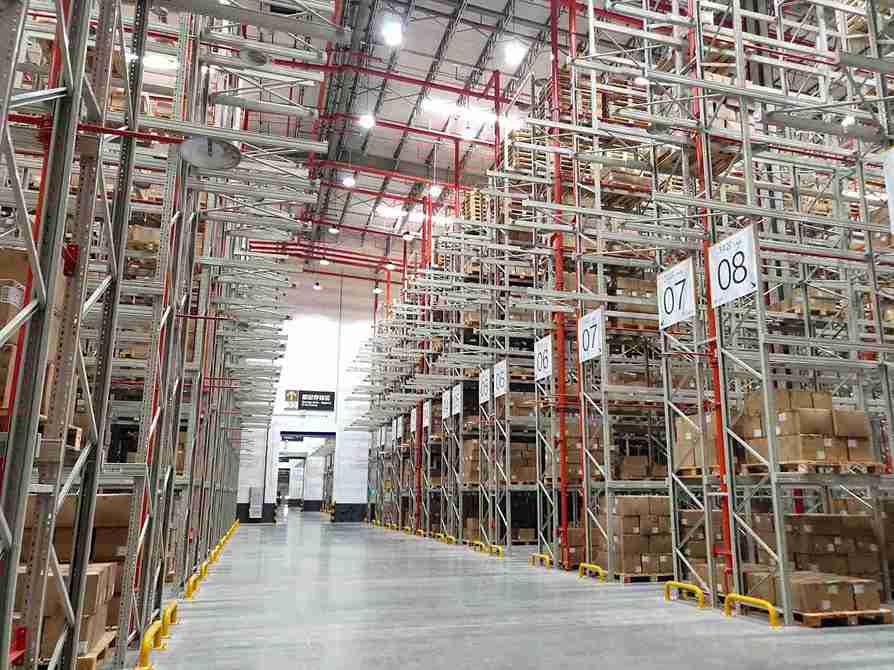
An optimized design utilizing the same floor area but a 10.5-meter clear height and reach trucks for narrow aisle operating in 2.2-meter aisles can store approximately 17,500 pallets (density: ~1.46 pallets/sqm).
The Savings Breakdown:
Real Estate / Capital Avoidance: To store 17,500 pallets the old way would require nearly 22,000 square meters. The optimized design defers the capital expenditure for an additional 10,000 square meters of building space—a monumental saving.
Equipment Fleet Efficiency: Due to reduced travel distances and higher throughput rates, the number of reach trucks for narrow aisle duties required often falls 20-30% short of the number of counterbalance trucks needed for the same volume of work. This reduces upfront capital outlay and ongoing maintenance costs.
Energy Expenditure: Electric reach trucks for narrow aisle operations consume significantly less energy per pallet moved than internal combustion alternatives. Factoring in lower travel distances and regenerative braking, total energy costs can drop by 40-60%.
Labor Productivity: Operators of reach trucks for narrow aisle equipment typically achieve 25-40% more pallet movements per hour due to reduced travel, faster lift/lower speeds, and more precise handling. This allows a facility to manage growth with a slower expansion of its labor force.
Damage and Shrinkage Reduction: The structured environment and superior visibility of reach trucks for narrow aisle systems can reduce inventory damage by 60-80%, directly preserving gross margin.
When these levers are pulled simultaneously, the compounding effect on the bottom line is profound. A 30% reduction in total operational costs is a conservative and consistently achievable target, with return on investment (ROI) periods typically falling between 18 and 36 months.
Building the Ecosystem: The Triad of Racking, Trucks, and Intelligence
A reach truck for narrow aisle task is only as effective as the system it serves. Success hinges on the seamless integration of three core components.
The Structural Backbone: Engineered High-Density Racking. The racking is the static infrastructure that defines the storage logic. It must be designed and installed to exacting standards to ensure safety and performance for reach trucks for narrow aisle operations.
Precision and Tolerance: Upright frames must be plumb, beams must be level and securely locked, and the entire assembly must align within tight tolerances to allow the reach trucks for narrow aisle to operate smoothly and safely at height.
Load Capacity and Configuration: The racking design must account for not just the static weight of the stored goods, but also the dynamic forces imposed during loading and retrieval by the reach trucks for narrow aisle. This includes considerations for seismic activity in certain geographies.
Future-Proofing: A well-designed system is modular and adaptable. It should allow for easy reconfiguration of beam levels to accommodate changing pallet dimensions or the future integration of more automated systems.
The Control Layer: Warehouse Management Software (WMS) and Telematics. To orchestrate the movement of reach trucks for narrow aisle fleets for maximum efficiency, a digital brain is essential. A proficient WMS does more than track inventory; it optimizes the workflow.
Task Interleaving and Slotting: The WMS can intelligently sequence tasks—combining a put-away and a retrieval in the same aisle—to minimize deadhead travel for the reach trucks for narrow aisle. It can also assign storage locations based on product velocity (ABC analysis), placing fast-moving items in the most accessible zones.
Integration with Fleet Telematics: Onboard sensors on the reach trucks for narrow aisle feed real-time data into a telematics platform. Managers gain visibility into operator performance metrics, battery status, fault codes, and utilization rates. This data-driven insight enables proactive maintenance, targeted retraining, and continuous process improvement, ensuring the fleet of reach trucks for narrow aisle is always performing at its peak.
The Automation Continuum: From Reach Trucks to Autonomous Mobility
Implementing a high-density system with reach trucks for narrow aisle at its core does not represent a dead-end investment. On the contrary, it establishes the perfect foundational infrastructure for future automation, allowing for a scalable, phased investment approach.
AGV/AMR Integration: The clean, consistent, and obstacle-free aisles required for efficient reach trucks for narrow aisle operation are identical to the pathways needed for Automated Guided Vehicles (AGVs) or Autonomous Mobile Robots (AMRs). These robots can be deployed to handle horizontal transport of pallets to and from the racking faces, working in tandem with the reach trucks for narrow aisle (or human operators on the trucks) to form a semi-automated, highly efficient material flow.
Gateway to AS/RS: For facilities with extremely high volumes or SKU counts, the dense storage block created for reach trucks for narrow aisle can evolve. The same racking structure can often be adapted to become the storage matrix for a fully automated mini-load or unit-load AS/RS, with the original reach trucks for narrow aisle fleet potentially redeployed to other value-added tasks or expansion areas. This strategic pathway protects and extends the value of the initial investment.
Tailoring Solutions for Regional Operational Realities
A one-size-fits-all approach fails in diverse global markets. Success with reach trucks for narrow aisle implementations requires deep localization of the solution set.
Adapting to African Logistics Hubs. Projects in Mombasa, Accra, or Durban must account for specific challenges:
Power Quality and Availability: Specifications for reach trucks for narrow aisle fleets include high-efficiency motors and chargers tolerant of voltage fluctuations. Battery sizing is calculated to ensure full-shift operation, and fast-charge solutions are recommended to leverage generator power during outages effectively.
Environmental Contaminants: Enhanced air filtration for hydraulic and cooling systems, along with sealed connectors, protects the electronics of reach trucks for narrow aisle equipment from pervasive dust.
Localized Support Networks: Establishing training programs for local technicians and maintaining strategic inventories of critical spare parts within the region are essential components of the offering, ensuring maximum uptime for the reach trucks for narrow aisle fleet.
Meeting Latin America’s Industrial Diversity. From the mining sector in Chile to the perishable goods exporters in Peru, requirements vary widely:
Cold Storage Optimization: Specially configured reach trucks for narrow aisle duties for cold environments (down to -30°C) include cold-rated hydraulics, insulated and heated operator cabins, and special tires that remain pliable at low temperatures.
Heavy-Duty Applications: For manufacturing and steel sectors, high-capacity models of reach trucks for narrow aisle equipment (2.5 to 3.5 tons) with durable components are specified to handle dense, heavy unit loads.
Compliance-Driven Industries: In pharmaceutical and chemical warehousing, the traceability and accuracy enabled by the WMS-controlled reach trucks for narrow aisle environment are critical for meeting stringent regulatory standards for lot tracking and FIFO/FEFO compliance.
A Blueprint for Implementation: From Vision to Operational Reality
Deploying a successful reach trucks for narrow aisle centric system is a meticulous process, best executed in clear, managed phases.
Phase 1: Comprehensive Audit and Digital Simulation. The process begins with data, not products. A detailed analysis of SKU profiles, historical turnover data, and future growth projections is conducted. Using advanced simulation software, a digital twin of the proposed warehouse is built. This model, populated with virtual reach trucks for narrow aisle units, runs thousands of simulated operational hours to validate throughput, identify potential bottlenecks, and provide a data-backed projection of ROI before any physical work begins.
Phase 2: Phased Deployment and Capability Building. Installation is planned to minimize disruption to ongoing operations, often executed in defined sections or during lower-activity periods. Parallel to this, a rigorous training program commences. Operators receive hands-on instruction on the new reach trucks for narrow aisle equipment, focusing on safety protocols, advanced handling techniques, and basic troubleshooting. Maintenance teams are trained on preventative maintenance schedules and component-specific care.
Phase 3: Performance Management and Continuous Optimization. Post-go-live, the system enters a tuning phase. Data from the WMS and reach trucks for narrow aisle telematics is analyzed to refine tasking rules, adjust slotting profiles, and monitor agreed-upon Key Performance Indicators (KPIs). Regular review meetings ensure the system not only meets but exceeds its performance targets, driving a culture of continuous improvement around the reach trucks for narrow aisle operations.
Conclusion: Forging a Competitive Advantage Through Strategic Density
In the fast-paced, cost-conscious markets defining global trade’s new frontiers, operational excellence is the ultimate competitive weapon. The strategic integration of reach trucks for narrow aisle systems represents a decisive move from reactive space management to proactive, profit-focused warehouse design. It is an investment that pays dividends not only in direct cost savings but also in enhanced agility, accuracy, and scalability.
For decision-makers across Africa, Latin America, the Middle East, and Southeast Asia, the question is no longer whether to increase storage density, but how to do so most effectively and resiliently. The evidence is clear: a systematic approach centered on high-quality, appropriately specified reach trucks for narrow aisle applications, embedded within a thoughtfully designed racking ecosystem and guided by intelligent software, provides a robust, future-ready answer. This is the blueprint for transforming the warehouse from a cost center into a strategic, value-driving asset, capable of powering growth and securing market leadership in the years to come.
Frequently Asked Questions (FAQs)
Q1: How does the total cost of ownership (TCO) for a fleet of electric reach trucks for narrow aisle compare to LPG/diesel forklifts over a 5-year period?
While the upfront purchase price of high-quality electric reach trucks for narrow aisle can be higher, the TCO analysis overwhelmingly favors them. Over five years, the savings from drastically lower energy costs (electricity vs. fuel), reduced maintenance (fewer moving parts, no engine oil/transmission fluid/filter changes), and longer component life result in a significantly lower cumulative cost. When the productivity gains (more pallets moved per shift) and the avoided costs of damage are factored in, the economic case for electric reach trucks for narrow aisle becomes compelling. A detailed TCO model based on local energy and labor rates can be provided to illustrate this.
Q2: Our products are not on standard pallets; we use slip sheets, non-standard sizes, or unstable loads. Can reach trucks for narrow aisle still handle these?
Yes, but it requires careful specification. Reach trucks for narrow aisle operations can be equipped with a variety of specialized attachments to handle non-standard loads. Push/pull attachments are ideal for slip sheets. Carton clamps can handle unitized loads without pallets. Fork positioners can adjust to different pallet widths. For unstable loads, features like electronic load stabilizers or mechanical sideshifters are critical. The key is a thorough analysis of the load portfolio during the design phase to ensure the reach trucks for narrow aisle are configured with the right combination of mast, carriage, and attachment for safety and efficiency.
Q3: What specific site preparation is required before installing a narrow aisle system with reach trucks?
Proper site preparation is crucial for performance and safety. The two most critical factors are floor flatness and lighting. The floor in the operating aisles must be within strict tolerances for levelness; excessive undulation can cause the reach trucks for narrow aisle to sway when elevated, creating a safety hazard and risking rack impact. A professional floor survey is recommended. Secondly, high-quality, uniform lighting at the rack face levels is essential for operator visibility and accuracy, especially when handling high-level storage locations. Other preparations may include ensuring adequate charging infrastructure and marking clear traffic lanes outside the narrow aisles.
Q4: How do we calculate the right number of reach trucks for narrow aisle needed for our operation?
This is a calculated process based on throughput data, not a rule of thumb. Key inputs include: total number of pallets moved in/out per shift, average travel distances (from receiving to storage, and from storage to shipping), average lift heights, required peak throughput rates, and planned break schedules for operators and batteries. Using simulation software or established industrial engineering formulas, analysts model the duty cycle to determine the number of reach trucks for narrow aisle required to meet throughput targets with optimal utilization, avoiding both under-staffing (bottlenecks) and over-provisioning (wasted capital).
Q5: What are the critical safety protocols unique to operating in narrow aisles with reach trucks?
Safety is paramount. Key protocols include:
1) Strict Aisle Access Control: Implementing physical or procedural controls to ensure only authorized reach trucks for narrow aisle enter the narrow aisles, and that no pedestrians are permitted inside.
2) Speed Management: Using onboard systems to automatically reduce travel and lift speeds when the truck is elevated.
3) Load Handling Discipline: Operators must be trained to always travel with the load lowered and to inspect loads for stability before retrieval.
4) Rack Protection Systems: Installing column guards, end-of-aisle barriers, and high-visibility rack posts to minimize damage from incidental contact.
5) Comprehensive Operator Certification: Ensuring every operator of reach trucks for narrow aisle equipment undergoes formal, hands-on training and evaluation specific to the narrow aisle environment.
If you require perfect CAD drawings and quotes for warehouse racking, please contact us. We can provide you with free warehouse racking planning and design services and quotes. Our email address is: jili@geelyracks.com