📐 "First 50 Enterprise Queries Get Custom 3D Warehouse Design" Plan


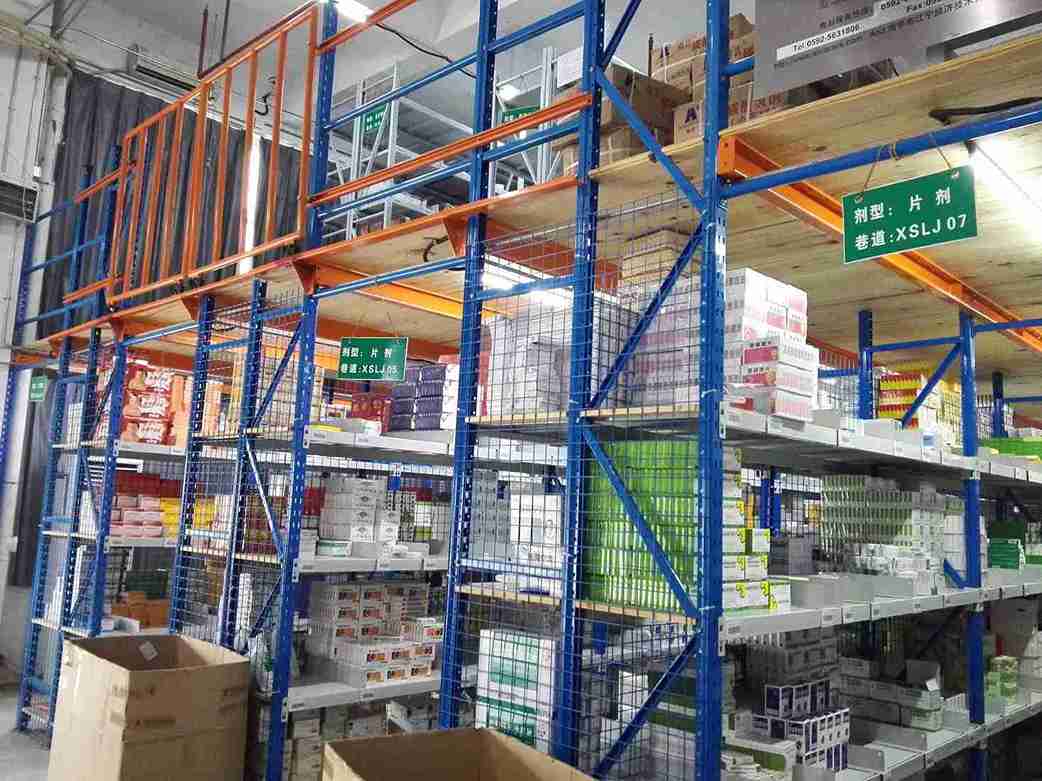
The Critical Role of a Purpose-Built Pharmaceutical Storage Racking System in Modern Supply Chains
The global pharmaceutical supply chain is a complex and high-stakes network, where the integrity of products is paramount. Within this network, the warehouse is not a passive holding area but an active, critical control point. The choice of storage infrastructure, therefore, becomes a strategic business decision. A standard racking system for pharmaceutical storage is fundamentally inadequate for this environment.
What is required is a purpose-built, engineered racking system for pharmaceutical storage designed from the ground up to address the unique triad of challenges in the pharma sector: uncompromising regulatory compliance, stringent product integrity demands, and the need for operational excellence. A specialized racking system for pharmaceutical storage acts as the backbone of the entire logistics operation, influencing everything from air quality in cleanrooms to the speed and accuracy of order fulfillment.
Investing in a properly designed racking system for pharmaceutical storage is not an expense; it is a direct investment in risk mitigation, brand protection, and supply chain resilience. Companies that recognize this shift from commodity shelving to an integrated storage ecosystem position themselves for sustainable growth in an increasingly competitive and regulated market.
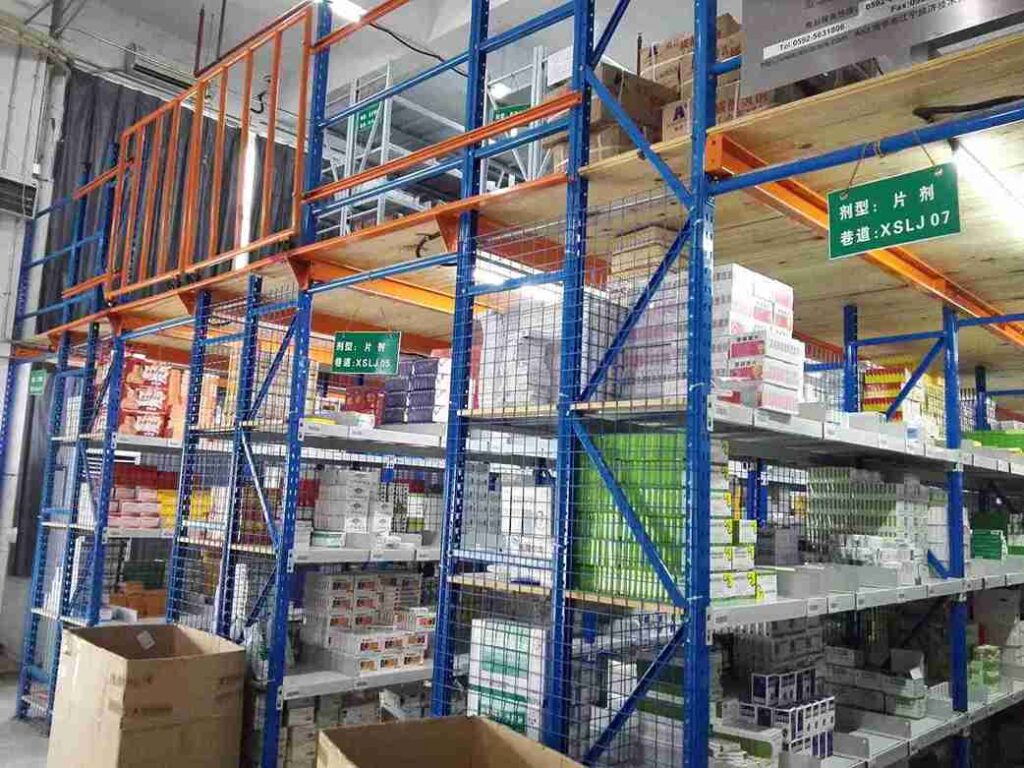
H3: Advanced Material Considerations for Superior Pharmaceutical Racking Systems
The performance and safety of any racking system for pharmaceutical storage begin with the fundamental materials used in its construction. These materials must be selected not only for their load-bearing capabilities but also for their interaction with the stored products and the storage environment.
High-Strength, Low-Alloy Steels: For a heavy-duty racking system for pharmaceutical storage, the use of high-tensile, low-alloy steel is non-negotiable. This material offers a superior strength-to-weight ratio, allowing for taller, more slender structures that maximize the available cubic space within a warehouse without sacrificing stability or safety. The inherent durability of this steel ensures that the racking system for pharmaceutical storage can withstand the dynamic loads and occasional impacts inherent in a busy distribution center.
Advanced Surface Technologies for Contamination Control: The finish of a racking system for pharmaceutical storage is a critical component of its contamination control strategy. Beyond standard powder coating, several advanced options exist:
Electrostatic Epoxy Coatings: These coatings provide an exceptionally hard, smooth, and non-porous surface that is highly resistant to chipping, scratching, and chemical corrosion. This seamless surface prevents the shedding of particulate matter, a crucial attribute for any racking system for pharmaceutical storage located near packaging or filling lines.
Zinc-Rich Primers with Topcoats: For environments with high humidity or where corrosion resistance is a priority, a multi-stage process involving a zinc-rich primer followed by a durable topcoat provides cathodic protection to the steel. This creates a robust racking system for pharmaceutical storage capable of withstanding the demanding conditions of certain climatic zones in Southeast Asia or Latin America.
Composite and Polymer Components: In specific areas, such as shelving for smaller components or work-in-progress items, the use of medical-grade polymers or composite materials can be advantageous. These materials are inherently corrosion-proof, easy to clean, and can be designed without sharp edges, further enhancing the safety and cleanability of the overall racking system for pharmaceutical storage.
H2: The Digital Twin: Leveraging Technology in Racking System Design
The process of designing an optimal racking system for pharmaceutical storage has been revolutionized by digital twin technology. This involves creating a highly detailed virtual model of the entire storage facility that is dynamically linked to its physical counterpart.
From Static CAD to Dynamic Simulation: While traditional CAD models provide a static layout, a digital twin for a racking system for pharmaceutical storage is far more powerful. It integrates data from the Warehouse Management System (WMS), inventory levels, and even the operational logic of automated guided vehicles (AGVs).
This allows engineers to simulate a full day’s—or a full month’s—worth of activity. They can stress-test the proposed racking system for pharmaceutical storage under peak season volumes, model the impact of introducing a new product line, or optimize the placement of fast-moving SKUs to minimize travel time. This data-driven approach de-risks the investment by validating the design’s performance before a single piece of steel is fabricated.
Lifecycle Management and Future-Proofing: The digital twin does not become obsolete after installation. It serves as a living document for the racking system for pharmaceutical storage. When modifications or expansions are planned, the digital model can be updated to test different scenarios seamlessly. This facilitates flawless future-proofing, ensuring that the initial investment in a custom racking system for pharmaceutical storage continues to deliver value for decades. This long-term perspective is a hallmark of a strategically planned racking system for pharmaceutical storage, setting it apart from short-term, reactive solutions.
H3: Specialized Racking Configurations for Unique Pharmaceutical Segments
The term “pharmaceuticals” encompasses a vast range of products, each with its own storage logistics. A world-class provider will have deep experience in tailoring the racking system for pharmaceutical storage for these niche segments.
Racking for Biologics and Cell & Gene Therapies: These products often have extreme sensitivity to temperature, shock, and vibration. The racking system for pharmaceutical storage for these products may incorporate specialized damping materials, integrated monitoring sensors at every pallet location, and be designed for ultra-low temperature (ULT) freezers, requiring materials that remain ductile at -80°C. The precision required for this racking system for pharmaceutical storage is unparalleled.
Narcotics and Controlled Substances Storage: Security is the primary driver here. A racking system for pharmaceutical storage for controlled substances often integrates directly with caged areas or vaults. The design may include reinforced structures, dedicated and isolated aisles with access control logging, and specialized locking mechanisms for individual pallet locations, creating a secure racking system for pharmaceutical storage that meets DEA and other international regulatory requirements.
Clinical Trials and Investigational Medicinal Products (IMPs): Storage for clinical supplies requires impeccable segregation and traceability. The racking system for pharmaceutical storage must be highly flexible, easily reconfigurable to accommodate different pallet sizes and study protocols, and designed with unambiguous visual management for blinding and randomization codes. This highly adaptable racking system for pharmaceutical storage is critical for maintaining the integrity of clinical trial data.
H2: The Synergy Between Racking and Material Handling Equipment (MHE)
A racking system for pharmaceutical storage does not operate in a vacuum. Its performance is inextricably linked to the Material Handling Equipment (MHE) that operates within it. A truly integrated design considers this symbiosis from the outset.
Narrow-Aisle and Very-Narrow-Aisle (VNA) Applications: To maximize storage density, many facilities opt for narrow-aisle configurations. This requires a specific type of racking system for pharmaceutical storage engineered with exceptional vertical alignment and precision to guide the tall, slender VNA forklifts. The floor flatness tolerances and the racking’s dimensional accuracy are critical for the safe operation of this equipment within the racking system for pharmaceutical storage.
Integration with Conveyor and Sortation Systems: In a fully automated distribution center, the racking system for pharmaceutical storage must interface perfectly with conveyor systems that bring goods to be stored and take them away for dispatch. The design of the racking system for pharmaceutical storage will include dedicated pick-up and drop-off (P&D) points at the correct heights and with the necessary clearances to ensure a smooth transfer of loads between the static storage and the dynamic conveyor systems. This seamless integration is a key benefit of a well-planned racking system for pharmaceutical storage.
H4: The Role of Professional Certification and International Standards
Given the critical nature of its function, a racking system for pharmaceutical storage must adhere to rigorous international engineering and safety standards. Reputable providers will design and manufacture in accordance with standards such as the Federation Européenne de la Manutention (FEM) 10.2.02, which governs the design of steel storage pallet racking. Seismic design, crucial for facilities in regions like Central Asia and parts of South America, should follow recognized codes like ASCE 7 or Eurocode 8.
Furthermore, the installation of the racking system for pharmaceutical storage should be carried out by certified installers, and the final structure should be inspected and certified by an independent, qualified racking inspector (SARI – Storage Equipment Manufacturers’ Association Registered Installer). This provides the client with independent verification that their racking system for pharmaceutical storage has been installed correctly and is safe for use, a critical component of operational due diligence.
Conclusion: The Strategic Imperative of a Custom-Engineered Racking Solution
In conclusion, the operational, regulatory, and economic demands of the modern pharmaceutical industry render generic storage solutions obsolete. The deployment of a professionally engineered, custom racking system for pharmaceutical storage is a strategic imperative for any organization serious about product safety, supply chain efficiency, and long-term profitability. Such a system is far more than a collection of steel beams; it is a sophisticated, integrated ecosystem that actively supports compliance, enhances product integrity, and drives operational excellence.
From the initial selection of advanced materials to the final implementation guided by digital twin technology, every aspect of a world-class racking system for pharmaceutical storage is deliberated and optimized. The offer of a free warehouse layout design is more than a service—it is an invitation to begin a strategic partnership, to collaboratively engineer a storage infrastructure that transforms a logistical challenge into a durable competitive advantage. For pharmaceutical companies operating on a global scale, there is no more critical foundation than a robust, intelligent, and future-proof racking system for pharmaceutical storage.
Frequently Asked Questions (FAQs)
1. How does the design of a racking system for pharmaceutical storage differ for a bulk raw material warehouse versus a finished goods distribution center?
The design priorities shift significantly. A racking system for pharmaceutical storage for raw materials often prioritizes high-density, bulk storage (e.g., using drive-in racking or pallet shuttle systems) for large quantities of fewer SKUs, with a focus on FIFO for materials with shelf life.
Conversely, a racking system for pharmaceutical storage for a finished goods DC is designed for high-speed order fulfillment, prioritizing selectivity and easy access to a vast number of SKUs, often integrating with sortation systems and pick modules. The configuration of the racking system for pharmaceutical storage is entirely driven by the different workflow demands.
2. What specific documentation is provided to support the validation of a new racking system for pharmaceutical storage?
A reputable supplier will provide a comprehensive validation support package (IQ/OQ). This includes material certificates for all steel and coatings, load test certificates, detailed “as-built” installation drawings, structural calculations signed by a certified engineer, and a full installation quality control report. This documentation package is essential for proving that the racking system for pharmaceutical storage is fit for its intended use and is a critical deliverable for the client’s quality assurance team.
3. Can an existing, non-compliant racking system be retrofitted or upgraded to meet pharmaceutical standards, or is a full replacement always necessary?
It is possible in some cases, but it requires a thorough structural audit. A professional assessment can determine if a racking system for pharmaceutical storage can be brought into compliance through measures like reinforcing upright frames, replacing beams with higher-capacity versions, adding decking for cleanability, and applying a new, compliant paint finish. However, if the core structure is fundamentally inadequate, damaged, or poorly documented, a full replacement of the racking system for pharmaceutical storage is often the safer and more cost-effective long-term solution.
4. How is the fire safety of a racking system for pharmaceutical storage addressed, especially for high-bay facilities?
Fire protection is a critical design factor. A high-bay racking system for pharmaceutical storage presents unique challenges for sprinkler systems. The design must include specific considerations for in-rack sprinklers, which are installed within the racking structure itself to overcome the obstruction posed by stored pallets and ensure water can reach the seat of a fire. The layout of the racking system for pharmaceutical storage is coordinated with fire safety engineers to ensure compliance with NFPA or other local fire codes, including clearances around sprinkler heads.
5. What is the typical process for conducting a safety inspection on an operational racking system for pharmaceutical storage, and how often should it be performed?
A formal safety inspection of a racking system for pharmaceutical storage should be conducted by a trained and competent person at least annually, with more frequent visual checks by warehouse staff. The formal process involves a systematic audit of every component of the racking system for pharmaceutical storage, checking for upright frame alignment, beam connector damage, beam deflection, impact damage, and loose or missing safety locks.
The inspection results in a detailed report categorizing defects by severity and recommending immediate and long-term corrective actions to maintain the integrity and safety of the racking system for pharmaceutical storage.
Welcome to contact us, if you need warehouse rack CAD drawings. We can provide you with warehouse rack planning and design for free. Our email address is: jili@geelyracks.com