📐 "First 50 Enterprise Queries Get Custom 3D Warehouse Design" Plan


Pallet Racking Collapse: The Ultimate Guide to Prevention, Safety, and Compliance
In the high-stakes, fast-paced world of modern logistics, the silent sentinels of the supply chain are the storage racking systems towering over warehouse floors. While often taken for granted, their structural integrity is the bedrock upon which operational safety, inventory security, and business continuity rest. The specter of a pallet racking collapse haunts every warehouse manager who understands the catastrophic domino effect it can trigger.
A single pallet racking collapse is not merely an accident; it is a systemic failure that can lead to severe injuries, fatal consequences, massive inventory loss, crippling operational downtime, and devastating financial and legal liabilities. The term pallet racking collapse represents a clear and present danger that requires a sophisticated, multi-layered defense strategy.
This comprehensive guide, distilled from decades of global engineering and safety audit experience, moves beyond basic checklists. It provides a masterclass in understanding the mechanics of failure, implementing a bulletproof inspection regime, and making strategic decisions that can fundamentally eliminate the risk of a pallet racking collapse. For businesses operating in the dynamic markets of Southeast Asia, the industrial hubs of the Middle East, the growing logistics networks of Africa, and the expansive distribution centers of Latin America, the principles outlined here are universal.
By dissecting the root causes, detailing forensic-level inspection protocols, and exploring advanced engineering solutions like automated storage systems, this resource aims to transform any warehouse from a potential hazard zone into a paragon of safety and efficiency, thereby preventing any chance of a pallet racking collapse.

Deconstructing the Anatomy of a Pallet Racking Collapse
A profound understanding of how and why a pallet racking collapse occurs is the first critical step toward prevention. An industrial pallet racking system is a finely engineered ecosystem where each component interdependently shares the load. A failure in one element can initiate a progressive, often rapid, chain reaction leading to a total pallet racking collapse.
Upright Frames: The Spinal Column Under Constant Threat
The upright frames are the vertical backbone of the entire structure, bearing the compressive load of thousands of kilograms. They are typically constructed from high-strength, cold-formed steel, which is strong but surprisingly vulnerable to lateral impacts. The most common catalyst for a pallet racking collapse is damage to these uprights. A forklift mast or pallet impacting an upright, even at speeds as low as 3-5 mph, can create a dent or bow. This deformation is not just cosmetic; it critically compromises the steel’s ability to bear weight.
Industry studies, including those from the Rack Manufacturers Institute (RMI), indicate that a dent of just ½ inch (12mm) can reduce an upright’s load capacity by over 30%. In a high-bay warehouse, this single point of weakness can become the epicenter of a vertical progressive pallet racking collapse, where the failure of one bay pulls down its neighbors in a devastating domino effect. Preventing this specific failure mode is paramount to avoiding a catastrophic pallet racking collapse.
The Beam-Upright Connection: A Precision Point of Failure
The connection between the horizontal beams and the upright frames is a marvel of engineering simplicity, but it is also the system’s most vulnerable mechanical point. Whether using a teardrop, tab-and-slot, or bolt-together design, this connection relies on a perfect fit to transfer the load. Several failure modes can precipitate a pallet racking collapse from this point:
Impact-Induced Dislodgement: A lateral hit from a forklift truck can instantly knock the beam end out of its connector, causing the beam and its load to fall.
Connector Fatigue and Fracture: Chronic overloading or shock-loading can cause the thin steel of the connector to fatigue and crack over time, leading to a sudden, unannounced failure.
Improper Seating or Mismatched Parts: Using beams from one manufacturer with uprights from another, or failing to ensure the beam is fully seated and secured with safety locks, creates an immediate and severe hazard. This oversight is a frequent, and often overlooked, contributor to a pallet racking collapse.
The Domino Effect: From Localized Damage to Catastrophic Systemic Failure
Understanding the systemic nature of a pallet racking collapse is crucial. Modern racking is designed as a continuous structure. When one upright frame fails and buckles, the immense load it was supporting does not vanish; it is dynamically and violently redistributed to the adjacent frames. These neighboring frames are not engineered to handle this sudden, eccentric loading.
They, in turn, buckle and transfer the load further. This chain reaction, or domino effect, can propagate down an entire aisle in a matter of seconds, resulting in a total pallet racking collapse that can devastate an entire storage zone. This understanding underscores why a policy of immediate isolation and repair for any damage is non-negotiable for preventing a full-scale pallet racking collapse.

The Root Causes: A Forensic Look at Why a Pallet Racking Collapse Occurs
A proactive and effective strategy to prevent a pallet racking collapse requires a clear-eyed, data-driven analysis of the threats. Global incident data and internal audit findings consistently point to a predictable set of culprits.
Forklift Impact: The Unavoidable Operational Reality
Forklift and pallet truck impacts are responsible for the overwhelming majority of damage that leads to a pallet racking collapse. In a busy warehouse with narrow aisles and tight deadlines, collisions are an operational inevitability. The goal, therefore, is not to eliminate all impacts—an unrealistic target—but to manage and mitigate their consequences. This is achieved through a triad of measures: physical protection (column guards, rack guards), continuous operator training, and well-defined traffic aisles. Ignoring this reality significantly increases the statistical probability of a pallet racking collapse.
The Silent Threats: Chronic and Acute Overloading
Every component in a racking system has a meticulously calculated Safe Working Load (SWL). Acute overloading—placing a single pallet that exceeds the beam’s capacity—can cause an immediate, dramatic failure and trigger a pallet racking collapse. More dangerous, however, is chronic overloading. This occurs when a beam or upright is consistently loaded beyond its design capacity.
The result is not immediate failure but a gradual process of metal fatigue. The steel slowly develops micro-fractures until, without any apparent warning, it fails under a load it previously held. This insidious process is a common cause of a sudden, and seemingly inexplicable, pallet racking collapse, often blamed on “faulty equipment” when the root cause is operational.
The Foundation: Poor Pallet Quality and Load Instability
The racking system is only as strong as the load it supports. A critical, yet often overlooked, factor that can precipitate a pallet racking collapse is the integrity of the pallet and the stability of the load. Damaged, rotten, or distorted pallets can fail under load, causing a pallet to collapse. This not only creates a falling hazard but also shifts the load’s center of gravity, creating an unbalanced force on the beam that can dislodge it or transfer unexpected stress to the uprights. Similarly, poorly stacked or overhanging loads can create lever forces that the racking was not designed to withstand, increasing the risk of a pallet racking collapse.
Improper Installation and Unauthorized Modifications
A racking system is a certified, engineered structure. Unauthorized modifications—such as cutting beams to fit around pipes, drilling new holes in uprights for signage, or using makeshift shims to level frames—fatally compromise its structural integrity. These actions create stress concentration points that can initiate a failure. Furthermore, the system must be installed on a flat, level, and sufficiently strong concrete floor. An uneven foundation introduces twisting forces (torsion) into the upright frames, leading to premature wear and a heightened risk of a pallet racking collapse. Only certified professionals should be entrusted with installation and reconfiguration.
The Culture of Complacency: Lack of Systematic Inspection
Perhaps the single greatest contributor to a pallet racking collapse is a reactive, rather than proactive, maintenance culture. Without a formal, documented, and diligently followed inspection program, minor damage goes unnoticed and unaddressed. A small dent today becomes a larger one next month. Over time, this cumulative damage progressively weakens the system, moving it inexorably closer to its failure point. A “fix-it-when-we-see-it” approach is a guaranteed path toward a pallet racking collapse.

Building Your Defense: A Proactive Racking Safety Inspection Program
To effectively prevent a pallet racking collapse, a company must implement a multi-tiered inspection regime. This layered defense ensures that damage is identified and rectified at the earliest possible stage, long before it can escalate into a catastrophe.
Operator-Driven Daily Visual Checks: The First Line of Defense
Forklift operators are the eyes and ears on the front lines. They interact with the racking system more than anyone else. Empowering them with basic training to identify and report obvious damage is a powerful and cost-effective strategy to prevent a pallet racking collapse. They should be trained to look for:
Visibly bent, dented, or twisted uprights and beams.
Beams that appear loose, misaligned, or not fully seated in their connectors.
Leaning or out-of-plumb racking frames.
Missing or damaged safety locks on beam ends.
A simple, non-punitive reporting system—such as a digital app or colored tag system—is essential for encouraging consistent participation and creating a culture of shared responsibility for preventing a pallet racking collapse.
Formal Weekly/Monthly Inspections by Designated Supervisors
A designated warehouse safety officer or supervisor should conduct a more formal, documented inspection on a weekly or monthly basis. This inspection should be methodical and use a detailed checklist. Key activities include:
Physically checking that all beam connectors are fully engaged and that safety locks (e.g., beam safety clips) are present and functional.
Verifying that all load capacity plaques are legible, accurate, and undamaged.
Using a calibrated rack inspection gauge to measure any dents or bows found, classifying them according to RMI or FEM standards.
Checking the tightness of floor anchors and the condition of column guards.
This formalized process provides a crucial intermediate layer of oversight to catch issues missed in daily checks and is a cornerstone of any strategy to prevent a pallet racking collapse.
The Gold Standard: Annual Professional Racking Audits
An annual audit by a qualified, independent racking safety expert is not a luxury; it is a necessity for any serious operation. This is not a simple inspection; it is a forensic engineering assessment. A professional audit, like those offered by leading storage solution providers, includes:
Laser Alignment Checks: Using precision laser levels to measure any deviation from vertical (plumb) in the upright frames.
Damage Quantification: Systematically using a rack damage gauge to measure every dent and bow, categorizing them into “Green” (monitor), “Yellow” (schedule repair), and “Red” (unload and repair immediately) zones.
Load Beam Deflection Analysis: Checking for signs of overloading or fatigue in the horizontal beams.
Foundation and Anchor Integrity Check: Assessing the condition of the concrete floor and the security of the baseplate anchors.
Comprehensive Digital Reporting: Providing a detailed report with photos, a risk assessment matrix, and a prioritized, actionable plan for repairs or replacements. This report is vital for insurance compliance and demonstrating due diligence in preventing a pallet racking collapse.
Immediate Corrective Actions: Containing the Risk After Damage is Found
The discovery of damage demands a swift, disciplined, and standardized response to avert a potential pallet racking collapse.
Immediate Isolation: The affected bay, plus at least one bay on either side, must be immediately cordoned off with safety tape or barriers. A clear, highly visible “DO NOT USE” or “CONDEMNED” tag should be attached directly to the damaged component.
Safe Unloading: The damaged bay must be carefully unloaded, starting from the top level and moving downward. It is critically unsafe to attempt any repair on a loaded rack. This process itself must be supervised to avoid causing further instability.
Professional Severity Assessment: The damage must be evaluated against accepted standards (RMI/FEM) to determine the correct course of action. A minor scratch may only require monitoring, but any deformation exceeding permissible limits mandates professional repair.
Executing the Repair: For repairable upright damage, the industry-standard solution is the installation of a upright repair sleeve or column reinforcement. This is a high-strength steel sleeve that is bolted around the damaged section, effectively restoring and often exceeding the original load capacity. Damaged beams must always be replaced with genuine OEM parts, never repaired. Attempting a weld repair on a damaged beam or upright is dangerous and invalidates all engineering certifications, increasing the long-term risk of a pallet racking collapse.
The Strategic Evolution: Moving Beyond Repair to Risk Elimination with Automation
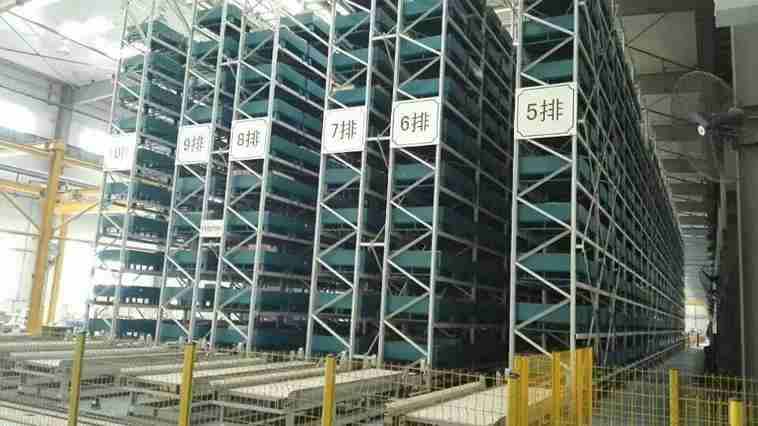
While a rigorous maintenance program can drastically reduce the risk, the most definitive way to eliminate the primary cause of a pallet racking collapse is to remove the forklift from the storage equation. This is the core value proposition of investing in automated storage and retrieval systems (AS/RS).
Engineering Out the Human Error Factor
In an AS/RS, such as a unit-load crane system or a pallet shuttle system, the storage and retrieval processes are handled by computer-controlled machines operating within the racking framework with millimeter precision. These systems run on integrated rails and are guided by lasers or encoders, making physical contact with the racking structure a virtual impossibility. By designing a “lights-out” or semi-automated warehouse, the primary cause of damage—vehicle impact—is engineered out of the operation. This represents the most technologically advanced and effective method to prevent a pallet racking collapse.
The Data-Driven Warehouse: Enhanced Monitoring and Load Integrity
Modern automated storage systems are equipped with a vast array of sensors and integrated Warehouse Management Software (WMS). They continuously monitor their own health and performance while ensuring that every single load is placed within its precise design parameters. This eliminates the risks of both chronic and acute overloading, two significant factors that can lead to a pallet racking collapse. The system’s software maintains perfect data integrity, knowing the weight and dimensions of every pallet, thereby enforcing the structural limits of the racking.
The Compelling Business Case for Automation
The decision to upgrade to automation is a strategic business investment with a clear and calculable return. When conducting a Total Cost of Ownership (TCO) analysis, businesses must factor in the direct and indirect costs of a traditional racking system: ongoing repairs, replacement parts, inventory loss from a potential pallet racking collapse, operational downtime, rising insurance premiums, and potential liability claims.
When these costs are accounted for, the investment in automated Storage Systems becomes compelling. It transforms a persistent cost center and risk liability (manual pallet racking) into a competitive advantage through unparalleled density, 99.99%+ accuracy, and dramatically higher throughput, all while rendering the threat of a pallet racking collapse virtually obsolete.
Navigating the Regulatory Landscape: Compliance as a Safety Framework
Adherence to international and local safety standards is not merely about legal compliance; it provides a proven framework for operational best practices that prevent a pallet racking collapse.
RMI (Rack Manufacturers Institute) & FEM 10.2.02: These are the leading design and application standards in North America and Europe, respectively. They provide the engineering basis for load capacities and, crucially, detailed guidelines for inspection and damage tolerance. Following these standards is the benchmark for professional practice.
OSHA and Local Regulatory Bodies: Regulations worldwide, such as OSHA’s General Duty Clause, mandate that employers provide a workplace free from recognized hazards. An unmaintained racking system that leads to a pallet racking collapse is a clear violation of this clause. A documented inspection and maintenance program is the primary evidence of due diligence.
Insurance Policy Requirements: Most commercial insurers now explicitly require proof of a formal racking safety management program, including annual professional audits. Failure to provide this documentation can lead to denied claims following an incident or even policy cancellation. Proactive management is key to mitigating insurable risk and preventing a financially devastating pallet racking collapse.
Conclusion: Forging a Culture of Uncompromising Safety
Preventing a pallet racking collapse is a continuous journey that blends engineering precision, operational discipline, and strategic foresight. It begins with a fundamental shift in perspective: viewing storage racking not as passive shelving, but as dynamic, critical infrastructure that demands respect and expert care. By implementing a rigorous, multi-tiered inspection program, taking immediate and correct action on damage, and understanding the transformative role that automated storage systems play in eliminating risk, businesses can protect their most valuable assets—their people, their product, and their profitability.
The journey to a collapse-proof warehouse is a deliberate and informed process, and it is a non-negotiable investment in a company’s sustainable future. A proactive approach to preventing a pallet racking collapse is the hallmark of a world-class logistics operation.
Frequently Asked Questions (FAQs)
1. How often should we formally train our warehouse staff on racking safety awareness?
Formal racking safety awareness should be a core module in all new-hire operator training. Furthermore, mandatory refresher courses should be conducted at least semi-annually to reinforce protocols and discuss any near-miss incidents. This continuous education is vital for maintaining a high level of vigilance against a pallet racking collapse.
2. Can we mix components from different racking manufacturers if they look the same?
Under no circumstances should components from different manufacturers be mixed. Racking systems are certified as complete, integrated units. Even if components appear physically identical, subtle differences in steel grade, manufacturing tolerances, and connector design mean they are not certified to work together. Mixing brands creates an enormous, unpredictable safety risk and is a direct pathway to a pallet racking collapse. Always use genuine OEM (Original Equipment Manufacturer) parts for repairs and expansions.
3. What is the typical lifespan of a well-maintained pallet racking system?
There is no fixed expiration date for a racking system. Its lifespan is entirely dependent on the operating environment, the frequency and severity of impacts, and the quality of the maintenance program. A system in a low-impact, well-managed warehouse can remain safe for 25-30 years with occasional component replacement. In contrast, a system in a high-volume, harsh environment may require significant refurbishment or replacement in under 10 years. The annual professional audit is the only reliable tool for assessing the remaining safe service life of your system and preventing an unexpected pallet racking collapse.
4. Are there specific foundation or floor requirements for high-bay racking installations?
Yes, this is a critical engineering consideration that, if ignored, can lead to a pallet racking collapse. The concrete floor must have a specified minimum compressive strength (typically 3000-4000 psi or higher) and must be exceptionally flat and level to prevent inducing stress into the racking frames. A professional site evaluation, including core sampling and floor flatness surveys, is mandatory before the installation of any high-bay or high-density system. Settling or an uneven base can create point loads that lead to premature failure.
5. How does seismic activity in certain regions affect racking design and safety?
In seismically active zones like parts of South America and Southeast Asia, standard racking designs are wholly inadequate. Seismic-rated racking is a specialized product engineered with specific bracing patterns, connection details, and base plate designs to withstand lateral forces and ground acceleration. If operating in such a region, it is imperative that the system was explicitly designed for the local seismic load requirements. This must be verified during a professional audit, as using non-seismic racking in a seismic zone dramatically increases the risk of a pallet racking collapse during an earthquake.
If you require perfect CAD drawings and quotes for warehouse racking, please contact us. We can provide you with free warehouse racking planning and design services and quotes. Our email address is: jili@geelyracks.com