📐 "First 50 Enterprise Queries Get Custom 3D Warehouse Design" Plan


Beyond Price Tags to True Value
The search for pallet shuttle system manufacturers signifies a pivotal moment for any logistics or warehouse professional. It represents a move beyond considering basic storage equipment to evaluating a strategic capital investment designed to solve pressing operational crises. The core challenge is not merely to find a supplier of hardware but to identify a partner capable of quantifying the profound impact a sophisticated pallet shuttle system will have on the bottom line. Generic pricing is not just useless in this context; it is misleading.
A deep, forensic, and custom Return on Investment (ROI) calculation is the only mechanism that can translate the engineering benefits of a pallet shuttle system into a clear, undeniable financial forecast. This document outlines the rigorous methodology employed by leading experts to build that precise financial model, ensuring that the decision to integrate a pallet shuttle system is justified by concrete data and strategic foresight, moving the conversation from cost to value, and from speculation to certainty.
Why a Generic Quote Fails: The Complex Value of a Custom Shuttle System
Requesting a standard price list for a pallet shuttle system is akin to asking for the price of a single component of a complex engine; it reveals nothing about the performance of the whole. The intrinsic value of a best-in-class pallet shuttle system is not encapsulated in the per-unit cost of its shuttle cars or racking beams. Instead, the value is generated by the seamless interplay of advanced hardware, intelligent software, and custom engineering, all tailored to the unique rhythm and constraints of a specific facility.
A low initial quote might exclude critical elements like system integration, software licensing, structural reinforcements, or adequate project management, leading to catastrophic cost overruns and project failure.
A truly custom pallet shuttle system is designed as a holistic solution. Its financial justification comes from its ability to redefine the economics of the warehouse operation. A sophisticated pallet shuttle system delivers value by creating a highly dense, ultra-efficient, and software-driven storage environment that operates with minimal human intervention. Therefore, a serious evaluation must bypass simplistic pricing and demand a detailed ROI analysis that answers the fundamental business question: How will this engineered system reduce my operating costs, protect me from risk, and enhance my service capabilities, and what is the exact financial return on the capital required?
The Foundation of Your Custom ROI Calculation: Key Performance Indicators We Analyze
Constructing an accurate and compelling ROI model for a pallet shuttle system is a data-intensive process. It requires a clear-eyed assessment of the current operational baseline to precisely measure the future improvements the system will deliver. Experts begin by conducting a thorough audit of several key performance areas.
Current Storage Density and Facility Costs
The primary driver for adopting a pallet shuttle system is often spatial efficiency. The analysis starts here:
Pallet Positions per Square Foot/Meter: A precise count of existing storage locations against the total facility footprint reveals the current utilization efficiency.
Clear Building Height Utilization: Most warehouses with conventional selective racking waste a vast amount of vertical space. Measuring the percentage of unused air space above the racking highlights the potential for a high-density pallet shuttle system to dramatically increase capacity without expanding the building’s footprint.
Real Estate Cost Analysis: Whether through mortgage payments, leasing costs, or the opportunity cost of unused space, every square meter has a value. Quantifying this cost is essential to calculating the savings generated by a denser pallet shuttle system installation.
Labor Economics: The Biggest Variable
In modern logistics, labor is the most volatile and significant operating expense. A proper audit dissects this completely:
Total Forklift Operator Cost: This extends far beyond hourly wages to include benefits, payroll taxes, training programs, insurance premiums, and overtime. The fully burdened cost of a single operator is often double their base salary.
Productivity and Utilization Metrics: Measuring actual pallets moved per operator per hour, alongside time-motion studies to identify non-value-added activities like long travel times, searching for SKUs, or waiting for instructions.
Multi-Shift Operations: The financial impact of a pallet shuttle system is magnified across multiple shifts. The model must account for labor savings over two or three shifts, where automated systems can run nearly continuously without added labor cost.
Recruitment, Retention, and Absenteeism: The hidden costs associated with high turnover in the material handling sector, including recruitment fees, training time for new hires, and productivity loss due to vacant positions.
Throughput Velocity and Accuracy
Speed is futile without precision. The baseline must capture:
Putsaway and Retrieval Rates: The current average time to put a pallet away into storage and to retrieve it for an order.
Order Cycle Times: The end-to-end time from order release to shipment staging. Inefficiencies in storage retrieval are a major bottleneck.
Inventory Accuracy Rate: The percentage discrepancy between digital inventory records and physical stock. Inaccuracies lead to costly cycle counts, stockouts, lost sales, and diminished customer trust.
The ROI Levers: How a Pallet Shuttle System Generates Hard Savings
A well-engineered pallet shuttle system directly and aggressively targets the KPIs listed above. The custom ROI model meticulously quantifies the financial impact of each improvement lever.
Lever 1: Dramatically Increased Storage Density
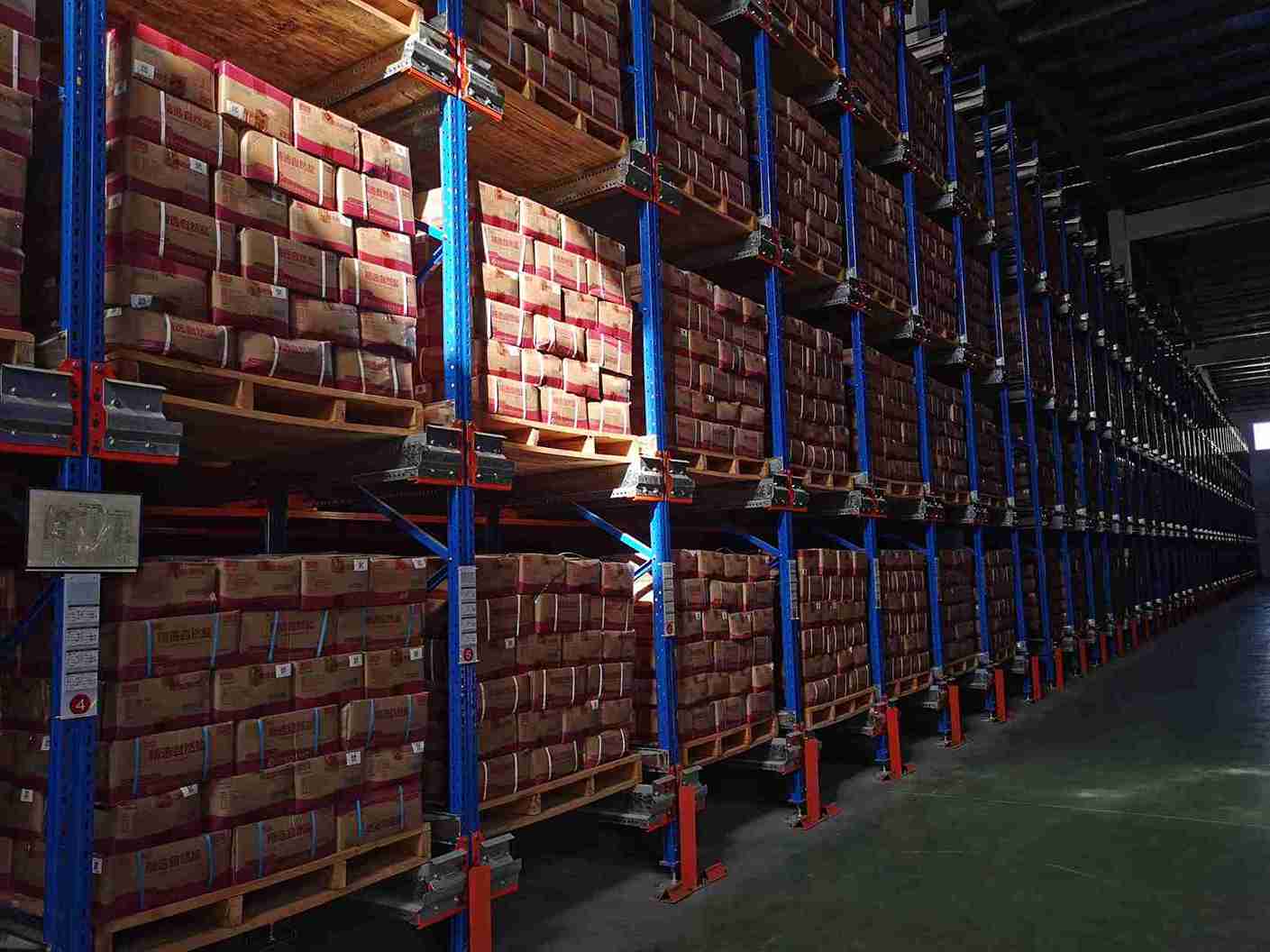
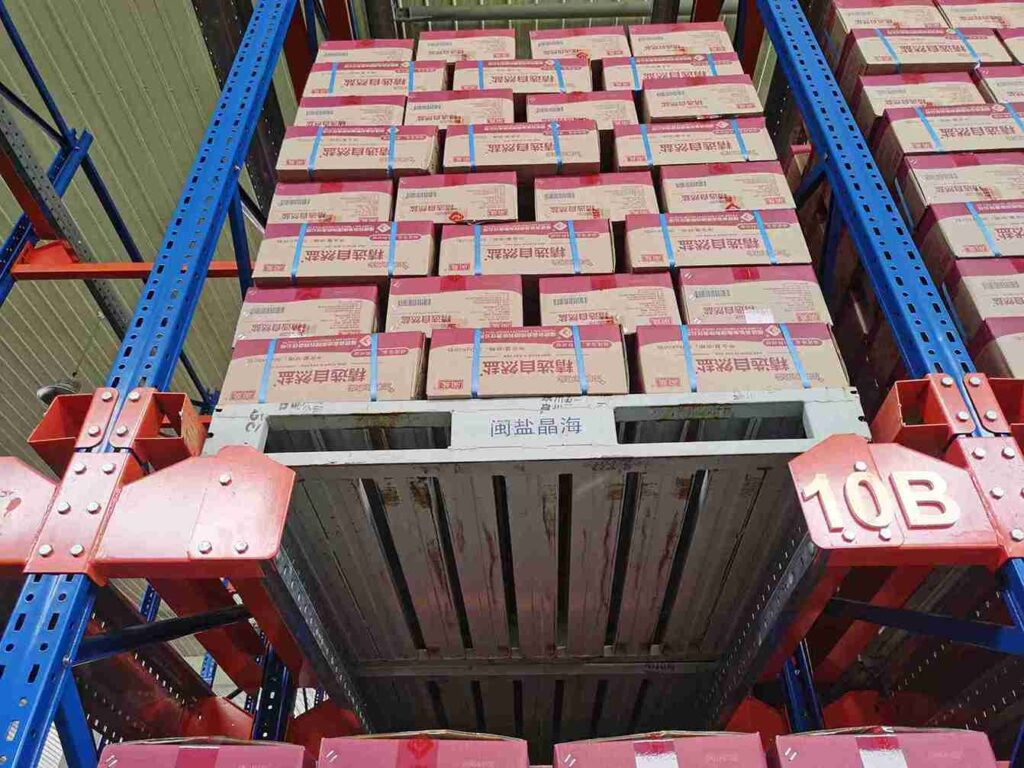
The design of a pallet shuttle system is the epitome of high-density storage. By operating within compact, multi-deep drive-in or flow-through racking configurations, it completely eliminates the wide aisles (often 3+ meters) required for traditional forklifts to maneuver.
The Calculation: Engineering simulations determine the new layout, typically achieving a 60-100% increase in pallet positions within the exact same warehouse footprint. The financial saving is calculated by multiplying the number of gained pallet positions by the company’s effective storage cost per position. For companies at capacity, this calculation often reveals that the pallet shuttle system helps avoid the monumental capital expenditure (CAPEX) of building a new facility or leasing additional space.
Lever 2: Radical Reduction in Labor Costs
This is frequently the most powerful driver of a fast ROI. A single operator can manage an entire fleet of shuttle cars from a workstation, overseeing the automated putaway and retrieval processes.
The Calculation: The model maps the direct reduction in required forklift operators per shift. For a multi-shift operation, automating the storage and retrieval functions with a pallet shuttle system can lead to saving 3-5+ full-time operator salaries and associated costs annually. This is a recurring, annualized saving that compounds over the system’s lifespan, making the payback period remarkably short.
Lever 3: Accelerated Throughput and Fewer Errors
Automation delivers relentless, predictable speed and flawless accuracy. A pallet shuttle system operates 24/7 without breaks, fatigue, or shifts changes, at a consistent, high speed.
The Calculation: The model projects the increase in pallet movements per hour (PPH), translating into faster order fulfillment, the ability to handle higher sales volumes without adding staff, and potential new revenue opportunities. Furthermore, a significant financial value is assigned to the near-elimination of mis-picks and inventory inaccuracies. For a large distribution center, a improvement in inventory accuracy directly protects revenue and reduces costly reconciliation efforts.
Lever 4: Enhanced Safety and Asset Protection
By minimizing human-operated forklift traffic within the storage aisles, a pallet shuttle system drastically reduces the risk of catastrophic accidents, product damage from impacts, and rack collisions.
The Calculation: While somewhat preventative, the model can factor in the potential for reduced insurance premiums and the direct savings from a lower rate of product damage. The avoidance of a single major incident—a rack collapse or a serious injury—can represent a saving that dwarfs other operational efficiencies.
Building Your Custom ROI Model: A Step-by-Step Walkthrough
The creation of a trustworthy ROI model is a collaborative and analytical process, not a sales exercise.
Step 1: In-Depth Discovery and Data Collection
The process is initiated with a collaborative deep-dive workshop. This involves collecting facility plans, CAD drawings, SKU data (including dimensions, weight, and velocity), current inventory profiles, and detailed flow patterns (receiving to storage, storage to picking, etc.). This phase is about building a complete digital twin of the current operation.
Step 2: Engineering the Optimal Layout
Using advanced simulation software, engineers design the optimal pallet shuttle system configuration. This determines the number of shuttles required, the number of levels and lanes, the location of picking stations, and how the system will integrate with any existing conveyor, sorter, or AGV/AMR systems. The simulation runs thousands of virtual cycles to predict throughput and validate the design before any metal is cut.
Step 3: The Investment Analysis (The “I” in ROI)
A transparent, all-inclusive investment proposal is prepared. This comprehensive quote leaves no room for surprises and includes:
Pallet Shuttle Hardware: All vehicles, rails, transfer cars, lifts, and charging systems.
Racking Structure: The high-density racking (e.g., drive-in, cantilever, mobile) engineered to support the dynamic loads of the pallet shuttle system.
Software & Controls: The critical Warehouse Execution System (WES) or control software that acts as the brain of the operation, managing the shuttle fleet and interfacing with the host WMS.
Professional Services: Full-scope project management, system integration, installation, and commissioning.
Ongoing Support: Comprehensive warranty terms and flexible service agreement options to ensure peak performance for years.
Step 4: The Return Analysis (The “R” in ROI)
Here, the custom report comes to life. The projected annualized savings across all levers are calculated:
Annual Labor Savings (across all shifts)
Annual Real Estate Avoidance Savings (or CAPEX deferral)
Annual Productivity Gain Value (throughput increase)
Annual Error Reduction & Safety Savings
These annual cash flows are then modeled against the total investment to generate the definitive financial metrics.
Presenting Your Findings: Key Financial Metrics You’ll Receive
The final deliverable is a professional investment-grade report, not a simple spreadsheet. It provides executives and finance teams with the standard metrics used to evaluate any major capital project:
Payback Period: The anticipated time (in months or years) for the cumulative annual savings from the pallet shuttle system to equal the total initial investment. For a well-designed system, this period typically falls between 2 to 4 years, an attractive horizon for most organizations.
Net Present Value (NPV): This calculation discounts the projected future annual savings back to today’s dollars, providing a clear picture of the project’s profitability in present-value terms. A strongly positive NPV indicates a highly valuable investment.
Internal Rate of Return (IRR): The effective annualized compounded return rate the project will generate. This rate is directly comparable to the company’s hurdle rate for other capital investments, making the decision objective and data-driven.
Case Study: ROI in Action – A 3rd-Party Logistics Provider
A representative example from industry experience (details anonymized):
A mid-sized 3PL company was at an impasse. Their largest client, a major food brand, demanded a 40% increase in allocated pallet positions for a new product line. Their existing facility was landlocked, and constructing a new building was financially prohibitive. Simultaneously, they struggled with a 20% vacancy rate in their forklift operator roles and soaring labor costs.
The Solution: A tailored high-density pallet shuttle system was engineered into their existing warehouse, utilizing the full clear height of the building. The design incorporated a semi-automated pallet shuttle system for deep-lane storage and a separate zone for faster-moving SKUs.
The Custom ROI Calculation Revealed:
Real Estate CAPEX Avoided: The system provided the required 40% plus an additional 45% capacity buffer, completely avoiding the need for a $3 million+ facility expansion.
Annual Labor Savings: $198,000 per year (achieved by reallocating 3 operators per shift to other value-added tasks and eliminating planned overtime).
Payback Period: 3.2 years on the capital outlay for the pallet shuttle system.
The clarity of the ROI model made the business case indisputable. The 3PL secured the client contract and significantly improved its profitability.
Why Your Choice of Manufacturer is an ROI Decision
The supplier selection process is intrinsically linked to the realized return on investment. The lowest-priced bid often carries the highest long-term risk. Evaluating manufacturers requires a focus on total value and partnership:
Software Intelligence and Analytics: The control software is the central nervous system of the pallet shuttle system. Its ability to optimize tasks, provide predictive analytics, and integrate seamlessly is paramount.
System Reliability and Design Redundancy: Inquiry about the Mean Time Between Failures (MTBF) for key components. A robust pallet shuttle system will have design redundancies, such as easy shuttle transfer between aisles, to mitigate downtime.
Global Service and Local Support: Ensure the manufacturer has a proven network of certified technicians and a responsive spare parts supply chain. Guaranteed response times should be part of the service-level agreement.
Industry Expertise and References: The best providers have a proven track record of deploying a reliable pallet shuttle system in similar industries and can provide client references who can speak to both the implementation process and the achieved results.
Conclusion: From Inquiry to Investment Clarity
The path to modernizing a warehouse with a pallet shuttle system is a journey from operational anxiety to financial confidence. It is a transition from being reactive to market pressures to being proactively in control. Insisting on a detailed, custom ROI calculation is the crucial mechanism that facilitates this shift. It transforms the dialogue from technical specifications and upfront costs to a strategic discussion about value creation, risk mitigation, and competitive advantage.
The data derived from a rigorous analysis provides the unequivocal justification needed to secure stakeholder buy-in and approve the investment. In the final analysis, a best-in-class pallet shuttle system is not an expense; it is a powerful engine for profitability and growth. The first step to unlocking that potential is a professional, data-backed assessment of what it can truly deliver for your business.
Frequently Asked Questions (FAQs)
1. How does a pallet shuttle system integrate with our existing Warehouse Management System (WMS)?
Integration is a critical success factor. A high-performance pallet shuttle system is governed by a Warehouse Execution System (WES) or a dedicated equipment controller. This system acts as a sophisticated intermediary. It receives tasks and orders from the higher-level WMS (e.g., “retrieve pallet ABC123 for order XYZ”). The WES then translates this command into an optimal series of actions for the pallet shuttle system, directing the specific shuttle vehicle to execute the retrieval in the most efficient sequence possible.
This communication happens via robust, standard APIs (Application Programming Interfaces), ensuring bidirectional data flow (e.g., confirming task completion, updating inventory location status) without disrupting the core WMS functionality.
2. What happens if a shuttle car breaks down? Will my entire operation grind to a halt?
System reliability is a primary design focus, and redundancy is engineered into a well-planned pallet shuttle system. In multi-aisle installations, shuttle cars are typically not permanently fixed to a single aisle. Using transfer cars or lifts at the end of aisles, a shuttle can be moved to replace a unit requiring maintenance.
Furthermore, the system is often designed with a slight overcapacity; the operation can continue at a slightly reduced throughput using the remaining vehicles while the faulty unit is serviced. Reputable manufacturers also offer 24/7 remote monitoring and rapid-response service agreements to minimize any potential operational impact, ensuring the pallet shuttle system maintains high availability.
3. Are pallet shuttle systems only suitable for large, high-volume operations?
While historically deployed in large distribution centers, the technology has evolved and become highly scalable. Modern, flexible pallet shuttle system designs are now a viable and financially attractive solution for small to mid-sized warehouses that face acute space constraints or severe local labor shortages. The ROI for a smaller pallet shuttle system can be just as compelling when the costs of unused vertical space, high labor expenses, and errors are accurately factored into the model. The key is a right-sized design, not the absolute size of the operation.
4. What type of pallets and loads are suitable for a pallet shuttle system?
These systems are highly adaptable but perform best with consistency. They are designed to handle standard-sized pallets (e.g., EUR, GMA) in good structural condition, as damaged or warped pallets can cause operational disruptions. A high-capacity pallet shuttle system can handle very heavy loads, often exceeding 1,500 kg (3,300 lbs). During the initial design and ROI analysis phase, a thorough review of your load spectrums—including dimensions, weights, and types of pallets—is conducted to ensure the proposed pallet shuttle system is perfectly engineered for your specific inventory.
5. How do you handle the transition from our current storage system to the new shuttle system without disrupting daily operations?
Minimizing operational disruption is a cornerstone of professional project management. Implementation follows a meticulously planned, phased approach. This strategy may involve building the new pallet shuttle system in a designated section of the warehouse while current operations continue elsewhere. A detailed inventory migration plan is then executed, often during slower periods or in waves, to physically transfer products from the old storage media to the new pallet shuttle system. This careful planning ensures that a significant portion of inventory remains accessible for daily shipping and receiving activities throughout the entire transition period, safeguarding business continuity.
Welcome to contact us, if you need warehouse rack CAD drawings. We can provide you with warehouse rack planning and design for free. Our email address is: jili@geelyracks.com


