📐 "First 50 Enterprise Queries Get Custom 3D Warehouse Design" Plan


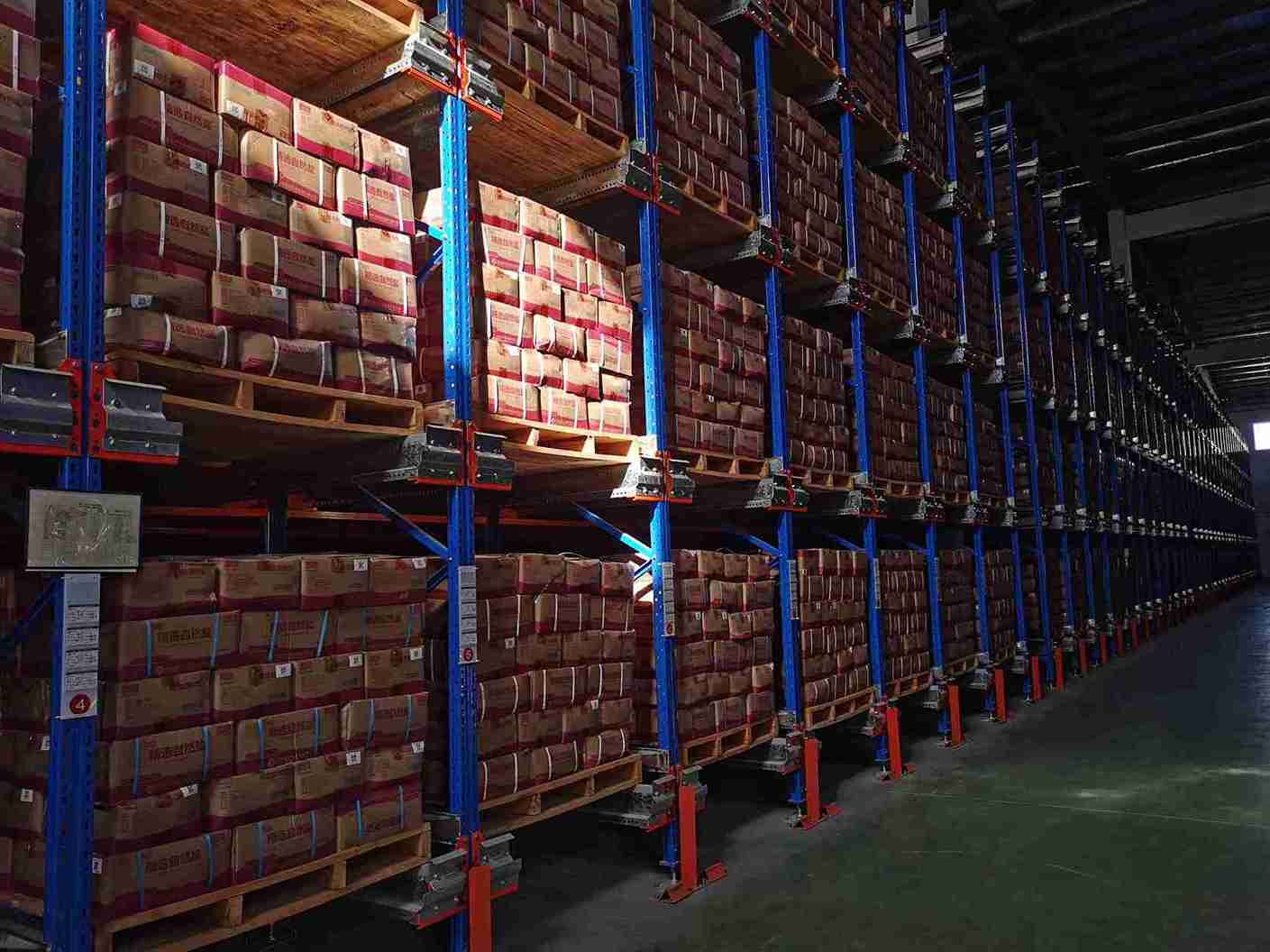
In the relentless pursuit of warehouse efficiency, shuttle racking systems have emerged as a game-changer for operations demanding high-density storage and rapid throughput. However, the true key to unlocking maximum Return on Investment (ROI) lies not just in choosing a shuttle system, but in meticulously optimizing its shuttle racking load capacity. This comprehensive guide delves deep into the engineering and strategic principles that govern this critical metric.
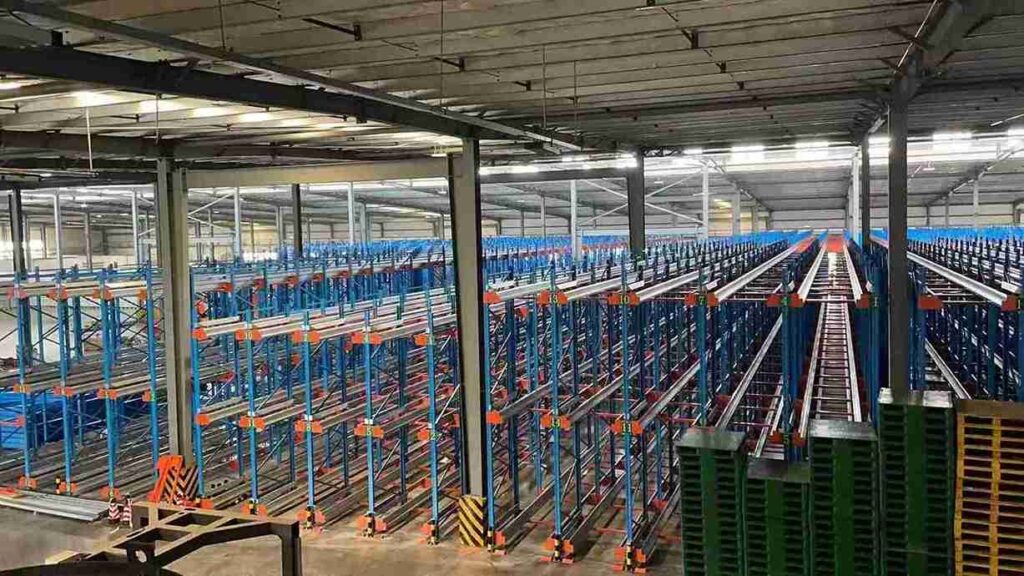
The discussion moves beyond basic specifications to explore how factors like structural integrity, dynamic load considerations, warehouse layout, and future-proofing directly impact a system’s longevity, safety, and overall profitability. For logistics managers, warehouse designers, and operations directors, this article provides the advanced knowledge needed to transform a standard shuttle installation into a high-performance, ROI-generating asset for dense, high-throughput warehouses by mastering shuttle racking load capacity principles.
H2: Understanding the Core Components of Shuttle Racking Load Capacity
When industry professionals discuss shuttle racking load capacity, it’s a common misconception to focus solely on the maximum weight a single pallet can hold. In reality, the true shuttle racking load capacity represents a sophisticated interplay of several structural components. A deep understanding of these elements forms the foundation for any meaningful optimization strategy. Misjudging even one component can lead to systemic inefficiency, safety hazards, and a failure to achieve the promised storage density.
H3: The Critical Role of Upright Frames and Bracing
The upright frames act as the veritable backbone of the entire storage system. Their intrinsic strength ultimately dictates the overall stability and maximum height potential of the installation. The specified shuttle racking load capacity is not merely a function of vertical strength; it equally involves resistance to horizontal forces generated by the shuttle’s movement, potential seismic activity, or even subtle sway induced by other material handling equipment in the facility.
Leading suppliers specify frames fabricated from thicker gauge steel with robust, optimized bracing patterns to ensure they can handle both the static load and the dynamic loads. The critical choice between roll-formed and structural steel frames directly influences the achievable shuttle racking load capacity, with structural frames typically offering superior strength and rigidity for taller, more heavily-loaded installations where every kilogram matters.
H3: Beam Strength and Deflection: The Unsung Hero of Stability
Beams provide the direct support for pallets, and their performance is measured not just by their ultimate breaking point, but by their deflection under load. Deflection refers to the slight but critical bending a beam experiences when weight is applied. Excessive deflection can lead to pallet instability, create operational difficulties for the shuttle during retrieval, and, over time, contribute to metal fatigue.
Engineering best practice focuses on specifying beams with a deflection limit strictly controlled to no more than 1/180 of the span under the maximum designated shuttle racking load capacity. This ensures a stable, level platform crucial for the smooth and reliable operation of the shuttle car, directly impacting both safety and throughput. Different beam profiles, depths, and locking mechanisms offer varying levels of strength, directly influencing the overall system’s shuttle racking load capacity.
H3: The Shuttle Car Itself: An Active Component in the Load Equation
The shuttle car is the dynamic heart of the system, and its own rated shuttle racking load capacity is a fixed specification. However, its impact on the system’s overall capabilities is profound. A heavier-duty shuttle car, designed for higher shuttle racking load capacity operations, will invariably require a more robust rack structure to support its increased weight and the greater forces it exerts during acceleration and deceleration.
Furthermore, the shuttle’s battery life and lifting mechanism efficiency are intrinsically linked to the operational shuttle racking load capacity. An underpowered shuttle consistently operating near its maximum shuttle racking load capacity will drain its battery faster, leading to more frequent charging cycles and reduced operational uptime, directly undermining the high-throughput goals of the warehouse.
H2: Static vs. Dynamic Loads: The Engineering Heart of Capacity Planning
A fundamental distinction that lies at the very core of accurate system design is the difference between static and dynamic loads. Misunderstanding this distinction is a primary reason why shuttle racking load capacity calculations can go awry, leading to under-engineered systems and potential safety risks. A precise analysis is non-negotiable for achieving a safe and efficient shuttle system that performs as expected over its entire lifecycle.
H3: Defining the Static Pallet Load
The static load constitutes the dead weight of the goods placed on a pallet, combined with the weight of the pallet itself. This is the figure most operators readily possess. When a manufacturer states a system’s shuttle racking load capacity, for example, 1,500 kg per pallet location, it primarily refers to this static load. However, a critical nuance often overlooked is that this weight is rarely uniformly distributed. A pallet with a concentrated, heavy item in the center will stress the beams differently than a pallet with evenly distributed weight. Therefore, professional shuttle racking load capacity calculations always account for these worst-case scenarios in weight distribution to ensure integrity under all realistic conditions.
H3: The Significant Impact of Dynamic Loads on System Integrity
Dynamic loads represent the often-hidden forces that are frequently underestimated in initial planning stages. These are the live, variable forces generated by the continuous movement of the shuttle cars within the confined racking structure. Every acceleration, deceleration, and lifting operation transfers kinetic energy into the racking framework. In a high-throughput warehouse environment where shuttles are in near-constant motion, these forces accumulate and can induce significant, repetitive stress.
The racking design must be meticulously engineered from the ground up to absorb and dissipate these forces without any compromise to its structural integrity. This fundamental requirement is precisely why a standard pallet racking system is entirely unsuitable for a shuttle application—it is simply not designed to withstand the constant, low-grade vibrations and impacts inherent to automated shuttle operation, which directly degrade the effective shuttle racking load capacity over time.
H3: Incorporating Seismic and Impact Considerations into Design
Even in geologically stable regions, modern building codes and prudent engineering practice increasingly mandate the consideration of seismic forces. These calculations ensure the racking can withstand unexpected lateral movements, thereby safeguarding both the inventory and personnel. Furthermore, accidental impact loads—though minimized in a highly automated system—must be factored into the safety margin. Scenarios such as a shuttle malfunction leading to a collision with the end-of-aisle stop, or incidental contact during manual loading/unloading at the transfer points, necessitate a robust design. Incorporating a generous safety factor that encompasses these potential impacts is a hallmark of a truly robust system designed for long-term shuttle racking load capacity reliability and longevity.
H2: The Direct Link Between Load Capacity and Storage Density
The primary driver for investing in a shuttle system is the compelling need to achieve superior storage density. However, an aggressive pursuit of maximum density without regard for structural implications can have a direct and often negative impact on the sustainable shuttle racking load capacity. Achieving an optimal balance is the hallmark of expert system design.
H3: How Aisle Configuration Dictates Structural Demands
The principal advantage of shuttle racking is its ability to operate in exceptionally narrow aisles, or even in a truly aisle-free configuration by utilizing a lift-and-transfer mechanism at the row ends. However, this very configuration places unique demands on the structure. The removal of frequent cross-aisles reduces the number of points where the racking can be anchored and laterally stabilized. This often necessitates the use of stronger, and consequently heavier, upright frames along with larger base plates to effectively counteract the increased leverage forces. This structural reinforcement is a direct response to the need for maintaining the designated shuttle racking load capacity in a high-density layout, influencing the final system specifications and cost.
H3: Strategic Pallet Placement and Weight Distribution per Level
In a multi-level shuttle system, loads are transferred through the structure in a complex manner, not just vertically but diagonally. The placement of heavier pallets therefore becomes a strategic decision with significant structural implications. Industry best practice, often enforced by advanced Warehouse Management System (WMS) software, mandates the placement of the heaviest unit loads on the lower levels.
This practice strategically lowers the system’s center of gravity, dramatically enhancing overall stability and reducing stress on the upper sections of the upright frames. Optimizing for shuttle racking load capacity inherently involves programming the WMS to intelligently assign pallet locations based on weight profiling, transforming inventory management from a simple tracking exercise into an active structural integrity measure.
H3: The Critical Trade-Off Between Density and Operational Accessibility
The absolute maximum theoretical density is achieved by filling every available storage location to its maximum shuttle racking load capacity. But this approach ignores operational reality. Retrieving a specific SKU buried deep within a densely packed row requires more time and energy from the shuttle system. For a warehouse where high-throughput is a critical performance indicator, strategic density is the key.
This involves intelligently organizing inventory so that fast-moving SKUs are positioned in more accessible locations (e.g., closer to the aisle entry points), even if this results in a minor reduction in overall storage density. This operational optimization directly supports throughput objectives without unnecessarily overburdening the shuttle system with excessive, time-consuming travel for high-demand items, ensuring the system’s shuttle racking load capacity is matched by its operational efficiency.
H2: The Critical Role of the Warehouse Management System (WMS) in Load Optimization
A modern shuttle racking system transcends its physical components of steel and machinery; it is a deeply integrated, data-driven ecosystem. The Warehouse Management System (WMS) functions as the intelligent brain that ensures the physical system operates consistently within its optimized shuttle racking load capacity parameters, thereby maximizing both safety and efficiency.
H3: Intelligent Location Assignment Based on Real-Time Data
A sophisticated, integrated WMS performs functions far beyond simple inventory tracking. It dynamically assigns pallets to storage locations based on a complex, customizable set of rules that incorporate weight, dimensions, SKU velocity, and expiration dates. By ensuring that heavy loads are systematically placed on the lower, more robust levels and that weight is distributed evenly across beams, the WMS actively maintains the structural integrity of the entire system. It acts as a preventive guard against the accidental overloading of a single beam or decking, which is a critical software function for preserving the engineered shuttle racking load capacity and ensuring day-to-day safety.
H3: Leveraging Predictive Analytics for Proactive Maintenance
The continuous operation of a shuttle fleet generates a vast stream of operational data. A modern WMS, tightly integrated with the shuttle control system, can monitor a plethora of performance metrics in real-time, including energy consumption per trip, travel times against benchmarks, and motor load. A gradual but consistent increase in the energy required to move a shuttle down a specific aisle could indicate a misaligned rail or a wheel bearing beginning to fail.
By identifying these subtle anomalies proactively, the system can automatically flag the need for maintenance before a catastrophic breakdown occurs. This predictive capability prevents costly downtime that cripples throughput and ROI, ensuring the system’s shuttle racking load capacity is always available when needed.
H3: Balancing Workload Across the Shuttle Fleet for Longevity
In systems employing multiple shuttles, the WMS performs a crucial role as an automated traffic controller and dispatcher. It intelligently balances retrieval and storage tasks across the entire available vehicle fleet. This prevents any single shuttle from being overworked while others remain idle. Even workload distribution is essential for extending the lifespan of shuttle batteries and mechanical components, ensuring consistent high-throughput performance throughout extended operational shifts. This intelligent management directly reduces long-term maintenance costs and contributes to a more predictable and reliable shuttle racking load capacity operation.
H2: Material and Manufacturing Quality: The Foundation of True Load Capacity
The calculated shuttle racking load capacity is a theoretical value that is only as reliable as the real-world materials and craftsmanship used in its construction. Compromising on quality at this fundamental level represents a catastrophic false economy that can jeopardize the entire operation’s safety and profitability.
H3: The Paramount Importance of Steel Grade and Quality
Not all steel is created equal. The specific grade and quality of steel used in the fabrication of upright frames and beams directly determine their strength-to-weight ratio, which is a primary factor in achieving a high shuttle racking load capacity. Reputable manufacturers insist on using high-tensile steel sourced from certified mills that consistently meet or exceed international standards (such as ASTM or DIN). This commitment to material quality allows for the design of components that are exceptionally strong yet relatively lightweight, contributing to the overall efficiency and safety of the system. Traceable material certifications should be a non-negotiable part of any quality assurance protocol for a critical asset like shuttle racking.
H3: Precision Manufacturing Tolerances and Protective Finishes
Precision in the manufacturing process is paramount for achieving the designed shuttle racking load capacity. Holes for beam connectors must be punched with extreme accuracy to ensure a perfect, rigid fit that eliminates any play or movement. Even minor misalignments can create localized stress points that may lead to premature failure under heavy, cyclic loading. Furthermore, the surface finish, typically a durable powder coating, serves a critical functional purpose beyond aesthetics.
It provides essential protection against corrosion, which can silently but steadily weaken steel components over time, especially in environments with specific temperature and humidity fluctuations. This protective layer is vital for guaranteeing the long-term integrity and shuttle racking load capacity of the system throughout its operational life.
H3: The Necessity of Third-Party Certification and Compliance
Any credible supplier must provide full, traceable certification for their racking components. This includes official shuttle racking load capacity certifications from independent, accredited third-party engineering firms. These documents provide verified proof that the components have been physically tested and meet the claimed specifications. Compliance with recognized local and international safety standards, such as those from the Storage Equipment Manufacturers’ Association (SEMA) in Europe or the Rack Manufacturers Institute (RMI) in North America, represents an absolute baseline requirement. It is the client’s primary assurance that the system is engineered for real-world safety and performance, not just sold based on marketing promises.
H2: Conducting a Professional Site Survey and Load Analysis
Theoretical calculations must be grounded in practical reality. A comprehensive, professionally conducted site survey and detailed load analysis form the most critical step in the optimization process. This is where the theoretical shuttle racking load capacity meets the physical constraints and opportunities of the specific operating environment.
H3: Evaluating Floor Flatness and Foundation Integrity
The entire racking system, regardless of its designed shuttle racking load capacity, is wholly dependent on the warehouse floor for its foundation. Any significant imperfections in the floor—such as slopes, dips, or cracks—will be transmitted up the structure, creating torsional and bending stresses that the racking was not designed to withstand. Professional installers use specialized laser leveling equipment to map the floor’s flatness with millimeter precision across the entire installation area.
The underlying foundation must also be rigorously assessed by a structural engineer to confirm it can support the immense point loads and distributed loads exerted by the fully laden racking system. A weak or unsuitable floor slab necessitates remediation or a fundamental redesign of the base isolation system.
H3: Profiling Inventory for Accurate and Realistic Data
Effective optimization cannot occur without accurate, granular data. Professional consultants work closely with clients to conduct a thorough profile of the entire inventory universe. This process involves categorizing every SKU or product type by its precise weight, dimensions, and historical turnover rate (velocity). This analysis should not be a simple one-time snapshot but must incorporate historical data trends and projected business growth models to create a realistic, forward-looking load profile. This rich dataset feeds directly into the structural engineer’s calculations, ensuring the system is designed not merely for today’s needs but for the planned future shuttle racking load capacity requirements of the operation.
H3: Integrating with Existing MHE and Workflow Patterns
A shuttle system must operate synergistically within the broader material handling ecosystem. The site survey must meticulously map all interaction points with other Material Handling Equipment (MHE) like counterbalance forklifts, conveyors, and Automated Guided Vehicles (AGVs). The transfer stations, where pallets are handed off to and from the shuttles, are critical zones that experience high dynamic activity. The load analysis must account for the potential additional forces in these areas where manual, semi-automated, and fully automated interactions converge. Overlooking these integration points can create bottlenecks and local stress points that compromise the overall system’s effectiveness and shuttle racking load capacity utilization.
H2: The Long-Term ROI of Proactive Load Capacity Management
Viewing shuttle racking load capacity as a static, one-time specification is a significant strategic error. Instead, it should be managed as a dynamic asset throughout the system’s entire lifecycle. Proactive management is the key to protecting the initial investment and continuously enhancing the long-term ROI.
H3: Implementing a Rigorous Inspection and Maintenance Schedule
Like any critical piece of industrial infrastructure, a shuttle racking system requires a disciplined, scheduled maintenance regimen. This program must extend beyond the shuttle cars themselves to encompass the entire racking structure. Industry best practice dictates a bi-annual or annual inspection conducted by qualified, certified personnel. This inspection should methodically check for signs of damage, wear, or excessive deflection, including verifying bolt torque, examining uprights for impact damage, and ensuring all safety locks are fully functional. This proactive approach is invaluable for identifying minor issues before they escalate into catastrophic, expensive failures, thereby safeguarding personnel, inventory, and the capital investment by ensuring the ongoing shuttle racking load capacity reliability.
H3: Comprehensive Training for Operational Teams
The most expertly designed system can be compromised by uninformed or poor operational practices. It is therefore vital to invest in comprehensive training for all warehouse staff, especially those operating MHE that interfaces with the racking. Training should emphasize the importance of the system’s structural integrity, covering strict protocols against overloading pallets, the correct positioning of pallets on beams, and the immediate reporting procedure for any impacts or observed anomalies. A well-informed operational team acts as the first and most effective line of defense in maintaining the designed shuttle racking load capacity and ensuring daily safety.
H3: Strategic Planning for Future Expansion and Reconfiguration
A truly optimized system is designed with inherent flexibility. Business needs are inevitably subject to change. A forward-thinking shuttle system design incorporates clear pathways for future expansion. This means selecting a system from a manufacturer with a proven history of supporting long-term upgrades and providing readily available, compatible components years after the initial installation. The initial structural design might intentionally allow for the straightforward addition of more levels or the extension of aisles without requiring a complete and costly overhaul. This built-in scalability is a massive contributor to long-term ROI, as it prevents the storage solution from becoming prematurely obsolete and allows the shuttle racking load capacity to evolve with the business.
H2: Case Study: Optimizing Load Capacity for a Pharmaceutical Distributor
To illustrate these principles in a real-world context, consider a recent project undertaken for a major pharmaceutical distributor. The client faced a classic challenge: SKU proliferation included both very light boxes of medical supplies and extremely dense, heavy pallets of liquid pharmaceuticals. Their existing conventional storage system was highly inefficient and posed potential safety risks due to inconsistent and unmanaged weight distribution, highlighting a critical need for a optimized shuttle racking load capacity solution.
H3: The Initial Challenge and Deep-Dive Data Analysis
The project commenced with an exhaustive analysis of the client’s inventory data, profiling over 5,000 distinct SKUs by precise weight, dimensions, and turnover velocity. This deep dive revealed a crucial insight: approximately 70% of their total warehouse throughput was generated by just 15% of the heaviest SKUs. However, their existing layout scattered these critical, heavy pallets randomly throughout the facility, creating unpredictable load points and inefficiencies.
H3: The Implemented, Zoned Solution
The solution was a custom-designed shuttle system that featured strategically reinforced lower levels. These levels were specifically zoned and designated for the high-weight, high-velocity SKUs. The integrated WMS was programmed with hard, unbreakable rules to automatically assign any pallet exceeding a predefined weight threshold to these reinforced locations. Lighter, slower-moving inventory was systematically directed to the standard upper levels. This approach ensured that the shuttle racking load capacity was precisely matched to the operational requirements on a zone-by-zone basis.
H3: The Measurable Return on Investment
The results were transformative. Throughput for the high-velocity SKUs increased by a remarkable 40% due to their optimized, accessible placement. The targeted reinforcement strategy, as opposed to reinforcing the entire structure, resulted in approximately 15% savings on the initial steel cost. Most importantly, the system passed its rigorous safety certification with ease, providing management with complete peace of mind. The ROI was achieved through a powerful combination of tangible efficiency gains and intelligent, data-driven capital expenditure focused on a tailored shuttle racking load capacity strategy.
H2: Conclusion: Optimizing Load Capacity is Synonymous with Optimizing Business Performance
In the fiercely competitive landscape of modern logistics and supply chain management, a shuttle racking system represents a substantial capital investment. To simply install such a system based on generic brochure specifications is to leave a significant amount of potential value on the table. True ROI maximization is achieved only through a holistic, engineering-led approach that places shuttle racking load capacity optimization at its core. This intricate process intertwines advanced structural mechanics, sophisticated data analytics, seamless operational workflow integration, and strategic long-term foresight.
It effectively transforms a storage system from a static cost center into a dynamic, high-performance engine capable of powering a dense, high-throughput warehouse to new levels of profitability. By partnering with experts who possess a deep, practical understanding of these interconnections, businesses can ensure their investment is not only safe and efficient but becomes a durable, scalable asset that actively drives financial performance for decades. The ultimate goal is never just to store more product, but to store smarter, safer, and significantly faster.
H2: Frequently Asked Questions (FAQs)
H3: 1. How does temperature variation in a warehouse (e.g., a cold storage facility) affect the load capacity of shuttle racking?
Temperature extremes, particularly the sub-zero conditions standard in cold storage facilities, profoundly impact both the racking structure and the shuttle cars, thereby affecting the overall system’s shuttle racking load capacity. Steel becomes increasingly brittle at very low temperatures, which can reduce its resistance to impact forces.
Consequently, the shuttle racking load capacity calculations for cold storage applications must incorporate different, more conservative safety factors and often require the use of specially certified steels rated for low-temperature performance. Simultaneously, the shuttle cars themselves require environmentally sealed components, thermally managed batteries, and specialized lubricants to operate reliably in these harsh conditions. These modifications can alter the vehicle’s weight and performance, further influencing the operational shuttle racking load capacity. A system designed for an ambient warehouse is fundamentally unsuitable for cold storage without these critical engineering modifications.
H3: 2. Can we mix pallets of different weights and sizes on the same level of a shuttle racking system?
While technically possible from a mechanical perspective, mixing pallet weights and sizes on the same level is highly discouraged from both an optimization and safety standpoint. Mixing pallet sizes can create uneven and unpredictable load distribution on the beams, potentially leading to overstress and interfering with the consistent, smooth operation of the shuttle car.
More critically, mixing weights randomly makes it impossible for the WMS to optimize the load distribution to maintain structural integrity. The industry best practice is to standardize on a single pallet size (e.g., EUR, ISO) and to use the WMS’s intelligence to zone the racking by specific weight bands. This ensures heavy, medium, and light loads are stored in their respective, appropriately engineered areas, preserving the designed shuttle racking load capacity for each zone.
H3: 3. What is the typical lifespan of a well-maintained shuttle racking system, and does the load capacity degrade over time?
A high-quality shuttle racking system, subjected to a rigorous and regular inspection and maintenance schedule and operated within its designed shuttle racking load capacity parameters, should have a functional lifespan of 15 to 25 years or more. The structural steel itself does not appreciably “degrade” in terms of its fundamental tensile strength if it is properly protected from corrosion.
However, the effective shuttle racking load capacity can be compromised over time by physical damage (e.g., impacts from other MHE), wear and tear on mechanical components like beam locks, or gradual deformation. This is precisely why regular professional inspections are so crucial; they ensure the system continues to perform as originally certified and that any damaged or worn components are identified and replaced promptly to restore full system integrity and shuttle racking load capacity.
H3: 4. How does the choice between a single-depth and double-depth (or deeper) configuration impact the load capacity?
Deeper configurations, such as double-depth or even deeper, undoubtedly increase storage density but introduce significant new engineering considerations that directly impact the shuttle racking load capacity. The beams must span a much greater distance to support the pallets located at the back of the row. This longer span inherently increases deflection under an identical load.
Therefore, to maintain the same per-pallet shuttle racking load capacity, the beams for a double-depth system will typically need to be significantly stronger, deeper, and heavier than those used in a single-depth system. Additionally, the shuttle car must be specifically designed with the capability to precisely handle the longer reach required and the additional weight of the extended forks, which also factors into the dynamic load calculations for the system.
H3: 5. If our business needs change and we need to increase the load capacity of an existing system, is that possible?
This is a complex question with a definitive answer of “it depends.” Increasing the designed shuttle racking load capacity of an already installed system is often challenging and can be prohibitively expensive or even impossible without major structural modifications. Potential options, subject to a detailed engineering assessment, might include:
Reinforcing Uprights: Adding thicker column guards or supplementary bracing to existing frames.
Upgrading Beams: Replacing all existing beams with heavier-duty models with a higher load rating.
Reducing Bay Spans: Adding additional upright frames to decrease the unsupported span of the beams, thereby reducing deflection.
Any such modification must be meticulously designed, specified, and certified by a qualified structural engineer who has conducted a thorough on-site assessment of the existing system’s condition. It is almost invariably more cost-effective and structurally sound to design the system with ample future shuttle racking load capacity needs in mind from the very outset than to attempt a major and uncertain retrofit later in its life.
Welcome to contact us, if you need warehouse rack CAD drawings. We can provide you with warehouse rack planning and design for free. Our email address is: jili@geelyracks.com