📐 "First 50 Enterprise Queries Get Custom 3D Warehouse Design" Plan


The Deceptive Simplicity of a Price Quote
When business leaders and logistics managers across Southeast Asia, the Middle East, Africa, and Latin America begin researching a warehouse expansion, their search often starts with a simple, financially-driven phrase: narrow aisle warehouse setup costs. This initial query typically yields a flood of supplier quotations listing upright frames, cross beams, wire guidance kits, and specialized forklift prices.
The instinct is to compare these line items, choose the most competitive bid, and proceed. However, this conventional approach represents a critical strategic misstep. It conflates the price of equipment with the total cost of operation. This article serves as a definitive guide, moving beyond simplistic price sheets to demonstrate how a holistic, integrated systems approach—centered on Automated Storage and Retrieval Systems (AS/RS)—fundamentally redefines and optimizes narrow aisle warehouse setup costs over the entire lifecycle of the facility.
The goal is not merely to reduce the initial invoice but to engineer a logistics asset that delivers the lowest possible cost-per-pallet-handled, maximizes ROI, and creates an unassailable competitive advantage in fast-growing markets. The true calculus of narrow aisle warehouse setup costs must include decades of labor, energy, maintenance, damage, lost space, and missed opportunities.
The Anatomy of Conventional Narrow Aisle Warehouse Setup Costs: A Surface-Level View
A traditional analysis of narrow aisle warehouse setup costs is deceptively straightforward. It is viewed as a capital expenditure project with clear, tangible components. Decision-makers compile quotes that generally include the following elements, which form the baseline for their financial planning:
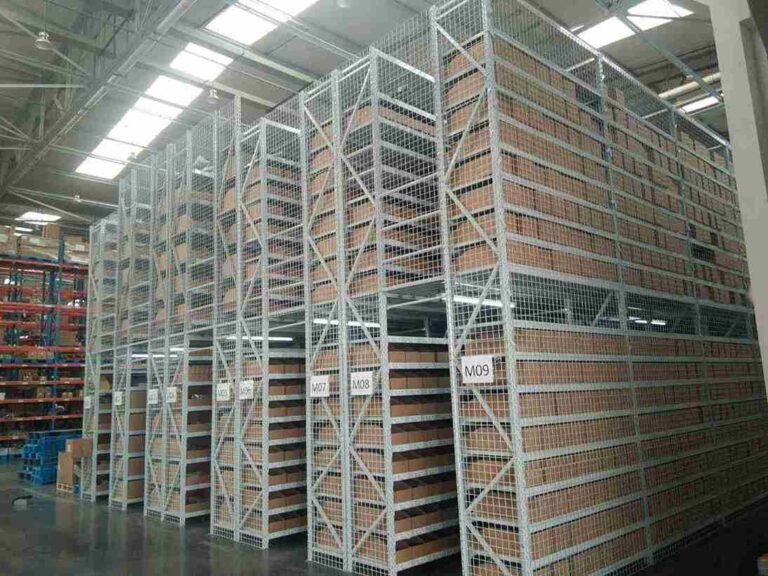
Storage Infrastructure: This is the narrow aisle racking itself, typically configured for very high vertical storage, often requiring specific upright and beam designs to handle the dynamic loads from reach trucks operating in tight spaces.
Material Handling Equipment: The cornerstone of the operation—a fleet of narrow aisle forklifts (reach trucks, turret trucks, or order pickers). These are far more expensive than standard counterbalance trucks and often require add-ons like wire or rail guidance systems to ensure operator precision in aisles as narrow as 1.6 meters.
Facility Modifications: These are the often-overlooked but critical additions to narrow aisle warehouse setup costs. They include reinforced concrete flooring with strict flatness tolerances (F<sub>F</sub>/F<sub>L</sub> ratings), high-precision rack installation, enhanced lighting for deep, tall aisles, and potentially upgraded HVAC for operator comfort at height.
Software & Training: A basic Warehouse Management System (WMS) license and the cost of training specialized forklift operators to handle equipment in confined spaces safely.
At this stage, the procurement team’s objective is to minimize these direct narrow aisle warehouse setup costs. Yet, this focus on initial CAPEX is akin to purchasing an aircraft based solely on the price of its seats and galley, ignoring its engines, avionics, fuel efficiency, and maintenance schedule. The real financial impact unfolds after the system goes live.
The Hidden Cost Multipliers: What the Initial Quote for Narrow Aisle Warehouse Setup Costs Never Reveals
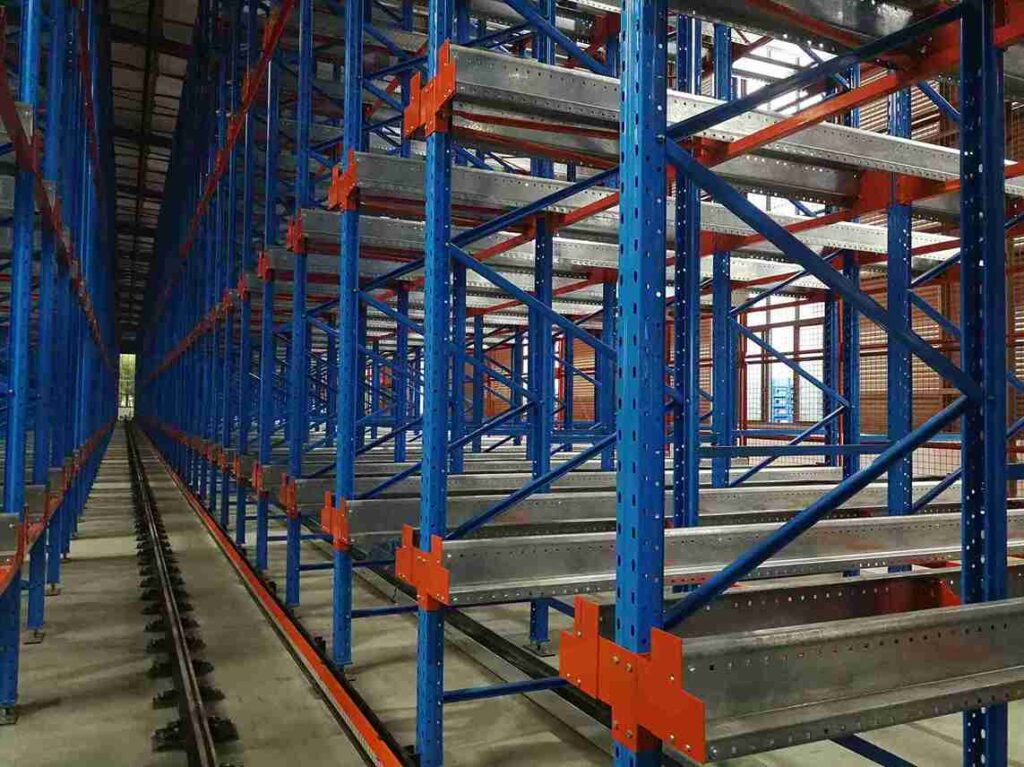
The operational phase reveals the profound limitations of a traditional, equipment-centric view of narrow aisle warehouse setup costs. The following hidden multipliers silently erode profitability, often surpassing the initial investment within a few years:
The Labor Vortex: The system’s throughput is irrevocably tied to human operators. In regions like Southeast Asia and the Middle East, where skilled labor markets are tightening and wage inflation is a reality, this creates a volatile and rising operational expense. Fatigue, shift changes, and training variances lead to inconsistent productivity. The narrow aisle warehouse setup costs saved upfront are quickly consumed by perpetual, unpredictable labor overhead.
The Cube Utilization Illusion: While narrow aisle racking enables height, practical storage is capped by the forklift’s maximum lift height and the operator’s ability to place and retrieve loads safely at elevation. It is common to see the top tiers of racking underutilized, housing only dead stock. This represents a direct waste of the capital invested in both the racking and the building’s cubic space—a fundamental failure to optimize the full potential of the initial narrow aisle warehouse setup costs.
Systemic Inefficiency and Bottlenecks: Travel, maneuvering, and fork positioning times are inherent to human-operated systems. Congestion at high-activity periods creates unpredictable bottlenecks. The WMS can assign tasks, but it cannot control the nuanced execution speed of multiple operators. This caps the facility’s maximum throughput, creating a growth ceiling that may necessitate another expensive expansion far sooner than planned.
The High Price of Contact: In a tightly spaced narrow aisle environment, contact between forklift and racking is not a matter of if but when. The resulting damage to uprights, beams, and product creates direct financial loss, safety hazards, and operational downtime. Furthermore, the sophisticated guidance and hydraulic systems on narrow aisle forklifts demand specialized, costly maintenance. Downtime for a key truck can halt an entire aisle, making reliability a constant, expensive concern.
A comprehensive evaluation of narrow aisle warehouse setup costs, therefore, must transition from a static procurement exercise to a dynamic operational simulation. It must account for these hidden multipliers to reveal the Total Cost of Ownership (TCO).
The Integrated AS/RS Paradigm: Redefining the Value of Every Dollar Spent on Narrow Aisle Warehouse Setup Costs
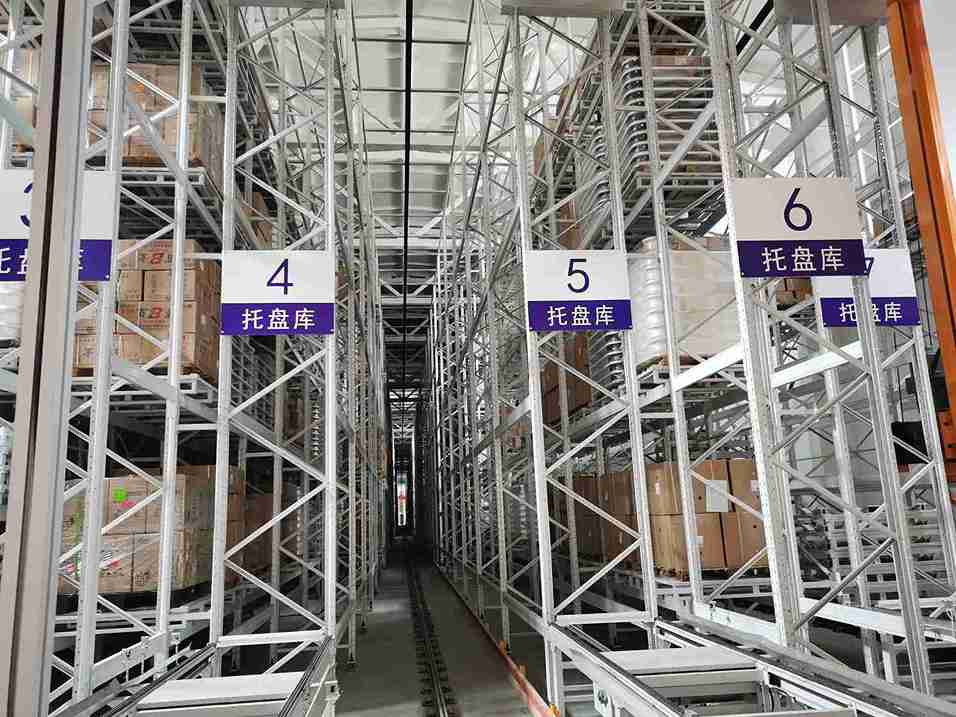
The paradigm shift lies in redefining the warehouse from a collection of independent assets to a single, cohesive, automated material handling organism. An Integrated AS/RS Solution is the embodiment of this shift. It views the initial narrow aisle warehouse setup costs as a strategic investment in a platform designed to minimize all subsequent cost multipliers. The integration is not merely mechanical; it is digital and systemic, connecting storage, movement, and control into a synchronized flow.
Under this model, the discussion around narrow aisle warehouse setup costs evolves. It is no longer about buying the cheapest rack and truck combination. It is about architecting a system where each component—the structure, the robots, the software—enhances the performance and efficiency of the others, driving down TCO from day one. This approach answers the core question behind the search for narrow aisle warehouse setup costs: “How do I store more, move faster, and spend less?” by fundamentally altering the operational equation.
Deconstructing the System: How Each Layer Optimizes Narrow Aisle Warehouse Setup Costs
An Integrated AS/RS Solution is a multi-layered architecture. Each layer is specifically engineered to attack a different subset of the traditional narrow aisle warehouse setup costs and their associated operational expenses.
Layer 1: The Optimized Storage Matrix—Racking Re-engineered for Robotics
This is the physical foundation, but it bears little resemblance to standard narrow aisle racking. It is a precision-engineered structure designed for machine, not human, interaction.
Ultra-Narrow, “Lights-Out” Aisles: Since no operator is required inside the storage aisles, they can be designed to the millimeter width required by the AS/RS crane or shuttle. This eliminates the “operator comfort buffer,” pushing storage density to its absolute physical limit. This directly optimizes the space utilization ROI of the narrow aisle warehouse setup costs.
Structural Integrity for Automation: The racking is built to tighter tolerances, with reinforced uprights to handle the dynamic forces of high-speed cranes and integrated guide rails for perfectly smooth travel. This upfront investment in superior infrastructure virtually eliminates the long-term cost of rack damage and misalignment, a major hidden cost in traditional setups.
Dynamic Slotting Architecture: The storage locations are uniform and addressed, allowing the software to store any pallet or tote in any available location based on real-time optimization algorithms. This maximizes cube utilization continuously, ensuring every cubic meter paid for in the narrow aisle warehouse setup costs is generating revenue.
Layer 2: The Robotic Mobility Grid—AGVs and Unmanned Vehicles
This layer handles the horizontal transport that connects different zones, replacing and vastly outperforming manual forklift travel.
Predictable, Optimized Material Flow: Automated Guided Vehicles (AGVs) and unmanned forklifts follow software-defined routes 24/7. They do not take breaks, get fatigued, or make unpredictable decisions. This transforms a variable, labor-dependent cost into a fixed, predictable, and optimizable asset. It directly addresses the labor cost multiplier hidden within traditional narrow aisle warehouse setup costs.
Seamless Handoff Integration: Advanced AGVs are programmed to interface directly with AS/RS cranes, conveyor induction points, and palletizers. This creates a “touchless” transfer, reducing handling time, eliminating a point of potential damage, and streamlining the entire process flow. This integration is key to unlocking throughput speeds that manual systems cannot approach.
Layer 3: The Vertical Precision Engine—AS/RS Cranes and Shuttle Systems
This is the core of the high-density storage system, replacing the human-operated forklift for the storage and retrieval function.
Unit-Load Cranes for Pallet Mastery: A single, automated crane operates in an aisle, servicing both sides from floor to ceiling (often 40+ feet). It stores and retrieves pallets with sub-centimeter accuracy at speeds exceeding 500 meters per minute. One crane reliably performs the work of multiple forklift shifts, with perfect inventory discipline. This is the most direct replacement for the labor and equipment costs central to traditional narrow aisle warehouse setup costs.
Multi-Level Shuttles for Case and Item Efficiency: For carton or piece-picking operations, autonomous shuttles dart within the rack structure, retrieving and storing bins. They deliver inventory directly to ergonomic goods-to-person pick stations. This system decouples storage density from picking speed, allowing both to be maximized simultaneously—a feat impossible in a manual narrow aisle environment.
Layer 4: The Central Nervous System—The Integration Software Stack
This is where the “integration” truly happens, transforming independent machines into a harmonious system.
Warehouse Execution System (WES): The WES is the real-time brain of the operation. It goes beyond a WMS’s inventory management to dynamically control and synchronize all automated assets. It acts as an air traffic controller, balancing workloads between cranes, AGVs, and workstations in real-time to prevent bottlenecks and maximize overall system throughput. This software intelligence is what extracts maximum value from the physical investment in narrow aisle warehouse setup costs.
Machine Control & Digital Twin Simulation: Low-level controllers ensure safe interlocking between equipment. Furthermore, the entire system is modeled and stress-tested in a digital twin simulation during design. This allows engineers to optimize the layout, equipment count, and logic to meet exact performance targets before installation, de-risking the project and ensuring the narrow aisle warehouse setup costs are aligned with guaranteed outcomes.
The Financial Re-Engineering: A Line-by-Line Transformation of Narrow Aisle Warehouse Setup Costs
When viewed through the TCO lens, the impact of integration on narrow aisle warehouse setup costs and their aftermath becomes crystal clear.
Capital Expenditure (CapEx): Strategic Reallocation, Not Mere Increase
The initial outlay for an integrated system is different in composition and value delivery.
From Depreciating Fleet to Appreciating Infrastructure: Capital shifts from a fleet of expensive, maintenance-intensive forklifts (which lose value daily) into the fixed, long-life racking and automation superstructure. The automation equipment itself is an asset with a clear, extended lifespan and predictable maintenance profile.
Building Value Optimization: By achieving 40-60% greater density, a company may require a smaller building footprint. In markets like the UAE or major Latin American cities where real estate and construction costs are significant, this can offset a substantial portion of the automation premium. The narrow aisle warehouse setup costs thus contribute directly to reduced facility costs.
Predictable Project Scope: The integrated system’s costs are largely defined and fixed at the engineering phase, offering budget certainty. This contrasts with the volatile, ongoing costs of labor and fleet management in a traditional model.
Operational Expenditure (OpEx): The Arena of Radical Reduction
This is where the integrated system delivers an overwhelming, recurring financial advantage.
Labor Cost Transformation: Direct labor for storage/retrieval and horizontal transport can be reduced by 60-80%. Staff are upskilled to higher-value roles in system supervision, maintenance, data analysis, and exception management. This directly attacks the largest hidden multiplier in traditional narrow aisle warehouse setup costs.
Energy and Maintenance Efficiency: Electric AS/RS cranes and AGVs are highly energy-efficient. Regenerative braking can feed power back into the system. Maintenance is scheduled, predictive, and focused on a smaller number of specialized assets compared to a large fleet of forklifts. “Lights-out” aisles eliminate lighting costs in storage areas.
Elimination of Damage-Related Costs: The multi-million dollar annual drain from product and rack damage ceases to exist. This alone can represent a staggering ROI on the portion of narrow aisle warehouse setup costs allocated to precision automation.
Throughput as a Revenue Engine: The guaranteed, high throughput of the system enables a business to handle more orders, scale without proportional cost increases, and offer superior service levels. This turns the warehouse from a cost center into a profit enabler.
The Implementation Journey: From Vision to Quantifiable ROI
Realizing this optimization of narrow aisle warehouse setup costs requires a disciplined, phased approach.
Deep-Dive Data Analysis & Digital Twin Modeling: The process begins not with a sales catalog, but with a forensic analysis of SKU data, order histories, and growth forecasts. A digital twin is created to simulate years of operation in days, validating design choices and guaranteeing performance outcomes before any commitment is made. This step ensures the narrow aisle warehouse setup costs are invested in a solution perfectly tailored to actual needs.
Phased, Disruption-Minimized Deployment: A robust implementation plan rolls out the system in phases, often allowing legacy operations to continue uninterrupted in one section while the new automated zone is built and commissioned nearby.
Commissioning, Knowledge Transfer, and Lifecycle Support: The system is rigorously tested. Client teams are trained not just to use it, but to understand its performance metrics and basic troubleshooting. Ongoing support includes remote monitoring and predictive maintenance to protect the long-term investment tied to the narrow aisle warehouse setup costs.
Global Evidence: Case Studies in Optimizing Narrow Aisle Warehouse Setup Costs
This methodology is proving decisive in the target markets.
Ho Chi Minh City, Vietnam – Consumer Electronics: A manufacturer facing explosive growth replaced a planned traditional narrow aisle expansion with a multi-level shuttle AS/RS for components. They achieved a 90% reduction in picking errors and a 50% increase in storage density within the same footprint, effectively halving their effective narrow aisle warehouse setup costs per storage location while guaranteeing scalable throughput for future contracts.
Dubai, UAE – Third-Party Logistics (3PL): A 3PL competing for high-service contracts installed a unit-load AS/RS. The integrated system allowed them to offer guaranteed 4-hour cross-docking services and reduced their operational costs per pallet by 35%. Their initial narrow aisle warehouse setup costs, while higher, became their primary marketing tool, winning them premium clients and justifying the investment many times over.
Monterrey, Mexico – Automotive Distributor: Space constraints made expansion impossible. A 45-foot high, narrow aisle AS/RS allowed consolidation of two regional warehouses into one, slashing real estate and overhead costs. The precision of the system reduced order cycle times by 60%, improving cash flow and customer satisfaction. The project’s ROI was calculated not just on labor savings, but on the avoided costs of a new facility.
Conclusion: The Ultimate Cost is the Cost of Inaction
For logistics leaders in high-growth regions, the quest to understand narrow aisle warehouse setup costs is, at its heart, a quest for efficiency, scalability, and competitive edge. Adhering to a 20th-century model of comparing equipment prices is a recipe for 21st-century obsolescence. The integrated AS/RS paradigm presents a more sophisticated, accurate, and ultimately profitable financial model. It acknowledges that the most significant narrow aisle warehouse setup costs are not the ones on the first invoice, but the cumulative, recurring expenses of labor, inefficiency, and constrained growth that plague a manual system for its entire life.
Choosing integration is a strategic decision to optimize the total cost of ownership. It transforms the warehouse from a static, expense-heavy liability into a dynamic, intelligent, and highly efficient engine for profit. While the initial investment requires careful analysis of narrow aisle warehouse setup costs, the long-term financial, operational, and strategic returns are unambiguous. In the competitive landscapes of emerging global markets, the true cost is no longer just about what you pay to set up your narrow aisle warehouse—it’s about what you fail to gain by not embracing the integrated, automated future.
Frequently Asked Questions (FAQs)
1. How does an Integrated AS/RS handle different pallet sizes and non-standard loads, which are common in our emerging market operations?
A robust Integrated AS/RS is designed for flexibility. Systems can be configured with adaptive handling attachments, adjustable deck sizes, or compartmentalized shuttles. The control software is programmed with the dimensions and weight of every load type. During the digital twin phase, the handling of this variety is rigorously simulated. The system’s intelligence lies in its ability to dynamically assign each unique load to a suitable, optimized storage location, a task far more complex and error-prone for human operators in a standard narrow aisle setup. This capability directly protects the investment in narrow aisle warehouse setup costs by ensuring the system can adapt to changing inventory profiles.
2. We have significant seasonal peaks. Is an automated system efficient when our volume fluctuates, or is it only for constant, high-volume operations?
Integrated AS/RS solutions are exceptionally effective for seasonal businesses. The system provides a guaranteed, maximum throughput ceiling that can be hit reliably during peak seasons without the chaos, overtime costs, and temporary hiring struggles of a manual operation. During off-peak times, the system can operate at a lower energy mode or schedule maintenance. The key is that the system’s performance is predictable and scalable without proportional cost increases. This predictability is a core value driver that should be factored into any evaluation of long-term narrow aisle warehouse setup costs and their impact on operational agility.
3. What is the typical payback period for the additional investment in integration over a traditional narrow aisle system in a market like ours?
Payback periods vary based on local labor costs, energy prices, and operational complexity, but in regions experiencing rapid wage inflation and growth, they are often surprisingly short—typically between 2 to 5 years. The financial model is compelling: the higher initial narrow aisle warehouse setup costs for automation are offset by drastic, immediate reductions in labor costs, damage, and energy use, coupled with revenue-enhancing gains from increased throughput and accuracy. A detailed TCO analysis, projecting these savings over 10 years, will clearly illustrate the superior financial performance of the integrated approach.
4. Our facility has limited ceiling height. Does an AS/RS still make sense, or is it only for very tall buildings?
While AS/RS excels in maximizing vertical space, it is also highly effective in lower-clearance buildings. The efficiency gains come from density (ultra-narrow aisles), speed, and accuracy, not just height. For lower buildings, shuttle-based systems or mini-load AS/RS for totes can deliver extraordinary gains in pick efficiency and order accuracy. The focus shifts from pure storage density to process optimization, but the fundamental principle remains: integrating storage and retrieval machines with control software delivers a lower total operational cost than a disjointed manual system. The optimization of narrow aisle warehouse setup costs is therefore relevant across various building profiles.
5. How do we ensure our local team can maintain and troubleshoot such a sophisticated system?
This is a critical component of the project. Reputable providers structure their offerings to include comprehensive knowledge transfer. This involves training local technicians on preventive maintenance routines, providing clear diagnostic tools and manuals, and establishing a support structure that often includes remote connectivity for expert diagnosis. The goal is to build in-country competency. The reliability of modern automation is high, and maintenance is more scheduled and predictable than the reactive repairs common in a forklift fleet. This planned maintenance is a defined, manageable operational cost, contrasting sharply with the unpredictable downtime and repair costs that plague traditional narrow aisle warehouse setup costs.
If you require perfect CAD drawings and quotes for warehouse racking, please contact us. We can provide you with free warehouse racking planning and design services and quotes. Our email address is: jili@geelyracks.com