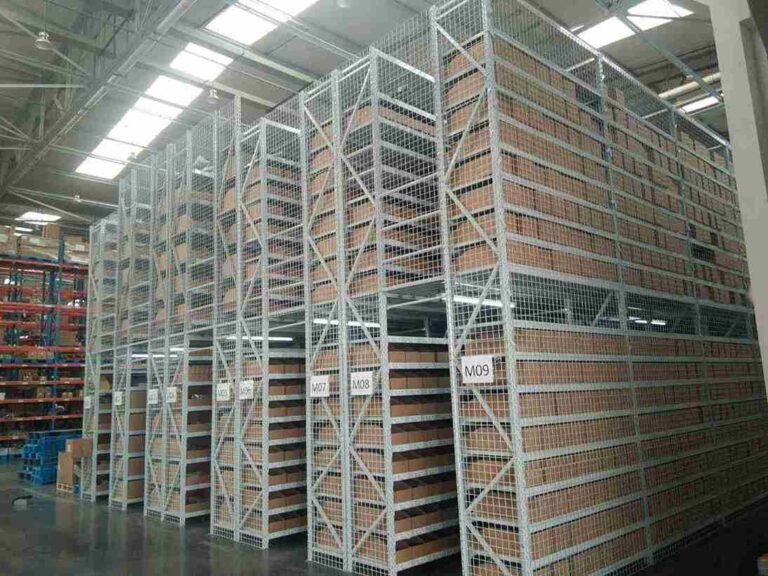
📐 "First 50 Enterprise Queries Get Custom 3D Warehouse Design" Plan


Maximize Storage & Efficiency: The Ultimate Guide to Narrow Aisle Racking Systems
In the high-stakes world of global logistics and warehousing, space is not just a commodity; it is the very currency of efficiency. For operations managers and business owners across the burgeoning industrial landscapes of Southeast Asia, the Middle East, Africa, and Latin America, the challenge is universal: how to store more, move faster, and spend less, all within the same four walls.
The answer, increasingly, is not found in costly new construction, but in a strategic re-imagining of storage density through advanced narrow aisle racking systems. This comprehensive guide delves deep into the world of high-density storage, exploring how a professionally engineered narrow aisle racking solution can transform a constrained warehouse into a model of productivity and a significant profit driver. It is more than a storage system; it is a strategic investment in operational supremacy.

Understanding the Core Principle: What is Narrow Aisle Racking?
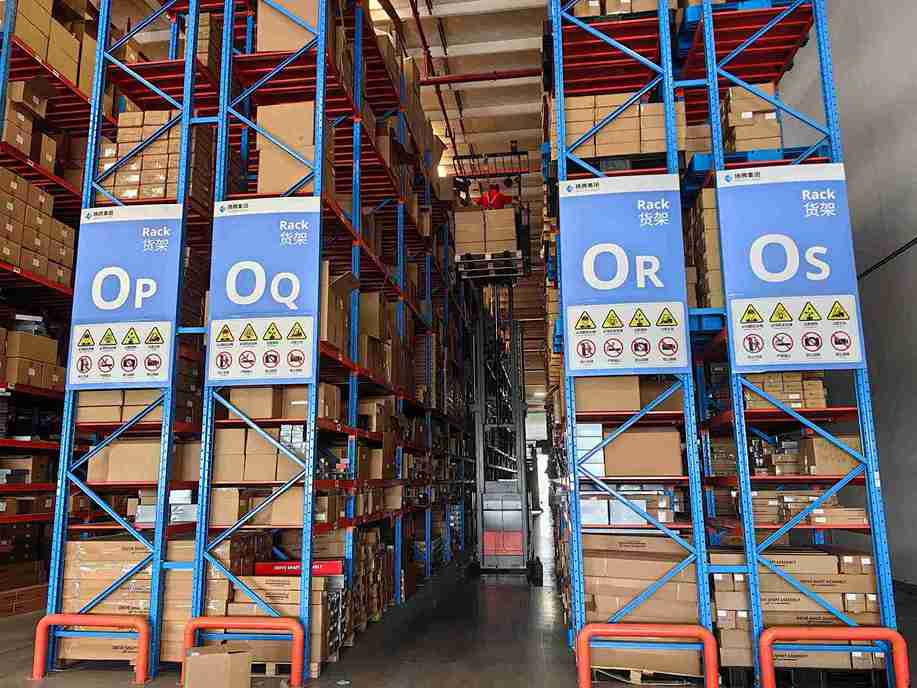
At its most fundamental level, narrow aisle racking is a storage methodology designed to maximize the cubic space of a warehouse by drastically reducing the width of the aisles between storage rows. While traditional pallet racking systems require aisles of 3.5 meters or more to accommodate the turning radius of a standard counterbalance forklift, a true narrow aisle racking configuration operates with aisles typically between 1.6 to 2.0 meters wide. This seemingly simple reduction of non-productive space is the engine of its remarkable efficiency.
The Engineering Synergy: Racking and Equipment
The profound space savings of a narrow aisle racking system cannot be achieved by the racking alone. Its effectiveness hinges on a perfect synergy with specialized material handling equipment. Standard forklifts are generalists, designed for both horizontal transport and vertical lifting in open spaces. In contrast, a narrow aisle racking system is paired with purpose-built machinery like turret trucks or order pickers. These machines are engineered to travel forwards and backwards within the tight confines of the aisle, with mast assemblies that can rotate 180 degrees to either side. This allows the forks to deposit or retrieve pallets without the truck itself turning, a critical feature that makes the entire narrow aisle racking concept viable and highly productive.
Beyond Space: The Multifaceted Benefits of a Custom Narrow Aisle System
While the dramatic increase in storage capacity is the most immediate and quantifiable benefit, the advantages of implementing a robust narrow aisle racking system cascade throughout the entire operation, delivering a compelling return on investment.
Radical Increase in Storage Density and Capacity
This is the primary value proposition. By systematically reclaiming the wasted real estate of wide aisles, a narrow aisle racking system can increase storage capacity by 30% to 50% or more. For a distribution center in Manila or a raw material warehouse in Johannesburg facing a capacity crunch, this is the equivalent of acquiring a significant portion of a new facility without the capital expenditure and operational disruption of a physical expansion. This enhanced density allows businesses to hold more SKUs, buffer against supply chain volatility, and support ambitious growth plans.
Supercharged Operational Efficiency and Productivity
Wider aisles inherently mean longer, less productive travel times for warehouse operatives. A well-designed narrow aisle racking layout minimizes these travel distances significantly. When this optimized travel path is combined with the high travel and lift speeds of a dedicated turret truck, the result is a dramatic reduction in cycle times for both put-away and order picking. This translates directly to more pallets moved per shift, faster order fulfillment rates, and a higher overall throughput for the entire logistics operation, making the narrow aisle racking system a powerful tool for competitive advantage.
Enhanced Inventory Control and Accuracy
A dense, well-organized storage environment facilitated by a narrow aisle racking system is inherently easier to manage and control. The logical, systematic layout allows for a clear and consistent location numbering system. This structure minimizes confusion for operators, leading to a measurable reduction in picking errors and mis-ships. Furthermore, physical stock counts become faster and more accurate. When this physical system is integrated with a modern Warehouse Management System (WMS), the narrow aisle racking layout becomes the physical manifestation of a digital twin, ensuring perfect synchronization between the physical and digital worlds of inventory.
Improved Safety and Structural Integrity
A common misconception is that tighter aisles compromise safety. In reality, a professionally engineered narrow aisle racking system enhances it. The specialized forklifts used are equipped with advanced stability systems, redundant sensors, and features designed specifically for operation in confined spaces. Moreover, the narrow aisle racking structure itself is designed and installed to exceptionally high standards, incorporating critical rack protection features such as heavy-duty column guards, robust aisle-end protectors, and guide rails at the base to prevent accidental impacts. A disciplined narrow aisle racking environment fosters better traffic management and overall housekeeping, contributing to a safer workplace.
Is Your Warehouse a Candidate for Narrow Aisle Racking? A Diagnostic Guide
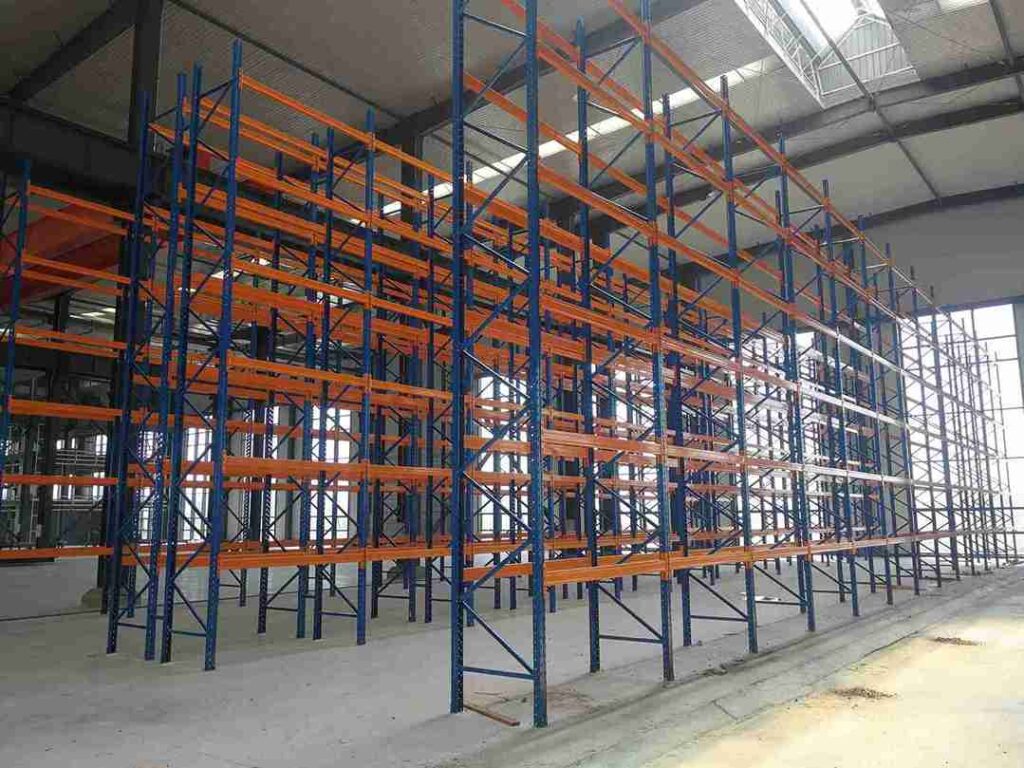
Transitioning to a high-density storage solution requires careful evaluation. Not every facility is an immediate candidate, but many can be successfully adapted with the right expertise. Here are the critical factors a specialist would assess to determine if a narrow aisle racking system is the optimal solution.
Analyzing Your Current and Future Storage Volume
A deep dive into inventory data is the first step. This includes analyzing SKU profiles, pallet specifications, and inventory turnover rates using ABC analysis. Crucially, the evaluation must be forward-looking. A narrow aisle racking system designed only for today’s volume will quickly become obsolete. The design must be scalable, anticipating business growth over the next 5 to 10 years, ensuring the investment remains sound long into the future.
Evaluating Your Warehouse Infrastructure
The physical characteristics of the building are paramount to the success of a narrow aisle racking installation. A professional site survey is non-negotiable and should examine:
Floor Flatness: The operation of high-reach narrow aisle racking equipment demands exceptionally flat floors, often specified by precise F-number/Flatness ratings. Tolerances that are acceptable for a standard forklift can be dangerous for a turret truck operating at height. Remedial work like floor grinding may be a necessary precursor.
Clear Ceiling Height: To fully capitalize on the vertical dimension of the narrow aisle racking concept, adequate clear height is essential. The system is designed to exploit the full building cube.
Column Locations and Building Obstructions: An experienced engineer will design the narrow aisle racking layout to intelligently work around existing structural columns, mezzanines, and other fixed obstructions, minimizing their negative impact on overall storage density.
Understanding Your Material Handling Workflow
The nature of the goods flow dictates the optimal configuration. Is the operation primarily full-pallet in/full-pallet out? Or is it a complex case-picking environment? The answers determine the type of narrow aisle racking equipment—such as a turret truck for full-pallet handling or a man-aboard order picker for case selection—and influence the racking design itself. For facilities with very high throughput, the narrow aisle racking system may serve as the perfect foundation for a more automated storage and retrieval system (AS/RS).

The Custom Engineering Process: Designing Your High-Density Storage Solution
The implementation of a successful narrow aisle racking system is a disciplined, multi-stage process. It moves from conceptual analysis to precise physical reality, ensuring every component performs in harmony with the operational requirements.
Step 1: In-Depth Consultation and Data-Driven Site Analysis
This foundational phase involves collaborative workshops with warehouse management and a rigorous, data-driven site analysis. Modern tools like 3D laser scanning are employed to create a precise digital twin of the facility. This model captures every nuance, ensuring the proposed narrow aisle racking design is perfectly tailored to the physical space, leaving nothing to chance.
Step 2: 3D Modeling and CAD-Based Layout Design
Using the collected data, engineering teams generate multiple 3D models and detailed CAD layouts. These are not just diagrams; they are sophisticated simulation tools. They allow for the optimization of storage density, the analysis of potential pick paths, and the modeling of throughput capacity before any metal is cut. Clients can visually walk through their future narrow aisle racking system, providing valuable feedback and building confidence in the solution.
Step 3: Component Specification and Seismic Considerations
Not all narrow aisle racking is created equal. Components must be specified based on precise load requirements, dynamic load factors, and regional environmental challenges. In seismically active regions like Indonesia or parts of South America, the narrow aisle racking design must incorporate specific seismic engineering calculations and reinforcements. This ensures the structural integrity and safety of the system under duress, a non-negotiable aspect of professional design.
Step 4: Professional Installation and Project Management
The precision of the design must be matched by the quality of the installation. Certified installation teams, managed by a dedicated project manager, ensure the narrow aisle racking system is erected to exact tolerances. This phase is managed with strict adherence to timelines and safety protocols, aiming to integrate the new narrow aisle racking system into live operations with minimal disruption.
Step 5: Comprehensive Training and Ongoing Support
The handover of a narrow aisle racking system is incomplete without comprehensive knowledge transfer. This includes hands-on, competency-based training for operators and maintenance staff on both the racking and the specialized equipment. Beyond installation, a partnership with a provider offering ongoing support contracts for maintenance and spare parts is critical for the long-term health and performance of the narrow aisle racking investment.
Synergistic Technologies: Integrating Narrow Aisle Racking with Automation
A narrow aisle racking system is not an end point; it is often the most logical and cost-effective stepping stone toward a fully automated warehouse. It provides the high-density, organized physical infrastructure upon which advanced automation can be built.
AGVs and Guided Narrow Aisle Forklifts
The next evolution of a manual narrow aisle racking system is the integration of automation. Automated Guided Vehicles (AGVs) or laser-guided turret trucks can be deployed to operate within the tight aisles of the narrow aisle racking system. This integration further reduces labor costs, eliminates human error from repetitive tasks, and enables round-the-clock operation, pushing productivity to new heights.
Seamless Integration with Conveyor and Sortation Systems
The <b>narrow aisle racking area should not be an island. It can be seamlessly connected to automated conveyor and sortation systems. This creates a continuous, streamlined flow of goods from receiving, through the high-density storage block of the narrow aisle racking, and directly to the picking and dispatch zones. This integration is the hallmark of a mature, end-to-end automated logistics solution.
The Bridge to AS/RS and Vertical Lift Modules (VLM)
For the ultimate in density and speed, the principles of a narrow aisle racking system naturally extend into fully automated storage and retrieval systems (AS/RS). The disciplined, high-density layout of a narrow aisle racking warehouse cultivates the operational mindset and data integrity required for a successful transition to a fully automated (Automated Warehouse). In this context, the narrow aisle racking system is both a physical and philosophical bridge to the future of warehousing.
Case Study: Transforming a Regional Distribution Center in Southeast Asia
A major consumer goods distributor operating a key regional hub in Indonesia was facing a critical operational bottleneck. Their existing wide-aisle racking system was at 95% capacity, causing chronic receiving delays and slowing order fulfillment to a crawl. The cost of building a new facility was prohibitive.
The Solution: A detailed analysis confirmed that a custom narrow aisle racking system was the ideal solution. The project involved a complete redesign of the storage layout, implementing a high-density narrow aisle racking configuration that reduced aisle width from 3.5 meters to 1.8 meters. This new narrow aisle racking system was paired with three high-performance, high-reach turret trucks.
The Quantifiable Results:
Storage Capacity: A dramatic 45% increase in pallet positions was achieved, effortlessly absorbing 18 months of projected business growth.
Order Picking Efficiency: Improved by 40% due to radically reduced travel distances and the superior performance of the new equipment within the narrow aisle racking environment.
Return on Investment (ROI): The entire project, including the new narrow aisle racking system and equipment, achieved a full return on investment in under 18 months, calculated through avoided expansion costs and hard productivity gains.
This case exemplifies the transformative power of a correctly engineered and implemented narrow aisle racking solution in a real-world, high-pressure environment.

Why Partner With a Specialist? The Definitive Choice for Your Warehouse
The market offers many suppliers of storage equipment, but the implementation of a mission-critical <b>narrow aisle racking</b> system demands a partner with deep, demonstrated expertise. The choice of provider is as important as the choice of system.
Proven Global Engineering Expertise
Selecting a partner with a proven track record across diverse international markets is crucial. Experience in dealing with the specific challenges of different regions—from the humidity of Thailand to the dust of the Middle East—ensures the narrow aisle racking solution provided is not just theoretically sound, but practically robust and reliable in your specific operating environment.
End-to-End Project Ownership and Accountability
A successful narrow aisle racking project requires seamless coordination between design, manufacturing, logistics, and installation. A specialist partner acts as a single point of accountability, managing the entire project lifecycle. This eliminates the risk and frustration of dealing with multiple vendors and ensures that the final installed narrow aisle racking system performs exactly as designed.
Uncompromising Commitment to Quality and Safety
The integrity of the narrow aisle racking system is paramount. A reputable provider manufactures components from high-tensile steel and can provide certification that the design and installation meet or exceed relevant international standards (e.g., FEM, RMI, SEMA). This commitment to quality and safety should be embedded in every aspect of their process, from the initial design calculations to the final bolt being torqued to specification.
Conclusion: Unlock Your Warehouse’s True Potential Today
The constraints of a traditional warehouse layout should not be the factor that limits a company’s growth and profitability. A narrow aisle racking system represents a proven, powerful, and highly cost-effective strategy to break through these constraints. It is a strategic investment that pays for itself through dramatically increased capacity, superior operational efficiency, and enhanced control over the entire storage function.
For any business serious about optimizing its logistics performance, the question is not whether to consider a narrow aisle racking system, but how quickly it can be implemented. Taking the first step towards a professional consultation and site assessment is the most logical move for any operation aiming to build a warehouse that is not just full, but truly efficient, safe, and strategically poised for future growth.
Frequently Asked Questions (FAQs)
1. What is the typical lead time for a complete Narrow Aisle Racking system from design to installation?
The total project timeline for a comprehensive narrow aisle racking system typically ranges from 8 to 14 weeks, depending on the system’s complexity and size. This includes 2-3 weeks for detailed engineering and design, 4-6 weeks for manufacturing the narrow aisle racking components, and 2-5 weeks for shipping and on-site installation. A firm project schedule is always provided after the initial site survey.
2. Can my existing standard forklift operators easily transition to operating a narrow aisle turret truck?
While the core principles of forklift operation remain, transitioning to a turret truck for a narrow aisle racking environment requires specialized, mandatory training. Operating in confined spaces at significant heights with a 180-degree rotating fork demands specific skills and heightened spatial awareness. A reputable provider will include a comprehensive, hands-on training program to ensure operators are not only efficient but, most importantly, safe within the narrow aisle racking system.
3. How does the cost of a narrow aisle forklift compare to a standard counterbalance forklift?
A narrow aisle turret truck represents a higher initial capital investment than a standard forklift. However, this must be evaluated against the total cost of ownership and the system’s ROI. The massive space savings (often avoiding a facility expansion) and the dramatic productivity gains provided by the narrow aisle racking system almost always justify the higher equipment cost, leading to a significantly lower total cost per pallet moved over the system’s lifespan.
4. Are there any specific fire safety regulations we need to consider with high-density racking?
Absolutely. High-density storage, such as that created by a narrow aisle racking system, can significantly impact a building’s fire protection strategy. Local regulations vary, but a professional narrow aisle racking provider will design the system with this in mind. They often collaborate with facility managers and fire safety engineers to ensure compliance, which may necessitate the inclusion of in-rack sprinkler systems, increased water supply requirements, or specific flue space allowances within the narrow aisle racking layout.
5. What kind of ongoing maintenance do narrow aisle racking systems require?
Preventive maintenance is crucial for the safety, performance, and longevity of both the narrow aisle racking structure and the associated equipment. A rigorous regimen should include: Weekly Visual Inspections: conducted by in-house staff for any obvious damage, impacts, or loose components on the narrow aisle racking. Scheduled Professional Inspections: conducted by the provider’s technicians annually or bi-annually to check structural alignment, bolt torque, and the integrity of all narrow aisle racking components. Forklift Maintenance: adhering strictly to the equipment manufacturer’s service schedule for the turret trucks. Many providers offer customizable maintenance contracts to manage all these aspects, ensuring the narrow aisle racking system operates at peak performance and safety for its entire lifecycle.
If you require perfect CAD drawings and quotes for warehouse racking, please contact us. We can provide you with free warehouse racking planning and design services and quotes. Our email address is: jili@geelyracks.com