📐 "First 50 Enterprise Queries Get Custom 3D Warehouse Design" Plan


Why Narrow Aisle Racking for Small Spaces is a Game-Changer
In the world of small warehouse management, every square foot counts. Businesses struggling with limited space often find themselves sacrificing accessibility for storage density—but it doesn’t have to be that way. Narrow aisle racking for small spaces is revolutionizing compact storage by maximizing vertical space while maintaining easy access to inventory.
This guide dives deep into the best racking solutions, with a strong focus on narrow aisle racking for small spaces, its benefits, and how it outperforms traditional systems. Whether managing e-commerce inventory, retail stock, or industrial parts, implementing the right narrow aisle racking system can double storage capacity without expanding the warehouse footprint.
Technical Design Nuances for Compact Environments
Designing an effective narrow aisle racking for small spaces solution requires a more nuanced approach than its larger counterpart. Every millimeter counts, and the integration must be holistic.
Customized Load Beam and Upright Profiles: The structural components for a narrow aisle racking for small spaces system are often selected for their optimal strength-to-size ratio. Lighter, high-tensile steel uprights with closer beam level spacing maximize the number of storage levels within a given vertical space. The design must account for precise load weights and frequencies, ensuring stability in a compact footprint where the racking structure is a dominant feature of the room.
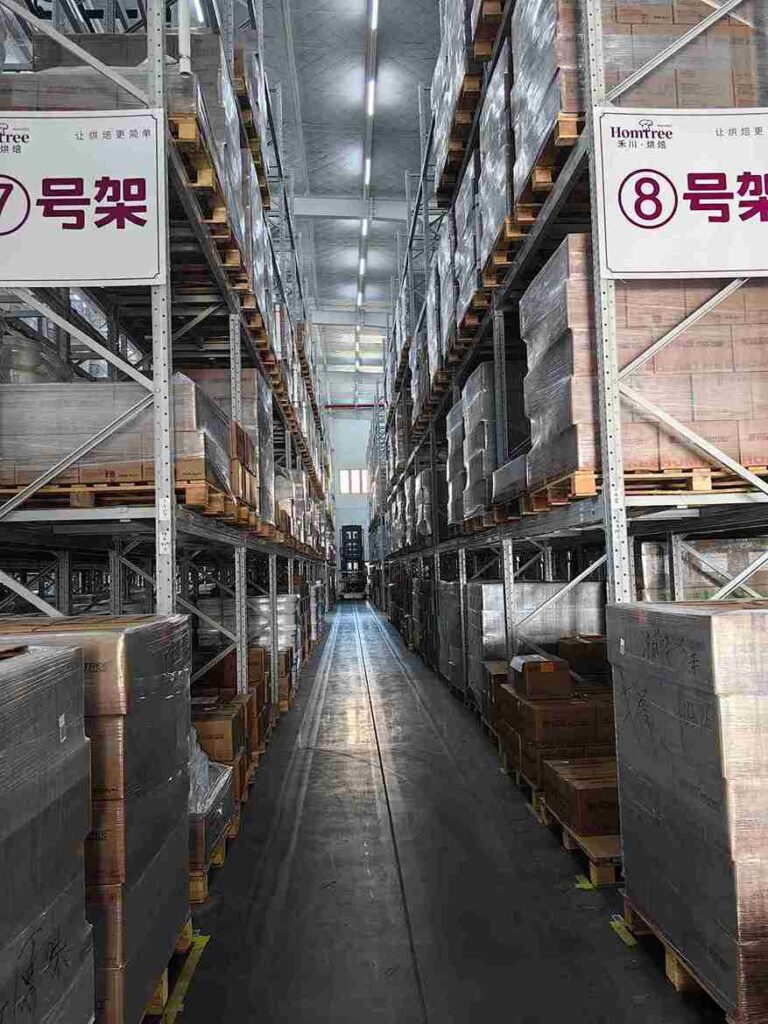
Specialized Equipment for Confined Operations: The choice of material handling equipment is critical. While standard narrow aisle trucks can operate in aisles around 1.6-1.8 meters, for the ultimate narrow aisle racking for small spaces applications, man-down turret trucks or even specialized pallet stackers designed for aisles as tight as 1.2-1.5 meters may be employed. In the most space-constrained scenarios, manual or semi-automated mobile aisle systems can be considered, where the aisle itself is created by moving rack bays, eliminating permanent aisles altogether and achieving unparalleled density. This represents the pinnacle of narrow aisle racking for small spaces innovation.
Integration with Building Infrastructure: In a small space, the racking system cannot be designed in isolation. It must interface seamlessly with existing building columns, sprinkler systems, lighting arrays, and ventilation ducts. A proficient engineer designing narrow aisle racking for small spaces will create a detailed BIM (Building Information Modeling) integration plan to avoid conflicts and ensure compliance with all fire and safety codes, which can be even more stringent in confined environments.

The Economic Calculus for Limited-Area Warehouses
The financial argument for narrow aisle racking for small spaces is compelling and often decisive. The investment is primarily in equipment and installation, avoiding the exorbitant costs associated with physical expansion.
Avoidance of Relocation or Construction Costs: For a business in a leased unit in Bangkok, Jakarta, or Mexico City, moving to a larger facility involves not just higher rent, but also business disruption, moving costs, and potential relocation of staff. Implementing narrow aisle racking for small spaces allows the business to stay put and grow in situ.
Dramatic Increase in Storage ROI per Square Meter: By potentially doubling or tripling the number of pallet or bin locations within the same rent-paying area, the cost per stored item plummets. The narrow aisle racking for small spaces system effectively reduces the spatial cost component of storage, a direct boost to the bottom line.
Labor Efficiency Gains in Concentrated Areas: In a small warehouse, travel paths are already shorter. A narrow aisle racking for small spaces system, combined with the right equipment, minimizes unnecessary movement further. Pickers and operators can accomplish more tasks per hour because the storage media is more accessible and logically organized, reducing the time spent searching and traveling.
A practical example illustrates this: A 800 sqm warehouse for pharmaceutical supplies in Manila was at 95% capacity, facing a costly move. A tailored narrow aisle racking for small spaces design, utilizing 11-meter height clearance with a guided VNA truck, increased pallet capacity from 800 to over 2,100 positions. The project paid for itself in less than 18 months by averting a relocation that would have increased annual overhead by 40%.
Overcoming Common Objections for Small-Space Implementations
Skepticism about implementing narrow aisle racking for small spaces often revolves around perceived limitations.
Objection: “Our space is too irregularly shaped.” A proficient storage consultant views irregular shapes not as a barrier, but as a puzzle. Narrow aisle racking for small spaces systems are highly configurable. Creative layouts can wrap around columns, fit into L-shaped corners, or utilize uneven ceiling heights through stepped configurations. The flexibility of the design is a key strength in adapting to non-standard footprints.
Objection: “We have too many SKUs for a dense system.” High SKU count is a primary driver for narrow aisle racking for small spaces. Density does not equate to disorganization. Integrated with a robust Warehouse Management System (WMS), a high-density narrow aisle racking for small spaces system allows for intelligent slotting. Fast-moving items are placed in the most accessible “golden zone,” while slow-movers occupy the higher, denser areas. The WMS provides the digital map to navigate the physical density with precision.
Objection: “It will be too slow for our throughput.” Throughput is a function of workflow design, not just aisle width. A well-planned narrow aisle racking for small spaces operation uses a “goods-to-person” or batch-picking strategy at optimized pick stations. The narrow aisle vehicle is dedicated to rapid replenishment of these stations from the high-density reserve storage. This separation of functions often results in higher overall throughput than a chaotic, congested wide-aisle layout.
Future-Proofing the Compact Warehouse
Investing in narrow aisle racking for small spaces is an investment in scalability. As a business grows, the system can evolve.
Modular Expansion: Quality narrow aisle racking for small spaces systems are modular. Additional bays can be added if floor space allows, or the system can be reconfigured for different pallet sizes or product types.
Pathway to Automation: The structured, predictable environment of a narrow aisle racking for small spaces system is the ideal foundation for automation. It can be readily integrated with automated guided vehicles (AGVs) for horizontal transport or, in some cases, upgraded to a fully automated mini-load ASRS for small-parts storage. Starting with a manual narrow aisle racking for small spaces system establishes the high-density footprint that future automation can build upon without a complete redesign.
Data-Driven Optimization: The implementation of a narrow aisle racking for small spaces system typically necessitates a digital upgrade in inventory management. This creates a data-rich environment where analytics can further refine storage strategies, seasonal slotting, and inventory forecasting, continuously squeezing more efficiency from the limited space.
Conclusion: The Strategic Imperative for Space-Constrained Operations
In the global marketplace, where logistics agility is paramount and real estate costs are a significant variable, the ability to do more within a fixed, small space is a formidable competitive edge. Narrow aisle racking for small spaces is not just a storage product; it is a comprehensive operational strategy. It embodies the principle that growth is not always horizontal—it is very often vertical and intellectual.
For the warehouse manager in Ho Chi Minh City, the plant supervisor in Johannesburg, or the distributor in Santiago, the message is clear: the limits of a physical building need not define the limits of the business. Through meticulous planning, tailored engineering, and the strategic deployment of narrow aisle racking for small spaces, constrained facilities can unlock latent capacity, streamline operations, and build a scalable platform for future growth. The journey begins with a re-evaluation of the space itself, seeing not its boundaries, but its untapped potential.
Frequently Asked Questions (FAQs)
Q1: We have a low, suspended ceiling (under 6 meters). Is narrow aisle racking still viable for our small space?
A: Absolutely. While high-bay applications get attention, narrow aisle racking for small spaces is highly effective in low-clearance environments. The gain comes from aisle reduction, not just height exploitation. By converting wide aisles to narrow aisles, even a 4.5-meter tall room can see a 40-60% increase in storage locations. We often use compact, maneuverable order pickers or pallet stackers in these ultra-low narrow aisle racking for small spaces designs, focusing on maximizing every cubic centimeter.
Q2: Our floors are uneven and old. Can we install a precision narrow aisle system without costly re-flooring?
A: This is a common challenge in older industrial buildings. A full assessment is needed. Solutions exist on a spectrum: For minor unevenness, we can specify trucks with advanced mast stabilization technology. For moderate issues, localized floor grinding or self-leveling compounds in the aisle paths can be a cost-effective fix. In severe cases, a mobile modular racking system that sits on a unified base plate can circumvent floor flaws entirely. We analyze the cost of floor correction versus the long-term performance benefits of a true narrow aisle racking for small spaces system to find the most economical path forward.
Q3: How do we handle fire safety and sprinkler requirements within such a dense storage layout in a small warehouse?
A: Safety is paramount. Dense narrow aisle racking for small spaces layouts require upgraded fire protection. National and local fire codes (NFPA, FM Global, etc.) will dictate the solution. Typically, this involves installing in-rack sprinkler heads at various vertical levels within the rack structure itself, ensuring water can penetrate the dense storage array. This is combined with main ceiling sprinklers. Our designs always include coordination with certified fire protection engineers to ensure the final narrow aisle racking for small spaces installation is fully compliant and protects both your inventory and your asset.
Q4: We operate in a humid coastal climate. Are there corrosion risks with the equipment used for narrow aisle racking in small spaces?
A: Yes, corrosion is a valid concern in tropical or coastal environments like those in Southeast Asia or the Gulf. We mitigate this through specification. For the narrow aisle racking for small spaces structure, we recommend hot-dip galvanized steel uprights and beams, which offer superior protection compared to painted finishes. For the electrical forklifts, we specify components with higher IP (Ingress Protection) ratings, recommend climate-controlled charging stations, and use stainless steel or protected alloys for key components. Regular preventative maintenance schedules are also tailored to these environmental challenges.
Q5: Can a narrow aisle racking system for small spaces be disassembled and relocated if we eventually do move to a larger facility?
A: One of the significant advantages of a modular narrow aisle racking for small spaces system is its relocatability. Unlike poured-in-place concrete structures, steel racking can be carefully disassembled, transported, and reassembled in a new location. While there are costs associated with the labor of disassembly/reassembly and potential for a small percentage of component loss, the majority of your investment retains its value. We often design with future relocation in mind, using standardized components and clear assembly markings to facilitate this process, protecting your long-term capital investment.
If you require perfect CAD drawings and quotes for warehouse racking, please contact us. We can provide you with free warehouse racking planning and design services and quotes. Our email address is: jili@geelyracks.com