📐 "First 50 Enterprise Queries Get Custom 3D Warehouse Design" Plan


The Definitive Guide to High-Density Narrow Aisle Racking for Logistics: Unlocking 40%+ Cost Savings in Growth Markets
For logistics operators across the burgeoning industrial corridors of Southeast Asia, the Middle East, Africa, and Latin America, the relentless pressure to do more with less defines daily operations. The strategic implementation of narrow aisle racking for logistics is not merely a storage upgrade; it is a comprehensive re-engineering of warehouse economics. This deep-dive analysis transcends surface-level benefits, providing a masterclass in how engineered storage density directly catalyzes double-digit reductions in total operational expenditure.
By dissecting the intricate synergy between structural design, specialized material handling, and localized operational intelligence, this guide establishes a definitive roadmap. Logistics managers in Manila, Dubai, Johannesburg, and São Paulo will find not just theory, but a actionable blueprint for transforming their facility into a high-throughput, low-cost asset, making narrow aisle racking for logistics the cornerstone of their competitive strategy.

Deconstructing the Modern Logistics Cost Crisis in Emerging Economies
The economics of logistics in high-growth regions present a unique and intensifying challenge. Skyrocketing commercial real estate values in zones like Binh Duong, Vietnam, or the GCC’s industrial cities force a brutal reckoning with space utilization. Concurrently, rising labor costs and scarcity of skilled forklift operators in markets like Indonesia and Mexico squeeze profitability from another angle. Inefficient storage—characterized by sprawling wide aisles designed for counterbalance forklifts—acts as a multiplier of these costs.
It consumes a premium on floor space, inflates energy bills through unnecessary travel, and caps productivity. The fundamental premise of narrow aisle racking for logistics is to attack this inefficiency at its source. By systematically replacing wasted aisle space with productive storage positions, the system recalibrates the entire cost model of the warehouse. This approach to narrow aisle racking for logistics shifts storage from a passive, space-consuming function to an active, profit-preserving engine.
The Precision Engineering Behind Superior Storage Density
Understanding the mechanics is crucial to appreciating the transformation. A system built on narrow aisle racking for logistics is a harmonized ecosystem of three critical components:
The Structural Framework: Unlike conventional racking, structures designed for narrow aisle racking for logistics are engineered for exceptional vertical stability and precise alignment. They utilize higher-grade steel and robust connection systems to withstand the dynamic loads and tighter tolerances required for operations with specialized trucks. This is particularly critical in regions prone to seismic activity or with variable building standards.
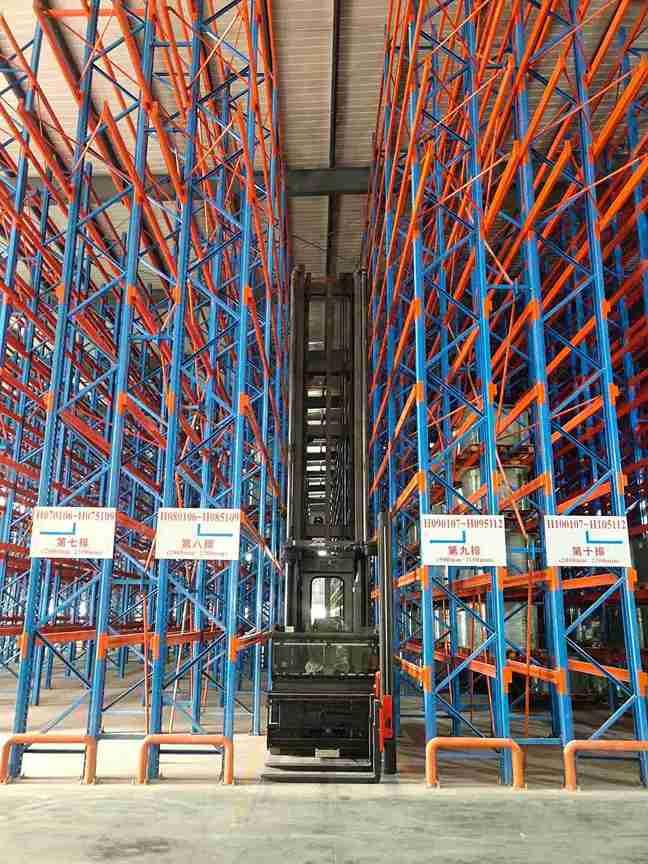
The Aisle Geometry: This is the transformative variable. Aisles are meticulously compressed to widths between 1.6 and 2.0 meters, a stark reduction from the 3.5-meter-plus corridors of traditional setups. Every centimeter saved is directly converted into additional pallet locations. This geometric efficiency is the non-negotiable foundation of any high-performance narrow aisle racking for logistics project.
The Purpose-Built Handling Equipment: The system’s intelligence resides here. Reach trucks, turret trucks, and order pickers are the specialized tools that bring narrow aisle racking for logistics to life. Their compact chassis, rotating forks, and elevated operator cabins are designed explicitly to navigate, store, and retrieve within the confined aisle, maximizing the density without sacrificing access.
The Mathematical Imperative: From Square Meters to Cubic Efficiency
The argument for narrow aisle racking for logistics is ultimately a numerical one. Consider a standard logistics warehouse of 10,000 square meters with a clear height of 12 meters. A traditional setup may yield approximately 8,000 pallet positions, sacrificing vast swathes of the cubic volume to aisle space. A meticulously planned narrow aisle racking for logistics system can increase that figure to 12,500 or more positions within the same envelope. This represents a direct 50%+ increase in storage capacity. The financial translation is immediate: a dramatic reduction in the cost per pallet position for rent, utilities, and building maintenance. This foundational benefit is why narrow aisle racking for logistics forms the core of any serious cost-containment strategy.

The Multi-Faceted ROI of a Narrow Aisle Racking for Logistics Transformation
While the density gain is the headline, the comprehensive return on investment from narrow aisle racking for logistics is generated through a cascade of operational improvements.
Labor Optimization in a Tight Market
Across logistics hubs from Thailand to Chile, consistent access to skilled labor is a chronic challenge. A well-implemented narrow aisle racking for logistics system directly addresses this. The defined, linear travel paths simplify operator tasks, reducing fatigue and training time. Advanced trucks with programmable height selectors and electronic direction controls further minimize errors and cycle times. In practice, facilities report a 25-35% improvement in picks per hour, allowing the same workforce to handle significantly greater throughput. This makes narrow aisle racking for logistics a powerful tool for labor cost management and productivity assurance.
The Overhead Reduction Multiplier
The efficiencies extend far beyond the warehouse floor. A facility utilizing narrow aisle racking for logistics requires less overall space to achieve the same storage volume. For a new build, this means a smaller, less expensive footprint. For an existing facility, it defers or eliminates the need for costly expansion. The reduced operational cube directly lowers lighting, heating, and cooling costs—a critical factor in regions with extreme climates like the Middle East or Southeast Asia. Furthermore, the shift to electric-powered narrow aisle equipment, combined with shorter travel distances, slashes energy consumption compared to traditional internal combustion forklifts roaming vast aisles.
Inventory Integrity and Velocity Gains
A dense storage environment, counterintuitively, enhances control. Modern narrow aisle racking for logistics designs are planned in concert with Warehouse Management Systems (WMS). Each pallet location becomes a precise, digitally-addressed point. This eliminates random storage and chaotic searching, leading to near-perfect inventory accuracy. Reduced travel times and optimized picking paths accelerate order cycle times. For a logistics provider serving the fast-moving consumer goods or e-commerce sectors in these dynamic markets, the speed and accuracy enabled by narrow aisle racking for logistics translate directly into superior customer service and contractual compliance.
Regional Application: Tailoring Narrow Aisle Racking for Logistics to Local Realities
The successful deployment of narrow aisle racking for logistics demands deep localization. The optimal configuration for a frozen food warehouse in Panama differs markedly from one for an automotive parts hub in South Africa.
Southeast Asia’s Diverse Ecosystem
Export-Oriented Manufacturing (Vietnam, Thailand): Here, narrow aisle racking for logistics must handle high volumes of homogeneous goods with rapid turnover. Designs emphasize very high bay heights (up to 15m), robust load capacities, and integration with automated guided vehicles (AGVs) for continuous production line feeding.
Archipelagic Distribution Centers (Indonesia, Philippines): These hubs require exceptional SKU variety management. A hybrid approach using narrow aisle racking for logistics for full-pallet reserve storage, combined with dynamic picking solutions for case-level fulfillment, is most effective. Seismic engineering is paramount.
High-Land-Cost Urban Logistics (Singapore, Metro Manila): Maximizing every cubic meter is the sole objective. Projects often involve retrofitting existing buildings with very narrow aisle (VNA) systems, using guided turret trucks or man-up order pickers to achieve unparalleled density within tight confines.
Adapting to the Middle East, Africa, and Latin America
GCC Logistics Hubs: The focus for narrow aisle racking for logistics here is on 24/7 reliability in harsh climates. Equipment requires enhanced cooling systems, and dust filtration. The systems support high-value logistics for sectors like pharmaceuticals, electronics, and duty-free retail, where security and traceability are integrated.
African Market Expansion: Solutions must be robust and often modular. In regions with less stable infrastructure, narrow aisle racking for logistics designs might prioritize simplicity and mechanical reliability over full automation, with a clear roadmap for future tech integration. Local technician training and parts availability are critical success factors.
Latin America’s Industrial Growth: From the sophisticated ports of Brazil to the growing manufacturing centers of Colombia, narrow aisle racking for logistics provides the scalable backbone. The approach often involves phased implementation, starting with a high-density manual system that is pre-configured for later integration with sortation and robotics.

The Financial Architecture: Building an Irrefutable Business Case for Narrow Aisle Racking
To move from interest to investment, logistics directors require a concrete, defensible financial model. The business case for narrow aisle racking for logistics is built on Total Cost of Ownership (TCO) analysis.
CapEx vs. OpEx: The Long-Term View
The initial investment in narrow aisle racking for logistics and specialized equipment is often higher than for conventional racking. However, the true analysis lies in the dramatic operational expenditure (OpEx) reduction over a 10-year horizon:
Real Estate Efficiency: Either a 30-40% reduction in required space or a equivalent increase in stored inventory within the existing footprint.
Labor Productivity: Documented reductions in operator hours per pallet moved.
Energy & Maintenance: Quantified savings from electric equipment, reduced travel, and lower racking damage.
Inventory Carrying Costs: Improvements from reduced shrinkage and better space utilization.
Achieving a Rapid, Quantifiable Payback
In documented deployments across target markets, the combination of deferred capital expenditure on building expansion and the annual OpEx savings consistently yields a payback period for narrow aisle racking for logistics systems between 18 and 36 months. Post-payback, the ongoing savings flow directly to the bottom line, creating a lasting competitive cost advantage. This financial profile makes narrow aisle racking for logistics one of the highest-ROI capital improvements available to a logistics operation.
The Strategic Evolution: From Narrow Aisle Racking to an Integrated Automated Logistics Nerve Center
A state-of-the-art narrow aisle racking for logistics installation is never an endpoint; it is the foundational grid for future automation. It creates the organized, high-density universe that software and robots require to operate at peak efficiency.
The Direct Path to Automation with AGVs/AMRs
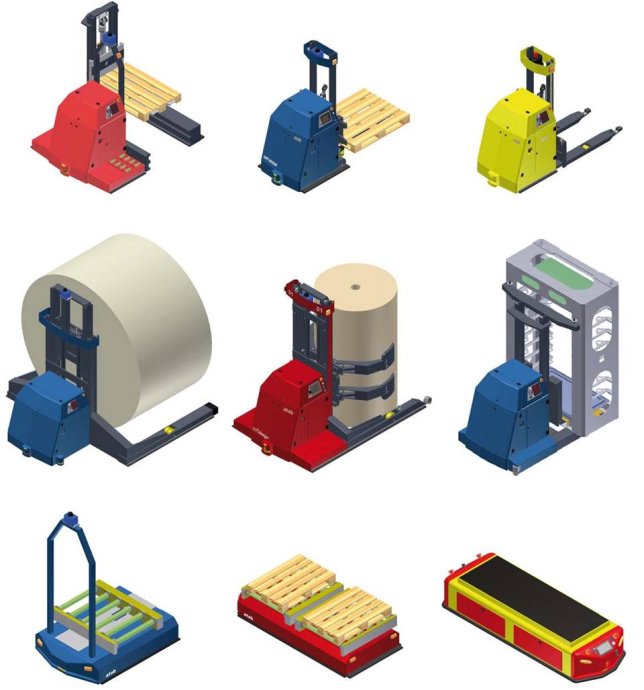
Modern narrow aisle racking for logistics can be specified with alignment guides and interfaces for automated guided forklifts. These driverless vehicles can be tasked with the repetitive, scheduled movement of pallets in and out of the ultra-dense storage blocks, a concept known as “goods-to-robot” workflows. This hybrid model, leveraging narrow aisle racking for logistics as the storage engine, is a pragmatic and highly effective entry into automation for markets building their technological base.
Forming the Core of a Broader Automated Ecosystem
The reserve storage provided by narrow aisle racking for logistics seamlessly connects to downstream processes. Pallet conveyors can transport loads to staging areas. A WMS can direct autonomous mobile robots (AMRs) to ferry picked items to packing stations. This creates a synchronized flow, positioning the warehouse utilizing narrow aisle racking for logistics as the high-capacity, reliable heart of a modern fulfillment operation, essential for meeting the service-level agreements of global e-commerce and retail.
Execution Excellence: The Make-or-Break Phase of Implementation
The superior design of a narrow aisle racking for logistics system can be undone by poor project execution. Success hinges on meticulous attention to often-overlooked details.
The Non-Negotiable: Site and Foundation Preparation
The performance of narrow aisle racking for logistics is contingent on exceptional floor flatness. Tolerances exceeding ±3mm over 3 meters can cause equipment misalignment and premature wear. A comprehensive laser survey is the first step, often leading to recommendations for floor grinding or levelling—a critical line item in the project budget, especially in regions with less stringent construction norms.
Mastery Through Training and Change Management
Introducing high-reach equipment into a new narrow aisle racking for logistics environment requires a certified, phased training program. Effective training goes beyond basic operation to encompass safety protocols, battery management, and preventative maintenance diagnostics. Securing operator buy-in by demonstrating how the technology makes their jobs safer and more efficient is a crucial success factor often underestimated.
Phased Go-Live and Sustained Support
A pilot phase, activating a single aisle or zone of the narrow aisle racking for logistics system, allows for fine-tuning workflows and building confidence before full-scale rollout. Partnering with a provider that offers on-site commissioning and sustained technical support ensures that the theoretical efficiency gains of the narrow aisle racking for logistics design are fully realized in day-to-day operations.
The Future-Proof Facility: Next-Generation Innovations in Narrow Aisle Racking for Logistics
The technology surrounding narrow aisle racking for logistics continues to advance. The integration of IoT sensors into racking uprights allows for real-time monitoring of load status and impact detection. Digital twin software enables the simulation and optimization of the entire storage and retrieval process before installation. Advances in high-strength, lightweight steel alloys facilitate even taller and more resilient structures. For the forward-thinking logistics operator, specifying a narrow aisle racking for logistics system today means investing in a platform ready to absorb these innovations, protecting the asset’s value for decades.
Conclusion: The Inescapable Logic of Density-Optimized Logistics
For decision-makers steering logistics enterprises in the world’s most competitive growth markets, the adoption of narrow aisle racking for logistics has transitioned from a tactical option to a strategic imperative. The evidence is unequivocal: in the face of rising costs for space, labor, and energy, the engineered density provided by narrow aisle racking for logistics offers the most direct and substantial lever for preserving margins and securing scalability.
The promise of 40%+ reductions in overall logistics costs is not aspirational; it is the documented outcome of applying precision engineering to the fundamental challenge of storage. Embracing narrow aisle racking for logistics signifies a commitment to operational excellence, transforming the warehouse from a static cost center into a dynamic, agile, and profit-critical component of the supply chain. The journey toward this transformation begins with a data-driven assessment of current constraints and future ambitions—a process where deep specialization in narrow aisle racking for logistics proves indispensable.
FAQs:
How does the selection process for the right type of narrow aisle forklift (reach truck vs. turret truck) work for a specific narrow aisle racking for logistics project?
The choice is dictated by aisle width, storage height, and throughput requirements. For aisles as narrow as 1.6m, a turret truck that operates without turning its forks is essential for narrow aisle racking for logistics. For aisles around 2.0m, a reach truck may be sufficient and more cost-effective. A detailed analysis of pallet flows, SKU profiles, and building dimensions conducted by a specialist in narrow aisle racking for logistics will determine the optimal equipment mix for maximum ROI.Can a narrow aisle racking for logistics system be effectively cooled or ventilated in hot and humid climates like those found in Southeast Asia or the Gulf?
Yes, but it requires intelligent design. The high-density nature of narrow aisle racking for logistics can affect air circulation. Solutions include strategically positioning HVLS (High Volume, Low Speed) fans above the aisles, designing the layout to align with existing ventilation paths, and, for climate-controlled environments, using precision-directed air conditioning. The structural design of the narrow aisle racking for logistics system itself can incorporate channels to facilitate airflow.What is the typical lead time for the design, manufacture, and installation of a comprehensive narrow aisle racking for logistics system in a market like Nigeria or Peru?
Lead times vary significantly based on system complexity and localization of components. A standard project involving narrow aisle racking for logistics typically follows this timeline: 2-3 weeks for detailed design and approval, 8-12 weeks for manufacturing of customized racking, and 4-8 weeks for shipping and installation. Working with a provider with regional manufacturing hubs or established logistics corridors can compress this timeline, a key consideration for fast-moving projects.How does the resale or reusability value of a narrow aisle racking for logistics system compare to standard racking if we relocate or redesign our facility?
Systems designed for narrow aisle racking for logistics generally have a strong residual value due to their higher-grade materials and construction. Their modular nature allows for disassembly and reconfiguration in a new location, though this requires expert re-engineering to ensure the new layout and floor conditions meet the original specifications. This adaptability makes narrow aisle racking for logistics a more durable and flexible long-term asset than many conventional alternatives.For a business with a significant portion of non-standard or unstable loads, is narrow aisle racking for logistics still a viable option?
It requires careful adaptation. The core principle of narrow aisle racking for logistics remains sound, but the storage media may change. Solutions include integrating specialized attachments like push-back carts within the narrow aisle framework, or using wire-guided trucks with extra stabilization for handling taller, less stable unit loads. A consultation focusing on the specific load characteristics is essential to tailor the narrow aisle racking for logistics concept effectively.
If you require perfect CAD drawings and quotes for warehouse racking, please contact us. We can provide you with free warehouse racking planning and design services and quotes. Our email address is: jili@geelyracks.com