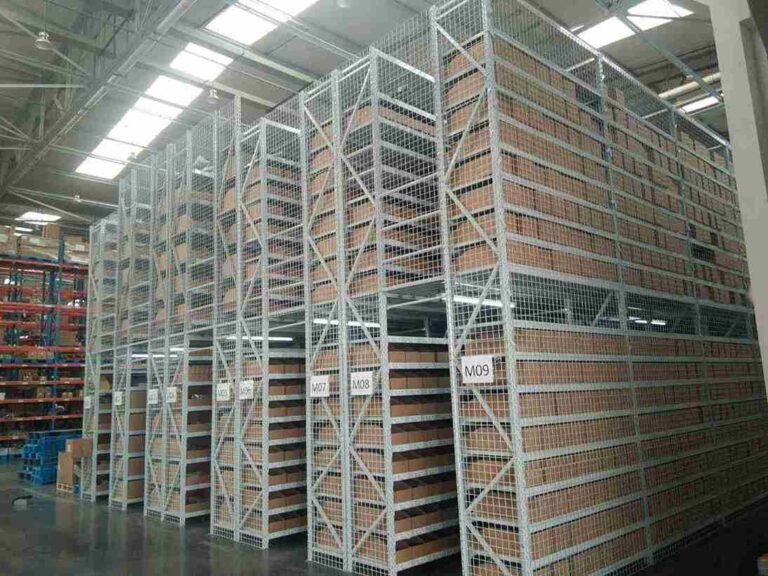
📐 "First 50 Enterprise Queries Get Custom 3D Warehouse Design" Plan


Advanced Engineering and Strategic Implementation of Narrow Aisle Racking for Cold Storage
The foundational case for implementing narrow aisle racking for cold storage is clear: unprecedented density, enhanced operational control, and the removal of personnel from hazardous environments. However, for the discerning logistics executive in São Paulo, Johannesburg, or Dubai, moving from conceptual acceptance to project approval requires delving deeper into the granular, often overlooked details that separate a theoretically sound solution from a resilient, high-return asset. This expansion focuses on the advanced engineering considerations, nuanced system configurations, and strategic implementation protocols that define world-class narrow aisle racking for cold storage deployments in emerging markets.

The Thermodynamic Symphony: Integrating Racking with Refrigeration Design
A narrow aisle racking for cold storage system is not an island; it is a critical component of the building’s thermodynamic system. Its design must be in concert with the refrigeration engineering to avoid costly inefficiencies.
Airflow Optimization and Coil Placement: Traditional wide-aisle warehouses allow for relatively unimpeded airflow. The high-density profile of a narrow aisle racking for cold storage system can obstruct this flow, leading to temperature stratification—pockets of warmer air at the top and colder air settling at the bottom. Expert integrators work with refrigeration contractors from day one. Computational Fluid Dynamics (CFD) modeling is employed to simulate airflow patterns around the proposed racking layout.
This informs the strategic placement of evaporator coils, the orientation of high-volume, low-speed (HVLS) fans, and sometimes the incorporation of perforated decking on select rack levels to facilitate vertical air movement. The goal is to achieve a homogenous temperature field (±1°C variance) throughout the stored product, which is non-negotiable for pharmaceutical or high-value frozen goods.
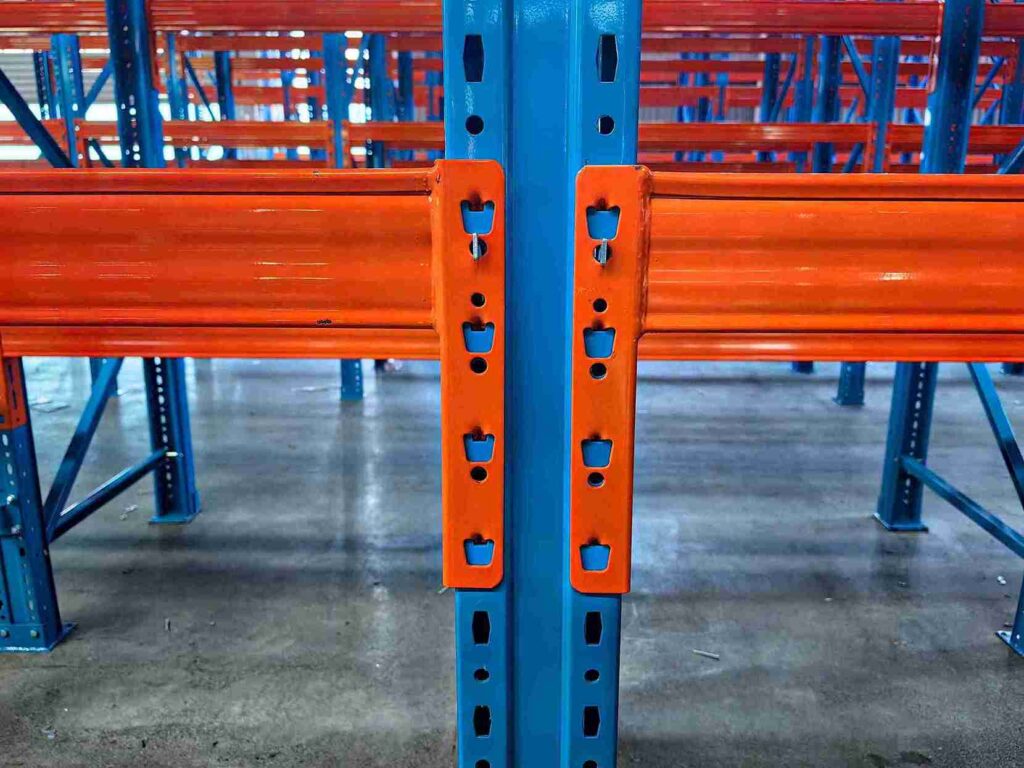
Minimizing Thermal Bridges and Infiltration: Every penetration into the cold chamber is a potential thermal bridge. The design of a narrow aisle racking for cold storage system must account for this. Floor-mounted rails for automated cranes, for example, require specialized thermal break pads and sealing compounds to prevent cold from leaching into the subfloor and ground, which can cause frost heave—a devastating issue for slab integrity. Similarly, conduit entries for power and data to the automated equipment use pressurized, sealed entry systems filled with non-conductive, flexible foam to block moisture and heat ingress.
Configuration Deep Dive: Choosing Between Crane-Based and Shuttle-Based NAR for Cold Storage
The choice between an Automated Narrow Aisle (ANA) crane system and a tier-level robotic shuttle system for narrow aisle racking for cold storage is pivotal. Each has distinct advantages suited to different operational profiles.
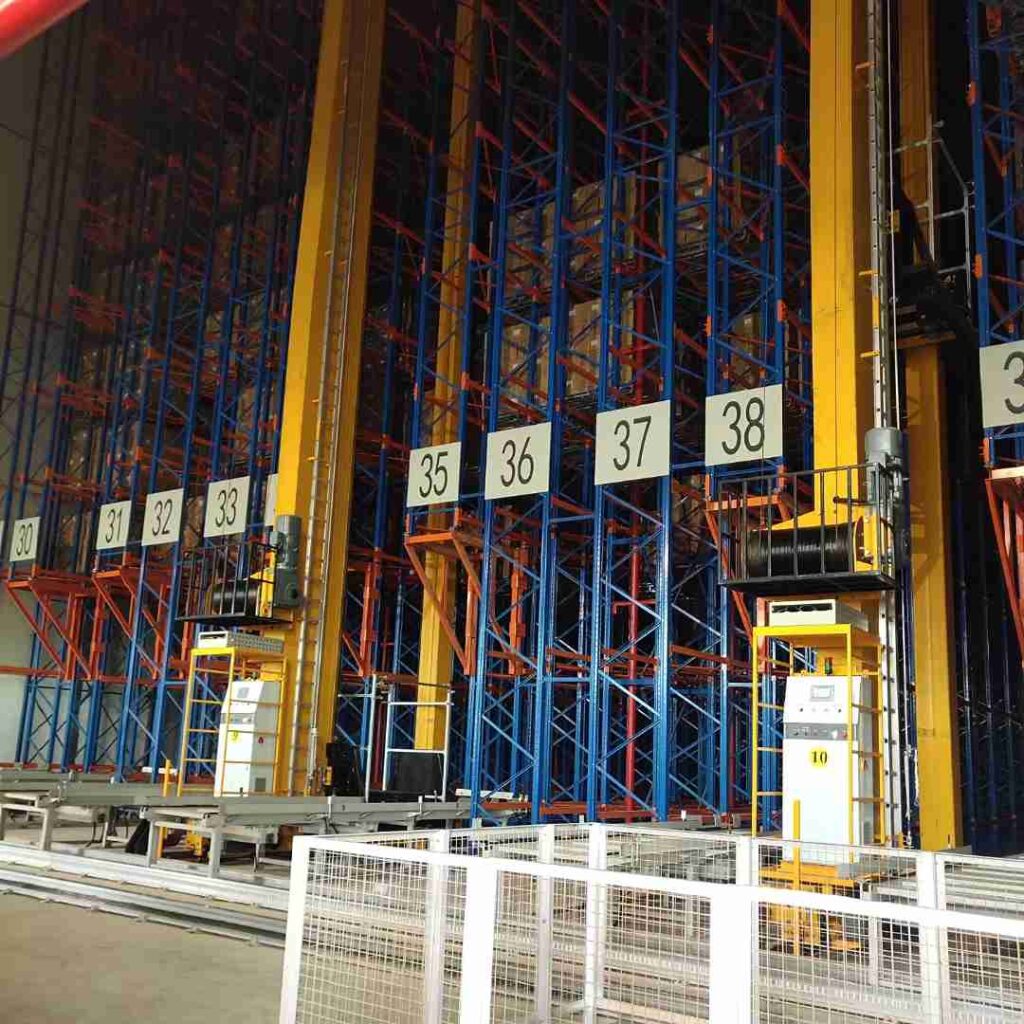
ANA Cranes: The High-Throughput, High-Bay Champion. This configuration is ideal for facilities with very high SKU counts, extreme height utilization (often over 30 meters), and a need for random access to any pallet at any time. For a large export facility in Chile storing 10,000+ pallets of frozen fruit, the crane-based narrow aisle racking for cold storage is often optimal. Modern cranes feature twin or even quad-mast designs for exceptional stability at height and speed, with lifting velocities exceeding 2 meters per second and horizontal travel over 4 meters per second.
Their ability to serve both sides of a single, extremely narrow aisle (down to 1.5m) maximizes cube utilization. The latest innovation is the “crane-on-crane” or satellite vehicle, where the main crane delivers a smaller, independent shuttle into the racking to access multiple deep storage lanes, combining the benefits of high-bay density with very high storage depth.
Robotic Shuttle Systems: The Flexibility and Scalability Leader. This configuration excels in multi-temperature facilities, operations with strong batch-picking requirements, or projects where future expansion is anticipated. In a distribution center in Nigeria handling frozen, chilled, and ambient goods, shuttle-based narrow aisle racking for cold storage allows for a modular approach. Shuttles are dedicated to specific temperature zones or product categories.
Throughput is scaled horizontally by adding more shuttles, not by building taller cranes. This system is exceptionally efficient for deep-lane storage (e.g., 10+ pallets deep), as the shuttle operates within the lane itself, retrieving pallets on a First-In-First-Out (FIFO) or Last-In-First-Out (LIFO) basis with perfect accuracy. The decoupling of the vertical lift mechanism (a central elevator or lift) from the horizontal transport (the shuttle) also simplifies maintenance and reduces single-point-of-failure risks.
The Software Layer: Beyond Basic WMS to Adaptive, AI-Driven Control
The intelligence of a narrow aisle racking for cold storage system is its ultimate differentiator. The software must be robust, adaptive, and predictive.
Adaptive Slotting and Dynamic Putaway: Advanced Warehouse Execution Systems (WES) now go beyond static slotting. Using real-time data on order patterns, seasonality, and product affinity (which items are often ordered together), the system dynamically reassigns optimal storage locations within the narrow aisle racking for cold storage. A fast-moving product during Ramadan in Saudi Arabia is automatically moved to a “golden zone”—a location minimizing the crane’s travel path. This continuous optimization, invisible to operators, can yield a 15-20% increase in effective throughput without any hardware changes.
Digital Twin and Simulation Modeling: Prior to installation, a full digital twin of the proposed narrow aisle racking for cold storage operation is created. This virtual model is subjected to stress tests simulating years of operation in hours: peak holiday seasons, conveyor jams, planned maintenance windows, and even equipment failures. This simulation identifies bottlenecks in the design phase, allowing engineers to optimize the number of cranes, shuttle-to-lift ratios, and P&D station layouts. It provides a data-backed performance guarantee before ground is ever broken.
Predictive Maintenance 2.0: Moving beyond simple hour-based servicing, next-gen systems use IoT sensors to monitor the health of every critical component. Vibration analysis on motor bearings, thermal imaging on electrical connections, and continuous amperage draw monitoring on drive units feed into a machine learning algorithm. This system doesn’t just flag a potential failure; it predicts the remaining useful life of a component and schedules its replacement during the next planned downtime, virtually eliminating catastrophic, unplanned stops. For a remote cold storage facility in Angola, this remote diagnostic capability is a lifeline.
The Human-Machine Interface: Training and Change Management for New Paradigms
The success of a narrow aisle racking for cold storage project hinges as much on people as on technology. Transitioning from a manual, forklift-based operation to a fully automated, software-controlled one is a cultural shift.
Structured Upskilling Programs: Implementation partners must provide tiered training that turns forklift operators into system supervisors and technicians. Level 1 training focuses on the User Interface (UI)—how to input orders, handle exceptions, and interpret system alerts. Level 2 training empowers local maintenance teams to perform routine diagnostics, component replacement, and mechanical adjustments. Level 3 training, often for a select few, delves into advanced WCS logic and network troubleshooting. This investment in local talent ensures system sovereignty and drastically reduces long-term support costs.
Gamification and Performance Transparency: Modern control systems often include operator dashboards that display real-time Key Performance Indicators (KPIs): orders per hour, system utilization, energy consumption per pallet moved. Some forward-thinking facilities use gamification, creating friendly competition between shifts to achieve the highest efficiency ratings. This transparency turns the narrow aisle racking for cold storage system from a black box into a tool for continuous operational improvement, engaging the workforce in the new process.
Regional Spotlights: Advanced Applications and Case Considerations
Latin America: Tackling Volatility in Fresh Produce Export Hubs
Beyond basic agro-exports, advanced narrow aisle racking for cold storage systems in regions like Mexico or Colombia are integrating with blast freezing tunnels and ripening rooms. The system manages the “arrested state” of produce. For example, avocados are received, placed in the narrow aisle racking for cold storage at a precise chilling temperature to halt ripening. Based on global demand signals, batches are automatically retrieved and transferred to ethylene-controlled ripening rooms before final shipment. The racking system’s flawless FIFO control and real-time traceability are essential for managing this delicate, value-optimizing process, ensuring premium quality and minimizing waste.
Africa & The Middle East: The Pharmaceutical Mandate and Hyper-Efficiency
In markets like South Africa or the UAE, where pharmaceutical distribution is governed by WHO Good Distribution Practices (GDP) and local standards, narrow aisle racking for cold storage becomes a compliance tool. The system provides an unbroken, audit-ready digital chain of custody. Every pallet movement is logged with timestamp, location, and operator (system or manual override user). Integrated environmental sensors provide continuous mapping data, proving to regulators that life-saving vaccines or insulin were stored within the mandated 2-8°C range for their entire dwell time. This demonstrable compliance is a powerful competitive advantage for 3PLs bidding for pharmaceutical contracts.
The Financial Model Revisited: CapEx, OpEx, and Value-Creation Levers
A sophisticated financial analysis moves beyond simple ROI to examine value-creation levers unique to automated narrow aisle racking for cold storage.
De-risking Labor Inflation and Scarcity: In markets with tightening labor laws and increasing wage pressures, automation provides a predictable, fixed cost for the “labor” of storing and retrieving pallets. The financial model quantifies this de-risking, projecting the rising cost of cold-room labor over 10 years against the stable operating cost of the automated system.
Unlocking Real Estate Value: In crowded urban ports like Mombasa or Callao, land is at a premium. By increasing storage density by 60% or more, a narrow aisle racking for cold storage system effectively multiplies the utility of every square meter of built space. The financial analysis can model the alternative: the cost of acquiring or leasing additional land and building a second, less efficient warehouse. The capital deferred or saved is a direct value creation attributable to the high-density system.
Insurance and Risk Mitification Credits: Some insurers now offer reduced premiums for facilities that eliminate manual forklift operations in cold storage—a high-risk activity. The reduction in product loss from damage (automation is gentler) and spoilage (perfect FIFO) further reduces insurance claims. These hard and soft savings must be factored into the total economic picture.
Conclusion: The Engine of Competitive Sovereignty
Ultimately, the decision to invest in advanced narrow aisle racking for cold storage is a decision to build competitive sovereignty. For a Latin American exporter, it means the ability to guarantee European retailers perfect, traceable loads year-round, commanding premium prices. For an African distributor, it means reliably supplying a continent’s growing cities with safe food and medicine, building a brand synonymous with trust. For a Gulf-based 3PL, it means offering pharmaceutical clients a level of compliance assurance that wins billion-dollar contracts.
The technology has matured from a niche solution to the backbone of modern cold chain logistics. The conversation is no longer about justifying its cost, but about meticulously engineering its implementation to capture the full spectrum of density, efficiency, resilience, and intelligence it promises. The companies that master this implementation—partnering with integrators who bring deep thermodynamic, mechanical, software, and regional expertise—will not just store product; they will orchestrate the cold chain, turning logistical complexity into their most durable competitive advantage.
FAQs (Continued from Previous Framework)
6. How does the structural design of narrow aisle racking for cold storage account for seismic activity in regions like Chile or parts of Southeast Asia?
Seismic design is paramount in active zones. Narrow aisle racking for cold storage systems in these regions are engineered beyond standard static load calculations. Dynamic analysis is performed using local seismic codes (e.g., NCh433 in Chile). This includes designing for specific seismic forces that induce both lateral and vertical accelerations. Solutions involve specialized, moment-resistant base plates, increased bracing configurations (like cross-bracing or structural frames), and even seismic isolation pads that dampen energy transfer from the floor slab to the racking structure. The automated cranes are also designed with seismic locking devices that engage upon detection of significant vibration, securing the machine to its rails to prevent derailment.
7. What specific battery technologies are preferred for robotic shuttles in -25°C narrow aisle racking for cold storage, and how is charging managed without creating heat or ice issues?
Lithium Iron Phosphate (LFP) batteries have become the industry standard for cold storage automation due to their superior safety profile, long cycle life, and relatively stable performance at low temperatures compared to other lithium chemistries. They are housed in thermally insulated compartments with minimal onboard heating to keep them within an optimal operational range (e.g., 5-25°C). Charging is managed strategically outside the main storage chamber. Shuttles autonomously dock at climate-controlled charging stations located in a service aisle or a separate, milder technical room. This “opportunity charging” philosophy uses short, frequent top-ups during natural idle periods, avoiding deep discharges and preventing the heat generated during charging from impacting the core cold storage environment.
8. Can an existing manual narrow aisle racking for cold storage system be retrofitted with automation, or is a greenfield installation always required?
Retrofitting is technically possible and can be a cost-effective strategy, but it requires a rigorous audit. The existing narrow aisle racking for cold storage structure must be meticulously surveyed for plumb, level, and beam elevation accuracy—tolerances far tighter than for manual operation. The upright frames must be structurally sound and of a compatible profile to accept the mounting hardware for automation guides. Often, existing racking needs significant reinforcement, beam replacement, and realignment. The floor flatness in the aisles is also critical. While retrofitting saves on the cost of new racking, the engineering and modification work can be substantial. A feasibility study comparing retrofit costs against a new, optimized greenfield design is always recommended.
9. How does the system handle the storage of non-standard load types, such as awkwardly shaped protein cartons or textile bales, in a cold environment?
Versatility is key. An advanced narrow aisle racking for cold storage system is not limited to standard EURO or GMA pallets. The system can be configured with custom load-handling devices (LHDs). For example, for cartons of irregularly shaped frozen seafood, a side-clamping or push-pull LHD can be used. For textile bales in a cold store, a cantilevered arm attachment might be specified. The WCS is programmed with the specific load dimensions and weight, and the automated crane or shuttle adjusts its grip, travel speed, and placement precision accordingly. This flexibility makes narrow aisle racking for cold storage applicable to a vast range of industries beyond food and pharma.
10. In terms of cybersecurity, what measures are embedded in the WCS/WMS for a narrow aisle racking for cold storage system to protect against operational disruption?
As operational technology (OT) converges with IT networks, cybersecurity is critical. Leading systems for narrow aisle racking for cold storage employ a defense-in-depth strategy:
1) Network Segmentation: The automation control network is physically or virtually separated from the corporate IT network with firewalls.
2) Secure Authentication: Role-based access control with multi-factor authentication for system configuration changes.
3) Encrypted Communications: All data between servers, programmable logic controllers (PLCs), and machines is encrypted.
4) Regular Security Patching: A defined schedule for applying security updates to all software and firmware components.
5) Intrusion Detection: Monitoring for anomalous network traffic that could indicate a breach. Providers should offer a clear cybersecurity protocol as part of their lifecycle support, ensuring the physical logistics operation is protected from digital threats.
If you require perfect CAD drawings and quotes for warehouse racking, please contact us. We can provide you with free warehouse racking planning and design services and quotes. Our email address is: jili@geelyracks.com