📐 "First 50 Enterprise Queries Get Custom 3D Warehouse Design" Plan


Narrow Aisle Racking Cost vs. Traditional Storage: A Definitive TCO Analysis for Middle Eastern Logistics
Executive Summary: Beyond the Sticker Price in a Competitive Region
For logistics managers, warehouse operators, and business owners across the Middle East, the decision between implementing a narrow aisle racking system and sticking with traditional storage is a pivotal financial and strategic crossroads. A superficial comparison focusing solely on the initial narrow aisle racking cost per pallet position often leads to a misleading conclusion.
This expert analysis delves far deeper, dissecting the Total Cost of Ownership (TCO) over a typical 10-15 year lifecycle. It reveals that in the context of the Gulf Cooperation Council (GCC) and wider Middle Eastern market—characterized by premium real estate, high operational expenses, and ambitious growth trajectories—the higher initial narrow aisle racking cost is almost invariably justified by profound, multi-layered savings.
The true narrow aisle racking cost analysis encompasses not just steel and equipment, but also real estate avoidance, energy efficiency gains, labor productivity surges, and future-proofing value. This document provides a comprehensive framework to evaluate these factors, demonstrating that the optimal choice for maximizing ROI in Middle East logistics is a decision rooted in density and long-term operational intelligence, not just upfront capital expenditure.

The Middle Eastern Warehouse Landscape: A Pressure Cooker of Costs and Demands
The logistics sector in regions like the UAE, Saudi Arabia, Qatar, and Oman is experiencing unprecedented growth, fueled by e-commerce expansion, economic diversification plans, and strategic geographic positioning. This growth occurs within a unique set of constraints that directly impact any racking cost calculation. Industrial land in prime logistics corridors, such as Dubai South or Riyadh’s industrial cities, commands a significant premium. Construction costs are substantial.
Concurrently, operational costs, particularly energy for climate control in harsh summer months, represent a major and volatile expense line. Furthermore, the push for faster fulfillment times and higher throughput pressures operations to do more within existing footprints. Within this “pressure cooker,” the traditional model of sprawling, wide-aisle warehouses becomes a luxury few can afford.
The conversation must shift from the simple racking cost of storage frames to the holistic cost of storage space utilization. This is where a detailed narrow aisle racking cost versus benefit analysis becomes not just an equipment choice, but a core strategic business decision impacting scalability and competitiveness.
Deconstructing the Upfront Investment: A Line-by-Line Examination
The initial capital outlay is the most visible differentiator and the primary source of hesitation for many projects. A clear, detailed breakdown is essential to understand what this investment actually entails.
Traditional Selective Pallet Racking (Wide-Aisle):
The racking cost structure here is relatively straightforward and lower in immediate terms. The system consists of upright frames, beams, and safety accessories. Installation is less complex, requiring standard tools and crews. The material handling equipment (MHE)—typically diesel, LPG, or electric counterbalance forklifts—is a separate but familiar capital purchase. The total upfront cost is the sum of the racking and the fleet of forklifts. This lower barrier to entry is appealing, but it essentially purchases a low-density storage solution with inherent long-term operational inefficiencies.
Narrow Aisle Racking Systems:
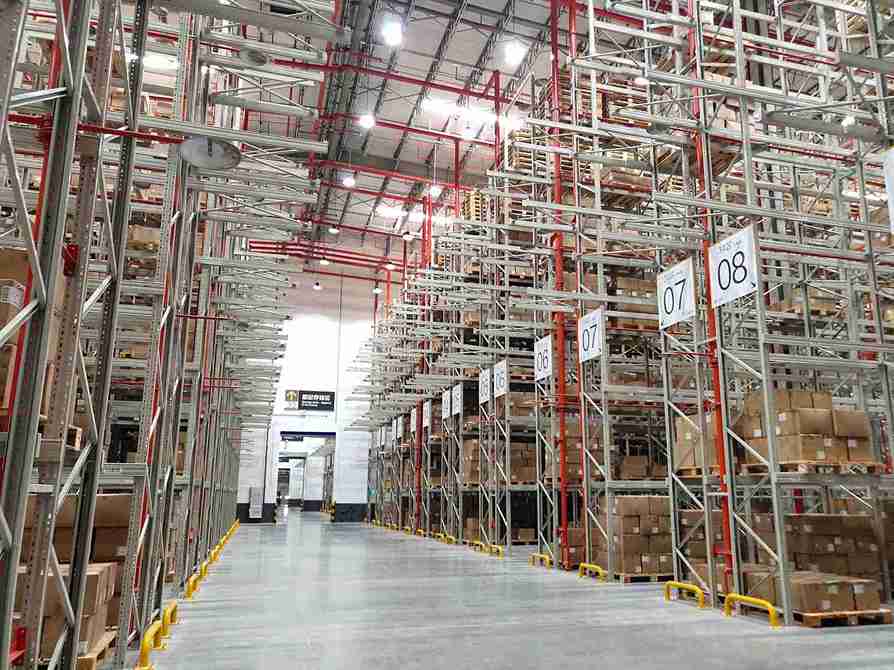
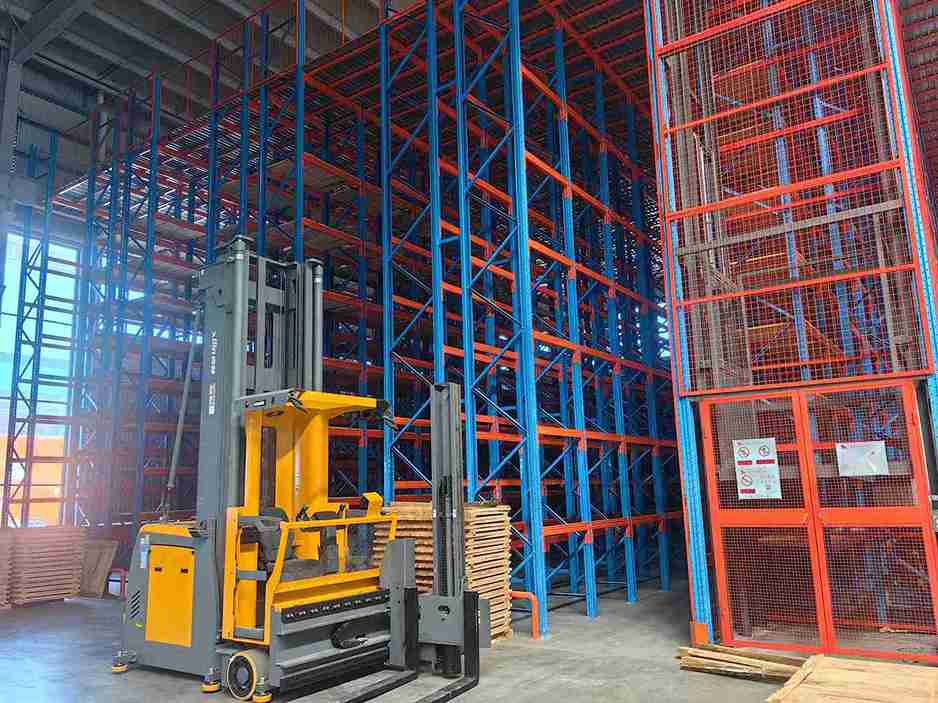
The initial narrow aisle racking cost is undeniably higher, and understanding its components justifies the premium. Firstly, the racking itself is engineered for greater height and load-bearing capacity, often using heavier-gauge steel. It is designed for precise tolerances. The most significant contributor to the narrow aisle racking cost is the specialized equipment. Narrow Aisle Forklifts (NAFs) or Very Narrow Aisle (VNA) trucks—which can be man-up, man-down, or fully automated—are sophisticated pieces of machinery.
A high-quality VNA truck with wire or rail guidance can cost 1.5 to 2.5 times more than a standard forklift of similar capacity. Furthermore, infrastructure costs are critical. Most high-performance VNA systems require a floor flatness tolerance of ±3mm over 3 meters and the installation of embedded guide rails or laser guidance systems. This site preparation work is a direct part of the project’s narrow aisle racking cost. Therefore, the initial quote reflects a complete, integrated system designed for maximum density and precision, not just storage frames.
The Hidden Savings Engine: Real Estate and Cubic Utilization
This is the single most compelling argument that redefines the narrow aisle racking cost narrative in the Middle East. The financial impact of storage density transcends simple racking comparisons and strikes at the heart of regional operational costs.
The Mathematics of Storage Density:
Consider a standard warehouse module of 10,000 square meters with a clear height of 12 meters. A traditional selective system with 3.5-meter aisles for counterbalance forklifts might achieve a storage density of, for example, 5,000 pallet positions. The same warehouse, engineered with a narrow aisle racking system with 1.8-meter aisles and utilizing height up to 11 meters, could easily accommodate 7,500 to 8,000 pallet positions—an increase of 50-60%.
This dramatic shift isn’t merely about storing more goods; it’s about asset utilization. When evaluating the narrow aisle racking cost, one must amortize it against the cost of the space it saves. In practical terms, to achieve 8,000 pallet positions with traditional racking, a company might need a 15,000+ square meter facility.
Translating Density into Direct Financial Savings:
The avoidance of additional leased or constructed space is where the narrow aisle racking cost demonstrates its rapid ROI. The annual rental savings on avoiding 5,000 square meters of premium warehouse space in a GCC hub can easily exceed $200,000 – $400,000 USD per year, depending on the location. Over a 10-year lease, this represents $2-4 million in avoided real estate costs alone—a figure that often dwarfs the entire initial narrow aisle racking cost of the system.
Furthermore, this saving is recurring and protected from rental market inflation. This analysis makes it clear: the true narrow aisle racking cost is effectively an investment in perpetual real estate savings. Ignoring this factor in a cost comparison is a critical financial oversight.
Operational Efficiency: The Continuous Cost Advantage
Beyond real estate, the operational cost differentials between the two systems are substantial and ongoing, directly impacting the bottom line every day.
Labor Productivity and Throughput:
In a traditional setup, forklift operators spend a significant portion of their time traveling long distances in wide aisles. While travel speed may be higher, the travel distance is exponentially greater. A narrow aisle system, with its condensed layout, drastically reduces travel distances between picks. More importantly, VNA systems integrated with a Warehouse Management System (WMS) enable optimized pick paths and semi-automated operation.
The operator is directed to a location, and the guided vehicle ensures precise, fast placement and retrieval with minimal error. This can increase effective picks per hour (PPH) by 25-40%, meaning fewer operators and machines are needed to achieve the same or higher throughput. This labor productivity gain is a direct, yearly reduction in operational cost that offsets the higher initial narrow aisle racking cost.
Energy and Climate Control Costs:
The Middle Eastern climate imposes a massive operational cost: cooling. A traditional warehouse with internal combustion (IC) engine forklifts faces a dual energy penalty. First, the IC engines themselves are less energy-efficient and consume costly fuel. Second, and more critically, they act as large mobile heaters, significantly increasing the heat load inside the facility. This forces the HVAC system to work much harder, escalating electricity costs. In contrast, the electric-powered equipment central to a narrow aisle racking system generates far less waste heat and has higher energy efficiency.
By eliminating the heat from IC engines and storing more product in a smaller, better-utilized footprint, the cost savings on climate control can be staggering. This operational cost reduction is a permanent advantage that makes the narrow aisle racking cost a strategic investment in sustainability and lower overhead.
Maintenance, Damage, and Safety:
The TCO analysis must include maintenance costs. Electric VNA trucks have fewer moving parts than complex IC engines and transmissions, leading to lower long-term maintenance costs and less downtime. The guided nature of VNA travel also drastically reduces incidental damage to racking and goods caused by forklift impacts—a common hidden cost in traditional warehouses. Enhanced safety from reduced vehicle maneuverability in aisles also lowers risk and potential insurance costs. Each of these factors contributes to a lower recurring operational cost profile, further justifying the capital allocation towards a narrow aisle racking system.
Case Study: A Data-Driven Perspective from the GCC
To move from theory to practice, consider a composite case study based on multiple real-world implementations by industry leaders for a major consumer goods distributor based in the UAE.
The Challenge:
The company operated a 15,000 sqm distribution center in Jebel Ali at near capacity with traditional racking. Market growth demanded a 50% increase in storage capacity. Leasing an additional 7,000+ sqm facility in the same area was financially and operationally daunting, involving dual-site management, increased transport, and doubled administrative overhead.
The Solutions Evaluated:
Option A (Traditional Expansion): Lease and fit-out a separate 8,000 sqm building. Maintain traditional racking and a mixed fleet of IC and electric forklifts across two sites.
Option B (Narrow Aisle Retrofit): Retrofit the existing facility with a high-bay narrow aisle racking system, utilizing 13.5 meters of clear height, and implement a fleet of wire-guided VNA trucks and a new WMS.
The 10-Year Total Cost of Ownership (TCO) Financial Model:
The Outcome and ROI:
Despite the narrow aisle racking cost and integrated system price of $3.5M being higher than Option A’s $2M initial outlay, the TCO analysis revealed a $3.6 million advantage over a decade. The narrow aisle racking cost was effectively paid back through real estate and operational savings in under 4 years. The client also gained intangible benefits: a single, streamlined operation, 99.5% inventory accuracy, and the ability to handle future volume growth within the same footprint. This case exemplifies why a holistic view of narrow aisle racking cost is non-negotiable for savvy Middle Eastern logistics planners.
Strategic Considerations and Future-Proofing
Choosing a storage system is a long-term commitment. The narrow aisle racking cost should also be evaluated as an investment in future agility and technological integration.
Scalability and Flexibility:
A well-designed narrow aisle racking system offers superior scalability within a fixed footprint. As SKU profiles change, the system can be reconfigured more easily than often perceived. Furthermore, the high-density layout inherently supports future growth longer than a traditional setup, delaying the next major capital project for expansion.
The Gateway to Automation:
This is a critical strategic advantage. The structured, predictable environment of a narrow aisle racking system is the ideal foundation for automation. The same racking structure can seamlessly transition from manned VNA trucks to fully automated Stacker Cranes or Autonomous Mobile Robots (AMRs). By incurring the narrow aisle racking cost today, a company is investing in the “grid” for tomorrow’s automated warehouse. This protects the capital investment long-term, as the infrastructure can be upgraded without a complete tear-down. In contrast, converting a traditional wide-aisle warehouse to automation often requires a completely new racking grid and layout, rendering the initial lower racking cost a sunk cost with no future value.
Conclusion: The Verdict on Value and Competitive Edge
In the demanding and costly environment of Middle Eastern logistics, the verdict from a comprehensive, expert-led TCO analysis is clear. While the upfront narrow aisle racking cost presents a higher capital hurdle, it is fundamentally a different category of investment compared to the cost of traditional storage. The narrow aisle racking cost purchases density, directly offsetting the region’s highest operational expense: real estate. It buys operational efficiency through lower energy and labor costs. It enhances accuracy and safety, reducing hidden costs. Most importantly, it builds a scalable, future-ready infrastructure.
The apparent savings from traditional storage are frequently an illusion—a lower initial price tag that masks a higher, recurring, and escalatory long-term TCO characterized by wasted space, energy inefficiency, and limited scalability. For logistics leaders in the GCC aiming to build resilient, scalable, and cost-competitive operations, the analysis unequivocally shows that the higher narrow aisle racking cost is not an expense, but a strategic investment.
It is the financially astute path to not just saving money, but to generating value, securing capacity, and sustaining a formidable competitive advantage in one of the world’s most dynamic logistics markets. The decision, therefore, is not about minimizing the racking cost today, but about minimizing the total cost of storage ownership for the next decade and beyond.
Frequently Asked Questions (FAQs)
1. How does the required floor flatness for VNA systems impact the overall narrow aisle racking cost in retrofit projects?
Floor flatness is a critical and non-negotiable specification for VNA performance and longevity, and it directly impacts the project’s narrow aisle racking cost in a retrofit. Tolerances of ±3mm over 3 meters are standard. In a new build, this is designed in. In a retrofit, achieving this may require diamond grinding or a new concrete topping slab across the entire operational area. This preparation can add 15-30% to the base narrow aisle racking cost, but it is essential. A reputable supplier will include a detailed floor survey and preparation quote in the initial narrow aisle racking cost proposal, ensuring no hidden surprises and guaranteeing system performance.
2. For a business with highly seasonal inventory fluctuations, is the investment in a narrow aisle system still justified given its higher fixed narrow aisle racking cost?
This is an excellent operational consideration. The higher fixed narrow aisle racking cost is indeed geared towards maximizing fixed space. For highly seasonal businesses, the solution often lies in creative layout design. One can design the warehouse with a dedicated narrow aisle racking system zone for core, year-round inventory, ensuring dense, efficient storage for the majority of the year. Flexible bulk storage or traditional racking areas can be maintained for peak-season overflow. This hybrid approach allows a company to benefit from the reduced operational costs of narrow aisle for its core SKUs while managing the higher narrow aisle racking cost investment effectively. A detailed SKU velocity analysis is key to optimizing this design.
3. What are the relative maintenance skill sets required for traditional IC forklifts versus electric VNA trucks, and how does this affect long-term cost?
The skill sets differ significantly. Traditional IC forklift maintenance revolves around engine mechanics, hydraulics, and transmission systems—skills that are widely available. Maintenance costs are recurrent for fluids, filters, and parts subject to heat and wear. Electric VNA truck maintenance focuses on electro-mechanics: motors, controllers, sensors, and guidance systems. It requires more specialized technicians, but the maintenance intervals are often longer and the costs per hour are generally lower due to fewer consumables and moving parts. The long-term cost advantage favors electric VNA, but companies must factor in training or a qualified service contract, which should be considered part of the ongoing operational cost profile after the initial narrow aisle racking cost.
4. How does the choice between man-up and man-down VNA trucks influence the overall system narrow aisle racking cost and productivity?
This choice significantly impacts both the narrow aisle racking cost and operational workflow. Man-down (operator on the floor) trucks are often less expensive initially and are excellent for full-pallet moves in and out of storage. Man-up (operator elevated with the load) trucks combine storage/retrieval with order-picking functionality, enabling each-pick operations from pallet racks. They have a higher acquisition cost. The decision directly affects the narrow aisle racking cost of the MHE portion and defines the warehouse’s picking strategy. A thorough analysis of order profiles (full pallet vs. case picking) is crucial. Many warehouses opt for a mixed fleet, which influences the total narrow aisle racking cost but optimizes overall productivity.
5. In regions with less stable power grids, are electric-based narrow aisle systems a higher risk, and how is this mitigated in the narrow aisle racking cost analysis?
This is a vital consideration for operations in certain growth markets. Reliance on an electric fleet introduces a dependency on grid stability. The narrow aisle racking cost analysis and system design must account for this. Mitigation strategies include: investing in higher-capacity battery banks for extended operation; installing a backup generator specifically for MHE charging stations; or in some cases, considering hybrid truck options. These mitigation factors add to the project’s narrow aisle racking cost and infrastructure costs but are essential for calculating a realistic TCO and ensuring operational resilience. A credible supplier will address these regional challenges directly in the planning phase.
If you require perfect CAD drawings and quotes for warehouse racking, please contact us. We can provide you with free warehouse racking planning and design services and quotes. Our email address is: jili@geelyracks.com