📐 "First 50 Enterprise Queries Get Custom 3D Warehouse Design" Plan


Unlocking Potential: A Data-Driven Journey to Transform Narrow Aisle Picking Efficiency
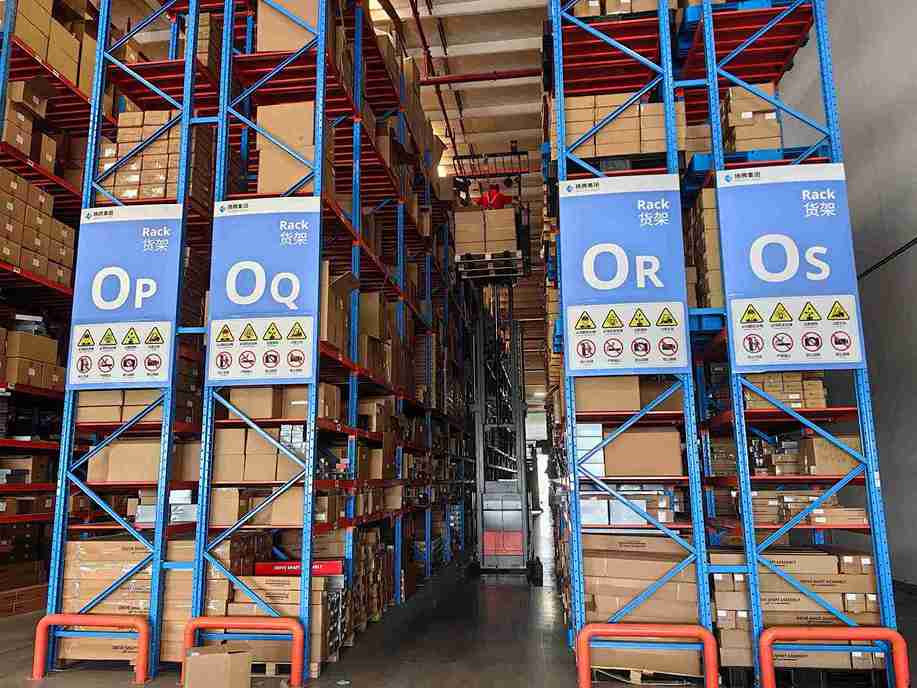
In the high-stakes arena of modern logistics and manufacturing, the narrow aisle warehouse stands as a testament to the relentless pursuit of spatial optimization. For operations directors and warehouse managers across the burgeoning industrial landscapes of Southeast Asia, the Middle East, Africa, and Latin America, these towering storage systems are a familiar sight. They represent a clever answer to the universal pressures of expensive real estate and growing inventory needs.
However, a sophisticated and often unspoken understanding exists among seasoned professionals: the initial gains in storage density can come with a hidden, compounding tax on operational fluidity. The central challenge, therefore, transcends mere storage; it becomes a strategic imperative to radically enhance narrow aisle picking efficiency. This metric, often buried in operational reports, is the true lever for profitability, scalability, and competitive advantage in today’s fast-moving markets.
Achieving a sustained, dramatic improvement in narrow aisle picking efficiency is not about working harder within the confines of an outdated system. It is about a fundamental re-engineering of the workflow itself. This comprehensive exploration delves beyond surface-level tips, offering a holistic blueprint that integrates advanced technologies, process intelligence, and human-centric design.
The objective is clear: to transform the narrow aisle from a necessary bottleneck into the most dynamic, high-throughput component of the supply chain, systematically driving narrow aisle picking efficiency gains of 50% or more. This journey is not theoretical; it is a proven path being adopted by market leaders who understand that in the race for fulfillment speed and accuracy, narrow aisle picking efficiency is the battleground.

Deconstructing the Bottleneck: The Inherent Limits of Manual Narrow Aisle Systems
To architect a superior solution, one must first conduct a forensic analysis of the current system’s constraints. The plateau in narrow aisle picking efficiency experienced by many facilities is not a failure of personnel but a design limitation.
The Tyranny of Travel and Sequence
In any picking methodology, the order cycle is a sum of parts: travel, search, extract, confirm, and travel again. In a vast warehouse, travel dominates. In a narrow aisle, distances shrink, but complexity multiplies. The physics of a 1.8-meter-wide corridor, often 12 meters tall, inherently caps velocity. Man-aboard equipment must navigate with extreme caution. The larger inefficiency, however, lies in sequencing. Without intelligent orchestration, pickers follow static pick lists that generate chaotic traffic patterns—revisiting aisles, crisscrossing paths, and creating invisible queues. This disordered movement is the primary thief of narrow aisle picking efficiency, consuming up to 60% of an operator’s shift in non-value-added travel and maneuvering.
The Human Factor in a Confined Space
The environment within a narrow aisle imposes significant cognitive and physical loads. An operator must simultaneously pilot equipment, locate a specific carton among visually similar ones at height, execute the pick, validate quantity, and update the system, often while managing a voice or RF directive. Fatigue is not linear; it exponentially erodes accuracy and speed as the shift progresses. This degradation directly impacts narrow aisle picking efficiency, leading to a measurable drop in picks per hour after the first few hours. Furthermore, the safety-critical nature of the work—proximity to racking, high-level access, potential for falling items—necessitates a pace that prioritizes caution over speed, creating an inherent conflict with productivity targets.
The Data Vacuum and the Guesswork of Management
Perhaps the most significant barrier to improving narrow aisle picking efficiency is the lack of granular, real-time data. In a manual system, once a picker enters the aisle, they vanish from operational visibility. Managers rely on end-of-shift reports that show outputs but not processes. Key questions remain unanswered: Which SKUs cause the longest search times? Where do invisible traffic jams occur? How much time is lost to poor pick pathing? Without this data, efforts to improve narrow aisle picking efficiency are based on intuition rather than insight, making continuous improvement programs difficult to sustain and measure.
The Architectural Shift: Technologies Engineered for Peak Narrow Aisle Picking Efficiency
The evolution of automation provides a suite of purpose-built solutions that directly attack each identified constraint. This is not about replacing humans but about augmenting their capabilities and removing them from inefficient, risky, and repetitive tasks.
The Autonomous Mobile Fleet: Redefining Horizontal Movement
The advent of sophisticated Narrow Aisle AGVs and Autonomous Mobile Robots (AMRs) marks a watershed moment. These are not merely automated vehicles; they are intelligent material handlers designed for density.
Adaptive Navigation: Utilizing LiDAR, 3D cameras, and simultaneous localization and mapping (SLAM) software, they dynamically navigate existing narrow aisles without costly infrastructure changes. They adapt to temporary obstacles and optimize their own traffic flow.
The “Fork-Over-AGV” Model: A prevalent configuration involves an AGV that can autonomously enter an aisle, precisely align with a pallet location, retrieve or deposit a load, and exit—all directed by a central intelligence. This automates the entire travel and positioning component, which is the largest drain on traditional narrow aisle picking efficiency.
24/7 Operational Cadence: This fleet operates consistently, unaffected by breaks, shift changes, or fatigue. It establishes a predictable, rhythmic base-level of material movement, fundamentally elevating the floor of narrow aisle picking efficiency for the entire facility.
Robotic & Automated Retrieval: Mastering the “Pick” Itself
To address the core “search and extract” function, robotic solutions bring superhuman consistency.
Automated Case & Tote Retrieval: Robotic arms or dedicated extractors, integrated within the racking or on mobile platforms, can retrieve individual cases or totes on command. This technology is pivotal for e-commerce and piece-picking operations, where it eliminates mis-picks and dramatically accelerates the process. Deploying such systems in narrow aisle configurations is a direct injection into the heart of narrow aisle picking efficiency.
Goods-to-Person (G2P) Paradigms: This philosophy is revolutionary for narrow aisle picking efficiency. Instead of sending a person to the inventory, autonomous mobile robots or shuttle systems bring the inventory shelf (a “pod”) to a stationary, ergonomically optimized pick station. The human operator’s role is refined to performing only the final visual verification and pick/place, often guided by put-to-light or augmented reality systems. This can increase an operator’s effective pick rate by 400% or more while drastically reducing walking fatigue and errors. The narrow aisle picking efficiency gains here are concentrated and monumental.
High-Density Automated Storage & Retrieval Systems (AS/RS)
For the ultimate integration of space and speed, the aisle itself becomes fully automated.
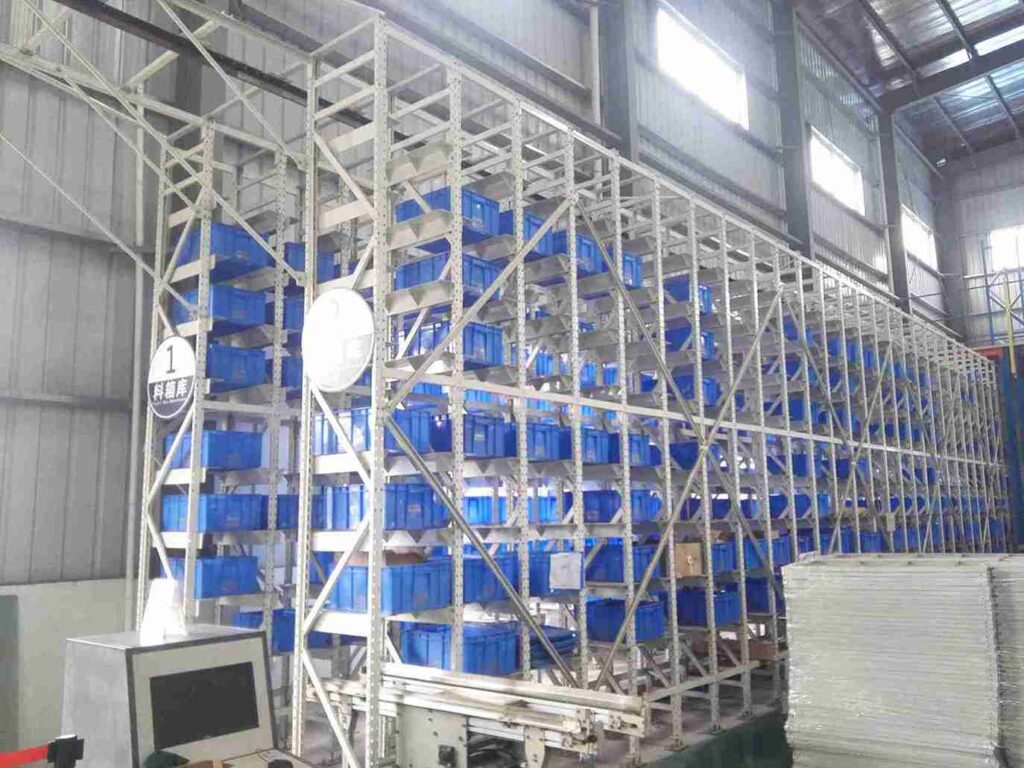
Mini-Load AS/RS and Pallet Shuttles: These systems use robotic cranes or autonomous shuttles that operate within the racking structure itself. An aisle becomes a fully automated vertical lift module or a high-speed shuttle lane. Narrow aisle picking efficiency, in this context, reaches its zenith, as the system’s throughput is defined by machine cycle times and software optimization, completely decoupled from human physical limits.
Hybrid “Cobot” Aisles: A highly effective model for pallet handling combines narrow aisle AGVs for horizontal transport to/from the aisle head with a high-speed deep-lane shuttle system inside the rack. This optimizes capital expenditure while maximizing both density and narrow aisle picking efficiency.
The Intelligent Core: The Warehouse Execution System (WES)
If the automated hardware are the muscles and limbs, the Warehouse Execution System (WES) is the central nervous system and brain. This software layer is the ultimate catalyst for unlocking unprecedented narrow aisle picking efficiency.
A modern WES does not simply execute tasks; it dynamically orchestrates them in real-time. It sits above the Warehouse Management System (WMS), consuming order waves and translating them into a synchronized ballet of machines.
Real-Time Dynamic Tasking: The WES assigns tasks based on real-time location of all assets, current congestion, and order priority. It might direct AGV ‘A’ to retrieve a pallet for today’s priority order while sending AGV ‘B’ on a replenishment mission during its return trip, minimizing empty travel—a key variable in the narrow aisle picking efficiency equation.
Predictive Traffic Management: It acts as an air traffic controller, preventing deadlocks and optimizing the flow of vehicles in cross-aisles and congested zones, ensuring smooth material flow.
The Data Engine for Continuous Improvement: The WES generates a rich stream of performance data. It provides visibility into the exact time taken for every micro-task. Managers can now pinpoint bottlenecks—Is it the retrieval speed? The AGV travel path? The transfer point to manual operations? This data-driven insight is the foundation for a culture of perpetual optimization of narrow aisle picking efficiency.

The Integrated Workflow: A Step-by-Step View of 50%+ Gains in Narrow Aisle Picking Efficiency
Imagine a third-party logistics (3PL) provider in Manila or a automotive parts distributor in Durban implementing this integrated philosophy. The workflow shift is profound.
Pre-Op: System Optimization. Overnight, the WES analyzes the upcoming day’s orders. It performs “virtual wave creation,” simulating thousands of possible sequences to find the optimal plan that balances equipment utilization, labor scheduling, and delivery deadlines to maximize overall narrow aisle picking efficiency.
Step 1: Seamless Order Launch. At shift start, the plan is executed. The WES does not simply broadcast a list; it dispatches discrete, timed instructions. An AGV receives a command to retrieve Pallet P-101 from Aisle A4, location L12.
Step 2: Autonomous Fulfillment. The AGV navigates to Aisle A4, enters, retrieves the pallet, and delivers it to Pallet Breakdown Station 3. Simultaneously, the mini-load AS/RS is retrieving 22 specific totes and sending them via conveyor to four designated G2P stations. The narrow aisle picking efficiency for these SKUs is now operating at machine-level consistency and speed.
Step 3: Human Expertise, Amplified. At the G2P stations, operators perform high-accuracy, high-speed picking. Their world is simplified to a screen and bins. Their pick rate soars, and their error rate plummets. This is where the human contribution to narrow aisle picking efficiency is maximized, focused entirely on value-added cognitive and dexterous tasks.
Step 4: Consolidated Flow. Completed orders flow to automated sortation and packing. The WES tracks each unit, closing the loop and providing real-time status on the entire order cycle.
The Compound Result: By attacking inefficiencies at every stage—travel, search, extraction, consolidation—the system achieves a non-linear improvement. A 50% increase in narrow aisle picking efficiency is a conservative projection; many facilities report doubling or tripling their effective throughput within the same footprint, with equal or reduced labor.
A Phased Implementation Roadmap for Sustainable Success
A transformation of this scale demands strategic phasing, especially in growth markets where operational continuity is paramount.
Phase 1: Holistic Discovery and Digital Simulation. This critical foundation involves deep data mining and the creation of a “Digital Twin.” Consultants analyze two years of order history, SKU velocity, seasonal peaks, and growth projections. The Digital Twin is a dynamic simulation model of the entire warehouse. It is used to stress-test different automation scenarios, accurately predicting their impact on narrow aisle picking efficiency and ROI before any physical commitment is made. This phase de-risks the investment.
Phase 2: Focused Pilot and Proof-of-Value. The strategy is “Think Big, Start Small, Scale Fast.” A controlled pilot is launched in one product category or a returns processing zone. This could involve 2-3 AGVs and one G2P station. The goals are to validate technology in the local environment, build internal competency, and, most importantly, demonstrate a tangible, measurable improvement in narrow aisle picking efficiency and ROI for that slice of the business. Success here builds organizational momentum.
Phase 3: Staged Expansion and Change Leadership. With the proof established, a full rollout is planned in logical stages—by zone, by product line, or by process. A dedicated change management program is crucial. This involves transparent communication, upskilling programs to transition equipment operators into robot fleet supervisors or systems technicians, and celebrating wins. The narrative shifts from job replacement to job enhancement and business growth.
Phase 4: Perpetual Optimization Partnership. Go-live is the beginning. A true partnership includes ongoing performance reviews. Using the WES analytics, teams meet quarterly to analyze new data, identify further optimization opportunities (e.g., adjusting storage locations based on new picking patterns), and plan the next capacity expansion. This ensures that narrow aisle picking efficiency is not a one-time project but a continuously evolving competitive metric.
Addressing Regional Operational Realities
Solutions must be tailored to the market’s unique infrastructure and economic conditions.
Southeast Asia & Latin America (E-commerce & Volatility): Systems must handle extreme peak-to-average ratios. Automation provides elastic scalability that manual labor cannot. The focus is on rapid sortation and accuracy for direct-to-consumer orders. Robust narrow aisle picking efficiency directly translates to handling sales event volumes without collapsing.
The Middle East & Africa (Environmental & Infrastructure Factors): Equipment specifications must account for dust, humidity, and temperature extremes. Power conditioning and battery solutions are critical for areas with grid instability. The business case for automation often includes the high cost and scarcity of skilled labor, making investments in narrow aisle picking efficiency not just an operational choice but a strategic necessity for growth.
Cold Chain Logistics: This is a prime use case. Automating narrow aisles in -25°C freezers removes people from a harsh environment, improves safety, and significantly boosts narrow aisle picking efficiency, as automated systems perform consistently regardless of temperature.
Quantifying the Return: The Tangible Impact of Elevated Narrow Aisle Picking Efficiency
The pursuit of superior narrow aisle picking efficiency culminates in a compelling financial and operational return.
Labor Productivity & Optimization: Direct labor cost per pick can be reduced by 40-70%. Staff are redeployed to quality control, customer service, maintenance, and system supervision—roles that add greater value and improve employee satisfaction.
Accuracy Dividend: Error rates can fall from industry averages of 1-3% to 0.01% or lower. This eliminates the colossal hidden costs of returns, re-shipping, credit notes, and damaged customer relationships.
Space Monetization: Increasing narrow aisle picking efficiency often allows for handling 30-100% more volume within the same footprint, delaying or eliminating multi-million dollar capital expenditures on new facility construction.
Safety & Risk Mitigation: Removing people from high-risk areas drastically reduces accident frequency, lowering insurance costs and protecting the organization from operational and reputational risk.
Strategic Agility: The ability to scale throughput up or down quickly by adjusting software parameters and potentially adding modular robots provides unmatched flexibility to capture new business or adapt to market shifts. This agility is the ultimate competitive advantage, rooted in superior narrow aisle picking efficiency.
Conclusion: The Future of Warehousing is Defined by Intelligent Flow, Not Just Dense Storage
The narrative of the narrow aisle warehouse is undergoing a historic rewrite. It is evolving from a static, dense archive—where narrow aisle picking efficiency was a constant struggle—into a dynamic, intelligent flow engine where narrow aisle picking efficiency is the core design principle. This transformation is powered by the synergistic integration of autonomous mobility, robotic precision, and, above all, cognitive software orchestration.
For decision-makers in the world’s most dynamic growth markets, the question is no longer if automation is relevant, but how and when to strategically adopt it to supercharge their narrow aisle picking efficiency. The journey begins with a commitment to move from reactive problem-solving to proactive, data-driven design. It is advanced through a partnership that respects local complexities and focuses on tangible, phased value delivery.
The destination is an operation where space is maximized, speed is unleashed, and accuracy is guaranteed. It is a facility where narrow aisle picking efficiency is not a limiting factor but the driving force behind profitability, customer satisfaction, and sustainable market leadership. In the global race for logistical excellence, mastering narrow aisle picking efficiency through intelligent automation is the decisive move.
Frequently Asked Questions (FAQs)
1. We have a mix of very old and very new SKUs in our aisles. Can automation handle such varied picking profiles?
Absolutely. A key strength of a system orchestrated by a powerful WES is its ability to manage mixed workflows. Fast-moving “A” items can be designated for fully robotic picking or high-density AS/RS, maximizing their narrow aisle picking efficiency. Slower-moving “C” items can be serviced by AGVs on demand or even remain in a manual pick zone. The system intelligently routes work based on these profiles, ensuring optimal overall narrow aisle picking efficiency without forcing a one-size-fits-all approach.
2. How do you ensure the accuracy of autonomous vehicles in narrow aisles, especially with potential floor deflection or minor rack misalignment?
Modern navigation systems are exceptionally robust. They use a combination of techniques: natural feature navigation (using the racking itself as a reference), inertial measurement units (IMUs), and sometimes supplemental fiducial markers. The software includes algorithms for “localization” that constantly correct the vehicle’s position within a map, compensating for minor environmental shifts. Regular preventative maintenance checks on floor flatness and rack integrity are part of the long-term support plan to sustain peak narrow aisle picking efficiency.
3. What is the typical energy consumption of an automated narrow aisle system compared to traditional equipment?
Generally, automated systems are more energy-efficient overall. Electric AGVs and shuttles use regenerative braking, high-efficiency motors, and smart charging strategies. They eliminate the idle time associated with manual equipment (e.g., a forklift with a running engine while the operator checks a list). Furthermore, by condensing operations and potentially allowing for lighting and climate control to be reduced in automated areas, the total facility energy footprint per unit picked often decreases, contributing to a lower operational cost that complements the gains in narrow aisle picking efficiency.
4. How does the system handle exceptions, like a dropped case or a pallet that is slightly out of position?
Exception handling is a critical component of system design. Sensors on the equipment (e.g., vision systems, lidar) are programmed to detect anomalies. If a pallet is misaligned beyond a safe retrieval threshold, or an obstacle is detected, the vehicle will stop safely and send an alert to the warehouse control system. A human supervisor is then notified via tablet or control room dashboard to intervene, assess, and clear the exception. This structured approach actually improves overall narrow aisle picking efficiency by preventing minor issues from causing major downstream delays or damage.
5. Can we integrate this automation with our existing legacy Warehouse Management System (WMS), or is a full system replacement required?
Full replacement is rarely required. A modern Warehouse Execution System (WES) is designed as an integration layer. It communicates with the legacy WMS via standard APIs (Application Programming Interfaces), receiving high-level orders and sending back confirmations. The WES handles the real-time, millisecond-level control of the automation. This allows companies to protect their existing IT investments while still unlocking transformative gains in narrow aisle picking efficiency. The integration scope and testing are key parts of the initial project planning phase.
If you require perfect CAD drawings and quotes for warehouse racking, please contact us. We can provide you with free warehouse racking planning and design services and quotes. Our email address is: jili@geelyracks.com