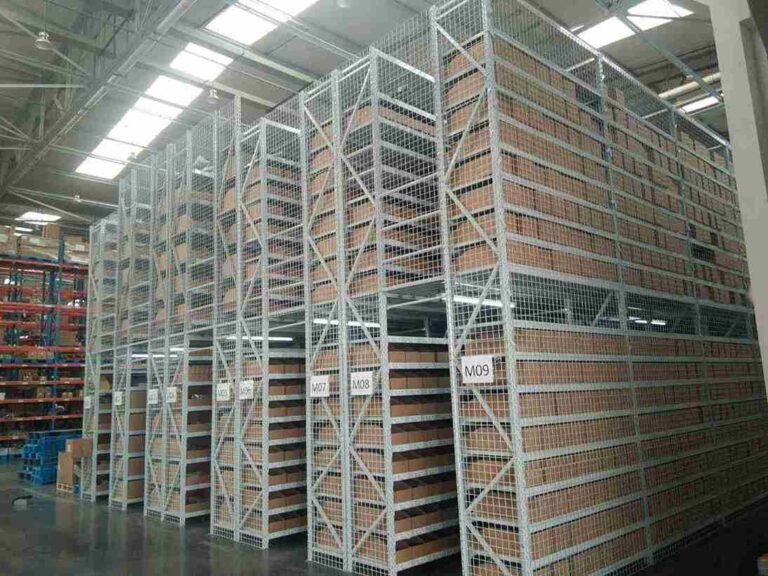
📐 "First 50 Enterprise Queries Get Custom 3D Warehouse Design" Plan


In today’s competitive logistics landscape, heavy-duty pallet racking is not just a storage solution—it’s a strategic investment. For warehouses looking to maximize space, improve accessibility, and reduce operational costs, choosing the right racking system is critical. One of the most cost-effective solutions for high-density storage is narrow aisle installation, which can dramatically increase storage capacity while minimizing floor space usage.
However, many warehouse managers hesitate to implement narrow aisle racking systems due to concerns about narrow aisle installation costs. While the upfront investment may seem high, the long-term savings in space optimization, labor efficiency, and inventory management often justify the expense. This guide will break down narrow aisle installation costs, compare them to alternative systems, and demonstrate how they can deliver a rapid ROI for high-volume operations.
By the end of this article, readers will understand:
- The true cost breakdown of narrow aisle installation (including equipment, labor, and long-term maintenance).
- How narrow aisle racking compares to traditional wide-aisle systems in terms of storage density and operational efficiency.
- Real-world case studies where businesses reduced costs by 30% or more after switching to narrow aisle configurations.
What Is Heavy-Duty Pallet Racking?
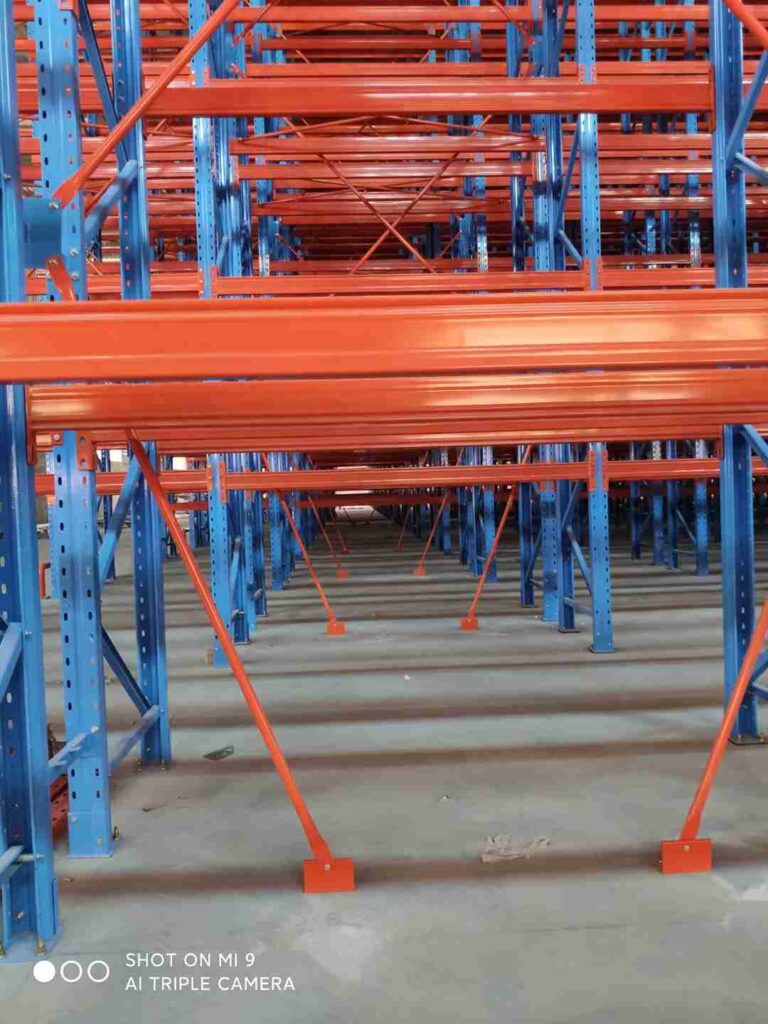
Heavy-duty pallet racking is engineered to support massive loads—from 1,000 lbs to over 30,000 lbs per shelf—making it ideal for industrial warehouses, manufacturing plants, and distribution centers. Unlike standard shelving, these systems are built with reinforced steel beams, impact-resistant uprights, and specialized decking to withstand forklift traffic, seismic activity, and decades of heavy use.
The Role of Narrow Aisle Racking in Modern Warehouses
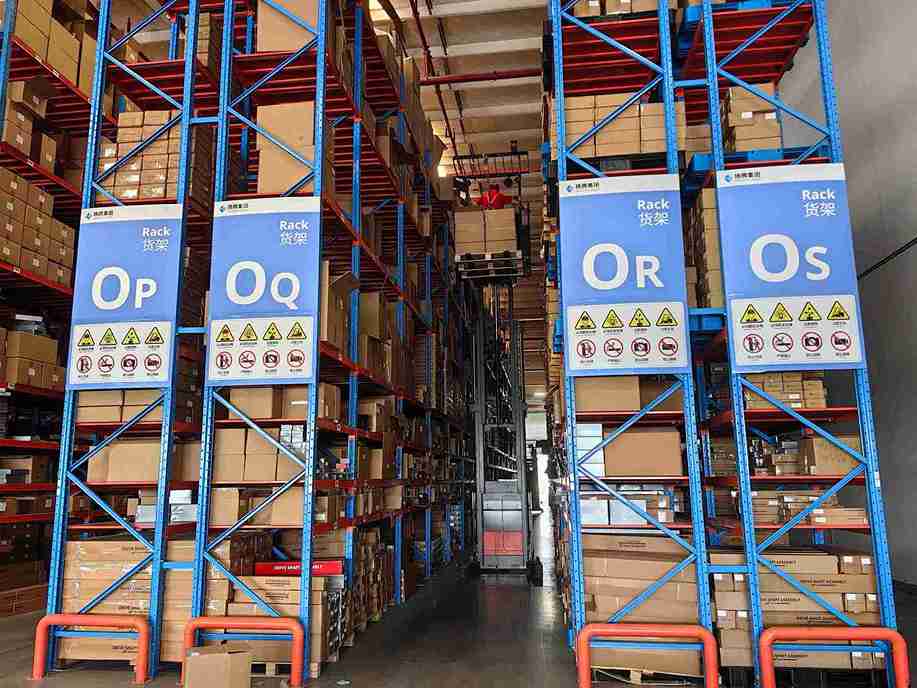
One of the most efficient configurations is narrow aisle pallet racking, which reduces aisle widths from 10–12 feet (traditional setups) to just 6–8 feet. This design increases storage capacity by up to 50%, but it requires specialized equipment like narrow aisle forklifts (NA forklifts) or very narrow aisle (VNA) turret trucks.
Key benefits of narrow aisle racking:
- Higher storage density = lower real estate costs per pallet position.
- Faster picking times due to reduced travel distances.
- Lower energy consumption (fewer forklift movements = reduced fuel/electricity costs).
However, narrow aisle installation costs can be a barrier. Let’s break them down.
Types of Heavy-Duty Pallet Racking Systems
1. Selective Pallet Racking (Standard vs. Narrow Aisle)
- Standard selective racking: Uses 10–12 ft aisles, compatible with most forklifts.
- Narrow aisle selective racking: Reduces aisles to 6–8 ft, requiring NA forklifts.
- Narrow aisle installation costs: Typically 10–20% higher due to specialized equipment needs.
2. Drive-In & Drive-Thru Racking
- Best for high-density, homogeneous pallets (e.g., beverages, packaged goods).
- Not ideal for narrow aisles due to limited accessibility.
3. Push-Back Racking
- Higher density than selective racking, but narrow aisle adaptations are rare.
- Cost comparison: Push-back systems may save space but increase picking complexity.
4. Pallet Flow Racking (Gravity Flow)
- Excellent for FIFO operations, but narrow aisle versions exist for cold storage.
- Narrow aisle installation costs for flow systems: 15–25% more due to conveyor integration.
5. Cantilever Racking
- Not typically used in narrow aisles (designed for long, bulky items).
6. Mobile Pallet Racking (Moveable Aisles)
- Ultra-high-density, but narrow aisle installation costs can be 2–3x higher than static systems.
Calculating Narrow Aisle Installation Costs
Upfront Costs Breakdown
- Racking Structure:
- Standard selective racking: 100 per pallet position.
- Narrow aisle selective racking: 130 per pallet position (due to reinforced uprights).
- Forklift Equipment:
- Standard forklift: 50,000.
- NA forklift (narrow aisle): 80,000.
- VNA turret truck: 200,000.
- Labor & Installation:
- Standard racking: 15,000 (depending on warehouse size).
- Narrow aisle racking: 25,000 (requires precision alignment).
Long-Term Cost Savings
- Space savings: 30–50% more pallet positions = lower real estate costs.
- Labor efficiency: 20–30% faster picking = reduced payroll expenses.
- Energy savings: Fewer forklift movements = lower fuel/electricity bills.
Example ROI Calculation:
- Upfront narrow aisle installation costs: $150,000 (racking + NA forklifts).
- Annual savings: $60,000 (reduced labor + space optimization).
- Payback period: 2.5 years.
Navigating the Procurement Process: A Phased Approach to Control Costs
To manage and accurately define narrow aisle installation costs, a disciplined, phased approach is essential.
Phase 1: Internal Discovery (Weeks 1-2): Before engaging suppliers, gather all data: pallet specs, SKU profiles, current and projected throughput, CAD drawings of the facility, and clear operational goals. This preparation allows for an apples-to-apples comparison of proposals and narrow aisle installation costs.
Phase 2: Supplier Engagement & Preliminary Assessment (Weeks 3-4): Engage 2-3 reputable specialists. The focus should be on their process, not a number. A credible partner will insist on a site visit before providing any meaningful detail on narrow aisle installation costs. This phase should yield a conceptual design and a range of potential narrow aisle installation costs with clear assumptions.
Phase 3: Detailed Site Survey & Final Proposal (Weeks 5-6): The selected partner conducts a thorough survey: laser scanning, floor core tests, detailed workflow interviews. The output is a fixed-scope, line-item proposal that details all narrow aisle installation costs, a 3D simulation, a project timeline, and a detailed ROI analysis. This document transforms vague narrow aisle installation costs into a firm project budget.
Phase 4: Implementation & Value Realization (Months 2-8): With a clear budget, the project executes: floor preparation, racking installation, guidance setup, equipment delivery, training, and go-live support. Professional project management throughout this phase is key to ensuring the final narrow aisle installation costs align with the proposal and the expected value is delivered.
Conclusion: Reframing the Investment Narrative
The journey from searching “narrow aisle installation costs” to realizing a fully operational high-density storage system is a transition from seeing a capital outlay to understanding a strategic lever. In the competitive landscapes of emerging global markets, warehouse efficiency is a direct contributor to margin and service quality. A comprehensive analysis of narrow aisle installation costs reveals that the most significant expense is often inaction—continuing to waste expensive real estate, overburden labor, and limit growth potential.
Therefore, the most pertinent question evolves from “What are the narrow aisle installation costs?” to “What is the cost of not optimizing our storage density and operational workflow?” By partnering with an expert who transparently details every pillar of narrow aisle installation costs—from the steel and the software to the floor and the training—businesses can make an informed, confident investment. They move beyond being mere procurers of racking to becoming architects of a more efficient, scalable, and profitable logistics operation, where the narrow aisle installation costs are clearly understood as the foundational price for a lasting competitive advantage.
Frequently Asked Questions (FAQs)
Q1: We have a limited budget this year. Can we phase the project to manage cash flow against the total narrow aisle installation costs?
Absolutely. A common and sensible strategy is to phase the project. Phase 1 could involve the complete site survey, detailed design, and crucially, all necessary floor preparation work. Phase 2, executed in the following fiscal year, would involve the racking installation and equipment purchase. This approach spreads the narrow aisle installation costs over two budgeting cycles while ensuring the foundational work (floor) is done correctly from the start. A professional partner can structure the project and the associated narrow aisle installation costs accordingly.
Q2: How do ongoing operational costs for a narrow aisle system compare to a traditional wide-aisle setup?
Operational costs shift. Narrow aisle installation costs are higher upfront, but operational costs can be lower per pallet handled. You will have maintenance contracts for the sophisticated VNA equipment (a new cost), but you will likely use fewer forklifts overall, reducing your fleet maintenance costs. Labor costs per pallet moved should decrease due to higher productivity. Energy costs may be similar or slightly higher for charging VNA batteries versus fueling ICE forklifts, but this is highly variable. The net operational cost position is typically favorable for the narrow aisle system at scale.
Q3: What are the typical warranty periods for the different components affecting narrow aisle installation costs?
Warranties vary and should be clarified in the proposal. Racking structures often carry a 10-15 year warranty against manufacturing defects. VNA equipment typically has a 1-2 year comprehensive warranty on the entire machine, with extended warranties available for key components like the mast or control system. Guidance systems also have separate warranties. Understanding these terms is part of evaluating the long-term value and risk protection within your narrow aisle installation costs.
Q4: For a multi-client logistics (3PL) warehouse with vastly different pallet specs, is a narrow aisle system feasible or too inflexible?
It is feasible but requires expert design. The system can be designed with adjustable beam levels and even different beam depths within the same aisle to handle a variety of pallet sizes. The key is to define the range of pallet dimensions and weights during the planning stage. The VNA truck’s forks may need adjustable sideshift or telescopic capabilities. This flexibility must be engineered into the system from the start, and its implications on the overall narrow aisle installation costs should be modeled upfront.
Q5: How critical is after-sales service and parts availability when evaluating suppliers for a project with significant narrow aisle installation costs?
It is arguably the most critical long-term consideration. The most competitively priced narrow aisle installation costs are meaningless if the supplier cannot provide timely technical support or spare parts in your region. Before committing, investigate the supplier’s local service center footprint, technician certifications, and inventory of common parts. A slightly higher initial investment in narrow aisle installation costs with a provider boasting a robust service network can prevent weeks of costly downtime in the future, protecting the very ROI the system is meant to deliver.
If you require perfect CAD drawings and quotes for warehouse racking, please contact us. We can provide you with free warehouse racking planning and design services and quotes. Our email address is: jili@geelyracks.com