📐 "50 Soalan Perusahaan Pertama Dapatkan Rekaan Gudang 3D Tersuai" Rancangan


H1: Automation Pallet Shuttle System for Logistics Pharma Warehouse Quotation: What Separates a Regulated Deployment from a Standard Warehouse Price
Ringkasan Artikel: A pallet shuttle quotation for a pharmaceutical logistics warehouse is rarely a straight answer to a straight question. The moment the storage task moves from ambient finished goods into a GDP-controlled zone—or from a 2–8 °C chilled chamber into a −25 °C deep-freeze block—the pallet shuttle stops being a density tool and becomes part of a regulated material-flow system.
This article examines where the real cost of a pharmaceutical pallet shuttle deployment sits, why two quotations for the same pallet-position count can differ by a factor of two, and which specification decisions a procurement team controls before the first vendor response arrives. The argument is deliberately narrow: the pallet shuttle is not the expensive part. The validation evidence, the cold-chain adaptation, the maintenance-access architecture, and the software audit trail are. A buyer who understands that ordering of costs will read every subsequent pallet shuttle quotation differently.
H2: The Pallet Shuttle Quotation Begins with an Envelope, Not a Price
Procurement teams that evaluate a pallet shuttle for a pharmaceutical site often begin with a position count and a target throughput. That is the correct starting point for a general warehouse. It is the wrong starting point for a regulated one. Pharma-grade automated storage in 2026 is selected first on regulatory envelope—GMP, 21 CFR Part 11, EU Annex 11—then on load unit and environment, and only lastly on throughput.
The ordering matters because each layer changes the pallet shuttle specification in a way that a per-position benchmark cannot capture. A pallet shuttle that satisfies a 21 CFR Part 11 audit-trail requirement carries a different software stack, a different access-control model, and a different change-control obligation than an identical-looking pallet shuttle moving pallets in a retail distribution center. The steel may be the same. The commercial risk is not.
H3: Why the Same Pallet Shuttle Carries Two Different Commercial Identities
The pallet shuttle is a hardware platform. The quotation is a scope document. In ambient general-purpose storage, the scope stops at the rack boundary, the shuttle fleet, and a standard warehouse control layer. In a pharmaceutical pallet shuttle deployment, the scope extends into the quality system. The pallet shuttle must generate a transaction record that identifies who moved which pallet, when, and under which lot number, in a form that survives an inspection without a manual reconstruction exercise.
It must sit inside a temperature-mapped envelope whose airflow has been re-validated after the rack block was installed. And in cold storage, the pallet shuttle must be serviceable without pulling an entire deep lane out of production—a design constraint that changes the rail layout, the transfer-station logic, and sometimes the building height. A quotation that treats the pallet shuttle as a catalog item has not priced these obligations. It has deferred them.
H3: The Regulatory Envelope as a First-Order Pallet Shuttle Cost Driver
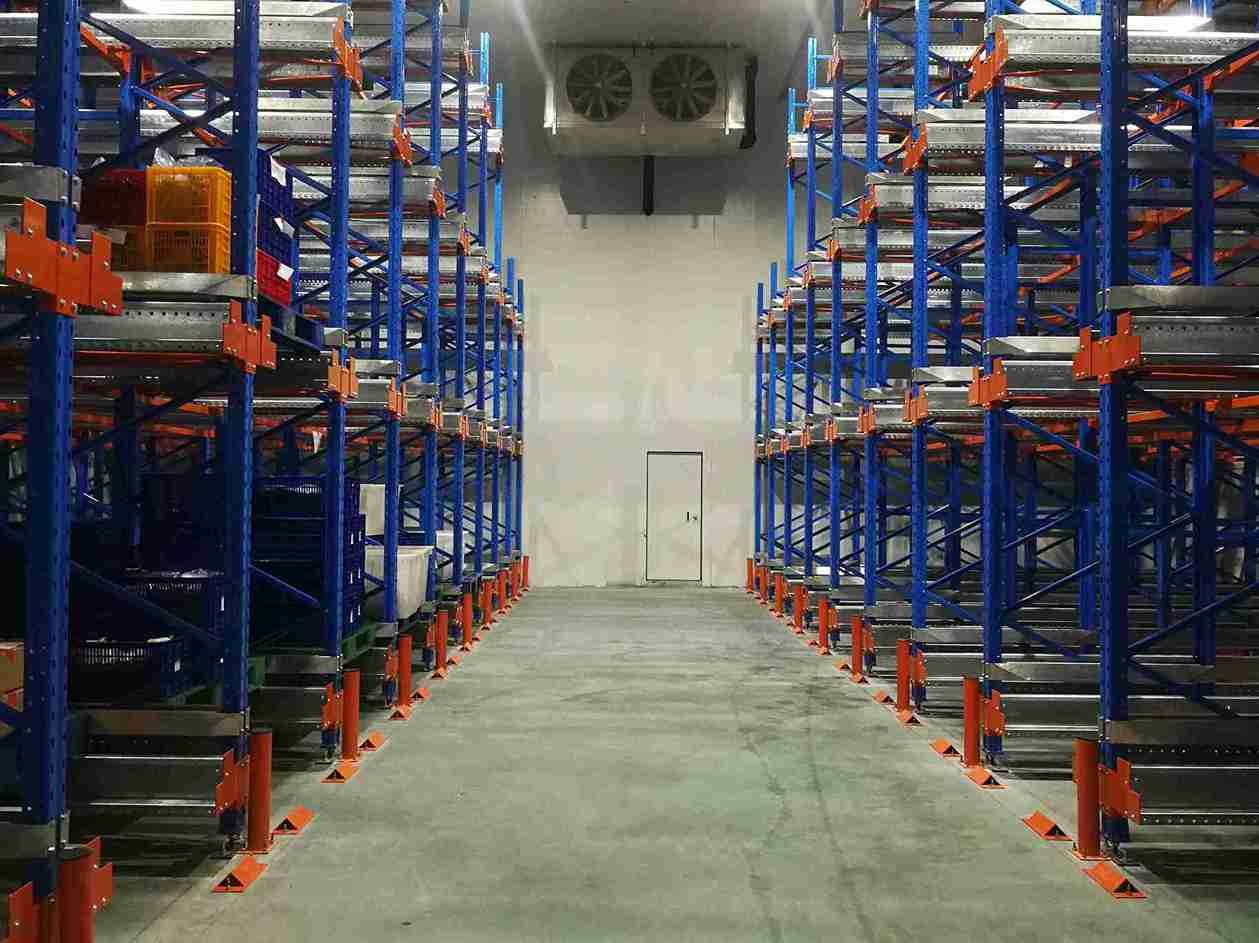
EU GDP requires initial temperature mapping before a storage area is first used, under representative conditions, and repeated after significant modifications or on a risk-assessment basis. A pallet shuttle rack block is a significant modification to the air volume and thermal mass of a cold chamber. The dense pallet mass changes where cold air can circulate and where stratification develops. That does not make the pallet shuttle incompatible with GDP storage.
It makes the mapping protocol a pallet shuttle design input rather than a post-installation formality. A pallet shuttle supplier who has not discussed sensor placement around the rack block, access for mapping equipment during loaded conditions, and the airflow consequences of lane depth is a supplier who has not priced the mapping interaction into the pallet shuttle scope. The quotation may look competitive. The mapping exercise will find the gap.
H3: Material Contact, Cleaning, and the Steel Specification Behind the Pallet Shuttle
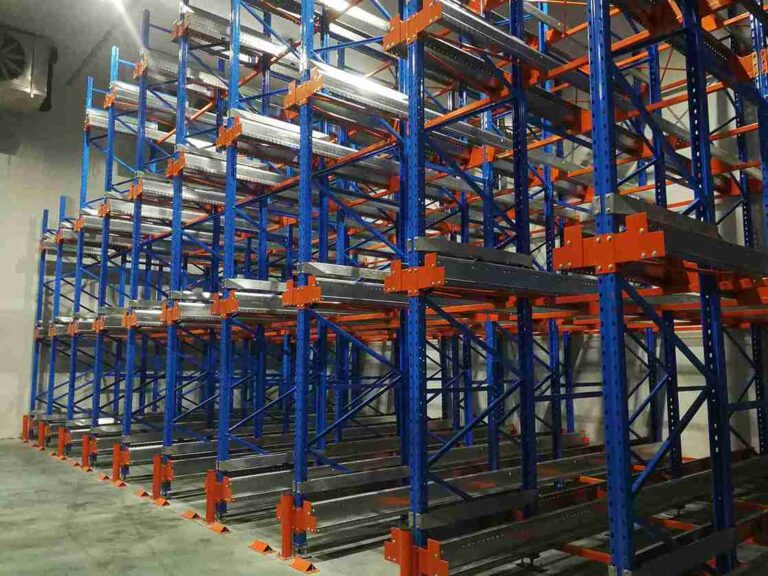
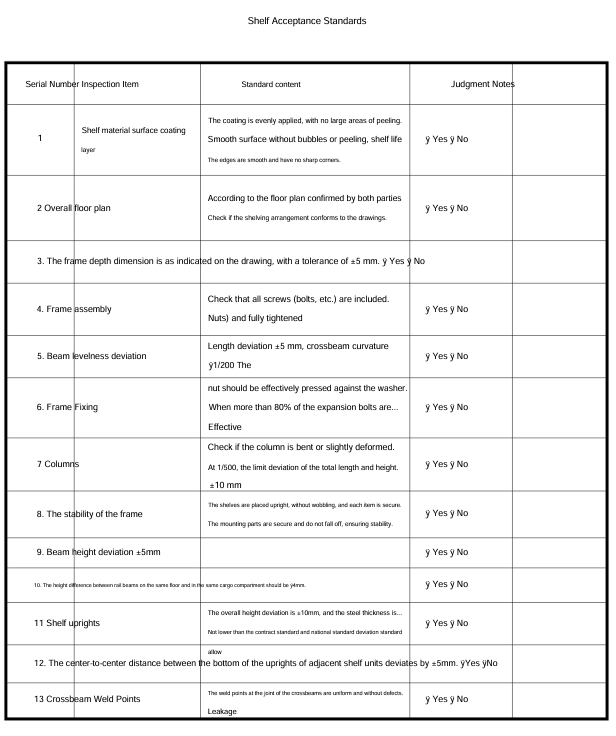
The rack structure in a pallet shuttle system usually remains carbon steel with an epoxy powder coat outside the classified zone, because the rack is not a product-contact surface. The pallet shuttle itself, and any extractor or transfer mechanism that touches a pallet in a washdown or cleanroom-adjacent zone, is a different question. For aseptic or potent-compound suites, extractor heads and contact surfaces move to 316L stainless steel with electropolished surfaces at Ra ≤ 0.8 µm, and drives are specified as non-particle-shedding.
In ambient finished-goods pharma storage, the pallet shuttle baseline still avoids copper, zinc, and lead in handling components, and washdown zones favor 304 or 316 stainless steel. These choices appear in a pallet shuttle quotation as steel grade, surface treatment, and shuttle body material. A general warehouse pallet shuttle quote may not contain those lines at all. Normalizing for material grade before comparing the bottom line is not a technicality. It is the difference between a pallet shuttle that passes a cleaning validation and one that becomes a deviation generator.
H2: What Actually Moves the Price of a Pharmaceutical Pallet Shuttle
A budgetary pallet shuttle response needs five inputs before it can be anything other than an orientation figure: warehouse length × width × clear height, pallet footprint and loaded weight, target position count, temperature band, and destination port. Geometry is the strongest lever because lane depth and building height spread fixed costs—aisles, pallet shuttle units, lifts—across more positions. Shuttle count is the throughput lever. Speed in a pallet shuttle system is bought with cars, not with steel.
Temperature is the second multiplier. A chilled or freezer pallet shuttle requires different steel treatment, different surface protection, and a different shuttle specification. A deep-freeze pallet shuttle below −15 °C needs a low-temperature battery, conformal coating on the PCBA, and a separate charging-port design. Those are not optional accessories. They are the difference between a pallet shuttle that survives a −25 °C cycle and one that becomes a maintenance queue.
H3: Two-Way and Four-Way Pallet Shuttle: The Cost Blocks Behind the Label
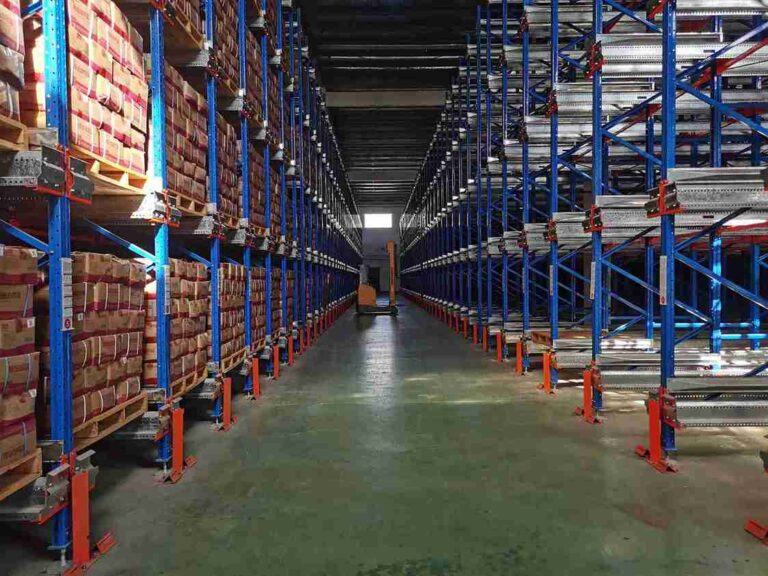
A two-way pallet shuttle travels forward and backward within a single lane. It is the workhorse of deep-lane, high-density storage and suits cold-chain bulk buffering where the pallet profile is uniform and the lane depth is the density mechanism. A four-way pallet shuttle moves along lanes and across lanes, pairing with lifts or transfer mechanisms to access multi-level racking and switch aisles autonomously.
The four-way pallet shuttle buys flexibility and SKU-mix tolerance, but the quotation carries additional blocks: cross-travel rails, transfer stations or lifts, more complex WCS scheduling, and a larger safety and communication footprint. In a pharmaceutical finished-goods warehouse with a stable lot structure and moderate SKU count, a two-way pallet shuttle or semi-automated radio shuttle can deliver the density benefit with a faster payback and a simpler validation boundary.
In a distribution center where SKU count climbs above several thousand and the bottleneck is case picking from dense pallet storage, the four-way pallet shuttle earns its premium—but the validation window lengthens and the maintenance-access design becomes a procurement gate rather than an afterthought.
H3: The Per-Position Benchmark and Why It Misleads on Pallet Shuttle Projects
Industry reference pricing for pallet shuttle racking sits at roughly US$120–350 per pallet position, all-in for racking, **pallet shuttle** units, and standard installation. Inside that band, radio shuttle semi-automated systems typically land at US$120–220, and four-way fully automated pallet shuttle systems at US$180–350. A complete four-way **pallet shuttle** system for a 20,000-square-foot facility handling around 1,200 pallet positions can range from US$400,000 to US$800,000 depending on throughput and pallet shuttle count.
Those numbers are useful for orientation and dangerous for decision-making. They exclude duties and freight variance, site civil works, fire-protection interface, and WMS/WCS software, and for four-way systems they exclude lifts and conveyor mechatronics. Two suppliers can quote the same pallet shuttle position count at double the price because they are not quoting the same scope: different pallet shuttle counts, lane depths, steel specifications, temperature ratings, and documentation levels sit behind the unit price. The only honest pallet shuttle comparison is a line-by-line scope normalization.
H2: Cold-Chain Pallet Shuttle Economics: Where the Quotation Quietly Diverges
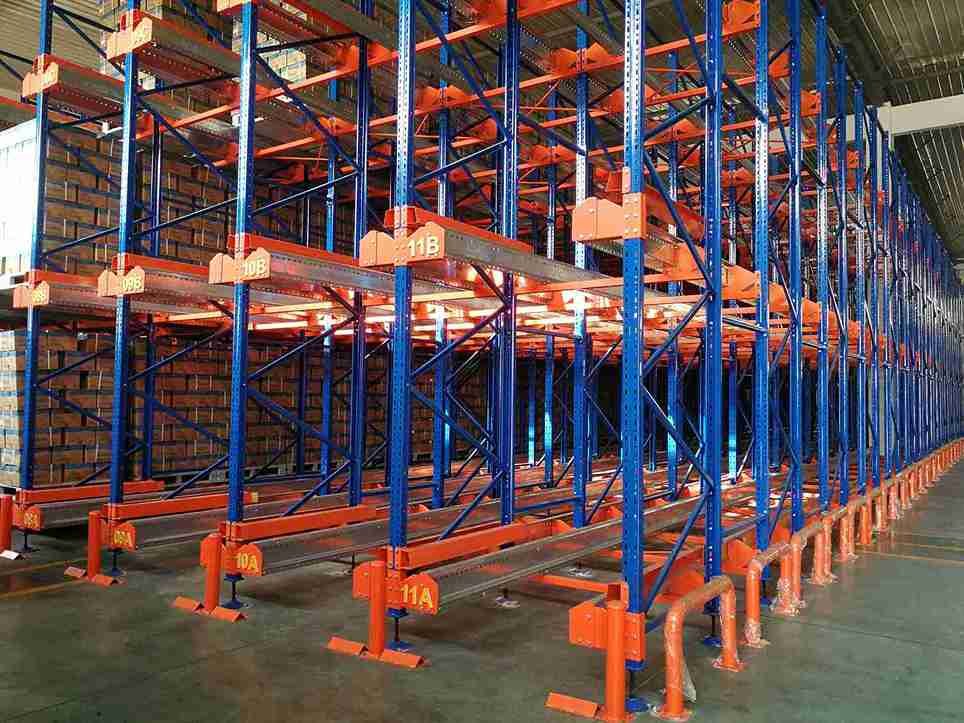
Cold-chain pharmaceutical storage adds cost in places that a standard pallet shuttle quotation may not surface. The deep-freeze environment adds roughly 10–20% to rack and pallet shuttle scope through steel treatment, surface protection, and shuttle specification changes. Below −15 °C, the pallet shuttle requires a low-temperature lithium battery, PCBA conformal coating, and a separate charging-port design. These are essential for reliability at −25 °C and must be budgeted at bid stage, not discovered during commissioning.
Maintenance intervals shorten as well. A pallet shuttle battery pack that delivers five to seven years of service in an ambient warehouse can need replacement at three to four years in a −25 °C cold store because low-temperature charging stresses the cell chemistry. The per-unit battery cost sits in the US$800–1,500 range depending on capacity. A pharmaceutical pallet shuttle quotation that shows a single maintenance percentage across ambient and cold zones is averaging away the risk. The pallet shuttle quote should separate ambient and cold-zone lifecycle assumptions, including battery replacement cycles and hot-swap or one-level isolation provisions that allow maintenance access without pulling an entire deep lane out of service.
H3: Maintenance Access as a Pallet Shuttle Design Requirement, Not a Service Plan
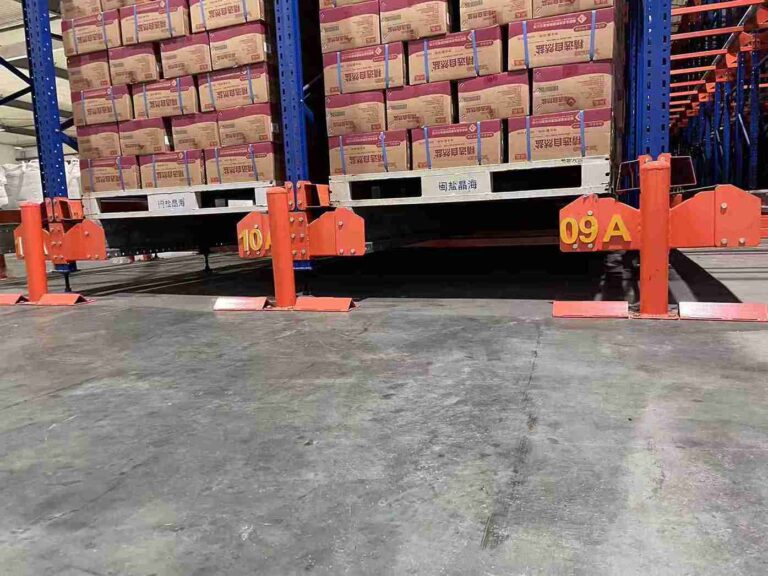
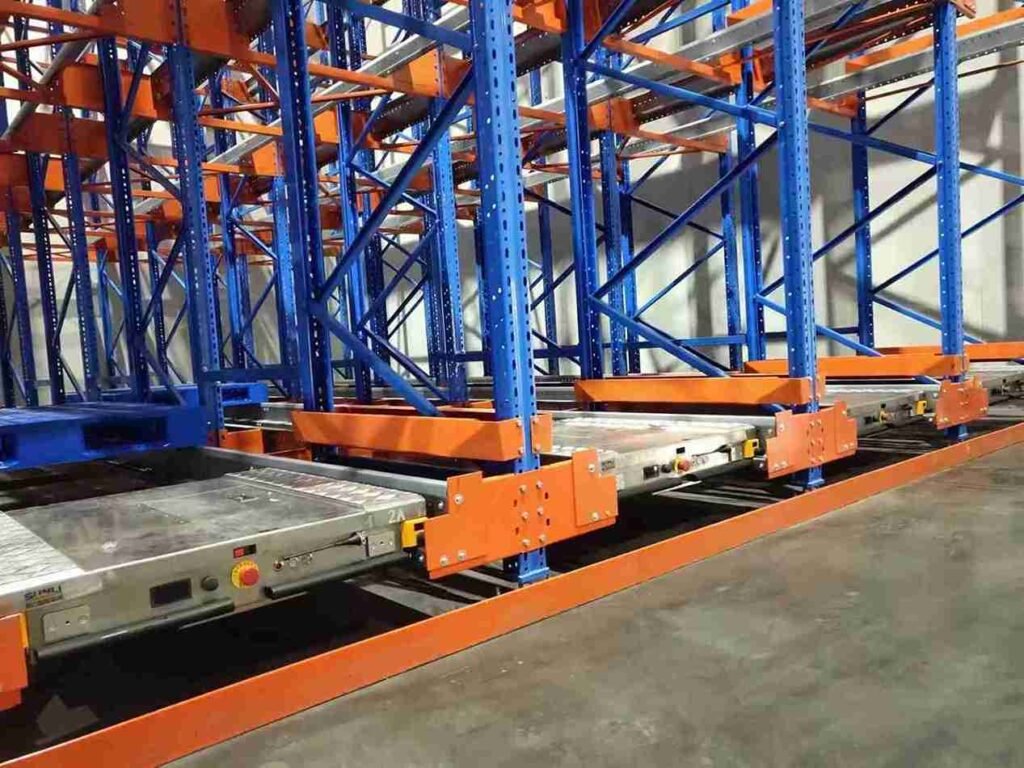
A four-way pallet shuttle that fails at the back of a thirty-pallet-deep lane in a −30 °C store is not a routine service call. It is a production event. The procurement question is whether the pallet shuttle can be extracted to a maintenance bay without emptying the lane, or whether the cleaning and repair procedure requires the lane to be taken out of service.
A pallet shuttle system specified with one-level isolation and hot-swap battery capability converts a potential multi-day outage into a scheduled intervention. A pallet shuttle system without those provisions converts every battery change into a capacity loss. The maintenance-access drawing belongs in the pallet shuttle quotation package before the price is accepted, because the drawing tells the buyer whether the cold-chain operating cost is credible.
H3: Energy Consumption and the Pallet Shuttle Cold-Chain Volume Effect
Pallet shuttle energy consumption is frequently framed as a robot-level question—how many kilowatt-hours does a pallet shuttle draw per move—when the larger cold-chain effect is the refrigerated volume the pallet shuttle layout allows the facility to avoid. Published benchmarks put pallet shuttle consumption at roughly 0.02 kWh per storage or retrieval cycle, holding even under deep-freeze conditions and 24-hour operation.
A deep-lane pallet shuttle block doing 80 cycles per hour pulls about 1.6 kWh/h before auxiliaries, while a crane doing 30 cycles per hour pulls roughly 0.6 kWh/h. At the component level, the pallet shuttle is not the dominant energy story. The dominant story is the cooled volume. A dense pallet shuttle block reduces the refrigerated envelope per pallet stored, and in frozen storage the HVAC load is a larger cost line than the pallet shuttle fleet itself. A pallet shuttle quotation that prices the fleet but does not model the refrigeration-volume consequence of the rack layout has separated the pallet shuttle from its operating economics.
H2: Pallet Shuttle Versus Crane-Based AS/RS in the Pharma Decision
Kedua-dua pallet shuttle racking and crane-based AS/RS can raise storage density by 60–150% over conventional selective racking. The financial difference sits on the investment curve. Pallet shuttle racking is a semi-automated, cost-effective high-density solution that usually delivers faster payback for medium-volume operations. Crane-based AS/RS is fully automated and typically delivers superior long-term ROI at very large scale and very high throughput, but at two to four times the initial capital cost. In pharma, the comparison cannot stop at capex.
A crane-based AS/RS maps cleanly to validation regimes because the storage envelope is enclosed and environmental zoning is established. A pallet shuttle maximizes cubic utilization and is scalable by adding modules, with faster commissioning than full conveyor sortation, but the pallet shuttle validation boundary depends on how the WCS captures transactions and how the maintenance-access design is documented. The procurement question is not which architecture is more automated. It is which architecture places the validation burden on a documented, repeatable interface rather than on site-specific engineering.
H3: Where the Pallet Shuttle Wins in Practice
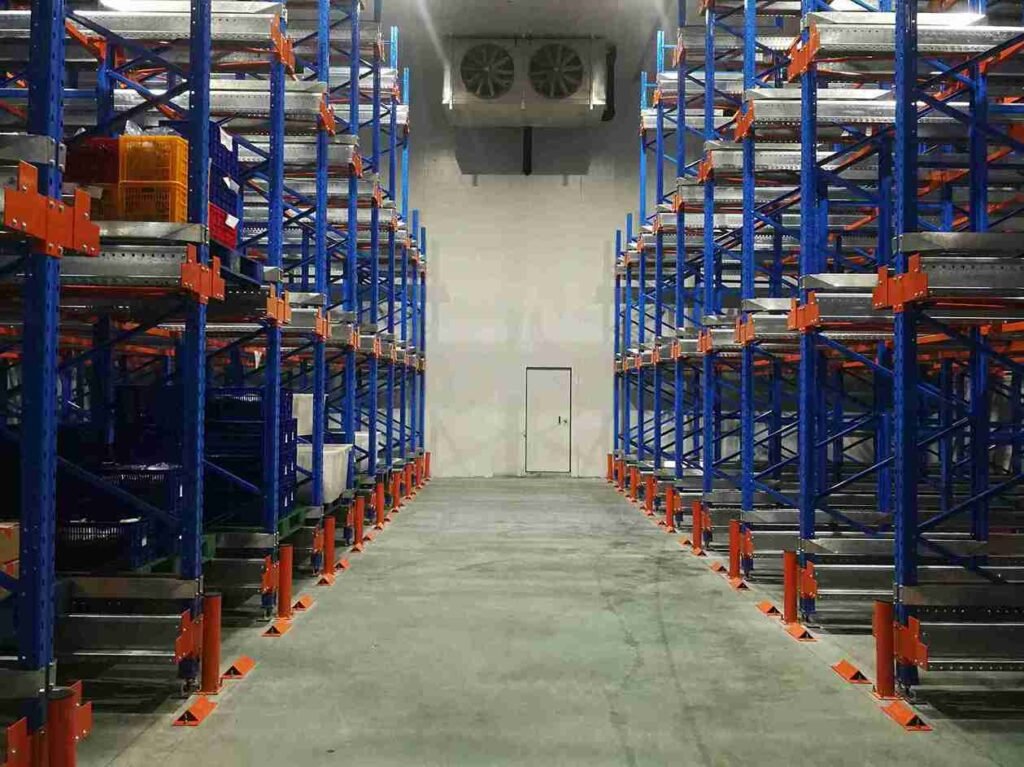
A pallet shuttle wins where the storage task is deep-lane pallet buffering under temperature control and the throughput requirement is moderate relative to the cube being stored. It also wins where the building already exists and clear height is the constraint: a high-density pallet shuttle layout can recover cubic capacity without the floor-space penalty that some crane-based layouts impose. In cold-chain pharma, the pallet shuttle operating inside a sealed dense block reduces unnecessary air exchange and supports more consistent temperature stratification, provided the airflow design accounts for the density of the rack block.
A documented pharmaceutical cold-storage deployment illustrates the scale effect: a four-way pallet shuttle system inside a 2–8 °C chamber, constrained to a 16 × 14 × 13 m footprint, delivered 816 pallet positions across eight storage levels and a throughput of 20 pallets per hour across 200–250 pharmaceutical SKUs. That is the pallet shuttle proposition in its clearest form: maximum positions inside a temperature-controlled envelope that cannot be expanded.
H3: Where the Crane Architecture Remains the Stronger Fit
Crane-based unit-load AS/RS remains the stronger fit for finished-goods warehouses storing palletized lots on a 21 CFR Part 11 batch record, where the load unit is a 500–1,500 kg pallet and the required throughput sits in the range of 20–40 cycles per crane per hour. The architectural advantage in a pharma context is the enclosed, well-defined storage envelope: environmental zoning is easier to qualify, access control is simpler to enforce, and the validation file has a cleaner boundary between the automated system and the surrounding facility.
The trade-off is capital intensity and qualification duration. A 5,000-pallet unit-load install can carry a four-to-nine-month validation window on the critical path before commercial release. A pallet shuttle quotation that does not show its own validation window as a schedule and cost line has understated the project in the same way.
H2: The Validation and Documentation Line in a Pallet Shuttle Quotation
A credible pharmaceutical pallet shuttle quotation names validation deliverables rather than gesturing at “IQ/OQ support.” The expected package includes factory acceptance testing, site acceptance testing, and installation, operational, and performance qualification aligned to GAMP 5, plus a documented 21 CFR Part 11 or Annex 11 audit trail for every pallet shuttle put and pick transaction including user ID, timestamp, and lot number. GAMP 5 is risk-based and covers the system lifecycle, not a one-time paper exercise; it expects reusable verification information and traceable change history.
The pallet shuttle supplier’s quotation should identify who authors which document, who executes which test, and what the client’s quality unit is expected to approve. A pallet shuttle line that says only “validation support available” is not a deliverable. It is a placeholder for an undefined scope, and the undefined scope is where the pallet shuttle budget overrun lives.
H3: The Pallet Shuttle WCS as the Real Data-Integrity Boundary
The pallet shuttle hardware does not need to read a serial number. The system around it does. The WMS and WCS driving a pharmaceutical pallet shuttle must support user access controls, audit trails, and electronic signatures compliant with 21 CFR Part 11 or Annex 11. The pallet shuttle WCS must hand off transaction data to the WMS in a form that preserves the batch and serial identity of every pallet movement, so that an inspection can reconstruct which pallet shuttle moved which lot, when, and under whose authorization.
A pallet shuttle quotation that prices the WCS as a generic “warehouse control” module without identifying the audit-trail schema and the serialization interface has left the most pharma-specific software work undefined. The pallet shuttle hardware price may be accurate. The system price is not.
H2: Vendor Selection: Reading a Pallet Shuttle Supplier for Pharma Fitness
A pharma-capable pallet shuttle supplier shares three observable characteristics.
First, the supplier can produce a validation package—IQ, OQ, PQ, and audit-trail documentation—as a standard deliverable, not a custom engineering request.
Second, the supplier can show cold-chain pallet shuttle references where units operate at −25 °C or below with documented battery and PCBA specifications.
Third, the supplier can explain the pallet shuttle maintenance-access philosophy in a dense lane and show how a single pallet shuttle fault does not cascade into a lane-wide outage. A general warehouse supplier can meet the steel and pallet shuttle specifications and still fail the pharma test on all three counts. The pallet shuttle quotation should identify the validation lead, the cold-chain reference sites, and the maintenance-access concept by name. Vague assurances are not procurement evidence.
H3: The Cold-Chain Pallet Shuttle Reference Check
A cold-chain pallet shuttle reference check should ask three questions beyond “did it work.” What temperature band was qualified, and was the qualification repeated after the pallet shuttle system was installed? What was the actual pallet shuttle battery replacement interval in service, as distinct from the datasheet estimate? And how many lane-hours were lost to pallet shuttle maintenance in the first twenty-four months? A supplier who can answer those three questions has a real cold-chain pallet shuttle installation. A supplier who can only provide a logo and a project count has a marketing reference. In a pharmaceutical pallet shuttle quotation, the reference check is part of technical due diligence, not a courtesy call.
H3: Software Ownership and the Pallet Shuttle Afterlife
The pallet shuttle software layer carries a lifecycle obligation that outlasts the hardware warranty. The WMS/WCS must support role-based access, electronic signatures, and audit trails that remain retrievable and tamper-evident over the record-retention period. An inspector arriving without notice may expect a complete pallet shuttle transaction record within a twenty-four-to-forty-eight-hour retrieval window. The pallet shuttle procurement question is who owns the audit-trail schema, who controls change management after handover, and whether a pallet shuttle software update can alter the audit-trail configuration without formal change control. A pallet shuttle quotation that prices software as a one-time license without a change-control and data-retention schedule has underpriced the regulated lifecycle.
H2: Pallet Shuttle Total Cost of Ownership: What the Pharma Buyer Should Model
Published pallet shuttle per-position numbers are purchase price, not lifecycle cost. Maintenance cost scales with pallet shuttle and lift count rather than position count, which is why pallet shuttle-heavy designs with fewer lifts can be cheaper to maintain even when hardware per position is similar. Annual maintenance contracts for pallet shuttle fleets typically run 3–5% of system hardware cost. In cold chain, that percentage is not stable because pallet shuttle battery replacement and condensation-related wear shorten component life.
A pharmaceutical pallet shuttle TCO model should separate ambient and cold zones, model pallet shuttle battery replacement at three-to-four years in frozen storage rather than the ambient five-to-seven-year cycle, and include the labor and production cost of lane downtime during pallet shuttle maintenance. The ROI case for a pallet shuttle in pharma is not built on labor savings alone. It is built on inventory accuracy above 99.9%, reduced manual handling variability, and the compliance value of a documented, auditable material flow.
H3: Hidden Pallet Shuttle Costs That Belong in the Business Case
The pallet shuttle costs buyers forget are consistent across projects: ocean freight and container utilization for racking, pallet shuttle installation and commissioning labor quoted separately, duties and import costs, facility modifications, power-supply upgrades, and software customization for unique workflows. In pharma, add pallet shuttle temperature-mapping interaction, cleaning validation, and the quality-unit review time for pallet shuttle validation documents. A pallet shuttle quotation that is transparent about these line items is more useful than a lower number that excludes them, because the excluded pallet shuttle items do not disappear. They reappear later without a competitive check.
H3: The Pallet Shuttle Payback Comparison Against Crane-Based AS/RS
Pallet shuttle racking usually delivers faster payback for medium-volume operations; crane-based AS/RS carries two to four times the initial capital cost but can deliver superior long-term ROI at very large scale and very high throughput. The pharma-specific adjustment is that the crane’s validation boundary is cleaner, while the pallet shuttle’s scalability is modular and incremental.
A distributor expecting steady volume growth can phase pallet shuttle modules and spread the capital and validation burden across budget cycles. A manufacturer with a fixed, high-throughput finished-goods profile may find the crane’s single-envelope validation more economically efficient over fifteen years. The wrong move is to compare a pallet shuttle quote against a crane quote at the same position count without normalizing throughput, redundancy, and validation scope.
H2: Procurement Sequence for a Defensible Pallet Shuttle Quotation
A defensible pallet shuttle comparison is built in five steps.
First, fix the regulatory envelope: which zones are GDP-controlled, which are GMP-adjacent, and which data-integrity standard applies.
Second, fix the load unit and the temperature band, because those two inputs determine the pallet shuttle specification and the steel treatment.
Third, fix the throughput and redundancy requirement, which determines pallet shuttle count and whether the architecture needs cross-lane transfer.
Fourth, require every supplier to quote against the same scope-of-supply matrix, with pallet shuttle validation documents and software interfaces listed as separate lines. Fifth, normalize freight, installation, and commissioning before comparing totals. A pallet shuttle supplier who will not quote against a normalized matrix is not comparable, regardless of the headline number. The goal is not the lowest pallet shuttle quotation. The goal is the pallet shuttle quotation with the fewest undefined obligations.
H3: The Five-Input Pallet Shuttle Budgetary Request
A competent pallet shuttle manufacturer can return a layout and a budgetary price within roughly forty-eight hours when given five inputs: warehouse length × width × clear height, pallet size and loaded weight, target pallet shuttle position count, temperature range, and destination port. Two pharma-specific inputs should be added to that list: the applicable regulatory standard (EU GDP, 21 CFR Part 211, or both) and the required data-integrity deliverable (21 CFR Part 11 or Annex 11 audit trail).
Those additions do not slow the pallet shuttle budgetary response; they prevent a general-purpose pallet shuttle number from being mistaken for a pharma-grade number. A supplier who cannot respond to the five-input request with a structured pallet shuttle budgetary layout is not ready for a pharmaceutical project.
H3: Red Flags in a Pharmaceutical Pallet Shuttle Offer
A pallet shuttle per-position price with no temperature band stated is a red flag. A pallet shuttle maintenance percentage that does not differentiate ambient from cold storage is a red flag. A pallet shuttle validation line that says “IQ/OQ available” without naming deliverables or responsibilities is a red flag. A pallet shuttle software line that does not identify the audit-trail schema or the serialization interface is a red flag.
A pallet shuttle maintenance-access concept that requires extracting a shuttle from the back of a full lane is a red flag. None of these signals means the pallet shuttle supplier is dishonest. They mean the pallet shuttle quotation is underspecified for a regulated environment, and the missing scope will be paid for later—either in pallet shuttle change orders or in compliance remediation.
H2: Conclusion
The pallet shuttle for a pharmaceutical logistics warehouse is a density instrument inside a regulatory envelope, and the pallet shuttle quotation is the commercial document that either acknowledges that envelope or hides it. A general warehouse pallet shuttle quote answers a throughput and cube question.
A pharmaceutical pallet shuttle quote must also answer a temperature-mapping question, a material-contact and cleaning question, a 21 CFR Part 11 or Annex 11 audit-trail question, and a cold-chain maintenance-access question. The pallet shuttle suppliers who understand this price the regulated layer explicitly and show their pallet shuttle validation and cold-chain evidence before the commercial negotiation begins. The suppliers who do not produce a pallet shuttle number that looks competitive until the undefined obligations surface during qualification.
A pharmaceutical buyer is better served by two complete, line-item-normalized pallet shuttle quotations than by one low per-position number that leaves the most expensive pallet shuttle work unpriced. The pallet shuttle that earns its place in a pharma warehouse is the one whose quotation can be read as a validation-ready design, not merely as a bill of materials for robots and rails.
H2: Frequently Asked Questions
What information should accompany a pallet shuttle request so the first quotation is usable?
A pallet shuttle budgetary response becomes usable when it is built on warehouse length, width, and clear height, pallet footprint and loaded weight, target pallet shuttle position count, temperature band per zone, and destination port. For a pharmaceutical pallet shuttle request, the applicable regulatory framework and the required data-integrity standard should be stated in the same brief. Those inputs allow a pallet shuttle manufacturer to return a layout and a budgetary price rather than a generic per-position range. A pallet shuttle request that omits the temperature band or the audit-trail requirement will produce a number that cannot be compared to a pharma-grade offer.
How does a cold-store pallet shuttle differ from an ambient pallet shuttle in maintenance terms?
A cold-store pallet shuttle is not an ambient unit with a lower thermostat setting. It carries a low-temperature lithium battery, conformal-coated PCBA, and a separate charging-port design. The pallet shuttle battery replacement cycle shortens from the ambient five-to-seven-year range to three-to-four years at −25 °C, and the per-unit battery cost sits in the US$800–1,500 range depending on capacity. A pallet shuttle maintenance plan that applies one replacement interval across ambient and frozen zones has not modeled the cold-chain pallet shuttle lifecycle. The pallet shuttle quotation should separate those assumptions by temperature zone.
Can a two-way pallet shuttle meet pharmaceutical cold-chain requirements without moving to a four-way architecture?
A two-way pallet shuttle can operate inside a GDP-qualified cold chamber provided the surrounding WMS/WCS captures put and pick transactions with the required audit trail and the temperature mapping covers the dense rack block. The two-way pallet shuttle is the workhorse of deep-lane, single-direction cold storage, and its simpler lane logic reduces the validation boundary compared with a cross-aisle four-way pallet shuttle. The compliance question is not the pallet shuttle travel axis. It is whether the pallet shuttle system places the data-integrity and maintenance-access obligations on a documented, repeatable interface. A four-way pallet shuttle buys SKU-mix flexibility; it does not automatically buy compliance.
What validation documents should a pallet shuttle supplier name in a pharma quotation?
The pallet shuttle quotation should name factory acceptance testing, site acceptance testing, and installation, operational, and performance qualification aligned to GAMP 5, plus a documented 21 CFR Part 11 or Annex 11 audit trail for every pallet shuttle put and pick transaction including user ID, timestamp, and lot number.
It should identify who authors each pallet shuttle validation document, who executes each test, and what the client’s quality unit is expected to approve. A pallet shuttle line that says only “IQ/OQ support” is a placeholder for an undefined scope. The pallet shuttle validation package is the evidence that the system can be released for GMP use, and it belongs in the commercial offer, not in a post-award clarification.
How should a pallet shuttle quotation be compared against a crane-based AS/RS quotation for the same pharma warehouse?
Normalize both offers to the same scope-of-supply matrix: pallet shuttle or crane position count, throughput, redundancy, temperature band, validation deliverables, software interfaces, freight, installation, commissioning, and maintenance-access concept. Pallet shuttle racking typically delivers faster payback for medium-volume operations, while crane-based AS/RS carries two to four times the initial capital cost and can deliver superior long-term ROI at very large scale. The pharma adjustment is that the crane’s enclosed envelope can simplify environmental qualification, while the pallet shuttle’s modularity allows phased capital and validation. A pallet shuttle comparison against a crane is only valid when both quotations define the same regulated scope.
Link and Citation Note: This article incorporates outbound references to established regulatory and technical frameworks, including the EU Guidelines on Good Distribution Practice (2013/C 343/01) for temperature-mapping expectations, 21 CFR Part 11 and EU GMP Annex 11 for electronic records, audit trails, and access controls, and GAMP 5 for risk-based validation of computerized systems. Internal-link anchors in a published version should point to related procurement guides on two-way versus four-way pallet shuttle architecture, cold-chain pallet shuttle battery lifecycle and maintenance access, and GAMP 5 validation deliverables for pallet shuttle warehouse control systems.
Geelyracks is a factory specializing in warehouse racking and a global expert in custom racking solutions: https://geelyracks.com/
We can provide you with free warehouse racking design plans and price quotes; Sila hubungi kami. Our email address is jili@geelyracks.com