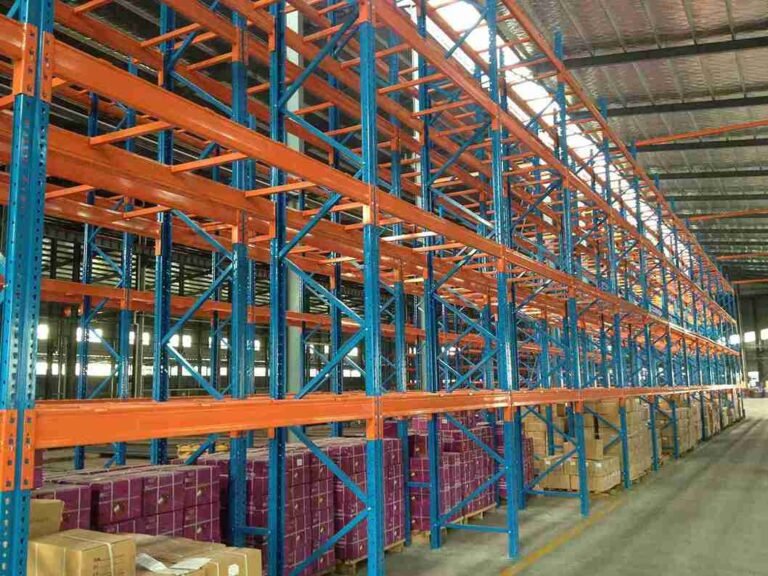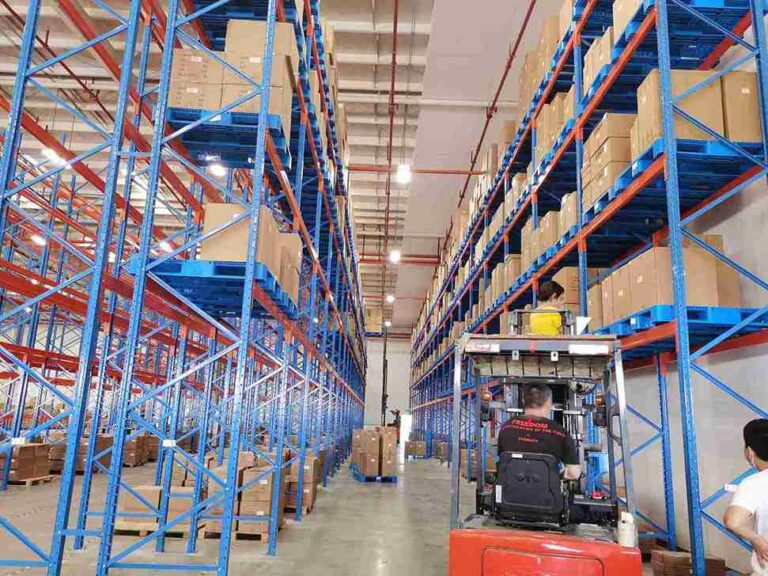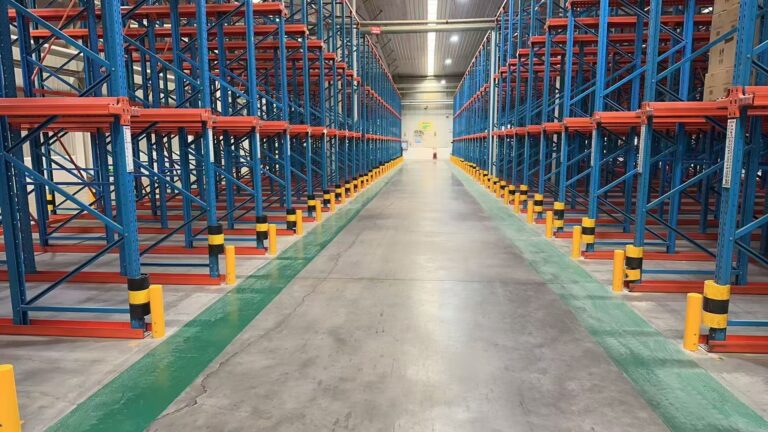
📐 "50 Soalan Perusahaan Pertama Dapatkan Rekaan Gudang 3D Tersuai" Rancangan















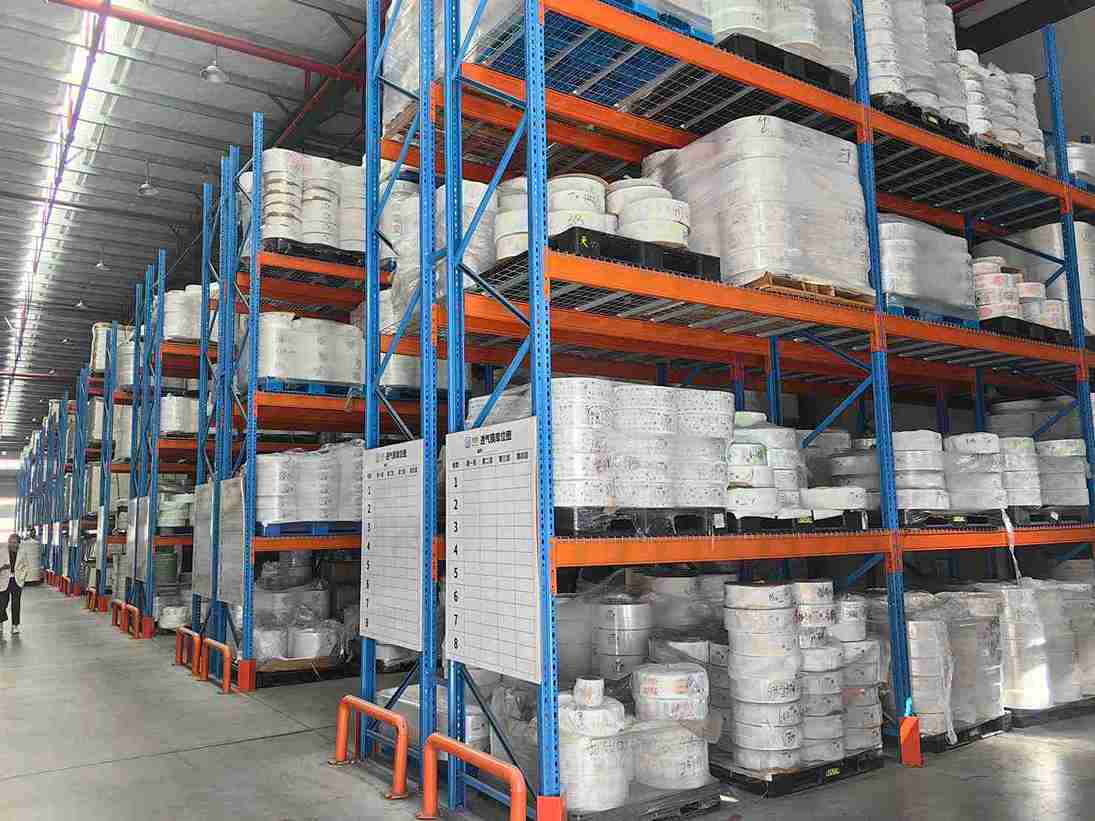
Cost-Effective Wire Mesh Decking with High Load Capacity – Request Logistics Center Quotation for Africa & Latin
Table of contents1.
1.Why Global Logistics Buyers Are Turning to Wire Mesh Decking in 2026
2. Market Intelligence – Africa & Latin America: Two Continents, One Storage Revolution
– 2.1 The African Warehouse Boom
– 2.2 Latin America: Nearshoring and Class-A Logistics Parks
3. Understanding Load Capacity in Wire Mesh Decking – The Technical Foundation Every Buyer Needs to Know
4. Why Wire Mesh Decking Offers Superior Cost-Effectiveness Compared to Other Pallet Rack Decking Options
5. Fire Safety, Airflow, and Compliance – Non-Negotiable Features for Modern Distribution Centers
6. Requesting Your Logistics Center Quotation – What African and Latin American Buyers Must Include
7. Quality Certifications, Manufacturing Standards, and What to Look for in a Reliable Supplier
8. Engineering a Warehouse for High-Density Storage – Integration with Pallet Racking, AGVs, and Automated Systems
9. Deep Dive into Pallet Rack Compatibility – Matching Wire Mesh Decking with Different Rack Types
10. Conclusion
11. Frequently Asked Questions (FAQs) About Wire Mesh Decking and Pallet Racks for Logistics Centers
REQUEST YOUR COST-EFFECTIVE WIRE MESH DECKING QUOTATION TODAY
The logistics and warehousing landscape across Afrika dan Latin America is undergoing a profound transformation. New distribution centers are rising at an unprecedented pace, driven by surging e-commerce demand, foreign direct investment in industrial real estate, and supply chain modernization initiatives that were unimaginable just a few years ago. For warehouse developers, logistics center operators, and procurement professionals overseeing these projects, selecting the right decking for pallet rack systems is not merely a technical decision—it is a strategic investment that impacts operational safety, storage efficiency, regulatory compliance, and long-term profitability.
Among all pallet rack decking options available today, cost-effective wire mesh decking with high load capacity has emerged as the preferred solution for logistics distribution centers across emerging markets. This article delivers a comprehensive, technically rigorous, and commercially actionable guide to help buyers in Africa and Latin America understand everything they need to know before requesting a quotation—from load capacity calculations and manufacturing standards to fire safety compliance, cost comparisons against alternative decking materials, and supplier evaluation criteria. The article also explores how different pallet rack configurations—selective, double‑deep, drive‑in, push‑back, and carton flow—interact with wire mesh decking to maximize storage density and operational flexibility.
1. Why Global Logistics Buyers Are Turning to Wire Mesh Decking in 2026
The year 2026 marks a pivotal moment for the global wire mesh decking market. Industry analysts project substantial growth, with the global wire mesh decks market expected to grow from approximately USD 682.8 million in 2024 to about USD 1.25 billion by 2035, representing a compound annual growth rate (CAGR) of 5.6 percent. Other market research reports estimate even stronger momentum, with the wire mesh decking market projected to expand at a CAGR of 6.8 percent from 2025 onward. These numbers reflect more than statistical trends—they tell a story about how modern warehouses are being designed, equipped, and operated.
Several interconnected factors are driving this global shift toward wire mesh decking. The explosive growth of e‑commerce has created unprecedented demand for high-density warehousing solutions that maximize storage capacity while maintaining operational flexibility. Distribution centers handling mixed stock-keeping units (SKUs), fast-moving consumer goods (FMCG), pharmaceuticals, and e‑commerce fulfillment require decking solutions that support a wide variety of carton sizes, pallet types, and picking methodologies. Wire mesh decking, with its open‑grid design and adaptable load ratings, meets these requirements more effectively than solid alternatives.
Regulatory pressure is also accelerating adoption. Warehouse safety standards—particularly those governing fire protection, falling object prevention, and structural integrity—have become more stringent worldwide. Wire mesh decking inherently allows sprinkler water to penetrate between pallet rack levels, a critical feature for meeting fire code requirements in modern distribution centers. In contrast, solid decking (whether steel sheet or wood) can block water flow, potentially compromising fire suppression effectiveness and leading to compliance violations with associated legal liabilities and insurance consequences.
The role of wire mesh decking within cost‑effective logistics center strategies cannot be overstated. For warehouse projects involving automated guided vehicles (AGVs), autonomous mobile robots (AMRs), and conveyor systems, decking must meet tight dimensional tolerances, provide consistent load‑bearing surfaces, and accommodate the precise navigation requirements of automated equipment. Wire mesh decking manufactured to ANSI MH26.2 or EN 15512 standards reliably delivers these capabilities at a fraction of the cost of custom‑engineered alternatives.
For buyers in Africa and Latin America, these global trends carry specific implications. Both regions are experiencing a massive wave of warehouse construction and modernization, creating immediate procurement needs for pallet rack accessories—including decking—at scale. However, local manufacturing capacity for high‑quality wire mesh decking remains limited in many markets, making international sourcing from experienced suppliers a practical necessity. Understanding how to request and evaluate quotations efficiently is therefore essential for project success. A well‑chosen pallet rack system, combined with the right decking, can increase storage density by 30‑50% compared to floor stacking, while also improving inventory accuracy and worker safety.
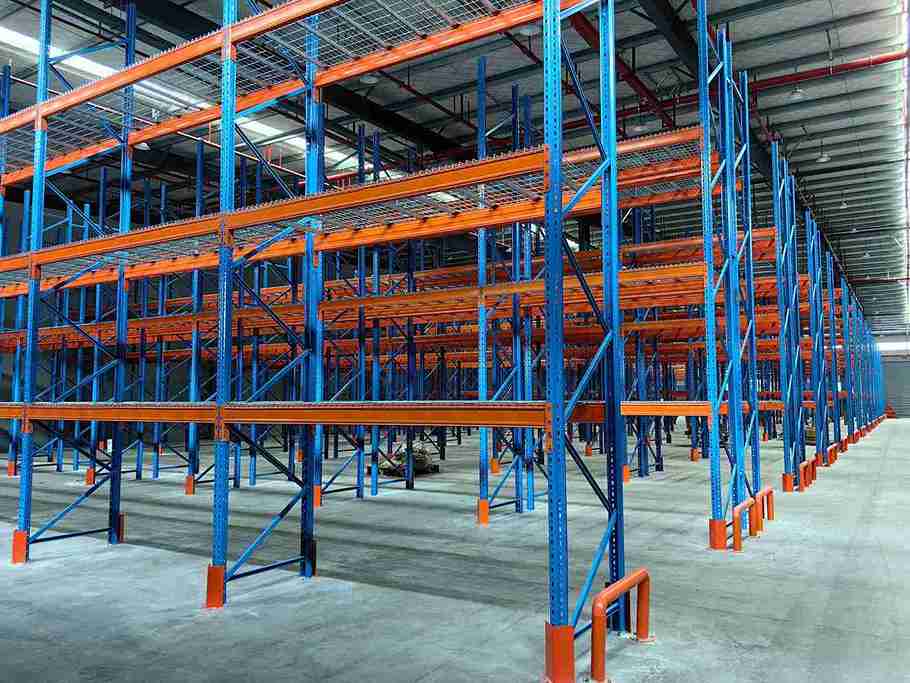
2. Market Intelligence – Africa & Latin America: Two Continents, One Storage Revolution
Warehouse development in Africa and Latin America is accelerating at rates that demand attention from global suppliers and procurement professionals alike. While each region has distinct economic drivers and logistical challenges, both share a common characteristic: the urgent need for modern, cost‑effective storage solutions that can support growing trade volumes and evolving supply chain requirements.
2.1 The African Warehouse Boom: E‑Commerce, AfCFTA, and Logistics Modernization
Africa’s logistics sector is undergoing a transformation driven by three powerful forces: digital commerce expansion, institutional investment in industrial real estate, and the implementation of the African Continental Free Trade Area (AfCFTA).
By 2026, Africa’s overall digital commerce market is projected to reach USD 72 billion, with leading markets including Egypt, Kenya, Morocco, Nigeria, and South Africa driving this growth. E‑commerce platforms, third-party logistics providers (3PLs), and retail chains are expanding their distribution networks rapidly, requiring modern warehouse facilities with capabilities that traditional “godowns”—the term commonly used for older, lower‑grade warehousing in many African markets—simply cannot provide. The demand for institutional‑grade warehousing facilities across Africa has grown steadily, with warehouse occupancy reaching 83 percent in the first half of 2025, up from 75 percent just one year earlier.
The AfCFTA, which aims to create a single continental market for goods and services, is expected to boost intra‑African trade by as much as 50 percent when supported by enhanced logistics infrastructure. This trade expansion will require significant investment in distribution centers, cold storage facilities, and cross‑docking hubs across the continent. The Middle East and Africa freight and logistics market is estimated to be worth USD 321.36 billion in 2026, growing to USD 416.75 billion by 2031 at a CAGR of 5.34 percent.
Investment is following this demand. A private infrastructure development group recently approved USD 15 million in African warehouse investments to be deployed via an Industrial Real Estate Investment Trust (REIT), marking East Africa’s first industrial REIT listing on the Nairobi Securities Exchange. Logistics costs currently account for approximately 30 percent of Kenya’s GDP—compared to about 10 to 12 percent in developed economies—highlighting the substantial efficiency gains achievable through modern warehousing infrastructure.
For wire mesh decking suppliers and buyers, these trends translate into concrete opportunities. New distribution centers require pallet rack systems with decking that can handle loads ranging from light cartons (250 kg per panel) to heavy pallets (over 1,500 kg per panel), depending on the facility’s intended use. The growing presence of multinational retailers and e‑commerce operators in African markets also means that buyers increasingly expect compliance with international safety standards, including ANSI MH16.1, EN 15512, and ISO 9001 quality management systems.
A pallet rack is the backbone of any modern warehouse. Without a robust pallet rack structure, even the best decking cannot deliver its promised performance. Therefore, when buyers request a quotation for wire mesh decking, they should also consider the condition and compatibility of their existing pallet rack system. For new projects, selecting a pallet rack design that matches the decking’s load capacity and beam spacing is the first step toward a safe and efficient operation.
2.2 Latin America: Nearshoring, Class‑A Logistics Parks, and Warehouse Expansion
Latin America’s commercial real estate and logistics sectors are experiencing a parallel surge, driven primarily by nearshoring trends, rising e‑commerce penetration, and sustained institutional capital inflows.
The Latin America commercial real estate market size in 2026 is estimated at USD 313.6 billion, growing to USD 429.21 billion by 2031 at a CAGR of 6.47 percent. Nearshoring—the relocation of manufacturing and supply chain operations closer to end markets—has intensified demand along Mexico’s Bajío and northern border corridors, while Brazil’s intermodal hubs continue to attract modern distribution assets. In some Mexican submarkets, vacancy rates for Class‑A industrial sheds have fallen below 3 percent, reflecting the intensity of demand for modern warehousing space.
E‑commerce penetration across Latin America did not retreat after the pandemic‑driven surge; instead, online retail volumes have continued to grow, pressing occupiers to secure urban cross‑dock sites and temperature‑controlled facilities. The World Bank ranks Latin America below the OECD average on logistics efficiency, underscoring the upside for developers and operators who can integrate modern storage systems, including wire mesh decking, into their facilities.
Mexico stands out as a particularly dynamic market. In March 2026, Logistic Properties of the Americas announced a master forward purchase agreement to invest approximately USD 200 million in Class‑A industrial assets in Central Park 57, a logistics park along the key Mexico–Querétaro corridor. New supply for logistics centers across Mexico is projected at 1.75 million square meters nationwide in 2026, with 1.40 million square meters concentrated in the Mexico City metropolitan area. Amazon is also expanding its presence in the region, with a new 60,700‑square‑meter logistics center under construction in Paraná, Brazil, featuring 12‑meter ceiling heights and 148 loading docks.
For wire mesh decking buyers in Latin America, these developments signal sustained demand for pallet rack accessories that can support high‑volume, rapid‑turnover distribution operations. The region’s diverse climate conditions—ranging from humid coastal zones to arid inland areas—also require careful attention to corrosion resistance, making hot‑dip galvanized or powder‑coated wire mesh decking the preferred specification for many projects.
In Latin America, many warehouses still rely on outdated pallet rack designs that use wooden planks or solid steel sheets. Replacing those with wire mesh decking on the same pallet rack frame can immediately improve fire safety, visibility, and load capacity without the need for a full rack replacement. That is why more logistics managers are now specifying wire mesh decking for both new pallet rack installations and retrofit projects.
Across both Africa and Latin America, the common procurement challenge is clear: warehouse developers and logistics center operators need cost‑effective decking solutions with high load capacity that can be delivered efficiently, installed quickly, and relied upon for years of continuous operation. The remainder of this article provides the technical and commercial information needed to evaluate suppliers, compare quotations, and select the right wire mesh decking for your specific project.
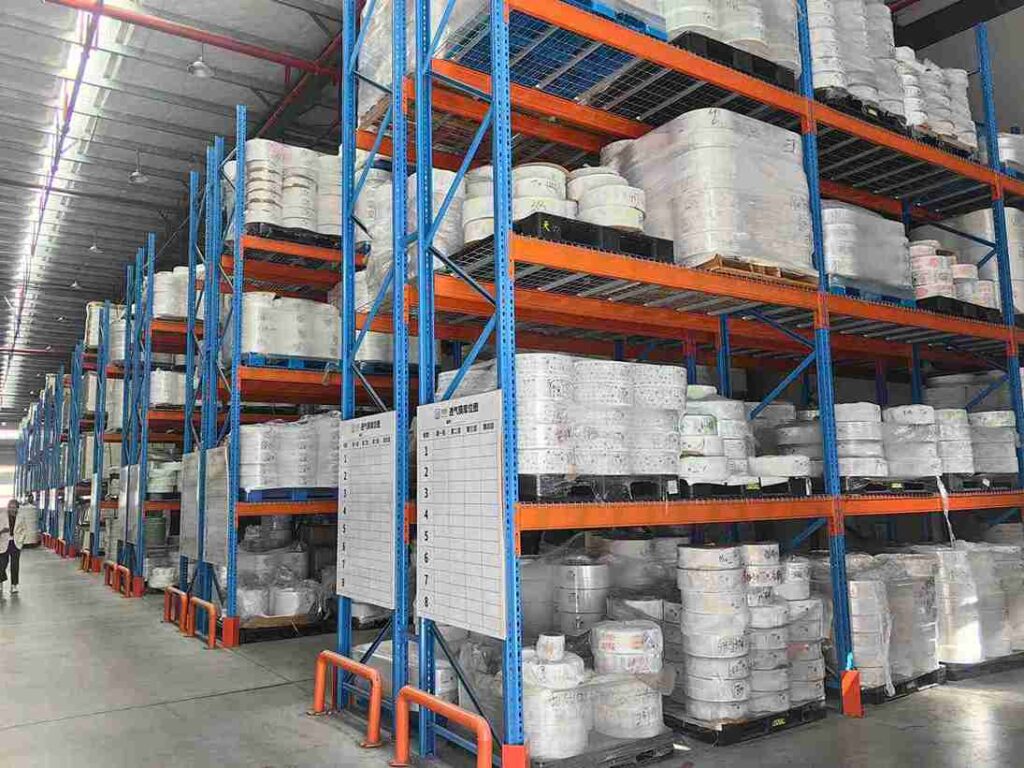
3. Understanding Load Capacity in Wire Mesh Decking – The Technical Foundation Every Buyer Needs to Know
Load capacity is the single most important technical specification for any pallet rack decking product. It directly affects worker safety, inventory protection, regulatory compliance, and the operational viability of your warehouse. Yet load capacity is also one of the most misunderstood specifications—particularly among buyers new to industrial shelving and pallet rack systems. In this section, we break down what load capacity actually means, how it is calculated, and what ratings you should look for when requesting a quotation for a logistics distribution center.
3.1 What Does “Load Capacity” Actually Mean for Logistics Distribution Centers?
Load capacity refers to the maximum weight a wire mesh decking panel can safely support under specified conditions. However, this apparently simple definition conceals important nuances that procurement professionals must understand.
First, decking load capacity is always expressed in relation to the pallet rack system it will be installed on. The decking distributes weight to the pallet rack beams, which in turn transfer loads to upright frames and ultimately to the warehouse floor. A decking panel’s rated capacity assumes that the supporting beams and uprights are themselves capable of handling that load. According to ANSI MH16.1 and OSHA requirements, all pallet rack systems must have clearly visible load plaques showing maximum unit load capacity, maximum total bay capacity, and manufacturer information compared to the decking specifications in the system.
Second, load capacity depends on multiple variables including: the wire gauge used (thicker wires generally provide higher capacity), the configuration of support channels (more channels distribute load more effectively), the overall dimensions of the decking panel (larger panels typically have lower per‑unit‑area capacity than smaller ones under the same design), the type of finish applied (which affects structural integrity over the product’s service life), and the quality of welding at each wire intersection.
Third, high load capacity decking products are available across a wide range of ratings to suit different applications. Not every warehouse needs the maximum possible capacity; selecting appropriately rated decking for your anticipated loads optimizes cost without compromising safety.
3.2 Standard Load Ratings and Real‑World Capabilities
Wire mesh decking is manufactured in multiple load classes to accommodate different storage requirements. Industry‑standard ratings generally fall into three categories:
Light‑duty wire mesh decking typically supports Uniformly Distributed Loads (UDL) up to approximately 250 to 300 kilograms (550 to 660 pounds) per panel. These products are suitable for warehouses storing small cartons, non‑palletized goods, or lightweight consumer products. An example is the mesh beam shelf rated at 250 kg (880×1100 mm), approved according to SS‑EN 15512 standards for lighter storage applications.
Medium‑duty wire mesh decking usually offers load capacities ranging from 500 to 1,000 kilograms (approximately 1,100 to 2,200 pounds) per panel. This category covers the majority of general warehousing and distribution center applications where mixed SKUs, cartons, and standard pallet loads are stored. Many suppliers offer medium‑duty products with wire thicknesses of 4.0 to 5.0 millimeters and mesh grids of 50×100 millimeters or 50×150 millimeters, providing sufficient strength for most logistics center operations.
Heavy‑duty wire mesh decking is rated for loads exceeding 1,000 kilograms (2,200 pounds) per panel, with some products rated up to 1,500 to 3,000 pounds or more. For example, welded wire mesh decking from leading manufacturers can achieve up to 2,500 pounds per square foot with appropriately specified wire gauges and support channel configurations. Other sources confirm heavy‑duty versions hold loads exceeding 2,500 pounds, meeting ANSI capacity standards for demanding industrial environments. For logistics distribution centers handling heavy palletized goods, automotive parts, or industrial equipment, heavy‑duty wire mesh decking is the appropriate specification.
The wire gauge specifications play a critical role in determining load capacity. Wire decking may be specified in wire gauges from 4 (thickest) to 7 (thinnest), with support channels ranging from 12 to 16 gauges. Standard capacity models typically hold up to 2,500 pounds, while heavy‑duty versions support loads exceeding that threshold. Decking must fit existing pallet racks from all major manufacturers, ensuring compatibility across different warehouse configurations.
3.3 Understanding Uniformly Distributed Load (UDL) and Point Load Scenarios
Uniformly Distributed Load (UDL) is the standard metric used to rate wire mesh decking. UDL assumes that weight is evenly spread across the entire surface of the decking panel—a scenario that approximates the storage of uniformly sized cartons, bags, or boxes. When goods are stored on pallets, the load is distributed across the pallet’s footprint, which typically occupies only a portion of the decking panel’s total surface area.
In practice, high load capacity decking is tested not only for UDL but also for point loads and concentrated loads that may occur when pallet feet or irregularly shaped items create pressure points at specific locations on the panel. The structural design of wire mesh decking—with welded wire intersections and support channels welded to the mesh at regular intervals—helps distribute concentrated loads across multiple wire strands, reducing the risk of localized failure.
For logistics distribution centers, understanding the distinction between UDL and point loads is essential when calculating real‑world decking requirements. A pallet weighing 1,000 kilograms resting on four small feet creates a very different stress pattern than 1,000 kilograms of evenly distributed cartons. Experienced suppliers can provide load/deflection data at 1.5 times UDL and weld shear samples to demonstrate their products’ actual performance under realistic loading conditions. When evaluating quotations, buyers should request this testing documentation—it is a reliable indicator of manufacturing quality and engineering rigor.
Compliance with recognized standards provides additional assurance. OSHA requires all capacities to follow the manufacturer’s engineering calculations, with factors such as beam length, upright size, decking type, and pallet weight affecting pallet rack capacity. The RMI ANSI MH16.1‑2023 code establishes design, testing, and utilization standards for industrial steel storage racks, serving as the benchmark that OSHA recognizes for compliance determinations. For buyers in Africa and Latin America, specifying compliance with these internationally recognized standards helps ensure that your wire mesh decking will perform as rated and withstand the rigors of daily warehouse operations.
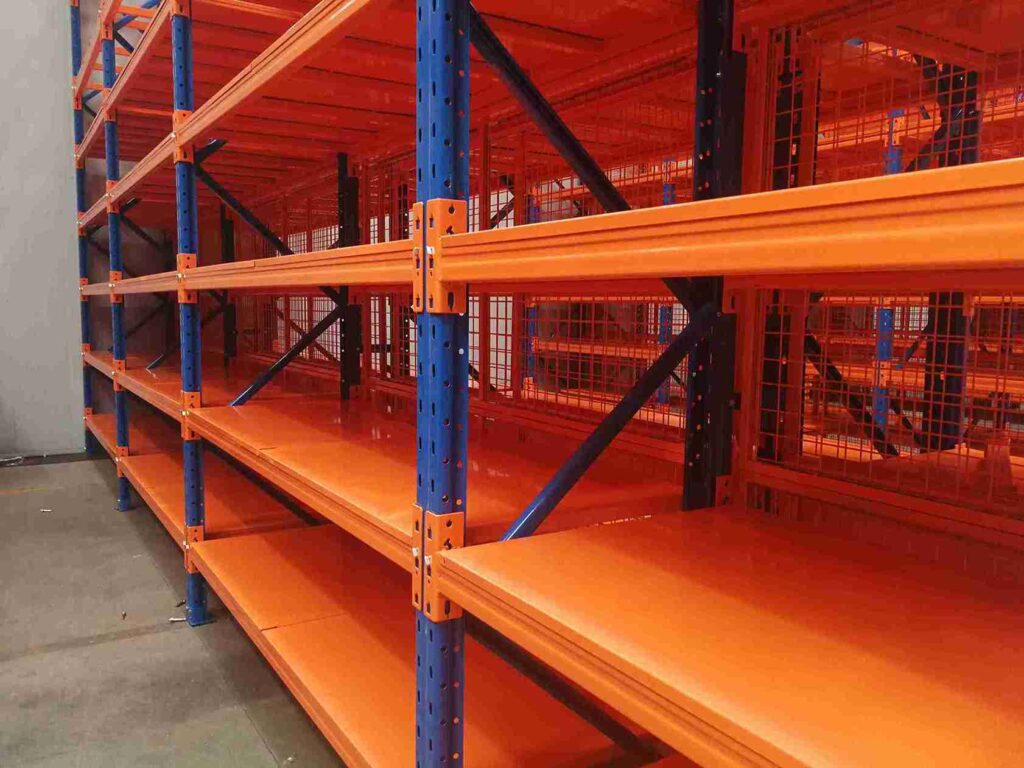
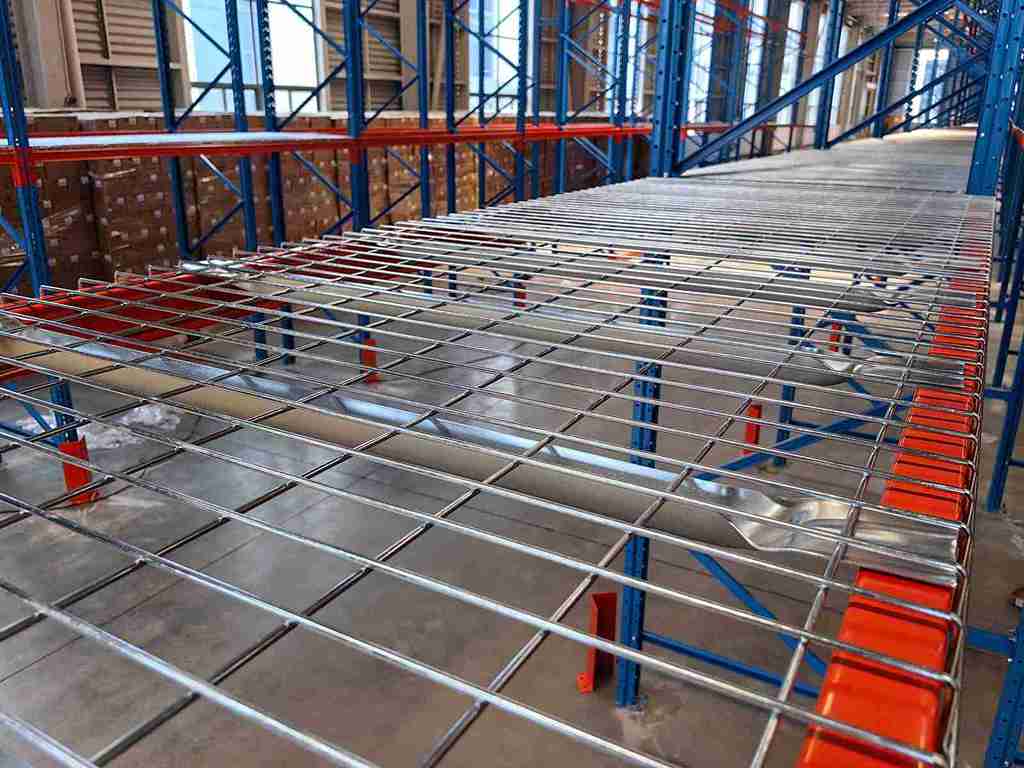
4. Why Wire Mesh Decking Offers Superior Cost‑Effectiveness Compared to Other Pallet Rack Decking Options
One of the first questions procurement professionals ask when evaluating pallet rack decking is straightforward: “What is the most cost‑effective solution for my project?” The answer depends on balancing upfront material costs against long‑term operational expenses including installation labor, maintenance requirements, replacement frequency, compliance risk, and safety liabilities. When these factors are considered comprehensively, cost‑effective wire mesh decking consistently outperforms the alternatives for most logistics distribution center applications.
4.1 Wire Mesh vs. Solid Steel Decking – A Detailed Cost‑Benefit Comparison
Solid steel decking—manufactured from continuous steel sheets rather than welded wire mesh—offers the highest raw strength among all decking options. Steel solid decks can be extremely strong, making them suitable for specialized applications such as storing heavy drums, tools, or small parts that might fall through wire mesh. However, this strength comes with significant trade‑offs.
Material cost is higher. Solid steel decking uses considerably more steel per unit area than wire mesh decking. Because of its material efficiency, wire mesh decking can support cost control in large‑scale warehouse storage projects by reducing raw material consumption while maintaining structural integrity. For a distribution center requiring thousands of decking panels, this material efficiency translates directly into lower procurement costs.
Weight and installation complexity differ substantially. Solid steel decking is heavier and more expensive than wire mesh decking. Wire mesh decking is designed to be light and easy to install, offering an efficient and versatile alternative to timber decking and solid steel panel solutions. Lower weight reduces shipping costs—particularly important for buyers in Africa and Latin America where freight expenses make up a significant portion of total landed cost. Lighter panels also accelerate installation, reducing labor hours and getting your distribution center operational faster.
Fire safety considerations create compliance cost differences. Solid steel decking can block water flow from sprinkler systems, potentially requiring additional fire protection measures that add to project costs. Wire mesh decking maximizes sprinkler penetration and reduces dust accumulation, features that are critical for meeting stringent safety standards without expensive supplementary equipment. For warehouses subject to local fire codes (which are common across both African and Latin American jurisdictions), choosing wire mesh decking can avoid costly compliance workarounds.
Ventilation and environmental control differ dramatically. Solid steel decking blocks air and light, potentially contributing to heat or moisture buildup in temperature‑sensitive storage environments. Wire mesh decking maximizes airflow, allows better lighting penetration, and helps with temperature‑controlled operations—features that reduce HVAC operating costs and improve inventory preservation in distribution centers handling perishable goods or climate‑sensitive products.
Versatility and compatibility advantages favor wire mesh. Wire mesh decking fits nearly all pallet rack types and supports both small and large items, making it ideal for mixed‑use operations. Solid decking is best for very small items or production spaces but may not be suitable for heavy pallet loads unless constructed from heavy‑gauge steel. For general warehouse storage in logistics distribution centers, wire mesh decking is the more versatile, cost‑effective, and safety‑compliant option.
4.2 The Hidden Costs of Wood Decking That Procurement Teams Often Overlook
Wood decking—typically plywood or solid planks laid across pallet rack beams—remains in use for light‑duty applications in some markets, primarily due to its low upfront cost. However, wood decking imposes hidden costs that often exceed the initial price advantage.
Fire resistance is fundamentally compromised. Wood is a combustible material. In warehouses with sprinkler systems, wood decking can absorb water rather than allowing it to pass through, reducing fire suppression effectiveness. Wire mesh decking is a robust, non‑combustible, and self‑cleaning surface that enhances fire safety—making it superior to traditional wood alternatives.
Durability under warehouse conditions is limited. Wood decking requires regular inspection to avoid wear, splintering, or moisture damage. In humid environments—common in coastal Africa and large portions of Latin America—wood can warp, rot, or harbor mold, creating cleanliness and safety problems. Wooden decks require replacement due to moisture or wear, driving up long‑term ownership costs.
Load capacity verification is unreliable. Unlike engineered wire mesh decking with documented load ratings, wood decking’s capacity depends on the specific plywood grade, thickness, and condition at the time of installation—and these properties degrade over time. OSHA requirements for clearly visible load plaques and documented capacities are difficult to satisfy with wood decking systems.
For logistics distribution centers operating at scale across Africa and Latin America, wood decking is generally not a viable long‑term solution. The combination of fire safety risks, maintenance requirements, and uncertain load capacities outweighs any short‑term cost advantage.
4.3 Long‑Term Total Cost of Ownership (TCO) Analysis for Logistics Centers
When procurement professionals evaluate pallet rack decking options, Total Cost of Ownership analysis provides the most accurate basis for comparison. TCO accounts for:
Initial procurement cost. Wire mesh decking is typically more affordable than solid steel alternatives. Its open structure reduces material usage while maintaining strength. Pricing typically ranges from approximately USD 20 to 30 per deck for standard configurations, varying by specifications and order quantity.
Installation labor. Lightweight wire mesh panels reduce installation time and associated labor costs by approximately 50 percent compared to solid steel alternatives on a per‑panel basis, accelerating project completion.
Shipping and freight. Lower weight reduces container shipping costs—a major expense for buyers importing from manufacturing hubs. With proper packaging and container optimization, Chinese wire mesh decking arrives in excellent condition with competitive pricing even after transportation to African and Latin American ports.
Maintenance and cleaning. Wire mesh decking requires low maintenance, provides a long lifespan, and is cost‑effective for large warehouse installations. The open grid deters dust and dirt build‑up, reducing cleaning frequency and associated labor costs. Solid steel decks are more expensive to maintain due to their weight and dust accumulation characteristics.
Replacement frequency. Wire mesh decking manufactured to appropriate standards offers a service life of 10 to 15 years in dry warehouse environments. Corrosive environments or freezer applications require upgraded coatings but still deliver superior longevity compared to wood or particle board alternatives.
Compliance and insurance costs. Facilities using wire mesh decking typically qualify for lower insurance premiums due to improved fire safety characteristics and documented load compliance. The absence of compliance‑related citations under OSHA or local occupational safety regulations also reduces legal risk exposure.
When these factors are calculated over a 10‑year warehouse operation period, cost‑effective wire mesh decking delivers superior value for logistics distribution centers compared to both solid steel and wood alternatives. Buyers requesting quotations should therefore focus not solely on per‑unit pricing but on the comprehensive TCO picture that wire mesh decking provides.
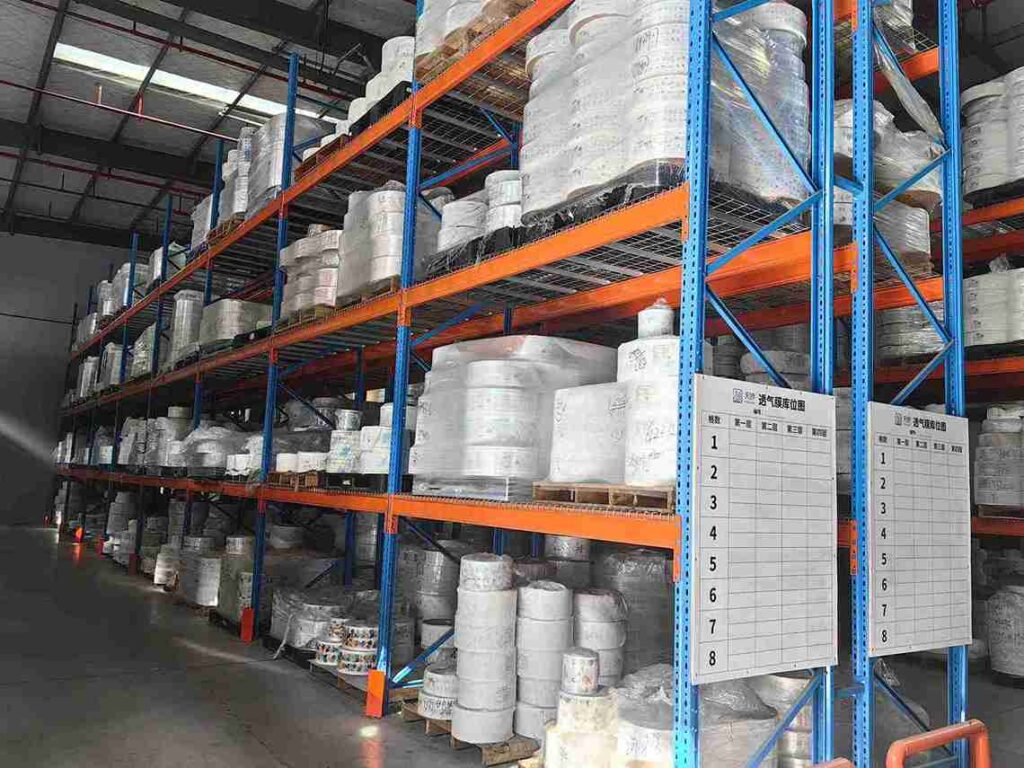
5. Fire Safety, Airflow, and Compliance – Non‑Negotiable Features for Modern Distribution Centers
Modern logistics distribution centers are complex facilities where multiple safety requirements must be balanced against operational efficiency goals. Among these, fire safety occupies a position of paramount importance—not only because of the obvious risks to human life and property but also because fire code violations carry severe penalties and can halt warehouse operations entirely. Wire mesh decking provides inherent safety advantages that solid alternatives cannot match.
5.1 Fire Safety: Why Open Mesh Design Can Make the Difference Between Containment and Catastrophe
The open‑grid design of wire mesh decking creates pathways for sprinkler water to flow between pallet rack levels. When a fire occurs, sprinkler heads at each level activate independently, delivering water directly to the fire source regardless of where it originates within the pallet rack structure. This capability represents a fundamental advantage for warehouses storing flammable materials, cardboard packaging, or any combustible inventory.
In contrast, solid decking (whether steel sheet or wood) blocks water flow. If a fire ignites above solid decking, water falling from upper‑level sprinklers may be blocked from reaching the fire below. Sprinkler water can be prevented from penetrating between pallet rack levels depending on the fire protection design and applicable local regulations. This configuration may require additional fire protection measures, increasing both capital costs and operational complexity.
High load capacity wire mesh decking does not compromise safety for strength. Manufacturers design welded wire decking such that the open mesh structure is maintained even in heavy‑duty configurations. Support channels and thicker wire gauges add structural reinforcement without creating solid barriers that would block water flow. The result is a product that delivers both high load capacity and full fire safety functionality—a combination that solid steel decking cannot achieve because its continuous surface inherently blocks water penetration.
Regulatory compliance considerations vary by region. Fire safety standards such as NFPA (widely adopted across Latin America), EN (common in Francophone Africa and international supply chains), and local building codes govern warehouse design. Wire mesh decking allows even distribution of air and therefore temperature, making it ideal in ambient warehousing as well as chill stores. Sprinkler water can permeate, offering a safer alternative to wooden shelving.
For distribution centers in Africa and Latin America, where fire inspection regimes may be less standardized than in North America or Europe, selecting wire mesh decking provides an additional layer of compliance assurance. The product’s inherent fire safety characteristics reduce the risk of being cited for code violations, even if local inspectors apply standards inconsistently.
5.2 Visibility and Inventory Management Benefits
Beyond fire safety, the open‑grid design of wire mesh decking delivers important operational benefits for logistics distribution centers.
Inventory visibility improves significantly. Warehouse staff can see through mesh decking to verify inventory levels, check product conditions, and identify misplaced items without requiring ladders or powered equipment. The open style of the wires allows for increased visibility for inventory inspection. This visibility reduces the time workers spend physically moving between pallet rack levels to perform simple checks, improving productivity and reducing equipment usage.
Airflow supports temperature control and moisture management. Wire mesh decking allows for better air circulation and improved lighting penetration, which are critical features for meeting operational requirements in temperature‑controlled environments. In facilities storing food products, pharmaceuticals, or other sensitive goods, proper airflow prevents condensation and mold growth that could cause inventory spoilage.
Light penetration improves safety and reduces energy costs. When overhead lighting passes through open mesh decking, illumination reaches lower pallet rack levels more effectively than with solid decking. This allows for potentially fewer lighting fixtures overall or lower intensity requirements, reducing electricity consumption. Better lighting also improves worker safety by eliminating dark areas where trip hazards or misplaced items might otherwise go unnoticed.
Dust and debris accumulation is minimized. The open wires deter dust and dirt build‑up, maintaining cleaner warehouse conditions with less frequent cleaning interventions. This cleanliness advantage is particularly valuable in food‑grade warehouses or facilities where product contamination risks must be strictly controlled.
6. Requesting Your Logistics Center Quotation – What African and Latin American Buyers Must Include in Their Inquiry
Obtaining accurate, comparable quotations for wire mesh decking requires providing suppliers with complete technical and commercial information upfront. Incomplete requests inevitably lead to ambiguous quotes, specification disputes, and project delays. This section provides a structured approach to requesting quotations that will produce comparable, actionable responses from multiple suppliers.
6.1 Essential Technical Specifications for Every Quotation Request
Before contacting suppliers, determine your exact requirements across the following parameters:
Decking dimensions: Measure the clear width and depth between your pallet rack beams where the decking will sit. Common dimensions include 880×1100 mm (Euro sizes), 42×46 inches, and 48×46 inches for US configurations. For custom pallet rack systems, provide specific width and depth measurements to the nearest millimeter or quarter‑inch. Always specify the beam type (step beam, box beam, or standard beam) to ensure proper channel configuration.
Load capacity requirement: Specify the maximum Uniformly Distributed Load (UDL) per decking panel in kilograms or pounds. Base this requirement on the heaviest pallet load you anticipate storing plus a safety margin. Industry guidance recommends staying below 70 percent of the maximum beam capacity as a safety measure; for decking, similar conservatism is warranted. For a distribution center storing pallets weighing up to 1,200 kg, requesting decking rated at 1,500 kg UDL provides an appropriate buffer.
Wire gauge and mesh aperture: Wire thickness specifications typically range from 4.0 mm to 6.0 mm for logistics applications. Mesh openings commonly measure 2.5×4 inches, 2×4 inches, or 50×100 millimeters. Smaller apertures (such as 2×2 inches) are recommended for warehouses storing smaller cartons that might otherwise fall through standard openings, especially in automated environments.
Number of support channels: Decking panels for pallet rack depths up to 42 inches typically require three support channels. For depths of 48 to 60 inches, four to five channels provide appropriate reinforcement to maintain load capacity across the longer span. The channels are welded to the mesh at regular intervals to distribute weight evenly and prevent sagging under heavy loads.
Surface finish specification: Standard finishes include electro‑galvanized (EG), hot‑dip galvanized (HDG), and powder coating. Hot‑dip galvanizing per ASTM A123 provides the highest corrosion resistance and is recommended for humid coastal environments or refrigerated warehouses where condensation occurs. For dry, climate‑controlled distribution centers in inland locations, electro‑galvanized or powder‑coated finishes may suffice at lower cost.
Edge configuration: Waterfall (drop‑over), inside waterfall, and inverted step/flared edges are available. Waterfall edges wrap over the beam, providing secure positioning and eliminating movement between deck and beam. This design is standard for most logistics applications.
6.2 Regional Considerations – Climate, Transportation, and Installation
For buyers in Africa and Latin America, several additional factors should be included in quotation requests:
Climate and corrosion environment: Specify the distribution center’s location and ambient conditions. Coastal regions such as Lagos (Nigeria), Mombasa (Kenya), Rio de Janeiro (Brazil), or Guayaquil (Ecuador) require HDG stainless steel or hot‑dip galvanized finishes with enhanced corrosion resistance. Inland arid areas may accept standard galvanized finishes at lower cost.
Seismic considerations: Parts of Latin America (Mexico, Chile, Peru, Colombia) and select African regions (East African Rift Valley) have seismic activity. Additional structural reinforcement, including thicker support channels or increased channel counts, may be required for both the pallet rack and the decking. Quote requests should specify whether seismic design parameters apply.
Delivery timeline requirements: Importation to African and Latin American ports typically requires 25 to 45 days lead time from Chinese manufacturing hubs, depending on port of entry and customs processing speeds. Expedited air freight is available for urgent projects at premium cost. Quotation requests should specify required delivery windows to ensure suppliers can meet your schedule.
On‑site installation support: Determine whether your team will handle installation or whether supplier‑provided installation support is required. Some suppliers offer technical supervision or full installation services, which should be explicitly requested in the quotation to avoid scope gaps.
6.3 Sample Template for Your Wire Mesh Decking Quotation Request
Below is a template African and Latin American buyers can adapt for their supplier inquiries. Providing this level of detail upfront generates accurate, comparable responses and accelerates the procurement process.
SUBJECT: Wire Mesh Decking Quotation Request – [Project Name] – [Quantity] Units
Dear Supplier,
We request a firm quotation for cost‑effective wire mesh decking with high load capacity for our logistics distribution center in [City, Country].
Technical Specifications:
Decking panel quantity: _______ units
Width _______ mm / inches, Depth _______ mm / inches (measured beam to beam of the pallet rack)
Load capacity requirement: _______ kg / lbs UDL minimum
Wire gauge: _______ mm (4.0–6.0 mm range)
Mesh aperture: _______ × _______ mm or inches
Support channels: _______ pieces per panel
Surface finish: [ ] Hot‑dip galvanized / [ ] Electro‑galvanized / [ ] Powder coating
Edge style: [ ] Waterfall / [ ] Inside waterfall / [ ] Inverted step
Beam compatibility: [ ] Step beam / [ ] Box beam / [ ] Standard beam
Commercial Requirements:
Delivery location: [Port of entry or warehouse address]
Required delivery date: [Date]
Packaging specification: Bundled and palletized for container shipping
Certifications required: [ ] ANSI MH26.2 / [ ] EN 15512 / [ ] ISO 9001 documentation
Testing documentation required: Load/deflection data at 1.5× UDL plus weld shear samples
Please quote on FOB [manufacturing port] and CFR [destination port] basis, including applicable export packaging. We also request estimated lead time from order confirmation to port of loading, plus estimated shipping time to destination port.
Thank you for your prompt quotation.
Sincerely,
[Your Name]
[Company / Position]
[Contact Information]
Suppliers who respond with clear, complete, and technically detailed answers to these specifications are generally more reliable partners than those who provide vague pricing without addressing the underlying engineering requirements. Requesting physical samples and factory audit documentation further strengthens procurement due diligence.
7. Quality Certifications, Manufacturing Standards, and What to Look for in a Reliable Supplier for Large‑Scale Projects
For logistics distribution centers requiring thousands of decking panels across multiple pallet rack bays, supplier reliability is as important as product quality. A single shipment of substandard decking can delay project completion, create safety hazards, and damage your organization’s operational reputation. This section outlines the standards, certifications, and verification methods that distinguish reliable wire mesh decking manufacturers from suppliers offering superficially similar products.
7.1 Global Standards You Should Insist Upon: A Complete Checklist for Procurement Professionals
The following standards provide engineering benchmarks that responsible manufacturers follow. Request evidence of compliance when evaluating quotations:
ANSI MH26.2 – This is the American National Standard for welded wire rack decking. It establishes design, testing, and performance requirements specific to wire mesh decking used in pallet rack systems. Manufacturers claiming compliance should provide test reports demonstrating adherence to these specifications.
RMI/ANSI MH16.1 – The primary design standard for industrial steel storage racks, covering upright frames, beams, and overall system structural integrity. Decking must be compatible with pallet racks meeting this standard. When a pallet rack system follows RMI standards, it is generally considered OSHA‑compliant.
EN 15512 / FEM 10.2.07 – European standards for steel static storage systems. These are widely referenced in international supply chains and are particularly relevant for multi‑national distribution center operators across Africa and Latin America with European parent companies or customers.
ISO 9001:2015 – Quality management system certification indicating that the manufacturer maintains documented processes for quality control, continuous improvement, and customer satisfaction tracking. While ISO 9001 covers management systems rather than product specifications directly, it serves as a useful indicator of overall manufacturing discipline and process maturity.
ASTM A641/A641M – Standard specification for zinc‑coated (galvanized) carbon steel wire, covering mechanical properties, coating weights, and dimensional tolerances. Wire mesh decking manufactured from wire meeting ASTM standards ensures material traceability and predictable performance.
Mill Test Certificates (MTCs) – Documentation proving the origin and chemical composition of raw steel used in manufacturing. MTCs should be traceable to specific production batches. Any supplier unable to provide mill certificates should be treated with skepticism, as this often indicates use of unspecified or substandard materials.
For buyers managing large‑scale warehouse projects across Africa and Latin America, verifying these certifications provides objective evidence that a supplier operates to accepted industry standards. If a manufacturer cannot or will not provide certification documentation upon request, consider this a significant red flag.
7.2 Manufacturing Quality Indicators That Matter More Than Price Alone
Beyond formal certifications, several manufacturing quality indicators distinguish superior suppliers:
Automated resistance welding – Consistent node fusion across thousands of wire intersections requires automated welding processes with precise electrical and mechanical control. Automated resistance welding produces uniform welds without weak spots or excessive burn‑through. Inconsistent hand welding generates variable weld quality that reduces load capacity and shortens product life.
Straightening and jig‑weld processes – Wire must be straightened before welding to limit camber (curvature) in finished panels. Jig‑welding ensures consistent mesh spacing and panel flatness. Poorly aligned decking may not sit flush on pallet rack beams, creating load distribution problems and safety hazards.
Channel attachment method – Support channels should be welded securely to the mesh using appropriate parameters. Loose channels or insufficient weld penetration reduce the decking’s ability to distribute loads effectively, concentrating stress at specific points and increasing failure risk.
Finish application and testing – Hot‑dip galvanizing should meet ASTM A123 specifications for coating thickness and uniformity. Salt spray testing (72 to 500 hours depending on finish specification) provides quantifiable corrosion resistance data. Suppliers who cannot share salt spray test results may be using substandard finishing processes.
Dimensional tolerance control – Decking panels should meet specified dimensions within ±2 millimeters or ±1/16 inch for critical dimensions such as overall width and depth. Panels that exceed these tolerances may not fit properly on pallet rack beams, potentially creating dangerous gaps where pallets or cartons could fall through.
7.3 Supplier Verification – Questions Every Buyer Should Ask Before Placing an Order
Before committing to a large wire mesh decking purchase, request the following from prospective suppliers:
Sample panels for physical inspection – Request at least two sample panels manufactured to your specifications. Inspect weld consistency at every intersection using magnifying glass or low‑power microscope. Check channel attachment points for secure welding. Verify that specified wire gauge matches actual panel construction using calibrated calipers.
Factory audit documentation – Suppliers should accommodate third‑party inspection services such as SGS or Bureau Veritas to evaluate robotic welding precision, galvanization thickness, and environmental controls. The absence of such accommodation suggests potential quality issues the supplier wishes to conceal.
Previous order references – Request contact information for previous customers in your region or in similar logistics distribution center applications. Follow up with these references to inquire about delivery timeliness, product quality upon arrival, and post‑sales support responsiveness.
Engineering drawing availability – Qualified suppliers can produce detailed engineering drawings showing wire placement, channel locations, edge configurations, and critical dimensions. Avoid vendors unable to provide such drawings.
Response time consistency – Monitor how quickly suppliers respond to technical questions. Response times exceeding 48 hours may indicate lack of dedicated technical personnel or excessive workload that could delay your order processing.
Lead time transparency – Reliable manufacturers quote specific lead times (such as 3 to 5 weeks for standard configurations, longer for custom orders). Vague commitments such as “we will try our best” without concrete schedules indicate unreliable production planning.
For buyers in Africa and Latin America, where distance from manufacturing hubs limits the ability to conduct in‑person factory visits, these verification methods become even more critical. Investing time in supplier due diligence before ordering reduces the risk of receiving substandard product that must be returned or replaced at significant cost and schedule impact.
In some markets, buyers may also consider secondhand units as an alternative cost‑saving measure. When serviceable condition secondhand decking is acceptable, clearly specify the required condition standards and any acceptance testing protocols that will be applied. However, for new construction projects where long‑term reliability is paramount, new manufactured decking with full certification documentation typically represents the better investment despite higher upfront cost.
8. Engineering a Warehouse for High‑Density Storage – Integration with Pallet Racking, AGVs, and Automated Systems for Distribution Centers
Modern logistics distribution centers increasingly incorporate automation technologies that place additional demands on pallet rack decking. Automated Guided Vehicles (AGVs), Autonomous Mobile Robots (AMRs), conveyor systems, and automated storage and retrieval systems (ASRS) require decking that maintains precise tolerances, provides consistent surfaces, and resists deformation under repeated vehicle passes. This section addresses integration considerations that buyers should incorporate into their wire mesh decking specifications.
8.1 Matching Decking Specifications to Pallet Rack Configurations
Wire mesh decking must integrate seamlessly with the pallet rack system it will occupy. Two common beam configurations exist:
Step beam pallet racks feature a horizontal beam with a stepped profile that creates a recess where decking channels rest. Step beam systems are widely used in selective pallet rack applications across both Africa and Latin America. Decking designed for step beams uses a flared or inverted channel configuration to match the beam profile, ensuring the decking surface remains level with the beam top for smooth pallet loading.
Box beam pallet racks employ rectangular tubular beams. Decking for box beam applications uses U‑channel supports that sit inside the beam’s top surface, providing a different engagement method than step beam designs. Specify your beam type clearly when requesting quotations to ensure proper channel selection.
Deck‑to‑beam engagement security is critical for preventing decking movement that could dislodge under load or during forklift operations. Waterfall‑style decking wraps over the beam to provide secure brace, eliminating movement between deck and beam. For double‑deep pallet rack systems, custom decking designs ensure consistent beam engagement and uniform load distribution, helping maintain stable and reliable load‑bearing performance even in deeper rack bays.
8.2 Integration with Automation – AGVs, AMRs, and Conveyor Systems
Distribution centers employing AGVs and AMRs for goods movement impose stricter decking requirements than manual warehouses:
Tighter dimensional tolerances – Automated vehicles navigate using pre‑programmed paths and onboard sensors. Decking panels that are even slightly out of specification—such as having warped edges or inconsistent dimensions—can create obstacles or misalignment that disrupts automated navigation. For automation cells, tighter mesh apertures such as 2×2 inch spacing under AMR routes help with spillage control and provide debris containment.
Surface consistency – Decking deflection under load must be minimized to maintain a consistent travel surface for AGVs. Overly flexible decking can cause sensor misreadings or create unsafe conditions for automated vehicle operation. Specify maximum allowable deflection under rated load as part of your quotation requirements.
Weld quality and long‑term durability – Automated warehouses operate continuously, often 24 hours per day, seven days per week. Decking in such facilities experiences more cycles than manual warehouses because vehicles traverse the same paths repeatedly. High‑quality welding and appropriately specified wire gauges are essential for maintaining structural integrity under this duty cycle.
Integration with conveyor systems – Distribution centers using conveyor‑based sortation or transport systems may require decking configured with specific cutouts, modified edge profiles, or reduced panel sizes to accommodate conveyor routing. Custom configurations are available from suppliers with engineering capabilities, but standard off‑the‑shelf products typically do not support such modifications.
For logistics projects incorporating automation, involve both your pallet rack supplier and automation integrator in the decking specification process. Wire mesh decking that works perfectly in a manual warehouse may cause operational problems in an automated facility if tolerances or deflection characteristics are not properly matched to vehicle requirements. Specifying decking to ANSI MH26.2 standards provides documented performance parameters that automation engineers can incorporate into their system designs.
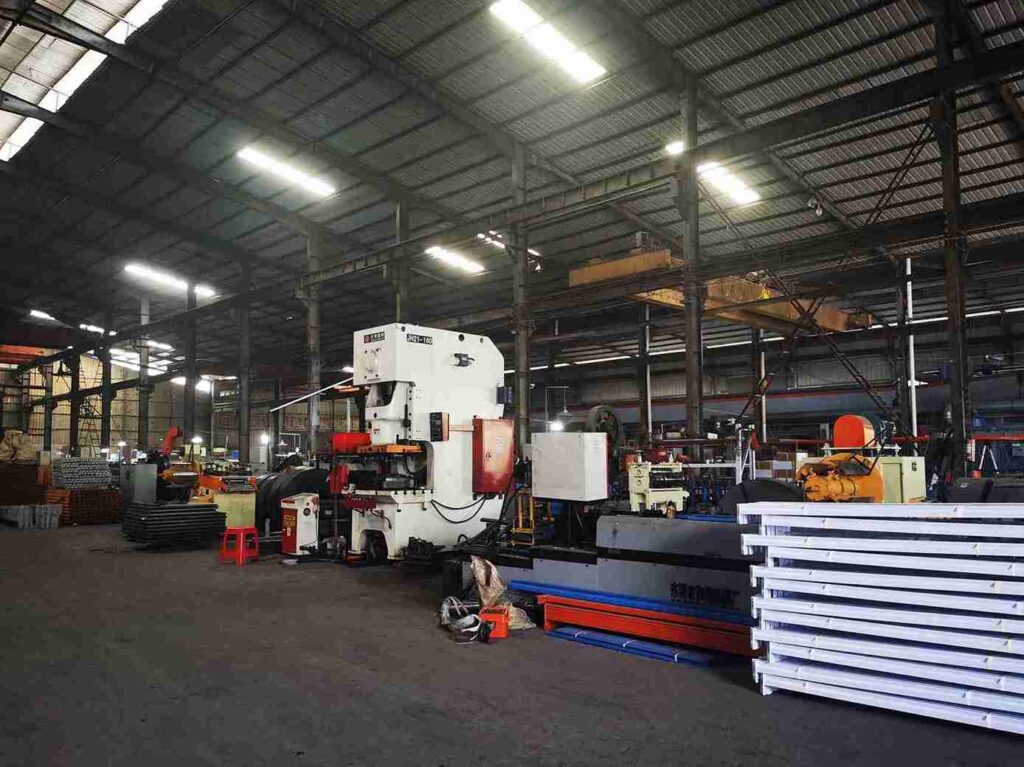
9. Deep Dive into Pallet Rack Compatibility – Matching Wire Mesh Decking with Different Rack Types
One of the most overlooked aspects of warehouse design is how wire mesh decking interacts with various pallet rack architectures. Not all pallet racks are created equal, and choosing the wrong decking for a specific pallet rack type can lead to wasted space, safety violations, or premature product failure. This dedicated chapter explains the five most common pallet rack systems and how wire mesh decking should be specified for each.
9.1 Selective Pallet Racks – The Universal Standard
Selective pallet racks are the most widely used storage system globally, offering direct access to every pallet. They consist of upright frames connected by load beams, forming bays that are typically one pallet deep. Wire mesh decking for selective pallet racks is straightforward: standard waterfall‑edge panels with three to five support channels, depending on beam span and load requirements.
For selective pallet racks, the decking acts as a fall‑through barrier and provides a flat surface for cartons or loose items. Because selective pallet racks are often used in mixed‑SKU environments, the decking should have a mesh aperture small enough (50×50 mm or 2×2 inches) to prevent small items from falling. High‑traffic selective pallet racks also benefit from heavier wire gauges (5.0–6.0 mm) to resist impact damage from forklifts.
9.2 Double‑Deep Pallet Racks
Double‑deep pallet racks use two pallets stored behind each other, accessed by a special forklift with extended forks. This configuration increases storage density but reduces selectivity. Wire mesh decking for double‑deep pallet racks must be carefully matched to the beam spacing, which is often deeper than standard selective racks. Typical depths range from 2,400 mm to 3,600 mm.
For such pallet racks, the decking requires four or more support channels to prevent sagging under the weight of two pallets (up to 3,000 kg per bay). The decking should also have a reinforced leading edge where the forklift enters the bay, as this area experiences the highest impact forces. Some suppliers offer heavy‑duty wire mesh decking with an extra‑thick front wire for double‑deep pallet rack applications.
9.3 Drive‑In and Drive‑Through Pallet Racks
Drive‑in pallet racks allow forklifts to enter the storage structure, placing pallets on rails that run from the front to the back. Drive‑through pallet racks are similar but have openings at both ends. These systems achieve very high density but are not suitable for first‑in‑first‑out (FIFO) inventory management.
In drive‑in pallet racks, wire mesh decking is rarely used directly on the rails because rails themselves support the pallets. However, some hybrid designs incorporate wire mesh decking on the top level or on intermediate levels to store smaller items. When decking is used, it must be extremely rigid and have a high point‑load capacity because forklift wheels may travel over the decking. Only heavy‑duty wire mesh decking with at least five support channels per depth should be considered for drive‑in pallet racks.
9.4 Push‑Back Pallet Racks
Push‑back pallet racks use nested carts that move along inclined rails. Pallets are loaded from the front, pushing previous pallets back. This system offers medium density and works well for same‑SKU, LIFO (last‑in‑first‑out) operations. Wire mesh decking is not typically used on the rail system itself because the carts require smooth rolling surfaces. However, push‑back pallet racks often have a top level of static storage where wire mesh decking can be installed. For that top level, standard selective rack decking specifications apply.
9.5 Carton Flow / Pallet Flow Racks
Carton flow and pallet flow pallet racks use rollers or wheels on a slight incline to move cartons or pallets forward automatically. Wire mesh decking is not suitable for the flow lanes because it would block the rollers. Nonetheless, the picking faces at the front of flow pallet racks sometimes use wire mesh decking as a work surface or for storing empty cartons. In such cases, a light‑duty decking (250–500 kg capacity) with a very fine mesh (25×25 mm) is recommended to prevent small items from falling.
Understanding these pallet rack types helps procurement professionals avoid the costly mistake of ordering one‑size‑fits-all decking. When requesting a quotation, always specify the exact pallet rack model and configuration. A reputable supplier will ask for beam spacing, bay depth, and the intended storage application before providing a recommendation.
Table 1 – Recommended Wire Mesh Decking Specifications by Pallet Rack Type
| Pallet Rack Type | Typical Depth | Min. Support Channels | Recommended Wire Gauge | Mesh Aperture (approx.) |
|---|---|---|---|---|
| Selective | 800–1,100 mm | 3 | 4.0–5.0 mm | 50×100 mm |
| Double‑deep | 2,400–3,600 mm | 5 | 5.0–6.0 mm | 50×100 mm |
| Drive‑in (if used) | custom | 5+ | 6.0 mm | 50×50 mm |
| Top level of push‑back | 800–1,100 mm | 3 | 4.0–5.0 mm | 50×100 mm |
| Flow rack pick face | 600–800 mm | 2 | 3.0–4.0 mm | 25×25 mm |
This table is a general guide. Always verify with your pallet rack manufacturer’s engineering data before finalizing decking specifications.
10. Conclusion
Selecting the right wire mesh decking for a logistics distribution center in Africa or Latin America requires balancing multiple factors: load capacity requirements, fire safety compliance, total cost of ownership, supplier reliability, and integration with both traditional pallet racks and warehouse automation systems. When properly specified and sourced from qualified manufacturers, cost‑effective wire mesh decking with high load capacity delivers safe, durable, and efficient storage operations for 10 to 15 years or longer—making it the optimal choice for most modern distribution center applications.
The market data presented in this article demonstrates that warehouse development across both regions is accelerating. Africa’s digital commerce market is projected to reach USD 72 billion by 2026, while Latin America’s commercial real estate market is growing at a CAGR of 6.47 percent. For suppliers and procurement professionals alike, this growth represents a sustained opportunity to deploy high‑quality wire mesh decking solutions at scale.
When requesting your logistics center quotation, remember to specify all technical parameters—dimensions, load ratings, wire gauges, finish types, and channel configurations—and to request certification documentation that verifies supplier quality claims. Conduct due diligence through sample inspection, reference checks, and response time assessment. Work with manufacturers who hold ISO 9001 certification, comply with ANSI MH26.2 or EN 15512 standards, and can provide load/deflection test data upon request. Also, carefully document your existing pallet rack type and beam dimensions to avoid mismatched orders.
The right wire mesh decking investment protects your inventory, safeguards your workers, satisfies regulatory requirements, and supports efficient warehouse operations day after day. With the information provided in this comprehensive guide, you are now equipped to request quotations that produce accurate, comparable responses and to select a supplier who will deliver products that perform as specified. Request your cost‑effective wire mesh decking quotation today and build a logistics distribution center that meets the demands of modern supply chain operations.
This article includes stereo.
11. Frequently Asked Questions (FAQs) About Wire Mesh Decking and Pallet Racks for Logistics Centers
Q1: Can wire mesh decking be installed on any existing pallet rack, or does the rack need to be modified?
In most cases, wire mesh decking can be installed directly onto existing pallet racks without modification, provided the beam spacing matches standard decking dimensions (typically 880–1,100 mm depth). However, if the pallet rack has unusual beam profiles or non‑standard depths (e.g., custom‑built racks), the decking may need to be manufactured with specific channel configurations. It is always recommended to provide the pallet rack model number or beam drawings to the supplier for verification.
Q2: How does the cost of wire mesh decking compare to replacing an entire pallet rack system with a newer design?
Wire mesh decking is significantly more cost‑effective than replacing an entire pallet rack system. Retrofitting an existing pallet rack with new decking typically costs 20–35 percent of a full rack replacement while delivering most of the safety and operational benefits. For budget‑constrained projects in Africa and Latin America, retrofitting with high‑quality wire mesh decking is the recommended approach.
Q3: What is the maximum load capacity for wire mesh decking on a selective pallet rack with 2.5‑meter beam spans?
On a selective pallet rack with 2.5‑meter beam spans, heavy‑duty wire mesh decking (6.0 mm wire, five support channels) can safely support up to 1,500 kg Uniformly Distributed Load. However, the pallet rack uprights and beams must also be rated for that load. Always consult the pallet rack manufacturer’s capacity plaque before exceeding 75 percent of the beam’s rated capacity. For point loads (e.g., pallet feet), the safe capacity may be lower; ask your supplier for point‑load deflection data.
Q4: Are there specific fire code requirements for wire mesh decking when used with sprinklered pallet racks in Latin American countries?
Most Latin American countries adopt NFPA 13 (Standard for the Installation of Sprinkler Systems) or local equivalents. NFPA 13 requires that decking on pallet racks allow sprinkler water to reach all levels. Wire mesh decking with an open area of at least 50 percent (which most products exceed) typically satisfies this requirement. However, local fire marshals may request documentation; therefore, request a “water permeability certificate” from your wire mesh decking supplier. Solid steel or wood decking on pallet racks almost never meets these codes.
Q5: How long does wire mesh decking typically last when installed on pallet racks in high‑humidity environments like coastal West Africa?
In high‑humidity coastal environments (e.g., Lagos, Abidjan, Mombasa), standard electro‑galvanized wire mesh decking may show surface rust within 12–24 months. For a service life of 10+ years, hot‑dip galvanized (HDG) decking per ASTM A123 is mandatory. HDG decking on pallet racks in such climates typically lasts 15–20 years with minimal maintenance, provided the pallet rack environment is not directly exposed to salt spray. Monthly visual inspections and immediate cleaning of any chemical spills further extend decking life.
Jika anda memerlukan lukisan CAD yang sempurna dan sebut harga untuk rak gudang, Sila hubungi kami. Kami boleh menyediakan perkhidmatan perancangan dan reka bentuk rak gudang serta sebut harga secara percuma. Alamat e-mel kami ialah: jili@geelyracks.com