📐 "50 Soalan Perusahaan Pertama Dapatkan Rekaan Gudang 3D Tersuai" Rancangan
















Introduction: Revolutionizing Warehouse Operations with Double Deep Racking
In the competitive world of logistics and warehousing, optimizing warehouse traffic flow with double deep racking has become a game-changer for businesses looking to maximize space, improve operational efficiency, and reduce costs. Unlike traditional storage systems, rakit dua tingkat mendalam allows warehouses to store pallets two rows deep, significantly increasing storage density while maintaining accessibility.
This in-depth guide explores how warehouse traffic flow double deep racking solutions enhance storage capacity, streamline material handling, and boost productivity. From design considerations to real-world applications, this article provides actionable insights for warehouse managers, logistics professionals, and business owners seeking to optimize warehouse traffic flow with double deep racking systemstitik.
H1: What is Double Deep Racking and How Does It Improve Warehouse Traffic Flow?
Double deep racking is a high-density storage solution designed to optimize warehouse traffic flow by reducing aisle space and increasing storage capacity. By storing pallets two rows deep, warehouses can nearly double their storage footprint without expanding their facility.
H2: The Science Behind Warehouse Traffic Flow Optimization with Double Deep Racking
- Fewer Aisles, Smoother Movement – By eliminating unnecessary aisles, rakit dua tingkat mendalam minimizes forklift congestion, creating a more efficient warehouse traffic flowtitik.
- Strategic Pallet Placement – Fast-moving SKUs are placed in the front row for quick access, while slower-moving inventory occupies the rear, balancing warehouse traffic flow double deep storage efficiencytitik.
- Compatibility with FIFO/LIFO Systems – Whether a warehouse operates on First-In-First-Out (FIFO)atauLast-In-First-Out (LIFO) principles, rakit dua tingkat mendalam can be configured to support both, ensuring seamless warehouse traffic flowtitik.
H2: Key Advantages of Double Deep Racking for Warehouse Traffic Flow
- 50% More Storage Capacity – By reducing aisle space, warehouses can store nearly twice as many pallets in the same area.
- Enhanced Forklift Efficiency – With fewer aisles to navigate, forklift operators experience smoother warehouse traffic flow, reducing travel time and labor costs.
- Lower Operational Costs – Fewer aisles mean less wasted space, leading to lower real estate and energy expenses.
- Scalability for Growing Businesses – As inventory needs expand, rakit dua tingkat mendalam allows warehouses to scale without costly renovations.
H1: Designing the Perfect Double Deep Racking Layout for Optimal Warehouse Traffic Flow
A well-planned rakit dua tingkat mendalam system is essential for maximizing warehouse traffic flow. Poor design can lead to bottlenecks, inefficient forklift movement, and lost productivity.
H2: Critical Factors in Double Deep Racking Layouts
- Aisle Width Optimization
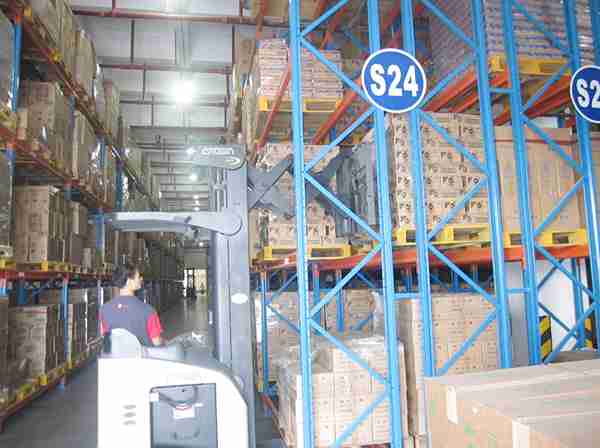
- Narrow aisles (9-11 feet) maximize storage but require specialized double reach forkliftstitik.
- Wider aisles (12+ feet) accommodate standard forklifts but reduce storage density.
- Forklift Selection for Seamless Warehouse Traffic Flow
- Standard forklifts cannot access rear pallets, making double reach forklifts mandatory.
- Forklift turning radius must align with aisle width to prevent warehouse traffic flow disruptions.
- Load Capacity and Beam Strength
- Each beam must support double the weight since pallets are stored two deep.
- Overloading can lead to rack failure, disrupting warehouse traffic flow and safety.
H2: Best Practices for Warehouse Traffic Flow Optimization
- Zone-Based Storage – Group high-turnover items near loading docks to minimize travel time.
- Dynamic Slotting with WMS Integration – Use Warehouse Management Systems (WMS) to automatically assign optimal pallet locations, improving warehouse traffic flowtitik.
- Regular Traffic Flow Audits – Monitor forklift paths and adjust layouts to prevent congestion.
H1: Comparing Double Deep Racking to Other High-Density Storage Systems
Sementararakit dua tingkat mendalam excels in warehouse traffic flow optimization, it’s important to compare it to alternatives like selective racking, drive-in racking, and push-back rackingtitik.
H2: Double Deep vs. Selective Racking
- Selective Racking allows direct access to every pallet but wastes space with excessive aisles.
- Double Deep Racking sacrifices some accessibility for superior warehouse traffic flow and storage density.
H2: Double Deep vs. Drive-In Racking
- Drive-In Racking is ideal for bulk storage but only supports LIFO, making it less flexible.
- Double Deep Racking supports both FIFO and LIFO, offering better warehouse traffic flow control.
H2: Double Deep vs. Push-Back Racking
- Push-Back Racking provides dynamic storage but at a higher cost.
- Double Deep Racking is more cost-effective for businesses prioritizing warehouse traffic flow and space efficiency.
H1: Real-World Success Stories: How Double Deep Racking Transformed Warehouse Traffic Flow
H2: Case Study – E-Commerce Fulfillment Center
A leading e-commerce company increased storage capacity by 45% after switching to rakit dua tingkat mendalam, reducing order processing time by 20% thanks to improved warehouse traffic flowtitik.
H2: Case Study – Automotive Parts Distributor
A global auto parts supplier eliminated bottlenecks by implementing rakit dua tingkat mendalam, cutting forklift travel time by 30% and boosting daily throughput.
H1: Future Trends in Warehouse Traffic Flow Optimization
- Kenderaan Berpanduan Automatik (AGV) – Integrating robotics with rakit dua tingkat mendalam for hands-free pallet retrieval.
- AI-Powered Warehouse Analytics – Machine learning algorithms predict optimal pallet placement for peak warehouse traffic flowtitik.
- Modular Racking Systems – Adjustable configurations to adapt to changing inventory needs.
Conclusion: Is Double Deep Racking the Right Solution for Your Warehouse?
For businesses struggling with space constraints and inefficient warehouse traffic flow, rakit dua tingkat mendalam offers a proven solution. By balancing storage density with accessibility, this system maximizes productivity while reducing operational costs.
Before implementation, warehouses should assess:
✔ Inventory turnover rates – Ideal for medium-to-high turnover SKUs.
✔ Forklift fleet capabilities – Requires double reach forkliftstitik.
✔ Warehouse layout constraints – Narrow aisles maximize benefits.
For companies ready to optimize warehouse traffic flow with double deep racking, the rewards include higher storage capacity, faster order fulfillment, and lower operational coststitik.
FAQs
1. How does double deep racking improve warehouse traffic flow compared to selective racking?
By reducing the number of aisles, rakit dua tingkat mendalam minimizes forklift congestion, creating a smoother warehouse traffic flow and faster material handling.
2. What type of forklift is needed for double deep racking?
Specialized double reach forklifts are required to access the second row of pallets efficiently.
3. Can double deep racking support FIFO inventory management?
Yes, with proper layout planning and WMS integration, rakit dua tingkat mendalam can effectively support FIFO systemstitik.
4. What industries benefit most from double deep racking?
Retail, e-commerce, food & beverage, and manufacturing sectors see the greatest improvements in warehouse traffic flow and storage efficiency.
5. What are the safety considerations when using double deep racking?
Key safety measures include proper forklift training, load balancing, and regular rack inspections to prevent accidents and maintain smooth warehouse traffic flowtitik.