📐 "50 Soalan Perusahaan Pertama Dapatkan Rekaan Gudang 3D Tersuai" Rancangan
















Introduction: Revolutionizing Warehouse Storage with Double Deep Pallet Racking System
In the competitive world of logistics and warehousing, space optimization is no longer optional—it’s a necessity. The double deep pallet racking system has emerged as a game-changing solution for businesses looking to maximize storage capacity, reduce operational costs, and enhance workflow efficiency. Unlike traditional selective racking, this system stores pallets two-deep, effectively doubling storage density while maintaining accessibilitydan danstructural stabilitytitik.
For warehouse managers, 3PL providers, and manufacturing facilities, implementing a double deep pallet racking system can mean the difference between struggling with space constraintsdan danachieving seamless inventory management. This guide dives deep into how this system works, its key advantages, ideal use cases, and best practices for implementation—ensuring businesses make an informed decision when upgrading their storage infrastructure.
What Is a Double Deep Pallet Racking System?
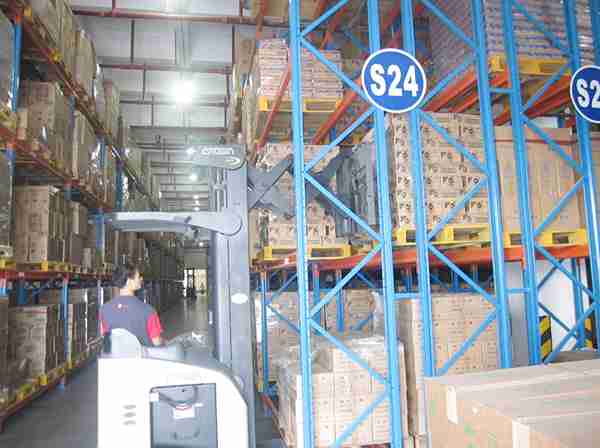
A double deep pallet racking system is a high-density storage solution designed to store pallets in two rows within each bay. Unlike selective racking, which allows direct access to every pallet, this system requires a specialized forklift (such as a reach truck or double-deep forklift) to retrieve pallets from the second positiontitik.
Core Components of a Double Deep Pallet Racking System
- Upright Frames: Heavy-duty steel columns that support the rack structure.
- Beams: Horizontal supports that hold pallets in place.
- Wire Decking (Optional): Adds stability for uneven or small-item loads.
- Load Backstops (Optional): Prevents pallets from sliding backward.
How It Works
- Pallets are loaded two-deep—one in front, one behind.
- A narrow-aisle forklift extends to retrieve the rear pallet when needed.
- The system reduces aisle space, allowing for more storage per square foottitik.
Top Benefits of a Double Deep Pallet Racking System
1. Dramatically Increases Storage Capacity
By storing pallets two-deep, gudang bolehboost storage density by up to 50% compared to selective racking. This is particularly valuable for urban warehouses where real estate costs are hightitik.
2. Lowers Operational Costs
- Reduces the need for warehouse expansion.
- Decreases energy consumption (especially in cold storage).
- Minimizes forklift travel time, improving productivity.
3. Improves Inventory Control
- Ideal for high-volume, low-SKU-count inventorytitik.
- Reduces misplaced stock by consolidating storage locations.
4. Enhances Workplace Safety
- Fewer aisles mean less forklift traffic, lowering accident risks.
- Sturdy construction prevents pallet collapses.
5. Future-Proof Investment
- Easily scalable as inventory grows.
- Compatible with automation (automated forklifts, pallet shuttles).
Double Deep Pallet Racking System vs. Other Storage Solutions
Double Deep vs. Selective Racking
| Feature | Double Deep Pallet Racking System | Selective Racking |
|---|---|---|
| Storage Density | High (2 pallets deep) | Low (1 pallet deep) |
| Accessibility | Requires reach forklift | Direct access |
| Best For | Bulk storage, low-SKU turnover | Fast-moving inventory |
Double Deep vs. Drive-In Racking
- Rak drive-in is higher density (LIFO system) but less flexibletitik.
- Double deep pallet racking system offers better selectivity while still optimizing spacetitik.
Double Deep vs. Push-Back Racking
- Push-back racking allows multiple-depth storage but is more expensivetitik.
- Double deep racking adalah cost-effective middle ground for fixed two-deep storagetitik.
Who Should Use a Double Deep Pallet Racking System?
1. Retail & E-Commerce Distribution Centers
- Stores large quantities of the same SKU.
- Reduces storage costs for high-volume products.
2. Food & Beverage Warehousing
- Maximizes cold storage efficiency.
- Ideal for perishable goods with predictable turnover.
3. Manufacturing & Industrial Storage
- Stores raw materials and finished goods efficiently.
- Supports just-in-time (JIT) inventory systems.
4. Third-Party Logistics (3PL) Providers
- Increases storage capacity per client.
- Improves profitability per square foot.
Best Practices for Implementing a Double Deep Pallet Racking System
1. Choose the Right Forklift Equipment
- Reach trucksataudouble-deep forklifts are mandatory.
- Ensure aisle widths match forklift specifications (typically 8-12 feet).
2. Optimize Warehouse Layout
- Conduct a storage capacity analysis before installation.
- Place high-turnover SKUs in front positions for faster access.
3. Ensure Proper Load Distribution
- Heavier pallets at the bottom.
- Uniform pallet sizes improve stability.
4. Train Staff for Safe Operation
- Forklift operators must be certified in double-deep retrieval.
- Implement strict pallet placement guidelines.
5. Integrate with Warehouse Management Software (WMS)
- AI-driven slotting optimizes pallet placement.
- Real-time tracking prevents misplaced inventory.
Overcoming Common Challenges
Challenge 1: Slower Retrieval Times for Rear Pallets
Solution: Use WMS to prioritize front-pallet placement for fast-moving goods.
Challenge 2: Higher Upfront Forklift Costs
Solution: Lease specialized forklifts before committing to a full purchase.
Challenge 3: Limited Flexibility for Mixed SKUs
Solution: Combine with selective racking for high-variability inventorytitik.
Future Innovations in Double Deep Pallet Racking Systems
1. Automated Pallet Retrieval Systems
- Robotic forklifts reduce manual labor.
- Automated storage and retrieval systems (AS/RS) enhance speed.
2. AI-Powered Warehouse Optimization
- Machine learning predicts stock movement.
- Dynamic slotting adjusts pallet placement in real time.
3. Sustainable Warehouse Design
- Higher density = lower energy consumption.
- Eco-friendly materials for rack construction.
Conclusion: Is a Double Deep Pallet Racking System Right for Your Business?
For warehouses struggling with space constraints, rising storage costs, or inefficient inventory flow, the double deep pallet racking system offers a proven, cost-effective solution. By doubling storage capacity, reducing operational expenses, and improving safety, this system is a smart long-term investment for retailers, manufacturers, and 3PLs alike.
Businesses considering this system should:
✔ Evaluate their inventory turnover.
✔ Assess forklift compatibility.
✔ Consult with a racking specialist for optimal layout design.
With the right implementation, a double deep pallet racking system can transform warehouse efficiencydan dandeliver measurable ROI within months.
Frequently Asked Questions (FAQs)
1. Can a standard forklift work with double deep racking?
No, it requires a reach truck or double-deep forklift with extended reach capabilities.
2. What’s the maximum height for double deep racking?
Up to 40 feet, depending on forklift reachdan danbuilding clearancetitik.
3. How much space can I save compared to selective racking?
Typically 40-50% more pallet positions by reducing aisle space.
4. Is this system suitable for FIFO inventory?
It’s best for LIFO, but smart WMS integration can support FIFO workflows.
5. Which industries benefit most from double deep racking?
Retail, food & beverage, manufacturing, and 3PLs see the biggest advantages.