📐 "First 50 Enterprise Queries Get Custom 3D Warehouse Design" Plan


Maximize Dense Storage & Safety: The Definitive Guide to Heavy-Duty Modular Racking Solutions for Industrial Demands
In the relentless engine of global commerce, where supply chain agility dictates market leadership, industrial storage is no longer a passive overhead—it is a critical strategic asset. The choice between sprawling, inefficient layouts and intelligent, dynamic storage systems can determine a company’s profitability, scalability, and operational safety. For forward-thinking logistics managers, plant operators, and supply chain directors, the era of compromise is over.
The new standard is defined by heavy-duty modular racking solutions. This comprehensive guide delves into the engineering excellence, strategic advantages, and transformative potential of these systems. It explores how modern modular racking solutions deliver an unparalleled synthesis of maximized dense storage and fail-safe safety for industrial demands, providing a future-proof foundation for growth across manufacturing, distribution, and large-scale warehousing sectors worldwide.

The Industrial Storage Paradigm Shift: Why Conventional Systems Are Now Obsolete
For decades, industrial facilities have been constrained by the limitations of static storage. Fixed-position shelving and basic pallet racking, while familiar, were engineered for a different era—one with lower throughput, less SKU proliferation, and less pressure on real estate costs. Today, these conventional systems are a primary source of operational friction.
The Crippling Financial Impact of Wasted Cubic Space
The most visible failure of outdated storage is the neglect of vertical space. In countless warehouses, the area from the top shelf to the ceiling represents a vast, untapped reservoir of potential capacity. Standard shelving lacks the structural integrity to build higher, while basic racking often cannot be reconfigured to accommodate changing pallet heights. This forces operations to expand horizontally, leading to sprawling facilities that increase travel times, amplify labour costs, and complicate material flow. The true cost isn’t just the rent for the extra square footage; it’s the perpetual inefficiency burned into every operational hour. Implementing advanced modular racking solutions is the most direct method to reclaim this lost cube, transforming air space into high-value, accessible storage.
Unseen Liabilities: How Old Storage Infrastructure Compromises Safety and Compliance
Beyond inefficiency, traditional storage poses significant, often underestimated, risks. Overloading is a rampant issue, where the urgent need for space overrules the rated capacity of shelves and beams, creating a ticking time bomb. The integrity of older racking is frequently compromised by repeated, minor impacts from material handling equipment (MHE), leading to bent uprights or damaged connectors that weaken the entire structure. These are not just maintenance issues; they are severe safety and liability hazards. A single collapse can cause catastrophic inventory loss, severe injury, and devastating reputational damage. Modern modular racking solutions are engineered from the ground up to mitigate these risks, incorporating robust safety factors and impact-resistant designs that protect both personnel and assets.
Deconstructing the Engineering: The Core Principles of Superior Modular Racking Solutions
A true heavy-duty modular racking solution is a feat of precision engineering, not a commodity product. Its superiority lies in the thoughtful integration of materials, design, and manufacturing processes that create a system greater than the sum of its parts.
Material Science: The Foundation of Strength and Durability
The journey of a world-class modular racking solution begins with high-grade, cold-rolled steel. This material is selected for its exceptional yield strength, which allows it to bear immense static and dynamic loads without permanent deformation. To combat the corrosive environment of a busy warehouse—from humidity to chemical exposure—the steel is treated with a multi-stage pre-treatment and a tough, electrostatic powder-coat finish. This provides a durable barrier against scratches, rust, and wear, ensuring the long-term structural integrity and aesthetic appearance of the modular racking solutions. For particularly harsh environments, hot-dip galvanizing options are available, offering an even higher level of corrosion protection for the entire modular racking system.
The Connector Revolution: Teardrop Design and Tool-Less Adjustability
The “modular” in modular racking solutions is epitomized by the connector system. The industry-prevalent teardrop design is a masterpiece of simplicity and strength. It allows for beams to be securely locked into upright frames without tools, enabling instant height adjustments. This feature is transformative for operational agility. When inventory profiles shift—taller pallets one season, shorter ones the next—the modular racking solutions can be reconfigured in minutes, not days. This eliminates downtime and eliminates the need for costly new storage purchases. This inherent flexibility is a core reason why businesses are standardizing their facilities on these adaptable modular racking solutions.
The Density Equation: Advanced Strategies for Maximizing Storage Capacity
The primary driver for upgrading to advanced modular racking solutions is the critical need for density. By employing sophisticated configuration strategies, these systems can dramatically increase storage capacity within the same footprint.
The Narrow Aisle (NA) and Very Narrow Aisle (VNA) Revolution
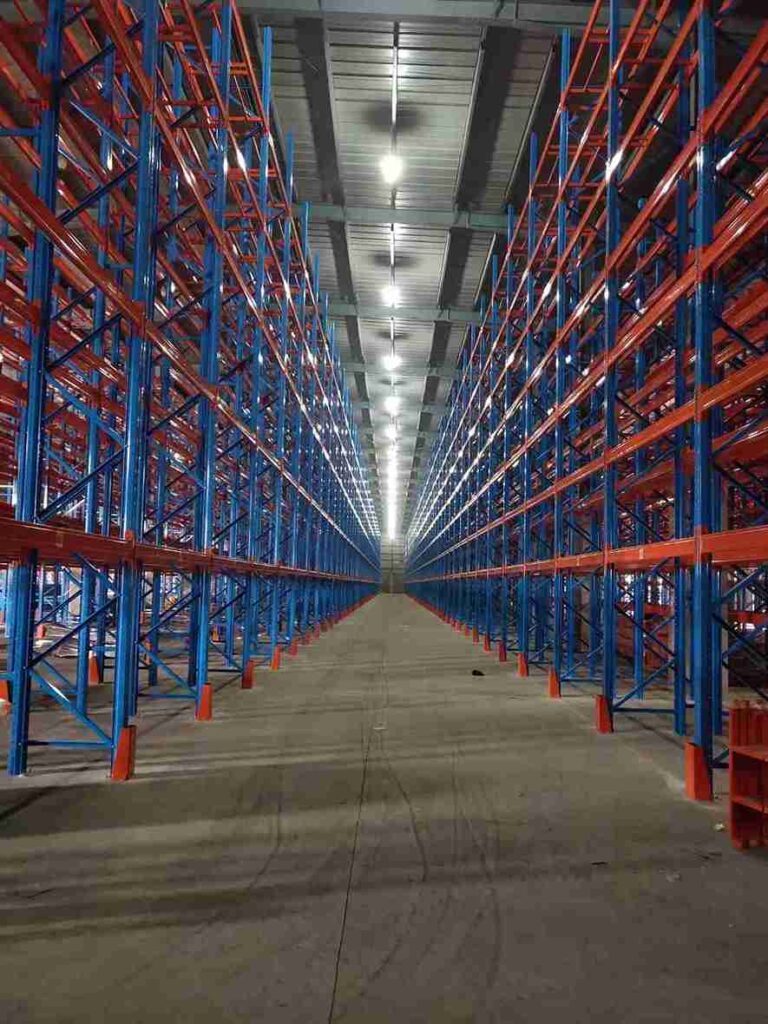
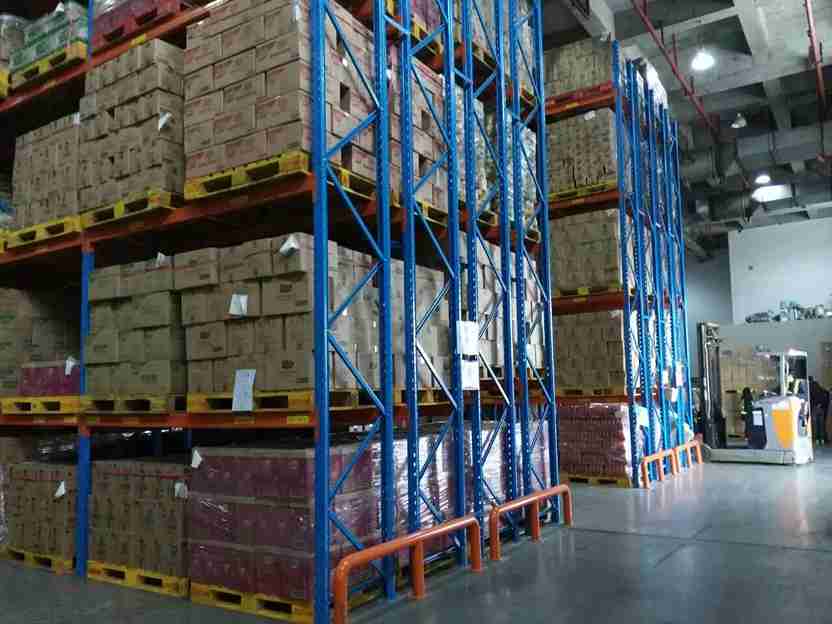
The most significant gain in floor space utilization comes from reducing aisle width. Traditional racking layouts, designed for counterbalance forklifts, require aisles of 3.5 meters or more. Modular racking solutions are perfectly suited for Narrow Aisle (NA) and Very Narrow Aisle (VNA) applications, which utilize specialized reach trucks or turret trucks that operate in aisles as narrow as 1.6 meters. The precision and rigidity of the modular racking structure are paramount here, as the clearances are tight. This strategic shift, enabled by high-quality modular racking solutions, can increase storage density by over 40%, a transformative figure for any operation constrained by space.
Reaching for the Sky: The Power of High-Bay Modular Racking Solutions
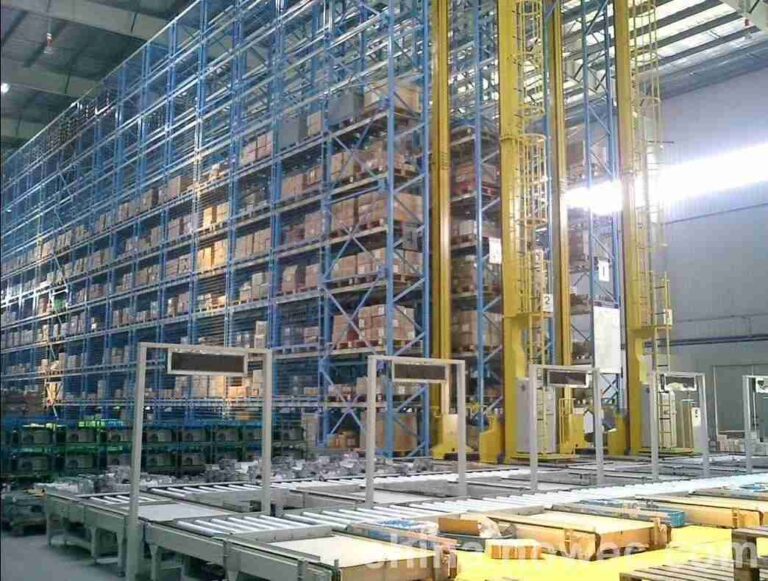
When land is expensive or unavailable, the only direction to build is up. High-bay warehousing, utilizing modular racking solutions that extend to heights of 30 meters or more, is the ultimate expression of cubic space optimization. These are not simple storage racks; they are engineered structures that must account for factors like seismic activity, wind loading (from building ventilation systems), and the critical need for absolute stability. The design of high-bay modular racking solutions involves sophisticated finite element analysis to ensure they can safely handle the enormous loads and dynamic forces at these elevations, making them a pinnacle application for heavy-duty modular racking.
Dynamic Storage: Push-Back and Drive-In/Dive-Through Racking Systems
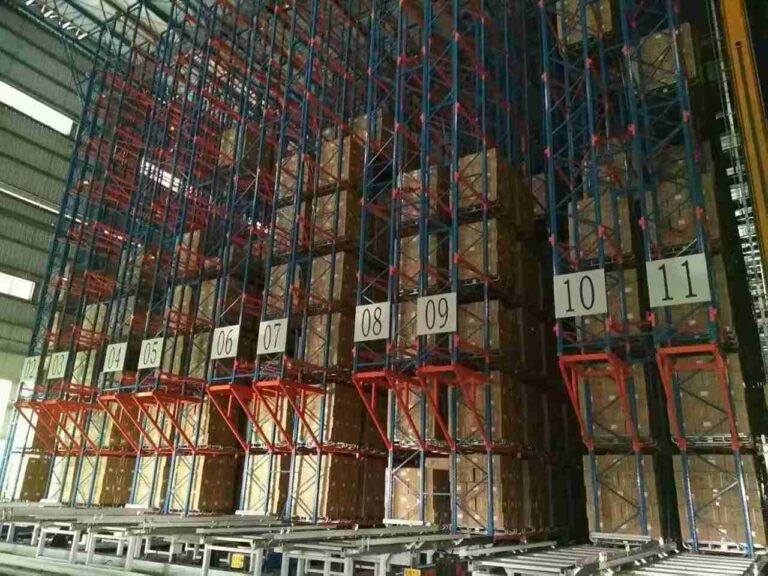
For operations requiring high-density storage for a smaller range of SKUs, dynamic modular racking solutions offer unparalleled space savings. Push-back racking systems, a type of modular racking solution, allow pallets to be stored several deep on a series of nested carts. When a pallet is retrieved, the one behind moves forward, offering Last-In, First-Out (LIFO) access with deep-lane storage. Drive-in and drive-through modular racking solutions take this further, eliminating aisles altogether and allowing forklifts to drive directly into the rack structure. These complex configurations demand the highest levels of engineering and safety, which are inherent in professionally designed modular racking solutions.
The Non-Negotiable Priority: Engineering Safety into Every Rack
In an industrial setting, safety is the bedrock of all operations. Premium modular racking solutions have safety engineered into every component, connection, and design specification.
Precision Load Engineering and Seismic Compliance
Every element of a modular racking solution is governed by precise load capacity calculations. These are not estimates; they are the result of rigorous engineering based on standards from bodies like the Rack Manufacturers Institute (RMI). Comprehensive load tables specify the Uniformly Distributed Load (UDL) for each beam and the collective capacity of the upright frames. For facilities in seismically active regions across the Pacific, Asia, and the Americas, modular racking solutions can be designed to meet specific local seismic codes. This involves specialized bracing, connections, and base plate designs that allow the structure to absorb and dissipate lateral energy, safeguarding the entire storage investment.
Integrated Protective Features: From Beam Locks to Wire Mesh Decking
Safety is proactively built into the hardware of quality modular racking solutions. Automatic beam locks are a critical standard feature, physically preventing beams from being dislodged during impact. Heavy-duty steel column guards bolt onto the base of uprights, absorbing the energy from forklift collisions and protecting the structural members from damage. To prevent fall-through, wire mesh decking can be integrated into the modular racking solutions, and for high-security or high-safety areas, fully welded partition meshes can be incorporated. End-of-aisle netting provides an additional layer of safety, containing any accidentally dislodged items.
The Automated Warehouse: Modular Racking as the Foundation for Industry 4.0
The fourth industrial revolution is built on automation, and the physical platform for this revolution is precision-engineered storage. Modular racking solutions provide the essential skeleton for the automated warehouse.
Seamless Integration with AS/RS and Robotic Forklifts
Automated Storage and Retrieval Systems (AS/RS) and robotic forklifts (AGVs/AMRs) require an environment of millimeter-level precision. The slightest misalignment in the modular racking solutions can cause system failures, delays, and damage to both the racking and the automated equipment. The installation tolerance for these modular racking solutions is exceptionally tight, ensuring that the automated guided vehicles and retrieval cranes can operate at peak speed and reliability 24/7. The robust design of the modular racking ensures it can withstand the constant, precise interactions without deflection.
Enabling the Digital Twin: IoT and Warehouse Management Systems
A modern modular racking solution is more than a physical structure; it is the framework for a digital ecosystem. By providing a fixed, predictable location matrix, it enables the flawless operation of Warehouse Management System (WMS) software. Furthermore, the racking itself can be equipped with IoT sensors to monitor structural health, track inventory in real-time via RFID, or even optimize picking paths. This transforms the modular racking solutions from a static asset into a connected, data-generating component of a smart logistics operation.
Industry in Focus: Tailored Modular Racking Solutions for Sector-Specific Challenges
The versatility of modular racking solutions allows them to be expertly configured to meet the unique demands of diverse industrial sectors.
Bulk and Raw Material Storage for Heavy Manufacturing
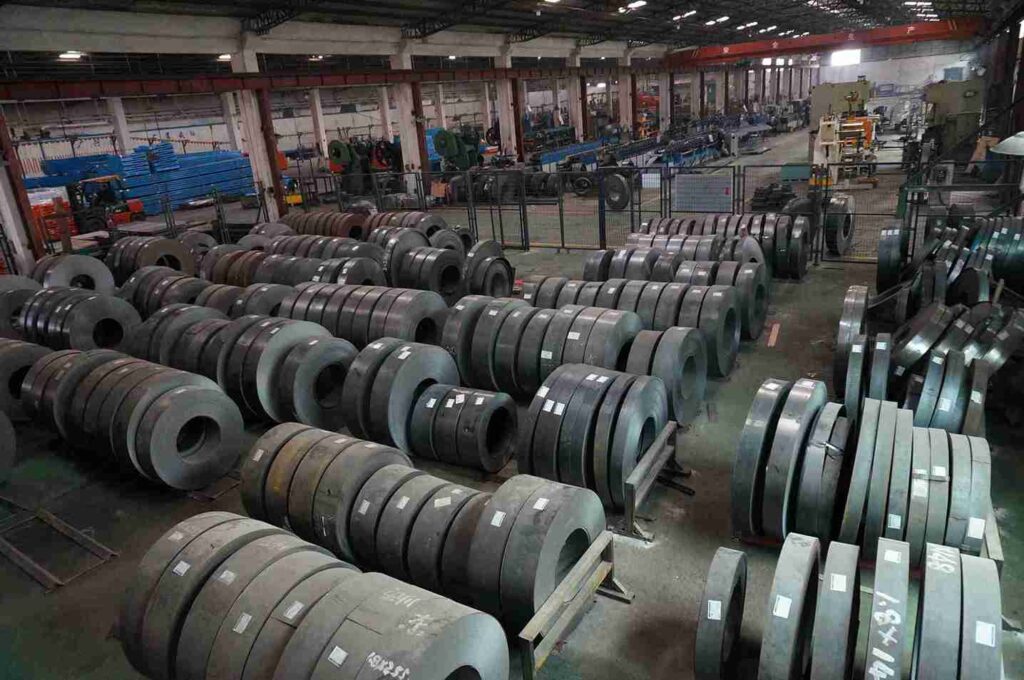
In foundries, automotive plants, and heavy equipment manufacturing, the challenge is storing bulky, dense raw materials and components. Here, modular racking solutions are configured with extra-heavy-duty beams and uprights to handle immense weights. Wide spans and deep bays are common, creating a robust structure for storing everything from steel coils to large machinery parts. The durability of these modular racking solutions ensures they can withstand the harsh environment of a manufacturing plant.
High-Velocity Distribution and E-Commerce Fulfillment Centers
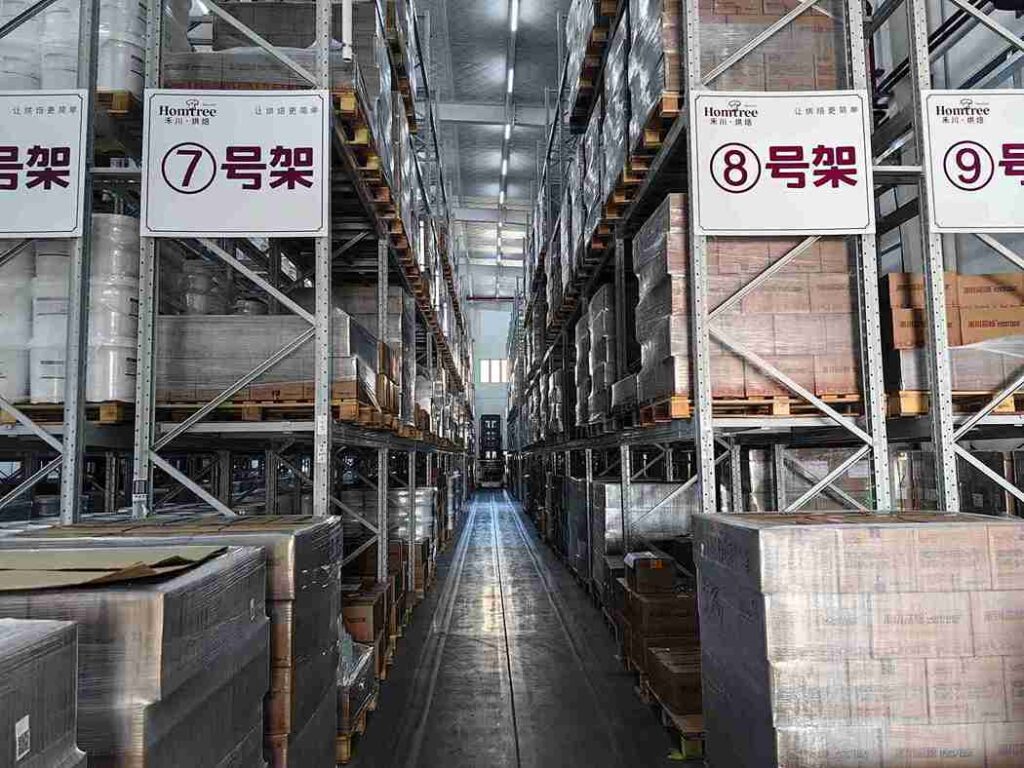
For third-party logistics (3PL) providers and e-commerce giants, speed and accuracy are everything. Modular racking solutions in these facilities are often part of complex multi-tiered pick modules. They integrate seamlessly with conveyor systems, sortation equipment, and carton flow lanes. The ability to quickly reconfigure these modular racking solutions is key during peak seasons or when onboarding new clients, providing the operational agility that is the lifeblood of the logistics industry.
A Blueprint for Success: The Professional Process of Selecting and Implementing Modular Racking Solutions
Investing in a large-scale modular racking solution is a significant project. A methodical, partnership-driven approach ensures a successful outcome that delivers on its promises.
Phase 1: In-Depth Discovery and Meticulous Load Auditing
The process begins with a comprehensive consultation and site survey. Experts will not just measure the building; they will analyze workflow, MHE types, and future growth plans. The most critical step is a thorough load audit, cataloging every SKU’s weight, dimensions, and turnover rate. This data is the non-negotiable foundation for engineering a safe and effective modular racking solution.
Phase 2: Collaborative Design with Advanced 2D/3D Modeling
Using the collected data, engineers create a custom 2D layout and a photorealistic 3D simulation of the proposed modular racking solutions. This virtual walkthrough allows stakeholders to visualize the new operation, checking for clearances, workflow efficiency, and potential issues before fabrication begins. This collaborative design phase is what separates a custom modular racking solution from an off-the-shelf product.
Phase 3: Certified Installation and Commissioning
A perfect design is useless without flawless execution. Professional installation teams, trained in the specific modular racking solutions being deployed, ensure the installation meets all engineered specifications. Upon completion, the system is inspected and a load test is often conducted to verify performance, providing the client with ultimate confidence in their new modular racking infrastructure.
Sustaining Peak Performance: The Long-Term Value of Professional Racking Management
The relationship with a provider of modular racking solutions should extend far beyond the installation day, focusing on long-term performance and safety.
Proactive Inspection and Maintenance Programs
To maintain peak safety and performance, a structured inspection regimen is essential. Providers of high-quality modular racking solutions typically offer inspection protocols and training for daily visual checks by warehouse staff, supplemented by scheduled professional audits. These experts can identify minor damage, wear, or overloading, recommending corrective actions before they escalate into major problems, thus preserving the integrity of the modular racking solutions.
The Inherent Scalability of a Modular Ecosystem
Perhaps the greatest long-term value of modular racking solutions is their inherent scalability. As a business expands, the storage system can grow with it. Additional bays can be added, sections can be reconfigured for new products, and in some cases, height can be increased. This “future-proofing” protects the capital investment and makes modular racking solutions the most fiscally prudent choice for growing enterprises, avoiding the need for complete system replacements down the line.
Conclusion: Building an Unbreakable Foundation for Industrial Growth
In the competitive landscape of modern industry, operational excellence is not an option—it is a requirement for survival. The storage infrastructure that supports the entire supply chain must be a catalyst for efficiency, not a constraint. Heavy-duty modular racking solutions represent the pinnacle of storage technology, offering a powerful, proven, and strategic answer to the intertwined challenges of space optimization and operational safety.
By investing in engineered modular racking solutions, businesses are not merely purchasing storage; they are building a dynamic, resilient, and intelligent backbone for their entire operation. This investment pays continuous dividends through radical gains in capacity, enhanced workflow velocity, a protected workforce, and a robust platform ready for the automated demands of tomorrow. The critical question for industrial leaders is no longer if they can afford to upgrade to advanced modular racking solutions, but if they can afford the escalating cost of delay.
Frequently Asked Questions (FAQs)
1. How does the total cost of ownership (TCO) of heavy-duty modular racking solutions compare to basic shelving over a 10-year period?
While the initial investment for advanced modular racking solutions is higher, the Total Cost of Ownership (TCO) is significantly lower. Basic shelving is a recurring expense due to its shorter lifespan, low density, and inability to adapt. In contrast, modular racking solutions are a long-term capital asset. The massive gains in storage density delay or eliminate the need for expensive facility expansions. The resulting labour efficiencies from optimized layouts, near-zero maintenance costs, and the prevention of costly accidents or collapses contribute to a compelling ROI, making modular racking solutions the smarter financial decision.
2. Can new modular racking solutions be safely integrated with our existing, older racking systems?
It is strongly discouraged to directly interconnect new, engineered modular racking solutions with older, unrated racking. The structural integrity and load capacities of the entire system become unpredictable and compromised. The safe, professional approach is a phased implementation. The new modular racking solutions should be installed as a dedicated, optimized zone, with a plan to eventually decommission and replace the old system entirely, ensuring uniform safety and performance throughout the facility.
3. What is the typical lead time from the initial design approval to the full installation of a large-scale modular racking project?
Lead times are project-specific but generally follow a structured timeline. For a large-scale distribution center, detailed engineering and design finalization typically take 2-3 weeks. Manufacturing of the custom modular racking solutions components may require 4-8 weeks. On-site installation can range from several weeks to a few months, depending on the system’s complexity and size. Reputable providers will give a detailed, phased project plan after the initial assessment.
4. Do you provide the full structural engineering package required for our local building permit application?
Yes, a professional provider will supply a complete engineered drawing set for permit submission. This package includes detailed layout plans, elevation views, assembly details, and full structural calculations, all sealed by a licensed professional engineer. This documentation is critical for demonstrating that the modular racking solutions comply with all local building codes and safety regulations.
5. What sustainable practices are involved in the production and end-of-life recycling of your modular racking solutions?
Sustainability is a key consideration in modern supply chains. The steel used in modular racking solutions is itself highly recyclable. Many manufacturers utilize production processes that minimize waste. Furthermore, as part of a retrofit project, providers can manage the decommissioning of old racking, partnering with certified recyclers to ensure over 90% of the material is recycled, thereby reducing the environmental footprint of the upgrade and supporting corporate sustainability goals.
If you require perfect CAD drawings and quotes for warehouse racking, please contact us. We can provide you with free warehouse racking planning and design services and quotes. Our email address is: jili@geelyracks.com