📐 "First 50 Enterprise Queries Get Custom 3D Warehouse Design" Plan


Heavy-Duty Modular Beam Racking System: The Ultimate Guide for High-Density Storage Projects
In the high-stakes world of modern logistics, the warehouse is no longer a static cost center; it is the dynamic, pulsating heart of the supply chain. For the logistics manager staring at soaring real estate costs, the operations director battling shrinking order cycle times, or the project engineer planning a facility for the next decade, the central challenge remains: how to store more, faster, and smarter within a fixed footprint. The solution, increasingly, is not just to add space but to intelligently engineer the space that exists.
This is the precise domain of the Heavy-Duty Modular Beam Racking System, a technological evolution of the classic pallet rack that has become the non-negotiable backbone for successful high-density storage projects. This comprehensive guide delves deep into the engineering, strategic advantages, and integration potential of the Modular Beam Racking system, positioning it as the foundational choice for industrial operations across Southeast Asia, the Middle East, Africa, and Latin America that are serious about scalability, efficiency, and building a future-proof logistics infrastructure.
The fundamental premise of Modular Beam Racking is its unparalleled combination of brute strength and graceful flexibility. Unlike welded systems that are rigid and permanent, or lighter-duty shelving that bows under pressure, a properly engineered Modular Beam Racking system is a living framework. It is designed to be adjusted, reconfigured, and expanded with the ebbs and flows of inventory and business growth.
For a distribution center in Vietnam experiencing a 20% annual growth in SKUs, or a manufacturing plant in Brazil adapting to seasonal raw material storage needs, the inherent adaptability of Modular Beam Racking provides a strategic buffer against uncertainty. This guide will explore the anatomy of this system, its critical role in automation, and the detailed planning required to unlock its full potential, establishing why this specific type of Modular Beam Racking is the cornerstone of any serious material handling strategy.

Deconstructing the Powerhouse: The Anatomy of a Heavy-Duty Modular Beam Racking System
To understand why the Heavy-Duty Modular Beam Racking system outperforms its alternatives, one must first appreciate the precision engineering embedded in every component. This is not merely a collection of metal parts; it is an integrated system where every element, from the tallest column to the smallest lock, plays a critical role in ensuring safety, stability, and performance.
The Upright Frames: The Vertical Backbone of Your Operation
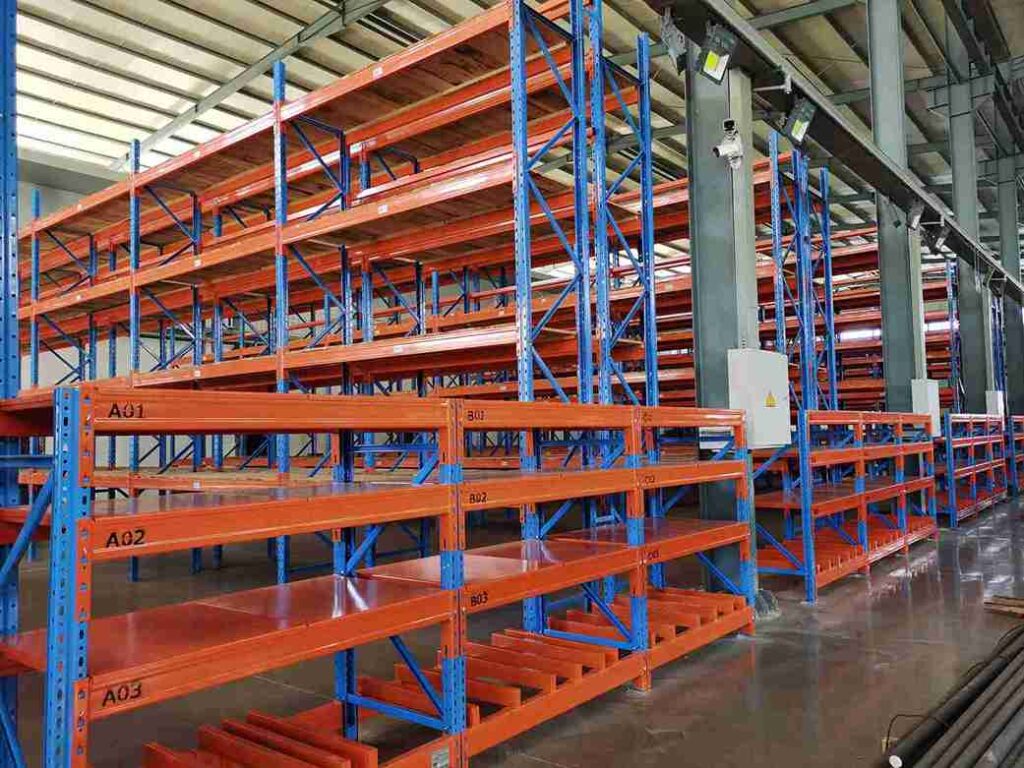
The upright frames are the unsung heroes of any Modular Beam Racking installation. In a heavy-duty context, these are far from simple C-channels. Leading manufacturers utilize high-tensile, cold-rolled steel formed into robust box-section or tubular designs. This geometry is crucial, as it provides superior resistance to the torsional and bending forces that can compromise a rack’s integrity, especially in installations exceeding 10 meters in height or in Very Narrow Aisle (VNA) applications where lateral stability is paramount.
The precision of the upright frames in a Modular Beam Racking system is most evident in the punchings—the series of holes that allow for beam connection. In a top-tier Modular Beam Racking system, these punchings are laser-cut, not stamped. This ensures a flawless, burr-free fit and perfect vertical alignment, which is non-negotiable when constructing a multi-level structure destined to hold hundreds of thousands of kilograms. The consistency of these punchings across all uprights is what makes the “modular” aspect of Modular Beam Racking possible, allowing for infinite configurability and future adjustments without compromising structural soundness.
Load Beams and Connectors: The Horizontal Workhorses
If the uprights are the backbone, the load beams are the shoulders of the operation, bearing the direct weight of the stored goods. In a heavy-duty Modular Beam Racking system, beams are typically roll-formed into a teardrop or step-beam profile. This shape is an engineering marvel, creating a stronger structural member capable of handling significant bending moments, often with capacities exceeding 7,000 kg per pair. The beam’s ends are engineered to house the most critical safety component in the entire Modular Beam Racking assembly: the connector.
The connectors in a high-quality Modular Beam Racking system are typically made from heat-treated, forged steel. They are designed as a “sacrificial” or “fuse” element. In the event of a severe, catastrophic impact from material handling equipment, the connector is engineered to deform or fail before the upright frame is compromised. This safety-centric design philosophy prevents a localized incident from triggering a progressive collapse of the entire Modular Beam Racking structure, protecting both inventory and, more importantly, personnel.
The Integrated Safety Ecosystem: Beyond the Core Components
A truly professional Modular Beam Racking installation is defined by its integrated safety features. These are not optional accessories but fundamental components of the system’s design:
Beam Safety Locks: These are automatic, spring-loaded devices that engage the moment a beam is seated into the upright. They prevent the beam from being accidentally dislodged, a critical feature in high-traffic warehouses.
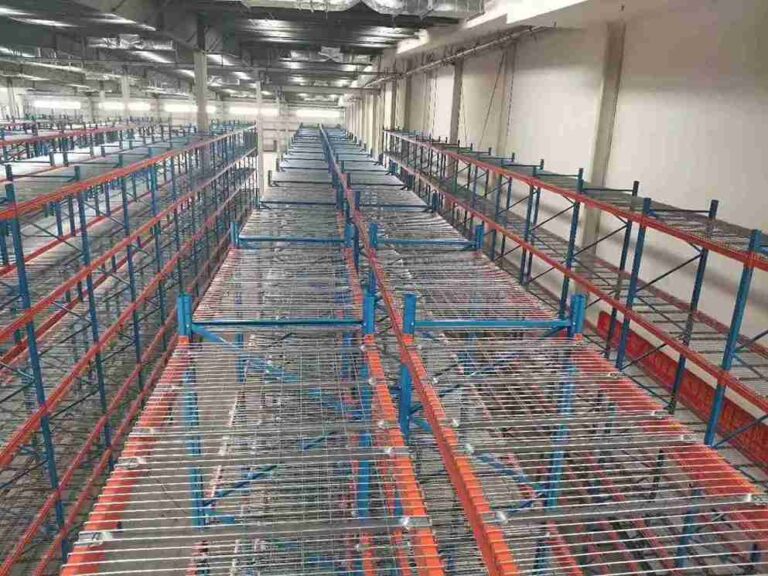
Row Spacers and Horizontal Braces: These elements tie adjacent bays of Modular Beam Racking together, transforming a series of individual frames into a monolithic, incredibly stable structure. This distribution of load and impact forces is essential for the long-term durability of the Modular Beam Racking system.
Pallet Supports and Wire Mesh Decking: For storing non-palletized items or smaller cases, decking is used. In a heavy-duty context, the supports for this decking must be equally robust, often capable of supporting distributed loads of several hundred kilograms per square meter.
Column Guards and Post Protectors: Constructed from high-density polyethylene or steel, these guards are the first line of defense against forklift impact. Strategically placing them on the Modular Beam Racking uprights most vulnerable to traffic is a standard best practice.
The Strategic Imperative: Why Modular Beam Racking Dominates High-Density Storage
The term “high-density” encompasses a spectrum of solutions, from dynamic flow racks to automated shuttles. Yet, the Modular Beam Racking system remains the most versatile and widely adopted solution for a fundamental reason: it offers an optimal balance of storage density, selectivity, and cost-effectiveness.
Unrivaled Flexibility in a Dynamic Market
The “modular” in Modular Beam Racking is its most powerful strategic asset. Consider a consumer electronics distributor in the Middle East during Ramadan, or an agricultural exporter in Africa during harvest season. Inventory profiles are not static. The ability to unclip a beam in one bay of a Modular Beam Racking system and reposition it in minutes to accommodate a different pallet size or weight is a operational superpower. This reconfigurability future-proofs the capital investment A warehouse can start with a standard layout and later be reconfigured for double-deep storage or to create wider aisles for new equipment, all within the same original Modular Beam Racking framework. This scalability is invaluable for businesses in emerging markets facing unpredictable growth trajectories.
Maximizing Throughput with Uncompromised Accessibility
While other high-density systems like drive-in racks offer greater density, they do so at the cost of selectivity and throughput. The selective nature of Modular Beam Racking provides direct, immediate access to every single pallet position. This is the bedrock of efficient First-In, First-Out (FIFO) inventory management. For a third-party logistics (3PL) provider serving multiple e-commerce clients, the ability to quickly pick any SKU without moving others is a direct driver of profitability and service-level agreement (SLA) adherence. The Modular Beam Racking system, by design, minimizes travel time and product handling, making it the throughput champion for fast-moving goods.
Engineered for Immense Load-Bearing Capacity
The term “heavy-duty” is not marketing fluff; it is a quantifiable engineering standard. A professionally designed and installed Modular Beam Racking system can be configured to support immense weights, with load capacities per level often designed to meet specific, demanding requirements. The engineering allows for a “load-mapping” strategy, where the lower levels of the Modular Beam Racking structure are configured for the heaviest pallets (e.g., raw materials or finished metal products), while the upper levels are reserved for lighter goods. This intelligent load distribution maximizes the structural efficiency and safety of the entire Modular Beam Racking installation, a critical consideration for industries like automotive or heavy machinery.
The Synergistic Core: Integrating Modular Beam Racking with Warehouse Automation
In the modern warehouse, the Modular Beam Racking system is not a passive storage fixture. It is the fundamental coordinate system, the physical grid upon which the software-driven world of automation operates. Its precision and reliability are what make advanced technologies not just possible, but efficient and safe.
The Foundational Grid for AGVs and Automated Forklifts
For a fleet of AGV小车 (Automated Guided Vehicles) or unmanned forklifts, the warehouse environment must be predictable to the millimeter. The rigid, unwavering structure of a precision-installed Modular Beam Racking system provides this essential predictability. The racks define the navigable aisles and the pick-face locations for the automation’s control software. Any deviation—a beam a few centimeters out of level, an upright slightly out of plumb—can cause navigation errors, mission abortions, or collisions.
Therefore, the installation of Modular Beam Racking intended for automation must follow a protocol more akin to assembling a spacecraft than simply bolting together shelving. Laser-guided leveling and verified torque specifications for every connection are standard practice for an automation-ready Modular Beam Racking project, ensuring the physical world perfectly mirrors the digital twin.
The Skeleton for AS/RS and Vertical Warehouses
Taking this integration to its logical conclusion, the Modular Beam Racking principle forms the very skeleton of Automated Storage and Retrieval Systems (AS/RS) and unit-load (Stereoscopic Warehouse Storage). In a rack-supported building, the Modular Beam Racking structure itself bears the load of the building’s roof and walls, eliminating the need for internal support columns and maximizing usable space.
The cranes that operate within these aisles, sometimes over 40 meters tall, require tolerances that are virtually zero. This phenomenal precision is only achievable with a Modular Beam Racking system engineered from the ground up for zero tolerance. Every component, from the baseplate to the top-tier beam, must be manufactured and installed to a singular, exacting standard. This evolution of the Modular Beam Racking system from a storage medium to the primary building structure represents the pinnacle of its integration potential.

Blueprint for Success: Critical Considerations for Planning Your Project
The journey to a successful high-density storage project begins long before the first upright frame is unloaded. A methodical, data-driven planning phase is the single greatest determinant of long-term success and return on investment for any Modular Beam Racking installation.
Conducting a Comprehensive Site and Operational Analysis
Rushing this phase is the most common and costly mistake. A thorough analysis must include:
Granular Pallet Data: Assumptions are the enemy. Every SKU’s pallet type (Euro, CHEP, plastic), exact dimensions (including overhang), and maximum weight must be documented. The Modular Beam Racking design will be based on this data.
Advanced Floor Flatness Survey: The warehouse floor must be within international flatness tolerances (e.g., DIN 15185 or equivalent). A floor that is out of tolerance will prevent the Modular Beam Racking from being installed plumb, creating latent stress points and a significant safety hazard.
Holistic Building Audit: This includes clear ceiling height, the location and size of all structural columns, the layout of the sprinkler system (to ensure compliance with clearances), and the load-bearing capacity of the floor slab itself. The Modular Beam Racking system must be a harmonious part of the building ecosystem, not a disruptive force.
Throughput and Workflow Modeling: Understanding the daily inbound and outbound flow, peak season volumes, and the type of material handling equipment (MHE) used is critical for determining optimal aisle widths, entrance/exit orientations, and the overall configuration of the Modular Beam Racking layout.
Accounting for Seismic and Environmental Factors in Global Deployments
A Modular Beam Racking design that is perfectly adequate for a warehouse in Germany may be dangerously insufficient for a facility in the Philippines, Chile, or Iran. Engineering for seismic activity is not an optional add-on; it is a fundamental requirement in many parts of the world. This involves specific bracing patterns, potentially different steel grades, and connection designs that can absorb and dissipate seismic energy. Similarly, for coastal facilities in the Middle East or in tropical climates, the specification of the finish is critical.
A standard powder coating may not suffice. More robust corrosion protection systems, such as hot-dip galvanizing or specialized epoxy coatings, may be required for the Modular Beam Racking components to ensure a long service life in harsh environments.
Advanced Configurations: Pushing the Density Envelope with Modular Beam Racking
The standard selective Modular Beam Racking layout is just the starting point. The system’s inherent flexibility allows for the creation of hybrid configurations that dramatically increase storage density for specific application needs.
Double-Deep Racking: A Pragmatic Density Solution
By placing two rows of Modular Beam Racking face-to-face, pallets can be stored two deep, effectively halving the number of aisles required. This configuration utilizes the same robust Modular Beam Racking components but requires the use of deep-reach forklifts to access the second pallet position. It is a highly cost-effective strategy for increasing capacity where inventory is homogeneous and a LIFO (Last-In, First-Out) approach is acceptable for certain product lines. The shared uprights between the front and back rows create a very stable Modular Beam Racking structure, making this a popular choice for bulk storage areas.
The Hybrid Approach: Push-Back Racking on a Modular Frame
Push-back racking systems, which offer LIFO storage with multiple pallets deep (typically 2-5), are often built upon a heavy-duty Modular Beam Racking frame. The structural uprights and beams of the Modular Beam Racking system provide the solid foundation and vertical travel for the inclined carts and rails that define the push-back system. This is a perfect illustration of the Modular Beam Racking system serving as a versatile platform. A warehouse can have a majority of selective Modular Beam Racking for high-turnover items and specific aisles of push-back Modular Beam Racking for slower-moving, bulk goods, all within a unified, coherent storage framework.
The Installation Imperative: Where Precision Engineering Meets Field Execution
The quality of the Modular Beam Racking components is only half of the equation. The installation process is where the design is physically realized, and its quality is paramount. A poor installation can render the world’s best-engineered Modular Beam Racking system unsafe and inefficient.
Professional installation teams do not simply follow diagrams; they adhere to a strict quality assurance protocol. This includes the use of calibrated torque wrenches to ensure every beam connector is tightened to its specified value, laser levels and optical instruments to guarantee perfect vertical and horizontal alignment, and a multi-stage inspection process. A final plumb and load-level check is conducted before the system is signed off. The integrity of the entire warehouse operation, and the safety of its personnel, depend on the meticulous execution of the Modular Beam Racking installation.
Protecting the Asset: The Non-Negotiable Regime of Maintenance and Safety Audits
A Modular Beam Racking system is a dynamic asset, subject to constant stress and the occasional minor impact. A proactive, documented maintenance and inspection program is not a recommendation; it is a core component of responsible operations management.
This program should be multi-layered:
Operator-Level Visual Inspections: Warehouse staff should be trained to identify and report obvious damage, such as significant beam deflection or visible dents in uprights, as part of their daily routine.
Scheduled Professional Audits: Conducted quarterly or annually by certified engineers, these audits involve a detailed inspection of the entire Modular Beam Racking system. Engineers use specialized tools, like ultrasonic thickness gauges and deflection gauges, to measure wear and tear that is invisible to the naked eye and assess the ongoing structural health of the installation.
Advanced Impact Monitoring: For facilities with intensive AGV小车 or forklift traffic, wireless impact detection systems can be installed on key uprights of the Modular Beam Racking system. These sensors record the time and force of any impact exceeding a pre-set threshold, immediately alerting management to a potential issue that requires inspection. This data-driven approach moves maintenance from a reactive to a predictive model.
Case in Point: A Distribution Hub in Southeast Asia
A concrete example illustrates the transformative power of a well-executed Modular Beam Racking project. A multinational pharmaceutical distributor based in Singapore needed to consolidate two regional warehouses into a single, high-throughput facility in Thailand. The challenge was to increase pallet capacity by 50% within a building with a low ceiling, while maintaining strict FIFO control for sensitive products and preparing for a future shift to automation.
The solution was a multi-tiered Modular Beam Racking system. The core of the design was a dense configuration of Modular Beam Racking that utilized the available vertical space with multiple mezzanine levels. The inherent strength of the heavy-duty Modular Beam Racking components supported the additional mezzanine structures. The layout was designed with clear, logical pick paths and was pre-configured with the necessary clearances and interface points for a future goods-to-person picking system.
The modularity of the Modular Beam Racking system allowed the installation to be phased, enabling the client to continue operations from the old sites throughout the transition. This project exemplifies how the Modular Beam Racking system is not just a storage solution but a strategic tool for business consolidation and growth.
Conclusion: Engineering the Foundation for Logistic Resilience and Growth
In conclusion, the decision to invest in a Heavy-Duty Modular Beam Racking System is one of the most significant long-term strategic choices a company can make for its logistics infrastructure. It is a decision that goes far beyond simple storage. The Modular Beam Racking system provides the proven, certifiable strength for today’s heaviest loads, the intelligent flexibility to navigate tomorrow’s market shifts, and the precise, reliable foundation required by the next generation of warehouse automation.
In the competitive landscapes of Southeast Asia, the industrious growth of Africa, the ambitious developments of the Middle East, and the dynamic markets of Latin America, the Modular Beam Racking system stands as the universal standard for efficient, scalable, and safe storage. By partnering with an expert who possesses deep engineering knowledge, global installation experience, and a commitment to the highest safety standards, businesses are not merely purchasing racks—they are investing in the resilient, scalable, and intelligent backbone of their entire supply chain for the next decade and beyond. The Modular Beam Racking system is, without question, the foundational technology for the modern, high-performance warehouse.
Frequently Asked Questions (FAQs)
1. What is the typical lead time for a large-scale, heavy-duty Modular Beam Racking project?
Lead times are project-dependent. For a major project involving several thousand pallet positions, a realistic timeline is 8-14 weeks for manufacturing and 2-4 weeks for on-site installation. Complex customizations, such as those for integration with an AS/RS, or shipping to remote locations in Africa or Latin America, can extend this timeline. A reputable provider will always provide a detailed, phase-by-phase project schedule during the quotation process.
2. Can a Modular Beam Racking system be relocated if we move to a new facility?
Yes, this is a core advantage of the Modular Beam Racking design. The system can be disassembled, transported, and reassembled in a new location. This process requires a professional team to manage the disassembly, catalog components, and conduct a new site survey for the re-installation. While some components may require replacement due to damage or loss, the vast majority of the initial investment is preserved, making Modular Beam Racking a highly sustainable and adaptable asset.
3. How do you ensure the Modular Beam Racking system complies with our local national safety standards?
Professional engineering is the key. Designs are based on internationally recognized standards like FEM 10.2.02 and RMI/MH16.1. Furthermore, reputable providers maintain a deep database of local building codes and seismic regulations for their target markets. The Modular Beam Racking system’s design is then specifically adapted and certified by in-house engineers to ensure full compliance with the local standards of the installation country, whether it’s Malaysia, Saudi Arabia, Nigeria, or Mexico.
4. What is the concrete difference between your heavy-duty Modular Beam Racking and a standard pallet rack available on the local market?
The differences are foundational. It begins with material science: high-tensile steel versus lower-grade alternatives. It extends to manufacturing precision: laser-cut punchings versus stamped holes. It is embodied in the engineering: certified, calculated load capacities and safety factors versus generic, unverified claims. Finally, it is reflected in the safety features: integrated, heat-treated locks and fuse-style connectors versus basic pins. A true heavy-duty Modular Beam Racking system is a professionally engineered structure, not a commodity shelving product.
5. Do you offer design software or BIM models for our project planning and integration?
Yes, industry-leading providers offer comprehensive digital support. This includes advanced 3D design software for creating immersive layout visualizations and, crucially, detailed Building Information Modeling (BIM) objects for their Modular Beam Racking components. This allows a client’s architectural and engineering teams to integrate the Modular Beam Racking system seamlessly into the overall building model, identifying and resolving potential clashes with HVAC, electrical conduits, and fire suppression systems long before construction begins, saving significant time and cost.
If you require perfect CAD drawings and quotes for warehouse racking, please contact us. We can provide you with free warehouse racking planning and design services and quotes. Our email address is: jili@geelyracks.com