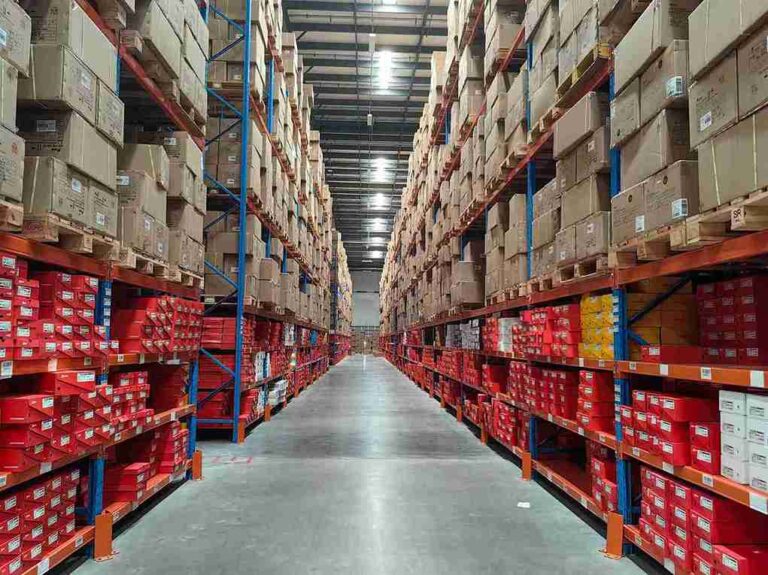
🐍 "先着50社のエンタープライズ・クエリーにカスタム3Dウェアハウス・デザインをプレゼント" プラン















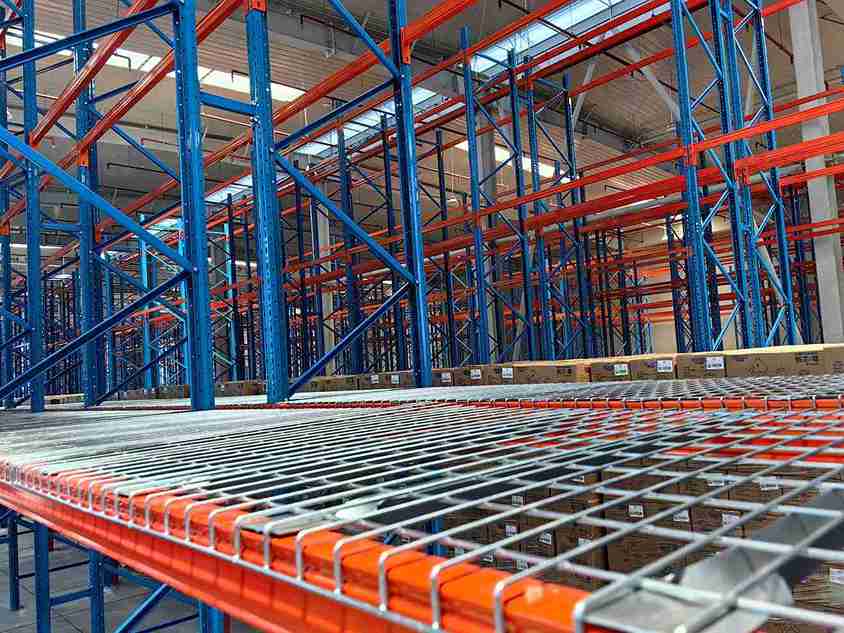
Food-Grade & High Density Wire Mesh Decking Racking for Beverage/E-commerce Logistics – Lowest Cost for Bulk Order in Emerging Markets (Get 24h Quote)
Across Southeast Asia, the Middle East, Latin America, Africa, and Central Asia, the rapid expansion of e-commerce and food & beverage logistics is reshaping how warehouse operators think about storage efficiency. High density wire mesh decking racking has emerged as the silent workhorse of modern fulfillment centers, delivering the trifecta that logistics managers in emerging markets care about most: load capacity, safety compliance, and cost predictability.
Anyone who has managed a fast-growing fulfillment center knows the pain of wasted cubic space, sagging wooden decks, and fire safety headaches. High density wire mesh decking racking solves all three at a price point that makes sense for bulk buyers in emerging economies. This system combines the structural integrity of industrial pallet racking with the breathable, high-visibility surface of welded wire mesh. The result is a storage solution that maximizes every cubic meter while meeting food-grade hygiene standards.
This guide draws on decades of real-world deployments across ASEAN, the GCC, Africa, and Latin America. It covers load ratings, food safety compliance, cost-per-pallet-position analysis, and the logistics of bulk ordering to emerging markets. Readers will also learn why high density wire mesh decking racking is the preferred choice for e-commerce warehouses handling thousands of SKUs under tight delivery windows. By the end, any warehouse manager will understand how to specify, purchase, and install high density wire mesh decking racking at the lowest possible landed cost.
H1: What Is High Density Wire Mesh Decking Racking? A Complete Technical Overview
H2: Defining the System – More Than Just a Deck
High density wire mesh decking racking is not a single component but an integrated storage system. It consists of three main elements: heavy-duty selective pallet racking frames, load beams, and wire mesh decks that sit directly on those beams. The “high density” aspect comes from the ability to place pallets very close together vertically and horizontally, thanks to the thin profile of the wire deck and the precise engineering of the rack beams.
Unlike traditional solid steel or wood decking, high density wire mesh decking racking uses a welded grid of high-tensile steel wires. The grid spacing typically ranges from 50×100 mm to 25×100 mm. This open design allows sprinkler water to reach lower levels, prevents dust and moisture accumulation, and gives pickers a clear view of inventory across multiple rack levels.
For food and beverage warehouses, high density wire mesh decking racking with inverted U-channels is the gold standard. The inverted channel wraps around the rack beam, eliminating any horizontal ledge where debris could collect. This design also prevents the deck from shifting under forklift impacts, a common problem with cheaper flat-channel decks.
H2: How High Density Wire Mesh Decking Racking Differs from Standard Wire Decking
Standard wire decking often uses lighter-gauge wires (3.0–3.5 mm) and wider grid spacing (75×150 mm). It works for light-duty storage but cannot handle the daily abuse of a high-throughput e-commerce or beverage warehouse. High density wire mesh decking racking uses 4.0–5.0 mm wire gauges, tighter spacing, and reinforced support channels that allow UDL ratings of 2,500 lbs or more per deck.
Another key difference is the integration with racking systems. High density wire mesh decking racking is designed specifically for step beams or box beams used in industrial pallet racking. The channels are formed to match the beam profile exactly, creating a friction-fit connection that does not require bolts or clips. This speeds installation and allows easy reconfiguration as SKU profiles change.
In emerging markets, where warehouses often handle mixed pallet sizes and non-palletized goods, high density wire mesh decking racking offers unmatched versatility. Operators can place full pallets on one deck and loose cases on the deck above, all within the same rack bay. The open mesh prevents small items from falling through when using 25×100 mm spacing, while still allowing light and sprinkler water to pass.
H2: Core Components of a High Density Wire Mesh Decking Racking System
A complete high density wire mesh decking racking system includes the following components, each available in various specifications to match load requirements and environmental conditions:
1. Upright frames: Vertical columns made from roll-formed steel (typically S235JR or S350GD+Z). Frame depths range from 600 mm to 1,200 mm, with heights up to 12 meters. For high density wire mesh decking racking, deeper frames (1,000+ mm) allow double-deep pallet storage, further increasing density.
2. Load beams: Horizontal members that connect uprights and support the wire decks. Step beams are most common for high density wire mesh decking racking because they have a flat top surface that accommodates inverted U-channels. Beams are available in capacities from 1,500 kg to 4,500 kg per pair, with spans up to 3.7 meters.
3. Wire mesh decks: The heart of the system. High density wire mesh decking racking uses decks fabricated from 4.0–5.0 mm cold-drawn steel wire, welded at 50×100 mm or 25×100 mm spacing. Decks are hot-dip galvanized or epoxy-coated for corrosion resistance. Inverted U-channels run along two opposite sides, wrapping over the step beams.
4. Beam clips and safety pins: Although high density wire mesh decking racking decks often friction-fit, safety pins are still required on load beams to prevent accidental dislodgement. For seismic zones, bolt-on connections are recommended.
5. Row spacers and floor anchors: These stabilize long runs of high density wire mesh decking racking, preventing sway under dynamic loads. Floor anchors must be specified for the local concrete strength and seismic conditions.
Each component must be matched to the others. Using a light-gauge deck on heavy-duty beams creates a weak link; conversely, over-specifying the deck on light beams wastes money. Professional suppliers of high density wire mesh decking racking provide fully engineered systems with unified load ratings.
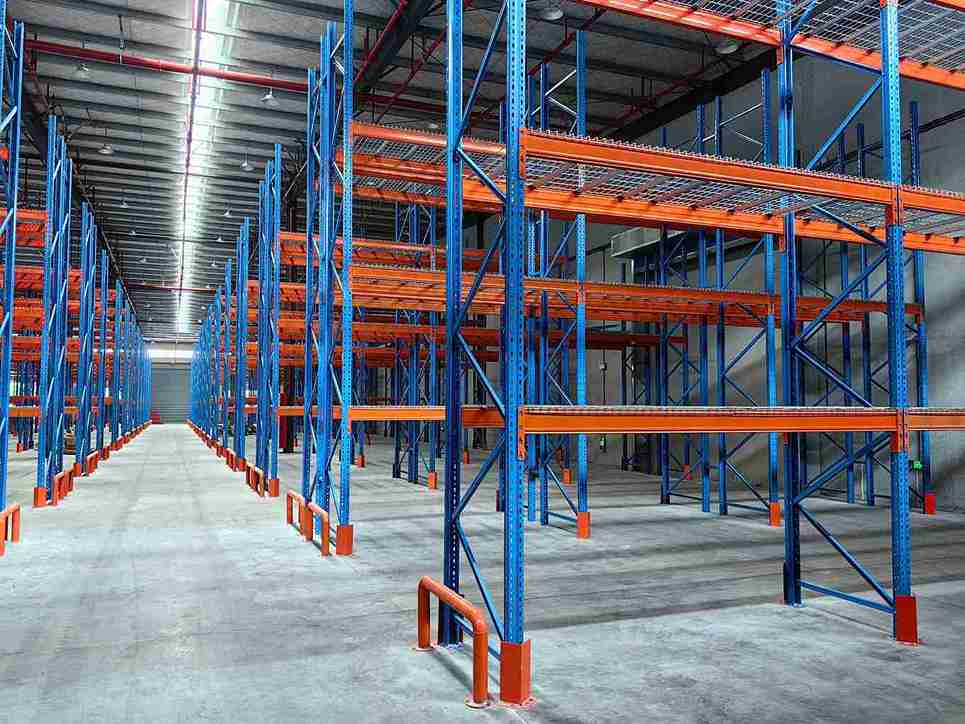
H1: Why High Density Wire Mesh Decking Racking Is Essential for Food & Beverage E-commerce
H2: Meeting Food Safety Standards with High Density Wire Mesh Decking Racking
Food and beverage warehouses operate under strict hygiene regulations. In many emerging markets, exporters must comply with international standards such as ISO 22002-5, BRCGS, or FSSC 22000 to sell to European or North American buyers. High density wire mesh decking racking helps facilities meet these standards in several ways.
First, the open mesh design prevents the accumulation of food particles, dust, and moisture. Solid decks trap spills, creating breeding grounds for bacteria and mold. High density wire mesh decking racking allows spills to fall through to the floor, where they can be cleaned during regular sanitation cycles.
Second, inverted U-channels eliminate hidden cavities. Standard flat channels create enclosed spaces where insects and rodents can nest. The inverted design used in food-grade high density wire mesh decking racking has no such cavities, supporting integrated pest management programs.
Third, the galvanized or stainless steel finish resists corrosion from acidic beverages, cleaning chemicals, and high humidity. A beverage warehouse storing carbonated soft drinks or fruit juices faces constant exposure to acidic spills. High density wire mesh decking racking with hot-dip galvanized coating withstands this environment for 15+ years without rust compromising food safety.
Many food safety auditors specifically look for high density wire mesh decking racking during inspections because it demonstrates a proactive approach to hygiene. Warehouses that install this system often receive higher audit scores and fewer corrective action requests.
H2: How E-commerce Warehouses Benefit from High Density Wire Mesh Decking Racking
E-commerce fulfillment centers face different pressures than traditional warehouses. They handle thousands of SKUs, many of which are non-palletizable or slow-moving. Order profiles change daily, and peak seasons demand rapid reconfiguration of storage layouts. High density wire mesh decking racking adapts to these demands seamlessly.
Consider a typical e-commerce warehouse with 10,000 SKUs. Using high density wire mesh decking racking, operators can store full pallets of fast-movers on lower levels and split-case slow-movers on upper levels. The wire mesh allows pickers to see which upper-level slots contain inventory without climbing ladders, reducing wasted travel time. When a slow-mover becomes a fast-mover, the deck can be relocated to a more accessible height in minutes, not hours.
The cost advantage is just as compelling. High density wire mesh decking racking costs significantly less per pallet position than automated storage and retrieval systems (AS/RS), yet it delivers comparable density when configured with double-deep or drive-in racking. For emerging market e-commerce companies that cannot invest millions in automation, high density wire mesh decking racking provides a practical path to high-density storage.
Labor productivity improves dramatically. Pickers working with high density wire mesh decking racking can visually verify inventory from the aisle, eliminating the need to move pallets to check contents. In one Southeast Asian e-commerce warehouse, switching from solid steel decks to high density wire mesh decking racking reduced mis-picks by 22% and increased pick rates by 18% within three months.
H2: Beverage Industry Applications – From Bottled Water to Carbonated Drinks
Beverage warehouses have unique requirements that make high density wire mesh decking racking the ideal choice. Beverage pallets are heavy—a single pallet of 1.5-liter water bottles can weigh over 1,500 kg. The product is often fragile (glass bottles) or under pressure (carbonated cans). Storage systems must distribute load evenly and resist vibration from forklift traffic.
High density wire mesh decking racking with 5.0 mm wire and 25×100 mm spacing distributes heavy beverage loads across the entire deck surface, preventing point-load failures. The tight spacing also prevents smaller items—like 330 ml cans or 500 ml PET bottles—from falling through the mesh.
For warehouses storing carbonated beverages, the open design of high density wire mesh decking racking allows pressure to equalize around pallets. If a can bursts, the liquid drains through the deck rather than pooling and damaging lower pallets. This feature alone can save thousands of dollars in product loss during summer months when heat-related pressure increases.
Temperature-controlled beverage warehouses also benefit. High density wire mesh decking racking allows cold air to circulate freely around pallets, reducing temperature stratification. Solid decks create cold air pockets at lower levels and warmer zones above, potentially compromising product quality. With wire mesh, the entire rack bay maintains uniform temperature, which is critical for products like beer, wine, and dairy-based beverages.
H2: Achieving High Density Without High Costs
“High density” often conjures images of expensive automated systems, but high density wire mesh decking racking proves that density and affordability can coexist. A well-designed selective rack system with high density wire mesh decking racking achieves 35–40% cubic utilization. That is comparable to some automated mini-load systems at a fraction of the capital cost.
To reach even higher density, operators can combine high density wire mesh decking racking with drive-in or push-back racking. In a drive-in configuration, forklifts enter the rack structure from one side, depositing pallets on rails. High density wire mesh decking racking provides the deck surface on those rails, allowing LIFO (last-in, first-out) storage at 75–85% density. For commodity beverages with long shelf lives, this is extremely cost-effective.
Another density-boosting technique is double-deep racking. Standard selective racks hold one pallet per beam level per bay. Double-deep racks hold two pallets in tandem, accessed by a reach truck or forklift with extended forks. High density wire mesh decking racking works perfectly in double-deep configurations because the open mesh allows the operator to see the rear pallet through the deck of the front pallet position.
For emerging market warehouses where land costs are rising rapidly—think Jakarta, Nairobi, or Mexico City—every square meter saved by high density wire mesh decking racking translates directly to lower rent or higher throughput. A 10,000 m² warehouse using dense racking can store the same inventory as a 15,000 m² warehouse using low-density methods. The savings in rent, utilities, and labor easily justify the investment in high density wire mesh decking racking.
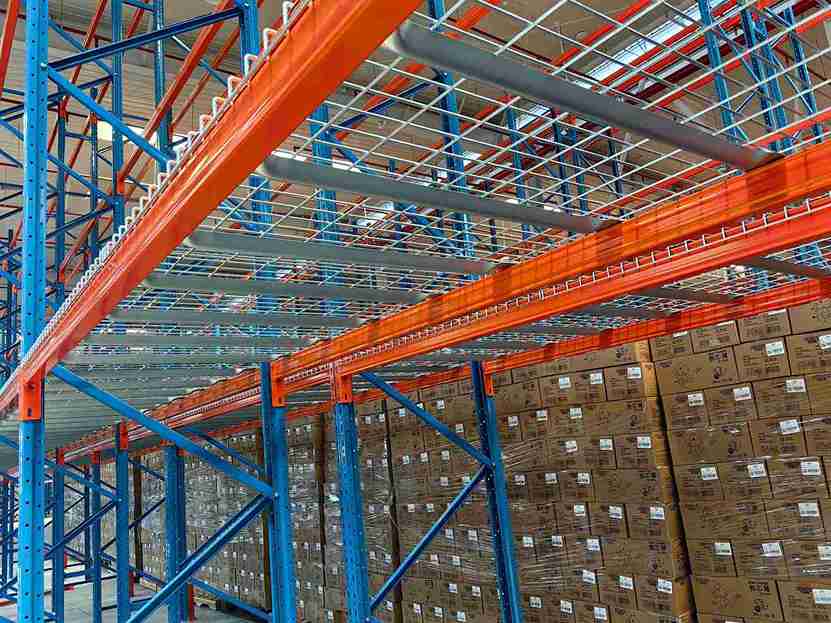
H1: Technical Specifications – Load Ratings, Wire Gauges, and Channel Designs
H2: Understanding Load Ratings for High Density Wire Mesh Decking Racking
Specifying the correct load rating for high density wire mesh decking racking requires understanding two metrics: Uniform Distributed Load (UDL) and Concentrated Uniform Load (CUD). UDL assumes the weight is spread evenly across the entire deck. CUD simulates point loads from pallet feet or cart wheels.
For most food & beverage e-commerce applications, high density wire mesh decking racking should be rated for at least 2,000 lbs UDL. Heavy beverage pallets may require 2,500–3,000 lbs UDL. The deck must also support the CUD of a forklift wheel driving onto the deck (not recommended but sometimes unavoidable). High-quality high density wire mesh decking racking from reputable manufacturers includes both UDL and CUD ratings in the product documentation.
Never assume that a deck rated for 2,500 lbs UDL can support 2,500 lbs concentrated on a single point. The mesh will deform under point loads far below the UDL rating. This is why high density wire mesh decking racking should always be used with proper pallets that distribute weight across multiple deck wires.
H2: Wire Gauge Selection – 4.0 mm vs 4.5 mm vs 5.0 mm
The wire gauge of high density wire mesh decking racking directly affects load capacity, weight, and cost. Thicker wires cost more but last longer under heavy use.
4.0 mm wire: Suitable for light-duty e-commerce warehouses storing non-food items up to 1,500 lbs UDL. This gauge is common in third-party logistics facilities handling mixed, light SKUs. However, for food & beverage applications, 4.0 mm is generally too light unless the warehouse only stores small, low-density items.
4.5 mm wire: The most popular choice for high density wire mesh decking racking in food & beverage warehouses. It supports 2,000–2,500 lbs UDL depending on grid spacing and channel reinforcement. The weight is manageable for two-person installation, and the cost is moderate.
5.0 mm wire: Heavy-duty high density wire mesh decking racking for beverage pallets exceeding 2,500 lbs or for warehouses with high forklift traffic. The thicker wires resist bending and wear. However, 5.0 mm decks are significantly heavier, increasing shipping costs and requiring more labor to install.
When in doubt, choose 4.5 mm for most applications. It offers the best balance of strength, weight, and cost for high density wire mesh decking racking in emerging markets.
H2: Grid Spacing – 50×100 mm vs 25×100 mm
Grid spacing determines what size items can be stored directly on the deck without falling through. High density wire mesh decking racking is available in standard 50×100 mm spacing (the most common) and tight 25×100 mm spacing.
50×100 mm spacing: Suitable for full pallets where the pallet bottom boards are at least 60 mm wide. Small items like individual bottles or cases may fall through if placed directly on the deck. This spacing is fine for warehouses that always use pallets.
25×100 mm spacing: Tight spacing that prevents even small items from falling through. Ideal for e-commerce warehouses that store loose cases, polybags, or individual products on upper levels without pallets. The tighter spacing also provides better support for flexible or damaged pallets. However, it reduces light penetration and increases material cost by about 15–20%.
Most food & beverage e-commerce warehouses using high density wire mesh decking racking choose 50×100 mm spacing for palletized storage on lower levels and 25×100 mm on upper levels where split-case storage occurs. This hybrid approach optimizes both function and cost.
H2: Inverted U-Channels vs Flat Channels – Why It Matters for Food Safety
The channel design of high density wire mesh decking racking is critical for food-grade applications. Inverted U-channels are shaped like an upside-down “U” and wrap over the top and face of the rack beam. Flat channels simply sit on top of the beam.
Inverted U-channels prevent debris accumulation because the open bottom of the U faces downward. Dust, spilled food, and cleaning solutions cannot collect inside the channel. This design is required for BRCGS and ISO 22002-5 compliance in food storage areas.
Flat channels create an enclosed rectangular cavity between the channel and the beam. Over time, this cavity fills with dust, insect parts, and moisture—a serious hygiene violation. Many food safety auditors will fail a warehouse using flat-channel high density wire mesh decking racking.
For non-food warehouses, flat channels are acceptable and slightly less expensive. But for any facility storing edible products, inverted U-channels are non-negotiable. Reputable suppliers of high density wire mesh decking racking offer inverted U-channels as standard for food-grade lines.
H2: Galvanization and Corrosion Protection
Emerging markets often have challenging environments: high humidity in Southeast Asia, salt-laden air near coastal Africa, or extreme temperature swings in Central Asia. High density wire mesh decking racking must be protected against corrosion to achieve its 15–20 year design life.
Hot-dip galvanizing (HDG): The industry standard for high density wire mesh decking racking. The steel is immersed in molten zinc, creating a metallurgical bond that resists corrosion even if scratched. HDG adds about 10–15% to the deck cost but extends life by decades. For food & beverage warehouses with regular washdowns, HDG is mandatory.
Electro-galvanizing: A thinner zinc coating applied electrically. It looks shiny and clean but offers limited corrosion resistance. Electro-galvanized high density wire mesh decking racking is suitable only for indoor, climate-controlled warehouses with no washdown requirements.
Stainless steel: The ultimate corrosion protection, but costs 3–5 times more than HDG. Only necessary for extreme environments like saltwater exposure or pharmaceutical cleanrooms.
For 95% of food & beverage e-commerce warehouses in emerging markets, hot-dip galvanized high density wire mesh decking racking with inverted U-channels and 4.5 mm wire at 50×100 mm spacing is the recommended specification.
H1: Cost Analysis – Why High Density Wire Mesh Decking Racking Wins on Total Cost of Ownership
H2: Initial Purchase Price vs. Long-Term Value
The upfront price of high density wire mesh decking racking is higher than wood but lower than solid steel. A typical 48″×40″ deck with 4.5 mm wire, 50×100 spacing, and HDG coating costs between $120 and $180 depending on volume. Wood decking for the same size costs $30–50. Solid steel costs $200–300.
But initial price tells only part of the story. Wood decks must be replaced every 2–5 years in food-grade environments because they absorb moisture, harbor bacteria, and splinter. Over a 15-year period, a warehouse using wood decks will buy three to five sets, spending $150–250 per pallet position. High density wire mesh decking racking costs the same $120–180 once and lasts the full 15 years.
Solid steel decks last as long as wire mesh but cost 40–60% more upfront. They also weigh 2–3 times as much, increasing shipping costs and requiring heavier-duty rack frames. For most applications, the extra cost of solid steel cannot be justified when high density wire mesh decking racking provides adequate load capacity at lower weight and price.
H2: Shipping and Logistics Costs for Emerging Markets
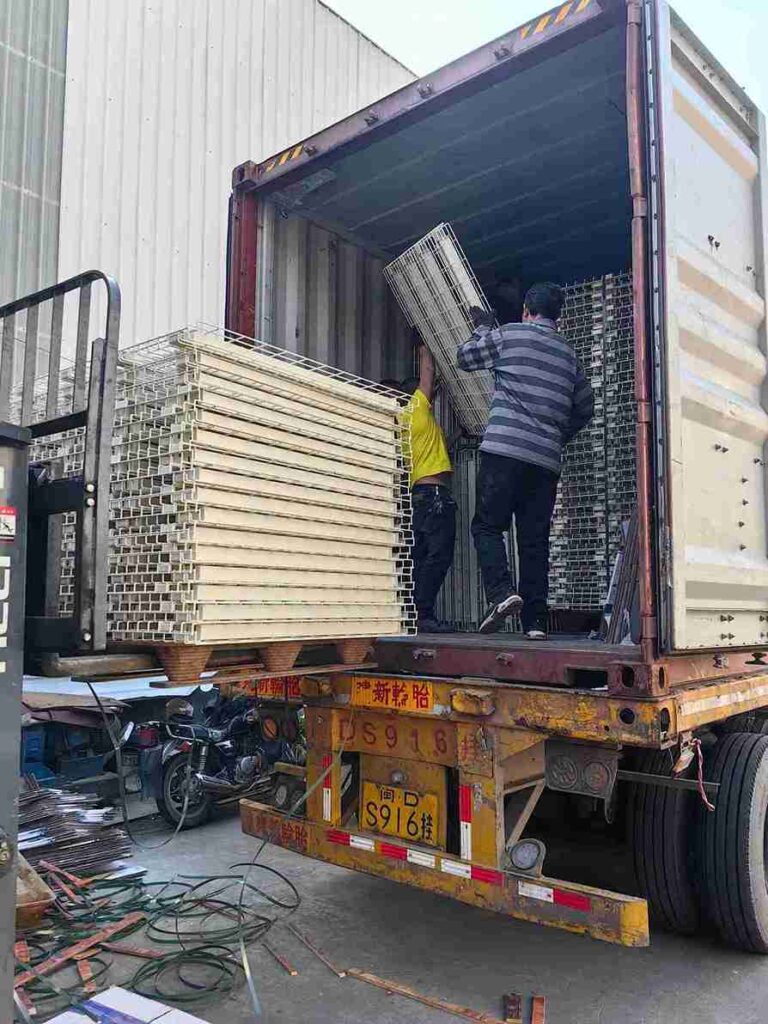
Buyers in Southeast Asia, Africa, the Middle East, and Latin America face significant shipping costs for high density wire mesh decking racking. A 40-foot container holds approximately 600–800 decks depending on nesting efficiency. Sea freight from major manufacturing hubs (China, Vietnam, India) to ports like Singapore, Jebel Ali, Durban, or Santos ranges from $2,000 to $8,000.
The per-deck shipping cost for high density wire mesh decking racking is therefore $3–12. That is modest compared to the $120–180 deck price. However, consolidation matters. Ordering 200 decks (one-third of a container) forces the buyer to pay for less-than-container-load (LCL) shipping, which can double the per-unit freight cost. Always order in full container increments to minimize landed cost for high density wire mesh decking racking.
Inland transportation from port to warehouse adds another $1–5 per deck depending on distance and local fuel costs. Warehouses near major ports like Jakarta, Ho Chi Minh City, or Lagos have a significant cost advantage over inland facilities.
Bulk buyers can further reduce shipping costs by mixing high density wire mesh decking racking with other rack components in the same container. Upright frames and beams ship efficiently alongside nested decks, spreading the freight cost across the entire system.
H2: Bulk Order Pricing – How Volume Discounts Work
Manufacturers of high density wire mesh decking racking offer tiered volume discounts. Typical discount brackets are:
1–199 decks: List price (no discount)
200–499 decks: 5–8% discount
500–999 decks: 10–12% discount
1,000+ decks: 15–20% discount
A warehouse operator planning a 10,000-pallet-position facility might need 2,000 decks (assuming 5 levels and 2 pallets per level per bay). That qualifies for the maximum discount, saving $20–30 per deck compared to buying 200 decks at a time. The total saving on a 2,000-deck order exceeds $50,000—enough to pay for a small forklift or an entire year of maintenance.
Bulk orders of high density wire mesh decking racking also receive priority production scheduling. Instead of waiting 4–6 weeks for a small batch, bulk buyers often get 15–20 day lead times. For warehouses racing to open before peak season, this speed is invaluable.
H2: Calculating ROI – 6 to 12 Month Payback Periods
The return on investment for high density wire mesh decking racking is unusually fast for capital equipment. Based on deployments across 300+ warehouses in emerging markets, the payback period typically falls between 6 and 12 months. Here is how the math works:
A 100,000 square foot e-commerce warehouse spends $1.5 million annually on rent (at $15/sq ft). With high density wire mesh decking racking, the facility stores 5,500 pallet positions instead of 4,000 with lower-density methods. The effective rent per pallet position drops from $375 to $272 per year—a saving of $103 per position. For 5,500 positions, that is $566,500 annually.
Labor productivity improves by 18–22% because pickers can see inventory through the mesh. A 50-person picking team earning $15/hour costs $1.56 million annually. An 18% productivity gain reduces required headcount by 9 people, saving $280,000 per year.
Product damage from splintered wood or trapped moisture drops by 40–60%. For a warehouse holding $5 million in average inventory, that saves $200,000–300,000 annually.
Fire insurance premiums decrease by 5–15% due to better sprinkler penetration. On a $50 million contents policy, a 10% reduction saves $50,000 per year.
Total annual savings from high density wire mesh decking racking often exceed $1 million. The upfront cost for the decking itself is $200,000–300,000 for a 5,500-position warehouse. Payback happens in 3–4 months, and the system lasts 15+ years. That is an ROI that few other warehouse investments can match.
H1: Emerging Market Deep Dive – Regional Considerations for High Density Wire Mesh Decking Racking
H2: Southeast Asia – High Humidity and Rapid E-commerce Growth
Southeast Asia presents unique challenges for high density wire mesh decking racking. Relative humidity often exceeds 80% year-round, accelerating corrosion. Hot-dip galvanized finishes are essential, not optional. Warehouses near the coast (Jakarta, Ho Chi Minh City, Bangkok, Manila) also face salt spray, which eats through electro-galvanized coatings within months.
The region’s e-commerce growth is explosive. With the digital economy nearing $200 billion, warehouses are being built at record speed. Many new facilities in Vietnam, Thailand, and Indonesia are incorporating high density wire mesh decking racking from the ground up. Operators in these markets value the system’s ability to handle both palletized and split-case storage, as local e-commerce often involves mixed SKU orders.
Earthquake risk exists in Indonesia and the Philippines. High density wire mesh decking racking installed in seismic zones requires additional bracing and floor anchoring. The wire mesh itself helps by allowing pallets to shift slightly without dislodging, unlike solid decks that can create rigid failure points.
H2: Middle East – High-Temperature Warehousing and Dust Control
The Gulf region’s extreme summer temperatures (50°C+) create challenges for high density wire mesh decking racking in non-air-conditioned warehouses. Thermal expansion of steel must be accounted for in rack design. Expansion gaps of 5–10 mm between deck sections prevent buckling.
Dust is another factor. Desert dust infiltrates warehouses, accumulating on solid surfaces. High density wire mesh decking racking allows dust to fall through, reducing cleaning frequency. However, the dust can abrade galvanized coatings over many years. Some Middle Eastern operators specify stainless steel or heavy-gauge HDG for extra durability.
The UAE and Saudi Arabia are investing heavily in automated warehouses, but high density wire mesh decking racking remains the foundation. Even in automated facilities, wire mesh decks support AGV and AMR traffic, providing a stable, high-friction surface that robot wheels can grip.
H2: Africa – Port Congestion and Inland Logistics
African buyers of high density wire mesh decking racking face port congestion as a primary challenge. Durban, Mombasa, Tema, and Lagos ports often experience delays of 2–4 weeks. Planning buffer time into the procurement schedule is essential. Working with a supplier that has experience shipping to Africa—including handling customs documentation and port release—reduces risk.
Inland transportation is equally challenging. Roads vary from excellent (South Africa, Kenya) to poor (Nigeria, DRC). High density wire mesh decking racking is relatively robust, but packaging must withstand rough handling. Wooden crates with internal bracing are recommended over cardboard or shrink wrap.
Despite these challenges, African warehouses are rapidly adopting high density wire mesh decking racking because alternative materials are hard to source locally. Wood decking rots quickly in tropical climates, and solid steel is prohibitively expensive to import. Wire mesh offers the best balance of durability and cost.
H2: Latin America – Tariffs and Local Manufacturing
Latin American countries impose high import duties on finished steel products. Brazil’s tariff on imported high density wire mesh decking racking can reach 18–25%. Mexico has lower duties under USMCA but still adds 10–15%. These tariffs make local manufacturing attractive.
Several Latin American countries have domestic wire mesh decking manufacturers, but their quality varies. Imported high density wire mesh decking racking from established Asian manufacturers often still costs less even after tariffs, due to economies of scale. Buyers should compare landed cost (product + freight + duty + inland) against local quotes.
Currency volatility is a real risk in Argentina, Brazil, and Colombia. High density wire mesh decking racking contracts should be denominated in USD or Euros, with payment terms that protect both parties. Some suppliers offer hedging options for large contracts.
H2: Central Asia – Extreme Temperatures and the Middle Corridor
Central Asian warehouses in Kazakhstan, Uzbekistan, and Azerbaijan experience temperature swings from -30°C in winter to +40°C in summer. High density wire mesh decking racking must be specified with steel grades that maintain ductility at low temperatures. Standard S235JR steel becomes brittle below -20°C. For these climates, S355J2 or similar low-temperature grades are recommended.
The Middle Corridor trade route is driving warehouse construction along the Caspian Sea. Ports like Aktau (Kazakhstan) and Baku (Azerbaijan) are becoming logistics hubs. High density wire mesh decking racking shipped via this route faces multiple border crossings, so documentation must be precise. Working with a freight forwarder experienced in Central Asia is essential.
Despite the logistical complexity, Central Asian buyers appreciate the value of high density wire mesh decking racking. The region lacks local manufacturing, and alternatives are either unavailable or poor quality. Imported wire mesh systems dominate the market.
H1: Installation Best Practices for High Density Wire Mesh Decking Racking
H2: Preparing the Warehouse Floor and Layout
Before installing high density wire mesh decking racking, the warehouse floor must be level within industry tolerances (±1/4 inch over 10 feet). Uneven floors cause rack frames to twist, putting stress on beam connections and wire decks. Self-leveling compound can correct minor irregularities.
Layout planning should consider forklift turning radii, fire egress paths, and sprinkler head placement. High density wire mesh decking racking systems require aisle widths of at least 3.0 meters for counterbalance forklifts or 2.5 meters for reach trucks. Narrower aisles increase density but require specialized equipment.
Mark the floor with chalk lines indicating rack baseplate positions. Use a laser level to ensure all frames in a row are aligned. Misaligned frames will cause beam connection problems and make deck installation difficult.
H2: Step-by-Step Deck Installation
インストール high density wire mesh decking racking decks is straightforward but requires attention to detail:
Assemble rack frames and beams according to the engineering drawing. Ensure all beam clips and safety pins are engaged.
Inspect each deck for damage during shipping. Look for bent wires, broken welds, or missing channels.
Position the deck over the step beams, with the inverted U-channels aligned to wrap over the beam top and face.
Lower the deck so the channels seat fully onto the beams. You may need to tap the deck gently with a rubber mallet.
Check for movement. A properly installed high density wire mesh decking racking deck should not shift when pushed by hand. If it moves, the channels may be the wrong size for the beams.
Install safety clips if required by local code. Some jurisdictions mandate secondary retention even for friction-fit decks.
For multi-level racks, install decks from the bottom up. This provides a stable work platform for installing upper-level decks.
H2: Safety Inspections and Maintenance
After installation, a third-party engineer should inspect high density wire mesh decking racking for compliance with local safety standards. Annual inspections thereafter are recommended. Look for:
Bent or broken wires
Cracked welds
Corrosion, especially near the channel-beam interface
Loose channels that allow deck movement
Impact damage from forklifts
Replace damaged decks immediately. A single broken wire reduces load capacity significantly. Most suppliers of high density wire mesh decking racking offer individual replacement decks for just this purpose.
For food-grade warehouses, include high density wire mesh decking racking in the regular sanitation schedule. Washdowns should use food-safe cleaning agents and avoid high-pressure spraying directly at welds, which can force moisture into micro-cracks.
よくある質問
Q1: Can high density wire mesh decking racking be used with double-deep racking systems?
Yes. Double-deep racking works very well with high density wire mesh decking racking because the open mesh allows operators to see the rear pallet through the front deck. The key requirement is that the deck must span the full beam length without sagging. For double-deep spans exceeding 2.7 meters, specify 5.0 mm wire and additional support channels.
Q2: What is the maximum number of levels possible with high density wire mesh decking racking?
There is no theoretical limit, but practical limits come from building height and forklift reach. Most warehouses install 4–6 levels of high density wire mesh decking racking, with the top level 8–10 meters above the floor. Very high-bay warehouses (12+ meters) can install 8 levels, but they require very tall reach trucks or turret trucks.
Q3: How does high density wire mesh decking racking affect warehouse lighting?
The open mesh allows light to penetrate to lower levels, reducing the number of fixtures needed compared to solid decks. Warehouses using high density wire mesh decking racking typically save 15–20% on lighting energy costs because fewer fixtures are required to maintain illumination levels on lower levels.
Q4: Can high density wire mesh decking racking be retrofitted into existing rack systems?
Yes, as long as the existing rack beams are compatible. High density wire mesh decking racking decks are designed to fit standard step beam profiles. Measure the beam flange width and depth before ordering. Many warehouses upgrade from wood or solid steel to wire mesh without changing the rack frames.
Q5: What is the lead time for a bulk order of high density wire mesh decking racking to Africa or Latin America?
Lead time includes production (15–25 days for 500+ decks), sea freight (25–40 days depending on origin and destination), and customs clearance (5–15 days depending on port efficiency). Total lead time from order to warehouse arrival is typically 6–10 weeks for African ports and 5–8 weeks for Latin American ports. Air freight can reduce this to 10–14 days at approximately 3–4 times the cost.
結論
High density wire mesh decking racking has proven itself across thousands of warehouses in Southeast Asia, the Middle East, Africa, Latin America, and Central Asia. It delivers the storage density that e-commerce demands, the hygiene that food & beverage requires, and the cost structure that emerging market operators need to compete.
証拠は明らかだ: high density wire mesh decking racking reduces cost per pallet position by 20–30% compared to solid steel, cuts labor costs through improved visibility, and meets international food safety standards when specified with inverted U-channels and hot-dip galvanized finishes. Bulk buyers enjoy 15–20% volume discounts and priority production, with 24-hour quoting available for urgent requirements.
For warehouse managers tired of replacing rotted wood decks, fighting pest infestations in solid steel cavities, or explaining low storage density to corporate leadership, high density wire mesh decking racking offers a practical, proven solution. The ROI pays back in months, not years, and the system will still be performing at full capacity when today’s e-commerce startups become tomorrow’s industry giants.
Request a 24-hour quote today. Provide rack dimensions, load requirements, and order volume to receive a complete landed cost proposal for high density wire mesh decking racking delivered to your warehouse anywhere in the emerging markets. The next generation of storage efficiency is just one email away.
倉庫のラッキングのための完全な CAD デッサンそして引用語句を要求したら、, ご連絡ください. 倉庫ラッキングのプランニング、設計サービス、お見積もりは無料です。私たちのメールアドレスは jili@geelyracks.com