🐍 "先着50社のエンタープライズ・クエリーにカスタム3Dウェアハウス・デザインをプレゼント" プラン















The Definitive Guide to ISO Certified High-density storage Drive-in Racking for Pharmaceutical Factory Storage
The pharmaceutical industry operates under a microscope. Every element of the supply chain, particularly the storage of finished products and raw materials, must adhere to the highest levels of safety and precision. As global demand for pharmaceuticals surges, particularly in the developing corridors of Central Asia, Africa, and Latin America, the need for an optimized High-density storage Drive-in Racking system has never been more critical. These systems are specifically engineered to provide the maximum volumetric utilization of warehouse space while maintaining the rigorous standards required by ISO certifications and Good Manufacturing Practices (GMP).
The Evolution of Pharmaceutical Warehousing: Why High-density storage Drive-in Racking is Essential
Historically, pharmaceutical warehouses relied on traditional selective racking, which often left up to 60% of the building’s volume dedicated to forklift aisles. However, the modern economic reality of pharmaceutical production—where cold chain storage and cleanroom environments cost ten times more than standard ambient storage—has forced a shift. The adoption of High-density storage Drive-in Racking has become the primary solution for factories looking to minimize their footprint without sacrificing inventory capacity.
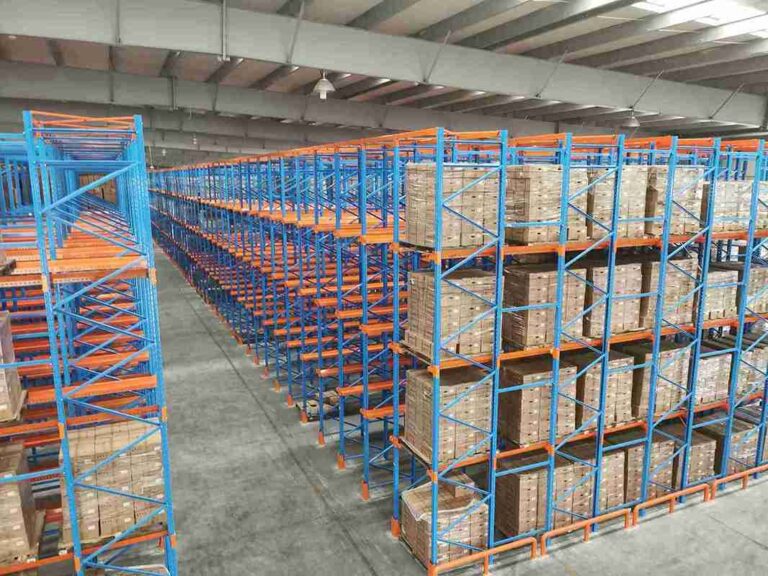
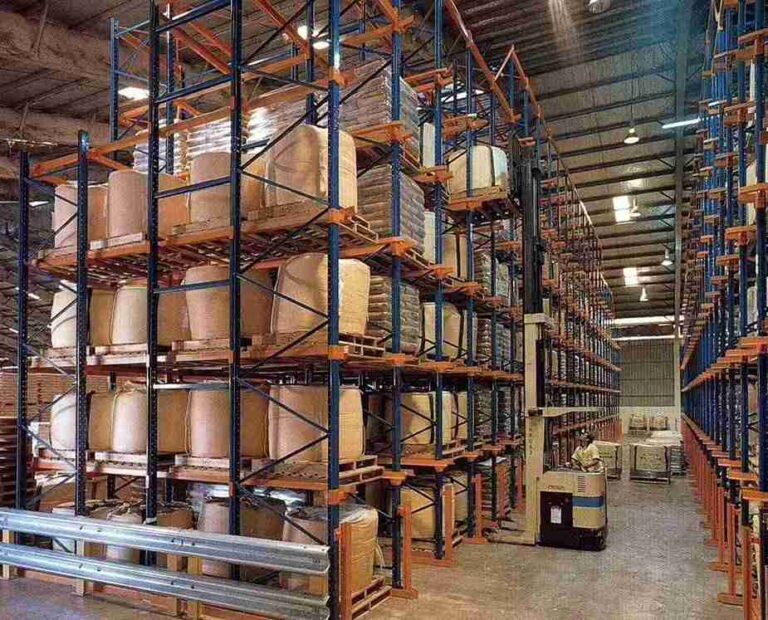
When a facility implements High-density storage Drive-in Racking, it effectively eliminates the need for numerous access aisles. Instead, forklifts drive directly into the racking lanes to deposit or retrieve pallets. This design allows for a significantly higher concentration of products, which is vital for pharmaceutical manufacturers who deal with large batches of identical SKUs. By utilizing High-density storage Drive-in Racking, a factory can store more vaccines, antibiotics, or medical devices in a temperature-controlled environment, ensuring that every dollar spent on HVAC and electricity is maximized.
Engineering Precision: The Structural Integrity of High-density storage Drive-in Racking
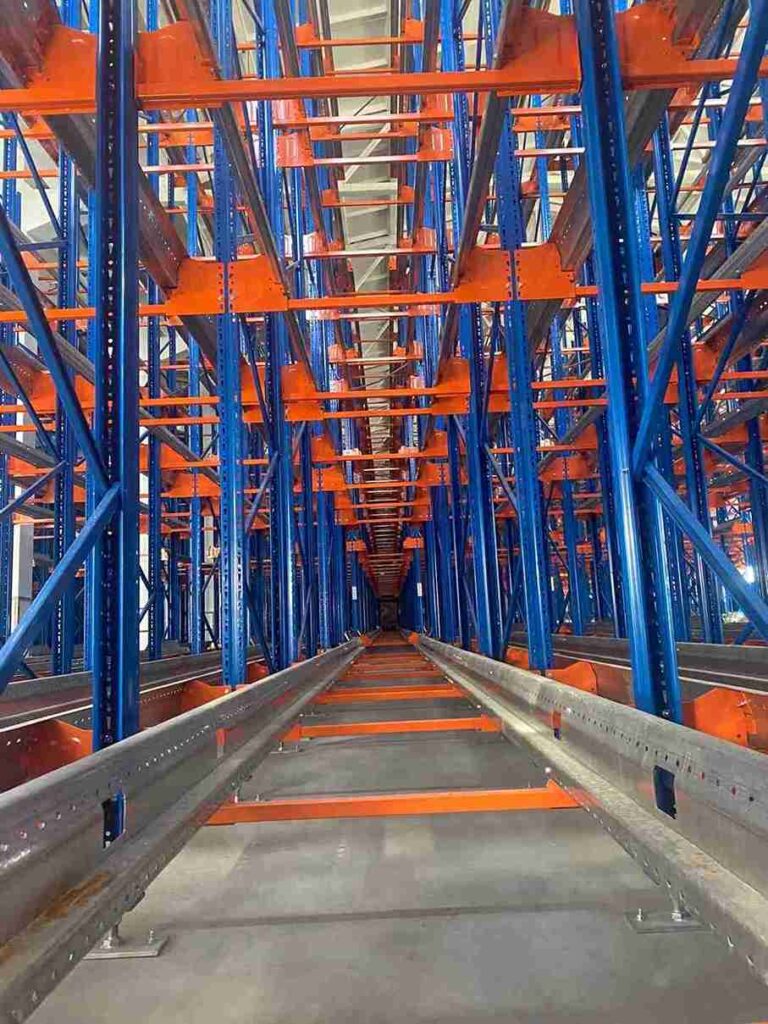
The engineering behind High-density storage Drive-in Racking must account for the unique stresses of a “drive-in” environment. Unlike standard racks, the structural components of High-density storage Drive-in Racking must be robust enough to withstand the potential for forklift impacts within the lanes. Top-tier global suppliers utilize high-tensile steel and reinforced uprights to ensure that the High-density storage Drive-in Racking remains stable under full load capacities.
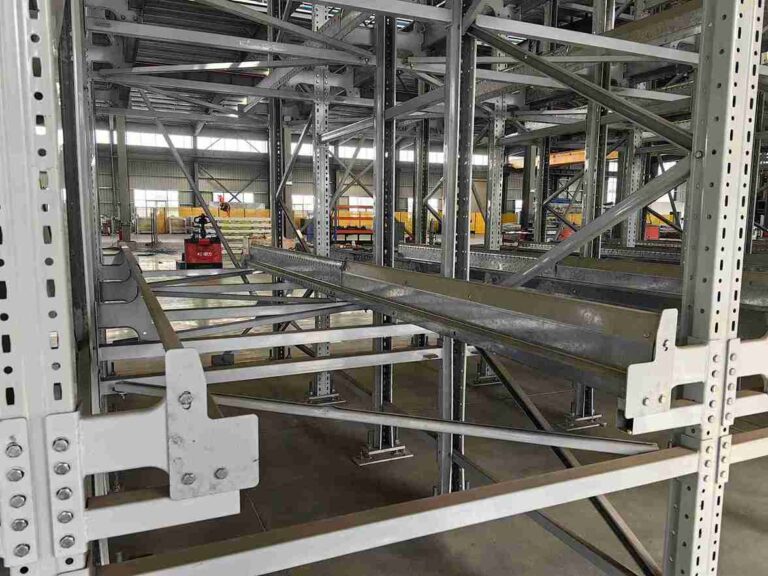
Furthermore, the rail systems within High-density storage Drive-in Racking are designed with precision tapers to guide pallets into place smoothly. In a pharmaceutical setting, where a punctured vial or a damaged box can lead to the quarantine of an entire batch, the reliability of the rails in High-density storage Drive-in Racking is paramount. The use of High-density storage Drive-in Racking ensures that pallet movement is predictable and secure, reducing the risk of product loss due to mechanical failure or operator error.
ISO Certification and Regulatory Compliance in High-density storage Drive-in Racking
For a pharmaceutical factory, an ISO certification is more than just a badge; it is a prerequisite for international trade and patient safety. An ISO certified High-density storage Drive-in Racking system guarantees that the supplier has followed strict quality management protocols during design, manufacturing, and installation. This level of oversight is crucial when dealing with the high-stakes environment of medical storage.
When a supplier provides High-density storage Drive-in Racking, they must demonstrate that the steel’s chemical composition and the powder coating’s toxicity levels meet international standards. In the Middle East and Southeast Asia, where local regulations are increasingly aligning with European and North American standards, having High-density storage Drive-in Racking that is ISO-compliant provides a significant advantage during government audits. The traceability of materials used in High-density storage Drive-in Racking ensures that the warehouse environment remains free from contaminants that could compromise drug purity.
Hygiene and Sanitation Protocols for High-density storage Drive-in Racking
Pharmaceutical warehouses require frequent cleaning, often involving harsh disinfectants. Traditional racking can suffer from corrosion under these conditions. However, a professionally designed High-density storage Drive-in Racking system utilizes specialized coatings—such as epoxy-polyester powder or hot-dip galvanization—to resist chemical degradation. The smooth surfaces of High-density storage Drive-in Racking prevent the accumulation of dust and biofilms, which are common breeding grounds for bacteria.
In cleanroom applications, the High-density storage Drive-in Racking is often engineered with “closed-box” sections. This prevents the internal hollows of the racking from trapping moisture or debris. By choosing High-density storage Drive-in Racking with these hygiene-focused features, pharmaceutical companies can ensure that their storage infrastructure supports, rather than hinders, their sterility goals.
Optimizing the Cold Chain with High-density storage Drive-in Racking
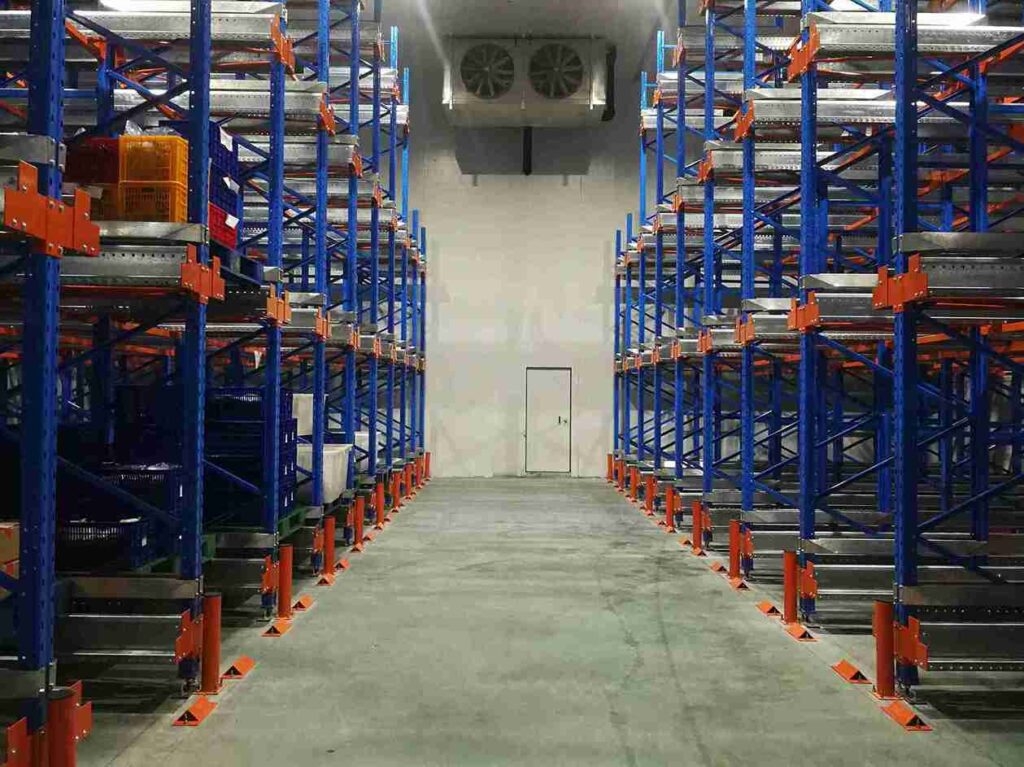
One of the most significant challenges in the pharmaceutical sector is the maintenance of the cold chain. Biological drugs and vaccines require precise temperature control, often in the range of 2°C to 8°C or even as low as -80°C. The energy required to cool a massive warehouse is substantial. High-density storage Drive-in Racking allows for the consolidation of products into a much smaller cubic area.
By reducing the overall volume of the refrigerated zone, High-density storage Drive-in Racking directly lowers energy consumption. The “thermal mass” of a densely packed High-density storage Drive-in Racking system also helps to maintain temperature stability during power fluctuations. For factories in Africa or Latin America, where power grids may be less reliable, the passive temperature-holding capacity of a well-organized High-density storage Drive-in Racking system can be a lifesaver for sensitive inventory.
High-density storage Drive-in Racking and Airflow Dynamics
While density is important, airflow is equally critical in a pharmaceutical cold store. A poorly designed system could create “hot spots” where the air does not circulate. Professional engineers of High-density storage Drive-in Racking utilize airflow modeling to ensure that even the pallets in the center of the rack receive adequate cooling. The spacing between pallets in High-density storage Drive-in Racking is calculated to balance the need for density with the necessity of uniform temperature distribution.
Strategic Implementation in Emerging Markets: SE Asia, Middle East, and Africa
As a global supplier, one must recognize that the application of High-density storage Drive-in Racking varies by geography. In Southeast Asia, high humidity levels necessitate superior anti-corrosion treatments for High-density storage Drive-in Racking. In the Middle East, the focus often shifts to rapid scalability and the ability of High-density storage Drive-in Racking to integrate with large-scale logistics hubs.
For the African market, the durability and ease of maintenance of High-density storage Drive-in Racking are the primary selling points. Since specialized maintenance crews may not be as readily available, the robustness of the High-density storage Drive-in Racking design ensures long-term operational continuity. In all these regions, the introduction of High-density storage Drive-in Racking allows local pharmaceutical manufacturers to compete on a global scale by adopting the same storage efficiencies used by multinational giants.
Seismic Safety Considerations for High-density storage Drive-in Racking
Many emerging markets, particularly in Latin America and parts of Central Asia, are located in high-seismic zones. The height and density of High-density storage Drive-in Racking make it susceptible to seismic forces if not properly engineered. A trusted supplier of High-density storage Drive-in Racking performs rigorous structural analysis to determine the required thickness of baseplates and the necessity of top-bracing.
Using advanced Finite Element Analysis (FEA), the behavior of High-density storage Drive-in Racking during an earthquake is simulated. This ensures that the High-density storage Drive-in Racking can sway without collapsing, protecting both the expensive pharmaceutical stock and the lives of the warehouse workers. This level of safety engineering is a hallmark of an ISO-certified High-density storage Drive-in Racking 解決策だ。.
The Transition to Automation: High-density storage Drive-in Racking and AGVs
The future of pharmaceutical logistics is undoubtedly automated. Many factories are now looking to integrate High-density storage Drive-in Racking with Automated Guided Vehicles (AGVs) and unmanned forklifts. The precision required for an AGV to enter a High-density storage Drive-in Racking lane is much higher than that of a human operator.
To facilitate this, the High-density storage Drive-in Racking must be installed with microscopic tolerances. Every rail and upright in the High-density storage Drive-in Racking system must be perfectly aligned to ensure the AGV’s sensors can navigate the lane without triggering an emergency stop. This “automation-ready” High-density storage Drive-in Racking provides a future-proof investment for companies that plan to upgrade to full warehouse automation in the coming years.
The Role of Stereoscopic Systems in High-density storage Drive-in Racking
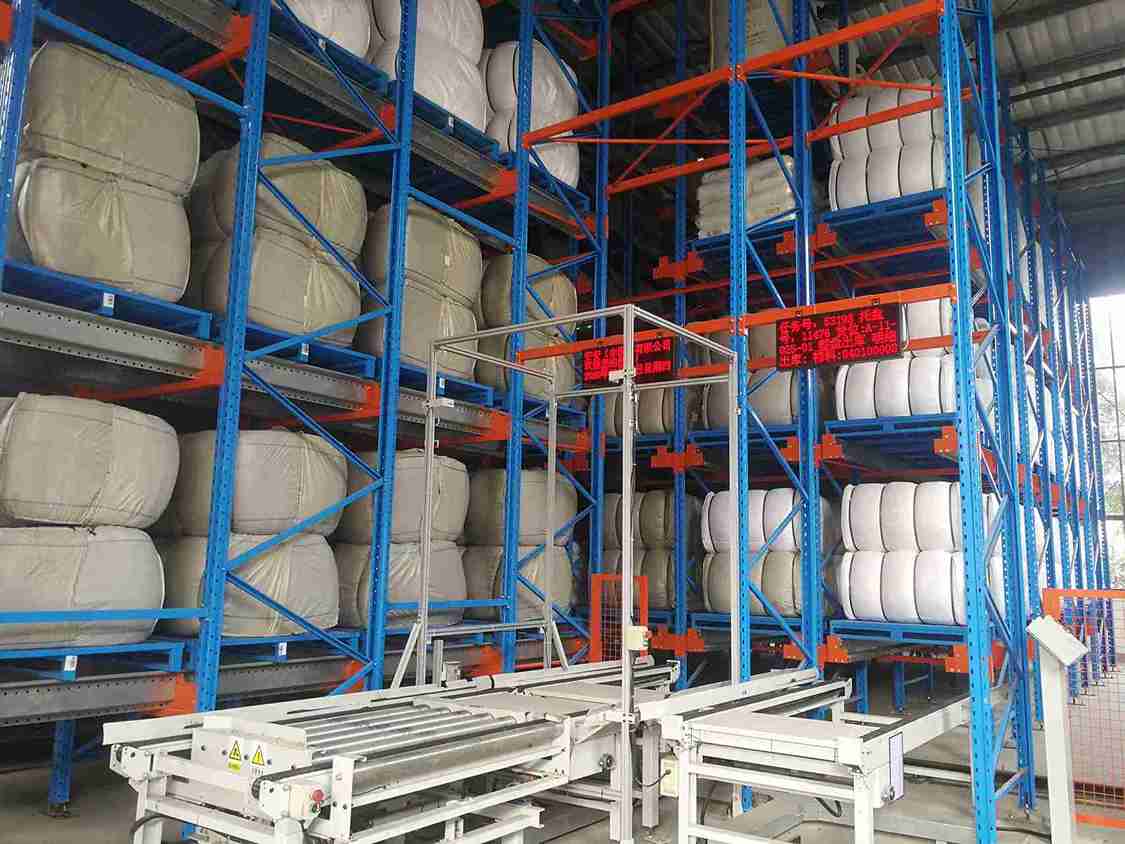
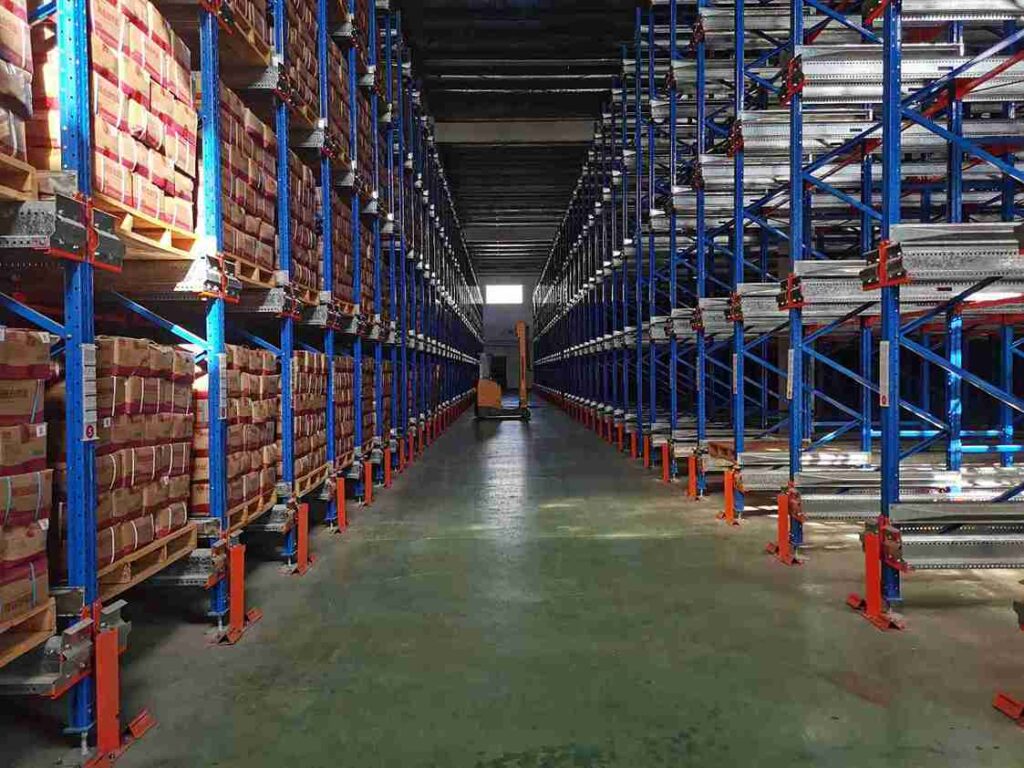
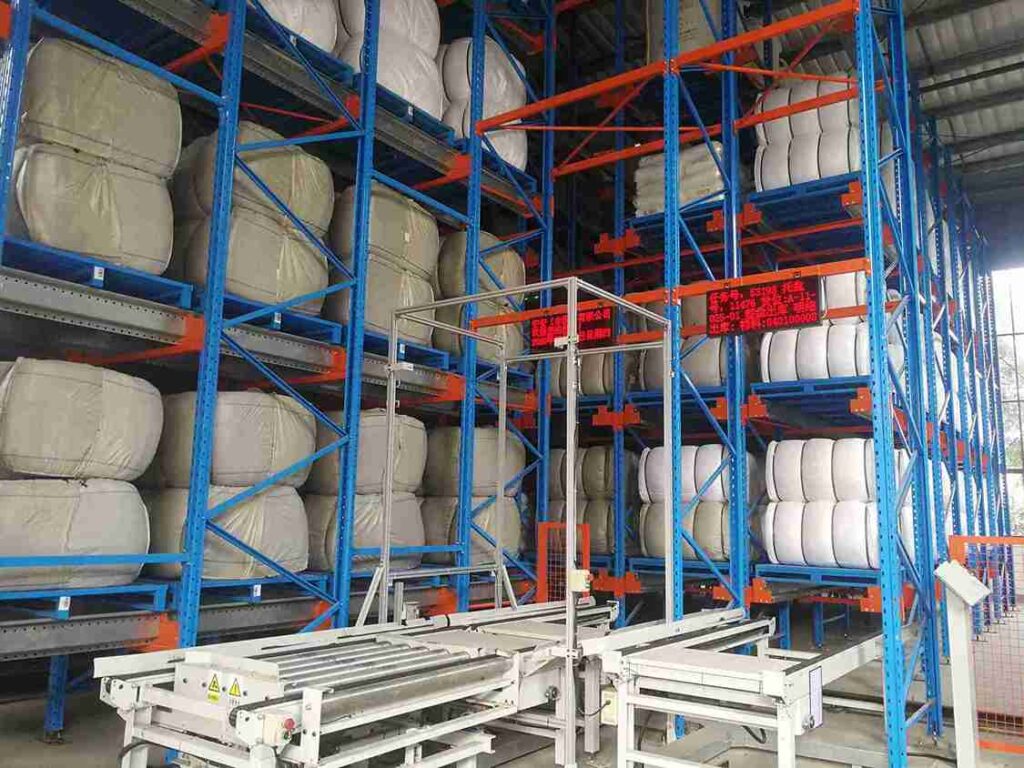
A revolutionary development in this field is the stereoscopic warehouse model. In a stereoscopic environment, the High-density storage Drive-in Racking serves as the framework for a high-rise, fully integrated storage system. By utilizing the vertical height of the building—often exceeding 20 or 30 meters—the High-density storage Drive-in Racking enables a level of density that was previously unthinkable.
においてである。 stereoscopic setup, High-density storage Drive-in Racking is often combined with shuttle technology, where a robotic device moves pallets within the deep lanes of the High-density storage Drive-in Racking. This hybrid approach combines the structural economy of High-density storage Drive-in Racking with the speed of automated retrieval. For pharmaceutical giants in the Middle East or Southeast Asia, this stereoscopic integration within High-density storage Drive-in Racking is the key to managing global distribution volumes.
Operational ROI: The Financial Logic of High-density storage Drive-in Racking
The capital expenditure for High-density storage Drive-in Racking is often justified by the rapid Return on Investment (ROI). When one considers the cost per pallet position, High-density storage Drive-in Racking is one of the most cost-effective ways to increase capacity. By avoiding the need for a warehouse expansion or a new facility build, High-density storage Drive-in Racking saves millions in construction costs.
Moreover, the operational efficiency gained from High-density storage Drive-in Racking reduces labor costs. Because forklifts spend less time traveling down long aisles and more time in concentrated retrieval zones, the throughput of the warehouse increases. In the fast-paced pharmaceutical market, where getting a product to market a few days earlier can result in significant market share gains, the speed afforded by High-density storage Drive-in Racking is invaluable.
Maintenance and Longevity of High-density storage Drive-in Racking
To ensure that High-density storage Drive-in Racking continues to provide value, a regular maintenance schedule is essential. While High-density storage Drive-in Racking is built for durability, the high-traffic nature of pharmaceutical storage means that occasional bumps are inevitable. A proactive approach involves installing column protectors and floor-mounted guide rails to shield the High-density storage Drive-in Racking from the heaviest impacts.
Regular inspections of the High-density storage Drive-in Racking ensure that any minor structural issues are addressed before they become safety hazards. A reputable supplier of High-density storage Drive-in Racking will provide detailed inspection checklists and support, ensuring the system remains in peak condition for decades. This longevity is what makes High-density storage Drive-in Racking a sustainable choice for growing pharmaceutical enterprises.
Customizing High-density storage Drive-in Racking for Specialized Pharma Needs
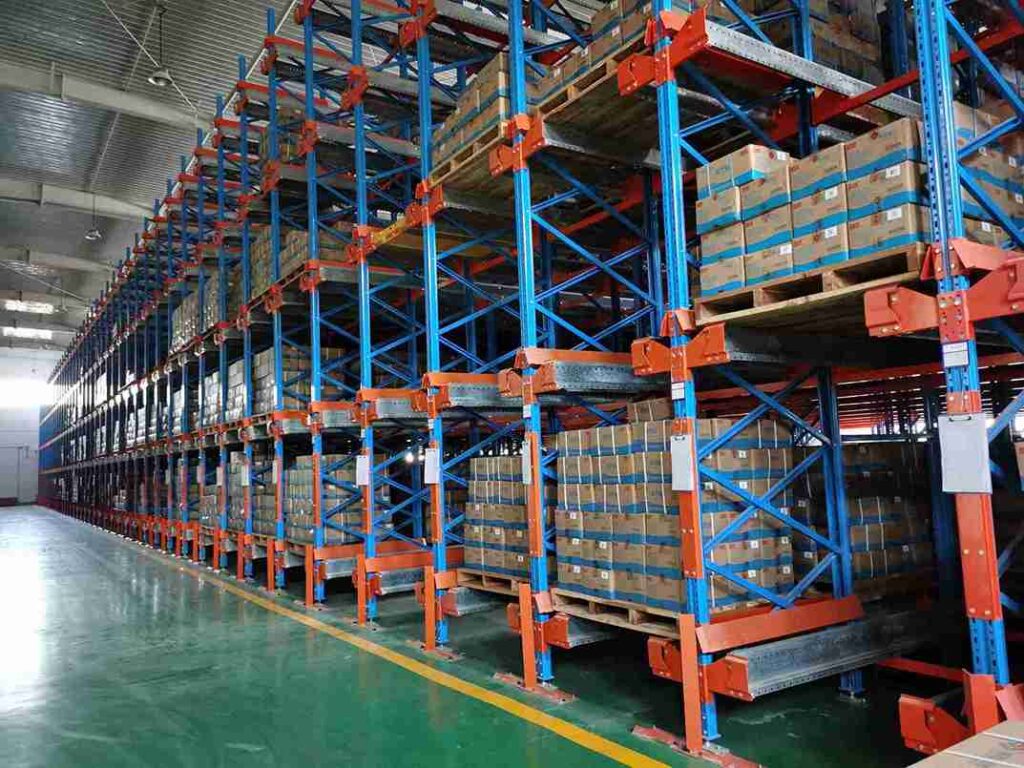
Every pharmaceutical factory has unique requirements. Some may need High-density storage Drive-in Racking for storing large drums of raw chemicals, while others require it for small, delicate boxes of biologics. The versatility of High-density storage Drive-in Racking allows for customization in beam levels, lane depths, and weight capacities.
We have seen instances where High-density storage Drive-in Racking is integrated with specialized fire suppression systems, where sprinklers are built into the racking structure itself. This is particularly important for the storage of flammable pharmaceutical solvents. The ability to tailor High-density storage Drive-in Racking to these specific safety requirements is what separates a world-class supplier from a general manufacturer.
Case Study: High-density storage Drive-in Racking in Central Asia
In a recent project for a major pharmaceutical plant in Uzbekistan, the challenge was to store high volumes of vaccines in a seismic-prone region with extreme temperature fluctuations. The solution was a customized High-density storage Drive-in Racking system designed with extra-thick steel profiles and a specialized seismic-damping base.
By implementing High-density storage Drive-in Racking, the factory was able to increase its cold-storage capacity by 85% within the existing building footprint. The High-density storage Drive-in Racking was also equipped with radio-shuttle compatibility, allowing the facility to move toward automation as their throughput increased. This project serves as a prime example of how High-density storage Drive-in Racking can solve complex logistical challenges in developing markets.
The Importance of Professional Installation for High-density storage Drive-in Racking
Even the best-engineered High-density storage Drive-in Racking system will fail if not installed correctly. Professional installation teams ensure that every bolt is torqued to specification and every upright is perfectly plumb. In the world of High-density storage Drive-in Racking, even a one-degree tilt can compromise the structural integrity of the entire row when fully loaded.
For pharmaceutical clients, the installation of High-density storage Drive-in Racking must also be “clean.” This means the installation crew must minimize dust and debris, especially if the High-density storage Drive-in Racking is being installed in a near-complete factory. Using specialized tools and following a strict protocol ensures that the High-density storage Drive-in Racking is ready for immediate use in a sterile environment.
Training and Operator Safety in High-density storage Drive-in Racking Environments
Safety in a High-density storage Drive-in Racking system is a combination of good engineering and well-trained personnel. Operators must be trained on the specific maneuvers required to enter and exit High-density storage Drive-in Racking lanes safely. Because the clearance between the forklift and the High-density storage Drive-in Racking uprights is often tight, precision is required.
Global suppliers often provide training modules as part of the High-density storage Drive-in Racking package. This includes teaching operators how to inspect the High-density storage Drive-in Racking for damage and how to report issues immediately. A culture of safety around the High-density storage Drive-in Racking system is the final piece of the puzzle in ensuring a zero-accident warehouse.
High-density storage Drive-in Racking: A Sustainable Choice for the Future
Sustainability is becoming a core value in the pharmaceutical industry. By maximizing space, High-density storage Drive-in Racking contributes to a more sustainable business model. Less land use, lower energy consumption for cooling, and a longer product lifespan all make High-density storage Drive-in Racking an environmentally friendly option.
Furthermore, the steel used in High-density storage Drive-in Racking is 100% recyclable at the end of its life cycle. By choosing High-density storage Drive-in Racking, pharmaceutical companies are making a commitment to long-term environmental stewardship while also improving their bottom line. The efficiency of High-density storage Drive-in Racking is, therefore, both an economic and an ecological win.
Conclusion: The Future of Pharma Storage is High-density storage Drive-in Racking
In conclusion, the strategic implementation of High-density storage Drive-in Racking is the most effective way for pharmaceutical factories to meet the dual challenges of space optimization and regulatory compliance. As we have explored, the benefits of High-density storage Drive-in Racking extend from mechanical engineering and seismic safety to energy efficiency and automation readiness.
For any pharmaceutical facility in Southeast Asia, the Middle East, Africa, or Latin America, investing in High-density storage Drive-in Racking from a trusted global supplier is a guarantee of quality and performance. The synergy between High-density storage Drive-in Racking and modern stereoscopic warehouse technology ensures that your facility will remain competitive and compliant for years to come. Ultimately, High-density storage Drive-in Racking is the backbone of a safe, efficient, and profitable pharmaceutical supply chain.
Frequently Asked Questions (FAQ)
1. Why is High-density storage Drive-in Racking preferred over selective racking in pharmaceutical cold stores?
The primary reason is the high cost of energy in cold storage. High-density storage Drive-in Racking minimizes the empty space (aisles) that needs to be cooled, allowing for more products to be stored per cubic meter. This concentration leads to significant energy savings and better temperature stability, which is vital for pharmaceutical integrity.
2. How does High-density storage Drive-in Racking handle different pallet sizes common in international pharma shipping?
優れたデザイン High-density storage Drive-in Racking system can be customized with adjustable rails and varying lane widths. While it is most efficient with standardized pallet sizes, global suppliers can engineer High-density storage Drive-in Racking to accommodate Euro-pallets, US pallets, or custom pharmaceutical skids within the same system.
3. What safety features are unique to High-density storage Drive-in Racking for pharmaceutical applications?
Beyond standard load-bearing limits, High-density storage Drive-in Racking for pharma often includes floor-mounted guide rails to prevent forklift collisions, rounded edges to facilitate cleaning, and specialized non-toxic coatings. These features ensure that the High-density storage Drive-in Racking does not become a source of contamination or a safety hazard.
4. Can High-density storage Drive-in Racking be converted into an automated system later?
Yes. Many companies install High-density storage Drive-in Racking as a manual system first and later integrate radio shuttles or AGVs. This “automation-ready” approach allows for phased capital investment. The key is ensuring that the initial High-density storage Drive-in Racking installation meets the high precision tolerances required for robotic interaction.
5. How often should an ISO certified High-density storage Drive-in Racking system be inspected?
In a high-turnover pharmaceutical environment, we recommend a basic visual inspection of the High-density storage Drive-in Racking weekly by warehouse staff and a comprehensive structural audit by a qualified professional at least once a year. This ensures the High-density storage Drive-in Racking remains compliant with ISO safety standards and continues to protect your inventory and staff.
倉庫のラッキングのための完全な CAD デッサンそして引用語句を要求したら、, ご連絡ください. 倉庫ラッキングのプランニング、設計サービス、お見積もりは無料です。私たちのメールアドレスは jili@geelyracks.com