📐 "First 50 Enterprise Queries Get Custom 3D Warehouse Design" Plan


The Future of Cold Storage Warehousing
In today’s rapidly evolving logistics landscape, warehouse operators face unprecedented challenges in balancing storage density, operational efficiency, and cost-effectiveness. Nowhere are these challenges more pronounced than in cold storage facilities, where every square meter of refrigerated space carries significant energy costs. This is where double deep racking systems emerge as the ultimate solution, offering unparalleled storage density without compromising accessibility.
Unlike conventional storage methods that force operators to choose between space utilization and product accessibility, double deep racking systems deliver the best of both worlds. These innovative systems have become the backbone of modern cold storage operations, particularly in industries like:
Frozen food distribution
Pharmaceutical storage
Chemical warehousing
Beverage logistics
What sets double deep racking systems apart is their ability to handle pallet loads up to 6,000kg per level while maintaining exceptional structural integrity in sub-zero environments. This guide will explore every facet of these systems, from their fundamental engineering principles to advanced automation integration, providing warehouse managers with the knowledge needed to make informed decisions about their storage infrastructure.
1. The Science Behind Double Deep Racking Systems
1.1 Fundamental Design Principles
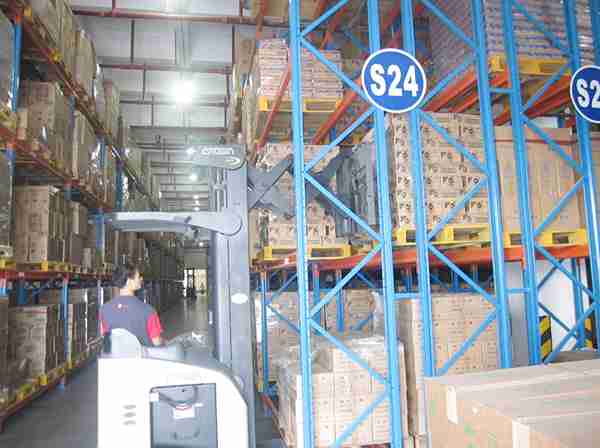
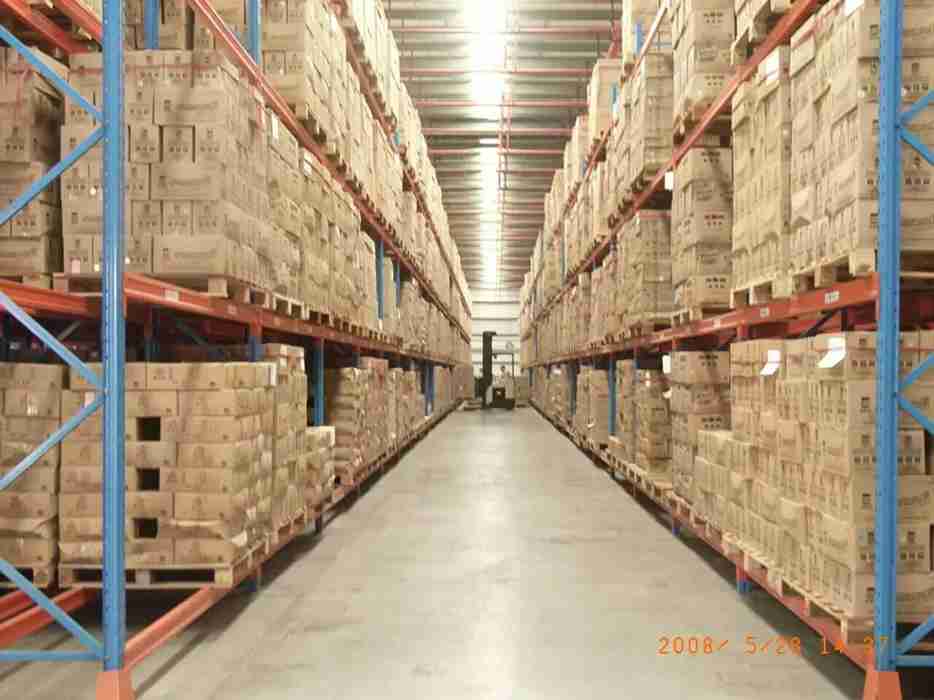
At its core, a double deep racking system is a masterclass in space optimization. The system stores pallets two-deep, requiring specialized handling equipment but delivering remarkable storage density. The key components include:
Structural uprights: Typically constructed from 12-gauge steel with cold-rated powder coating
Box-beam crossbars: Engineered for maximum load distribution
Pallet supports: Designed to prevent load shifting in high-traffic environments
1.2 Material Science for Extreme Environments
The true test of any storage system in cold environments lies in its material composition. Premium double deep racking systems incorporate:
Hot-dip galvanized steel with a minimum coating thickness of 80μm
Low-temperature resistant paints that maintain flexibility at -40°C
Impact-resistant coatings for high-traffic areas
These material specifications ensure that the system maintains structural integrity even after years of exposure to:
Constant sub-zero temperatures
High humidity conditions
Frequent washdowns in food-grade facilities
1.3 Load Dynamics and Weight Distribution
Understanding the physics of double deep racking systems is crucial for safe operation. The systems are engineered to handle:
Static loads up to 6,000kg per pallet position
Dynamic loads from forklift impacts
Seismic forces in earthquake-prone regions
The secret lies in the sophisticated weight distribution system that channels forces through:
The pallet supports
The box-beam crossbars
The structural uprights
Finally to the anchored base plates
This multi-stage load distribution is what allows double deep racking systems to safely handle weights that would compromise conventional storage solutions.
2. Engineering Marvels: The Heavy-Duty Advantage
2.1 Structural Enhancements for Maximum Capacity
When dealing with pallet loads approaching 6,000kg, every component must be over-engineered for safety. Premium double deep racking systems feature:
Laser-cut steel components with precision tolerances
Robotic welding for consistent joint strength
Post-weld heat treatment to eliminate stress points
2.2 The Cold Storage Challenge
Most warehouse operators don’t realize how dramatically temperature affects structural materials. Steel becomes more brittle in cold environments, which is why double deep racking systems for cold storage incorporate:
Special alloy compositions with improved low-temperature ductility
Impact modifiers in powder coatings
Thermal break technology at connection points
2.3 Safety Systems That Go Beyond Compliance
While all racking systems meet basic safety standards, premium double deep racking systems include:
Redundant load path engineering
Impact monitoring systems
Real-time load sensors (in advanced configurations)
These features work together to create a storage system that’s not just compliant, but genuinely failsafe.
3. Real-World Applications: Case Studies That Prove the Value
3.1 Frozen Food Distribution Breakthrough
A leading European frozen seafood distributor faced a critical space shortage in their -25°C facility. After implementing a double deep racking system, they achieved:
68% increase in pallet positions
18% reduction in energy costs due to reduced refrigerated volume
Faster order fulfillment through optimized lane design
3.2 Pharmaceutical Cold Chain Revolution
A global vaccine distributor needed to expand capacity while maintaining strict temperature control. Their custom double deep racking system solution delivered:
Precision temperature mapping throughout the storage area
Automated inventory tracking with WMS integration
Seamless integration with existing cold chain logistics
4. The Automation Advantage
4.1 AGV Integration: The Future Is Here
Modern double deep racking systems are designed from the ground up for automation compatibility. Key features include:
Standardized pallet pocket dimensions for robotic handling
RFID tag mounting points throughout the structure
Laser guidance reflectors for precision navigation
4.2 Data-Driven Optimization
The most advanced installations now incorporate:
Load cell sensors in each pallet position
Vibration monitoring for structural health
AI-powered slotting algorithms
These technologies work together to create storage systems that are not just passive infrastructure, but active participants in warehouse optimization.
5. Comparative Analysis: Making the Right Choice
When evaluating storage options, it’s crucial to understand how double deep racking systems compare to alternatives:
Accessibility vs. Density Tradeoff:
Selective Racking: Maximum accessibility, minimum density
Drive-In Racking: Maximum density, minimum accessibility
Double Deep Racking: Optimal balance
Cost Per Pallet Position Analysis:
Initial investment in double deep racking systems is typically 15-20% higher than selective racking
But delivers 30-40% lower cost per pallet position over 10 years
With 50% better space utilization than selective systems
Operational Efficiency Metrics:
Forklift travel time reductions of 20-25%
Energy savings of 15-20% in cold storage
Throughput increases of 18-22%
6. Installation Excellence: Building for Decades of Service
6.1 Precision Installation Protocols
Proper installation is critical for double deep racking systems, requiring:
Laser-guided alignment to ±2mm tolerance
Torque-controlled anchoring with continuous monitoring
Load testing at 125% of rated capacity
6.2 The Maintenance Advantage
Unlike some high-density systems, double deep racking systems are designed for easy maintenance:
Modular component replacement
Non-destructive inspection points
Predictive maintenance scheduling
7. Future-Proofing Your Investment
7.1 Scalability Without Compromise
The modular nature of double deep racking systems allows for:
Vertical expansion as needs grow
Horizontal reconfiguration for changing workflows
Technology upgrades without system replacement
7.2 Sustainable Design Leadership
Modern systems incorporate:
Recycled steel content up to 85%
Energy-efficient lighting integration
Solar-ready structural designs
8. Conclusion: The Smart Choice for Demanding Environments
For cold storage operators and heavy industrial users, double deep racking systems represent the pinnacle of storage technology. They deliver:
Unmatched storage density
Exceptional load capacity
Future-ready automation compatibility
Long-term cost efficiency
The data clearly shows that operations choosing double deep racking systems gain:
20-30% better space utilization than conventional systems
15-25% lower operating costs
10-15 year service life with proper maintenance
9. Expert Answers to Critical Questions
Q1: How does temperature cycling affect system longevity?
Modern double deep racking systems use thermal expansion joints and special alloys to accommodate temperature fluctuations without compromising structural integrity.
Q2: What’s the ROI timeframe for these systems?
Most operations see full ROI within 18-24 months through space savings and efficiency gains.
Q3: Can existing warehouses retrofit to these systems?
Yes, but requires professional assessment of:
Floor load capacity
Ceiling clearance
Column spacing
Q4: How does this compare to automated storage/retrieval systems (AS/RS)?
Double deep racking systems offer:
Lower capital cost
Greater flexibility
Easier maintenance
Q5: What certifications should we look for?
Key certifications include:
FEM 10.2.02 for European standards
RMI/ANSI MH16.1 for North America
ISO 9001 for quality management
Welcome to contact us, if you need warehouse rack CAD drawings. We can provide you with warehouse rack planning and design for free. Our email address is: jili@geelyracks.com