📐 "Ensimmäiset 50 yrityskyselyä saavat mukautetun 3D-varaston suunnittelun" Suunnitelma
















Introduction: Why Shuttle Rack Components Matter in Modern Warehousing
In today’s fast-moving logistics landscape, warehouses demand smarter storage solutions that maximize space while minimizing operational costs. Shuttle rack components form the backbone of these next-generation storage systems, offering unparalleled density, speed, and automation compared to traditional pallet racking.
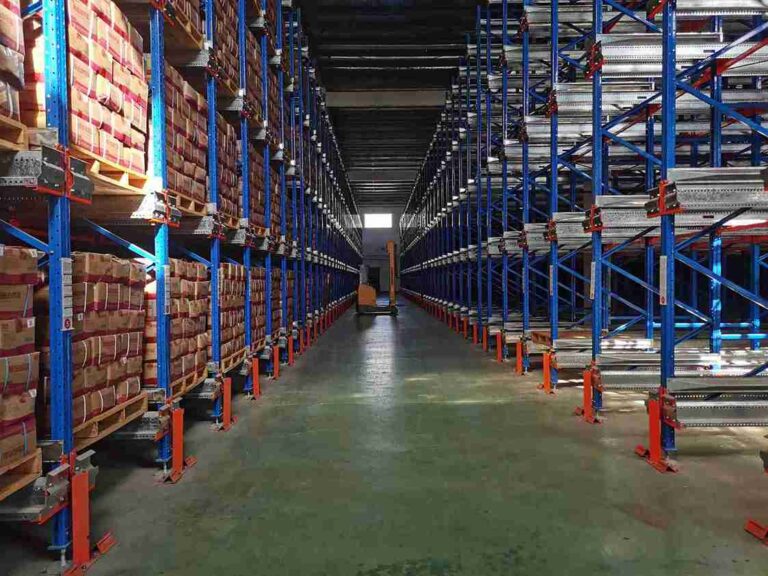
This definitive guide dives deep into every critical shuttle rack component, explaining how they work together to create a seamless, high-performance storage system. Warehouse managers, supply chain professionals, and operations directors will gain actionable insights into selecting, implementing, and optimizing these systems for their specific needs.

1. The Shuttle Carrier: The Intelligent Workhorse of the System
At the center of every high-performance shuttle rack system sits the shuttle carrier – a self-powered, rail-guided vehicle that revolutionizes how pallets move within storage lanes.
Evolution of Shuttle Carrier Technology
Moderni shuttle rack components have evolved from simple remote-controlled units to sophisticated AI-driven vehicles that:
- Automatically adjust speed based on load weight
- Self-diagnose maintenance needs
- Communicate in real-time with warehouse management systems
Critical Shuttle Carrier Specifications
When evaluating shuttle rack components, professionals should examine:
- Load capacity (ranging from 500kg to 2,500kg)
- Travel speed (typically 1.0-1.8 m/s)
- Battery life (8-12 hours per charge)
- Lateral shifting capability for multi-depth storage
Industry leaders like Jungheinrich and SSI SCHAEFER now offer shuttle rack components with predictive maintenance features, reducing downtime by up to 30% compared to earlier models.
2. The Rail Guidance System: Precision Engineering for Flawless Movement
The rail system represents one of the most technically sophisticated shuttle rack components, requiring exacting tolerances for reliable operation.
Rail Types and Their Applications
| Rail Type | Paras | Maintenance Requirements |
|---|---|---|
| Hardened Steel Rails | Heavy-duty applications | Quarterly lubrication |
| Aluminum Composite Rails | Corrosive environments | Bi-annual inspection |
| Modular Snap-Together Rails | Temporary installations | Monthly alignment checks |
Innovations in Rail Technology
Recent advancements in shuttle rack components include:
- Magnetic levitation rails for near-silent operation
- Self-cleaning rail channels that repel debris
- Smart rails with embedded sensors to monitor wear
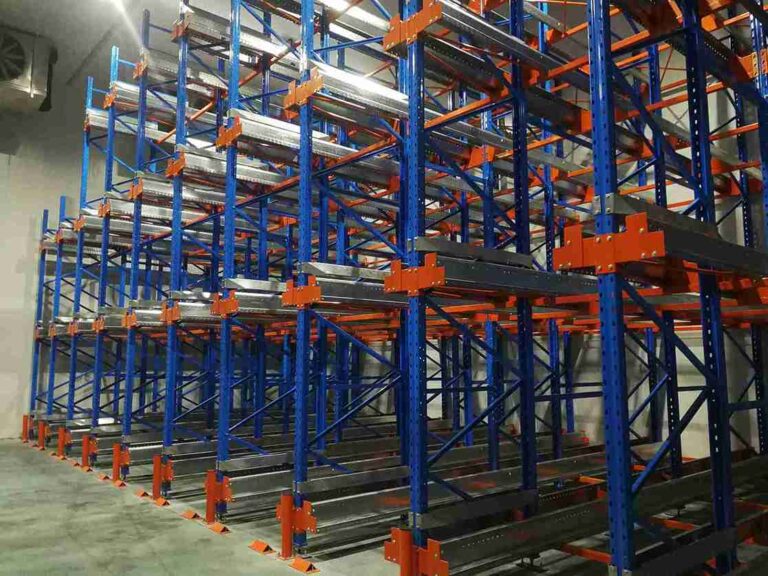
3. The Storage Rack Framework: Engineered for Maximum Density
Toisin kuin perinteiset telineet.shuttle rack components are designed specifically for automated operation, requiring unique structural considerations.
Structural Engineering Principles
The rack framework must account for:
- Dynamic loads from moving shuttles
- Impact forces during pallet exchanges
- Seismic activity in earthquake-prone regions
Material Science Breakthroughs
Leading manufacturers now utilize:
- High-strength boron steel for critical load beams
- Nanocoated surfaces that resist abrasion
- Modular connectors allowing rapid reconfiguration
4. The Control System: Brain of the Operation
Modernishuttle rack components integrate multiple control layers for optimal performance.
Hierarchy of Control
- Onboard shuttle computer – handles immediate navigation
- Zone controller – manages a bank of shuttles
- Enterprise WMS integration – coordinates system-wide operations
Key Control Features
- Adaptive routing algorithms that minimize empty runs
- Peak power management to balance electrical loads
- Collision avoidance protocols using LiDAR scanning
5. Loading Interfaces: Where Human and Machine Meet
The transfer stations represent crucial shuttle rack components that ensure smooth handoffs between automated and manual operations.
Ergonomic Design Considerations
- Height-adjustable platforms (650mm-1200mm range)
- Anti-slip surfaces with tactile indicators
- Integrated weight verification systems
Safety Innovations
- AI-powered cameras detect unsafe loading practices
- Automatic pallet orientation correction
- Overload prevention with real-time feedback
6. Power Infrastructure: Keeping the System Running
Reliable power delivery ranks among the most critical shuttle rack components, especially in 24/7 operations.
Emerging Power Technologies
- Inductive charging at transfer stations
- Ultracapacitor arrays for rapid energy storage
- Solar-assisted charging in suitable climates
Battery Management Best Practices
- Condition monitoring tracks cell degradation
- Opportunity charging during idle periods
- Battery rotation systems extend overall lifespan
7. Safety Systems: Protecting People and Product
Safety shuttle rack components have evolved from basic emergency stops to comprehensive protection suites.
Multi-Layer Safety Architecture
- Physical barriers with interlocked access gates
- Proximity sensors creating virtual safety zones
- Ennakoiva analytiikka identifying potential hazards
Regulatory Compliance
All shuttle rack components must meet:
- EN 15635 for storage equipment safety
- ISO 3691-4 for industrial truck requirements
- Local workplace safety regulations
8. Ancillary Components: The Supporting Cast
Several often-overlooked shuttle rack components contribute significantly to system performance.
Critical Support Elements
- Pallet position sensors ensuring proper alignment
- Guide rollers for smooth pallet transfer
- Dust suppression systems in harsh environments
Innovative Add-Ons
- Automated pallet labeling stations
- Integrated dimensioning systems
- Condition monitoring for cold storage
9. System Integration: Making Components Work Together
The true power of shuttle rack components emerges when they function as a coordinated system.
Integration Challenges and Solutions
| Challenge | Solution |
|---|---|
| Communication protocols | Unified IoT gateway |
| Data synchronization | Edge computing nodes |
| Legacy system compatibility | Modular adapter kits |
Performance Optimization Techniques
- Digital twin simulations before implementation
- Continuous calibration using machine learning
- Predictive traffic routing algorithms
10. Future Trends in Shuttle Rack Technology
The next generation of shuttle rack components will feature:
- Autonomous mobile robot integration
- Blockchain-enabled inventory tracking
- Self-healing materials for reduced maintenance
Conclusion: Building Your Optimal Shuttle Rack System
Understanding these shuttle rack components empowers businesses to:
- Specify systems matching their operational needs
- Evaluate vendors based on component quality
- Plan upgrades as technology advances
For operations requiring maximum storage density with efficient material handling, investing in quality shuttle rack components delivers measurable ROI through:
- 50-70% better space utilization
- 30-50% labor cost reduction
- 99.9% inventaarion tarkkuus
Frequently Asked Questions
1. How do shuttle rack components handle temperature extremes?
Premium shuttle rack componentsominaisuus:
- Cold-rated lubricants (-30°C to 50°C operation)
- Thermal compensation in guidance systems
- Condensation-resistant electronics
2. What maintenance do shuttle rack components require?
A proper maintenance program includes:
- Daily: Visual inspections and sensor checks
- Weekly: Rail cleaning and lubrication
- Monthly: Full system diagnostics
3. Can shuttle rack components interface with existing WMS?
Most modern systems offer:
- Standard API connections
- Custom middleware development
- Legacy system emulation
4. How long does shuttle rack component installation take?
Timelines vary based on:
- System complexity (2-12 weeks)
- Site preparation requirements
- Commissioning and testing
5. What ROI period should businesses expect?
Typical payback periods range:
- 18-36 months for high-throughput operations
- 24-48 months for seasonal businesses