📐 "Ensimmäiset 50 yrityskyselyä saavat mukautetun 3D-varaston suunnittelun" Suunnitelma













The Strategic Imperative: Leveraging Pallet Flow Racking for Competitive Advantage in High-Growth Markets
For logistics directors and operations managers across Southeast Asia, the Middle East, Africa, and Latin America, the pressure to scale operations is unrelenting. This deep-dive analysis positions kuormalavahyllystö not as a mere storage option, but as a fundamental strategic lever for achieving scalable, low-CAPEX automation. The article systematically explores how a gravity-based pallet flow racking system serves as the indispensable backbone for an evolutionary automation journey.
It provides a granular examination of ROI calculation tailored to emerging market economies, detailed engineering adaptations for harsh climatic and infrastructural conditions, and a phased integration blueprint for incorporating AGVs and unmanned forklifts. Beyond technical specifications, the focus rests on building a resilient, data-ready logistics asset that directly translates into market leadership and superior profit margins in competitive landscapes.

The Economic Reality of Growth: Scaling Logistics Without Capital Paralysis
In the bustling ports of Indonesia, the sprawling industrial parks of Saudi Arabia, and the manufacturing hubs of Mexico, a common narrative unfolds. Business growth, while desired, exposes critical vulnerabilities in manual warehouse operations: aisle congestion cripples throughput, manual picking errors inflate costs, and inefficient space utilization forces premature capital expenditure on new facilities. The allure of fully automated, lights-out warehouses is tempered by daunting price tags and complex integration risks. The strategic answer, increasingly adopted by savvy operators, is kuormalavahyllystö.
This technology embodies the principle of targeted automation. It automates the most resource-intensive process—physical pallet movement within the storage medium—using the constant, zero-energy force of gravity. By transforming static storage into a dynamic, high-density flow-through system, kuormalavahyllystö directly attacks the core cost drivers of space, labor, and inventory inaccuracies. It is the pragmatic first major step into automation, designed to pay for itself and generate the capital for further technological investment.
The Operational Anatomy of a High-Performance Pallet Flow Racking System
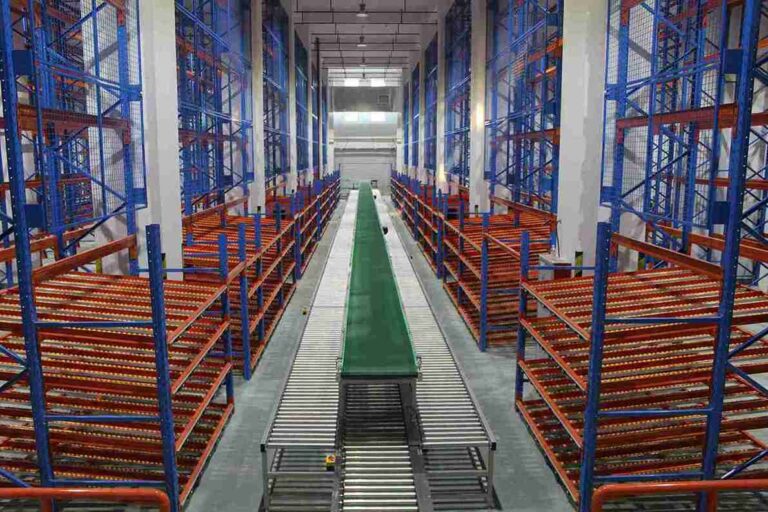
Understanding the engineered sophistication within a kuormalavahyllystö installation is key to appreciating its reliability and return on investment. Far from a simple inclined plane, a modern pallet flow racking system is a precision-assembled ecosystem of components, each playing a critical role in ensuring uninterrupted, safe operation 24 hours a day.
H3: Core Components Engineered for Durability and Precision
The longevity and smooth operation of any kuormalavahyllystö installation hinge on the quality and specification of its core parts. Industry-leading systems are defined by:
High-Capacity, Low-Friction Rollers/Wheels: These are the arteries of the system. Manufactured from hardened, case-hardened steel or composite polymers with high load ratings, they are selected based on pallet weight, base type (wooden block, stringer, plastic), and ambient conditions. In coastal regions of Vietnam or the Philippines, corrosion-resistant coatings or materials are non-negotiable for the kuormalavahyllystö components.
Precision Gradient and Braking Modules: The controlled flow is managed by a calibrated incline (typically 1-3%) and a series of mechanical or hydraulic speed controllers and brakes. These devices prevent pallets from gaining excessive momentum and impacting the end stop with damaging force. The ability to fine-tune these for varying load weights—from dense automotive parts in Thailand to lighter packaged foods in Nigeria—is what separates a functional kuormalavahyllystö lane from an exceptional one.
Robust Lane Dividers and Guide Rails: Constructed from heavy-gauge steel, these components ensure pallets remain perfectly aligned throughout their journey. This prevents jamming, which is the primary cause of operational disruption in a kuormalavahyllystö system. Their design must accommodate slight pallet imperfections without compromising guidance.
Automatic Load & Unload Mechanisms: At the rear (load) end, a pallet entry gate ensures only one unit enters a lane at a time. At the front (pick) face, a heavy-duty pallet stop secures the leading pallet until intentionally released by an operator or an automated retrieval machine. These features are vital for safety and process integrity within the kuormalavahyllystö alue.
2: The Multifaceted ROI: Quantifying the Impact of Pallet Flow Racking
Justifying the investment in kuormalavahyllystö requires a holistic view of its financial impact. The benefits cascade across real estate, labor, inventory, and energy budgets.
3: Direct Financial Metrics: From Density Gains to Labor Productivity
A well-configured kuormalavahyllystö system typically increases storage density within a given footprint by 60% to 80% compared to traditional selective racking. This directly defers or eliminates the need for expensive warehouse expansion or relocation—a critical factor in cities like Manila or Dubai where industrial lease rates are climbing. Furthermore, the kuormalavahyllystö design creates dedicated, ergonomic pick faces.
Studies and field data consistently show a 30-50% reduction in order picking time, as workers no longer travel, search, or wait for forklifts to retrieve pallets. This labor productivity gain either reduces direct payroll costs per unit handled or allows the existing team to manage significantly higher volumes, a key advantage during seasonal peaks in markets like Brazil or South Africa.
3: Intangible Yet Critical Advantages: Accuracy, Safety, and Scalability
The enforced First-In, First-Out (FIFO) discipline of a kuormalavahyllystö system is invaluable for industries with expiry dates or batch-tracking requirements, such as food, pharmaceuticals, and chemicals prevalent across all target markets. It eliminates costly errors of shipping obsolete stock. Safety improves as forklift traffic is segregated; replenishment occurs at the rear of the kuormalavahyllystö structure, while picking is done at the safe, ground-level front.
Perhaps most importantly, a kuormalavahyllystö installation provides a scalable framework. Additional modules can be integrated, and its predictable interface makes it the ideal foundation for later automation, protecting the initial investment from obsolescence.
2: The Integration Nexus: Pallet Flow Racking as the Foundation for AGV and Unmanned Forklift Networks
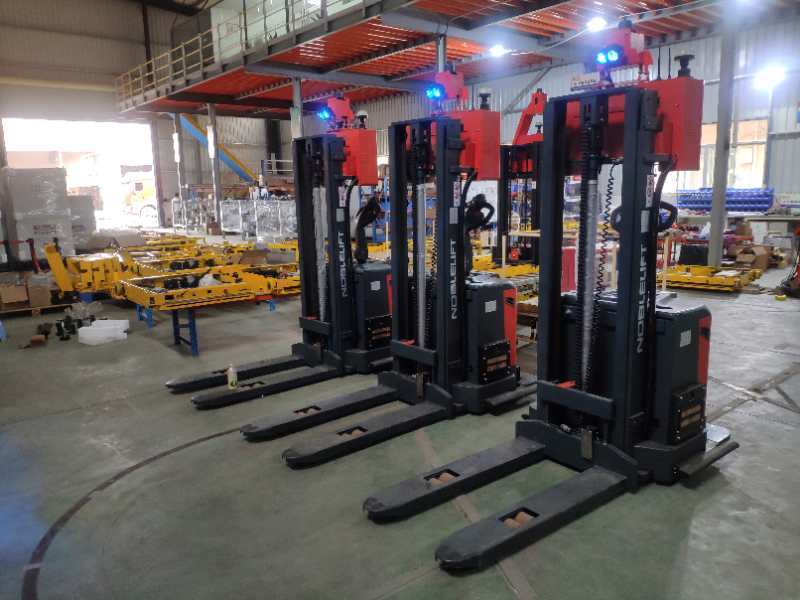
The true strategic power of kuormalavahyllystö is revealed when it becomes the fixed node in a mobile automation network. It provides the perfect, predictable destination and source point for automated guided vehicles (AGVs) and unmanned forklifts, enabling a phased, scalable automation strategy.
3: Creating a Machine-Readable Storage Environment
A kuormalavahyllystö system brings order and predictability. Each lane has a fixed address. This allows Warehouse Management System (WMS) software to command an AGV or unmanned forklift to “retrieve pallet from Lane A4” or “deposit pallet to Lane B12” with absolute certainty. The consistent pick face height and location eliminate complex machine vision challenges required in more chaotic environments. This seamless handoff between the dynamic transport layer (AGVs) and the high-density storage layer (kuormalavahyllystö) is the hallmark of a modern, efficient warehouse.
3: Phased Implementation: From Manual to Hybrid to Highly Automated
This integration allows for a low-risk, capital-sensitive evolution. A company can first install the kuormalavahyllystö system and operate it with traditional forklifts, immediately reaping the density and picking benefits. Once operations are stable and the ROI begins to materialize, a pilot AGV fleet can be introduced to handle the replenishment cycle from receiving to the rear of the kuormalavahyllystö system. This pilot proves the concept, trains staff, and builds confidence before a broader rollout. This stepwise approach, centered on the kuormalavahyllystö infrastructure, makes advanced automation financially and operationally accessible for firms in Kazakhstan, Colombia, or Egypt.
2: Engineering for Extreme Environments: Ensuring Pallet Flow Racking Reliability Globally
A kuormalavahyllystö system destined for a climate-controlled German warehouse is a different product from one engineered for the variable conditions of emerging markets. Reliability is not a coincidence; it is the result of deliberate, context-specific engineering.
4: Defeating Humidity, Dust, and Corrosion
In the tropical climates of Southeast Asia and coastal Africa, humidity and salt air are relentless. A kuormalavahyllystö system here requires superior corrosion protection. This goes beyond standard paint. Specifications must include hot-dip galvanized structural frames, stainless steel or zinc-nickel plated fasteners for critical joints, and rollers with sealed bearings. In arid, dusty regions of the Middle East and Central Asia, component seals and regular cleaning protocols are emphasized in the kuormalavahyllystö design to prevent abrasive dust from degrading moving parts.
4: Structural Integrity for Seismic Zones and Variable Subfloors
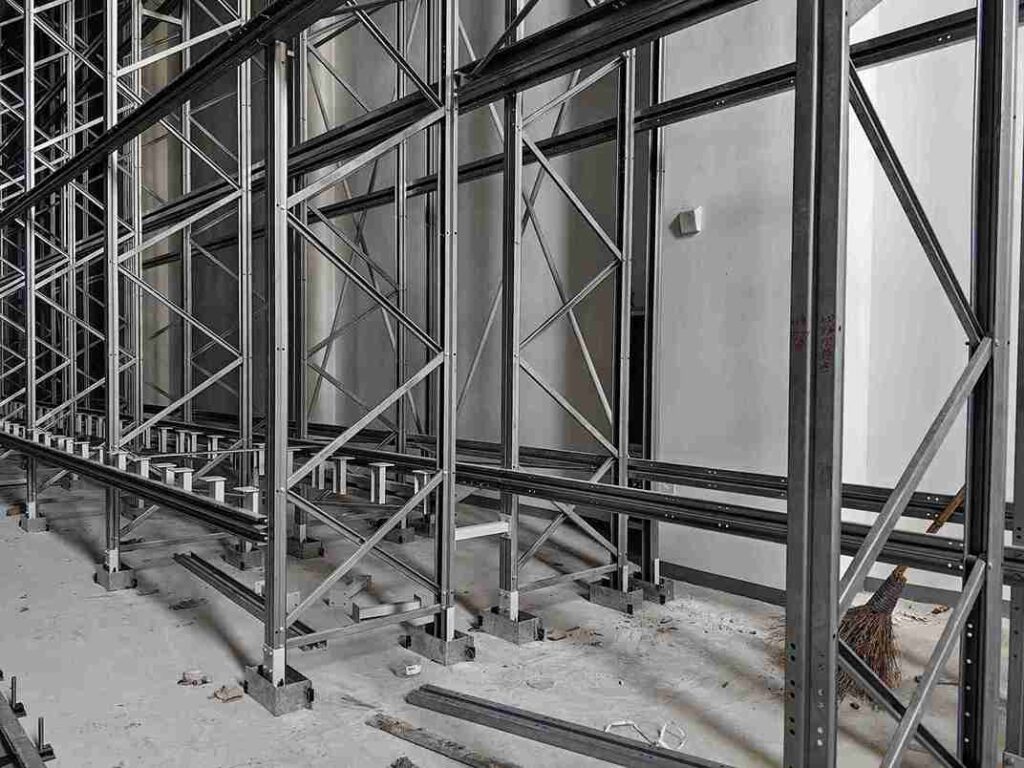
Many target regions, from parts of Latin America to Indonesia, lie in seismic zones. The kuormalavahyllystö design must incorporate seismic-rated upright frames with specific bracing patterns and load capacities certified to local building codes. Equally critical is floor tolerance. The precise incline of a kuormalavahyllystö lane is paramount. Professional installers will conduct a floor flatness survey using laser levels before installation, employing adjustable baseplates and leveling shims to create a perfectly uniform foundation. Ignoring this step is a leading cause of poor performance in a kuormalavahyllystö asennus.
2: The Implementation Blueprint: A Collaborative, Data-Driven Deployment Process
Successful deployment of a kuormalavahyllystö system is a consultancy-led process, not a simple transaction. It follows a meticulous sequence to ensure the solution fits the unique business rhythm.
3: Phase 1: Holistic Process Audit and Digital Twin Simulation
The journey begins with a deep analysis of SKU data: dimensions, weight, turnover velocity (ABC classification), and affinity groupings. Using this data, specialists create a digital simulation model of the proposed kuormalavahyllystö layout. This “digital twin” predicts throughput capacity, identifies potential bottlenecks at the pick face, and optimizes lane depth long before installation. This phase mitigates risk and sets accurate expectations.
3: Phase 2: Hybrid Master Planning – The Right Storage for the Right SKU
Rarely is a 100% kuormalavahyllystö warehouse the optimal solution. Expert design involves creating a hybrid storage ecosystem. High-velocity, FIFO-critical SKUs are assigned to the kuormalavahyllystö lanes. Medium-slow movers go into adjacent selective racking. Bulky or irregular items might be placed in drive-in racks. This master plan, centered around the kuormalavahyllystö core, ensures each product is stored in the most cost-effective and operationally efficient medium.
3: Phase 3: Staged Physical Deployment and Knowledge Transfer
Installation is scheduled in phases to minimize operational disruption. Commissioning involves load testing with actual products and intensive operator training. The training focuses not just on how to pick from the kuormalavahyllystö system, but crucially on how to replenish it correctly—understanding load weight distribution, lane dedication, and gate operation—as improper loading is a primary source of issues.
2: The Partner Ecosystem: Why Expertise Trumps Component Supply
In markets where specialized technical support may be scarce, the choice of supplier for a kuormalavahyllystö system is a long-term strategic decision. The partner must provide more than steel and rollers; they must offer deep application engineering, local code compliance knowledge, and lifecycle support. A true partner maintains a stock of critical spare parts within the region and has trained local technicians, ensuring that the kuormalavahyllystö system remains a productive asset, not a stranded liability. Their expertise should also encompass the broader ecosystem, advising on how the kuormalavahyllystö system will interface with future conveyor sortation systems or automated vertical lift modules.
2: Future-Proofing the Investment: Data, Connectivity, and Industry 4.0
Moderni kuormalavahyllystö system is a data-generation platform. Sensors can monitor lane flow rates, while the WMS tracks inventory velocity per lane. This data feeds into predictive analytics: identifying SKUs with slowing turnover that might need to be relocated from the kuormalavahyllystö lanes, or triggering automatic replenishment requests when a lane hits a minimum threshold. This connectivity transforms the kuormalavahyllystö infrastructure from a passive storage tool into an intelligent, responsive node in a smart supply network, aligning perfectly with the digitalization goals of progressive companies in all emerging markets.
2: Conclusion: Building an Unassailable Logistics Foundation
In the fast-moving commercial landscapes of the world’s most promising economies, logistics efficiency is a primary competitive weapon. Hesitation in modernizing storage infrastructure cedes advantage to more agile competitors. Lavavirtatelineet stands as the most strategically sound entry point into warehouse automation—a high-impact, proven technology with a clear and rapid payback period. It is the robust, intelligent, and integrable backbone upon which resilient and scalable logistics operations are built. By adopting a meticulously planned, partner-driven approach to implementing kuormalavahyllystö, businesses are not merely purchasing equipment; they are capitalizing their operations with an asset designed to drive density, accelerate throughput, ensure accuracy, and seamlessly evolve alongside their growth ambitions for the next decade and beyond.
Usein kysytyt kysymykset (FAQ)
1: For a mixed SKU warehouse with vastly different pallet turnover rates, how is lane depth within the pallet flow racking system determined to avoid wasting space or causing frequent stock-outs?
A: Lane depth optimization is the cornerstone of an efficient kuormalavahyllystö design. It is determined by a detailed analysis of each SKU’s historical and forecasted demand, pallet footprint, and required safety stock levels. Fast-moving SKUs (A-items) are assigned to deeper lanes (e.g., 10-15 pallets deep) within the kuormalavahyllystö system to maximize density and minimize replenishment frequency. Medium-velocity SKUs occupy shallower lanes. The goal is to balance the “goldilocks” zone: deep enough to ensure pickers are not waiting for replenishment, but not so deep that inventory sits stagnant for extended periods, tying up capital. Advanced design software models this to recommend optimal lane depths.
2: What happens in a pallet flow racking system if a pallet becomes damaged or collapses during its travel down the lane, causing a major blockage?
A: While rare with proper pallet quality control, blockages are a critical contingency. High-quality kuormalavahyllystö designs incorporate “rescue gates” or access panels at strategic points along the lane. In the event of a collapse, trained personnel can safely access the affected section from the side of the kuormalavahyllystö structure to clear the jam without having to unload the entire lane from the front—a time-consuming process. This design feature is a mark of a well-engineered kuormalavahyllystö solution focused on minimizing operational downtime.
3: How does the weight of a pallet impact the design and component selection for a pallet flow racking system, especially when handling very light or exceptionally heavy loads?
A: Pallet weight is a primary design variable. For standard loads (e.g., 500-1500 kg), standard heavy-duty rollers are used. For very light loads (under 300 kg), a different roller pitch and sometimes a steeper incline are specified within the kuormalavahyllystö lane to ensure consistent gravitational movement. For ultra-heavy loads (e.g., 2,500 kg+), such as those in metal fabrication, the kuormalavahyllystö system requires reinforced rollers with higher load ratings, stronger lane dividers, and more robust braking systems. The structural upright frames for the entire kuormalavahyllystö bay must also be rated for the cumulative load. A professional supplier will always conduct a detailed load analysis.
4: Can a pallet flow racking system be successfully retrofitted into an existing warehouse with low ceiling heights, or is it only suitable for new, high-clearance buildings?
A: Lavavirtatelineet is exceptionally versatile for low-clearance buildings, often found in older industrial areas of emerging market cities. Because it provides high density without the need for tall aisles for forklift maneuvering (as required in selective racking), it can make superb use of cubic space in warehouses with ceilings as low as 6-7 meters. The key is designing the kuormalavahyllystö system with an appropriate number of storage levels to fit within the vertical space while maintaining safe working clearances. It can be a transformative solution for maximizing capacity in constrained existing facilities.
5: In regions with unstable power grids, what are the risks to a pallet flow racking operation, and are there any mitigation strategies?
A: A significant advantage of a kuormalavahyllystö system is its inherent resilience to power outages. Since the core storage and retrieval mechanism is gravity-powered, picking and replenishment can continue manually during a power failure, unlike fully electrified AS/RS or conveyor systems. The only potential impact is if the operation integrates AGVs for replenishment, which would be paused. However, the static kuormalavahyllystö infrastructure remains fully accessible and functional. This makes a kuormalavahyllystö-centric warehouse design a strategically robust choice for locations with less reliable infrastructure, ensuring business continuity.
Jos tarvitset täydellisiä CAD-piirustuksia ja tarjouksia varastohyllyistä, ota yhteyttä. Voimme tarjota sinulle maksuttomia varastohyllyjen suunnittelupalveluja ja tarjouksia. Sähköpostiosoitteemme on: jili@geelyracks.com