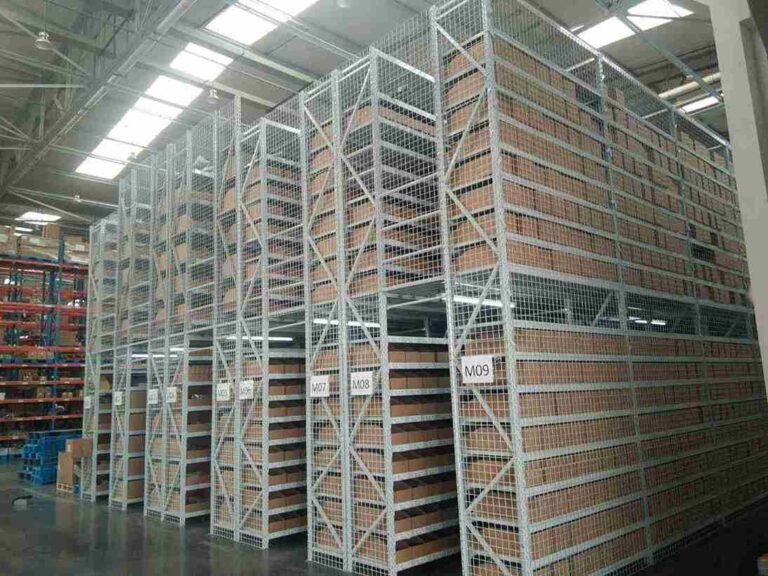
📐 "La unuaj 50 entreprenaj demandoj ricevas personigitan dezajnon de 3D-stokejo" Plano
















Mastering Manufacturing Efficiency: The Ultimate Guide to Custom VNA Racking System Design & Automation for Africa & Latin America
This definitive resource explores the strategic implementation of custom VNA racking system design as the cornerstone for revolutionizing manufacturing logistics in high-growth regions. For operations directors and plant managers across Africa and Latin America, this guide details how a meticulously engineered VNA racking system design, seamlessly integrated with automated material handling, transcends mere storage to become a dynamic engine for inventory flow optimization, radical cost reduction, and unshakeable supply chain resilience.
Moving beyond generic theory, it provides a actionable blueprint for a VNA racking system design that accounts for regional infrastructure, diverse pallet standards, and scalable growth, ultimately delivering a formidable competitive advantage.
Introduction: The Manufacturing Imperative in Emerging Markets
The industrial landscape across Africa and Latin America is undergoing a profound metamorphosis. As global supply chains diversify and domestic markets surge, manufacturing facilities face a dual mandate: exponentially increase output while ruthlessly optimizing operational costs. Often, the most significant bottleneck—and the greatest untapped opportunity—lies within the four walls of the warehouse. Outdated, wide-aisle storage configurations, reliant on manual, high-traffic forklift operations, are no longer merely inefficient; they are active barriers to profitability and growth. Congestion, product damage, labor-intensive processes, and wasted vertical space silently erode margins every single day.
This reality necessitates a fundamental re-engineering of storage philosophy. The transition to a custom VNA racking system design represents a strategic leap from a passive storage area to an active, intelligent logistics hub. For a plant in Monterrey managing automotive components or a facility in Lagos processing agricultural goods, the decision to invest in a VNA racking system design is a decision to future-proof the entire operation.
It is an architectural project for inventory, requiring a partner who understands that a successful VNA racking system design is not a catalog product, but a bespoke solution born from deep analysis of unique operational DNA. The following guide articulates why a sophisticated, regionally-attuned VNA racking system design is the critical foundation for manufacturing excellence, detailing the kiel, the kial, and the measurable return.
Deconstructing VNA: The Anatomy of a High-Density Storage Ecosystem
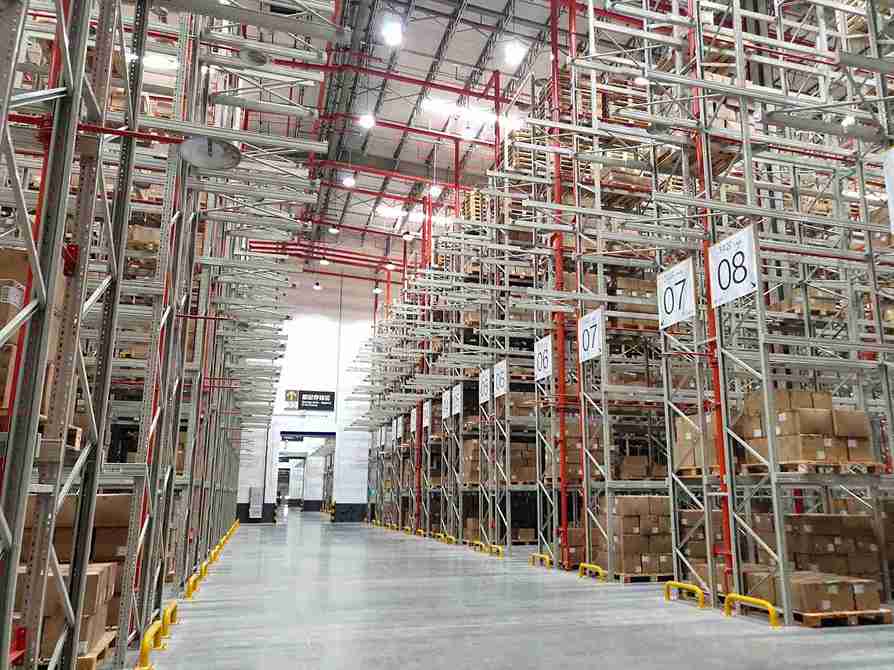
A common misconception reduces VNA racking system design to simply installing racks closer together. This is a dangerous oversimplification. A true, high-performance VNA racking system design is an interdependent symphony of precision-engineered components, advanced technology, and intelligent software. The physical racking structure is just the skeleton.
The Structural Core: Engineered for Precision and Load.
The racking itself in a professional VNA racking system design utilizes heavy-duty roll-formed or structural steel uprights. These are designed to withstand immense compressive loads at significant heights—often exceeding 15 meters in modern facilities. Beams are meticulously leveled and locked to tolerances of millimeters, as the entire system’s integrity depends on this precision. The VNA racking system design must account for specific load weights, dimensions, and turnover rates for every SKU, determining beam levels, back-to-back configurations, and necessary safety accessories like wire mesh decking or pallet supports.
The Guidance Infrastructure: The Invisible Highway.
The “very narrow aisle” (typically 1.5 to 1.8 meters) is only viable due to guidance technology. A foundational element of the VNA racking system design is specifying this system. Wire guidance, involving a low-voltage wire embedded in the concrete floor, is a robust and cost-effective choice. Rail guidance, with physical steel channels, offers extreme durability for high-traffic environments. For ultimate flexibility in a phased automation approach, the VNA racking system design may incorporate inertial or optical guidance technologies, allowing vehicles to operate without physical floor guides. The choice is strategic and has lasting implications for flexibility and maintenance.
The Handling Equipment: Manual, Semi-Automated, or Robotic.
The racking and guidance system dictates the type of handler. A VNA racking system design for a facility introducing the technology might specify specialized man-up turret trucks aŭ articulated forklifts, where the operator ascends with the load. The next evolutionary step in a VNA racking system design is the integration of automated guided vehicles (AGVs) por horizontala transporto kaj, kio estas esenca, plene Aŭtomataj VNA-stokaj/rekuperaj (S/R) maŝinoj kiuj funkcias robote en la koridoroj. La VNA racking system design devas esti perfekte sinkronigita kun la kinematiko, levaltecoj, kaj ŝarĝmanipulaj aparatoj de ĉi tiu ekipaĵo.
La Cifereca Nerva Sistemo: Stokada Administrada Programaro (WMS).
La fizika sistemo estas inercieca sen inteligenteco. Kompleta VNA racking system design ĉiam inkluzivas la integrigan strategion por WMS kapabla administri alt-densecan stokadlogikon. Ĉi tiu programaro direktas ĉiun deponadon kaj ĉiu prenadon, optimumigas la lokigon laŭ rapideco, provizas realtempan inventarvideblecon, kaj interfaciĝas rekte kun la aŭtomataj manipuliloj. La VNA racking system design Procezo difinas ĉi tiujn datumfluojn kaj interfacajn punktojn ekde la komenco.
La kritika malsukceso de normigitaj VNA-proponoj kaj la imperativo de personigo
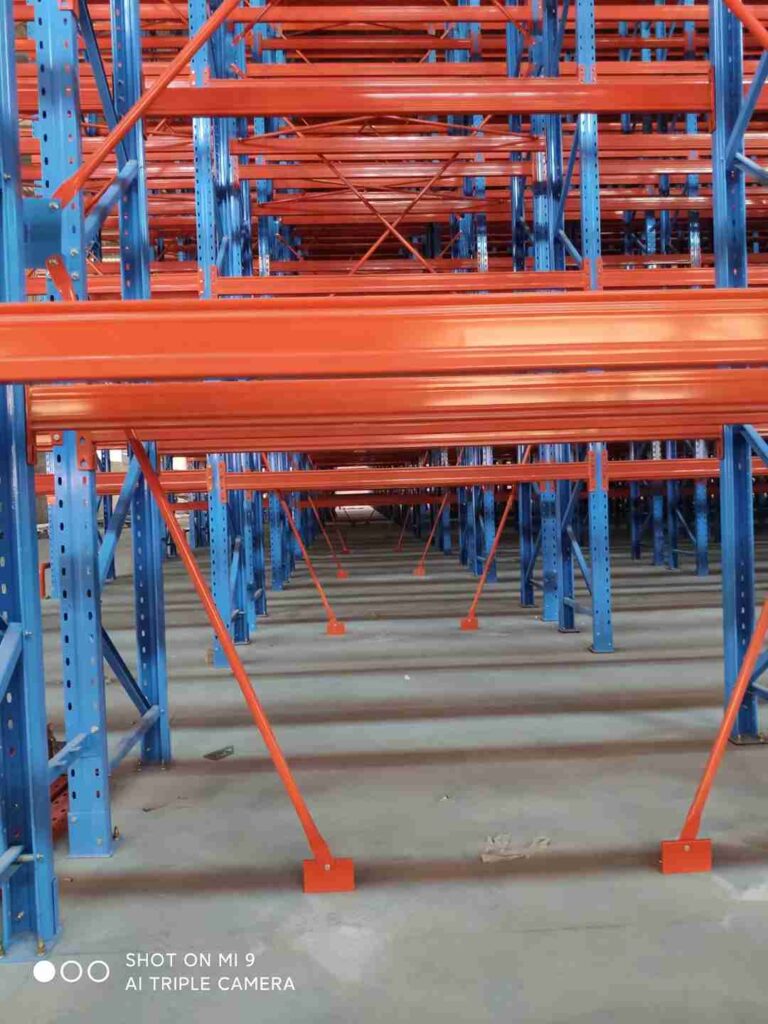
La merkato estas plena je provizantoj ofertantaj “normajn” VNA-aranĝojn. Por kompleksa fabrikada medio, ĉi tiu aliro estas fundamentale mankhava. Fabrika inventaro estas heterogena: krudmaterialoj (ofte pezaj kaj uniformaj), prilaborataĵoj (WIP) en diversaj stadioj, rezervaj partoj por prizorgado, kaj finitaj varoj de ĉiuj grandecoj. Unu-granda-por-ĉiuj VNA racking system design devigos ĉi tiun diversecon en unuforman kradon, kreante tujajn malŝparojn en la uzado de spaco, la manipulada rapido kaj la sekureco.
Aŭtenta custom VNA racking system design La procezo komenciĝas per datumkolektado kaj analizo je krimmedicina nivelo. Fakuloj profilos ĉiun SKU laŭ dimensioj, pezo, turniĝrapideco (uzante ABC-analizon) kaj ĝia loko en la produktada ciklo. Ili analizos la padronojn de paledfluo de la ricevado, tra la produktada preparstadio, ĝis la forsendo. Ĉi tiuj datumoj nutras sofistikan simuladan modeladon.
La rezulto estas a VNA racking system design kiu estas zonigita kaj optimumigita: rapide moviĝantaj ‘A’-artikoloj estas poziciigitaj en la ‘ora zono’ ĉe ergonomiaj altoj; malpli rapide moviĝantaj ‘C’-artikoloj estas stokitaj pli alte; volumaj krudmaterialoj povas okupi dediĉitan alt-stokan blokon; kaj areoj por prilaborataj partoj estas desegnitaj por efika preparigo. Tiu grado de personigo estas tio, kio transformas a VNA racking system design de simpla stokada aranĝo en dinamikan ilon por inventory flow optimization.
Orkestrado de fluo: Kiel laŭmenda VNA-dezajno sinkronigas kun fabrikadcikloj
En fabrikplanto, la stoko ne estas statika; ĝi estas en konstanta, multidirekta movado. Supera VNA racking system design funkcias kiel sofistika trafik-administrada sistemo por ĉi tiu fluo. La celo estas minimumigi la vojaĝtempon sen aldonita valoro kaj la tuŝpunktojn por ambaŭ materialoj kaj operaciistoj.
Mapado de la materia vojaĝo: La unua fazo de profesiulo VNA racking system design inkluzivas krei detalan valorfluan mapon de ĉiuj materialaj movadoj. Ĉi tiu mapo identigas ĉiun tuŝpunkton, de la malŝarĝa doko por ŝtala bobenaro aŭ plasta rezino, ĝis ĝia ĉefa stokloko, ĝis ĝia antaŭvoka punkto apud premo aŭ miksilo, ĝis la stokado de finitaj komponantoj kaj ilia fina forsendo. La VNA racking system design Estas tiam evoluigita por pliefikigi ĉi tiun mapon, lokante la plej uzatajn aĵojn plej proksime al ilia konsumloko.
Ebligante krucdokadon kaj sekvadigon: Altnivela VNA racking system design povas enkorpigi dediĉitajn zonojn por rekta transŝarĝado de rapide moviĝantaj materialoj al la produktado, tute preterpasante profundan stokadon. Por nutrado de la muntolinio, la VNA racking system design povas faciligi precizan sekvencadon, kie kompletoj da partoj estas prenataj laŭ la munta ordo kaj liverataj rekte al la linioflanko per AGV-oj, procezo neebla per kaosa, larĝkoridora stokado.
La Konkretaj Metrikoj de Optimumigita Fluo: La efiko de fluo-centra VNA racking system design estas kvantigebla. Instalaĵoj tipe spertas 50–70 % redukton de internaj vojaĝdistancoj por ĉareloj, kio rekte tradukiĝas al pli malaltaj energikostoj, reduktita ekipaĵa eluziĝo kaj pli rapidaj mendocikloj. La produktiveco de kolektado povas pliiĝi je 30 % aŭ pli simple per forigo de malŝparema serĉado kaj longaj transportvojoj. Jen la potenco de a VNA racking system design kiu estas projektita ĉirkaŭ procezo, ne nur paledoj.
Aŭtomatigo kiel la logika etendo: AGV-oj kaj robotaj ĉareloj en la VNA-kadro
La disponeblo de laboro, sekurecaj normoj kaj la postulo pri 24/7 operacia preteco igas aŭtomatigon ĉiam pli alloga, se ne esenca, komponanto de moderna fabrikado. Precizeco VNA racking system design Provizas la perfektan, strukturitan medion por ke aŭtomatigo prosperu.
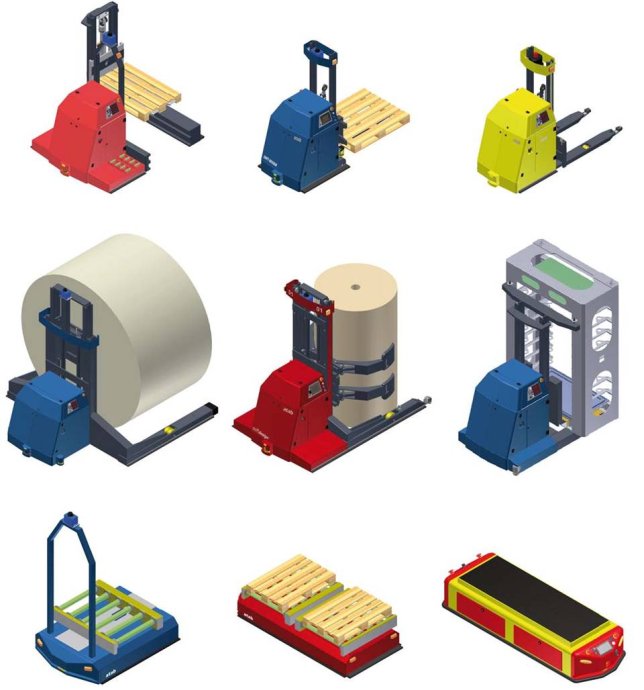
AGV-oj: La horizontala transporta ligo. En aŭtomatigita VNA racking system design, Aŭtomataj Gvidataj Veturiloj (AGVoj) ofte servas kiel la cirkulada sistemo. Ili transportas ŝarĝojn de ricevejoj al la enirpunktoj de la VNA-stokkoridoroj, kaj de la elirpunktoj de tiuj koridoroj rekte al la produktad-preparado aŭ al la ekspedado. La VNA racking system design Devas precize difini lokitajn preno- kaj livero-punktojn (P&D), certigante senjuntan transdonon inter la aŭtomataj koridoraj maŝinoj kaj la horizontala transporta reto. La etaĝplano kaj trafikliniroj estas integrala parto de la tuta VNA racking system design.
Robotaj VNA-ĉareloj: La aŭtonomaj koridoraj majstroj. La pinto de integriĝo estas la uzo de plene aŭtomatigitaj, senŝoforaj VNA S/R-maŝinoj. Tiuj robotoj ricevas instrukciojn rekte de la WMS, eniras la mallarĝan koridoron, prenas aŭ metas paledon kun milimetra precizeco, kaj revenas al la P&D-punkto. La VNA racking system design ĉar tia sistemo estas escepte rigora, kun absolutaj toleremoj pri breta aliniĝo, etaĝa ebeneco kaj poziciigaj sensiloj. Tio reprezentas la plej densan, efikan kaj sekuran formon de VNA racking system design.
La kontrol-tavolo: Stok-ekzekuta sistemo (WES). Kunordigi ĉi tiun simfonion de bretoj, robotoj kaj transportiloj postulas inteligentan dispeĉiston. WES situas super la WMS kaj la sistemoj por ekipaĵa kontrolo, farante realtempajn decidojn por optimumigi la trairejon. Ĝi ekvilibrigas taskojn inter ĉiuj rimedoj, administras atendovicojn kaj dinamike respondas al prioritatoj. La specifado kaj integriĝo de ĉi tiu softvara tavolo estas kritika, fina komponanto de plene realigita aŭtomatigita sistemo. VNA racking system design.
Dezajno por la realo: Regiona adaptiĝo en Afriko kaj Latin-Ameriko
A VNA racking system design Perfekciigita en kontrolita eŭropa medio ne povas esti rekte transplantita al planto en Kenjo aŭ Kolombio sen adaptiĝo. Sukceso dependas de dezajna filozofio, kiu agnoskas kaj projektas solvojn por regionaj realaĵoj.
Adaptado al infrastrukturaj nuancoj:
Kvalito kaj Kosto de Elektro: Neregula tensio kaj oftaj interrompoj povas paralizi senteman aŭtomatigon. Rezistema VNA racking system design for these markets prioritizes equipment with robust power conditioning, specifies high-efficiency motors, and incorporates battery systems with sufficient backup capacity. The VNA racking system design may also advocate for a hybrid approach, using automated S/R machines but with manual or semi-automated horizontal transport as a buffer against grid instability.
Floor Conditions & Building Standards: Existing slabs may not meet the stringent flatness requirements. A responsible VNA racking system design project always begins with a comprehensive civil survey. The design package then includes detailed specifications for floor remediation—whether grinding, topping, or reinforcement—as a non-negotiable prerequisite, ensuring the longevity and performance of the system.
Navigating the Skills & Maintenance Landscape:
Building Local Expertise: La plej sofistika VNA racking system design will fail if local technicians cannot maintain it. The design process must prioritize reliability and serviceability. This means selecting components with global spare parts networks, designing with modularity for easy replacement, and, most importantly, embedding a comprehensive training and knowledge-transfer program into the project scope. A partner’s commitment to building local capability is as important as their engineering skill.
Accommodating Operational Diversity:
Pallet & Load Variability: Unlike standardized markets, a plant may contend with a mix of CHEP pools, local wooden pallets, slip sheets, and even stillages or custom containers. A professional VNA racking system design conducts a full pallet audit and is engineered for this flexibility. Adjustable beam levels, custom compartment sizes, and adaptable handling attachments are all specified within the VNA racking system design to manage diversity without sacrificing density.
Scalability for Growth: La VNA racking system design must be inherently scalable. This means planning for clear expansion paths: leaving space for additional racking bays, designing software licenses for more users and transactions, and ensuring automation controllers can handle additional vehicles. A forward-looking VNA racking system design is an investment that grows with the business.
The Blueprint for Success: A Phased Approach to VNA Implementation
Embarking on a VNA racking system design and automation project is a significant undertaking. A structured, phased methodology de-risks the process and ensures alignment with business objectives.
Phase 1: Discovery & Data-Driven Modeling (The Foundation). This is the most critical phase. Consultants and engineers immerse themselves in the operation, gathering data on inventory, flows, pain points, and growth plans. Using tools like CAD and warehouse simulation software, they create multiple iterations of the VNA racking system design, modeling performance under different scenarios to present clients with clear, data-backed options.
Phase 2: Detailed Engineering & Integration Planning. Once a concept is approved, the VNA racking system design moves into detailed engineering. This produces construction-ready drawings for the racking, detailed schematics for electrical and data networks for automation, and a complete software integration blueprint. This package ensures all components of the VNA racking system design will work in harmony.
Phase 3: Phased Installation & Commissioning. Execution is managed as a coordinated project. Site preparation (e.g., floor work) comes first, followed by the precision installation of the racking system. Subsequently, automated equipment is installed and calibrated. The final stage is the meticulous integration of all software and a rigorous testing period, where the entire system is stress-tested before live operation.
Phase 4: Operational Ramp-Up & Continuous Support. Go-live is supported by the project team. Key personnel receive in-depth training on both operation and basic maintenance. Performance is monitored closely in the initial months, with adjustments made as needed. A strong partner provides ongoing support, ensuring the VNA racking system design continues to deliver value.
Calculating the Compelling ROI: Beyond Square Meters Saved
The justification for investing in a sophisticated VNA racking system design is built on a robust and multi-faceted return on investment (ROI) model.
Direct Storage Capacity Gains: The most immediate benefit. A high-density VNA racking system design can increase pallet positions by 60-100% within the same building footprint compared to conventional selective racking, deferring or eliminating the need for costly expansion.
Labor Productivity & Optimization: Automation directly reduces labor dependency per pallet moved. Furthermore, a well-executed VNA racking system design streamlines workflows, allowing remaining staff to be redeployed to higher-value tasks, improving overall labor utilization.
Operational Cost Reduction: Consolidated savings are dramatic. Reduced travel cuts energy consumption. Fewer touches and automated handling slash product damage rates. Improved inventory accuracy (often reaching 99.9%+) eliminates costly stock-outs and over-ordering. The aggregate effect can reduce the total cost per pallet handled by 40% or more.
Enhanced Safety & Risk Mitigation: By removing human-operated forklifts from narrow aisles and minimizing manual handling, a VNA racking system design significantly reduces the risk of accidents, product damage, and rack collisions. This translates to lower insurance premiums and a stronger safety culture.
Strategic Agility & Customer Service: Faster, more accurate order fulfillment leads to shorter lead times. Real-time inventory visibility enables better production planning and customer communication. This enhanced reliability becomes a powerful market differentiator.
Case Studies: VNA Design Principles in Action
Case Study A: Agro-Processing Plant, West Africa.
A major food processor faced seasonal spikes in raw material intake and needed to guarantee FIFO (First-In, First-Out) stock rotation. A standard racking design was insufficient. The implemented VNA racking system design featured a dedicated high-bay block for raw materials (sacks, drums) with a drive-through configuration at one end and a “live” picking face at the other, enforced by the WMS. AGVs moved pallets from processing to finished goods VNA storage. This tailored VNA racking system design ensured perfect stock rotation, increased storage capacity by 90% to handle harvest volumes, and reduced loading times for outbound trucks by 35%.
Case Study B: Automotive Tier-1 Supplier, Mexico.
Supplying just-in-time sequences to a major OEM required flawless part availability and kitting. Their old warehouse caused frequent line-side shortages. The new VNA racking system design created a multi-tiered solution: a fully automated VNA AS/RS for bulk pallets of components, a mezzanine-level pick module for kitting, and a fleet of AGVs that delivered kits directly to assembly stations in the correct sequence. This integrated VNA racking system design and automation solution achieved 99.95% line-feed accuracy, reduced parts picking labor by 60%, and provided the OEM with real-time visibility into inventory levels.
The Future-Proof Warehouse: Designing for Industry 4.0 and Beyond
A visionary VNA racking system design is conceived not just for today’s needs, but as a platform for tomorrow’s technologies. The inherent order and digital interface of a modern VNA racking system design make it the ideal foundation for Industry 4.0.
IoT and Predictive Analytics: Sensors on racking can monitor load weights and structural stress. Sensors on forklifts can track utilization and predict maintenance needs. The data-rich environment created by a modern VNA racking system design feeds these IoT streams, enabling predictive analytics that prevent downtime.
Digital Twins: A virtual replica of the physical warehouse, the digital twin is fed by data from the WMS and IoT sensors. It allows managers to simulate layout changes, process adjustments, or peak period planning with zero disruption. The accuracy of the twin depends entirely on the precision of the underlying VNA racking system design data model.
Advanced Robotics and AI: The next generation of mobile robots will be more adaptive. A well-structured VNA racking system design with precise digital coordinates for every location allows for the easier integration of these future robots. Furthermore, AI algorithms can be applied to the WMS data to continuously optimize slotting and picking paths, creating a self-optimizing warehouse.
Conclusion: The Strategic Decision for Manufacturing Leadership
For manufacturing executives in the vibrant but challenging markets of Africa and Latin America, operational excellence is the key to capturing growth. This excellence is increasingly defined by logistics agility. A custom VNA racking system design, thoughtfully integrated with appropriate levels of automation, is the most powerful strategic tool available to transform the warehouse from a cost center into a competitive weapon.
It is a comprehensive engineering project that demands expertise, regional understanding, and a partnership approach. The question for forward-thinking leaders is no longer whether to modernize storage, but how to select the right partner to execute a VNA racking system design that will deliver resilience, efficiency, and growth for the next decade. The journey begins with recognizing that superior VNA racking system design is the bedrock of a future-ready manufacturing operation.
Oftaj demandoj (ODF)
1. How does the structural design of VNA racking differ from standard selective racking to handle greater heights and weights?
La VNA racking system design prioritizes structural integrity under dynamic load conditions at height. It utilizes heavier-gauge steel, often with reinforced upright profiles and closer-spaced bracing patterns. The connection systems (beam locks) are engineered for higher load moments. Furthermore, a professional VNA racking system design includes explicit seismic and wind load calculations (where applicable) and mandates anchor bolt specifications and installation torques that far exceed those of standard racking, ensuring stability for the specialized handling equipment.
2. Can a VNA system be retrofitted into an existing warehouse building, and what are the key structural checks?
Yes, retrofitting is common, but it requires a meticulous feasibility study as part of the VNA racking system design. Key checks include: verifying the clear interior height for desired racking height and sprinkler clearance; conducting a core test or reviewing original drawings to determine the concrete slab’s compressive strength and thickness; assessing column grid spacing for optimal racking layout; and evaluating the roof structure, especially if new roof-mounted services like lights or sprinklers are needed. The VNA racking system design must adapt to these constraints.
3. What are the fire protection considerations for high-bay VNA storage, and how are they incorporated into the design?
This is a critical safety and regulatory aspect. A compliant VNA racking system design must integrate with fire protection engineering. This often involves specifying in-rack sprinklers, which are installed at multiple levels within the rack structure itself to overcome the barrier created by dense storage. The VNA racking system design must coordinate the placement of uprights and beams with the sprinkler pipe and head layout. It also involves planning for adequate flue spaces (vertical gaps between back-to-back racks) to allow for heat and smoke ventilation, as mandated by codes like NFPA or local equivalents.
4. How long does the entire process from initial design to fully operational VNA system typically take?
The timeline for a complete VNA racking system design and implementation project varies significantly based on scope and customization. A typical project for a mid-sized manufacturing facility can range from 6 to 12 months. This encompasses 1-2 months for detailed consultation and concept design, 1-2 months for final engineering and procurement, 2-4 months for site preparation and racking installation, and 1-3 months for automation installation, software integration, and commissioning. A phased VNA racking system design approach can see the racking operational sooner, with automation added in a subsequent phase.
5. What ongoing performance metrics should we track to ensure our VNA system continues to deliver optimal ROI?
A professional VNA racking system design partner will help establish a performance dashboard. Key metrics include: Storage Utilization Rate (used locations vs. total available), Trafluebleco (pallets in/out per hour), Order Cycle Time, Inventory Accuracy (periodic cycle count results), Equipment Utilization Rate (forklift/AGV hours working vs. available), and Incident Rate (number of rack impacts or product damages). Monitoring these KPIs allows for continuous tuning of the WMS rules and operational processes, ensuring the VNA racking system design delivers sustained peak performance.
Se vi bezonas perfektajn CAD-desegnaĵojn kaj ofertojn por magazenaj bretoj, Bonvolu kontakti nin.. Ni povas provizi al vi senpagajn servojn pri planado kaj projektado de magazenaj bretoj kaj prezproponojn. Nia retpoŝtadreso estas: jili@geelyracks.com