📐 "Τα πρώτα 50 επιχειρηματικά ερωτήματα λαμβάνουν προσαρμοσμένο σχεδιασμό 3D αποθήκης" Σχέδιο
















Εισαγωγή
In today’s fast-paced logistics and warehousing industry, shuttle racking systems have emerged as a game-changing solution for businesses looking to maximize storage density, improve efficiency, and reduce labor costs. Unlike traditional pallet racking, shuttle racking systems utilize automated shuttles to move pallets within deep storage lanes, eliminating the need for wide aisles and significantly increasing storage capacity.
This in-depth guide will explore:
- How shuttle racking systems work and their key components
- The major advantages of implementing a shuttle racking system
- Potential drawbacks and how to mitigate them
- Industry-specific applications where shuttle racking systems excel
- Cost analysisκαιROI considerations
- Comparison with other high-density storage solutions
- Future trends in shuttle racking technology
By the end of this guide, warehouse managers, logistics professionals, and business owners will have a clear understanding of whether a shuttle racking system is the right investment for their operations.

1. What Is a Shuttle Racking System?
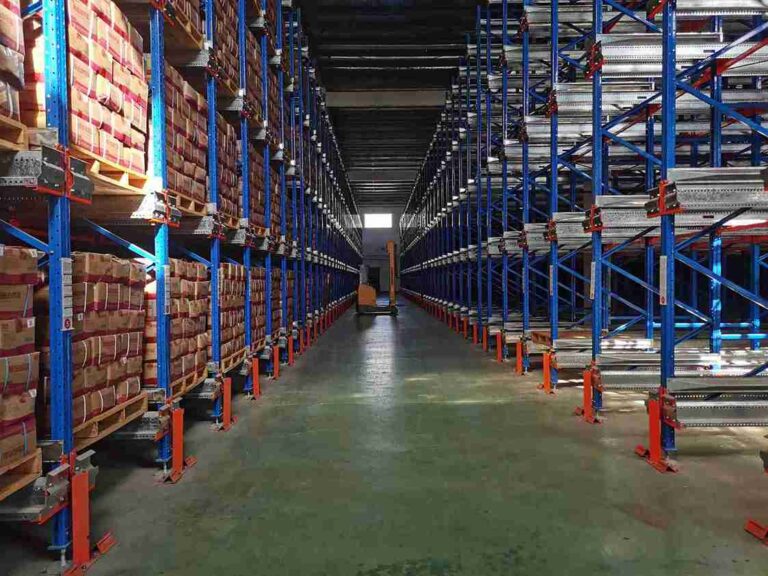
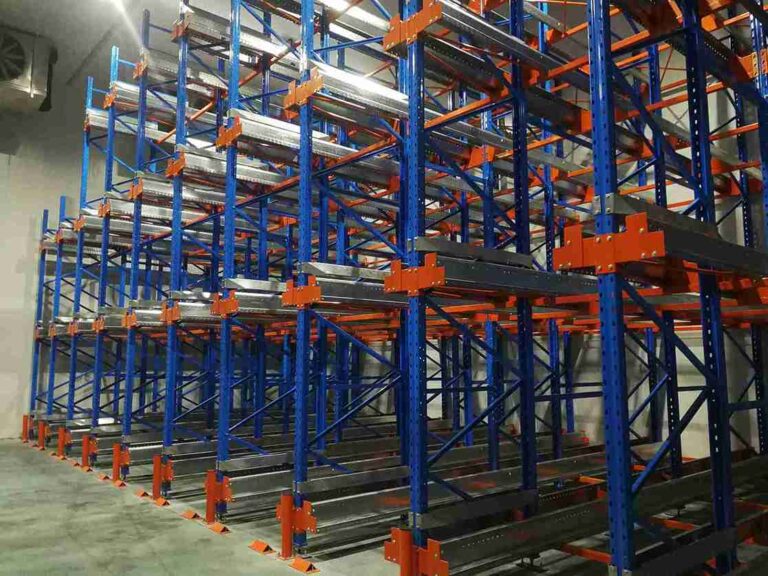
A shuttle racking system is a semi-automated storage solution designed for high-density pallet storage. Unlike conventional racking systems that rely on forklifts to access every pallet, shuttle racking systems use motorized shuttles that travel inside the racking structure to store and retrieve pallets automatically.
1.1 How Do Shuttle Racking Systems Work?
The operation of a shuttle racking system can be broken down into three key phases:
- Loading Phase
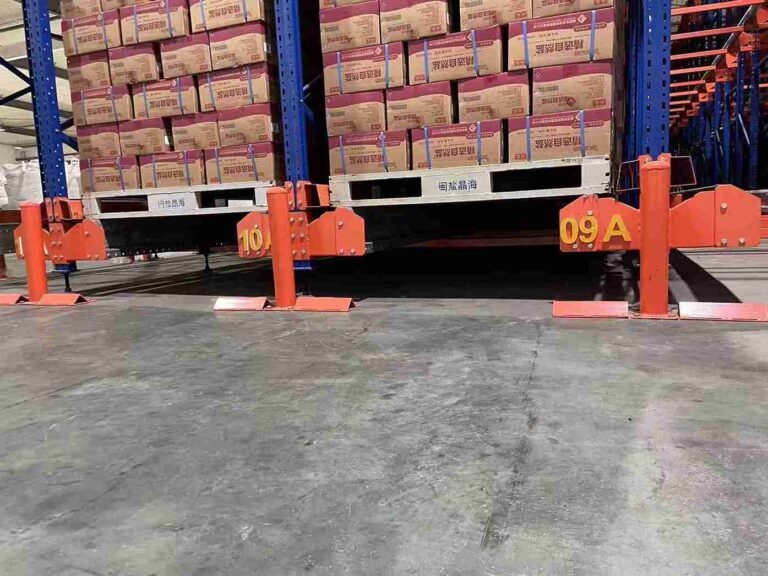
- A forklift places a pallet at the entrance of a storage lane.
- Τοautomated shuttle moves into position and transports the pallet to the next available slot.
- Storage Phase
- The shuttle travels along rails inside the racking structure, placing pallets in sequence.
- Multiple pallets can be stored in a single deep lane, maximizing space utilization.
- Retrieval Phase
- When a pallet is needed, the shuttle retrieves it and brings it back to the front.
- The forklift then picks up the pallet for distribution.
This system supports both FIFO (First-In, First-Out)καιLIFO (Last-In, First-Out) inventory management, depending on the configuration.
1.2 Types of Shuttle Racking Systems
There are several variations of shuttle racking systems, each suited for different storage needs:
- Single-Depth Shuttle Systems – Stores one pallet per position (ideal for fast-moving goods).
- Double-Depth Shuttle Systems – Stores two pallets deep (increases density while maintaining accessibility).
- Multi-Tier Shuttle Systems – Features multiple levels for ultra-high-density storage (common in cold storage facilities).
2. Key Advantages of Shuttle Racking Systems
2.1 Απαράμιλλη πυκνότητα αποθήκευσης
One of the biggest benefits of shuttle racking systems is their ability to maximize warehouse space. By eliminating the need for wide aisles, these systems can increase storage capacity by up to 80% compared to selective pallet racking.
2.2 Significant Labor Cost Reduction
Since forklifts only need to load and unload pallets at the front of each lane, fewer operators are required, leading to lower labor expenses.
2.3 Faster and More Efficient Operations
Automated shuttles move pallets faster than manual forklifts, reducing retrieval times and improving warehouse throughput.
2.4 Enhanced Safety
With fewer forklifts operating inside aisles, accident risks decrease, making shuttle racking systems a safer alternative for high-traffic warehouses.
2.5 Scalability and Flexibility
Shuttle racking systems can be easily expanded by adding more shuttles or storage lanes, making them ideal for growing businesses.
3. Potential Drawbacks of Shuttle Racking Systems
3.1 Higher Initial Investment
The upfront cost of shuttle racking systemsείναιhigher than traditional racking due to automation components. However, the long-term savings often justify the expense.
3.2 Limited Pallet Compatibility
Unlike selective racking, shuttle racking systems require consistent pallet sizes and weights, which may not suit all businesses.
3.3 Maintenance Requirements
Shuttles require regular servicing to prevent breakdowns, adding to operational costs.
3.4 Slower Access in LIFO Configurations
If a shuttle racking system is set up for LIFO retrieval, accessing pallets at the back of a lane can take longer.
4. Shuttle Racking vs. Other High-Density Storage Solutions
4.1 Shuttle Racking vs. Drive-In Racking
- Shuttle racking systems are automated, while drive-in racking relies on forklifts.
- Drive-in racking is cheaper but less efficient for high-turnover inventory.
4.2 Shuttle Racking vs. Push-Back Racking
- Ραφιέρα push-back uses gravity rollers, while shuttle racking systems are motorized.
- Shuttle rackingπροσφορέςbetter control over pallet movement.
4.3 Shuttle Racking vs. AS/RS (Automated Storage & Retrieval Systems)
- AS/RSείναιfully automated but far more expensive.
- Shuttle racking systems provide a cost-effective middle ground for semi-automation.
5. Best Applications for Shuttle Racking Systems
5.1 Cold Storage Warehouses
Shuttle racking systems minimize human exposure to freezing temperatures, improving efficiency in refrigerated and frozen storage.
5.2 High-Volume Distribution Centers
Ideal for fast-moving consumer goods (FMCG), where speed and density are critical.
5.3 Manufacturing Facilities
Perfect for buffer storage of raw materials or finished products.
5.4 Food & Beverage Industry
Supports FIFO inventory management, crucial for perishable goods with expiration dates.
6. Cost Analysis: Is Shuttle Racking Worth the Investment?
6.1 Initial Investment Breakdown
- Shuttle units: 20,000 per shuttle
- Racking structure: 100 per pallet position
- Installation & setup: 15,000
6.2 ROI Considerations
- Labor savings: Up to 50% reduction in forklift operators.
- Space savings: Higher pallet density means lower real estate costs.
7. How to Choose the Right Shuttle Racking System
7.1 Assess Your Inventory Profile
- Pallet dimensions & weight
- Turnover rate (FIFO vs. LIFO)
7.2 Evaluate Warehouse Layout
- Ceiling height (for multi-tier systems)
- Floor load capacity
7.3 Future-Proofing Your Investment
- Scalability options
- Compatibility with future automation
8. Maintenance & Best Practices for Shuttle Racking Systems
8.1 Regular Shuttle Servicing
- Battery checks (for electric shuttles)
- Rail alignment inspections
8.2 Operator Training
- Proper loading/unloading techniques
- Emergency protocols
9. Future Trends in Shuttle Racking Technology
9.1 AI & Machine Learning Integration
- Predictive maintenance to reduce downtime.
- Optimized pallet placement algorithms.
9.2 Hybrid Systems
- Combining shuttle racking with AS/RS for full automation.
10. Conclusion
Shuttle racking systems offer unmatched storage density, efficiency, and labor savings, making them ideal for high-volume warehouses, cold storage, and manufacturing. While the initial investment is higher, the long-term ROI justifies the cost for many businesses.
Before investing, evaluate your inventory needs, warehouse layout, and budget to determine if a shuttle racking system is the right fit.
Συχνές ερωτήσεις
1. Can shuttle racking systems handle different pallet sizes?
Τα περισσότεραshuttle racking systems require standardized pallets, but some advanced models can adjust to slight variations.
2. How long do shuttle racking systems last?
With proper maintenance, 10–15 years is typical.
3. Are shuttle racking systems suitable for small warehouses?
They work best in medium to large facilities with high storage demands.
4. What happens if a shuttle breaks down?
Τα περισσότεραshuttle racking systems have redundant shuttles to prevent operational disruptions.
5. Can shuttle racking be integrated with WMS (Warehouse Management Systems)?
Yes, modern shuttle racking systems sync with WMS for real-time inventory tracking.