📐 "Τα πρώτα 50 επιχειρηματικά ερωτήματα λαμβάνουν προσαρμοσμένο σχεδιασμό 3D αποθήκης" Σχέδιο
















Introduction
Ένα καλά σχεδιασμένο racking system is the foundation of an efficient warehouse. Without adherence to racking system design standards, businesses risk operational inefficiencies, safety violations, and wasted storage space. This in-depth guide explores racking system design standards, covering everything from load capacities and seismic requirements to layout optimization and compliance with OSHA, RMI, and FEM regulations.
Whether planning a new warehouse or upgrading an existing racking system, understanding racking system design standards ensures maximum safety, efficiency, and return on investment.

H1: What Are Racking System Design Standards?
Racking system design standards are a set of engineering and safety guidelines that govern the construction, installation, and maintenance of warehouse storage systems. These standards ensure that racking systems can safely support intended loads while complying with industry regulations.
Key aspects of racking system design standards include:
- Load capacity calculations (static & dynamic)
- Seismic & wind resistance requirements
- Material durability & corrosion protection
- Aisle spacing & clearance specifications
- Fire safety & emergency access compliance
Regulatory bodies such as OSHA (Occupational Safety and Health Administration),RMI (Rack Manufacturers Institute), καιFEM (Fédération Européenne de la Manutention) establish these racking system design standards to prevent accidents and optimize warehouse operations.
H2: Critical Components of a Compliant Racking System
H3: 1. Uprights & Frames: The Backbone of Racking Systems
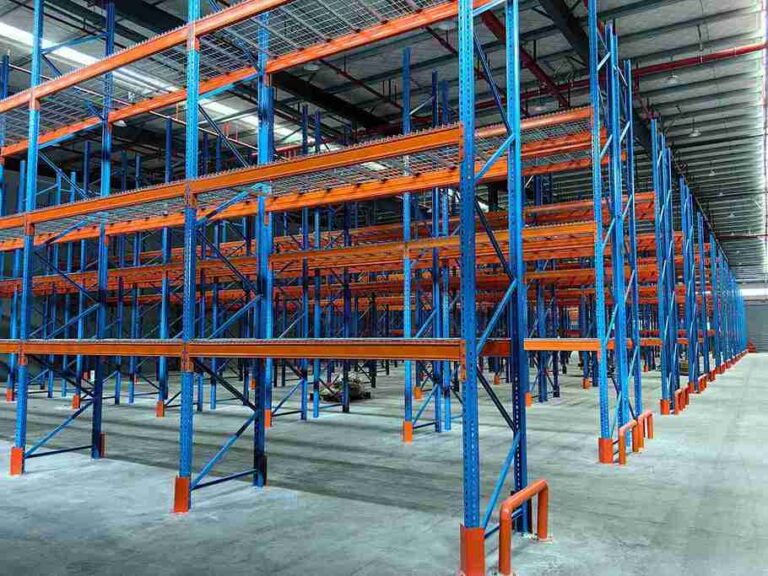
Uprights (vertical columns) and frames form the structural foundation of any racking system. Proper racking system design standards dictate that they must be:
- Hot-dip galvanized or powder-coated to resist corrosion
- Securely anchored to the warehouse floor to prevent tipping
- Σχεδιασμένο για σεισμικές ζώνες if located in earthquake-prone regions
H3: 2. Beams & Load Supports: Ensuring Safe Weight Distribution
Horizontal beams must adhere to racking system design standards by:
- Matching the system’s rated load capacity
- Incorporating safety locks to prevent accidental dislodging
- Allowing adjustable heights for different pallet sizes
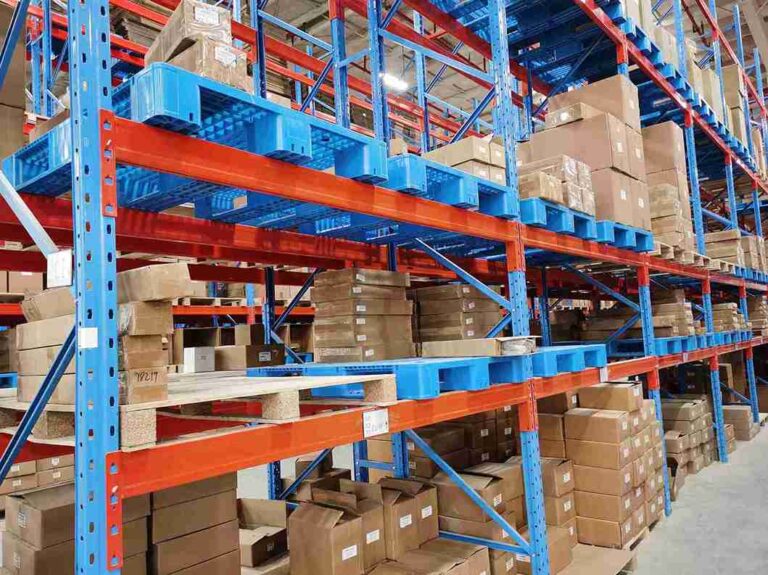
H3: 3. Decking & Wire Mesh: Choosing the Right Surface
Decking materials must comply with racking system design standards, with options including:
- Particleboard (ideal for light-duty storage)
- Steel wire mesh (enhances ventilation & fire safety)
- Plywood or steel grating (for medium to heavy-duty loads)
H3: 4. Shims & Baseplates: Ensuring Stability & Load Distribution
Proper racking system design standards require:
- Shims to level uneven floors
- Reinforced baseplates to distribute weight and prevent floor damage
H2: OSHA & RMI Compliance in Racking System Design
H3: OSHA’s Racking System Safety Requirements
OSHA enforces racking system design standards by mandating:
- Annual inspections by qualified personnel
- Minimum aisle widths (3 ft for manual handling, 4 ft for forklifts)
- Immediate reporting and repair of rack damage
H3: RMI ANSI MH16.1-2023: The Gold Standard for Racking Systems
ΤοRack Manufacturers Institute (RMI) provides detailed racking system design standards, including:
- Load capacity charts for different configurations
- Seismic design recommendations
- Forklift impact protection guidelines
H2: Calculating Load Capacity in Racking System Design
To ensure compliance with racking system design standards, engineers must calculate:
- Uniformly Distributed Load (UDL) vs. Concentrated Load (CL)
- Dynamic load factors (forklift impacts, seismic activity)
- Maximum beam deflection limits (typically 1/180 of the span length)
Using RMI’s load tables or consulting a structural engineer ensures adherence to racking system design standards.
H2: Optimizing Warehouse Layouts with Racking System Design Standards
H3: 1. Selective Pallet Racking (Most Common Design)
- Καλύτερα για. High SKU variety
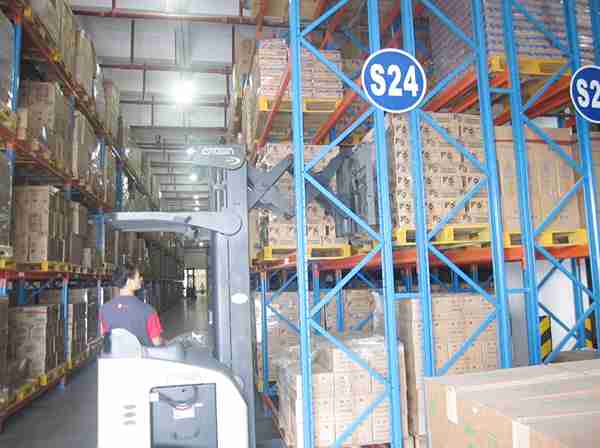
- Aisle width: 10-13 ft for reach trucks
- Compliance: Must follow racking system design standards for beam spacing
H3: 2. Drive-In & Drive-Through Racking
- Καλύτερα για. High-density, low-SKU storage
- Aisle width: Only one aisle required
- Compliance: Must meet racking system design standards for load distribution
H3: 3. Push-Back & Pallet Flow Racking
- Καλύτερα για. FIFO or LIFO inventory systems
- Requires: Gravity rollers or hydraulic systems
- Compliance: Must align with racking system design standards for slope angles
H2: Fire Safety & Racking System Design Compliance
- NFPA 13απαιτείsprinkler systems in racking systems
- Flue space requirements (6-12 inches vertical clearance)
- Fire-rated racking for hazardous materials storage
H2: Common Mistakes in Racking System Design
- Ignoring load capacity limits → Leads to catastrophic collapses
- Improper anchoring → Increases seismic failure risk
- Blocking sprinklers → Violates fire safety codes
- Inadequate forklift training → Causes costly collisions
H2: Future Trends in Racking System Design
- Automated Storage & Retrieval Systems (AS/RS)
- AI-driven layout optimization
- Modular & scalable racking solutions
Συμπέρασμα
Adhering to racking system design standards is non-negotiable for warehouse safety and efficiency. By following OSHA, RMI, and FEM guidelines, businesses can maximize storage capacity, minimize risks, and improve ROI.
For a custom racking system design consultation, contact industry experts today.
Συχνές ερωτήσεις
1. How often should racking systems be inspected?
OSHA recommends annual inspections, but high-traffic warehouses should conduct monthly checks.
2. What’s the difference between selective and drive-in racking?
Selective racking allows direct access to every pallet, while drive-in racking maximizes density with fewer aisles.
3. Can different racking types be combined in one warehouse?
Ναι.hybrid racking systems (e.g., selective + push-back) optimize space for varied SKUs.
4. What’s the minimum aisle width for forklifts?
Standard forklifts need 8-10 ft, while narrow-aisle trucks require 5-6 ft.
5. How do I ensure my racking system meets seismic standards?
Consult RMI’s ANSI MH16.1-2023 or hire a structural engineer for seismic compliance.