📐 "Τα πρώτα 50 επιχειρηματικά ερωτήματα λαμβάνουν προσαρμοσμένο σχεδιασμό 3D αποθήκης" Σχέδιο















Introduction: The Strategic Advantage of Double Deep Selective Racking
In today’s competitive warehousing landscape, maximizing storage efficiency is non-negotiable. Double deep selective racking has emerged as a leading solution for operations seeking higher storage density without sacrificing selective pallet access. But does this system align with your warehouse’s unique demands?
This in-depth analysis explores:
- Τοoperational mechanics of double deep selective racking
- How it outperforms single-deep and drive-in systems in specific scenarios
- Real-world applications across industries like retail, food distribution, and manufacturing
- Critical cost-benefit considerations before implementation
- Best practices for installation, safety, and long-term maintenance
By the end, warehouse managers and logistics professionals will have a data-driven framework to determine if double deep selective racking is the right investment for their facility.

Defining Double Deep Selective Racking: How It Works
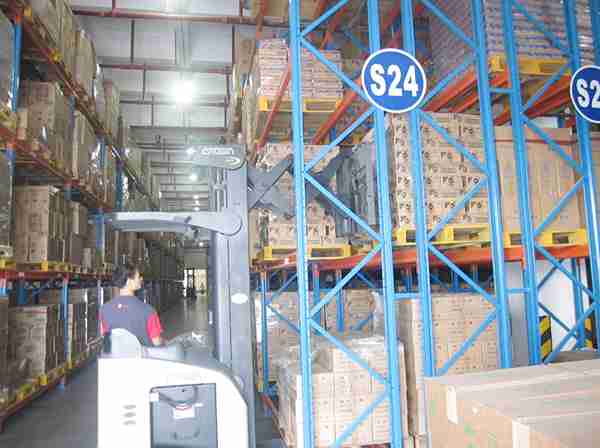
Double deep selective racking is a σύστημα αποθήκευσης παλετών designed to double storage capacity within the same footprint as traditional selective racking. Unlike single-deep configurations, this system stores pallets two-deep, requiring a narrow-aisle reach truck for retrieval.
Core Operational Principles
- Two-Pallet Depth: Pallets are stored in pairs, with the front pallet immediately accessible and the rear pallet requiring the front to be moved first.
- Partial Selectivity: While not as flexible as single-deep racking, it offers better accessibility than drive-in systems.
- Optimized Aisle Width: Aisles are narrower than επιλεκτικά ράφια but wider than high-density systems like push-back racking.
This configuration makes double deep selective racking ideal for warehouses with:
✔Moderate to high inventory turnover
✔Limited floor space
✔A need for better space utilization than single-deep racking
Comparative Analysis: Double Deep Selective Racking vs. Alternative Systems
1. Double Deep Selective Racking vs. Single-Deep Selective Racking
| Factor | Double Deep Selective Racking | Single-Deep Selective Racking |
|---|---|---|
| Storage Density | 40-50% higher | Lower (100% accessibility) |
| Forklift Requirements | Reach truck needed | Standard forklift compatible |
| Best For | Fast-moving goods | High-SKU operations |
Key Takeaway: If space savings outweigh instant access needs,double deep selective racking is superior.
2. Double Deep Selective Racking vs. Drive-In Racking
| Factor | Double Deep Selective Racking | Drive-In Racking |
|---|---|---|
| Access Method | Partial selectivity (FIFO/LIFO) | LIFO only |
| Βάθος αποθήκευσης | 2 παλέτες βάθος | 3-10 pallets deep |
| Damage Risk | Μέτρια | Higher |
Key Takeaway: Double deep selective rackingείναι καλύτερο γιαinventory control, while drive-in racking suits bulk storage with low turnover.
3. Double Deep Selective Racking vs. Push-Back Racking
| Factor | Double Deep Selective Racking | Push-Back Racking |
|---|---|---|
| Cost | More affordable | Higher investment |
| Density | Good (2-deep) | Excellent (3-6 deep) |
| Maintenance | Lower | Higher (cartridges) |
Key Takeaway: Double deep selective rackingείναι μιαcost-effective middle ground for warehouses needing better density than single-deep but simpler operation than push-back.
Top 5 Benefits of Implementing Double Deep Selective Racking
1. 40-50% Higher Storage Capacity Without Expansion
By simply doubling pallet depth, οι αποθήκες μπορούνstore nearly twice as much inventory in the same footprint. This is a game-changer for facilities facing:
- High real estate costs
- Limited expansion options
- Seasonal inventory spikes
2. Better Space Utilization Than Single-Deep Systems
Traditional επιλεκτικά ράφια wastes valuable square footage with wide aisles.Double deep selective racking reduces aisle width while maintaining reasonable accessibility.
3. Improved Inventory Control Over Drive-In Systems
Unlike drive-in racking, which operates on LIFO (Last-In-First-Out),double deep selective rackingεπιτρέπει τοFIFO (First-In-First-Out) for the front pallet. This is critical for:
- Perishable goods (food, pharmaceuticals)
- Time-sensitive materials
4. Lower Upfront Cost Than High-Density Alternatives
Compared to push-back or pallet flow racking,double deep selective racking requires:
- Less structural modification
- More common forklift equipment
- Lower installation costs
5. Flexibility for Medium-Sized Warehouses
It’s the sweet spot for operations that:
- Don’t need ultra-high density
- Want better selectivity than drive-in systems
- Need a cost-effective upgrade from single-deep racking
Potential Challenges of Double Deep Selective Racking
1. Slower Access to Rear Pallets
Since the second pallet isn’t directly accessible, retrieval times can increase for:
- High-SKU environments
- Operations with frequent stock rotation
2. Requires Specialized Forklifts
Standard forklifts won’t work—warehouses must invest in:
- Narrow-aisle reach trucks
- Operator training
3. Not Ideal for Ultra-High-Density Needs
If storage depth beyond two pallets is required, alternatives like:
- Push-back racking (3-6 deep)
- Drive-in racking (5-10 deep)
May be more suitable.
4. Higher Risk of Product & Rack Damage
Improper forklift operation can lead to:
- Collisions with uprights
- Load instability
- Increased maintenance costs
Mitigation Strategy: Implement strict operator trainingκαιregular rack inspections.
Industries That Gain the Most from Double Deep Selective Racking
1. Retail & E-Commerce Fulfillment Centers
- High inventory turnover
- Balanced selectivity and density needs
- Ideal for fast-moving consumer goods (FMCG)
2. Food & Beverage Distribution
- Perishable goods require FIFO access
- Moderate SKU variety
- High storage density needed
3. Manufacturing & Industrial Storage
- Bulk raw material storage
- Predictable demand patterns
- Space optimization without sacrificing access
4. Pharmaceutical & Healthcare Logistics
- Batch tracking compliance
- Controlled storage environments
- Efficient palletized medical supply management
Key Decision Factors Before Choosing Double Deep Selective Racking
1. Forklift Compatibility & Aisle Width Requirements
- Minimum aisle width: 8-9 feet (varies by forklift)
- Forklift type: Reach truck with double-deep capability
2. Inventory Turnover & SKU Profile
✔Καλύτερα για. Medium-to-high turnover, moderate SKU variety
✖ Less ideal for: Slow-moving inventory, high-SKU operations
3. Warehouse Layout & Structural Limitations
- Ceiling height clearance
- Floor load capacity
- Seismic zone considerations
4. Future Growth & Scalability
- Can the system expand vertically?
- Will additional forklifts be needed?
Installation & Maintenance Best Practices
1. Proper Rack Configuration & Safety Standards
- Anchoring uprights securely
- Beam level alignment with pallet heights
- Compliance with OSHA & RMI guidelines
2. Forklift Operator Training Programs
- Certified reach truck operation
- Load handling protocols
- Collision avoidance techniques
3. Routine Safety Inspections
- Check for beam deflection
- Inspect upright alignment
- Monitor for wear & tear
Conclusion: Is Double Deep Selective Racking Your Best Option?
Double deep selective rackingείναι μιαstrategic middle-ground solution for warehouses needing:
✅Higher storage density than single-deep racking
✅Better accessibility than drive-in systems
✅Cost efficiency compared to push-back racking
However, it may not be the best fit for:
❌ Operations requiring instant access to every pallet
❌ Ultra-high-density storage needs
❌ Facilities unwilling to invest in reach trucks
Final Recommendation:
- Conduct a cost-benefit analysis comparing double deep selective racking to alternatives.
- Consult a racking specialist to assess your warehouse’s unique needs.
- Pilot the system in a controlled section before full implementation.
Frequently Asked Questions (FAQs)
1. Can existing single-deep racking be converted to double deep?
Yes, but it requires aisle width adjustmentsκαιforklift upgrades.
2. What’s the typical load capacity per pallet position?
Τα περισσότεραdouble deep selective racking supports 3,000–6,000 lbs, but engineering approval is essential.
3. How much space does double deep racking save vs. single-deep?
Aisles can be 30-40% narrower, increasing storage without expansion.
4. What forklift is needed for double deep racking?
Anarrow-aisle reach truck with extendable forks is mandatory.
5. Is this system viable for cold storage warehouses?
Yes, but forklifts must be cold-rated, and racks should be corrosion-resistant.