📐 "First 50 Enterprise Queries Get Custom 3D Warehouse Design" Plan


The Intricacies of SKU Profiling for Maximum Double Deep Efficiency
The financial success of any double deep racking installation hinges on a pre-implementation exercise often overlooked in haste: granular SKU profiling. A sophisticated double deep racking ROI calculator does not operate on averages; it requires input data reflecting the chaotic, unique reality of a warehouse’s inventory. Profiling transcends basic ABC analysis. It involves mapping each SKU against a multi-axis matrix: physical dimensions (including pallet overhang), weight distribution, annual turnover velocity, seasonality peaks, and order affinity (which SKUs are often shipped together).
For instance, a beverage distributor in the Philippines might find that 70% of their volume comes from just 15 SKU variants of bottled water and soft drinks. These are perfect, high-velocity candidates for dedicated double deep lanes. However, embedding a slow-moving, promotional flavor in the same lane as the high-volume cola would create a costly access block, negating density gains. A professional ROI calculator models this scenario, quantifying the cost of “honeycombing” or lost access.
It prompts the planner to designate hybrid zones—perhaps a floor-level double deep lane for the fast-movers and a single-deep, selective bay above for the slower-moving siblings. This nuanced planning, fed into the double deep racking ROI calculator, shifts the projected savings from theoretical to reliably achievable.
The Hidden Cost of Poor Profiling: A Quantifiable Risk
An under-profiled project risks becoming a monument to inefficiency. The double deep racking ROI calculator serves as a risk-assessment tool here. By inputting pessimistic scenarios—like a 15% mis-slotting rate—the model reveals the erosion of potential savings. It can answer: What is the financial impact if 20% of our lanes are blocked for two extra days per month due to poor rotation? The calculator might show that this alone could extend the ROI payback period by six months. This rigorous analysis justifies the upfront investment in thorough data cleansing and WMS reconfiguration, making the case for including these services in the total project cost modeled by the double deep racking ROI calculator.

Beyond Aisle Count: Advanced Spatial Modeling in the ROI Calculation
While eliminating aisles is the headline gain, a superior double deep racking ROI calculator incorporates subtler spatial optimizations that compound savings. It models the impact of load beam height adjustments, the cubic space recovered by minimizing vertical clearance above the pallet, and the strategic use of different beam lengths for varying pallet depths.
Vertical Clearance Optimization and Cubic Utilization
A standard calculation might assume a fixed vertical storage pitch. An advanced double deep racking ROI calculator, however, allows for variable adjustment. For a warehouse storing uniformly tall cartons, the calculator can optimize beam levels to reduce wasted vertical air space between each pallet tier. Gaining just 2 inches of usable height per level, across 8 levels in a 10-meter building, can create room for an entirely new level of storage. This cubic utilization gain is pure, incremental ROI that a basic spreadsheet misses. The calculator quantifies this, asking for carton/pallet height data to refine the model, ensuring the proposed layout squeezes maximum value from every cubic foot.
Aisle Width Precision: Balancing Access and Density
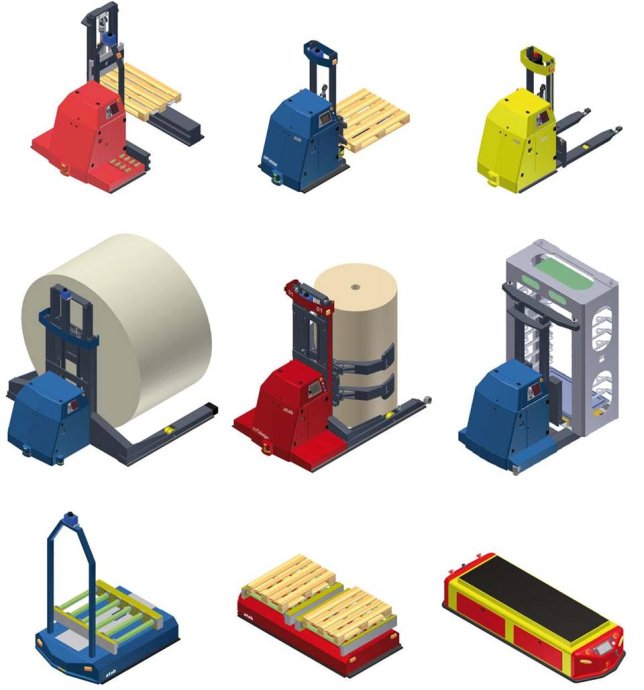
The aisle width for a double deep system is not a one-size-fits-all figure. It is a precise calculation based on the turning radius of the specified forklift or AGV, the pallet length, and required safety clearance. An advanced double deep racking ROI calculator integrates with equipment specification sheets. By selecting “Model X Deep-Reach Truck,” the calculator dynamically adjusts the proposed aisle width in the layout, which in turn alters the total number of achievable rows and pallet positions.
This precision prevents the common error of overestimating density gains based on idealized aisle widths, ensuring the savings calculation output is rooted in operational reality. This feature is particularly valuable when comparing the ROI of manned deep-reach trucks versus narrower-aisle AGV systems, as the calculator clearly shows the trade-off between equipment cost and spatial yield.
The Total Cost of Ownership (TCO) Framework in Your ROI Analysis
A mature financial evaluation moves beyond simple payback period. The most authoritative double deep racking ROI calculator employs a Total Cost of Ownership (TCO) framework over a 7 or 10-year horizon. This provides a panoramic view of financial impact, crucial for CFOs and financial controllers who evaluate Capex decisions.
H3: Incorporating Long-Term Operational and Maintenance Costs
The TCO model within a robust double deep racking ROI calculator includes line items often omitted:
Forklift/AGV Maintenance: Deep-reach mechanisms incur different maintenance schedules and costs than standard forks. AGVs have predictable battery and sensor maintenance contracts.
Energy Consumption: Detailed modeling for equipment. Electric deep-reach trucks and AGVs have a calculable kWh cost per shift, which the calculator can compare against existing fuel or LPG costs.
Racking Inspection and Maintenance: Scheduled professional inspections and potential repair costs are factored in.
Software License Fees: Ongoing WMS/WES and fleet management software subscriptions.
Labor Cost Escalation: The model can apply a projected annual wage inflation rate (e.g., 5% in many Southeast Asian markets) to the labor savings, making the case for automation even stronger over time.
By contrasting the TCO of the existing setup with the proposed double deep (and potentially automated) system, the double deep racking ROI calculator generates compelling charts showing cost divergence. Typically, the existing system’s costs (dominated by space and labor) show a steady upward trend, while the new system’s costs, after the initial investment hump, flatten and remain predictable. The area between these two cost curves represents the total net savings, a powerful visualization no simple ROI percentage can match.
Scenario Modeling: The Strategic Power of the ROI Calculator
A static calculation is a snapshot; a dynamic double deep racking ROI calculator is a strategic planning simulator. Decision-makers need to model “what-if” scenarios to build confidence and plan for growth.
Modeling Phased Implementation and Future Expansion
What if capital is constrained? A sophisticated double deep racking ROI calculator allows for phased modeling. Scenario A might implement double deep in 50% of the warehouse now, with a plan to expand in Year 3. The calculator shows the intermediate savings, the second investment spike, and the cumulative ROI. It can also model the integration of a future automated storage and retrieval system (AS/RS) for very slow movers, showing how a double deep system forms a flexible, high-density foundation within a broader automation strategy.
Stress-Testing Against Business Volatility
The post-pandemic landscape demands resilience. A best-in-class double deep racking ROI calculator includes sensitivity analysis sliders. How does the ROI change if storage volume grows by 15% annually instead of the projected 5%? What is the impact of a 20% increase in rental rates? If labor availability drops, forcing a 30% increase in wages, how does that affect the case for automation? By allowing users to adjust these variables, the calculator transforms from a static proposal tool into a dynamic business continuity planner. It demonstrates that the double deep investment is not just a cost saver but a risk mitigator, insulating the operation from volatile external costs.
Bridging the Data Gap: From Calculation to Commissioning
The output of a double deep racking ROI calculator is a set of compelling numbers. But the journey from spreadsheet to operational reality requires meticulous data translation. This phase is where engineering expertise proves its worth, ensuring the promised ROI is physically achievable.
Translating Calculator Outputs into Engineering Drawings
The pallet position count generated by the double deep racking ROI calculator must be translated into detailed CAD drawings and Bills of Materials (BOM). This includes specifying upright frame capacities (upright, column), beam profiles (box, step), decking types (mesh, sheet), and the exact anchorage plan. Each component must be certified to meet or exceed local safety standards (e.g., FEM, RMI, or regional building codes). The load simulations run during this phase validate the safety factors assumed in the calculator, ensuring the system will perform reliably under dynamic loading conditions. This engineering rigor is the bedrock upon which the projected savings calculation confidently stands.
The Critical Path of Installation and Integration
A delayed installation erodes ROI from day one. Professional project management is critical. This involves sequencing: site preparation (floor leveling, painting), racking assembly, equipment delivery and commissioning, and finally, system integration (WMS configuration, AGV path teaching). The timeline for this critical path should be referenced in the double deep racking ROI calculator model, as a delayed go-live date directly pushes back the start of the savings accrual period. Reputable providers manage this tightly, treating the projected ROI timeline as a committed performance metric.
The Human Factor: Training, Change Management, and ROI Realization
Technology and steel alone cannot deliver ROI. The workforce interacting with the new double deep system—whether as operators, supervisors, or inventory clerks—must be engaged as active partners in the transformation.
Operational Training for Safety and Efficiency
Comprehensive, hands-on training is non-negotiable. For manned systems, this includes specialized certification for deep-reach truck operation, emphasizing spatial awareness in narrow aisles and the specific technique for handling second-pallet positions. For automated systems, training shifts to exception handling, system monitoring, and basic troubleshooting for floor staff. This investment in human capital, often a line item in the double deep racking ROI calculator, directly impacts two key variables: the speed of achieving full operational throughput and the reduction of accident or damage-related costs, both of which safeguard the projected return.
Leveraging Data for Continuous Improvement
Once operational, the system itself becomes a data generator. Information on pick rates, travel times, lane utilization, and equipment cycles flows into the WMS. Astute managers use this data not just for day-to-day management but for continuous ROI optimization. They might discover that re-profiling a few lanes based on actual, rather than forecasted, turnover can yield an additional 2-3% in effective capacity. This cycle of measurement and refinement ensures the savings calculation is not a one-time event but a living benchmark for ongoing performance management.
Conclusion: The ROI as a Journey, Not a Destination
In the final analysis, the pursuit of warehouse efficiency through double deep racking is a strategic continuum, initiated by a question of financial viability and sustained by operational excellence. A sophisticated double deep racking ROI calculator is the essential compass for this journey.
It transcends its basic function of generating a payback period. It becomes a strategic planning platform, a risk-assessment module, a scenario-modeling simulator, and a foundational document aligning operational, financial, and executive teams around a common goal: the quantifiable optimization of the logistics asset.The most successful implementations treat the output of the double deep racking ROI calculator not as a finish line, but as a baseline. The real achievement lies in leveraging the enhanced density, visibility, and control of the double deep environment to drive continuous improvement—further refining processes, integrating deeper levels of automation, and adapting fluidly to market changes.
For the discerning logistics professional in growth markets worldwide, mastering this tool and the logic it represents is not merely an option for cost reduction; it is an imperative for building a scalable, resilient, and dominant logistics operation. The journey toward maximized storage and calculated savings begins with a single, precise calculation, but its rewards compound for the life of the facility.
Frequently Asked Questions (FAQs)
1. How does the ROI calculation differ for a greenfield warehouse vs. a retrofit of an existing facility?
The core principles of the double deep racking ROI calculator remain, but key inputs change dramatically. For a greenfield site, the calculator compares the double deep layout against a baseline conventional layout in the same planned building, highlighting savings in reduced building footprint or the ability to specify a smaller, less expensive building. For a retrofit, the baseline is the current operational cost of the existing layout. The retrofit model must include additional costs like demolition of old racking, potential downtime during changeover, and inventory relocation—costs absent in a greenfield model. A competent calculator will have a toggle to select project type, adjusting its cost model and savings algorithms accordingly.
2. Can a double deep racking system be later converted to an even denser system, like push-back or drive-in?
Generally, conversion is not straightforward or cost-effective. Double deep racking is a structurally distinct system from push-back (which uses carts on inclined rails) or drive-in (which uses a continuous rail guide). The upright frames and beam connections are designed for specific load and access patterns. While the floor space footprint might be reused, the racking itself typically cannot be economically converted. The double deep racking ROI calculator should therefore be used for a long-term strategic decision. If future ultra-high density is a possibility, the initial layout can be planned to zone for it, but the calculator would evaluate the double deep system on its own long-term merits.
3. What are the insurance implications of installing a high-density storage system?
Insurance providers often view high-density storage as a higher risk concentration for property damage (more value per sq. ft.). A robust double deep racking ROI calculator should prompt the user to consider potential changes in property insurance premiums. However, a professionally engineered system installed to code, with documented safety protocols and often with required in-rack sprinklers, can mitigate this. In many cases, insurers may require an engineering certification. The net effect on TCO might be a slight premium increase, which a comprehensive double deep racking ROI calculator can factor into its long-term financial model.
4. How does climate (e.g., high humidity in Southeast Asia, temperature swings in the Middle East) affect the ROI calculation for double deep racking?
Climate directly impacts the specification of the racking system and the performance of equipment, which in turn affects the savings calculation. In high-humidity coastal regions, a premium galvanized or powder-coated finish is necessary to prevent corrosion, adding to the initial CapEx in the calculator. For extreme heat or cold, the efficiency of electric forklift and AGV batteries is affected, potentially reducing operational hours per charge or requiring battery conditioning systems—variables that should be adjustable in an advanced double deep racking ROI calculator to ensure accurate operational cost projections.
5. We have a very high mix of SKUs but low quantities per SKU (like spare parts). Is there any scenario where double deep racking makes sense?
In such highly fragmented inventory profiles, a standard double deep system is usually not optimal, as most lanes would be underutilized. However, a variation known as Double Deep Pallet Flow Racking could be applicable for fast-moving, small-SKU parts stored in cartons on flow-through pallets. The double deep racking ROI calculator can still be a useful tool here, but it requires specialized configuration to model the different dynamics of flow systems. More commonly, the calculator would likely demonstrate that for this profile, a different solution (like a vertical lift module or mixed carton flow) has a superior ROI, guiding the client to the most appropriate technology.
If you require perfect CAD drawings and quotes for warehouse racking, please contact us. We can provide you with free warehouse racking planning and design services and quotes. Our email address is: jili@geelyracks.com