📐 "First 50 Enterprise Queries Get Custom 3D Warehouse Design" Plan


Why Double Deep Racking Financial Benefits Are Overlooked
Most warehouse managers focus on labor costs, automation, or energy efficiency—but few realize the massive double deep racking financial benefits available. This high-density storage system doesn’t just save space—it directly boosts profitability by cutting real estate costs, reducing labor expenses, and improving operational efficiency.
For companies still using traditional selective racking, switching to double deep racking financial benefits can mean six-figure annual savings. This guide reveals the hidden financial advantages most warehouses miss—and how to implement them for maximum ROI.
1. What Is Double Deep Racking? (And Why It’s a Financial Game-Changer)
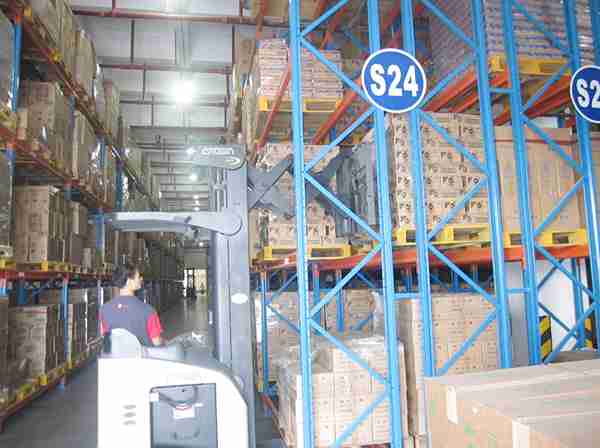
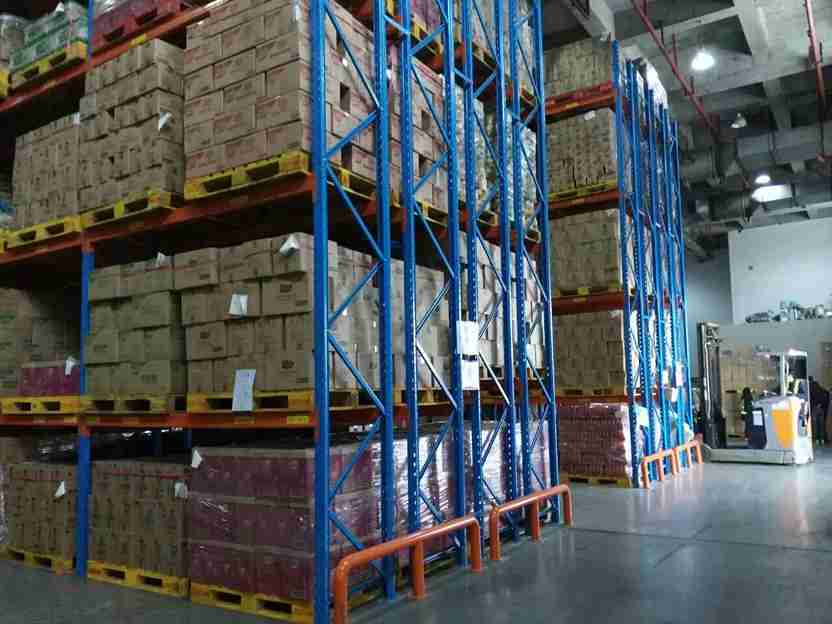
Double deep racking is a high-density pallet storage system where pallets are stored two-deep instead of one-deep. Unlike selective racking, which requires wide aisles for forklift access, double deep racking financial benefits come from doubling storage capacity without expanding floor space.
How It Works:
- Uses narrow-aisle reach trucks or double-deep forklifts for access.
- Operates on a LIFO (Last-In, First-Out) system, ideal for high-volume SKUs.
- Reduces aisle space by 50%, instantly increasing storage density.
Key Takeaway: The double deep racking financial benefits start with space optimization, but the real savings come from lower operational costs.

2. The Top 5 Double Deep Racking Financial Benefits
2.1. Cuts Warehouse Real Estate Costs by Up to 50%
The most obvious double deep racking financial benefit is reduced real estate expenses. Since warehouses pay 12 per sq. ft. in rent (or more in urban areas), doubling storage density means:
- No need for expansion—avoid costly construction or leasing.
- Lower property taxes—smaller footprint = reduced tax assessments.
- Reduced utility costs—smaller space = lower heating, cooling, and lighting bills.
Real-World Example: A beverage distributor in Texas saved $180,000/year by switching to double deep racking instead of leasing additional warehouse space.
2.2. Slashes Labor Costs with Fewer Forklift Movements
Fewer aisles mean faster pallet retrieval, leading to:
- Reduced forklift travel time—operators spend less time driving.
- Lower labor hours—fewer workers needed for the same throughput.
- Decreased energy/fuel costs—electric forklifts consume less battery power.
Data Point: A Midwest 3PL provider reduced labor costs by $52,000 annually after implementing double deep racking.
2.3. Extends Forklift Lifespan (Lower Maintenance Costs)
Since double deep racking financial benefits include fewer pallet movements, forklifts experience:
- Less wear on tires, hydraulics, and motors.
- Fewer breakdowns—reducing repair costs and downtime.
- Longer equipment lifespan—delaying costly replacements.
2.4. Improves Inventory Accuracy (Reduces Shrinkage & Errors)
With fewer aisles, warehouses see:
- Less misplaced inventory—easier tracking in a condensed space.
- Fewer picking mistakes—simpler navigation for workers.
- Better stock rotation (critical for perishable goods).
2.5. Higher ROI Than Other Storage Systems
| Storage System | Avg. Cost per Pallet Position | Storage Density | Best For |
|---|---|---|---|
| Selective Racking | 80 | Low | High-SKU operations |
| Double Deep Racking | 90 | High | High-volume, low-SKU |
| Drive-In Racking | 110 | Medium | Bulk storage |
Key Insight: The double deep racking financial benefits make it the best cost-to-density ratio for warehouses storing large quantities of similar products.
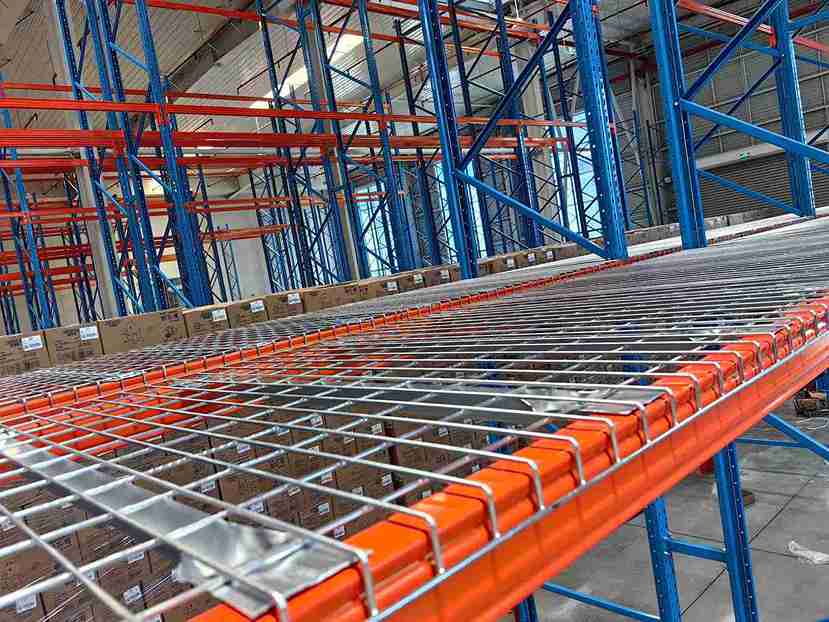
3. When Should You Use Double Deep Racking? (Maximizing Financial Benefits)
3.1. Best for High-Volume, Low-SKU Warehouses
Industries that gain the most from double deep racking financial benefits include:
- Beverage & alcohol distributors (pallets of the same product).
- Appliance & furniture warehouses (bulky, uniform items).
- Retail backstock storage (cases of identical SKUs).
3.2. Not Ideal for Fast-Moving, High-SKU Operations
Double deep racking struggles with:
- E-commerce fulfillment (needs frequent single-pallet access).
- Cold storage with FIFO requirements (LIFO isn’t suitable for perishables).
4. How to Implement Double Deep Racking for Maximum Savings
4.1. Conduct a Warehouse Space & Cost Analysis
Before switching, assess:
- Current storage costs (rent, labor, equipment).
- Potential savings using double deep racking financial benefits calculators.
- Clearance heights & floor load capacity (ensure compatibility).
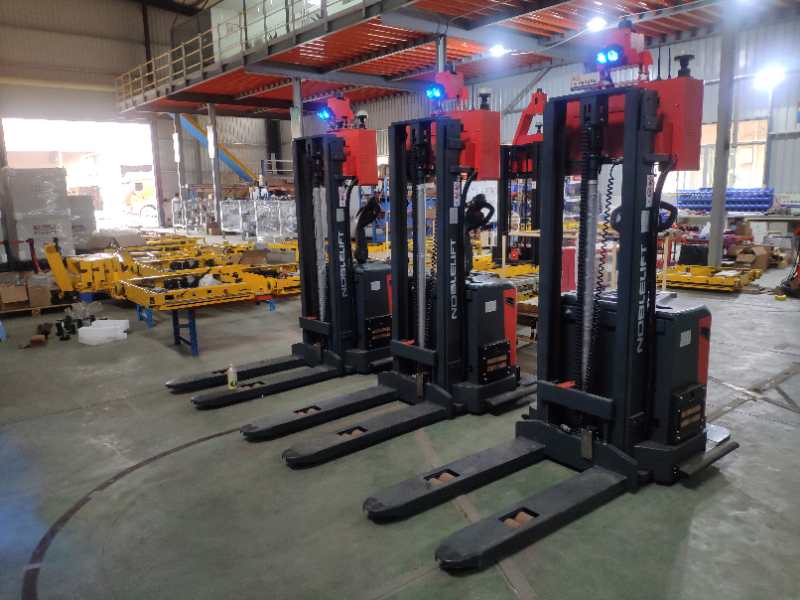
4.2. Invest in the Right Forklifts
- Narrow-aisle reach trucks (9-11 ft. aisles).
- Double-deep compatible forklifts (e.g., Raymond 9600 or Crown RC 5500).
4.3. Train Staff on LIFO Best Practices
- Standardize pallet retrieval procedures.
- Use barcode scanning to prevent misplaced inventory.
5. Debunking Myths About Double Deep Racking Financial Benefits
Myth 1: “It’s Only for Giant Warehouses”
Even 50,000 sq. ft. facilities can achieve 20-30% cost savings.
Myth 2: “The Upfront Cost Is Too High”
While initial investment is higher than selective racking, ROI is typically 12-24 months.
Myth 3: “It’s Less Safe Than Selective Racking”
With proper training and load balancing, double deep racking is just as safe.
Conclusion: Double Deep Racking = A Hidden Profit Multiplier
Most warehouses underestimate the financial power of double deep racking. By doubling storage density, companies cut real estate costs, reduce labor expenses, and improve inventory accuracy—all while extending equipment life.
For businesses storing high volumes of similar products, the double deep racking financial benefits are too significant to ignore. The switch isn’t just an upgrade—it’s a strategic cost-saving move that pays for itself.
FAQs: Double Deep Racking Financial Benefits Explained
1. Can double deep racking work with FIFO systems?
No—it’s designed for LIFO (Last-In, First-Out). For FIFO, consider drive-in or push-back racking.
2. What’s the minimum warehouse height for double deep racking?
18-22 ft. clear height is ideal for optimal vertical storage.
3. How much can a warehouse save with double deep racking?
Most facilities save 20-50% in real estate and labor costs.
4. Does double deep racking require special forklifts?
Yes—narrow-aisle reach trucks or double-deep forklifts are essential.
5. Is double deep racking harder to manage than selective racking?
With proper training and WMS integration, it’s just as efficient.
If you require perfect CAD drawings and quotes for warehouse racking, please contact us. We can provide you with free warehouse racking planning and design services and quotes. Our email address is: jili@geelyracks.com