📐 "First 50 Enterprise Queries Get Custom 3D Warehouse Design" Plan


Double-Deep Racking Cost Savings: The Ultimate Strategy to Maximize Storage and Slash Operational Expenses
In the high-stakes world of logistics and warehousing, space is currency. Every square meter of unused vertical air, every aisle wider than necessary, and every inefficient forklift journey represents a direct drain on the bottom line. For supply chain managers and warehouse operators across burgeoning markets like Southeast Asia, the Middle East, and Latin America, the pressure to do more with less is intensifying.
The solution, proven in countless facilities worldwide, lies not in expensive expansion but in intelligent, high-density storage. This definitive guide explores the transformative potential of double-deep pallet racking, a system engineered to deliver profound and measurable double-deep racking cost savings. It provides a masterclass in leveraging this technology to achieve staggering storage density increases and realize the compelling goal of cutting overall warehouse expenses by 30% or more.
The following analysis will dissect the financial mechanics, operational protocols, and advanced technological integrations that make these double-deep racking cost savings not just a possibility, but a predictable outcome for businesses ready to optimize their storage infrastructure.
The High Cost of Empty Air: Why Traditional Storage Falls Short
Many warehouse managers operate under the assumption that their current layout is as efficient as it can be. However, a deep dive into the economics of a standard warehouse reveals a landscape rife with wasted potential and hidden expenses. The pursuit of double-deep racking cost savings begins with understanding what is being lost with conventional systems.
The Anatomy of Warehouse Inefficiency
A traditional warehouse using selective, single-deep racking is a study in compromise. While it offers immediate access to every pallet, this convenience comes at an exorbitant price. The primary cost culprits include:
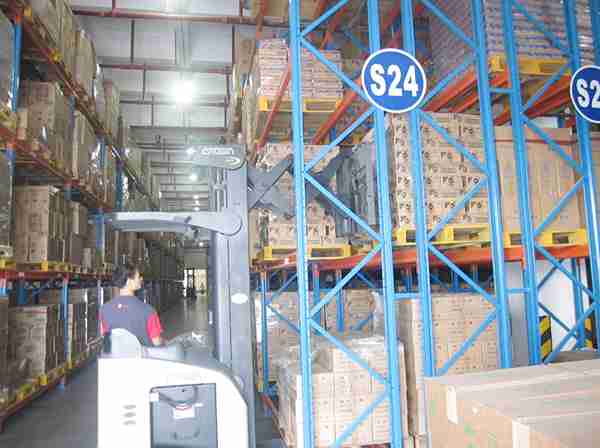
Real Estate and Footprint Waste: In a single-deep layout, aisles must be wide enough for a counterbalance forklift to maneuver—typically 11 to 13 feet. In a 10,000 square meter facility, this can mean over 5,000 square meters are dedicated solely to aisles. This is paved, expensive real estate generating zero storage value. The double-deep racking cost savings model directly attacks this inefficiency by drastically reducing aisle widths.
Labor Inefficiency and Travel Time: Forklift operators in a single-deep setup spend a significant portion of their day traversing these wide aisles. The labor cost associated with this non-productive travel is immense. Any strategy aimed at significant double-deep racking cost savings must, and does, address this core operational drain.
Energy and Overhead Consumption: A larger footprint equates to higher costs for lighting, heating, and cooling. Consolidating the storage footprint through a high-density system like double-deep racking creates immediate and ongoing double-deep racking cost savings on utility bills.

Deconstructing Double-Deep Racking: An Engineering Marvel for Modern Logistics
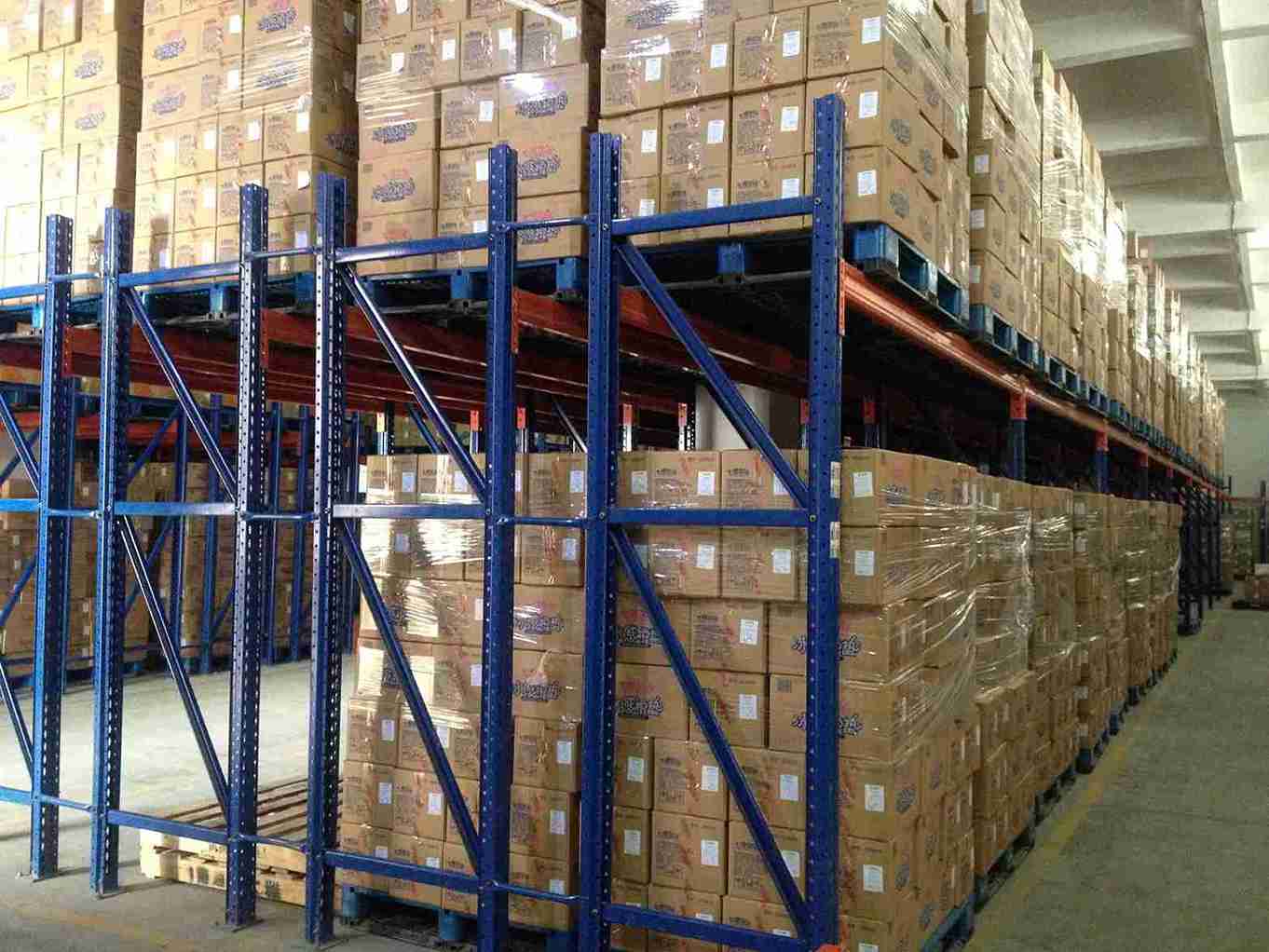
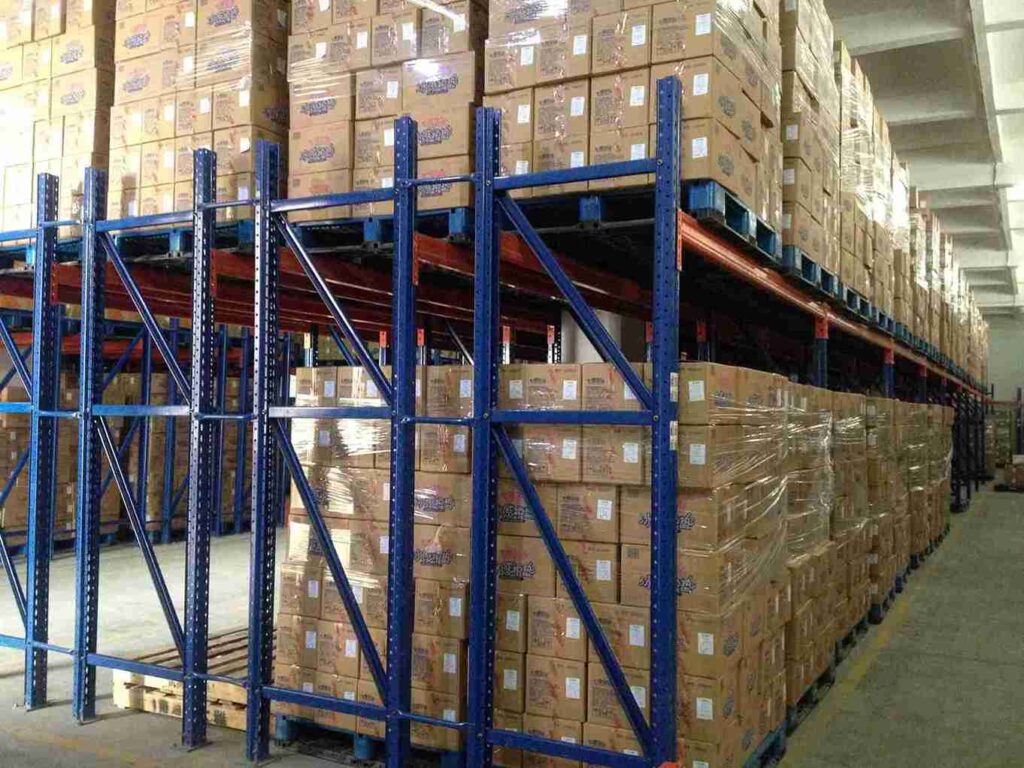
Double-deep racking is not merely a variation of standard racking; it is a fundamental re-engineering of the storage concept. The system is designed to store pallets two deep on each side of a single aisle, utilizing specialized material handling equipment to access the second pallet position.
Core Components and Structural Integrity
The achievement of reliable double-deep racking cost savings is contingent upon a robust and well-designed physical structure. Key components include:
Heavy-Duty Upright Frames: These are engineered with a higher structural capacity than their single-deep counterparts to handle the increased load and the unique longitudinal stresses.
Reinforced Load Beams: Designed for higher load ratings, these beams often incorporate features like step-beams or integrated decking to enhance stability and safety.
The Double-Reach Truck: This is the linchpin of the entire system. With its telescoping forks, it can operate in narrower aisles (around 10-11 feet) and retrieve the second pallet. The efficiency of this truck is a primary driver of the labor-related double-deep racking cost savings.
The Critical Role of the Warehouse Management System (WMS)
A double-deep racking system cannot operate at peak efficiency without a sophisticated WMS. The software is crucial for managing the inherent First-In, Last-Out (FILO) inventory flow. A smart WMS ensures that two pallets of the same SKU are slotted together, preventing product obsolescence and maximizing the double-deep racking cost savings by maintaining perfect inventory harmony. Without this digital brain, the physical system’s potential for double-deep racking cost savings is severely compromised.
The Financial Blueprint: Quantifying the 30% Cost Reduction
The promise of cutting costs by 30% is a bold one, but it is grounded in concrete financial arithmetic. The pathway to double-deep racking cost savings is clear and calculable.
Direct Savings from Storage Density Multiplication
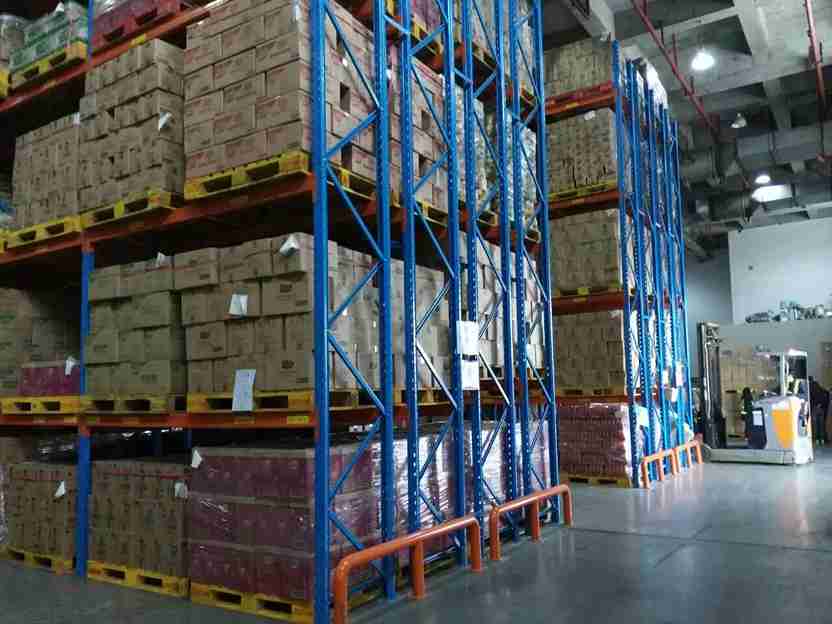
The most immediate impact is on storage capacity. By doubling the storage depth and utilizing narrower aisles, facilities typically see a 40-50% increase in pallet positions within the same building envelope. This directly translates to deferred or eliminated capital expenditure on new warehouse construction or leasing—a monumental double-deep racking cost savings achievement. For a company facing expansion, the double-deep racking cost savings from avoiding a new lease or build can run into millions of dollars.
The Compound Effect on Labor and Operational Expenditure
The double-deep racking cost savings multiply when labor is factored in. Narrower aisles mean shorter travel distances. This leads to a 15-25% increase in picks per hour per operator. The double-deep racking cost savings here are realized through:
Reduced Labor Hours: Fewer operators are needed to achieve the same throughput, or existing teams can handle significant volume growth.
Lower Energy Consumption: Electric reach trucks consume less power with reduced travel.
Decreased Equipment Maintenance: Less mileage translates to lower maintenance costs and longer equipment lifecycles.
Total Cost of Ownership (TCO): The True Measure of Value
While the initial investment for a double-deep system is higher than for basic racking, the TCO analysis reveals the undeniable truth about double-deep racking cost savings. The higher capital outlay is rapidly offset by the dramatic reduction in operational expenses. Most operations experience a full return on investment within 12-24 months, after which the double-deep racking cost savings flow directly to the bottom line, year after year.

Operational Synergies: Integrating Automation for Maximum Impact
The pursuit of double-deep racking cost savings does not end with the racking itself. The true pinnacle of efficiency is reached when this high-density storage is integrated with modern automation technologies.
AGVs and Automated Guided Vehicles in the Double-Deep Environment
The structured, narrow-aisle environment of a double-deep system is ideal for automation. Automated Guided Vehicles (AGVs) or automated double-reach trucks can operate with flawless precision 24/7. This integration supercharges the double-deep racking cost savings by:
Eliminating Labor Costs: The single largest operational expense is removed.
Ensuring Predictable Throughput: The system operates at a consistent, optimized pace, eliminating bottlenecks and variability.
Enhancing Safety and Reducing Damage: With no human operator, the risk of accidents and product damage plummets, contributing to a different but valuable form of double-deep racking cost savings.
The Automated Storage and Retrieval System (ASRS) Connection
Double-deep racking can serve as the high-density reserve block within a larger ASRS. In this configuration, the double-deep racking cost savings are part of a holistic efficiency gain. Automated cranes or shuttles store and retrieve pallets, which are then conveyed to picking stations. This creates a seamless, touchless flow that maximizes the double-deep racking cost savings from the storage module while boosting overall warehouse productivity.
Global Implementation: Tailoring the Solution for Emerging Markets
The principles of double-deep racking cost savings are universal, but their application in markets like Africa, Southeast Asia, and Latin America requires a nuanced, adaptive approach.
Navigating Infrastructure and Supply Chain Realities
Success in these dynamic regions depends on more than just the equipment. It requires a partner who understands local challenges:
Power Reliability: Plans must include robust backup power solutions to ensure the electric-based system remains operational.
Local Skills Development: Comprehensive training programs for local operators and technicians are non-negotiable for sustaining the system and the ongoing double-deep racking cost savings.
Localized Spare Parts Inventory: Strategic partnerships or local warehousing of critical spare parts prevent extended downtime, protecting the hard-won double-deep racking cost savings.
The Implementation Roadmap: A Phased Approach to Guaranteed Savings
Achieving the promised double-deep racking cost savings requires a disciplined, phased implementation strategy. Rushing this process is the fastest way to undermine the entire project’s ROI.
Phase 1: Feasibility Analysis and Data-Driven Design
The process begins with a laser scan of the existing facility and a deep analysis of inventory data (SKU velocity, cube, weight). This data-driven approach models the optimal layout and provides a accurate forecast of the double-deep racking cost savings, eliminating guesswork.
Phase 2: Customized Engineering and Procurement
Structural engineers design the system to meet local seismic and wind loads, a critical step for facilities in geologically active regions. This phase ensures the system’s integrity and long-term contribution to double-deep racking cost savings.
Phase 3: Professional Installation and Commissioning
Certified installation teams execute the plan with precision. Upon completion, rigorous load testing and safety inspections are conducted, resulting in a certified system ready to deliver its full potential for double-deep racking cost savings.
Beyond Double-Deep: A Comparative Look at High-Density Alternatives
While double-deep racking offers an excellent balance of density, accessibility, and double-deep racking cost savings, it is one option in a spectrum of high-density solutions.
Drive-In/Drive-Through Racking
These systems offer even greater density but operate on a Last-In, First-Out (LIFO) or FIFO basis with much lower selectivity. They often sacrifice the operational flexibility that contributes to the holistic double-deep racking cost savings model.
Push-Back Racking
Push-back racking offers better selectivity than drive-in systems and operates on a LIFO basis. However, its cost per pallet position is typically higher than double-deep, and the double-deep racking cost savings often prove more compelling for a wider range of applications.

Conclusion: Making the Strategic Investment in Warehouse Efficiency
In an era defined by supply chain volatility and intense cost pressure, optimizing the warehouse footprint is a strategic imperative, not a tactical afterthought. Double-deep pallet racking stands as a proven, powerful solution for achieving deep and sustainable operational double-deep racking cost savings. Its ability to dramatically increase storage density, slash labor costs, and reduce overhead provides a clear and calculable path to reducing total warehouse expenses by 30% or more.
When integrated with automation and supported by a robust WMS, the potential for double-deep racking cost savings is magnified, future-proofing logistics operations. For decision-makers seeking to enhance resilience, agility, and profitability, an investment in a professionally engineered double-deep racking system is one of the most impactful decisions they can make. The journey toward unparalleled double-deep racking cost savings begins with a single step: a commitment to replacing wasted space with engineered efficiency.
Frequently Asked Questions (FAQs)
1. How does the load capacity of double-deep racking compare to single-deep?
The load capacity is determined by the engineering of the specific components. While the beams and uprights are typically heavier-duty, the key difference is in the dynamic load considerations. A professional design ensures the system meets all required capacities, and the structural integrity is a non-negotiable foundation for achieving double-deep racking cost savings.
2. Can a double-deep system be reconfigured later if our inventory profile changes?
While not as flexible as selective racking, double-deep systems do offer a degree of reconfigurability. Beams can be relocated on the upright frames, and the entire system can be disassembled and reconfigured in a new layout, protecting the long-term investment and ensuring continued double-deep racking cost savings even as business needs evolve.
3. What is the typical lead time for a project of this scale?
From initial assessment to operational handover, a typical project can take between 12 and 20 weeks, depending on the system’s complexity and size. This timeline includes design, manufacturing, shipping, and installation. The long-term double-deep racking cost savings far outweigh the short-term project timeline.
4. Are there specific industries where double-deep racking is particularly advantageous?
Yes, industries with high-volume, low-SKU-count inventory are ideal. This includes beverage distribution, packaged food, certain manufacturing sectors (raw material storage), and cool/cold storage, where the double-deep racking cost savings from maximizing expensive cooled space are exceptionally high.
5. How does the system impact fire safety and insurance premiums?
High-density storage requires enhanced fire protection, typically involving in-rack sprinklers. While this adds to the initial cost, a properly protected system demonstrates a commitment to risk mitigation. Many companies find that this, coupled with the overall safety improvements, can have a neutral or even positive effect on insurance premiums, contributing to the overall double-deep racking cost savings.
If you require perfect CAD drawings and quotes for warehouse racking, please contact us. We can provide you with free warehouse racking planning and design services and quotes. Our email address is: jili@geelyracks.com