📐 "First 50 Enterprise Queries Get Custom 3D Warehouse Design" Plan


For logistics and warehouse managers across the Middle East, Africa, and other emerging markets, the quest for operational supremacy hinges on a single, critical metric: the total double deep racking cost per pallet. This figure transcends a simple procurement price; it embodies the complete financial and operational footprint of a storage strategy. A deeply engineered approach to double deep racking cost per pallet analysis reveals that true savings are unlocked not by cutting initial quotes, but by strategically amplifying storage density, integrating symbiotic automation, and tailoring solutions to local climatic and infrastructural realities.
This definitive guide explores how leading operations from Dubai’s free zones to Nairobi’s industrial parks are leveraging a holistic view of double deep racking cost per pallet to achieve 40-60% greater storage capacity, reduce material handling expenses by up to 30%, and build resilient, scalable supply chain nodes. The journey to an optimized double deep racking cost per pallet is a systematic fusion of precision engineering, lifecycle cost modeling, and regional expertise, transforming storage infrastructure from a static expense into a dynamic competitive asset.
1. Deconstructing the Pallet-Cost Equation: A Holistic Lifecycle Perspective
The common industry inquiry into “double deep racking cost per pallet” often yields a simplistic figure covering only beams and uprights. This is a fundamental misstep. For a financially astute warehouse director, the true double deep racking cost per pallet is a dynamic calculation spanning the asset’s entire lifecycle. It encapsulates direct capital outlay, equipment interdependence, operational throughput efficiency, and the often-overlooked “cost of space.” A sophisticated evaluation breaks down the double deep racking cost per pallet into several interlinked components:
Capital Expenditure (CapEx): This includes the racking structure (frames, beams, wire decking, safety locks), any required floor anchoring or special foundations, and the crucial investment in compatible material handling equipment (MHE) such as double-reach forklifts or automated guided vehicles (AGVs). The CapEx element of the double deep racking cost per pallet must be assessed jointly with the MHE, as one dictates the requirements of the other.
Operational Expenditure (OpEx): This is where ongoing double deep racking cost per pallet is defined. It encompasses forklift operator training and labor, energy consumption per storage/retrieval cycle, preventive maintenance schedules for both racking and MHE, insurance premiums linked to system safety, and the cost of inventory shrinkage due to damage or inefficiency.
Efficiency Dividend (The Negative Cost): This is the value-creation side of the equation. By potentially doubling storage density within the same footprint, a double deep system drastically reduces the required warehouse square footage. In markets like Riyadh or Lagos, where real estate costs are soaring, this dividend can be monumental. The resulting lower double deep racking cost per pallet, when factoring in avoided rent or construction costs, becomes powerfully compelling. Furthermore, faster cycle times and reduced travel distances for MHE lower the energy and labor cost per pallet moved.
Therefore, reducing the final double deep racking cost per pallet is not about sourcing cheaper steel; it’s about engineering a system where the efficiency dividend consistently and significantly outweighs the operational expenditure over a 10- to 15-year horizon. This holistic view is the cornerstone of strategic warehouse planning in growth markets.
2. The Density Engine: How Engineering Directly Dictates Cost Per Pallet
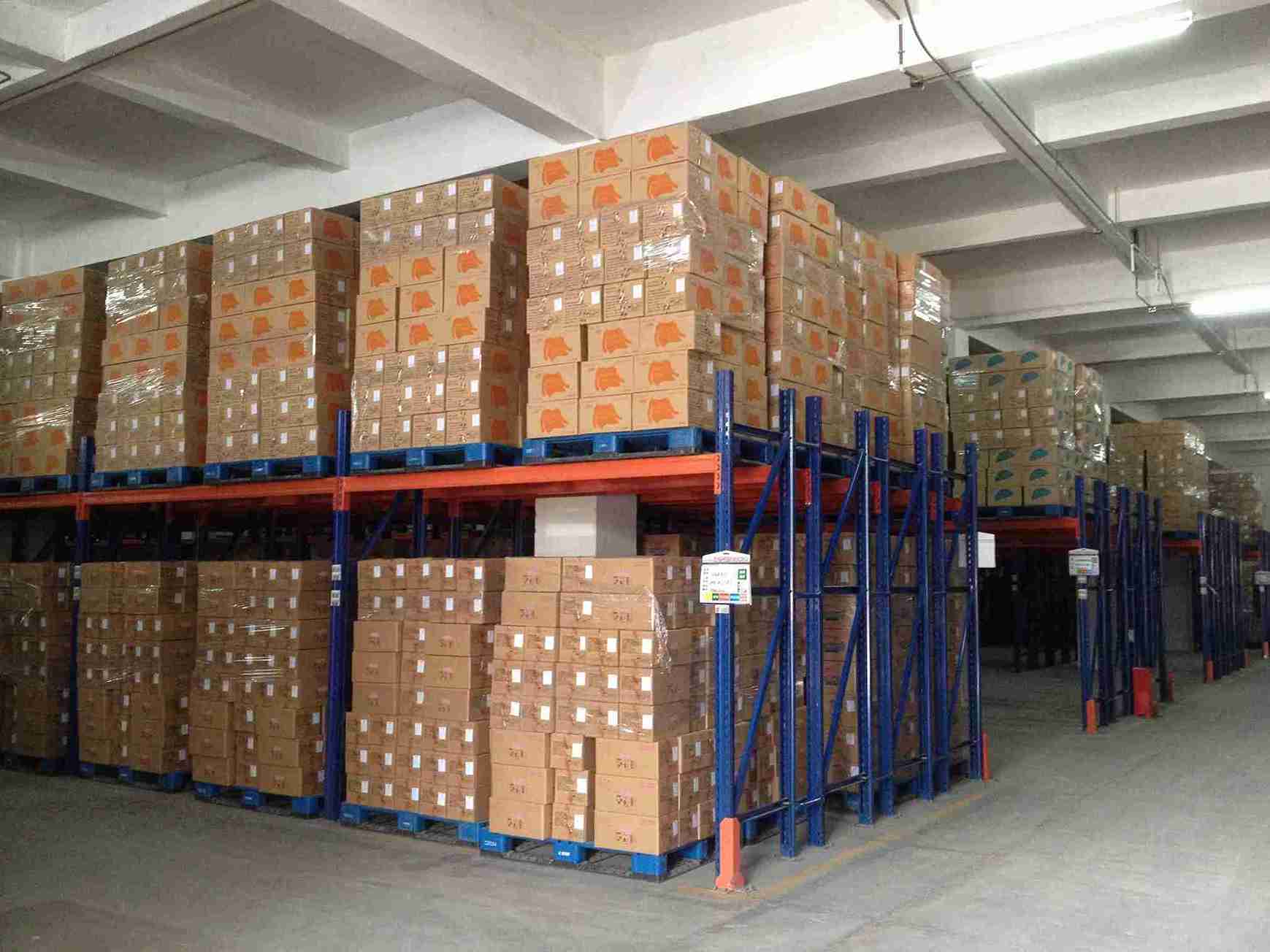
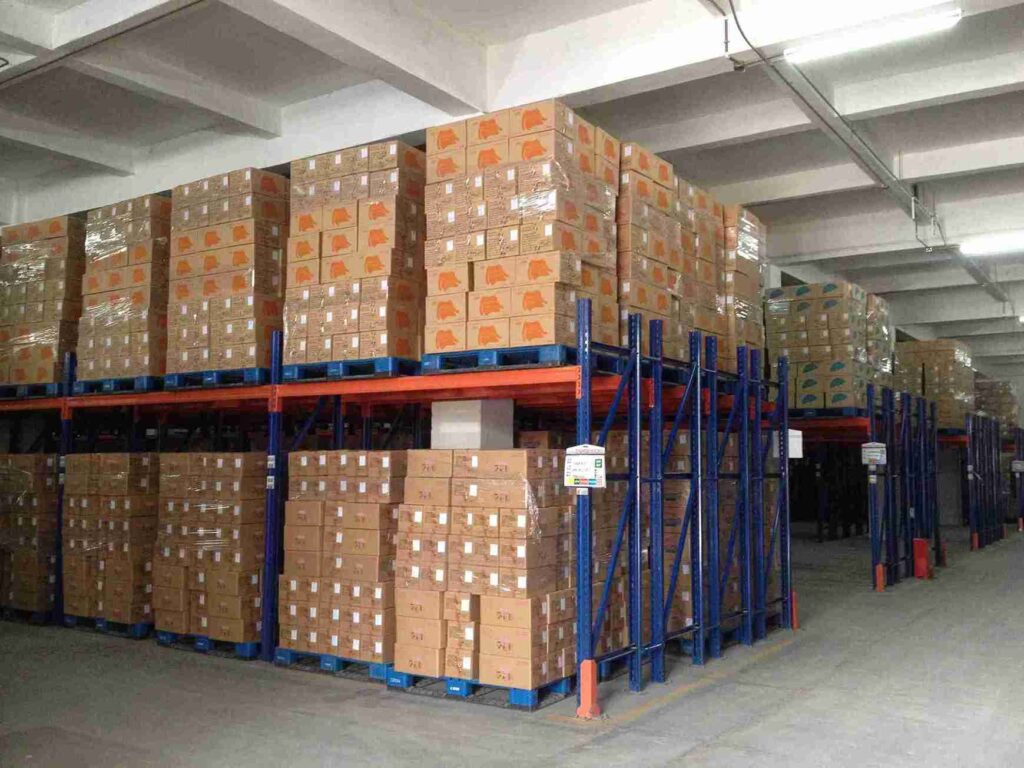
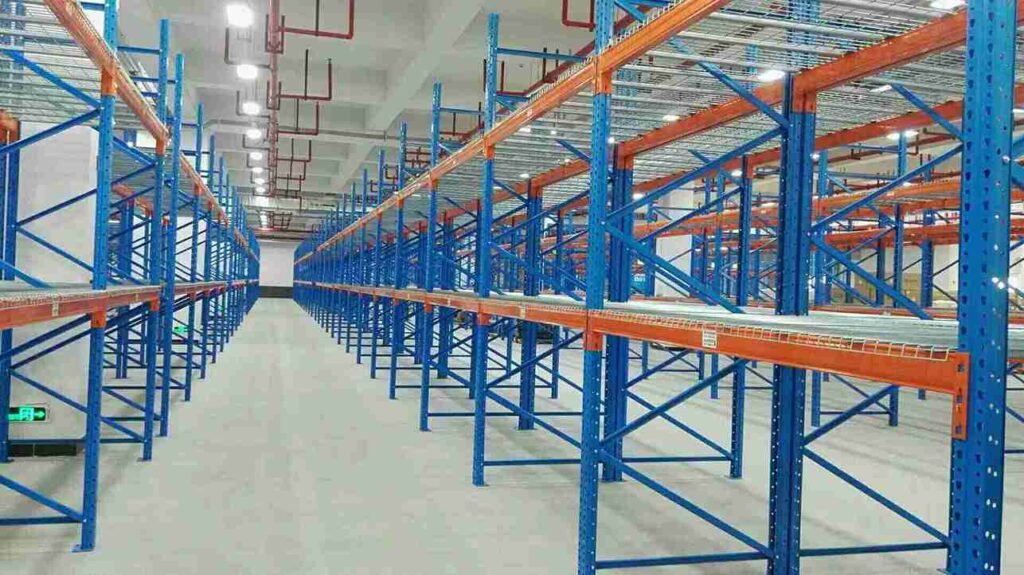
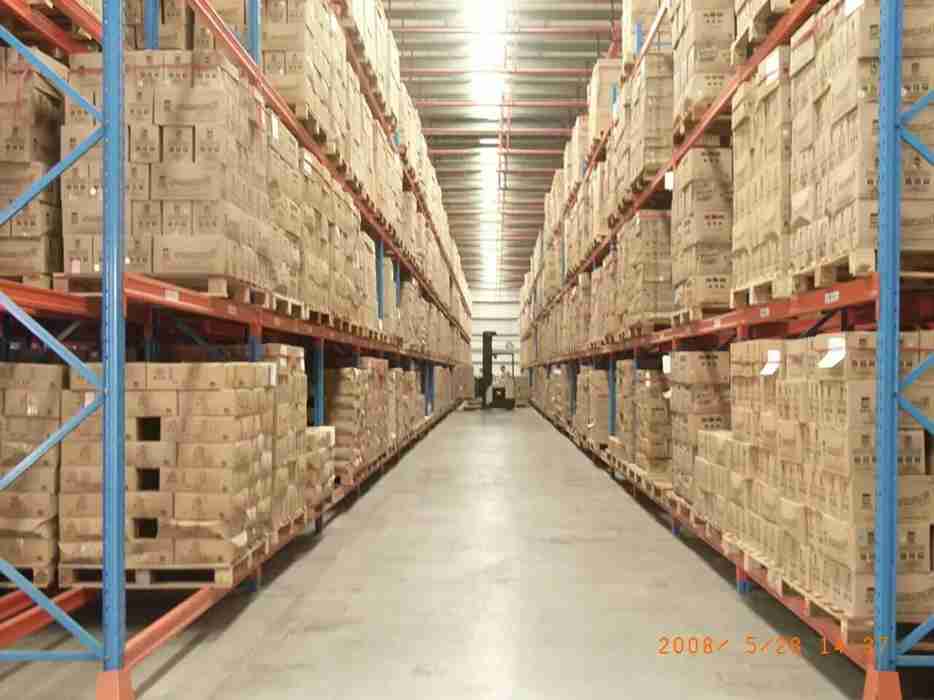
The primary lever for minimizing the long-term double deep racking cost per pallet is the profound spatial efficiency of the design itself. By storing pallets two units deep in a single lane, the system eliminates approximately every other aisle required by traditional selective racking. This geometric shift is transformative. It converts non-revenue-generating aisle space into productive storage positions, directly attacking the largest component of warehouse overhead: the cost of the building itself.
For a logistics manager in Durban or Mombasa, this means either storing significantly more goods within an existing shed, thereby deferring a costly expansion, or constructing a smaller, more cost-effective facility for a target capacity. The impact on the double deep racking cost per pallet is direct and substantial. When the capital cost of the racking system is amortized over a much larger number of pallet positions within the same real estate envelope, the fixed asset contribution to the double deep racking cost per pallet plummets.
2.1 Advanced Structural Design: Building Resilience into the Cost Model
The structural integrity of the racking is non-negotiable, but its design also directly influences the double deep racking cost per pallet. Expert engineers optimize this by:
Material Science Application: Utilizing high-tensile steel (e.g., grade S355) allows for upright columns with a higher strength-to-weight ratio. This can enable taller installations—critical in high-bay warehouses in the GCC—without proportionally increasing steel mass, optimizing both material costs and usable volume. The choice of protective coating, be it a sophisticated powder coat for controlled environments or hot-dip galvanizing for humid, coastal climates in West Africa, is a critical decision impacting the lifespan and maintenance interval, thus affecting the long-term double deep racking cost per pallet.
Dynamic Load Analysis: A system’s design load (the weight per pallet position) is a key cost driver. Professional analysis differentiates between uniformly distributed loads and point loads, allowing for a more precise and often more economical beam specification than a one-size-fits-all approach. Precision in this area prevents over-engineering and keeps the structural component of the double deep racking cost per pallet in check.
Seismic and Wind Loading Considerations: In regions like North Africa or certain parts of the Middle East, seismic activity or high wind loads must be factored into the design. This requires additional bracing and potentially more robust connections. While this increases the upfront material cost per pallet, it is a non-negotiable investment in asset safety and longevity, preventing catastrophic loss. The engineered solution finds the optimal balance between safety and economy for the regional double deep racking cost per pallet.
2.2 The FIFO vs. LIFO Conundrum and Hybrid Solutions
A standard double deep configuration operates on a Last-In, First-Out (LIFO) basis, which is perfect for non-perishable, homogeneous goods. However, for the thriving food & beverage, pharmaceutical, and chemical sectors across the target markets, First-In, First-Out (FIFO) is often a regulatory or quality imperative. This presents a challenge to density.
The innovative solution lies in hybrid systems. By integrating a gravity flow system within the deep lane, operators can maintain the dense double-deep storage while achieving FIFO rotation. In this setup, pallets are loaded from the rear (the high end) and flow gently to the front (the low end) on wheel or roller tracks. While the initial double deep racking cost per pallet for a flow-rack-integrated system is higher than static racking, the value preserved in inventory rotation and reduced handling often delivers a superior return, making the total effective double deep racking cost per pallet lower for FIFO applications.
3. The Symbiotic Partner: How Forklifts and AGVs Make or Break the Cost Equation
The performance of a double deep system is inseparable from the equipment that services it. The choice of Material Handling Equipment (MHE) is the single greatest variable influencing the operational double deep racking cost per pallet. Misalignment here can erase all theoretical density savings.
3.1 The Double-Reach Forklift: A Specialized but Essential Investment
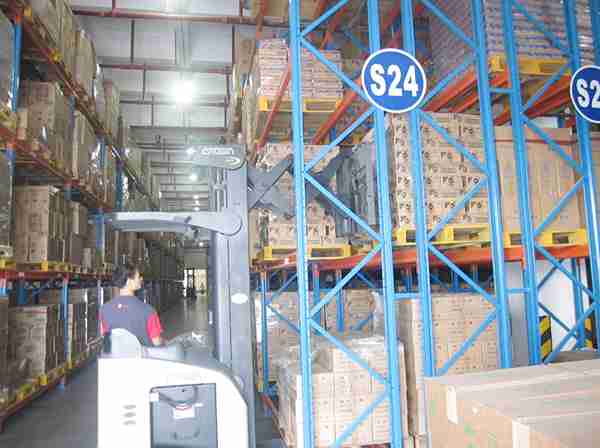
Conventional counterbalance forklifts require wide aisles and cannot access the second pallet position. The double deep system demands Very Narrow Aisle (VNA) trucks, specifically double-reach forklifts. Their articulating forks can extend to retrieve the second pallet. The financial analysis is crucial:
Higher CapEx, Lower OpEx: These specialized trucks command a higher purchase price, which must be added to the system’s total double deep racking cost per pallet calculation. However, their ability to operate in aisles as narrow as 1.5 meters dramatically reduces the truck’s travel distance per pallet transaction. This increases pallet moves per hour, lowers fuel or electricity consumption per move, and reduces operator fatigue. Over a 5-year period, this operational efficiency gain often outweighs the higher capital cost, leading to a lower net operational double deep racking cost per pallet.
The Human Factor – Operator Expertise: The efficiency of a double-reach truck is heavily dependent on operator skill. Professional training programs are essential to minimize racking impacts, pallet damage, and cycle times. Investing in certified training is a minor cost that protects the substantial investment in both racking and MHE, safeguarding the projected double deep racking cost per pallet.
3.2 The Automation Frontier: AGVs and the Path to Predictable Pallet Costs
For facilities targeting peak efficiency, 24/7 operations, or facing labor challenges, automation presents the ultimate optimization of the double deep racking cost per pallet. This involves:
Double Deep AGVs: These automated guided vehicles are fitted with custom lifting mechanisms capable of accessing both front and rear pallet positions. They operate with millimeter precision, follow optimized digital paths, and can work in darkness, eliminating lighting costs for that area. While the capital expenditure is significant, the operational double deep racking cost per pallet move becomes remarkably predictable, stable, and devoid of labor variance. They are ideal for high-volume, repetitive distribution centers, such as those serving e-commerce giants in the UAE or South Africa.
Unmanned Forklift Systems: Robotic forklifts combine the high load capacity of traditional machines with autonomous navigation. They can be seamlessly integrated into a double deep racking layout managed by a Warehouse Execution System (WES). This integration represents the pinnacle of reducing the variable double deep racking cost per pallet, as system performance is governed by software algorithms maximizing throughput and minimizing energy use.
The interplay between racking design and MHE selection is where expert consultants engineer tangible advantage. A system designed in isolation from its servicing equipment will inevitably lead to a suboptimal and inflated long-term double deep racking cost per pallet.
4. Regional Tailoring: Why Local Conditions Define the Final Cost Per Pallet
A blueprint from Europe cannot be dropped unaltered into Jeddah or Accra. The local environment, regulations, and infrastructure directly shape the project’s feasibility and final double deep racking cost per pallet.
4.1 Middle Eastern Mastery: Precision in Extreme Conditions
The Middle East presents unique opportunities and challenges. The high value of land in Dubai or Doha makes vertical storage (high-bay) a prime strategy. Double deep racking systems are engineered to heights exceeding 18 meters, integrated with AS/RS cranes. This vertical expansion multiplies the density benefit, collapsing the double deep racking cost per pallet relative to the astronomical value of the land below. Furthermore, the region’s harsh, sandy, and sometimes corrosive atmosphere mandates specific steel coatings and sealing technologies to ensure the racking’s lifespan—and thus its amortized cost per pallet—is not compromised.
4.2 African Adaptability: Robustness and Scalability as Core Principles
Africa’s logistics growth is explosive but uneven. Solutions must be robust and adaptable. Key considerations include:
Infrastructure Flexibility: Designs may need to accommodate less-than-ideal floor flatness or limited electrical grid stability. This can involve adjustable baseplates and modular racking designs that are easier to correct during installation, and AGVs with advanced on-board power management for facilities with intermittent power.
Phased Implementation: A business in Kenya may start with a manual double deep system but require a clear roadmap to automation. Future-proof designs ensure the initial racking investment is not obsoleted by later technological upgrades. The racking layout, lane widths, and software architecture are planned from day one to allow AGVs to be introduced in Phase 2, protecting the capital basis of the double deep racking cost per pallet calculation.
5. The Financial Blueprint: Modeling Your Specific Cost Per Pallet Trajectory
Moving from generic industry averages to a precise, proprietary financial model is the hallmark of a serious investment. This dynamic model projects the double deep racking cost per pallet over a 10-15 year period, incorporating:
Localized Inputs: Real estate costs (purchase or lease per m²), local energy tariffs, prevailing wage rates for forklift operators, and available financing terms.
Throughput Scenarios: Modeling different pallet-in/pallet-out volumes to understand how the operational double deep racking cost per pallet behaves under peak and off-peak conditions.
Comparative Analysis: Contrasting the TCO of the double deep system against feasible alternatives (selective racking, drive-in racking, push-back racking) under the same operational assumptions.
This model becomes the decisive business case, demonstrating not just the static double deep racking cost per pallet, but the cumulative cash flow advantage and return on investment (ROI). It shifts the conversation from price to value.
6. Beyond Installation: The Critical Role of Software and Control Systems
The physical racking is the skeleton; the software is the central nervous system. Maximizing efficiency and minimizing the operational double deep racking cost per pallet is impossible without intelligent control. This involves:
Warehouse Management System (WMS) Integration: The WMS must understand the double deep lane configuration to make intelligent put-away decisions, manage lane depth, and prevent product mixing that leads to inefficient retrieval (e.g., “honeycombing”).
Warehouse Control System (WCS) / Warehouse Execution System (WES): In automated setups, this software layer orchestrates the AGVs or robotic forklifts. It optimizes task assignment, traffic management, and charging schedules to ensure the highest possible equipment utilization and the lowest possible energy cost per pallet moved. This software optimization is a force multiplier on the physical system’s efficiency.
7. The Partnership Imperative: Lifecycle Support for Sustained Cost Efficiency
A superior double deep racking cost per pallet is not a one-time achievement but a sustained outcome of a professional partnership. This extends beyond delivery to include:
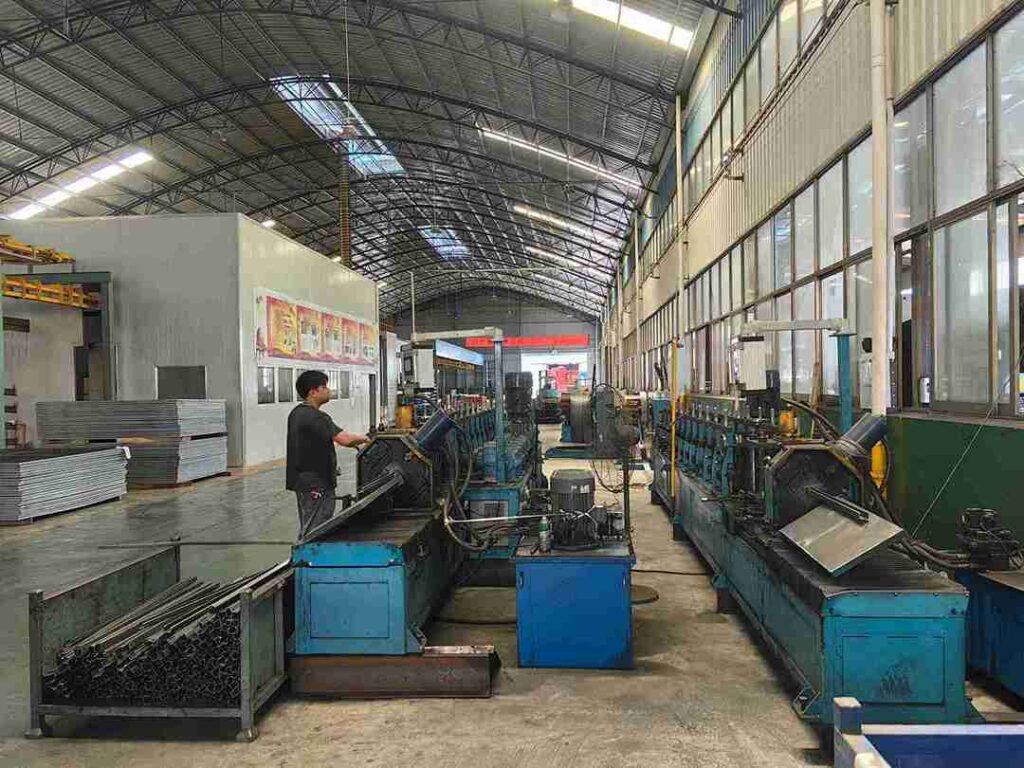
Certified Installation & Commissioning: Precision assembly by factory-trained technicians ensures the system performs as engineered, preventing early wear and safety issues that inflate costs.
Preventive Maintenance Programs: Scheduled inspections and servicing of both racking and MHE prevent costly breakdowns and extend asset life, protecting the long-term double deep racking cost per pallet.
Performance Audits and Re-optimization: Periodic reviews of system use, operator compliance, and warehouse layout can identify new opportunities to streamline flows and further reduce the effective double deep racking cost per pallet as business needs evolve.
Conclusion
For supply chain leaders navigating the competitive and rapidly evolving landscapes of the Middle East, Africa, and beyond, the strategic optimization of double deep racking cost per pallet is a definitive pathway to resilience and growth. It is a complex calculus that balances advanced engineering, intelligent automation, regional pragmatism, and lifecycle partnership. The goal is unequivocal: to transform the warehouse from a cost center into a density-driven, efficiency-generating core of the supply chain.
By mastering the total double deep racking cost per pallet—encompassing every element from steel specification to software logic—organizations can secure not just storage space, but a formidable and lasting market advantage. The most competitive double deep racking cost per pallet is achieved not by seeking the lowest bid, but by partnering with experts who architect the highest long-term value.
Frequently Asked Questions (FAQs)
Q1: For a warehouse with a very high mix of SKUs (many different products), is double deep racking still effective, or does it lead to excessive “honeycombing” (empty spaces that cannot be used)?
Double deep racking is most effective for high-density storage of medium-to-slow moving SKUs with good pallet quantity. For a warehouse with an extremely high SKU count and low pallets per SKU, selective racking often offers more flexibility. However, a sophisticated strategy called “velocity-based slotting” can optimize a double deep system. Fast-moving SKUs are placed in selective or hybrid racking, while the double deep lanes are reserved for the slower-moving, bulkier items that turn over in full-pallet quantities. A professional WMS is critical to manage this. Therefore, the effective double deep racking cost per pallet for high-mix facilities depends on intelligent zoning and software, not a blanket application.
Q2: How does the need for increased fire protection in high-density storage affect the overall project’s double deep racking cost per pallet?
High-density storage, including double deep racking, can impact local fire safety codes, potentially requiring enhanced suppression systems like in-rack sprinklers or ESFR (Early Suppression, Fast Response) sprinklers at the ceiling. This is a significant additional project cost that must be factored into the total double deep racking cost per pallet model from the outset. A qualified supplier will engage with local fire authorities and engineering consultants during the design phase to ensure compliance and provide a complete cost picture, avoiding costly retrofits.
Q3: Can existing standard forklifts be retrofitted or adapted to work with a new double deep racking system, or is a full fleet replacement always necessary?
It is virtually impossible to retrofit a standard counterbalance or reach forklift to perform the double-reach function safely and effectively. The mast design, fork carriage, and hydraulic systems are fundamentally different. Therefore, implementing a double deep system typically necessitates investment in compatible VNA equipment. The financial analysis must include this fleet upgrade or addition in the holistic double deep racking cost per pallet calculation. The efficiency gains from the new equipment, however, typically justify this investment through lower operating costs.
Q4: What are the critical floor flatness (FF/FL) tolerances required for a double deep racking system, especially one served by AGVs, and what is the cost of correcting an inadequate floor?
Double deep systems, particularly those using AGVs or high-reach trucks, demand very flat floors (typically a minimum of FM 50/FF 30 as per ASTM E1155). AGVs require even tighter tolerances for reliable navigation. If an existing floor is out of specification, corrective grinding or self-leveling topping can be a substantial cost adder. A professional site survey before final design is essential to identify this. This potential remedial work is a key variable in the installation portion of the double deep racking cost per pallet and must be assessed early to avoid budget overruns.
Q5: In regions with volatile currency exchange rates, how can we protect the project budget and the projected double deep racking cost per pallet from significant fluctuation between design and installation?
Currency risk is a real concern in international projects. Reputable suppliers offer several strategies:
1) Price Hedging: Locking in exchange rates for major components at the time of quotation or order placement.
2) Local Currency Contracts: Where possible, structuring contracts in the client’s local currency, with the supplier absorbing the exchange risk.
3) Phased Procurement: Breaking the project into phases (racking, MHE, software) with separate, shorter-duration orders to reduce exposure time. A transparent partner will discuss these options upfront to stabilize the final double deep racking cost per pallet.
If you require perfect CAD drawings and quotes for warehouse racking, please contact us. We can provide you with free warehouse racking planning and design services and quotes. Our email address is: jili@geelyracks.com