📐 "First 50 Enterprise Queries Get Custom 3D Warehouse Design" Plan


Are Double Deep Racking Disadvantages a Deal-Breaker? A Candid Analysis
For logistics professionals grappling with soaring real estate costs and intensifying pressure to optimize storage footprints, the debate surrounding double deep racking advantages and disadvantages is more than academic—it’s a pivotal strategic decision. The system presents a compelling proposition: a dramatic leap in storage density. Yet, seasoned warehouse managers often voice legitimate concerns about accessibility and cost.
A thorough examination of double deep racking advantages and disadvantages reveals that the system’s viability hinges not on a generic checklist, but on a precise alignment with a company’s specific operational DNA. This analysis moves beyond superficial lists to deliver an unvarnished, expert-level exploration of the trade-offs, providing a definitive framework for determining whether the notable double deep racking disadvantages are indeed fatal flaws or simply manageable challenges on the path to transformative space utilization.
Deconstructing the System: The Fundamental Mechanics of Double Deep Racking
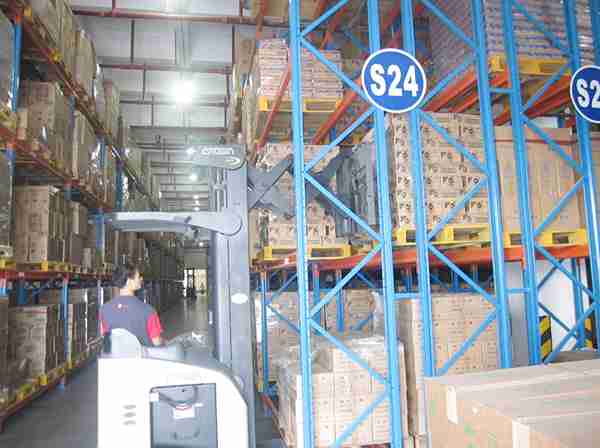
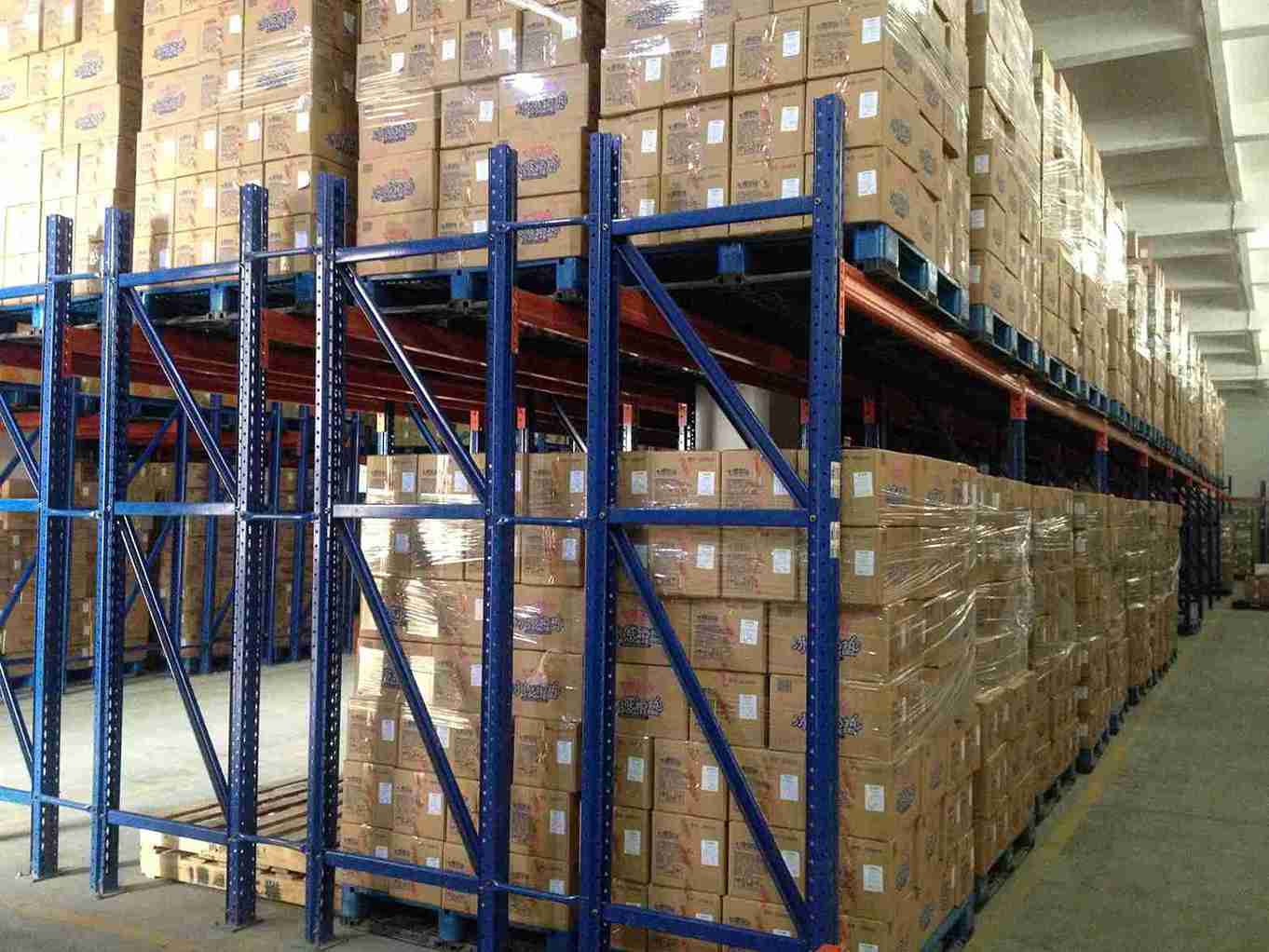
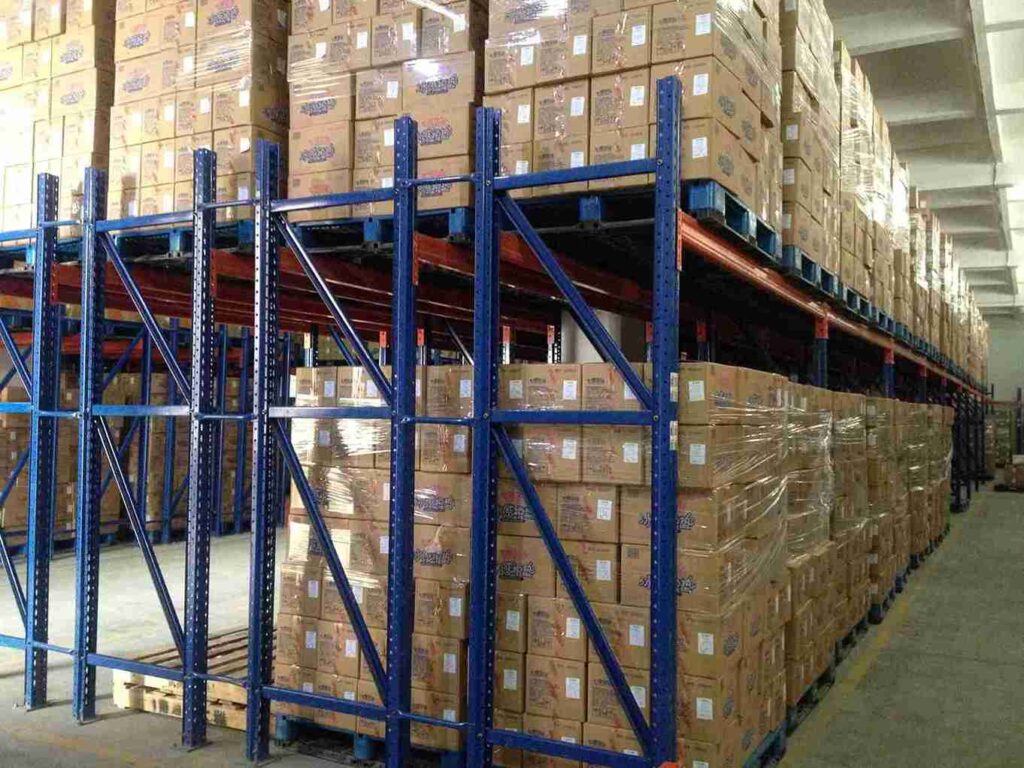
To fully appreciate the double deep racking advantages and disadvantages, one must first understand its core architectural principle. Double deep racking is a pallet storage configuration where goods are stored two pallets deep on either side of a central aisle. This design stands in stark contrast to selective pallet racking, which offers direct, unimpeded access to every single pallet position. The operational heart of the double deep racking system is the deep-reach forklift truck, a specialized vehicle whose telescoping forks can extend beyond the front pallet to securely handle the rear pallet. This single mechanical requirement is the genesis of many double deep racking disadvantages, yet it is also the key that unlocks its primary advantage.
The entire discussion of double deep racking advantages and disadvantages orbits around this fundamental trade-off: the sacrifice of immediate, selective access for the gain of profound storage density. It occupies a crucial middle ground in the storage system spectrum. It is less dense than drive-in or push-back racking but offers far better selectivity. It is denser than selective racking but introduces access limitations. Therefore, any meaningful evaluation of double deep racking advantages and disadvantages must contextualize the system not in isolation, but in relation to these alternatives, always asking: “For this specific application, do the double deep racking advantages outweigh the documented double deep racking disadvantages?”
The Engineering Blueprint: How Aisle Reduction Fuels Density
The most quantifiable of all double deep racking advantages is its radical reduction in aisle space. In a conventional selective racking layout, the aisles required for forklift turning radii can consume up to 60% of the total floor space, a staggering inefficiency. By doubling the storage depth, a double deep racking system can reduce the number of aisles by approximately 50%, instantly reclaiming that square footage for productive storage.
This engineering decision is what drives the system’s most celebrated benefit—a potential 40-50% increase in storage capacity within the same warehouse footprint compared to selective racking. For a business constrained by costly expansion or expensive lease rates, this single point in the column of double deep racking advantages can be decisive, often overshadowing the accompanying double deep racking disadvantages.
An Unflinching Look at the Challenges: Scrutinizing Double Deep Racking Disadvantages
A credible analysis must confront the double deep racking disadvantages with candor. These are not minor inconveniences; they are fundamental operational constraints that can cripple an unprepared operation. A failure to thoroughly acknowledge and plan for these double deep racking disadvantages is the most common cause of system failure and buyer’s remorse.
The LIFO Imperative: A Critical Access Limitation
Foremost among the double deep racking disadvantages is the mandatory Last-In, First-Out (LIFO) access pattern. The second pallet in a lane is physically inaccessible until the first pallet is removed. This is arguably the most significant of all double deep racking disadvantages for operations handling perishable goods, items with strict lot-number control, or products with short shelf lives. The LIFO constraint can lead to stock obsolescence, inefficient picking paths, and inventory inaccuracies if not managed with extreme discipline.
This particular double deep racking disadvantages list item is often the primary reason logistics directors dismiss the system outright. However, characterizing this as a universal deal-breaker is an oversimplification. The severity of this double deep racking disadvantages is entirely dependent on inventory profile. For operations with high-volume, non-perishable SKUs that turn over rapidly, the LIFO impact is minimized, making the other double deep racking advantages more attractive.
The Capital and Operational Burden of Specialized Equipment
Another substantial entry on the list of double deep racking disadvantages is the absolute requirement for specialized material handling equipment. Standard counterbalance forklifts are incapable of operating in a double deep racking system. The necessity for deep-reach trucks introduces a multi-faceted cost burden that amplifies the double deep racking disadvantages. The acquisition cost of a deep-reach truck is significantly higher than that of a standard forklift.
Furthermore, these machines are more complex, requiring highly trained, skilled operators and a more rigorous, and costly, preventative maintenance regimen. This reliance on a specialized fleet introduces a vulnerability; the breakdown of a single reach truck can block access to a substantial portion of inventory, a operational risk that compounds the double deep racking disadvantages related to throughput and accessibility.
Throughput Velocity: The Inevitable Efficiency Trade-Off
When evaluating double deep racking advantages and disadvantages, throughput speed is a critical battleground. It is an undeniable fact that a double deep racking system will almost always have a lower peak throughput than a well-designed selective racking system. The cycle time for retrieving a rear pallet is inherently longer. The operator must carefully position the truck, extend the forks, engage the load, retract the forks, and then maneuver out of the aisle. These extra seconds per cycle accumulate over a shift, resulting in a measurable reduction in overall productivity.
This is a pivotal double deep racking disadvantages for distribution centers where order fulfillment speed is the paramount Key Performance Indicator (KPI). The analysis of double deep racking advantages and disadvantages thus becomes a question of priorities: is the value of the gained storage space greater than the cost of the lost productivity? For some, this double deep racking disadvantages is a deal-breaker; for others, it is an acceptable trade.
The Non-Negotiable Dependency on Advanced Software
A frequently underestimated aspect of the double deep racking disadvantages is the system’s complete reliance on a sophisticated Warehouse Management System (WMS). Operating a double deep racking system without a WMS capable of intelligent inventory control is akin to flying blind. The WMS is the essential tool for mitigating the other double deep racking disadvantages, particularly the LIFO constraint. It must perform complex tasks like dynamic slotting, intelligent put-away to group similar SKUs or dates, and provide flawless, real-time visibility into lane composition.
The cost and complexity of implementing and maintaining this level of system integration is a hidden but substantial double deep racking disadvantages that must be included in the total cost of ownership calculation. When weighing the double deep racking advantages and disadvantages, the WMS requirement is not a minor footnote; it is a core system component.
The Compelling Counterargument: Where Double Deep Racking Advantages Dominate
Despite the formidable catalogue of double deep racking disadvantages, the system remains a cornerstone of modern warehouse design for a simple reason: under the right conditions, the double deep racking advantages are so powerful that they render the challenges moot. A deep understanding of both the double deep racking advantages and disadvantages allows for strategic deployment where the system excels.
Transformative Storage Density: The Primary Advantage
The preeminent double deep racking advantages is, without question, the dramatic increase in storage density. In an era of escalating industrial real estate costs, the ability to store up to 50% more pallets in the same building is a transformative financial advantage. This core double deep racking advantages directly translates to a lower cost-per-pallet-stored, deferred capital expenditure on facility expansion, and the ability to accommodate growth within an existing footprint. For businesses in high-cost urban centers or those in rapid growth phases, this single benefit often tops the list of double deep racking advantages, providing a compelling reason to accept the associated double deep racking disadvantages.
Improved Space Utilization and Inherent Organization
Among the more subtle yet significant double deep racking advantages is the creation of a more organized and efficient warehouse layout. The reduction in aisle count naturally consolidates storage into a more compact footprint. This not only increases density but also can streamline material flow by reducing forklift cross-traffic and confining travel to more defined pathways. This can lead to enhanced safety, a reduction in product damage, and a generally more orderly operation. This organizational benefit is a key double deep racking advantages that is often realized only after implementation, complementing the primary financial double deep racking advantages of increased density.
A Strategic Stepping Stone to Automation
For forward-thinking operations, one of the most strategic double deep racking advantages is its role as a bridge to full automation. The structured, repetitive nature of the double deep racking environment is inherently more suitable for automation than a free-form selective system. The racking itself can be designed to be compatible with future Automated Guided Vehicles (AGVs) or semi-automated retrieval systems. By investing in double deep racking today, a company is effectively future-proofing its warehouse, building an infrastructure that can be more easily and cost-effectively upgraded later. This long-term strategic value is a powerful but often overlooked item when listing the double deep racking advantages and disadvantages.
The Competitive Landscape: Double Deep Racking vs. Alternative Systems
A true expert assessment of double deep racking advantages and disadvantages requires a comparative analysis. The system does not exist in a vacuum, and its value is relative to other storage solutions.
Double Deep vs. Selective Pallet Racking
The classic comparison pits the high-density double deep racking advantages against the high-accessibility advantages of selective racking. The choice is a pure expression of operational priority. Selective racking provides 100% selectivity and faster throughput, core double deep racking disadvantages. Conversely, double deep racking provides superior density, which is the primary selective racking disadvantage. The evaluation of double deep racking advantages and disadvantages in this context is binary: which is the greater constraint, space or speed?
Double Deep vs. Drive-In/Drive-Through Racking
When compared to drive-in systems, the double deep racking advantages include much better selectivity and reduced risk of rack damage, as forklifts do not enter the storage structure. The double deep racking disadvantages in this comparison are a lower storage density and a higher cost per pallet position. The analysis of double deep racking advantages and disadvantages here favors double deep racking for operations needing a better balance of density and accessibility without the extreme LIFO/FILO constraints of drive-in systems.
Double Deep vs. Push Back Racking
Push back racking, a popular high-density alternative, offers greater depth and dynamic LIFO operation. In this comparison, the double deep racking advantages are a lower initial investment, higher structural weight capacity, and simpler mechanics with fewer moving parts. The double deep racking disadvantages are a lower storage density per square foot and the rigid LIFO access. For operations storing very heavy loads or those with capital constraints, the double deep racking advantages of cost and robustness can be decisive.
The Strategic Decision Matrix: Navigating the Trade-Offs
The ultimate question—are the double deep racking disadvantages a deal-breaker?—can only be answered through a disciplined, quantitative assessment. The following matrix guides this critical decision-making process, forcing a direct comparison of the double deep racking advantages and disadvantages against key business drivers.
SKU Velocity and Profile: Operations with a high proportion of fast-moving, non-perishable, uniform SKUs are ideal candidates, mitigating the primary double deep racking disadvantages. Conversely, a high-SKU, slow-moving, or time-sensitive profile amplifies the double deep racking disadvantages.
Financial Modeling: The capital cost of the racking and specialized equipment (a key double deep racking disadvantages) must be weighed against the quantifiable value of the saved space (the core double deep racking advantages). A detailed ROI analysis is essential.
Operational Throughput Requirements: If peak picking speed is the non-negotiable top KPI, the throughput-related double deep racking disadvantages may be prohibitive. If storage capacity is the burning issue, the double deep racking advantages dominate.
Future Growth and Technology Roadmap: The long-term strategic double deep racking advantages related to automation readiness can influence the decision, making short-term double deep racking disadvantages more palatable.
Turning Weaknesses into Strengths: Proactive Mitigation of Disadvantages
Successful implementations of double deep racking do not ignore the double deep racking disadvantages; they engineer solutions to mitigate them. A sophisticated approach involves several key strategies:
Hybrid Warehouse Design: The most effective method to balance the double deep racking advantages and disadvantages is to not rely on a single system. Use double deep racking for high-density bulk storage of fast-movers, and integrate selective racking for picking, slow-movers, and time-sensitive goods. This hybrid model captures the double deep racking advantages where they are strongest and contains the double deep racking disadvantages where they are most harmful.
WMS as a Strategic Weapon: Deploy a high-functionality WMS to actively manage the LIFO constraint. Through intelligent put-away logic, dynamic slotting, and perfect inventory visibility, the WMS can virtually eliminate the stock accessibility issues that form the core of the double deep racking disadvantages.
Investment in People and Process: Comprehensive training for reach truck operators transforms them from simple drivers into system stewards. A rigorous preventative maintenance schedule for the specialized fleet directly addresses the reliability concerns among the double deep racking disadvantages.
Conclusion: The Final Verdict on a Complex Storage Solution
In the final analysis, the extensive catalogue of double deep racking disadvantages—the LIFO access, the specialized equipment costs, the throughput trade-offs, and the software dependency—are indeed serious considerations. However, to universally categorize them as “deal-breakers” is to misunderstand the nuanced reality of warehouse design. The double deep racking advantages, particularly the transformative gains in storage density and the strategic path to automation, possess immense value for a specific segment of the market.
The determination is not a simple yes or no but a complex calculation of operational fit. For the right company with the right inventory profile, the profound double deep racking advantages not only justify managing the well-documented double deep racking disadvantages, but they make the system an unparalleled tool for driving efficiency and controlling costs. The most successful warehouses are those that conduct a meticulous, honest analysis of their own needs, viewing the list of double deep racking advantages and disadvantages not as a verdict, but as a blueprint for a tailored, high-performance storage solution.
Frequently Asked Questions (FAQs)
1. What is the typical lead time for the procurement and installation of a double deep racking system compared to selective racking?
The lead time for a double deep racking system is generally comparable to that of selective racking, as the core components are similar. However, potential delays can arise from the longer procurement time for specialized deep-reach forklifts. Furthermore, the installation process for a double deep racking system requires a higher degree of precision to ensure perfect alignment for the reach truck operation, which can add time to the project schedule. This is a practical consideration that ties into the overall double deep racking advantages and disadvantages analysis, impacting project planning.
2. How does the resale value or reusability of double deep racking components compare to other systems?
The resale value and reusability of double deep racking components are moderate but can be more limited than selective racking. While the upright frames are often reusable, the specific layout and beam configuration are highly customized to the double-deep principle. Reconstituting the system into a standard selective layout elsewhere is often not economically feasible, representing a potential long-term double deep racking disadvantages in terms of flexibility. This contrasts with the high reusability of selective racking, a point to consider in the total lifecycle assessment of double deep racking advantages and disadvantages.
3. Can double deep racking be effectively used in environments with low ceilings?
The effectiveness of double deep racking in low-clearance buildings is a nuanced aspect of the double deep racking advantages and disadvantages discussion. The system itself does not require high ceilings; its density gains are primarily horizontal. However, the specialized deep-reach trucks often have a greater overall height than some standard forklifts, which must be factored into the building’s clear height. In such cases, the double deep racking advantages of horizontal density are still fully realizable, provided the equipment fits the space, mitigating a potential double deep racking disadvantages in low-clearance facilities.
4. What are the specific fire safety and sprinkler system considerations for a double deep racking installation?
Fire safety is a critical consideration that amplifies certain double deep racking disadvantages. The dense storage configuration can create a greater fire load and potentially obstruct sprinkler water discharge. Most building codes require in-rack sprinkler systems to be installed within double deep racking structures, which adds significant cost and complexity to the installation. This is a substantial **double deep racking disadvantages** from both a cost and compliance perspective, and it must be thoroughly engineered and budgeted for from the outset.
5. For a business with highly seasonal demand, is double deep racking a flexible solution?
Double deep racking presents a significant double deep racking disadvantages for businesses with highly fluctuating inventory levels due to seasonality. The system is designed for high-density storage of relatively uniform product. During off-peak seasons, the fixed LIFO lanes may be under-utilized or filled with slow-moving stock, creating access blockages when the peak season arrives. This lack of inherent flexibility is a key double deep racking disadvantages for seasonal businesses, which often benefit more from the adaptable nature of selective racking or mobile shelving systems.
Welcome to contact us, if you need warehouse rack CAD drawings. We can provide you with warehouse rack planning and design for free. Our email address is: jili@geelyracks.com