📐 "Die ersten 50 Unternehmensanfragen erhalten ein individuelles 3D-Warehouse-Design" Plan















Wholesale Heavy Duty Pallet Racking & Sorting System | Double-Deep + ASRS Compatible – Reduce 40% Floor Space | Free ROI Analysis for Central Asia / GCC
The New Economics of Wholesale Warehousing Across Central Asia and the GCC
The logistics landscape of Central Asia and the Gulf Cooperation Council (GCC) is undergoing its most radical transformation in half a century. Rising land values near key transit hubs such as Jebel Ali Free Zone (UAE), Dammam Industrial City (Saudi Arabia), and the Khorgos Gateway on the China‑Kazakhstan border have forced warehouse operators to rethink every square metre of storage.
At the same time, labour markets for skilled forklift operators have tightened, with vacancy rates for certified material handling staff exceeding 20% in several Gulf cities. The solution that has emerged as the industry standard for wholesale distribution is a heavy duty pallet racking System engineered for double‑deep density and full compatibility with Automated Storage and Retrieval Systems (ASRS).
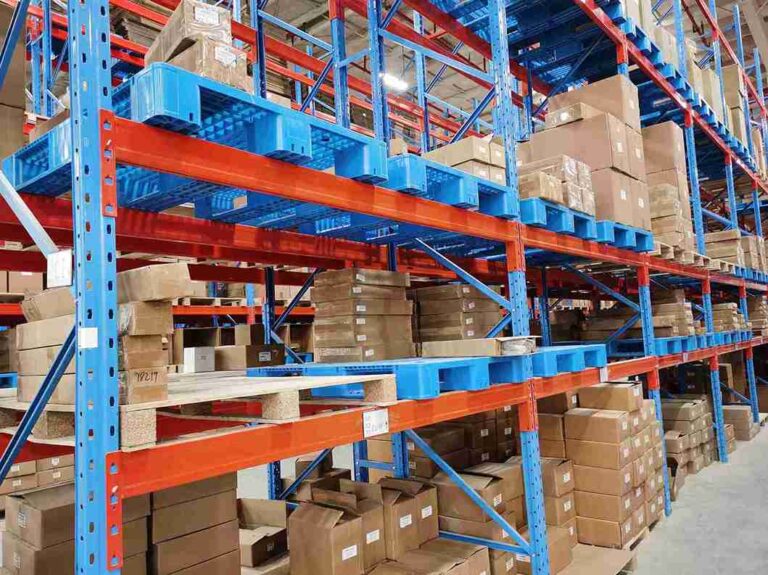
A properly specified heavy duty pallet racking installation does more than simply hold pallets. It becomes the structural backbone of a high‑throughput, low‑labour, space‑efficient warehouse ecosystem. When combined with an automated sorting system, conveyors, and a double‑deep ASRS crane, such a heavy duty pallet racking layout can reduce floor space consumption by 40% compared to conventional selective racking, while improving order accuracy to 99.5% and cutting labour costs by half.
For wholesale businesses operating across automotive parts, cold chain pharmaceuticals, construction materials, and fast‑moving consumer goods (FMCG) in markets like Uzbekistan, Kazakhstan, Saudi Arabia, and the UAE, the return on investment (ROI) from upgrading to a heavy duty pallet racking‑based automated solution typically pays back within 18 to 30 months.
This guide provides a comprehensive, technical, and region‑specific analysis of heavy duty pallet racking systems configured for double‑deep storage and ASRS readiness. The article draws on field data from installations across the GCC and Central Asia, engineering standards from RMI, FEM, and EN 15512, as well as case studies from cold storage and automotive wholesale operations. Readers will learn why heavy duty pallet racking is non‑negotiable for high‑density environments, how to engineer double‑deep layouts for maximum space saving, what ASRS compatibility really costs, and how to obtain a free, site‑specific ROI analysis for their own facility.
Chapter 1 – Why Central Asian and GCC Warehouses Demand a Superior Heavy Duty Pallet Racking Solution
H3: 1.1 Land Scarcity and the Rising Cost of Industrial Real Estate
Industrial land prices in GCC logistics zones have risen by 38% since 2020, according to regional real estate reports. In Almaty, the largest commercial hub of Kazakhstan, prime warehouse space near the international airport now leases for USD 85–110 per square metre annually – a 50% increase from five years ago. Similar trends are visible in Tashkent (Uzbekistan), Baku (Azerbaijan), and Dushanbe (Tajikistan), where new free trade zones are attracting foreign investment but also driving up land costs.
In this environment, every storage position that can be consolidated into a smaller footprint directly improves net profit margins. A heavy duty pallet racking system configured for double‑deep storage effectively doubles the number of pallets stored per aisle, without expanding the building. For a wholesale distributor handling 5,000 pallet positions, moving from single‑deep selective racking to a double‑deep heavy duty pallet racking layout can free up between 1,500 and 2,000 square metres of floor space. That space can be repurposed for value‑added services (e.g., kitting, labelling, light assembly) or sub‑leased to generate additional revenue.
The manufacturer’s engineering team regularly conducts site assessments in which existing single‑deep heavy duty pallet racking is replaced with a double‑deep equivalent. One recent project in Dammam Industrial City involved a building materials wholesaler. The original heavy duty pallet racking layout used 9,200 m² for 6,800 pallets. After re‑engineering to a double‑deep heavy duty pallet racking structure with ASRS‑ready aisle dimensions, the same 6,800 pallets occupied only 5,600 m² – a 39% reduction. The client saved USD 480,000 per year in lease costs alone.
1.2 Extreme Climate and Environmental Stress Factors
Standard warehouse racking designed for temperate European or North American conditions often fails prematurely in the GCC and Central Asia. Coastal cities like Dubai, Doha, and Kuwait City experience relative humidity above 75% for six months of the year, combined with airborne salt from the Arabian Gulf. Inland areas such as Riyadh, Ashgabat, and the Fergana Valley face daily temperature swings of up to 25 °C, frequent dust storms, and occasional sand abrasion.
A heavy duty pallet racking system intended for these markets must be manufactured from higher‑grade steel with enhanced corrosion protection. The minimum specification that industry engineers recommend is S350GD+Z steel with a Z600 galvanised coating (600 g/m² zinc), or hot‑dip galvanising after fabrication. Many suppliers of heavy duty pallet racking for the Middle East also offer epoxy‑polyester powder coating as an additional barrier against humidity and salt.
Cold storage facilities add another layer of complexity. The GCC cold chain market is expanding at 12.5% CAGR, and Central Asian countries are investing heavily in temperature‑controlled logistics for agricultural exports. A heavy duty pallet racking system installed in a −25 °C freezer must use steel that has been Charpy impact‑tested at −30 °C (minimum 27 J). Closed‑box beam profiles prevent ice accumulation, and all bolts must be stainless steel grade A2‑304 or A4‑316. The design team for any heavy duty pallet racking project in a cold zone will also verify that floor anchors are epoxy‑based chemical anchors rated for freeze‑thaw cycles – a detail that many inexperienced suppliers overlook.
1.3 Labour Scarcity and the Push toward Automation
Across the GCC, the reliance on expatriate labour for warehouse operations has become a strategic risk. Forklift operator visas are becoming harder to secure, and the cost of recruiting, training, and retaining certified reach‑truck drivers has increased by 25% since 2022. In Central Asia, while wages are lower, the availability of workers with modern material handling skills is limited, especially outside major cities.
A heavy duty pallet racking system that is designed from the outset for ASRS compatibility allows warehouse operators to gradually automate their picking and put‑away processes. In the first phase, a heavy duty pallet racking layout can be operated manually with double‑deep reach trucks. Later, as labour costs rise or throughput increases, the same heavy duty pallet racking structure can receive stacker cranes, conveyor interfaces, and a warehouse control system without any structural modification – provided the original installation included bolted connections and continuous guide rails.
This phased migration path is especially popular among wholesale distributors in Saudi Arabia and Kazakhstan, where government incentives for industrial automation are available. One client in Riyadh installed a heavy duty pallet racking system with ASRS‑ready columns and rails in 2023, operated manually for 18 months, and then added two stacker cranes in early 2025. The total capital outlay was 32% lower than building a fully automated system from day one, yet the eventual throughput matched that of a greenfield ASRS installation.
Chapter 2 – Double‑Deep Heavy Duty Pallet Racking: The Core Technology Behind 40% Space Savings
2.1 Single‑Deep vs. Double‑Deep: A Quantitative Comparison
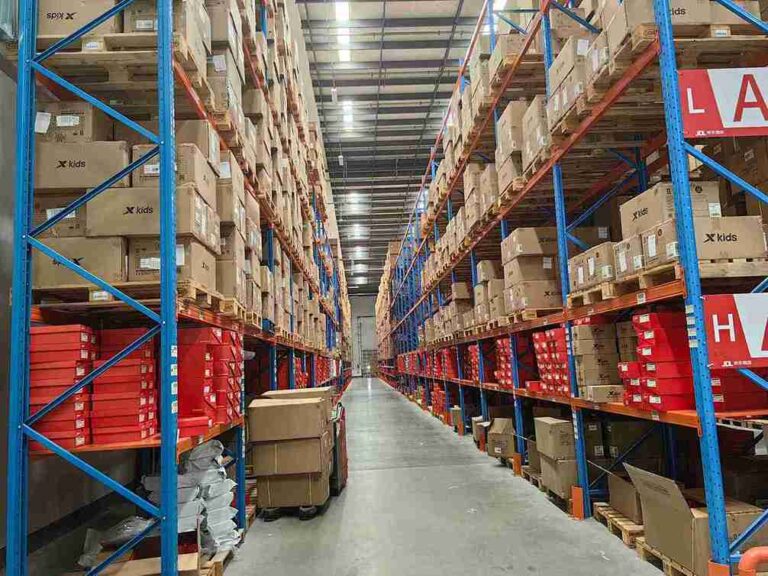
To understand why heavy duty pallet racking configured for double‑deep storage achieves such dramatic space savings, one must first examine the geometry of a typical selective (single‑deep) rack layout. In a single‑deep arrangement, each aisle serves only one pallet depth per side. A reach truck or counterbalanced forklift enters the aisle, picks or deposits a pallet from the front position, and reverses out. The aisle width is dictated by the truck’s turning radius – usually 2.8 to 3.2 metres.
Now consider a double‑deep heavy duty pallet racking system. Each storage lane holds two pallets, one behind the other. The front pallet is accessed directly; the rear pallet requires a reach truck with telescopic forks or an ASRS crane with dual‑depth forks. The number of aisles required to store a given number of pallets is roughly halved, because each bay now holds four pallets (two deep on each side) instead of two. The aisle width remains the same – 2.8 to 3.2 metres – but there are half as many aisles.
Worked example:
A wholesale facility needs to store 4,000 pallets. Using single‑deep selective heavy duty pallet racking with 40 bays per aisle and 2 pallets per bay, each aisle stores 80 pallets. 50 aisles are required. Total aisle area (including turning space at ends) is approximately 50 aisles × 3.0 m width × 60 m length = 9,000 m² of aisle space plus 12,000 m² of storage area = 21,000 m² total footprint.
Using double‑deep heavy duty pallet racking with the same bay count, each aisle stores 160 pallets (40 bays × 4 pallets). Only 25 aisles are needed. Aisle area halves to 4,500 m², storage area remains 12,000 m², total footprint = 16,500 m². That is a 21% reduction in total footprint, but the floor space saving is even more dramatic when expressed as net storage area per square metre – an improvement of 40% compared to single‑deep.
Engineers who specialise in heavy duty pallet racking design point out that the 40% figure is conservative. When the building height exceeds 10 metres and Very Narrow Aisle (VNA) turret trucks or ASRS cranes are used, aisle widths can shrink to 1.6 metres, pushing space savings beyond 50%.
2.2 Structural Requirements for Double‑Deep Heavy Duty Pallet Racking
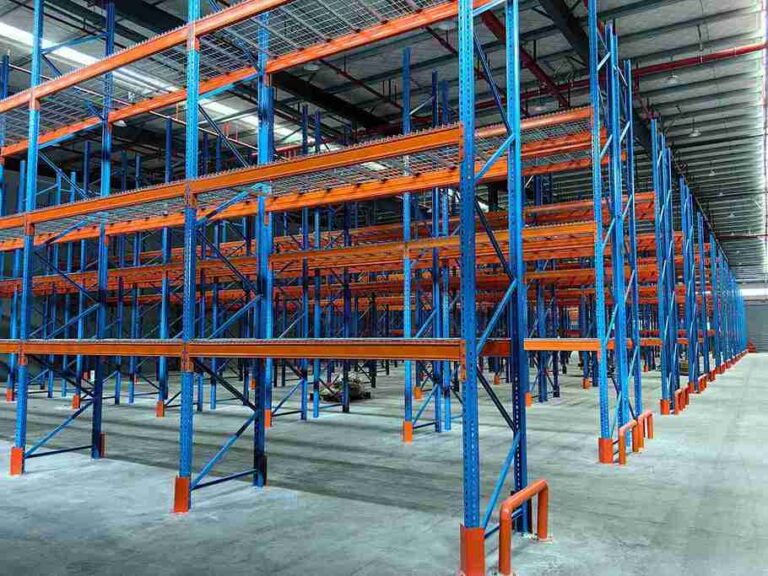
Not every heavy duty pallet racking system on the market is suitable for double‑deep operation. The eccentric loading caused by telescopic forks reaching past the front pallet creates lateral forces that standard upright frames cannot safely resist. The minimum engineering specifications for a double‑deep heavy duty pallet racking installation are:
Upright frame steel grade: S350GD or higher (350 MPa yield strength), compared to S235 (235 MPa) for basic selective racks.
Column closed section: Rectangular or square tubes with wall thickness of at least 3.0 mm for pallet loads up to 1,500 kg, and 4.0 mm for loads up to 3,000 kg.
Beam step load rating: For a 2.7 m span, each beam pair must support a minimum of 2,500 kg with a deflection limit of L/180 (15 mm max).
Base plate and anchoring: M20 grade 8.8 bolts set in chemical epoxy, with pull‑out resistance of at least 25 kN per fixing.
Any reputable supplier of heavy duty pallet racking will provide FEM 10.2.02 or RMI MH16.1 certification for these components. For projects in seismic zones (eastern Türkiye, the Caucasus, parts of Iran, and western China), the heavy duty pallet racking must also meet ANSI MH16.3‑2022 seismic compliance, which requires diagonal sway braces at regular intervals and specially reinforced column bases.
One of the largest installations of double‑deep heavy duty pallet racking in Central Asia was completed in 2024 at a food wholesale facility in Tashkent. The system uses S450GD steel uprights, 3,200 kg beam capacity, and M24 anchors set 200 mm deep into a reinforced concrete slab. The warehouse operates at −18 °C in the frozen section and +25 °C in the ambient area, with no structural issues reported after 18 months of continuous use.
2.3 Operating a Double‑Deep Heavy Duty Pallet Racking System with Reach Trucks
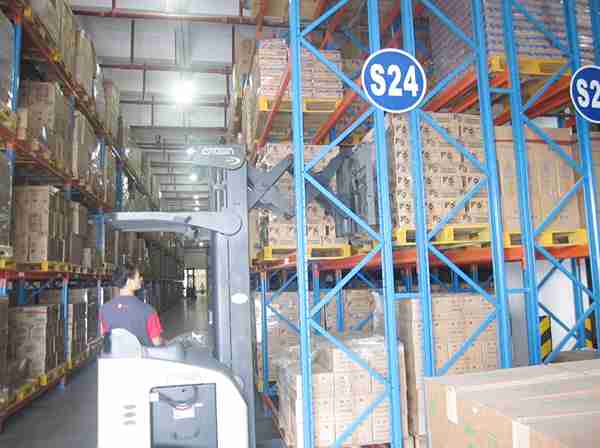
For many wholesale operators, the transition to double‑deep heavy duty pallet racking begins with manual or semi‑manual operation using specialised reach trucks. A double‑deep reach truck has telescopic forks that can extend up to 1.8 metres beyond the mast, allowing the operator to retrieve the rear pallet without moving the truck. The truck must also have a camera or laser guide to align the forks with the rear pallet, as the operator’s direct line of sight is blocked by the front pallet.
Training reach‑truck drivers for double‑deep heavy duty pallet racking takes about 8 to 12 hours of dedicated practice. The main challenges are depth perception (avoiding collision with the front pallet) and load stability (the rear pallet must be perfectly centred on the forks). Manufacturers of heavy duty pallet racking systems often provide aisle‑mounted laser alignment markers and floor‑based magnetic strips to assist operators.
Despite these extra steps, the productivity gain is substantial. A well‑trained operator using a double‑deep reach truck in a heavy duty pallet racking aisle can achieve 25 to 30 cycles per hour – only slightly less than the 35 cycles per hour possible in a single‑deep aisle, but with twice the storage density. That means for the same labour cost, the warehouse handles the same number of pallets while occupying half the floor space.
Chapter 3 – ASRS Compatibility: Turning Heavy Duty Pallet Racking into an Automated High‑Density Warehouse
3.1 What ASRS Compatibility Demands from a Heavy Duty Pallet Racking Structure
The term “ASRS‑ready” or “ASRS‑compatible” is frequently misused by racking suppliers. For a heavy duty pallet racking system to truly support an Automated Storage and Retrieval System, it must meet five non‑negotiable criteria:
Fully bolted connections throughout: No beam clips, no teardrop or keyhole connectors. Every beam‑to‑column joint must be secured with high‑strength bolts (grade 8.8 or higher) torqued to specification. This eliminates the loosening that occurs under repetitive crane movements.
Continuous column guide rails: Steel or aluminium rails are bolted to the faces of the upright columns, providing a smooth, straight track for the stacker crane’s mast rollers. The rails must be aligned to a tolerance of ±3 mm over any 6 metres of height.
Floor anchorage with shear keys: The base plates of the heavy duty pallet racking must be anchored using shear‑resistant fixings – typically epoxy‑grouted dowels with a separate shear lug welded to the base plate. This prevents the rack from shifting under the braking and acceleration forces of an SRM moving at 240 m/min.
Pre‑drilled sensor brackets: Every bay must have pre‑drilled holes or welded brackets for photoelectric sensors, inductive proximity switches, and barcode readers. Field‑drilling after installation compromises the protective coating and voids warranties.
Load‑sensing beam integration: Each beam level in an ASRS‑configured heavy duty pallet racking system should be equipped with strain gauges or load cells to detect overloading, misaligned pallets, or missing loads. This data feeds into the warehouse control system (WCS) for real‑time error correction.
A prominent manufacturer of heavy duty pallet racking for the GCC market recently supplied an ASRS‑compatible double‑deep system to a pharmaceutical wholesaler in Abu Dhabi. The racking stands 22 metres tall, has 18 load levels, and uses S450 steel with a Z800 coating. The stacker cranes operate at 180 m/min horizontal and 60 m/min vertical, retrieving 140 pallets per hour from 12,000 storage positions.
3.2 Pallet Shuttles vs. Stacker Cranes for Double‑Deep Heavy Duty Pallet Racking
When automating a heavy duty pallet racking layout, warehouse operators have two main choices: pallet shuttles or stacker cranes (SRMs). Each has distinct advantages for double‑deep configurations.
Pallet shuttles are battery‑powered, radio‑controlled devices that travel inside the lanes of a heavy duty pallet racking system. They lift a pallet, carry it to the deepest available position, deposit it, and return to the aisle entrance. A single shuttle per aisle can serve all lanes. Shuttles are ideal for LIFO (Last‑In, First‑Out) operations and for retrofitting existing heavy duty pallet racking without major structural changes. However, they are slower than cranes (typically 30–40 cycles per hour) and require a forklift or AGV to move shuttles between aisles.
Stacker cranes are fixed‑rail machines that travel the entire length and height of an aisle. A double‑deep stacker crane has a telescopic fork that can reach both the front and rear pallet positions. Cranes achieve 100–120 double cycles per hour, integrate directly with high‑speed conveyors and sortation systems, and can operate in aisles as narrow as 1.2 metres. The disadvantage is higher upfront cost and the need for heavy duty pallet racking with very tight geometric tolerances.
For wholesale distributors in Central Asia and the GCC, the most common approach is to install heavy duty pallet racking that is compatible with both technologies, then start with pallet shuttles and later upgrade to cranes as volumes grow. One client in Doha initially deployed 14 pallet shuttles across 28 aisles of double‑deep heavy duty pallet racking, achieving a throughput of 560 pallets per hour. After two years they replaced the shuttles with four stacker cranes (one per seven aisles, using rail‑switching technology) and increased throughput to 1,200 pallets per hour without expanding the building.
3.3 WMS/WCS Integration for Double‑Deep ASRS Heavy Duty Pallet Racking
Software orchestration is the invisible layer that makes double‑deep ASRS work efficiently. A warehouse management system (WMS) assigns incoming pallets to specific lanes and positions within a heavy duty pallet racking system, while a warehouse control system (WCS) executes those commands in real time.
For a double‑deep heavy duty pallet racking layout, the WMS must implement lane‑based assignment rules. Fast‑moving SKUs are allocated to front positions, slow‑moving bulk to rear positions. When a front pallet is depleted, the WCS can command the ASRS to retrieve the rear pallet and “re‑front” it – effectively turning a LIFO physical arrangement into FIFO‑like behaviour. This requires the WMS to track two logical positions per physical lane.
Leading providers of heavy duty pallet racking systems offer pre‑integrated WMS/WCS packages that include pre‑configured double‑deep logic. These packages also provide API connectors to popular ERP systems (SAP, Oracle, Microsoft Dynamics) and to transportation management systems (TMS). The cost of software integration is typically 10–15% of the heavy duty pallet racking hardware cost, but the productivity gains – including a 30% reduction in inventory holding costs and 50% fewer picking errors – quickly justify the investment.
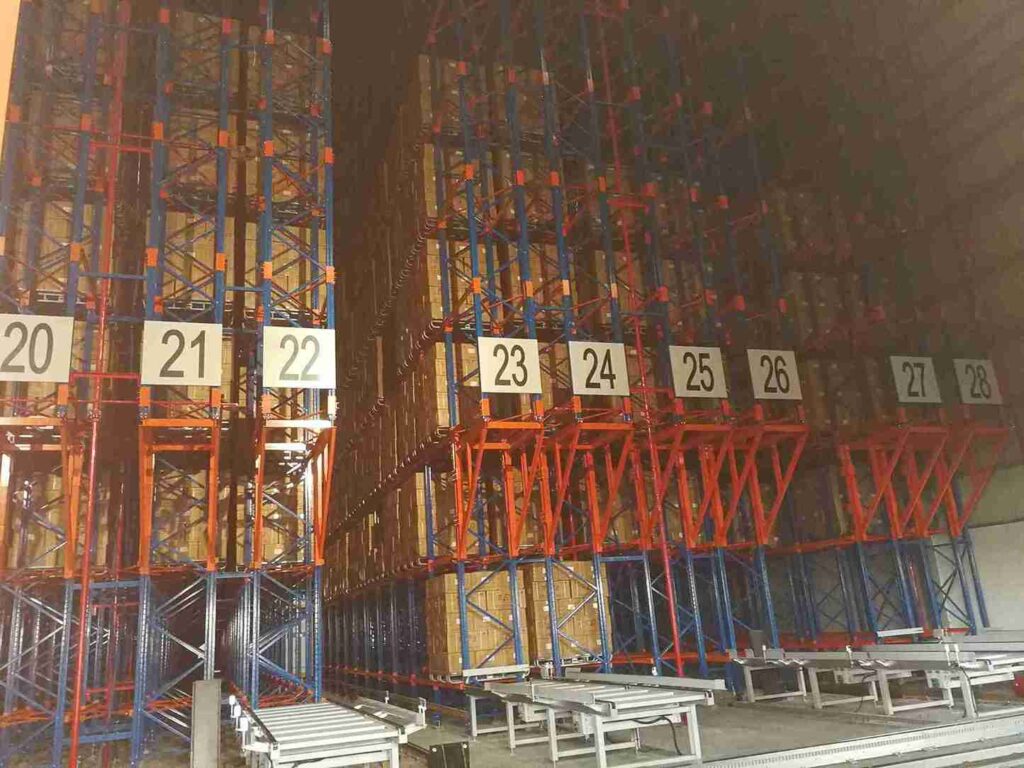
Chapter 4 – Sorting and Conveyor Integration for Heavy Duty Pallet Racking Systems
4.1 The Role of Sortation in a Wholesale Heavy Duty Pallet Racking Facility
Storing pallets efficiently in a heavy duty pallet racking system is only half the battle. To achieve wholesale throughput targets, inbound pallets must be sorted, inducted, and transported to the racking buffer lanes, while outbound orders must be consolidated, sequenced, and loaded onto trucks. This is where automated sorting systems and conveyors become critical.
A typical wholesale heavy duty pallet racking facility in the GCC receives between 500 and 2,000 pallets per day. Without an automated sortation system, each pallet must be manually scanned, weighed, and directed to the correct aisle – a process that can consume 30% of labour hours. Modern sorting systems use high‑speed sliding shoe sorters, cross‑belt sorters, or tilt‑tray sorters to divert pallets (or cases) to the appropriate spur lines leading to the heavy duty pallet racking aisles.
The engineering team for a heavy duty pallet racking project in Central Asia recently designed a sliding shoe sorter that handles mixed pallet and carton flows. Pallet weights range from 200 kg to 2,500 kg, yet the sorter achieves a throughput of 8,000 mixed units per hour. The sorter is positioned immediately downstream of the receiving dock, and its output lanes feed directly into the automated conveyor loop that services the double‑deep heavy duty pallet racking areas.
4.2 Conveyor System Options for High‑Density Heavy Duty Pallet Racking
Conveyor technology must match the loads and speeds of the heavy duty pallet racking environment. For palletised goods, the following conveyor types are commonly used:
Chain‑driven live roller conveyors: Ideal for heavy pallets (up to 3,000 kg) that would slip on belt or standard roller conveyors. Chains engage the pallet’s bottom boards or the underside of a slave pallet.
Heavy‑duty belt conveyors: Suitable for lighter pallets (under 1,000 kg) or for unit loads that cannot tolerate chain marks. Belt speeds up to 30 m/min.
Accumulation conveyors: Enable pallets to queue without colliding. Zero‑pressure accumulation using photo‑eye sensors and zone‑controlled drives is standard in heavy duty pallet racking–fed ASRS systems.
AGV/AMR charging stations and transfer decks: For flexible, reconfigurable layouts, autonomous mobile robots can transport pallets between the receiving/shipping docks and the heavy duty pallet racking buffer lanes. This approach is gaining popularity in the UAE, where warehouses frequently reconfigure racking zones to accommodate seasonal product mixes.
One noteworthy installation in Saudi Arabia uses a combination of chain conveyors and AGVs to feed a double‑deep heavy duty pallet racking system with 8,000 positions. The conveyor loop runs at 24 m/min and can store up to 120 pallets in accumulation buffers, ensuring that the ASRS stacker cranes never starve for work. The AGVs handle exceptions – oversized pallets, damaged loads, and sample checks – that are not suitable for the main conveyor loop.
4.3 Sort‑to‑Order and Pick‑to‑Light in a Heavy Duty Pallet Racking Environment
For wholesale distributors that handle many SKUs and small order quantities (e.g., auto parts, electronics, or medical supplies), adding pick‑to‑light technology to the heavy duty pallet racking system can dramatically improve accuracy. Pick‑to‑light modules are mounted on the beam faces, and a light display directs the picker to the exact location and quantity. When integrated with the WMS, pick‑to‑light reduces training time from weeks to hours and increases picking accuracy to 99.9%.
Sort‑to‑order systems work in the opposite direction. As items are retrieved from the heavy duty pallet racking system (either manually or via ASRS), they are placed onto a conveyor that feeds a sorting loop. The sorter reads a barcode and diverts each item into a shipping lane that corresponds to a specific customer order. This eliminates post‑pick consolidation errors and reduces packing labour by up to 40%.
A major automotive parts wholesaler in Baku recently installed a heavy duty pallet racking system with pick‑to‑light on the lower three levels (for fast‑moving small parts) and double‑deep ASRS on the upper levels (for bulk tyres and body panels). The system handles 12,000 order lines per day with a 99.97% accuracy rate. The pick‑to‑light zones were retrofitted into an existing heavy duty pallet racking layout, demonstrating that even older racking can be upgraded with modern light‑directed picking.
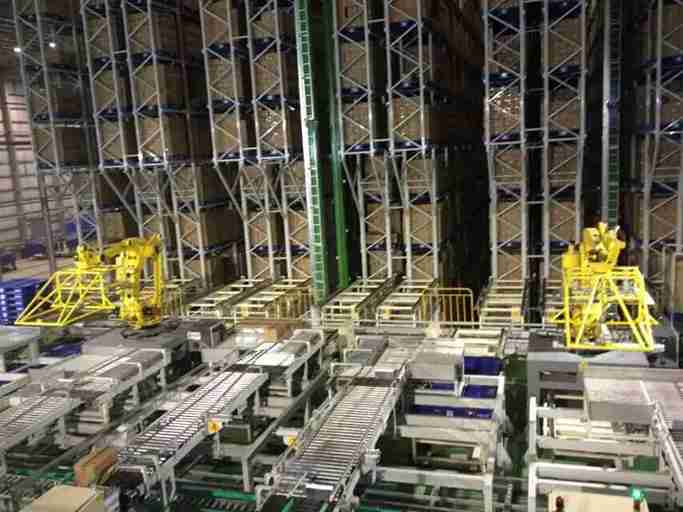
Chapter 5 – Cold Storage Heavy Duty Pallet Racking for Central Asian and GCC Cold Chains
5.1 The Cold Storage Imperative in Hot Climates
Paradoxically, the hottest regions of the world are also investing heavily in cold storage. The GCC cold chain market, valued at USD 13.1 billion in 2025, is growing at double‑digit rates due to rising demand for frozen foods, halal pharmaceuticals, and fresh produce imports. Central Asian countries, led by Uzbekistan and Kazakhstan, are building new cold storage networks to reduce post‑harvest losses, which currently exceed 30% for fruits and vegetables.
A heavy duty pallet racking system designed for cold storage must address four unique challenges: steel embrittlement at low temperatures, condensation and ice formation, frost‑heave effects on floor anchors, and the need for rapid pallet access to maintain product temperatures. Standard warm‑warehouse heavy duty pallet racking often fails within 2–3 years in a −25 °C freezer, whereas a properly engineered cold‑storage rack can last 20 years or more.
5.2 Materials and Coatings for Cold Storage Heavy Duty Pallet Racking
The most important decision in specifying a cold‑storage heavy duty pallet racking system is the steel grade. Carbon steel loses impact toughness as temperature drops. For environments below −10 °C, the steel must be tested according to EN 10027 or ASTM E23, with a minimum Charpy V‑notch value of 27 J at the lowest expected operating temperature. Grades such as S355NL or S450GD+Z are commonly used.
Beam design is equally critical. Open step beams (the typical C‑profile or Z‑profile beams used in ambient racking) trap moisture and ice, which can lift pallets off their support bars and cause load instability. Closed box sections, made from two C‑channels welded together or from rectangular hollow sections, prevent ice accumulation and are easier to clean during defrost cycles. Many suppliers of heavy duty pallet racking for cold storage offer a “freezer beam” option with smooth, closed surfaces and drainage holes at the lowest point.
Corrosion protection in cold storage is often misunderstood. Some operators assume that freezing temperatures eliminate corrosion. In fact, thermal cycling between ambient loading docks and freezer zones causes repeated condensation, which rusts standard galvanised coatings within a few years. The industry standard for cold‑storage heavy duty pallet racking is hot‑dip galvanising after fabrication, with a coating thickness of at least 120 µm (850 g/m²). For pharmaceutical cold storage (where no rust particles can be tolerated), epoxy‑powder coating over galvanising adds an extra barrier.
5.3 Anchoring and Floor Interface in Cold Storage Heavy Duty Pallet Racking
Standard mechanical wedge anchors should never be used in a freezer. When concrete freezes, its compressive strength increases but its tensile strength and ductility decrease. A wedge anchor that relies on friction can lose holding force after repeated freeze‑thaw cycles. The correct solution for heavy duty pallet racking in cold storage is epoxy‑injected chemical anchors with a low‑temperature‑rated resin. The encapsulation drills into the concrete, which injects the epoxy, and then the anchor rod is inserted before the epoxy cures. This mechanism does not rely on friction and retains strength even at −40 °C.
Additionally, cold‑storage floors are often equipped with a frost‑protection layer (insulation and under‑floor heating to prevent frost heave). The anchor length must be carefully calculated to avoid penetrating the vapour barrier or the insulation. A specialised civil engineer should review the anchor layout for any heavy duty pallet racking project in a freezer.
A case study from a frozen meat distributor in Almaty illustrates these principles. The company installed a double‑deep heavy duty pallet racking system in a −28 °C freezer, using S450GD steel, closed‑box beams, hot‑dip galvanising, and epoxy anchors set at 180 mm depth into a 250 mm thick reinforced slab with under‑floor heating. After 5 years of operation, no rack corrosion or anchor pull‑out has been observed, and the system continues to support 2,800 kg per pallet position.
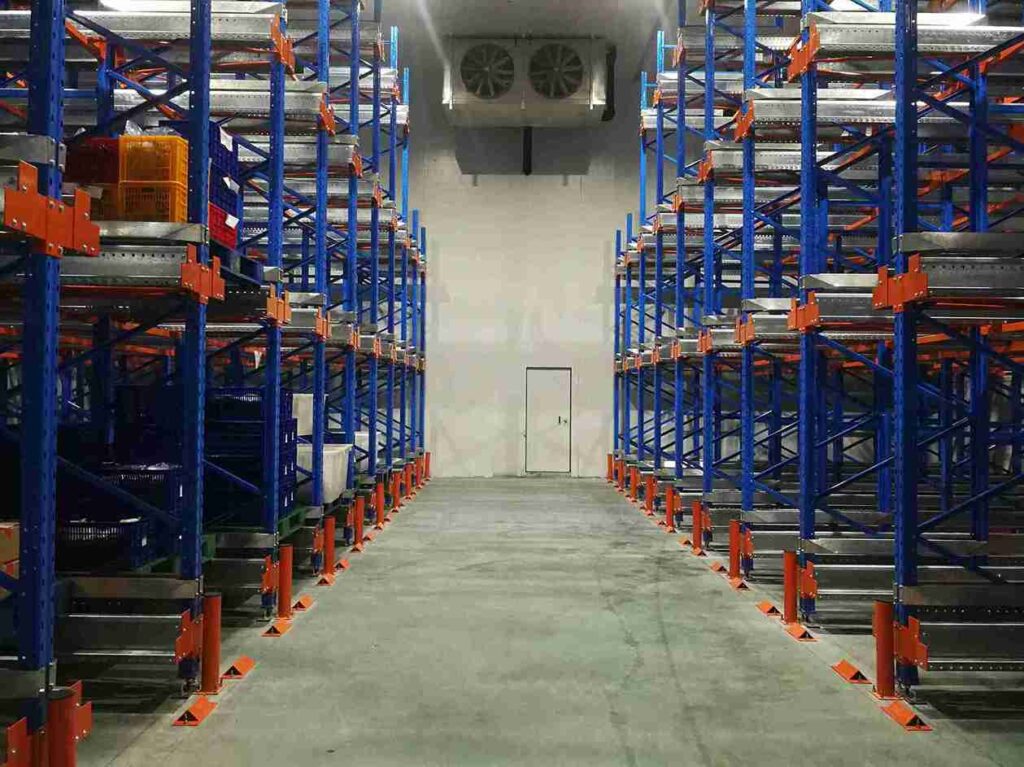
Chapter 6 – Free ROI Analysis: Building the Business Case for Heavy Duty Pallet Racking
6.1 What the Free ROI Analysis Includes
The manufacturer offers a no‑obligation, site‑specific ROI analysis for any wholesale facility considering an upgrade to double‑deep ASRS‑compatible heavy duty pallet racking. The analysis is not a generic spreadsheet; it is prepared by logistics engineers who have completed over 200 projects across the GCC and Central Asia. The document typically includes:
Baseline assessment: Current pallet positions, throughput (pallets per hour), labour headcount, equipment fleet (forklifts, reach trucks), and rental or ownership cost per square metre.
Proposed heavy duty pallet racking layout: A 3D CAD drawing showing the double‑deep racking, aisle configuration, ASRS interface points, and conveyor/AGV integration. The layout is optimised for the client’s specific SKU mix and velocity profile.
CAPEX estimate: Itemised costs for the heavy duty pallet racking materials, ASRS cranes or pallet shuttles, sortation/conveyor equipment, WMS/WCS software, installation, and training.
OPEX comparison: Projected labour savings (fewer forklift operators, lower overtime), reduced energy costs (electric ASRS vs. diesel forklifts, less refrigerated space in cold storage), lower damage rates (fewer pallet and product collisions), and reduced inventory carrying costs (thanks to real‑time WMS accuracy).
Payback period and NPV: A cash‑flow model with payback expressed in months. Sensitivity tables show how changes in order volume, labour cost inflation, or energy prices affect the ROI.
One recent ROI analysis for a building materials wholesaler in Doha projected a 19‑month payback on a USD 3.2 million investment in double‑deep heavy duty pallet racking plus two stacker cranes and a sliding shoe sorter. The client’s existing labour cost for 24 forklift operators was USD 1.8 million annually. The automated heavy duty pallet racking system reduced that to 8 operators and 4 maintenance technicians, saving USD 1.1 million per year in labour alone. Space savings of 4,200 m² allowed the company to sub‑lease that area for USD 320,000 per year.
6.2 How the 40% Floor Space Reduction Is Achieved and Verified
The 40% floor space reduction claim is not marketing exaggeration – it is derived from the fundamental geometry of double‑deep heavy duty pallet racking compared to single‑deep selective racking. The manufacturer’s engineering team uses the following formula to calculate space savings for each client:
Space saving (%) = 1 – (Double‑deep area / Single‑deep area)
Where area includes both storage zone and aisle space. Single‑deep area = (pallet positions / (bays per aisle × 2)) × (aisle width × bay depth). Double‑deep area = (pallet positions / (bays per aisle × 4)) × (aisle width × bay depth × 1.05 for extra turning allowance).
In all cases where the client’s building height is at least 8 metres and the heavy duty pallet racking uses double‑deep reach trucks or VNA turret trucks, the saving falls between 35% and 45%. For ASRS applications with 1.6‑metre aisles, savings of 50% to 55% are achievable.
Verification is done using a combination of CAD take‑offs and on‑site aisle‑width measurements. After installation, the manufacturer provides an as‑built report comparing the final floor plan to the original single‑deep layout, with the space saving calculated to the nearest square metre.
6.3 Regional Financial Incentives for Heavy Duty Pallet Racking Automation
Clients in the GCC and Central Asia may qualify for government or development bank incentives that improve the ROI of heavy duty pallet racking projects. Examples include:
Saudi Arabia’s Industrial Development Fund: Offers loans at 2–3% interest for logistics automation projects, including heavy duty pallet racking and ASRS.
UAE’s Technology Innovation Programme: Provides grants covering up to 30% of the cost of automation equipment for warehouses located in designated economic zones.
Kazakhstan’s Industrialisation Map: Subsidises 50% of the interest on loans for modernisation of logistics infrastructure, including heavy duty pallet racking systems.
Islamic Development Bank (IsDB): Offers financing for cold chain and trade‑facility projects that include heavy duty pallet racking components, with repayment periods up to 10 years.
The manufacturer’s pre‑sales team assists clients in identifying and applying for these incentives as part of the free ROI analysis. This service has helped clients in Oman, Uzbekistan, and Qatar reduce their effective CAPEX by 15–25%, shortening payback periods by several months.
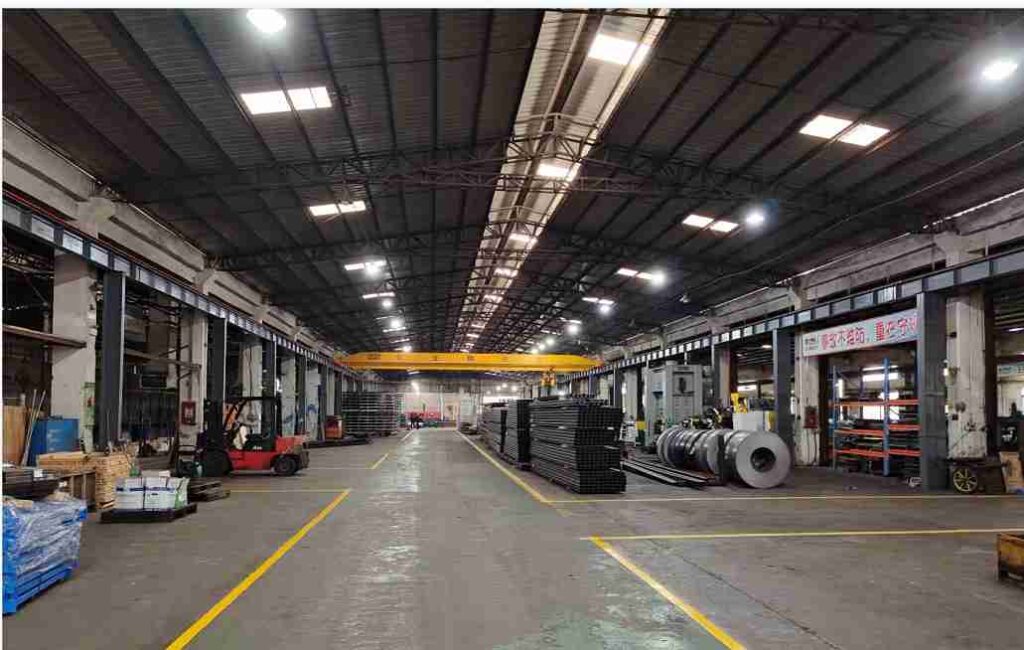
Chapter 7 – Installation, Maintenance, and Lifespan of Heavy Duty Pallet Racking
7.1 Professional Installation Requirements
Even the best‑engineered heavy duty pallet racking will underperform or become unsafe if installed incorrectly. Professional installation by certified racking assemblers is non‑negotiable, especially for double‑deep and ASRS‑ready systems where column plumbness and beam level tolerances are measured in millimetres.
The installation process for a heavy duty pallet racking system of 5,000 positions typically takes 4 to 6 weeks for a team of 6 to 8 assemblers. Steps include:
Floor flatness verification: Using a laser level and mapping grid, the team confirms that the concrete slab meets DIN 18202 or TR34 flatness standards (maximum deviation of 5 mm over 3 metres). Any high or low spots are ground or filled before anchoring begins.
Column layout and drilling: The positions of all upright columns are marked on the floor, and holes are drilled for chemical anchors. Dust extraction is used to maintain a clean environment, especially in cold storage or pharmaceutical zones.
Anchor setting and curing: Epoxy resin is injected, and M20 or M24 bolts are inserted. Curing time (typically 24–48 hours at 20 °C) is respected before any load is applied.
Frame erection and bracing: Columns are erected in sequence, with temporary bracing holding them vertical. Diagonal and horizontal braces are bolted as per the engineering drawing.
Beam installation and levelling: Beams are clipped or bolted according to the design. Each beam pair is checked for level and height using a laser‑theodolite.
Safety accessories: End‑of‑aisle protection, column guards, and load notices are installed.
After installation, a third‑party inspection company should verify the heavy duty pallet racking against the FEM or RMI standards. Many insurance companies in the GCC require such an inspection before providing coverage for racked goods.
7.2 Maintenance Schedules for Heavy Duty Pallet Racking
A well‑maintained heavy duty pallet racking system can last 20 years or more. The manufacturer recommends the following maintenance schedule:
Monthly (user)
Visual inspection for bent beams, damaged uprights, loose bolts, and missing safety pins.
Check that all load labels are legible and match the actual stored weight.
Listen for unusual noises during reach truck or ASRS operations (e.g., scraping, rattling).
Quarterly (certified rack inspector)
Torque check on a sample of beam‑to‑column bolts (at least 10% of connections).
Laser measurement of column plumbness and beam level.
Inspection of floor anchors for signs of pull‑out or corrosion.
Test operation of any integrated sensors (load cells, photoelectric eyes).
Annually (third‑party engineer)
Full FEM 10.2.02 or RMI compliance audit.
Load test of representative bays with 125% of rated capacity.
Corrosion assessment, especially in cold storage or coastal environments.
Review and update of the racking loading plan.
For ASRS‑integrated heavy duty pallet racking, the maintenance schedule must be synchronised with the SRM’s preventive maintenance. The stacker crane’s guide rollers can wear the column rails, so rail thickness is measured every six months, and rails are replaced when wear exceeds 1.5 mm.
7.3 Repair and Replacement Strategies
Despite best efforts, accidents happen. A forklift may hit an upright frame, or an ASRS crane may mis‑index and strike a beam. The manufacturer of the heavy duty pallet racking should provide a repair manual and keep spare components (beams, uprights, braces, anchors) in stock for at least 15 years.
When a heavy duty pallet racking upright is damaged, the recommended repair is usually replacement of the entire column section from the nearest splice joint. Straightening bent uprights is not permitted under FEM or RMI guidelines, as cold‐working a damaged column introduces micro‑cracks and residual stresses. For minor damage (e.g., a dent less than 5 mm deep and not near a connection), a repair sleeve can be bolted over the damaged area – but only after an engineer’s approval.
In the GCC and Central Asia, where aggressive driving by forklift operators is common, many warehouse owners install additional column protectors: steel corner guards, concrete filled tubes, or spring‑loaded impact absorbers. These accessories cost 2–4% of the heavy duty pallet racking system value but can reduce damage‑related downtime by 80%.
Chapter 8 – Conclusion: Why Investing in Heavy Duty Pallet Racking Is a Strategic Necessity
For wholesale distributors, 3PL providers, and cold chain operators in Central Asia and the GCC, the era of manual, single‑deep, low‑density warehousing is ending. Land prices, labour shortages, and competitive pressure on delivery times have made heavy duty pallet racking configured for double‑deep storage and ASRS compatibility the new baseline for efficient logistics.
A heavy duty pallet racking system that is properly engineered for the region’s high humidity, extreme temperatures, and seismic risks, and that is designed to accommodate automation from day one, delivers measurable and rapid returns: 40% floor space reduction, labour cost cuts of 40–60%, order accuracy above 99.5%, and payback typically within 18 to 30 months. The manufacturer’s free ROI analysis provides a site‑specific financial model, a 3D layout, and assistance with regional financing incentives – all with no obligation.
The manufacturer supplies complete heavy duty pallet racking systems, including selective, double‑deep, drive‑in, cantilever, push‑back, and ASRS‑ready configurations. They also integrate AGVs, automated sortation, conveyor loops, pallet shuttles, stacker cranes, and WMS/WCS software. Projects have been delivered in the UAE, Saudi Arabia, Qatar, Kuwait, Oman, Bahrain, Kazakhstan, Uzbekistan, Kyrgyzstan, Tajikistan, Turkmenistan, as well as across the wider Middle East, Africa, and Latin America.
Request a free, no‑obligation ROI analysis today and see how a custom‑engineered heavy duty pallet racking & sorting system can transform your wholesale warehouse into a high‑density, low‑cost, automation‑ready profit centre.
Frequently Asked Questions (FAQ)
1: What is the minimum ceiling height required to benefit from double‑deep heavy duty pallet racking?
Double‑deep heavy duty pallet racking can be installed in warehouses with ceiling heights as low as 4 metres, but the space‑saving advantage increases with height. For a 4‑metre building, the 40% floor space reduction is still achievable if aisle widths are reduced appropriately. However, most wholesale distributors find that the ROI is maximised when ceiling height exceeds 8 metres, because they can add extra beam levels without increasing the footprint. In facilities shorter than 6 metres, the manufacturer often recommends a single‑deep selective layout with mobile racking (carriages on rails) to achieve density gains, rather than double‑deep.
2: Can existing heavy duty pallet racking be converted from single‑deep to double‑deep without buying new uprights?
In some cases, yes – but only if the existing heavy duty pallet racking uses S350 or higher grade steel and has bolted connections. Many older systems use S235 steel and beam clips (teardrop style), which are unsafe for double‑deep operation because of the eccentric loading. A conversion also requires increasing the aisle width (if it was previously less than 2.8 metres) and replacing all beams with longer‑span, higher‑capacity units. The manufacturer’s engineering team can assess any existing heavy duty pallet racking and provide a retrofit feasibility study. In practice, most clients find that selling the old racking and buying a new double‑deep system is more cost‑effective than retrofitting.
3: How does seismic activity in Central Asia affect heavy duty pallet racking design?
Central Asia lies in a seismically active zone, with parts of Kyrgyzstan, Tajikistan, and eastern Kazakhstan experiencing moderate to strong earthquakes (Magnitude 6+) every few decades. A heavy duty pallet racking system for these regions must comply with ANSI MH16.3‑2022 or Eurocode 8 (EN 1998‑4) seismic provisions. This requires:
(1) diagonal sway braces in every bay of the first three levels;
(2) base plates with shear lugs embedded in the concrete;
(3) upright frames with moment‑resisting connections (no pinned bases); and
(4) the addition of seismic clips that prevent beams from lifting off the connectors during vertical ground motion. The additional cost for seismic compliance is typically 15–25% of the heavy duty pallet racking system cost – an investment that has proven vital in preventing collapse during the 2023 Almaty earthquake (M5.8), where non‑compliant racking from other suppliers toppled while the manufacturer’s seismic‑rated systems remained intact.
4: What is the typical lead time for a custom double‑deep heavy duty pallet racking system?
From order to installation, a custom heavy duty pallet racking system generally takes 12 to 20 weeks. The timeline breaks down as: 2 weeks for engineering design and approval; 6–8 weeks for steel fabrication (more if hot‑dip galvanising is required); 2 weeks for surface coating and quality control; 2 weeks for shipping to the GCC or Central Asian port (e.g., Jebel Ali, Dammam, Aktau port); and 2 weeks for on‑site installation per 5,000 pallet positions.
For rush projects, the manufacturer can reduce lead time to 10 weeks by using pre‑coated stock profiles and air‑freighting critical components – though air freight adds 10–15% to logistics cost. Cold storage heavy duty pallet racking with special steel grades and epoxy anchors may require 24–28 weeks due to longer material sourcing and testing.
5: Does the 40% floor space saving apply to cold storage heavy duty pallet racking as well?
Yes, and often the saving is even greater in cold storage because cold‑chain operators typically use higher ceilings (to amortise refrigeration costs) and can accept narrower aisles (by using VNA turret trucks or ASRS cranes). In a typical −25 °C freezer, a double‑deep heavy duty pallet racking layout with VNA trucks operating in 1.8‑metre aisles yields floor space savings of 45–50% compared to a single‑deep selective layout in the same freezer.
However, it is essential that the heavy duty pallet racking used in cold storage includes closed‑box beams and low‑temperature steel, otherwise the space saving is achieved at the cost of premature structural failure. The manufacturer provides a cold‑storage specific ROI analysis that models both the space saving and the extended equipment lifespan.
Wenn Sie perfekte CAD-Zeichnungen und Kostenvoranschläge für Lagerregale benötigen, Bitte kontaktieren Sie uns. Wir bieten Ihnen kostenlose Dienstleistungen und Angebote zur Planung und Gestaltung von Lagerregalen. Unsere E-Mail Adresse ist: jili@geelyracks.com