📐 "De første 50 virksomhedsforespørgsler får tilpasset 3D-lager-design" Planlæg


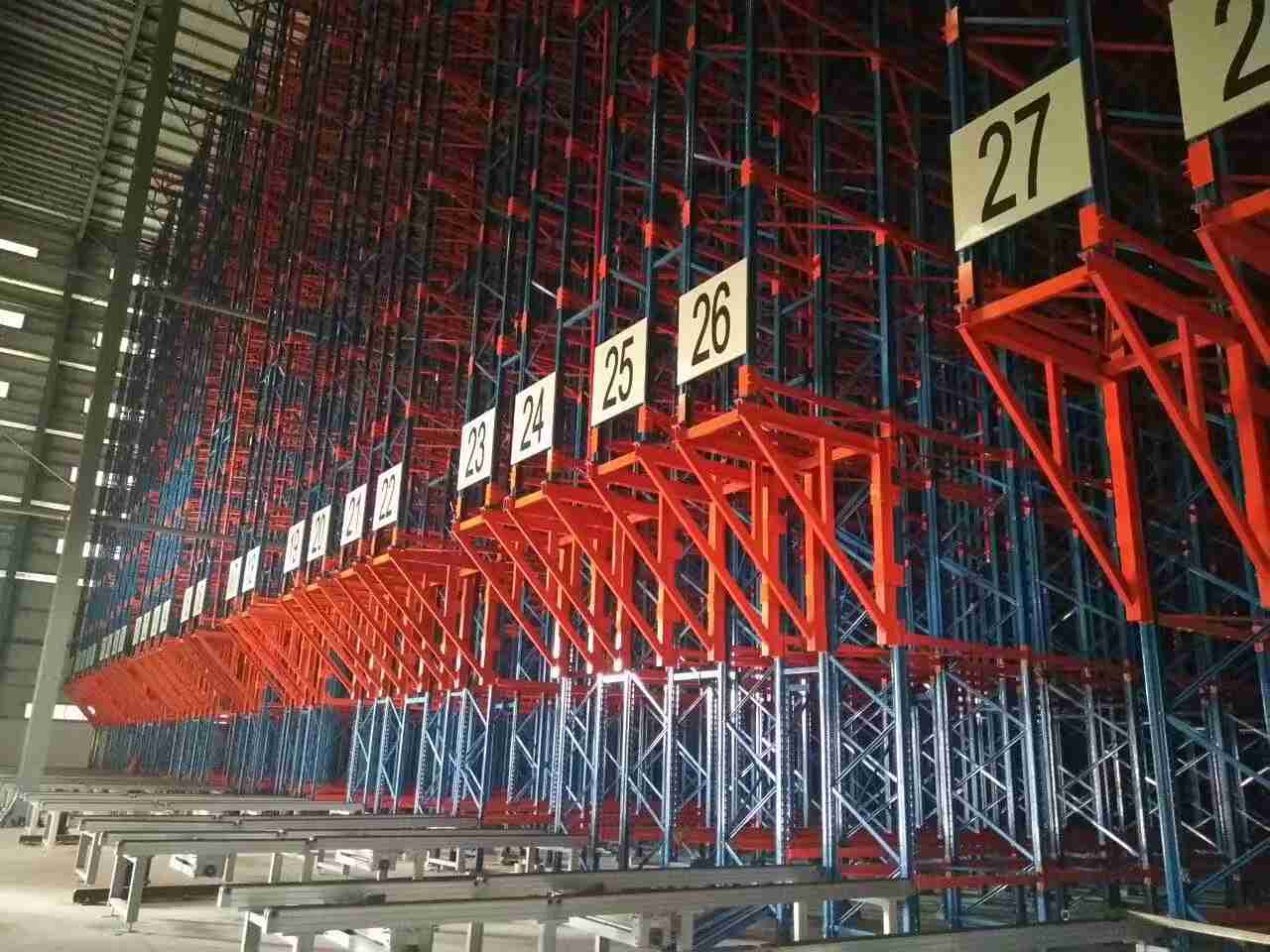
ASRS-Compatible Racking: The Ultimate Guide to Future-Proof Warehousing Operations
Introduction: The Warehouse Revolution Powered by ASRS-Compatible Racking
The logistics industry stands at a crossroads where manual storage systems simply can’t keep pace with modern demands. ASRS-compatible racking (Automated Storage and Retrieval Systems) has emerged as the cornerstone of next-generation warehousing, enabling businesses to dramatically increase storage density,slash operational costsogeliminate inefficiencies plaguing traditional setups.
Dennedefinitive guide dives deep into why ASRS-compatible racking represents the single most important infrastructure upgrade for progressive warehouses, how it integrates with cutting-edge automation, and what separates high-performance installations from mediocre ones.
For supply chain directors,warehouse managersogoperations executives, this resource delivers actionable intelligence on selecting, implementing, and optimizing ASRS-compatible racking to achieve:
✔40-60% higher storage capacity in existing footprints
✔90%+ accuracy rates in inventory management
✔24/7 operational capabilities without labor constraints
✔Future-proof scalability for business growth
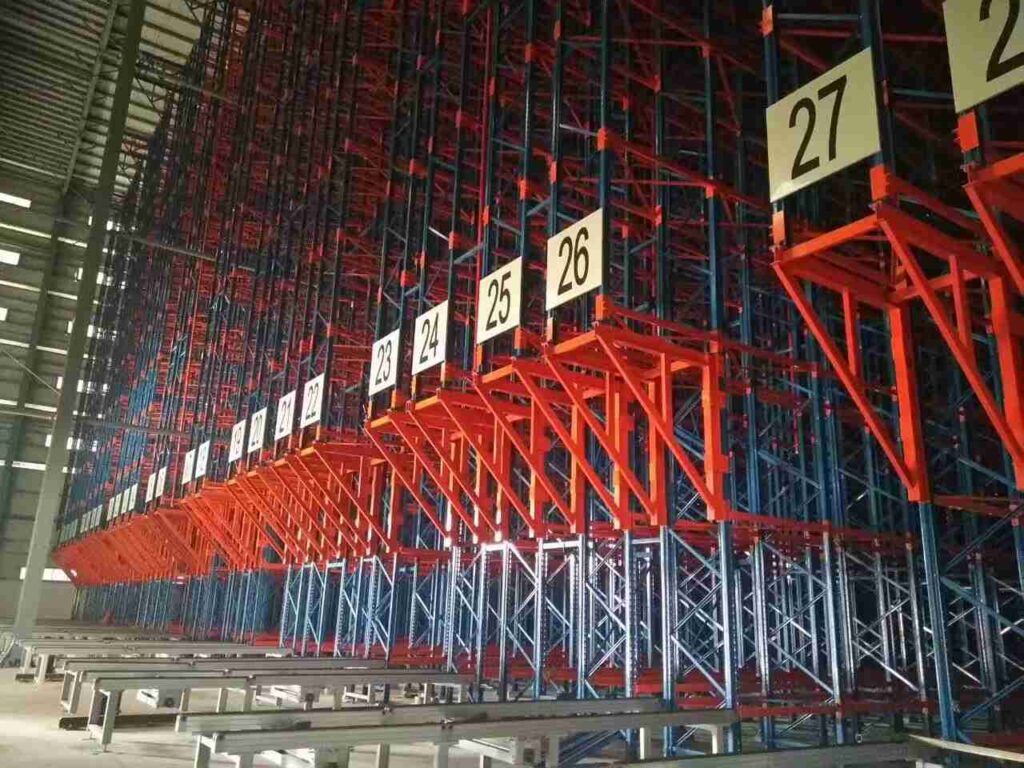
H1: ASRS-Compatible Racking Defined: The Engine of Automated Warehouses
H2: The Fundamental Architecture of ASRS-Compatible Racking
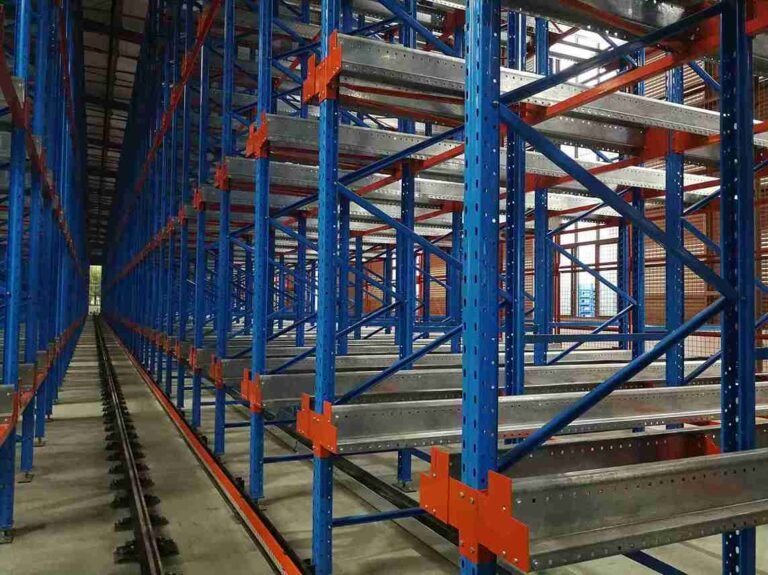
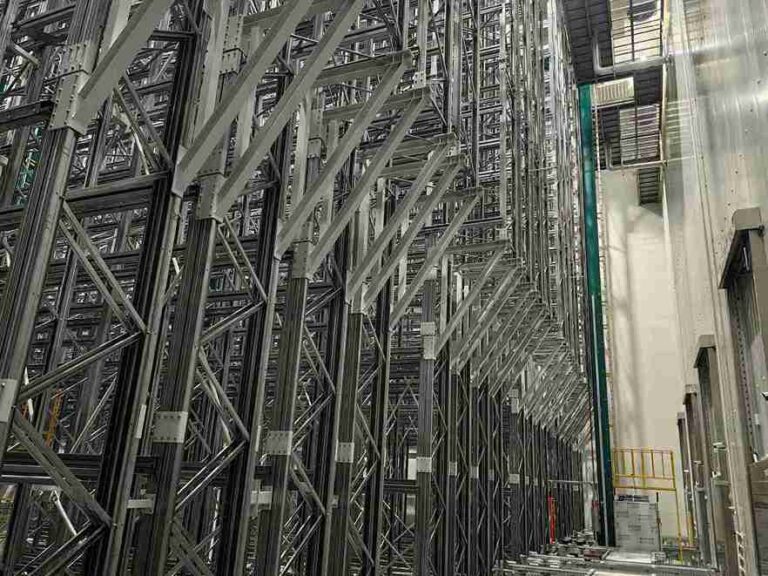
Unlike conventional storage solutions, ASRS-compatible racking systems are precision-engineered structures designed specifically for seamless integration with automated material handling equipment. These systems feature:
- Ultra-precise structural tolerances (±2mm alignment) for robotic operations
- Reinforced load-bearing capacity (up to 50% stronger than standard racking)
- Standardized interface points for automated cranes and shuttles
- Modular expansion capabilities for phased implementation
H3: The Critical Differences from Conventional Racking
Where traditional selective pallet racking requires 12-15 foot aisles for forklift access, ASRS-compatible racking enables:
| Feature | Traditional Racking | ASRS-Compatible Racking |
|---|---|---|
| Gangbredde | 10-15 ft | 5-8 ft (narrow aisle) or 0 ft (deep lane) |
| Operational Speed | 15-20 pallets/hour | 50-80 pallets/hour |
| Storage Height | Typically <30 ft | Up to 120 ft in high-bay configurations |
| Accuracy Rate | 92-95% | 99.9%+ with automation |
This paradigm shift allows ASRS-compatible racking to deliver 3-5X greater throughput while occupying 30% less floor space.
H1: The Transformational Benefits of ASRS-Compatible Racking
H2: 1. Revolutionary Space Utilization
ASRS-compatible racking redefines warehouse density through:
➔ Vertical Maximization
- Enables storage heights exceeding 100 feet where local codes permit
- Converts previously unusable overhead space into high-value inventory zones
➔ Dynamic Slotting Algorithms
- AI-driven storage optimization based on pick frequency,product dimensionsogexpiration dates
- Continuously reorganizes inventory placement for peak efficiency
Case Study: A European pharmaceutical distributor achieved 58% more storage capacity within their existing 150,000 sq ft facility by implementing ASRS-compatible racking with automated vertical lift modules.
H2: 2. Unparalleled Operational Precision
ASRS-compatible racking eliminates the ”human factor” in warehouse operations:
✔Zero mis-picks through barcode/RFID verification at every touchpoint
✔Millimeter-perfect positioning via servo-controlled automation
✔Real-time inventory visibility with <1% variance
Operational Impact:
- Order accuracy improves from industry-average 95% to 99.99%
- Returns processing decreases by 60-75%
- Cycle counting becomes fully automated
H2: 3. Financial Advantages That Compound Over Time
While the capital expenditure for ASRS-compatible racking exceeds traditional systems, the total cost of ownership tells a different story:
| Cost Category | 5-Year Savings |
|---|---|
| Labor Reduction | 3.5M per 100,000 sq ft |
| Energy Efficiency | 25-40% lower HVAC/lighting costs |
| Inventory Shrinkage | 80% reduction in lost/damaged goods |
| Insurance Premiums | 15-25% discounts for automated facilities |
ROI Benchmark: Most operations achieve full payback within 2.5-4 years through these cumulative savings.
H1: The Four Primary Types of ASRS-Compatible Racking Systems
H2: 1. Unit-Load ASRS (Pallet-Handling Systems)
Ideal For:
- Full pallet storage/retrieval
- High-volume distribution centers
- Heavy industrial applications
Technical Specifications:
- Load capacity: Up to 3,000 kg per pallet position
- Throughput: 50-80 pallets/hour per crane
- Height capability: 25-45 meters
Best Practice: Combine with automated stretch wrapping stations for complete pallet handling automation.
H2: 2. Mini-Load ASRS (Tote & Bin Systems)
Perfect For:
- E-commerce fulfillment
- Spare parts logistics
- Pharmaceutical storage
Key Features:
- Dual-command cycles (simultaneous storage/retrieval)
- Integrated weighing systems
- LED pick-to-light interfaces
Innovation Spotlight: Next-gen mini-load ASRS-compatible racking now incorporates 3D vision systems for mixed-SKU handling.
H2: 3. Shuttle-Based ASRS (High-Density Storage)
Breakthrough Advantages:
- 100% first-in, first-out (FIFO) compliance
- Ultra-deep lane storage (up to 50 pallets deep)
- Energy-recovery braking systems
Implementation Tip: Ideal for cold storage facilities where energy efficiency is paramount.
H2: 4. Vertical Buffer Modules (VBM)
Specialized Applications:
- Production line feeding
- Kitting operations
- High-value item security
Technical Edge:
- 5-second retrieval times
- Climate-controlled options
- Integrated fire suppression
H1: Implementing ASRS-Compatible Racking: A Step-by-Step Framework
H2: Phase 1: Comprehensive Facility Assessment
Critical Evaluation Points:
- Structural Analysis
- Floor load capacity
- Ceiling height clearances
- Column spacing limitations
- Operational Profiling
- Current vs projected SKU count
- Seasonal volume fluctuations
- Growth projections
H2: Phase 2: System Customization & Engineering
Customization Options:
- Multi-depth configurations
- Hybrid manual/automated zones
- Specialized load-handling attachments
Engineering Considerations:
- Seismic reinforcement for high-bay installations
- Vibration dampening for precision operations
- Corrosion-resistant coatings for harsh environments
H2: Phase 3: Integration With Warehouse Ecosystem
Must-Have Interfaces:
- WMS (Warehouse Management System)
- ERP connectivity
- Automated guided vehicle (AGV) pathways
- Packaging automation hand-off points
Integration Challenge:
Overcoming legacy system incompatibilitiesigennem:
✔ Middleware solutions
✔ API-based architecture
✔ Data normalization protocols
H1: The Future of ASRS-Compatible Racking: 2025 & Beyond
H2: AI-Driven Predictive Optimization
Emerging machine learning algorithms will enable ASRS-compatible racking systems to:
- Anticipate stock movements before orders arrive
- Self-reconfigure storage patterns based on predictive analytics
- Automatically rebalance loads to minimize energy consumption
H2: Sustainable Warehouse Revolution
Next-generation ASRS-compatible racking contributes to:
♻ Regenerative braking systems that return energy to the grid
♻ Solar-integrated rack structures that double as power generators
♻ Biodegradable composite materials for eco-conscious operations
H2: Human-Machine Collaboration 2.0
Advanced ASRS-compatible racking installations will feature:
- Augmented reality interfaces for maintenance staff
- Voice-controlled override systems
- Collaborative robotics work zones
H1: Conclusion – The Strategic Imperative of ASRS-Compatible Racking
For forward-thinking operations,ASRS-compatible racking has transitioned from competitive advantagetiloperational necessity. The combination of unmatched density,flawless accuracyogcontinuous operational readiness creates an insurmountable lead for early adopters.
Three Strategic Takeaways:
- The cost of inaction now exceeds implementation costs for most operations
- System flexibility allows phased adoption to manage capital outlay
- Technology convergence with AI/IoT makes this the ideal implementation window
Ofte stillede spørgsmål: Expert Insights on ASRS-Compatible Racking
1. What’s the minimum warehouse height for ASRS-compatible racking?
While 8-meter clearances enable basic systems, optimal performance requires 12+ meter heights to capitalize on vertical storage advantages.
2. How does ASRS-compatible racking handle irregularly shaped items?
Custom load-handling attachments (clamps, forks, platforms) accommodate 95% of industrial products, with specialized solutions for unique items.
3. What maintenance downtime should we expect?
PremiumASRS-compatible racking systems feature <1% annual downtimeigennem:
- Predictive maintenance alerts
- Hot-swappable components
- Redundant system architectures
4. Can we retrofit our existing racking to be ASRS-compatible?
Limited structural reinforcement projects can upgrade certain systems, but purpose-built ASRS-compatible racking delivers superior performance and longevity.
5. What workforce training is required?
Transition focuses on system monitoring rather than manual handling:
- 40 hours for control center operators
- 16 hours for maintenance technicians
- 8 hours for inventory managers