📐 "First 50 Enterprise Queries Get Custom 3D Warehouse Design" Plan


The Definitive Guide to Warehouse Storage Costs: Mastering the Double Deep vs. Selective Racking Decision
For logistics managers, warehouse operators, and business owners across emerging global markets, the pursuit of operational efficiency is a relentless financial imperative. At the heart of this pursuit lies a critical capital allocation decision: selecting the storage system that delivers the lowest total cost of ownership without compromising throughput. The debate between Double Deep and Selective Pallet Racking is not a mere technical comparison; it is a fundamental cost comparison double deep vs selective analysis that dictates profitability, scalability, and competitive advantage for years to come.
A superficial evaluation, focusing solely on the price tag of the steel structure, leads directly to the costly pitfalls of underutilized space or prohibitive upfront investment. A truly strategic cost comparison double deep vs selective must dissect every variable—from concrete flooring specifications and forklift cycle times to seasonal inventory fluctuations and local energy tariffs.
This comprehensive guide is engineered to serve as an indispensable resource for professionals tasked with justifying this significant investment. It moves beyond vendor brochures and generic online calculators to provide a nuanced, regionally-aware framework for analysis. The objective is to empower decision-makers with the depth of knowledge required to initiate a procurement process with confidence, ensuring they secure a system aligned with their precise operational DNA and financial constraints.
By methodically exploring each layer of cost and performance, this cost comparison double deep vs selective aims to illuminate the path to the optimal return on investment. Furthermore, to translate this analytical framework into a tangible, site-specific action plan, the experts behind this guide offer a complementary, data-driven warehouse layout simulation. This practical tool is designed to crystallize the theoretical cost comparison double deep vs selective into a clear, visual, and financial projection for one’s own facility.
Architectural Foundations: How Design Informs Financial Outcomes
The genesis of any accurate cost comparison double deep vs selective must begin with a rigorous understanding of their inherent structural and operational philosophies. Their architectural DNA pre-determines a vast array of subsequent costs.
H3: Selective Racking: The Paradigm of Unrestricted Access
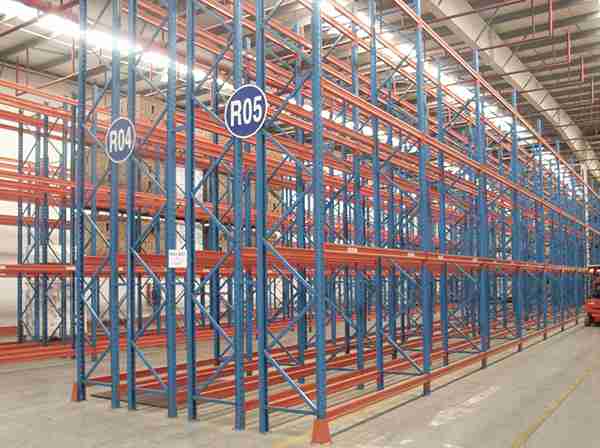
Selective Pallet Racking (SPR) embodies the principle of direct, unimpeded access. Each pallet position resides in a dedicated bay, face-on to the warehouse aisle, creating a one-to-one relationship between storage location and forklift retrieval path. This design philosophy yields specific cost-driving characteristics:
Aisle Space Consumption: To allow a standard counterbalance or reach forklift to turn into the rack face and operate, aisles typically range from 3.2 to 3.9 meters wide. This generous aisle width is the system’s primary consumer of valuable floor space, directly influencing the required building footprint—a major capital cost component in any cost comparison double deep vs selective.
Equipment Agnosticism: A significant financial advantage of SPR is its compatibility with a broad spectrum of material handling equipment (MHE). From rudimentary pallet jacks to sophisticated automated guided vehicles (AGVs), the system does not mandate a specific, high-cost forklift type. This flexibility can dramatically lower the barrier to entry and provide scalability in fleet evolution.
Inventory Management Simplicity: With 100% selectivity, every pallet is instantly accessible. This supports any inventory rotation method (FIFO, LIFO, FEFO) with equal ease, eliminating costs associated with stock rotation complexities or potential obsolescence due to blocked loads.
Double Deep Racking: The Engineering of Density
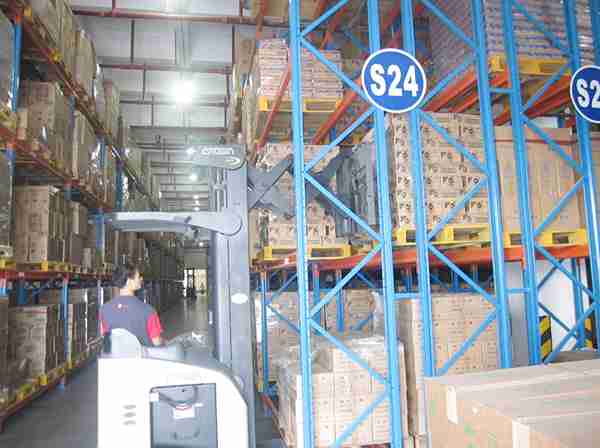
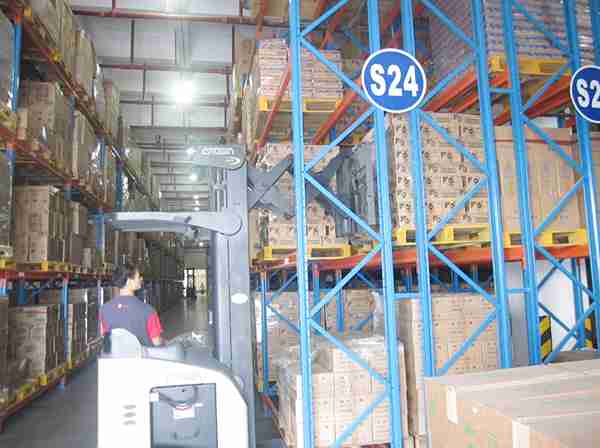
Double Deep Racking (DDR) is an engineered solution predicated on the strategic sacrifice of immediate access to a subset of pallets in exchange for radical space consolidation. Pallets are stored two-deep within a single racking bay, facilitated by specialized forklifts.
Aisle Space Reclamation: The defining economic benefit is the dramatic reduction in aisle width to approximately 2.6-2.9 meters. This narrowing, often amounting to a 25-30% reduction compared to selective aisles, is the core driver of density increases of 40-50% or more. In any cost comparison double deep vs selective, this space reclamation is the central financial lever, transforming building costs and rental yields.
Specialized Equipment Dependency: The density advantage is inextricably linked to a capital investment in specialized double deep reach trucks. These vehicles feature telescopic forks that extend to engage the second pallet position. Their sophisticated mechanics and guidance systems command a premium price, a non-negotiable line item that must be factored into the upfront cost comparison double deep vs selective.
LIFO Inventory Dynamics: DDR inherently operates on a Last-In, First-Out basis per bay. This makes it supremely cost-effective for storing multiple pallets of identical SKUs but introduces potential “honeycombing” costs (unusable empty space) and complexity for high-SKU-count environments. Effective Warehouse Management System (WMS) integration is not just beneficial but essential to mitigate these hidden costs.
Constructing a Total Cost of Ownership (TCO) Model
An authoritative cost comparison double deep vs selective demands a holistic TCO perspective that spans the entire lifecycle of the installation. This model must be built on the following pillars:
Capital Expenditure (CAPEX): The Initial Investment Deep Dive
1. Racking Structure & Installation:
Selective Racking: Offers a lower cost per individual bay. The components are standardized, and installation is typically faster and less complex. However, when evaluated on a cost per pallet position basis—factoring in the lower density—the financial picture begins to shift.
Double Deep Racking: Carries a higher per-bay cost. The structure requires heavier-duty upright frames to manage the cantilevered load of the deeper configuration. Crucially, it necessitates the installation of steel guide rails or reinforced floor channels to ensure the precise tracking of the double deep truck. This adds both material and skilled labor costs to the installation phase. In a pure line-item cost comparison double deep vs selective for the steel alone, selective often appears cheaper.
2. Material Handling Equipment (MHE) Procurement:Selective Racking: Provides unparalleled flexibility. Operations can commence with a pre-existing fleet of standard forklifts or select new equipment based on a broad range of budgetary options.
Double Deep Racking: Presents a defined, high-cost entry point. The specialized reach trucks represent a significant capital outlay, often 30-60% higher than a standard reach truck of equivalent capacity. This single factor frequently dominates the initial CAPEX discussion in a cost comparison double deep vs selective.
3. Building & Space Utilization Costs:
This is the transformative axis of the cost comparison double deep vs selective.Selective Racking: Consumes a larger building envelope for the same storage capacity. In markets like the UAE, Thailand, or Mexico, where modern warehouse rental rates are climbing or greenfield construction costs are substantial, this translates into a recurring, high-value expense or a larger upfront construction budget.
Double Deep Racking: Its superior density can result in one of two powerful financial outcomes: storing the same inventory in a significantly smaller building, or storing far more inventory within an existing facility. The financial impact—whether measured in reduced annual lease payments, avoided construction costs, or increased revenue-generating storage capacity—often overwhelms the higher upfront racking and MHE costs over a 5-7 year period.
The Critical, Often Overlooked: Flooring & Infrastructure Costs
A rigorous cost comparison double deep vs selective must audit the warehouse floor. Double deep operations impose greater point loads on the concrete during deep reach maneuvers. Many existing slabs, particularly in older facilities, may require costly upgrading, cutting, or reinforcement to install guide rails and bear the dynamic loads. This hidden CAPEX item can be a decisive factor in retrofit projects, whereas new builds can design the slab to optimal specifications from the outset.
Operational Expenditure (OPEX): The Continuous Cost Engine
1. Labor Productivity & Throughput:
Selective Racking: Excels in applications requiring rapid, random-access picking. There is no pallet shuffling, leading to faster single-pallet retrieval times. For mixed-SKU order fulfillment centers, this can translate to higher picks per hour and lower labor costs per transaction.
Double Deep Racking: While an individual retrieval from the rear position takes longer, the system’s compact layout drastically reduces travel distances for forklifts between storage aisles. In bulk storage and put-away operations involving full pallets of the same SKU, the net effect on pallets moved per operator hour can be superior. The cost comparison double deep vs selective in labor is thus intensely application-specific.
2. Energy & Maintenance:Double Deep Trucks: Feature more complex hydraulic and electrical systems for the telescoping mechanism, potentially leading to higher scheduled maintenance costs and specialized technician requirements. However, their operation in narrow aisles reduces overall travel, which can lower energy consumption per pallet moved, especially in electric models.
Equipment for Selective: May have lower unit maintenance costs but could be powered by internal combustion engines (diesel/LPG) in regions where electric infrastructure is less reliable. This introduces ongoing fuel price volatility and ventilation costs, a critical OPEX factor in any emerging market cost comparison double deep vs selective.
Intangible & Strategic Costs: Risk, Flexibility, and Future Value
The most sophisticated cost comparison double deep vs selective quantifies the intangible.
Cost of Inflexibility: Selective racking’s modularity allows for low-cost reconfiguration as SKU profiles change. DDR’s guide-railed aisles are more permanent; a major product line change could necessitate an expensive re-layout.
Cost of Stock-Outs & Inefficiency: A poorly suited system leads to congestion, slower throughput, and potential errors. Selective in a high-volume, homogeneous environment wastes space; DDR in a high-SKU environment causes wasteful honeycombing and trapped stock. The cost of these mis-matches is operational friction.
Strategic Value of Density: In land-scarce urban hubs in Vietnam or Colombia, the ability to consolidate inventory into a single, dense facility can reduce secondary transportation costs, simplify management, and create a formidable competitive moat. This strategic value, while hard to pin to a line item, is a real outcome of a correct cost comparison double deep vs selective.
Regional Application Scenarios: Contextualizing the Cost Analysis
The outcome of a cost comparison double deep vs selective is never universal; it is deeply contextual to geographic and market realities.
Scenario 1: The High-Growth E-Commerce 3PL in Southeast Asia
A third-party logistics provider in Malaysia or Indonesia faces explosive SKU growth and unpredictable client demands. Their cost comparison double deep vs selective must prioritize flexibility, rapid reconfiguration, and the ability to handle thousands of unique SKUs with perfect selectivity. Here, the lower upfront CAPEX for racking and MHE, coupled with the reduced complexity and training costs of selective racking, typically delivers a lower TCO. The potential cost of space inefficiency is outweighed by the cost of operational rigidity.
Scenario 2: The Bulk Commodity Storage Operator in the Middle East
A company storing construction materials, packaged food staples, or automotive parts in Saudi Arabia or Kuwait operates with deep lanes of identical products. Their cost comparison double deep vs selective is dominated by the cost of cooled or warehoused space. The 40-50% density gain of DDR directly reduces their most significant OPEX: air conditioning and building lease costs. The premium for specialized trucks and racking is rapidly amortized against the massive savings in space-related expenses, making DDR the unequivocal low-TCO champion.
Scenario 3: The Manufacturing Hub in Latin America
An automotive parts manufacturer in Brazil requires high-density buffer storage for raw materials and finished components adjacent to the production line. Their inventory flow is predictable and often LIFO. A cost comparison double deep vs selective for this operation reveals that DDR minimizes internal transportation distances, frees up floor space for value-added manufacturing cells, and provides the required density within a constrained onsite footprint. The productivity gains and avoided factory expansion costs justify the capital intensity.
The Integration Imperative: How Ancillary Systems Skew the Cost Equation
No storage system is an island. Its true cost is revealed through integration with broader warehouse systems.
Warehouse Management System (WMS) Dependencies
The efficiency dividend from any system hinges on intelligent software control. For selective racking, a WMS optimizes put-away and picking paths. For double deep, a capable WMS is critical. It must perform sophisticated lane profiling, minimize honeycombing by intelligently slotting identical SKUs together, and sequence retrieval tasks to avoid unnecessary shuffling. The cost of implementing or upgrading to a WMS with advanced slotting logic is a necessary part of a complete cost comparison double deep vs selective, especially for DDR.
The Automation Readiness Pathway
This cost comparison double deep vs selective must consider the future. Selective racking aisles can be easily serviced by AGVs for automated goods-to-person picking. Double deep racking, with its guided, narrow aisles, represents a direct stepping stone towards even higher-density, higher-CAPEX solutions like Very Narrow Aisle (VNA) systems with man-up turret trucks or even fully automated storage and retrieval systems (AS/RS). Choosing DDR can be a strategic, intermediate investment on a defined automation roadmap, a future-value consideration that influences the present-day cost comparison double deep vs selective.
From Analysis to Action: A 10-Step Diagnostic for Your Facility
To operationalize this cost comparison double deep vs selective, stakeholders should conduct an internal diagnostic:
SKU & Pallet Profile: What is the ratio of unique SKUs to total pallet positions? What is the average and maximum pallet weight/dimensions?
Inventory Velocity: What are the turnover rates (ABC analysis)? Is inventory rotation method (FIFO/LIFO) a regulatory or quality requirement?
Real Estate Economics: What is the annual cost per square meter of our current space? What are the local costs for new construction or expansion?
Building Constraints: What are the clear ceiling height, column spacing, and floor load capacity specifications?
Throughput Patterns: What are the daily peaks in receiving, put-away, and shipping? Is the operation primarily case-pick or full-pallet?
Existing Fleet & Labor: What is the current fleet’s age, type, and remaining depreciation? What is the skill level and training capacity for operators?
Technology Stack: Do we have a WMS? What is its current capability for directed put-away and slotting optimization?
Growth Trajectory: What are the volume and SKU growth projections for the next 3, 5, and 10 years?
Energy & Utility Costs: What are the local costs for electricity, LPG, or diesel? Is the facility climate-controlled?
Risk Profile: What is the tolerance for equipment downtime? How critical is reconfiguration flexibility to our business model?
Mitigating Risk in the Final Decision
A prudent cost comparison double deep vs selective must also be a risk assessment. The risk of selective racking is the long-term cost of space inefficiency and premature expansion. The risk of double deep racking is technological (dependence on complex MHE), operational (poor lane management leading to accessibility issues), and strategic (reduced adaptability). The correct system minimizes total risk alongside total cost.
Conclusion: The Ultimate Cost is the Cost of a Suboptimal Choice
The intricate exercise of performing a cost comparison double deep vs selective is the cornerstone of sound warehouse logistics investment. It reveals that the lowest-cost solution is not a universal product, but a bespoke fit—a system engineered to match specific inventory characteristics, market conditions, and strategic ambitions. For high-volume, low-SKU operations in space-constrained, high-rent markets, the density-driven economics of Double Deep Racking will typically yield a superior long-term return, justifying its higher initial capital intensity. For high-mix, dynamic environments where flexibility and accessibility are paramount, Selective Racking’s operational agility and lower upfront costs will prove more economical over time.
The gravest error is not in choosing one system over another; it is in choosing without the rigorous, data-illuminated analysis that a true cost comparison double deep vs selective provides. This decision reverberates through balance sheets and P&L statements for a decade or more. To mitigate this risk and transform analysis into actionable intelligence, a professional, simulation-based layout design is not a luxury—it is a due diligence necessity.
It is the final, critical step in validating the theoretical cost comparison double deep vs selective against the concrete reality of one’s own warehouse dimensions and inventory data. Engaging with experts who can provide this clarity is the first step toward ensuring that every capital dollar spent on storage infrastructure is an investment in efficiency, not an ongoing liability in wasted space or stifled productivity.
Frequently Asked Questions (FAQs)
1. How does climate, such as extreme humidity in Southeast Asia or dust in the Middle East, affect the long-term maintenance costs in this cost comparison double deep vs selective?
Environmental factors significantly impact the OPEX side of the equation. In humid climates, both systems require racking with appropriate anti-corrosion coatings, but the more complex moving parts of double deep reach trucks (hydraulics, sensors, guidance systems) may require more rigorous and frequent climate-controlled maintenance to prevent failure. In dusty environments, the guide rails for DDR systems can suffer from abrasion and clogging, increasing wear and requiring regular cleaning protocols. These ongoing maintenance nuances must be factored into a region-specific cost comparison double deep vs selective.
2. Can double deep racking be effectively used in a warehouse with very low ceiling heights?
While DDR excels in high-bay applications, it can still offer benefits in lower-clearance facilities. The primary driver of the cost comparison double deep vs selective remains aisle space savings. Even in a 6-meter clear building, reducing aisle width from 3.5m to 2.8m increases the number of storage rows. However, the cost-benefit ratio shifts; the absolute square meter savings are less, potentially lengthening the ROI period for the more expensive DDR equipment. A detailed, site-specific layout simulation is crucial to validate the economics in low-clearance scenarios.
3. What are the insurance and liability cost implications in a cost comparison double deep vs selective?
Insurance premiums can be influenced by the perceived risk of each system. Selective racking, often seen as simpler and with a longer industry history, may not carry specific premium adjustments. Double deep operations, involving deeper reaches and more complex machinery, might be subject to additional scrutiny. However, a well-engineered DDR installation with proper guard rails, operator training programs, and documented safety protocols can mitigate this. Disclosing a professional layout and safety plan to insurers is recommended as part of the overall cost comparison double deep vs selective.
4. How does the resale or salvage value of the equipment and racking factor into a lifecycle cost comparison double deep vs selective?
At end-of-life or during a facility relocation, selective racking holds a distinct advantage. Its standardized components have a robust secondary market and are easily disassembled and reconfigured elsewhere. Double deep racking is more specialized; the guide rails are often fixed to the floor, reducing salvageability, and the custom racking frames may have less resale value. The specialized forklifts, while retaining some value, cater to a narrower buyer pool. This potential recovery value difference is a minor but valid component of a full lifecycle cost comparison double deep vs selective.
5. For a business with highly seasonal inventory peaks (e.g., agricultural products, retail holiday goods), which system offers more cost-effective scalability?
This scenario heavily favors selective racking in a direct cost comparison double deep vs selective on flexibility. During peak season, temporary “overflow” selective racking can be installed in bulk areas or even rented. Its operation requires no specialized forklifts if standard trucks are available. Double deep systems are far less agile; scaling up requires duplicating the entire system (racks, guide rails, specialized MHE), a costly and time-consuming process. For operations with wild inventory swings, the scalable, modular OPEX of selective often outweighs the dense, fixed CAPEX of double deep.
If you require perfect CAD drawings and quotes for warehouse racking, please contact us. We can provide you with free warehouse racking planning and design services and quotes. Our email address is: jili@geelyracks.com