📐 "First 50 Enterprise Queries Get Custom 3D Warehouse Design" Plan


H1: The Definitive Guide to Cold Storage Racking Systems: A Strategic Blueprint for Maximizing Space and Slashing Energy Costs
In the high-stakes world of temperature-controlled logistics, efficiency isn’t just a goal—it’s a matter of survival. For managers and executives overseeing cold storage operations, the twin pressures of maximizing storage density and controlling runaway energy costs define daily challenges. The solution, often overlooked, lies in the fundamental infrastructure of the warehouse: the cold storage racking systems.
These are not passive storage fixtures but active, strategic assets that directly influence profitability. Advanced, well-engineered cold storage racking systems represent the most significant lever a company can pull to achieve transformative gains, potentially cutting energy costs by 30% or more while radically maximizing storage space. This guide delves beyond catalog specifications to explore the engineering, physics, and strategic implementation of high-performance cold storage racking systems that deliver a tangible return on investment.
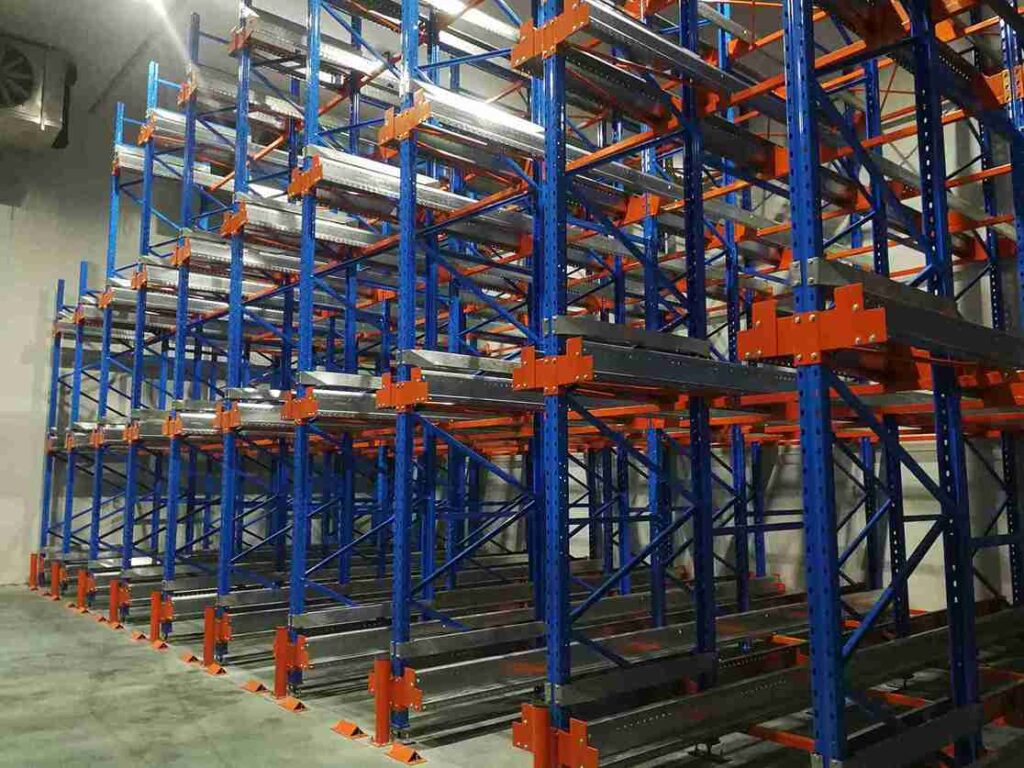
H2: The Cold Storage Conundrum: Space and Energy as Primary Profit Killers
Operating a cold storage facility is uniquely capital and energy-intensive. The very environment required to preserve goods creates a complex puzzle where operational inefficiencies are exponentially more costly than in ambient warehouses.
H3: The True Cost of Wasted Cubic Air
In a -25°C facility, every cubic meter of space is expensive real estate, cooled at a tremendous cost. When this volume is occupied by inefficiently arranged pallets or, critically, empty air from wide aisles, the financial drain is continuous. Traditional wide-aisle cold storage racking systems, a carryover from dry warehouse designs, become a primary source of inefficiency. This low-density approach results in:
Excessive Energy Consumption per SKU: The refrigeration system works tirelessly to cool a large volume of air relative to the actual product stored.
Poor Scalability: Business growth forces the need for additional cold space construction, a prohibitively expensive and slow solution.
Elevated Operational Overheads: Material handling equipment travels greater distances, consuming more power and increasing the time personnel spend in the harsh environment.
H3: Energy Consumption: The Relentless Financial Drain
Refrigeration often accounts for over 60% of a facility’s total energy use. The key drivers of this consumption are intrinsically linked to the warehouse layout and the type of cold storage racking systems in place:
Infiltration Losses: Each dock door opening initiates a costly exchange: dense, cold air escapes, and warm, moist air infiltrates. This new air must be cooled and dehumidified, placing a massive, repetitive load on the refrigeration system.
Internal Heat Loads: The constant operation of forklifts, conveyors, and lighting generates heat that the system must counteract.
Inefficient Airflow Dynamics: Poorly planned cold storage racking systems can obstruct the throw of cold air from evaporator units. This creates temperature stratification and hot spots, forcing compressors to work harder and less efficiently to maintain a uniform set point.

H2: Beyond Standard Racking: The Specialized Engineering of Industrial-Grade Cold Storage Racking Systems
Deploying standard warehouse racking in a sub-zero environment is a critical error. The extreme conditions demand cold storage racking systems that are engineered from the ground up for performance, safety, and longevity.
H3: Metallurgy and Materials Science for Sub-Zero Performance
The integrity of the steel is non-negotiable. Standard steel undergoes a ductile-to-brittle transition at low temperatures, becoming susceptible to sudden, catastrophic failure upon impact. Reputable manufacturers of cold storage racking systems exclusively use low-temperature carbon steels or specially formulated alloy steels. These materials are certified to maintain their toughness, ductility, and impact resistance at the specific operational temperatures of the facility, ensuring foundational safety.
The protective finish is equally critical. The cyclical nature of defrost periods—creating high humidity—followed by deep freeze conditions, accelerates corrosion. Superior cold storage racking systems employ advanced coating technologies, such as epoxy-polyester hybrid powders or multi-stage electrophoretic deposition (E-coating). These processes provide a far more resilient, pore-free barrier against corrosion compared to standard paint, protecting the structural integrity and preventing product contamination.
H3: Structural Dynamics and Thermal Expansion Management
A cold storage racking system is a dynamic structure, constantly undergoing microscopic movement due to thermal expansion and contraction. The temperature differential between a -30°C freezer and a +15°C dock can be 45°C or more. The engineering of professional-grade cold storage racking systems meticulously accounts for this movement. This involves specialized connection details, slotted base plates, and calculated tolerances that prevent the buildup of destructive thermal stresses, ensuring long-term structural stability that is irrelevant in ambient storage applications.
H2: High-Density Storage Paradigms: The Direct Route to Maximized Space and Efficiency
The single most effective strategy for conquering space and energy challenges is the adoption of high-density cold storage racking systems. By storing more pallets in the same footprint, these systems directly reduce the volume of air requiring refrigeration and streamline operations.
H3: Narrow Aisle and Very Narrow Aisle Racking Systems
Transitioning from wide-aisle to narrow-aisle cold storage racking systems is a foundational efficiency upgrade. By reducing aisle widths from 12 feet to approximately 6-7 feet for narrow aisle (NA) trucks, or even 5-6 feet for very narrow aisle (VNA) machines, facilities instantly gain a substantial number of storage positions.
Space Utilization Gains: Can increase storage density by up to 40% compared to conventional wide-aisle layouts.
Energy Efficiency Impact: Fewer and narrower aisles mean less open, unused volume to be refrigerated, directly reducing the cooling load.
Operational Requirements: These cold storage racking systems require specialized material handling equipment, such as narrow aisle reach trucks or order pickers. VNA systems often incorporate guidance rails for precision, enhancing both safety and speed in confined, cold environments.
H3: Drive-In and Drive-Through Racking: The Ultimate in Storage Density
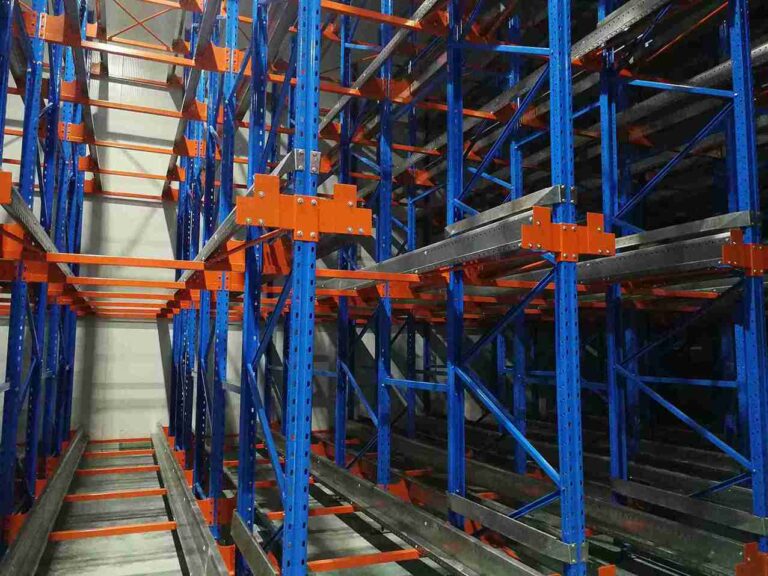
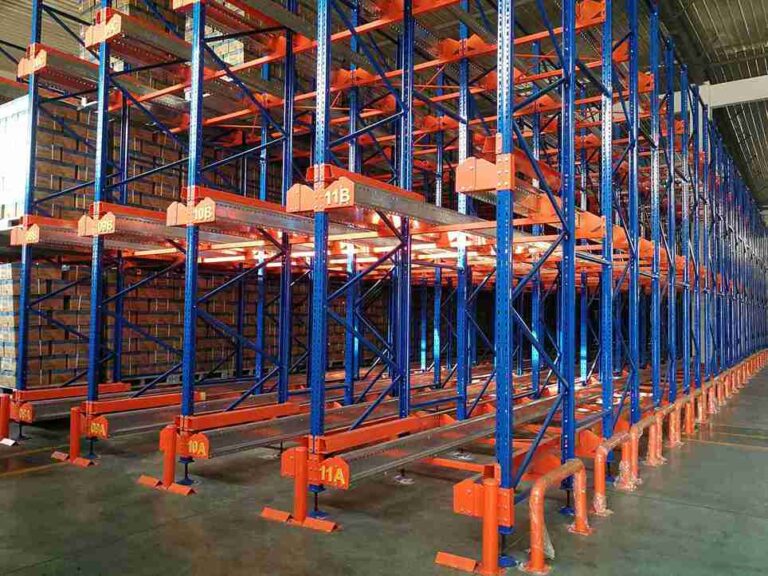
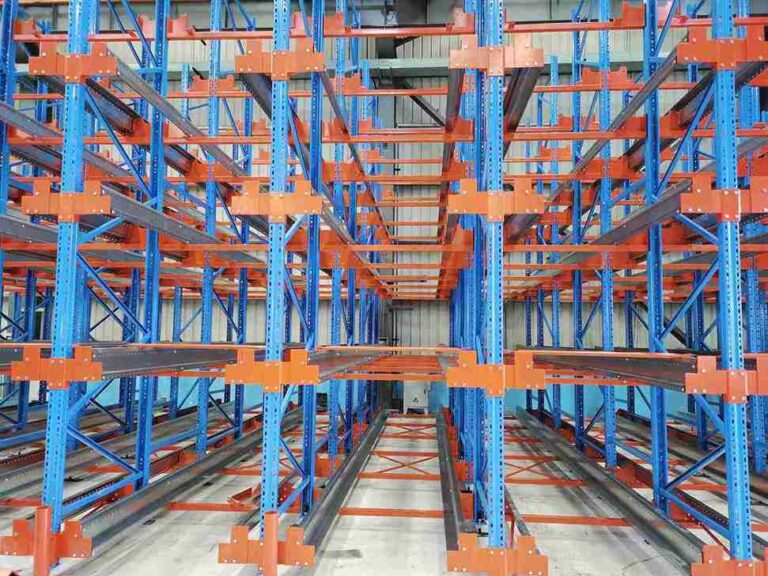
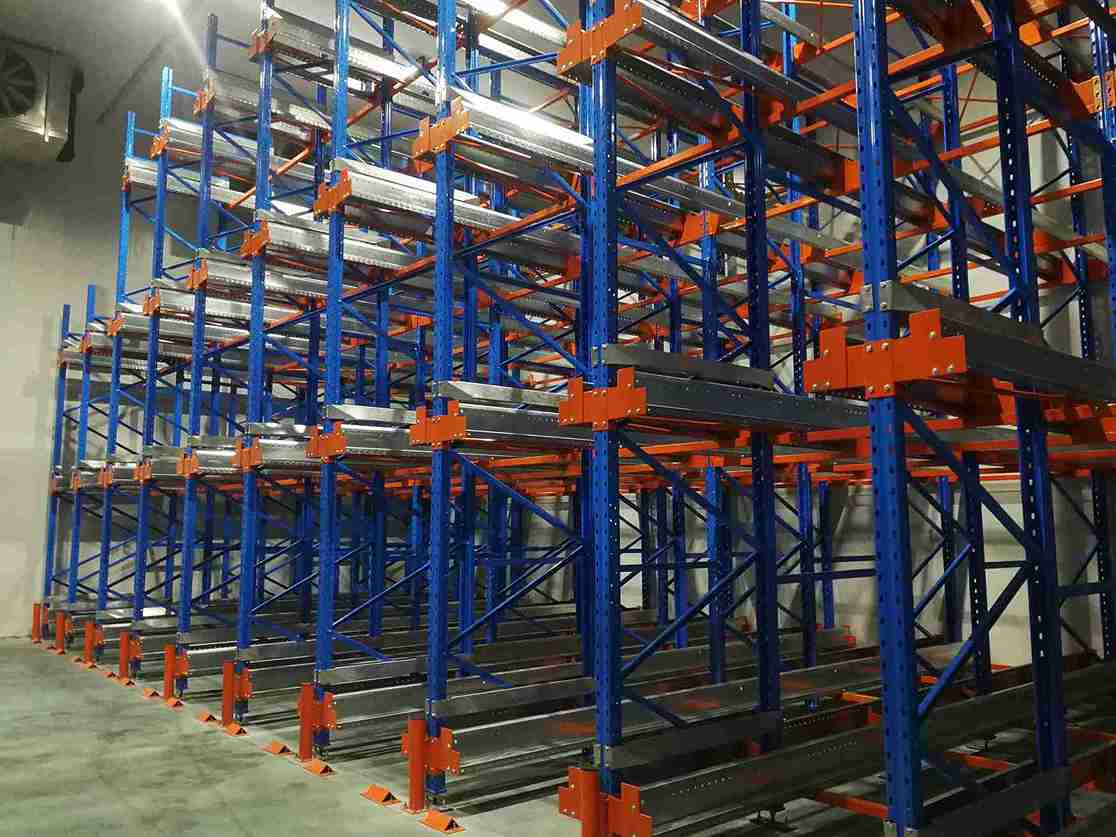
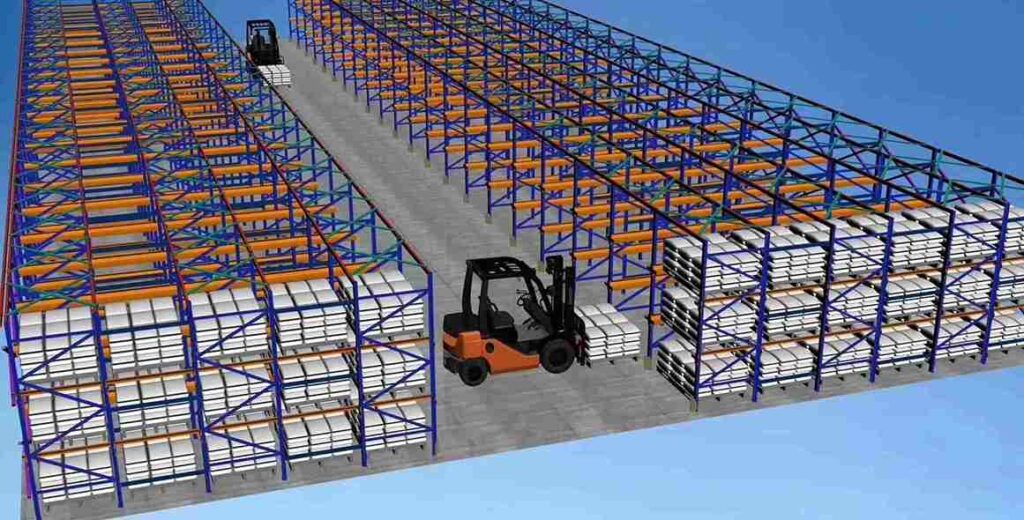
For operations with high-volume, low-SKU-depth inventory, Drive-In and Drive-Through cold storage racking systems offer unparalleled density. These systems are ideal for FIFO (First-In, First-Out) or LIFO (Last-In, First-Out) inventory management.
Operational Principle: Pallets are stored on multiple-depth rails within the rack structure itself. The forklift drives directly into the rack to deposit or retrieve a load.
Density Advantage: These cold storage racking systems can achieve density gains exceeding 75% over selective pallet racking by eliminating almost all access aisles.
Profound Energy Savings: This is where the most significant energy reductions are realized. By creating a near-solid block of stored product, these cold storage racking systems minimize the volume of air requiring refrigeration. The mass of the stored goods and the racking acts as a thermal buffer, stabilizing temperatures. The drastic reduction in open aisle space also lessens the impact of infiltration every time a dock door opens.
H3: Push Back Racking: Dynamic Storage with Enhanced Selectivity
Push Back Racking systems provide an excellent compromise between high density and good stock accessibility, typically operating on a LIFO basis.
Functionality: Pallets are stored on wheeled carts on inclined rails. Loading a new pallet pushes the previous ones back. Upon retrieval, the next pallet rolls forward to the pick face.
Key Benefits: These cold storage racking systems offer greater selectivity per SKU than Drive-In systems while providing significantly higher density than selective racking. They are perfectly suited for multi-SKU environments where batch management is feasible.
H3: Pallet Flow and Carton Flow Systems: Optimizing High-Velocity Operations
For high-throughput order picking in cold environments, dynamic flow cold storage racking systems are unparalleled in their efficiency.
Pallet Flow: Utilizing gravity on a slight decline, these cold storage racking systems allow pallets to be loaded from the rear and flow to the front for picking. This enforces perfect FIFO control and minimizes travel time.
Carton Flow: Integrated into shelving or racking structures, these systems use wheel or roller tracks for individual cases. They dramatically increase pick density and speed while reducing picker fatigue and travel time.
Synergistic Energy Benefits: By consolidating fast-movers into an ultra-efficient, compact zone, these cold storage racking systems reduce the time personnel and MHE spend in the cold, thereby reducing the associated heat load and energy spent on cooling large, active areas.

H2: The Automation Frontier: ASRS and AGVs in the Frozen Warehouse
To achieve peak efficiency and move towards a “lights-out” cold storage operation, the integration of automation with cold storage racking systems is the definitive solution. This is where the synergy between space maximization and energy savings is fully realized.
H3: Automated Storage and Retrieval Systems (ASRS): The Pinnacle of Performance
An ASRS represents the most advanced integration of automation and cold storage racking systems. It consists of computer-controlled cranes operating within ultra-narrow aisles to store and retrieve loads without human intervention.
Maximum Cubic Utilization: These cold storage racking systems utilize over 90% of the available building height and footprint, with aisles barely wider than the load itself.
Unrivaled Energy Efficiency: The enclosed nature of the ASRS cold storage racking systems minimizes air exchange with the rest of the facility. The automated cranes generate far less heat than internal combustion or even electric forklifts. Access doors to the storage array are only opened during load transfer, virtually eliminating infiltration losses. This is a primary mechanism for achieving a 30% or greater reduction in energy costs.
Operational Superiority: These systems guarantee perfect inventory accuracy, enable 24/7 operation, and enhance safety by removing personnel from the freezer environment. Leading providers design these cold storage racking systems with cold-rated components, including specialized lubricants, frost-proof sensors, and controllers validated for low-temperature operation.
H3: Autonomous Mobile Robots and Unmanned Forklifts
For facilities seeking a more flexible automation solution, Autonomous Guided Vehicles (AGVs) and unmanned forklifts can be integrated with existing or new cold storage racking systems.
Adaptive Integration: These robots can transport loads between the dock and various cold storage racking systems, including Selective, Narrow Aisle, and Push Back.
Reduced Environmental Footprint: Being electrically powered and programmed for optimal routes and smooth movement, they generate less parasitic heat than manually operated equipment.
Human Resource Advantage: They perform reliably in environments that are hazardous and uncomfortable for human workers, improving welfare and reducing costs associated with specialized PPE and safety protocols.
H2: The Physics of Cold Air Management: How Advanced Racking Design Drives Energy Savings
The strategic value of advanced cold storage racking systems extends into the realm of physics, directly influencing the performance of the refrigeration system itself.
H3: Facilitating Optimal Airflow and Eliminating Hot Spots
A refrigeration system’s efficiency plummets when it must fight an obstructive layout. A dense, monolithic block of product created by high-density cold storage racking systems can inadvertently block airflow, leading to stagnant pockets of warmer air. These hot spots trigger the system’s sensors, forcing compressors to run longer and less efficiently.
Expertly designed cold storage racking systems are planned in concert with the refrigeration layout to promote laminar airflow. This involves creating designated channels that allow cold air to circulate effectively from the evaporators, around the stored product, and back in a consistent loop. This collaboration between the cold storage racking systems and the HVAC system ensures stable, even temperatures and allows the refrigeration plant to operate at its peak efficiency.
H3: Leveraging Thermal Mass for System Stability
High-density cold storage racking systems, particularly Drive-In and ASRS, create a significant thermal mass within the warehouse. The palletized goods and the racking steel itself, once cooled to the target temperature, act as a massive heat sink. This “cold battery” effect dampens temperature fluctuations caused by transient events like door openings. The refrigeration system experiences a milder, slower load increase, allowing it to recover more efficiently and avoid the energy-intensive peak demand associated with rapid pulldowns.
H2: A Framework for Success: The Professional Journey to Optimized Cold Storage Racking Systems
Achieving the promised ROI from cold storage racking systems requires a meticulous, partnership-driven approach, not merely a transactional sale.
H3: Phase 1: Comprehensive Discovery and Digital Twin Simulation
The process begins with a deep analysis of the client’s business logistics: SKU profiles, turnover velocities, growth projections, and specific pain points. A detailed facility survey follows. Using state-of-the-art warehouse simulation software, consultants create a digital twin of the operation. This model allows for the virtual testing of various cold storage racking systems configurations, accurately projecting their impact on capacity, workflow, and energy consumption before any capital is committed.
H3: Phase 2: Custom Engineering and Precision Specification
Following the simulation phase, a team of in-house engineers translates the chosen concept into a fully detailed and certified design. This phase is where the specifics of the cold storage racking systems are finalized: the exact grade of low-temperature steel, the type of corrosion-inhibiting finish, connection details, and load calculations. This documentation is essential for regulatory compliance and risk management.
H3: Phase 3: Expert Installation and Cold Commissioning
The installation of cold storage racking systems in a live cold environment is a specialized discipline. Professional crews, trained and equipped for cold-weather work, execute the project with a focus on minimizing operational disruption. The final and critical step is “cold commissioning,” where the system is fine-tuned and inspected only after it has stabilized at its full operational temperature. This ensures that all components of the cold storage racking systems are performing as intended under real-world conditions.
H2: Conclusion: Positioning Cold Storage as a Strategic Competitive Advantage
The evolution of a company’s cold storage racking systems is a strategic inflection point. It is an investment that directly and simultaneously attacks two of the largest operational cost centers: space utilization and energy consumption. By moving beyond conventional racking and embracing high-density, automated cold storage racking systems engineered for extreme environments, businesses can achieve a fundamental transformation.
The dual objectives of maximizing space and cutting energy costs by 30% are not aspirational; they are the measurable outcomes of a strategically planned and expertly executed infrastructure upgrade. This requires a partner with a deep understanding of structural integrity, material science, thermal dynamics, and logistics workflow. For forward-thinking companies, upgrading their cold storage racking systems is the decisive step toward turning a cost-intensive necessity into a powerful source of market advantage and profitability.
H2: Frequently Asked Questions (FAQs)
1. Beyond energy and space, what are the secondary ROI factors of advanced cold storage racking systems?
The ROI extends to “softer” but critical areas: enhanced inventory accuracy through better organization, reduced product loss due to improved FIFO/FILO control, lower labor costs through improved picking rates, decreased insurance premiums due to enhanced safety, and improved compliance tracking for regulated industries like pharmaceuticals.
2. How does the seismic rating of cold storage racking systems differ from standard systems?
In seismic zones, the engineering of cold storage racking systems is even more critical. The added mass from the stored product, combined with the potential brittleness of materials at low temperatures, requires specific dynamic analysis. Professional engineers design these cold storage racking systems with specialized bracing, connections, and base plates that can dissipate seismic forces, ensuring stability during an event.
3. What is the impact of different pallet types and conditions on the performance of cold storage racking systems?
Pallet quality is crucial. Warped, damaged, or non-standard pallets can cause jams in dynamic systems like Pallet Flow and pose safety risks in Drive-In/Drive-Through cold storage racking systems. Consistent, high-quality pallets are recommended to ensure smooth operation, maximize safety, and protect the integrity of the racking investment.
4. Can these high-density systems be adapted for multi-temperature facilities?
Absolutely. The principles of high-density storage apply across temperature zones. However, the specification for the cold storage racking systems will vary. For example, a chill (+2°C) environment with high humidity may require a different corrosion protection specification than a deep-freeze (-30°C) environment. A professional analysis is needed to specify the correct cold storage racking systems for each unique zone.
5. What is the lead time for a large-scale project involving automated cold storage racking systems?
Lead times for complex, automated cold storage racking systems like ASRS can range from 9 to 18 months from order to commissioning, given the custom engineering, manufacturing, and software integration involved. For semi-automated cold storage racking systems like Push Back or Pallet Flow, lead times are typically shorter, around 12-20 weeks. Early engagement with a specialist is key to accurate project planning.
Welcome to contact us, if you need warehouse rack CAD drawings. We can provide you with warehouse rack planning and design for free. Our email address is: jili@geelyracks.com