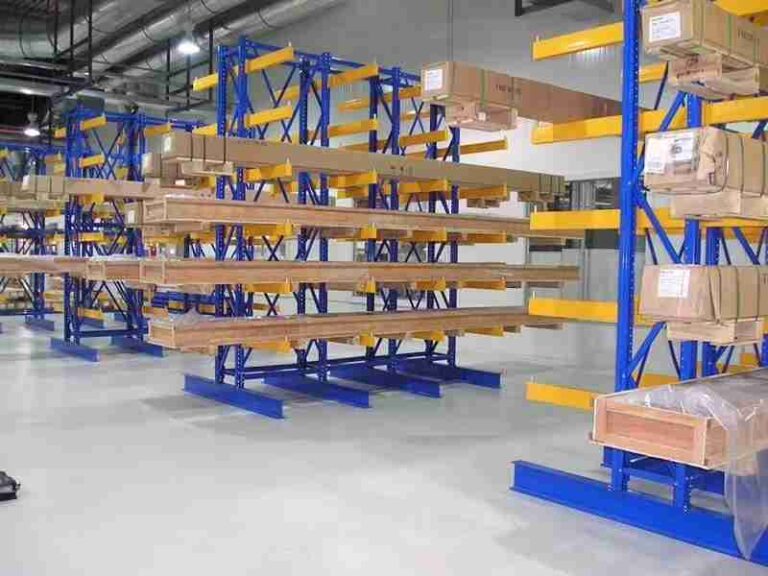
📐 "First 50 Enterprise Queries Get Custom 3D Warehouse Design" Plan


Struggling with Long & Bulky Items? Cantilever Beam Racking Maximizes Your Storage Space.
For warehouse and logistics managers across industrial sectors, the storage of long, bulky, and irregularly shaped inventory presents a persistent and costly challenge. Materials such as steel tubing, timber, plastic extrusions, and finished furniture items defy the logic of standard pallet racking, leading to inefficiencies that ripple through the entire supply chain. The conventional workarounds—inefficient leaning, unstable cross-beaming, or wasteful floor stacking—are not just suboptimal; they are active liabilities. They consume premium floor space, jeopardize worker safety, and directly contribute to product damage and operational slowdowns. In the face of these challenges, a highly specialized storage solution emerges as the definitive answer: cantilever beam racking.
This comprehensive guide delves into the engineering, applications, and transformative benefits of cantilever beam racking. It explores why this system is not merely a product but a fundamental re-engineering of storage philosophy for long-span goods. The discussion will extend beyond basic specifications to cover advanced integration with automation, custom engineering processes, and the critical role of cantilever beam racking in building a resilient, high-density, and future-proof warehouse operation. For any business serious about optimizing its material handling for non-palletized goods, understanding and implementing the right cantilever beam racking system is a strategic imperative.

The Inherent Limitations of Conventional Storage for Long-Span Goods
To fully appreciate the value proposition of cantilever beam racking, one must first diagnose the critical failures of traditional storage methods when applied to lengthy inventory.
The Cube Utilization Problem: Wasted Air and Wasted Capital
Standard pallet racking is designed for unit loads that fit within a defined bay. Storing a 6-meter bar in such a system forces the allocation of an entire 6-meter-wide bay, regardless of the item’s height or depth. This results in a catastrophic under-utilization of the warehouse’s cubic volume—the most valuable asset in any storage facility. The business effectively pays for expensive industrial real estate filled with air. A properly configured cantilever beam racking system attacks this inefficiency at its core, enabling true volumetric storage from the floor to the ceiling, unimpeded by vertical front columns.
Compromised Safety and Accelerated Product Damage
Improper storage of heavy, long items creates a hazardous environment. When rested on the horizontal beams of standard racking, these items can bow, twist, or slip. This instability poses several risks:
Structural Overload: Point loads on standard beams can exceed their design capacity, leading to catastrophic beam deflection or failure.
Load Collapse: An unsecured or unbalanced load can cascade, creating a domino effect that endangers personnel and damages vast amounts of inventory.
Forklift Operator Hazard: Navigating long items in and out of confined spaces with front-column obstacles increases the risk of collisions and load impacts.
The fundamental design of cantilever beam racking is conceived to mitigate these very risks, offering stable, full-length support and obstacle-free access.
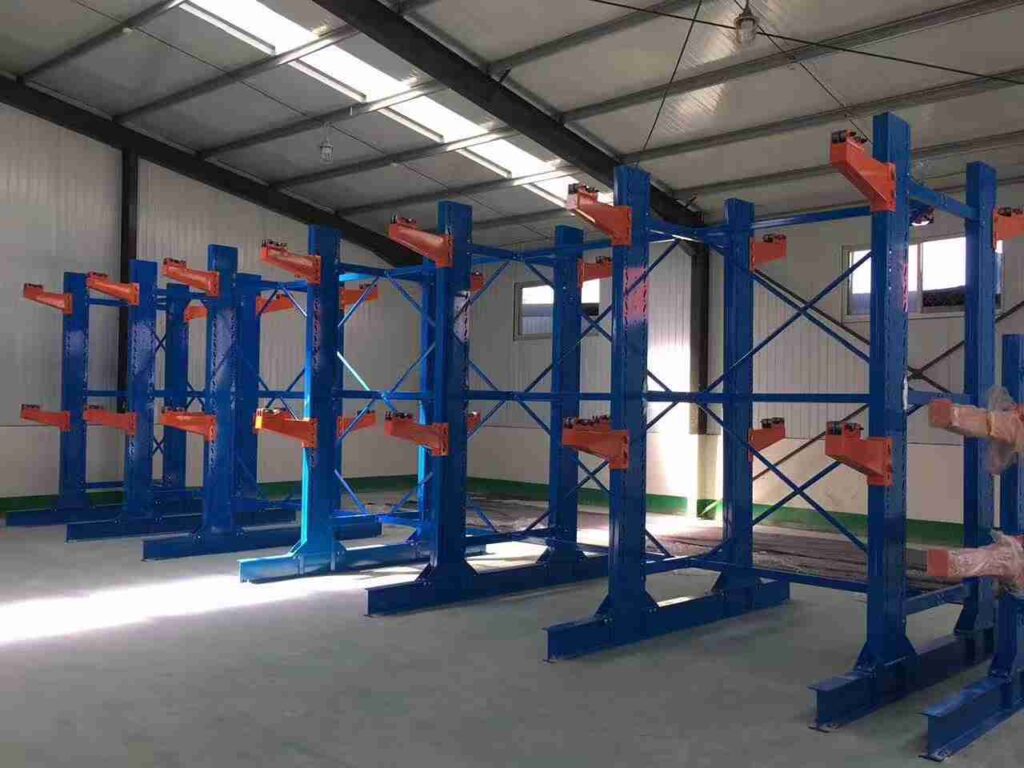
Cantilever Beam Racking: A Deep Dive into Its Engineered Design
The cantilever beam racking system is a masterpiece of industrial design, prioritizing strength, flexibility, and accessibility. Its architecture is both simple and profoundly effective.
Core Structural Components: Built for Load and Longevity
A robust cantilever beam racking installation comprises two primary structural elements:
Heavy-Duty Upright Columns: These are the backbone of the system. Manufactured from high-tensile steel, these columns are engineered to withstand significant moment forces. They are anchored to a concrete foundation with high-grade anchors, transferring the load safely into the floor. The columns feature a series of precisely punched holes or slots for arm attachment.
Load-Bearing Arms: The defining feature of any cantilever beam racking system, these arms project out from the column to directly support the stored materials. They are typically double-slotted for enhanced strength and are equipped with a secure locking mechanism that engages with the column. Arms are available in various lengths and capacities, and can be specified with inclined tips to prevent items from sliding off.
The synergy between these components creates the open-front, highly adaptable storage bay that makes cantilever beam racking so unique.
The Physics of Storage: Understanding the Cantilever Principle
The term “cantilever” is borrowed from structural engineering, describing a rigid structural element anchored at only one end. In a cantilever beam racking system, the arm is the cantilever, fixed securely to the upright column. The column acts as a counterbalance, resisting the overturning moment created by the load on the arm. Sophisticated engineering calculations determine the required column base size, anchor strength, and overall configuration to ensure the entire cantilever beam racking assembly remains stable under full load. This is not guesswork; it is applied physics ensuring operational safety.
The Compelling Advantages of Implementing Cantilever Beam Racking
The decision to invest in a cantilever beam racking system yields a rapid and substantial return on investment across multiple operational metrics.
Unrivaled Space Optimization and Storage Density
By eliminating the front uprights, cantilever beam racking allows for 100% accessible face-room across the entire storage run. Items can be stored tightly together, fully utilizing the available width and height. This dramatic increase in storage density directly translates into a lower cost per stored item and can delay or eliminate the need for costly facility expansion. For businesses in markets with high real estate costs, the space-saving attribute of cantilever beam racking is a game-changing financial advantage.
Unobstructed Accessibility and Dramatically Improved Workflow
The open-access design of cantilever beam racking is a boon for material handling efficiency. Forklift operators can approach the storage location directly from the front, without complex maneuvering. This seamless access significantly reduces both put-away and retrieval times. In practice, this means faster order picking, reduced labor costs, and improved overall throughput. The workflow efficiency afforded by a well-planned cantilever beam racking layout is a significant competitive edge.
Inherent Flexibility for Evolving Inventory Needs
The modern supply chain is dynamic, and storage systems must be adaptable. The cantilever beam racking system excels in this regard. The arms can be easily repositioned up and down the column without the need for tools in some designs, or with simple hand tools in others. This allows a single cantilever beam racking bay to be reconfigured in minutes to store items of different heights and sizes, future-proofing the storage investment against changing inventory profiles.
Enhanced Inventory Integrity and Workplace Safety
A primary benefit of a correctly loaded cantilever beam racking system is the unparalleled stability it provides to stored goods. Items are supported along their entire length by multiple arms, eliminating sagging and minimizing the risk of bending or deformation. This preservation of inventory quality is a direct financial benefit. Furthermore, the reduction in clutter and the clear access lanes contribute to a safer, more organized work environment, reducing the potential for accidents.

Critical Applications: Where Cantilever Beam Racking is Indispensable
The versatility of cantilever beam racking makes it the storage system of choice for a diverse range of industries that handle non-palletized goods.
Industry-Specific Implementations
Metals and Manufacturing: Storage of steel bars, tubes, sheets, and structural sections. The robustness of cantilever beam racking is perfectly suited for the extreme weights involved.
Lumber and Building Materials: Ideal for dimensional lumber, plywood, paneling, and molding. The system keeps materials straight, dry, and easily accessible.
Plastics and Composites: A perfect solution for plastic pipes, extrusions, and sheet stock, protecting these materials from scuffs and scratches.
Furniture and Fixtures: Efficiently stores mattresses, sofas, table tops, and cabinet doors, preventing damage to finished goods.
Construction and Infrastructure: Organizes and protects PVC piping, conduit, rebar, and scaffolding on-site or in distribution yards.
Textiles and Roll Goods: Provides an efficient method for storing large rolls of carpet, fabric, and vinyl, allowing for easy rotation and selection.
For any operation where inventory is characterized by length, the implementation of a cantilever beam racking system should be a primary consideration.
The Professional Implementation of a Cantilever Beam Racking System
Deploying a cantilever beam racking system is a significant project that requires meticulous planning and expert execution to ensure safety, performance, and longevity.
Phase 1: Comprehensive Site Survey and Load Analysis
The process begins with a detailed on-site assessment conducted by experienced storage consultants. This goes beyond simple measurements and includes:
Precise Inventory Profiling: Documenting the dimensions, weights, and handling characteristics of every item type to be stored.
Throughput Analysis: Understanding inventory turnover rates (ABC analysis) to optimize the layout for fast-moving items.
Material Handling Equipment (MHE) Review: Assessing the type, capacity, and dimensions of forklifts or other MHE to ensure perfect operational clearances within the cantilever beam racking layout.
Site Infrastructure Check: Evaluating floor flatness, ceiling height, and column spacing to inform the final design.
Phase 2: Customized Engineering and 3D Visualization
Using the data collected, engineers create a custom design for the cantilever beam racking system. This includes precise structural calculations to determine column and arm specifications. Leading providers will then generate a photorealistic 3D model of the proposed cantilever beam racking layout within the client’s own facility. This allows stakeholders to conduct a virtual walkthrough, validate workflow efficiencies, and approve the design with confidence before manufacturing begins.
Phase 3: Quality-Centric Manufacturing and Finishing
A reliable supplier manufactures the cantilever beam racking components from high-quality steel, formed and welded to exacting standards. A critical step in the process is the application of a durable finish, typically a powder-coat paint. This coating is not merely cosmetic; it provides essential protection against corrosion, scratches, and chemical exposure, ensuring the long-term structural integrity and appearance of the cantilever beam racking system.
Phase 4: Certified Installation and Comprehensive Training
Professional installation is non-negotiable for a cantilever beam racking system. Certified technicians ensure that columns are perfectly plumb, anchors are torqued to specification, and the entire assembly is level and secure. Upon completion, they provide thorough operational training for the client’s staff, covering correct loading/unloading procedures, weight distribution principles, and basic inspection protocols. This knowledge transfer is crucial for maximizing the safety and lifespan of the cantilever beam racking investment.

Integrating Cantilever Beam Racking into Automated and Smart Warehouses
The role of cantilever beam racking is evolving beyond passive storage; it is becoming an active component in the automated warehouse.
Seamless Compatibility with AGVs and Robotic Forklifts
The obstacle-free design of cantilever beam racking is inherently compatible with automation. An Automated Guided Vehicle (AGV) or robotic forklift can interface with a cantilever beam racking system with remarkable efficiency. The robot’s programming can direct it to a precise coordinate without the need for complex pathing to avoid front uprights. This makes the integration of cantilever beam racking into an automated material handling workflow a straightforward and highly effective strategy.
The Role in a Holistic Automated Storage and Retrieval System (AS/RS)
In a fully integrated warehouse, different storage technologies coexist. A high-bay pallet racking system might handle unit loads, while a cantilever beam racking system is dedicated to long, non-palletized goods. The cantilever beam racking aisle acts as a specialized zone within a broader automated logistics solution. Data from a Warehouse Management System (WMS) can direct workflows between these different systems, with the cantilever beam racking area providing the unique handling capability that other AS/RS types lack.
A Comparative Analysis: Cantilever Beam Racking Versus Alternative Solutions
While cantilever beam racking is the premier solution for many applications, understanding its position relative to other options is valuable.
Cantilever Beam Racking vs. Drive-In/Drive-Through Racking
Cantilever Beam Racking: Provides selective (FIFO or LIFO) access to every single SKU without moving other items. Superior for high-variety, lower-volume inventory.
Drive-In Racking: Offers high density but operates on a Last-In, First-Out (LIFO) basis. Retrieving a specific item often requires moving others. Best suited for high-volume, low-variety product lines where selectivity is not a priority.
Cantilever Beam Racking vs. Mobile Shelving for Long Items
Cantilever Beam Racking: Designed for heavy, bulky items requiring forklift access. It handles immense weights and is structurally robust.
Mobile Shelving: Excellent for space-saving storage of lighter, often hand-loaded long items (e.g., architectural drawings, trim). It cannot support the industrial-scale weights typical of a cantilever beam racking application.
Operational Excellence: Maintenance and Safety for Cantilever Beam Racking
To ensure the long-term integrity and safety of a cantilever beam racking system, a proactive maintenance regimen is essential.
Implementing a Proactive Inspection Protocol
Companies should establish a formal inspection schedule for their cantilever beam racking system. This includes:
Weekly Visual Checks: For any obvious signs of damage, impact, or overload.
Monthly Detailed Inspections: Verifying column plumb, arm lock engagement, and anchor tightness.
Annual Professional Audit: A thorough inspection conducted by a qualified engineer from the provider.
Adherence to Load Management and Best Practices
The cardinal rule for operating a cantilever beam racking system is to never exceed the manufacturer’s rated capacity for the arms or the overall system. Loads must be distributed evenly and centered on the arms. Comprehensive training for all personnel who interact with the cantilever beam racking system is the most effective risk mitigation strategy, ensuring that the design principles of safety and efficiency are upheld in daily operation.
The Future Trajectory of Cantilever Beam Racking Technology
The evolution of cantilever beam racking is tied to the rise of Industry 4.0 and smart warehouse concepts. The next generation of cantilever beam racking systems will be more connected and intelligent.
IoT-Enabled Monitoring: Wireless load sensors on arms can provide real-time inventory data to the WMS, eliminating stock-taking errors and enabling dynamic inventory management.
Augmented Reality (AR) for Picking: AR glasses could project picking instructions directly into a worker’s field of view, highlighting the exact item to be retrieved from the cantilever beam racking bay, thereby increasing speed and accuracy.
Predictive Analytics: Data on usage patterns and load cycles could be analyzed to predict maintenance needs or suggest layout optimizations for the cantilever beam racking system, moving from preventive to predictive management.

Conclusion: Elevating Storage Strategy with Cantilever Beam Racking
The challenges associated with storing long and bulky items are not insurmountable; they are simply a mismatch between inventory and storage methodology. Persisting with conventional racking or makeshift solutions is a decision that perpetuates inefficiency, risk, and hidden costs. The implementation of a professionally engineered cantilever beam racking system represents a strategic upgrade that delivers measurable returns through radical space optimization, enhanced operational workflow, and fortified safety standards.
As a flexible, durable, and intelligently designed solution, cantilever beam racking adapts to the demands of the modern supply chain, proving itself as an indispensable asset for any business seeking to build a lean, resilient, and high-performing storage operation. For organizations ready to transform their storage challenges into a durable competitive advantage, the path forward begins with a consultation with a specialist in cantilever beam racking systems.
Frequently Asked Questions (FAQs)
1. What specific foundation requirements are necessary for a cantilever beam racking system?
A robust concrete floor is essential for a safe cantilever beam racking installation. The industry standard typically calls for a minimum 4-inch (100mm) thick, reinforced concrete floor with a specified compressive strength. During the site survey, engineers will assess the substrate to ensure it can properly support the point loads transmitted through the column anchors. In cases of inadequate flooring, remediation solutions can be proposed.
2. Can a cantilever beam racking system be designed with seismic resistance for unstable geological zones?
Absolutely. Reputable manufacturers offer seismic-rated cantilever beam racking designs engineered to meet specific regional building codes, such as those in California or Japan. These designs incorporate enhanced bracing systems, specialized anchoring details, and specific load calculations that account for lateral seismic forces, ensuring structural integrity during an seismic event.
3. How does the lead time for a custom cantilever beam racking project typically break down?
Lead time for a custom cantilever beam racking project is multi-faceted. The design and engineering phase may take 1-2 weeks. Manufacturing of the custom cantilever beam racking components can take 3-6 weeks, depending on complexity and volume. Shipping and installation are additional variables. A total project timeline of 8-12 weeks from order to completion is common for a mid-sized installation, though this can vary significantly.
4. Are there specific fire safety or building permit considerations for cantilever beam racking installations?
Yes, significant installations often require building permits, as they are considered permanent structural improvements. Local fire marshals may have requirements regarding aisle widths, flue spaces, and the potential need for in-rack sprinkler systems, especially for high-piled storage. A professional cantilever beam racking supplier will assist in navigating these regulations and ensuring the design is compliant.
5. What is the typical operational lifespan of a well-maintained cantilever beam racking system, and is relocation possible?
A high-quality cantilever beam racking system, when properly installed and maintained, has an exceptionally long operational lifespan, often exceeding 25 years. Relocation is entirely possible and is one of the advantages of the bolted, non-welded design. The system can be disassembled, moved, and reconfigured at a new facility, protecting the client’s long-term investment.
If you require perfect CAD drawings and quotes for warehouse racking, please contact us. We can provide you with free warehouse racking planning and design services and quotes. Our email address is: jili@geelyracks.com