📐 "First 50 Enterprise Queries Get Custom 3D Warehouse Design" Plan


Maximizing Financial Returns: The Definitive Guide to Narrow Aisle Racking ROI
For logistics directors, warehouse managers, and supply chain strategists operating in the dynamic markets of Southeast Asia, the Middle East, Africa, and Latin America, capital allocation decisions carry immense weight. The pressure to enhance throughput, reduce operational expenses, and scale efficiently within existing footprints is relentless. In this context, the investment in narrow aisle racking transitions from a mere storage upgrade to a pivotal financial strategy.
The central question, however, remains: does the investment truly pay off? This exhaustive guide delves beyond surface-level claims to provide a masterclass in calculating, validating, and maximizing Narrow Aisle Racking ROI. It presents a robust, three-step analytical framework designed to translate physical warehouse transformations into undeniable financial statements, empowering decision-makers to build a bulletproof business case for radical efficiency gains.
The pursuit of superior Narrow Aisle Racking ROI is not a one-dimensional calculation of storage density. It is a holistic assessment of how a high-density storage system fundamentally alters a facility’s economic engine. This analysis encompasses direct capital avoidance, systemic operational savings, and strategic value creation. For businesses in growth markets where logistics infrastructure is evolving rapidly, achieving a compelling ROI is the critical factor that separates industry leaders from competitors burdened by inefficient, costly operations. This guide serves as the essential manual for that journey.
The Global Imperative: Why Narrow Aisle Racking ROI is Non-Negotiable in Growth Markets
Emerging logistics hubs in Jakarta, Dubai, Lagos, and São Paulo face unique challenges: rapidly escalating real estate costs, rising labor wages, and intensifying customer demand for faster fulfillment. Traditional wide-aisle warehouses, often relics of a less pressurized era, become significant financial liabilities in this environment. They consume excessive space for equipment maneuvering, inflate labor costs through inefficient travel paths, and constrain growth. The strategic implementation of a narrow aisle system directly attacks these cost centers.
A comprehensive Narrow Aisle Racking ROI analysis reveals the multi-faceted financial impact. In regions where building a new warehouse can be prohibitively expensive or logistically complex, the ability to increase storage capacity by 40-60% within the same four walls represents a monumental capital avoidance strategy.
This directly boosts ROI by eliminating or postponing multi-million dollar expansion projects. Furthermore, as wage inflation continues across manufacturing and logistics sectors, the productivity gains from a narrow aisle operation—where pickers and forklifts travel significantly shorter, optimized paths—deliver recurring annual savings that dramatically improve the ROI calculation. For a multi-national corporation evaluating a regional distribution center, the Narrow Aisle Racking ROI often becomes the decisive factor in site selection and configuration, favoring retrofitted efficiency over costly greenfield construction.
Deconstructing the ROI Equation: More Than Just Pallet Positions
To accurately forecast Narrow Aisle Racking ROI, one must first dismantle the conventional understanding of warehouse costs. The total cost of ownership for a storage system extends far beyond the invoice for racking beams and uprights.
The Foundational Layer: Quantifying Direct Space and Capital Savings
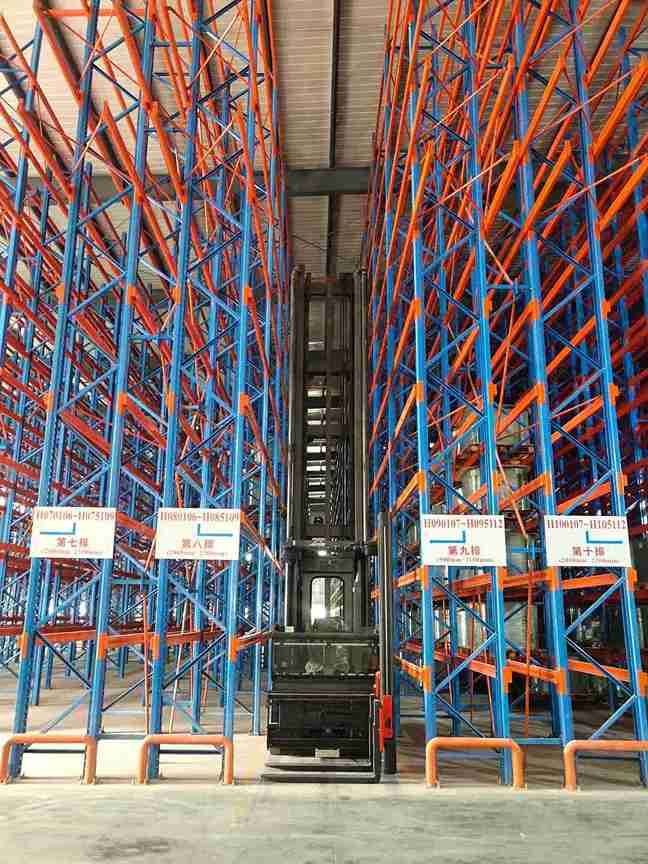
The most immediate component of Narrow Aisle Racking ROI is the dramatic increase in storage density. Replacing 12-foot aisles with 7-foot aisles reclaims thousands of square feet for productive use. The financial translation of this physical change is powerful:
Pallet Position Modeling: The first step in any ROI projection is a detailed CAD-based layout comparison. A professional analysis contrasts the current pallet count with a proposed narrow aisle configuration, often revealing gains of 50% or more. Each new pallet position has a tangible value.
Capital Cost Avoidance (The Most Powerful ROI Driver): In markets like Singapore or Saudi Arabia, where industrial land and construction costs are at a premium, this is where Narrow Aisle Racking ROI shines brightest. If a company is facing a 20,000 sq. ft. expansion at $150 per sq. ft., the avoided $3,000,000 capital outlay must be credited against the racking and equipment investment. The ROI calculation effectively becomes: (Avoided Construction Cost + Annual Operational Savings) / Initial Investment. This frequently results in a payback period measured in months, not years.
Operational Lease Savings: For facilities on leased property, increasing density can prevent the need to secure additional, costly leased space. The annual rent saved—for example, $120,000 yearly for forgone 10,000 sq. ft. in Bangkok—flows directly into the positive side of the Narrow Aisle Racking ROI ledger as a recurring benefit.
The Operational Efficiency Layer: Labor, Productivity, and Accuracy
While space savings provide the initial justification, the sustained, long-term Narrow Aisle Racking ROI is generated through daily operational excellence. Labor typically constitutes 50-70% of ongoing warehouse costs; this is the primary lever for ROI optimization.
Travel Distance Minimization: A narrow aisle layout, often combined with a optimized warehouse management system (WMS), drastically reduces unproductive travel time. Studies confirm that order picking travel can consume over 60% of a shift. By consolidating storage into a tighter footprint, travel distances can be reduced by 30% or more. The impact on Narrow Aisle Racking ROI is profound: more picks per hour, per operator. The formula is straightforward:
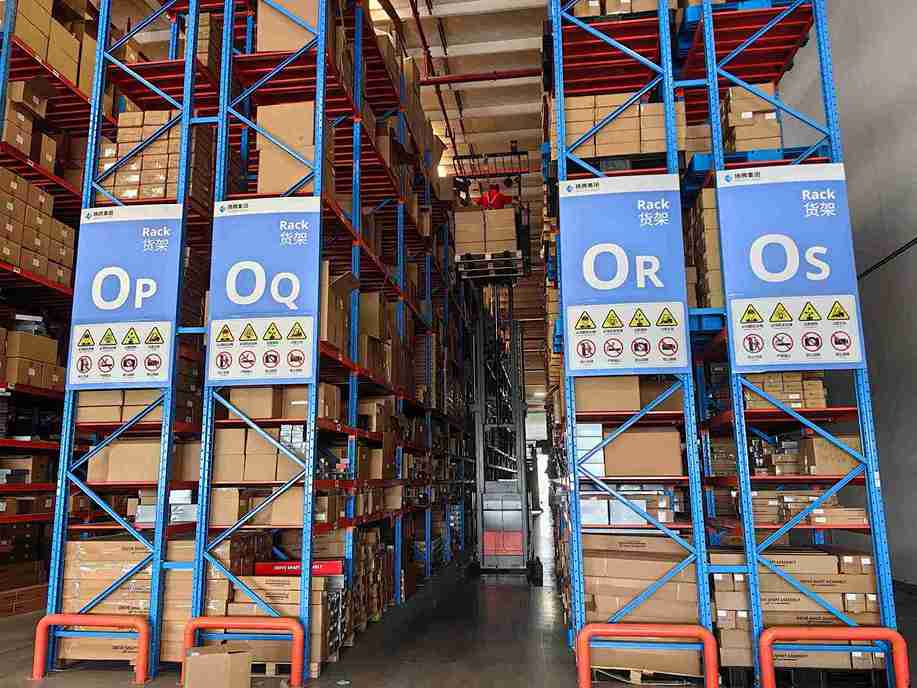
(Reduction in Travel Time) x (Hourly Labor Cost) x (Number of Operators) x (Annual Shifts) = Annual Labor Savings. This figure alone can often justify the entire project ROI.Enhanced Equipment Productivity: Specialized narrow aisle forklifts, such as turret trucks or swing-mast trucks, are engineered for speed and precision in confined spaces. While their upfront cost is higher than a standard counterbalance forklift, their throughput capability is vastly superior. The relevant metric for ROI is cost per pallet moved. A turret truck operating in a 8-meter high, narrow aisle system may move 40+ pallets per hour, whereas a standard forklift in a congested wide-aisle environment may only achieve 20. This doubling of productivity directly cuts the equipment and operator cost per unit handled, a critical factor in a positive Narrow Aisle Racking ROI.
The Accuracy and Damage Dividend: A more organized, WMS-directed workflow within a structured narrow aisle system significantly reduces picking errors and product damage. Fewer mis-picks mean lower reverse logistics costs and improved customer satisfaction. Reduced forklift maneuvering in wide aisles lowers the frequency of rack and load impacts. Assigning a conservative financial value (e.g., 0.7% of annual inventory value) to this reduction provides another quantifiable boost to the overall Narrow Aisle Racking ROI model.
Step-by-Step: Building a Bulletproof Narrow Aisle Racking ROI Model
Transforming these concepts into an executive-ready financial model requires a structured, three-step approach. This framework ensures no value driver is overlooked in the pursuit of an accurate ROI projection.
Step 1: The Comprehensive Data Audit and Baseline Establishment
An accurate Narrow Aisle Racking ROI prediction is built on precise baseline data. This phase involves collating:
Physical Layout: Current warehouse drawings, clear height, column positions, and door locations.
Inventory Profile: Pallet dimensions, weights, SKU count, and turnover velocity (ABC analysis).
Operational Metrics: Current picks/person/hour, put-away cycles, average travel distances, and forklift fleet utilization.
Financial Data: Local labor rates (including benefits), energy/utility costs, current real estate costs (rent or depreciation), and historical spend on inventory shrinkage/damage.
This data set forms the “before” snapshot against which the Narrow Aisle Racking ROI of the new system will be measured.
Step 2: The Comparative Scenario Modeling
With a partner possessing deep industry expertise, two detailed models are developed:
Scenario A: The “Do-Nothing” or “Expand-Traditionally” Projection. This model forecasts costs over 5-7 years if the current system remains, accounting for anticipated growth, likely additional leasing, and rising labor costs. It often reveals a steep, upward cost trajectory.
Scenario B: The “Narrow Aisle Transformation” Projection. This is the heart of the Narrow Aisle Racking ROI work. It includes:
Capital Outlay: Detailed cost for racking, specialized MHE (e.g., turret trucks), necessary infrastructure (floor flatness correction, guide rail installation), and WMS upgrades.
Recurring Savings: Calculated annual savings from labor productivity, space avoidance, energy efficiency, and reduced damage.
Intrinsic Value Creation: Estimates for improved order fulfillment cycles, increased storage capacity for new business, and enhanced safety records.
A side-by-side financial comparison of these scenarios over a 5-year period vividly illustrates the Narrow Aisle Racking ROI. The gap between the cumulative cost lines of Scenario A and Scenario B represents the total value created, with the initial investment payback point clearly visible.
Step 3: Financial Metric Calculation and Sensitivity Analysis
From the comparative model, key financial metrics are derived to articulate the Narrow Aisle Racking ROI:
Payback Period: The point in time when cumulative savings equal the initial investment. For well-planned narrow aisle projects, this typically falls between 18 to 36 months.
Net Present Value (NPV): This discounts future cash flows to today’s currency value, demonstrating the project’s true value-add to the corporation. A strongly positive NPV is the gold standard for ROI justification.
Internal Rate of Return (IRR): The annualized effective compounded return rate. A narrow aisle project with an IRR exceeding the company’s hurdle rate (often 15-25%) is a compelling investment.
Sensitivity Analysis: A robust Narrow Aisle Racking ROI model tests key assumptions. What if labor costs rise 10% faster? What if throughput grows 15% slower? This “what-if” testing confirms the resilience of the projected ROI, building stakeholder confidence.
Advanced Considerations for Maximizing Long-Term Narrow Aisle Racking ROI
The highest ROI outcomes arise from viewing the narrow aisle system not as an endpoint, but as a platform for continuous optimization and future automation.
Designing for the Future: Automation-Ready Racking
The highest echelon of Narrow Aisle Racking ROI planning involves designing the static racking infrastructure to be compatible with future automated storage and retrieval systems (AS/RS) or autonomous mobile robots (AMRs). This foresight protects the initial investment and dramatically reduces the cost and disruption of future automation integration. By specifying racking with precise tolerances, standardized interfaces, and the correct beam profiles today, a company paves the way for a subsequent phase of automation that will deliver a further step-change in ROI. This strategic approach transforms the Narrow Aisle Racking ROI from a single project metric into a multi-stage value creation roadmap.
The Critical Role of Software and Integration
The physical racking and equipment are only as good as the software that directs them. Maximizing Narrow Aisle Racking ROI is impossible without a capable WMS or warehouse execution system (WES). This software optimizes put-away locations, creates efficient pick paths, manages inventory in real-time, and provides the data analytics to continuously improve. The integration cost and effort must be included in the initial ROI model, as it is a non-negotiable component for realizing the projected labor and accuracy savings.
Regional Application: Tailoring the Narrow Aisle Racking ROI Case
The drivers for Narrow Aisle Racking ROI can vary by region, influencing which aspects of the model are most emphasized to stakeholders.
Southeast Asia (E-commerce Fulfillment): Here, speed and scalability are paramount. The ROI argument centers on labor productivity and throughput capacity to handle volatile, high-SKU-count e-commerce orders. The ability to scale storage vertically within urban fulfillment centers, avoiding costly satellite facilities, delivers a powerful ROI.
Middle East (Mega-Distribution Centers): In hubs like the UAE, the focus is on regional distribution for continents. Narrow Aisle Racking ROI models here heavily weigh capital avoidance (given high construction costs) and the ability to handle large volumes of pallet-in, pallet-out goods with extreme efficiency and reliability.
Africa & Latin America (Import/Export Logistics): In markets with developing infrastructure, reliability and maximizing the utility of existing buildings are key. The ROI case emphasizes system robustness, reduced dependence on a large skilled labor pool through operator-friendly equipment, and the dramatic increase in storage capacity without new construction.
Avoiding the Pitfalls: Ensuring Your Project Achieves its Projected ROI
A theoretical Narrow Aisle Racking ROI is only as good as its execution. Common pitfalls that erode realized ROI include:
Inadequate Floor Flatness: Narrow aisle trucks require exceptionally flat floors (e.g., ±3mm over 10 meters). Overlooking floor remediation can lead to poor performance, accelerated wear, and safety issues, undermining the projected ROI.
Underspecifying Equipment: Choosing a forklift with insufficient lift height, speed, or technology for the task will throttle productivity gains. The ROI depends on the synergy between racking and machine.
Neglecting Training and Change Management: Operators must be thoroughly trained on the new equipment and processes. Failure to invest in this human element can lead to underutilization, damage, and resistance, all of which degrade the actual Narrow Aisle Racking ROI.
Conclusion: The ROI as a Strategic Compass
In the final analysis, a meticulous Narrow Aisle Racking ROI study is far more than a financial justification tool. It serves as a strategic compass, guiding investments that fundamentally rewire a warehouse for profitability, resilience, and growth. For businesses across the globe’s most dynamic regions, the choice is increasingly clear: continue to absorb the hidden costs of inefficient storage, or harness a proven methodology to capture dramatic space savings, operational efficiencies, and a compelling financial return. The path to a superior Narrow Aisle Racking ROI begins with a commitment to detailed analysis, expert partnership, and a vision of the warehouse as a core profit center, not just a cost center.
Ready to Model Your Potential Narrow Aisle Racking ROI?
Contact our team of storage strategy consultants for a personalized, data-driven ROI simulation. We will analyze your current operations, benchmark against your regional market, and provide a transparent, detailed projection of the financial returns a tailored narrow aisle solution can deliver to your business.
Frequently Asked Questions (FAQs)
1. How does climate control (e.g., in cold storage or humid environments) impact the Narrow Aisle Racking ROI calculation?
The Narrow Aisle Racking ROI in controlled environments is often even more pronounced. In cold storage, where energy costs for cooling are astronomical, maximizing storage density within the refrigerated cube is paramount. Every cubic meter of air that doesn’t need to be cooled represents direct energy savings. Furthermore, specialized, cold-rated narrow aisle equipment improves operator productivity in a harsh environment where labor efficiency is naturally lower. The ROI model must factor in the dramatically higher value of saved chilled space and the productivity gains from using appropriate equipment.
2. Can narrow aisle racking systems be effectively reconfigured if our product profile or business needs change significantly?
A key strength of modern cantilever and selective narrow aisle racking is its inherent modularity and adjustability. Beams can be relocated up or down the upright frame to accommodate different load heights. While the overall aisle width is fixed by the racking baseplate design, the storage configuration within the bays is highly flexible. This adaptability protects your long-term Narrow Aisle Racking ROI by ensuring the system is not obsolete if SKU dimensions evolve. A professional design will also incorporate some scalability for future expansion within the warehouse.
3. What is the typical lifespan of a narrow aisle racking system, and how does depreciation affect the long-term ROI view?
A professionally designed, manufactured, and installed narrow aisle racking system, when properly maintained and not subjected to abuse, has a functional lifespan of 20+ years. The specialized MHE (forklifts) typically have a depreciable life of 7-10 years. This longevity is a crucial component of Narrow Aisle Racking ROI. The financial model should amortize the initial capital cost over a 10-15 year period, while the operational savings (labor, space) continue annually. This long-term perspective makes the ROI overwhelmingly positive in the out-years, as the system continues to deliver savings long after it is fully depreciated.
4. How do safety features and compliance contribute to the overall ROI, beyond avoiding accident costs?
Superior safety is a direct contributor to Narrow Aisle Racking ROI. Systems designed with clear traffic management, integrated rack guards, and features that promote operator awareness (like height-limiting devices) reduce the frequency of costly accidents. This not only avoids direct costs from damage, injury, and downtime but also reduces insurance premiums over time. Furthermore, a safer workplace lowers employee turnover and training costs, and enhances operational continuity—all positive contributors to the holistic ROI that may not appear in a simple spreadsheet but have real financial impact.
5. For a multi-site organization, are there economies of scale that can improve the aggregate Narrow Aisle Racking ROI across the network?
Absolutely. A corporate-wide initiative to standardize on narrow aisle solutions across multiple distribution centers can significantly enhance the aggregate Narrow Aisle Racking ROI. Economies of scale appear in bulk procurement of racking and equipment, streamlined design and engineering costs, consolidated training programs for operators and maintenance staff, and leveraged service contracts for equipment maintenance. This standardized approach also creates a pool of transferable skills and spare parts, reducing downtime and improving overall network resilience, further boosting the collective return on investment.
If you require perfect CAD drawings and quotes for warehouse racking, please contact us. We can provide you with free warehouse racking planning and design services and quotes. Our email address is: jili@geelyracks.com