📐 "First 50 Enterprise Queries Get Custom 3D Warehouse Design" Plan


Maximize Storage & Efficiency: How Advanced Pallet Racking Systems Save 30% Floor Space
In the high-stakes world of logistics and supply chain management, the physical warehouse is not merely a storage location but a critical center of profitability. A common and costly challenge faced by operations managers from Southeast Asia to Latin America is the inefficient use of valuable warehouse space. Constructing new facilities is a capital-intensive endeavor, making the optimization of existing cubic volume the most strategic path forward. This in-depth analysis explores the transformative potential of a professionally engineered pallet racking system as the fundamental tool for this optimization.
It moves beyond elementary concepts to detail how sophisticated, high-density storage solutions are specifically designed to maximize storage density and radically improve operational workflows. The following sections provide a comprehensive blueprint, demonstrating how a strategic investment in the right pallet racking system can reliably deliver a minimum of 30% savings in floor space, resulting in dramatic increases in storage capacity, workflow efficiency, and overall return on investment, all within the current building envelope.

The True Financial Burden of an Inefficient Warehouse Layout
Many warehouse operators underestimate the profound financial drain caused by an underperforming pallet racking system. The cost extends far beyond the simple square footage of rent or mortgage. An inefficient layout creates a domino effect of operational inefficiencies that directly impact the bottom line. Wide aisles, forced by an outdated pallet racking system, necessitate longer travel distances for forklifts and AGVs, leading to increased energy consumption, higher maintenance costs, and slower cycle times. This congestion creates safety hazards, slows order picking to a crawl, and fosters a disorganized inventory environment.
The consequence is a direct increase in labor costs, as personnel spend an inordinate amount of time searching for products and navigating a suboptimal pallet racking system. This chaotic environment is a direct result of failing to leverage modern storage solutions to maximize storage density. Recognizing this multifaceted financial impact is the first critical step toward a transformative solution that a new pallet racking system can provide.
The Engineered Backbone: Viewing the Modern Pallet Racking System as a Strategic Asset
A superior pallet racking system should never be considered a simple commodity purchase. It is, in fact, the engineered backbone of the entire logistics operation. The outdated practice of procuring the least expensive uprights and beams is a direct path to perpetuating inefficiency and introducing safety risks. Leading providers approach the design of a pallet racking system as an integrated, analytical process. This involves a deep diagnostic of several key operational variables that influence the final design of the pallet racking system:
Inventory Profile: A detailed analysis of SKU dimensions, weight, and turnover velocity (using ABC analysis) is foundational to configuring the ideal pallet racking system.
Material Handling Equipment (MHE) Integration: The type of forklifts, narrow aisle trucks, or automated guided vehicles (AGVs) in use will dictate critical design parameters of the pallet racking system, such as aisle width and load-bearing specifications.
Operational Throughput: The volume of goods processed daily determines the required accessibility and dynamic performance of the pallet racking system.
Facility Architecture: Constraints and opportunities presented by clear ceiling heights, column placements, and floor load capacity must be integrated into the design of the pallet racking system.
Synthesizing this data allows for the creation of a pallet racking system that functions not as a passive storage unit, but as an active, dynamic participant in streamlining the supply chain, marking the evolution from a simple storage solution to a strategic efficiency engine.
The Foundational Goal: Mastering Storage Density with a Pallet Racking System
The most direct method to save floor space is to systematically increase storage density, which is the primary function of a well-conceived pallet racking system. Density refers to the number of storage positions engineered into a given cubic area. Traditional, wide-aisle layouts, often the result of a basic pallet racking system, are the main cause of low density. The strategic objective is to minimize aisle width while maintaining, or even enhancing, inventory accessibility. This is not a generic solution but a spectrum of specialized pallet racking system configurations, each tailored to specific operational needs.
Selective Pallet Racking: Optimizing the Versatile Standard
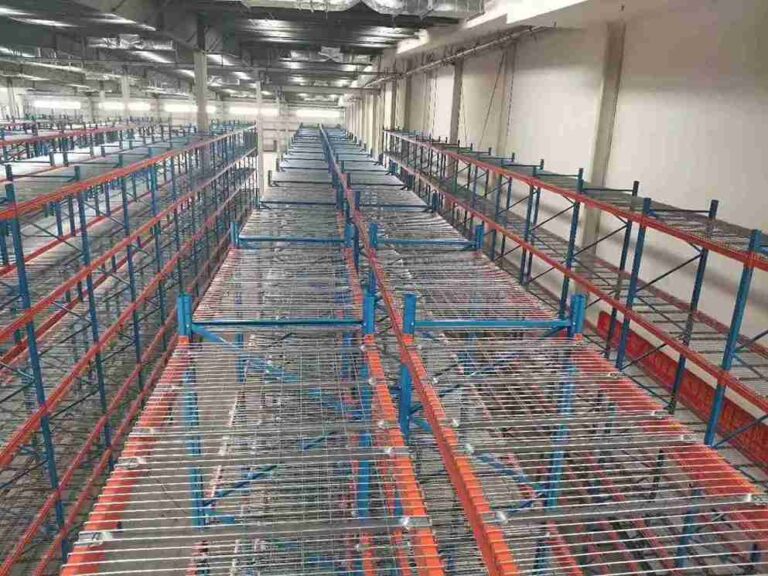
The selective pallet racking system remains the industry’s most versatile and widely adopted solution, offering direct, unimpeded access to every pallet location. However, in its most fundamental configuration, this type of pallet racking system is also the least space-efficient, as it requires aisles wide enough for a standard counterbalance forklift to maneuver. The pathway to efficiency with a selective pallet racking system involves a holistic re-engineering of the access paradigm.
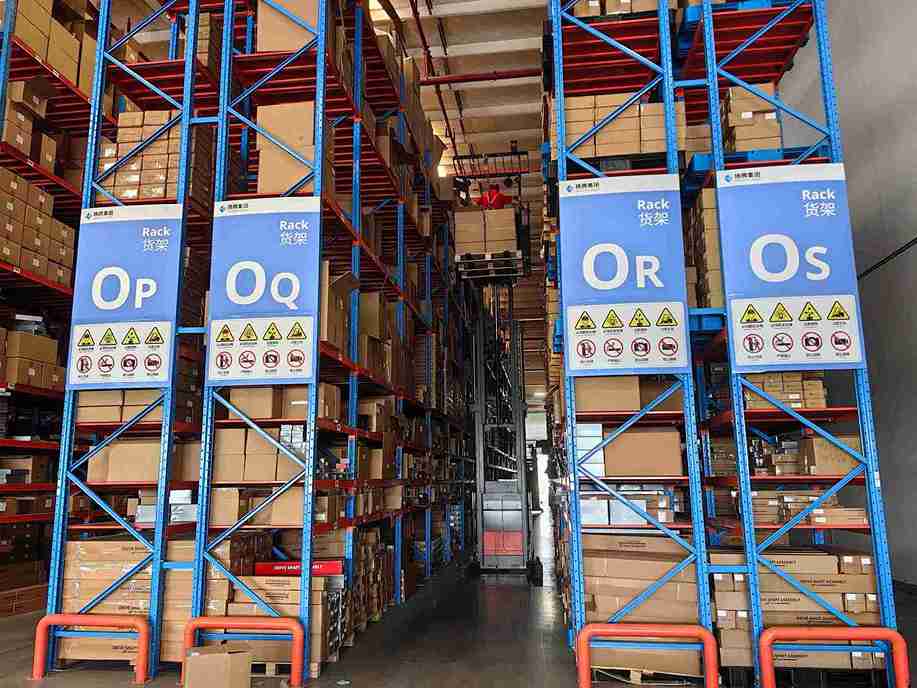
By transitioning from a standard forklift to a narrow aisle (NA) or very narrow aisle (VNA) truck, operators can drastically reduce the aisle widths within their selective pallet racking system from 12-13 feet down to 6-8 feet. This single strategic change, focused on the pallet racking system access method, can increase overall storage capacity by up to 20% without a single brick being laid, showcasing how an optimized pallet racking system directly contributes to space savings.
Double-Deep Racking: A Strategic Leap in Density
For operations managing high-volume SKUs where density is a priority, the double-deep pallet racking system presents a significant advancement. This configuration positions two rows of racks back-to-back, effectively doubling the storage depth of the pallet racking system. While this introduces a slight reduction in accessibility (operating on a Last-In-First-Out, or LIFO, basis), the gains in density are substantial.
By eliminating every other aisle, a double-deep pallet racking system can achieve space savings of up to 40% compared to a standard selective pallet racking system. It is an ideal pallet racking system for storing large quantities of slower-moving goods or for staging products for production lines. The operational success of this pallet racking system hinges on the use of a specialized double-reach truck, designed specifically to access the second pallet position within the pallet racking system framework.
Drive-In and Drive-Through Racking: Maximum Density for High-Volume Logistics
Expanding upon the depth concept, the Drive-In pallet racking system represents a paradigm shift in high-density storage. This design transforms the aisle into a channel where the forklift drives directly into the structure of the pallet racking system itself. This pallet racking system is the ultimate solution for cold storage warehouses or any operation with extreme density requirements for a limited range of SKUs, operating on a LIFO basis.
The Drive-Through pallet racking system offers a similar structural design but with access from both ends, enabling First-In-First-Out (FIFO) inventory management, which is critical for perishable goods or items with strict expiry dates. These specialized pallet racking system configurations can achieve an astonishing 60-75% better space utilization than a standard selective pallet racking system, making them indispensable for targeted, high-volume applications where the pallet racking system is the core of the storage strategy.
Push-Back Racking: The Dynamic and Dense Pallet Racking System Solution
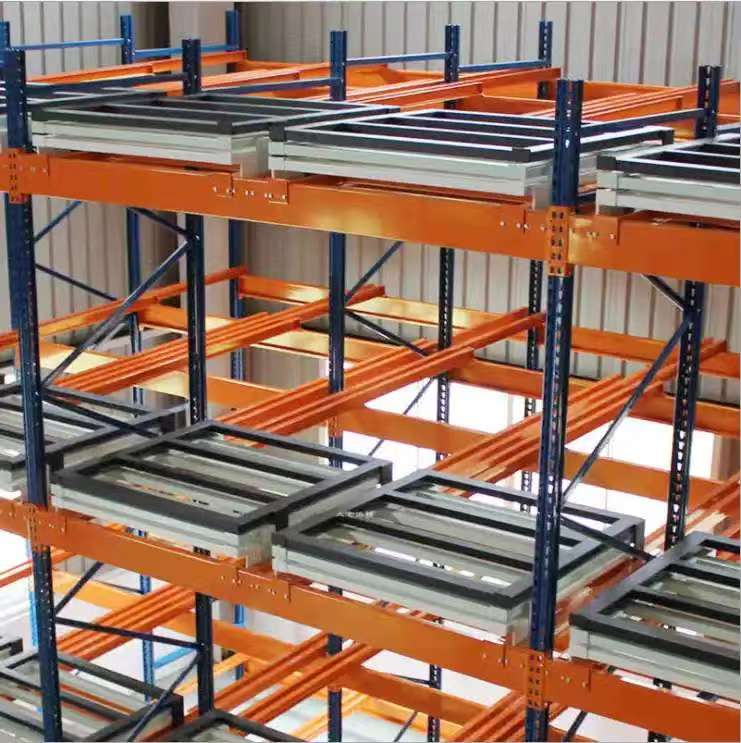
The Push Back pallet racking system signifies a major evolution in high-density, dynamic storage technology. This LIFO-system consists of tightly nested carts that ride on inclined rails within the pallet racking system framework. When a new pallet is loaded into the pallet racking system, it pushes the previously loaded pallets back along the lane. During unloading, the pallets behind gently slide forward by gravity, ensuring seamless operation.
The key advantage of this pallet racking system over drive-in alternatives is its enhanced flexibility; each lane can store multiple SKUs at different levels. Typically configured 2-5 pallets deep, a Push Back pallet racking system can increase storage density by 50-75% compared to a selective pallet racking system, while simultaneously offering faster load/unload cycles and improved selectivity, making it a highly efficient and versatile pallet racking system choice.

The Pinnacle of Performance: Pallet Live Storage Systems for Unmatched FIFO Efficiency
For operations demanding the ultimate synergy of high density, exceptionally high throughput, and guaranteed FIFO inventory control, the Pallet Live Storage pallet racking system (often called flow racks) is the superior solution. This advanced pallet racking system utilizes inclined roller or wheel tracks. Pallets are loaded at the elevated “infeed” end and glide smoothly by gravity to the lower “pick-face” end of the <b>pallet racking system.
This creates a truly “live” storage environment that ensures perfect stock rotation and dramatically reduces order-picking times. By functionally eliminating all internal aisles except for the loading and unloading points, this pallet racking system achieves phenomenal storage density. For warehouses managing a high volume of time-sensitive SKUs, this specific pallet racking system is unmatched in its ability to save floor space while simultaneously boosting operational efficiency and pick-accuracy, representing the cutting edge of pallet racking system technology.
Vertical Expansion: Integrating Mezzanine Floors with a Pallet Racking System
Once the floor plan has been fully optimized by a high-density pallet racking system, the only remaining direction for expansion is upward. A structural mezzanine floor acts as a force multiplier when integrated with a pallet racking system, creating a second or even third level within the existing facility. This is not a pallet racking system in itself, but a powerful complementary structure that leverages the unused vertical airspace above the primary pallet racking system.
Engineers design and install heavy-duty mezzanines that can support additional levels of a pallet racking system, create bulk storage areas for smaller items, or house operational functions like packing stations. By incorporating a mezzanine above or within the footprint of the existing pallet racking system, businesses can effectively double their storage capacity, achieving a 100% gain in usable space and making the entire pallet racking system ecosystem vastly more productive.
The Critical First Step: Professional Site Assessment for a Tailored Pallet Racking System
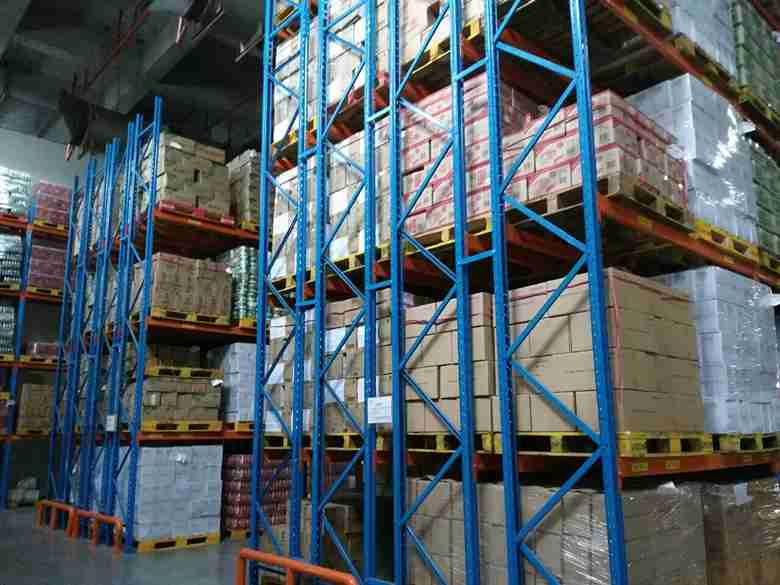
The performance of any advanced pallet racking system is contingent upon a meticulous, data-driven site assessment conducted by seasoned storage consultants. Reputable providers do not simply sell components; they engineer a complete pallet racking system solution tailored to the client’s unique operational reality. The assessment process for a new pallet racking system is comprehensive and typically includes:
3D Laser Scanning: To generate a millimeter-accurate digital model of the facility, ensuring the new pallet racking system fits perfectly around all structural elements.
Floor Flatness and Capacity Survey: Essential data for the safe and efficient operation of narrow aisle and VNA equipment within the pallet racking system.
Dynamic Load Analysis: To guarantee the structural integrity of the pallet racking system under all anticipated load conditions.
Process Flow Optimization: Analyzing workflow from receiving to shipping to design a pallet racking system layout that eradicates bottlenecks and streamlines material movement.
This rigorous, data-backed methodology is what enables experts to confidently guarantee that the proposed pallet racking system will deliver the promised 30% floor space savings and a transformative improvement in operational efficiency.
Quantifying the Investment: The Comprehensive ROI of a High-Performance Pallet Racking System
The return on investment from a professionally engineered pallet racking system delivers value that extends far beyond the immediate square footage reclaimed. The financial benefits of a high-density pallet racking system are multi-layered and substantial:
Reduced Operational Overheads: A streamlined pallet racking system shortens travel paths, directly lowering fuel and labor costs.
Accelerated Throughput: An intelligently designed pallet racking system facilitates faster picking and restocking, increasing the number of orders processed per shift.
Enhanced Safety and Reduced Damage: An organized and logically arranged pallet racking system minimizes clutter, improves visibility, and significantly lowers the risk of accidents and product damage.
Inherent Scalability: A properly engineered pallet racking system is modular by design, allowing it to expand and adapt alongside business growth, thereby future-proofing the investment.
Deferred Capital Expenditure: By fully maximizing the current facility through an advanced pallet racking system, companies can postpone the enormous expense of constructing a new warehouse for many years.
The Implementation Roadmap for a New Pallet Racking System
Achieving a guaranteed 30% floor space saving requires a strategic partnership with a provider capable of delivering a turnkey pallet racking system solution. The process is a sequenced journey, beginning with an initial consultation, progressing through a detailed site survey and custom 3D design, and culminating in a transparent installation and commissioning plan. A professional provider manages the entire lifecycle of the pallet racking system project, from initial engineering and manufacturing to precise installation and ongoing support, ensuring the new pallet racking system performs at peak efficiency from its first day of operation, fully aligned with the client’s strategic objectives.
Conclusion
In an era defined by supply chain volatility and intense competition, a warehouse must be recognized not as a static cost center, but as a dynamic, profit-driving asset. The journey to maximize storage and efficiency is a strategic imperative, not an optional upgrade. By adopting an advanced, high-density pallet racking system—from optimized selective racks and double-deep configurations to dynamic push-back and live storage systems—businesses are doing more than just storing pallets.
They are building a more resilient, responsive, and profitable operation. The commitment to a superior pallet racking system yields the tangible, achievable outcome of saving 30% of valuable floor space, which in turn unlocks a cascade of operational and financial benefits. The space conserved through an intelligent pallet racking system today is the profit and competitive advantage earned tomorrow.

Frequently Asked Questions (FAQs)
1. What specific structural reinforcements might our warehouse need for a high-density pallet racking system?
Structural requirements vary based on the pallet racking system type and height. For mezzanines or multi-level pallet racking system configurations, civil engineering analysis is often required to verify the existing floor slab can support the additional load. Similarly, tall pallet racking system installations may require anchorage to the building structure for seismic and wind stability. A professional assessment will identify all necessary reinforcements for your specific pallet racking system project.
2. How does a pallet racking system impact fire safety and sprinkler system requirements?
A high-density pallet racking system can alter air flow and potentially obstruct sprinkler coverage. Building codes often require in-rack sprinkler heads to be installed within the pallet racking system itself to ensure water can penetrate dense storage. The design of the pallet racking system must be coordinated with fire safety regulations, and reputable providers account for this, ensuring the final pallet racking system design is fully compliant.
3. Can a new pallet racking system be installed in phases to minimize disruption to ongoing operations?
Yes, a phased installation of a pallet racking system is a common and practical approach. The project can be sequenced to clear and install sections of the new pallet racking system one at a time, allowing other areas of the warehouse to remain operational. A detailed project plan will outline the phased rollout of the pallet racking system to ensure a smooth transition with minimal impact on daily activities.
4. What is the typical lifespan of a heavy-duty industrial pallet racking system?
The service life of a pallet racking system is largely determined by the quality of its components, the conditions of the operating environment, and adherence to load capacities. A high-quality, hot-rolled pallet racking system that is well-maintained and not subjected to impacts or overloads can reliably last for 20-30 years or more. The durability of the pallet racking system is a key factor in its long-term return on investment.
5. How do you ensure the proposed pallet racking system design will be compatible with our future automation plans?
Forward-thinking pallet racking system design is crucial for automation readiness. This involves specifying critical tolerances for upright plumbness and beam elevation to ensure compatibility with Automated Guided Vehicles (AGVs) or robotic retrievers. The layout of the pallet racking system is also designed with future automation in mind, ensuring aisle widths and clearances are suitable. Disclosing automation plans during the pallet racking system design phase allows engineers to future-proof the entire installation.
If you require perfect CAD drawings and quotes for warehouse racking, please contact us. We can provide you with free warehouse racking planning and design services and quotes. Our email address is: jili@geelyracks.com