📐 "First 50 Enterprise Queries Get Custom 3D Warehouse Design" Plan


The Definitive Guide to Beam Racking Inspection Frequency: Protecting Assets and Optimizing Warehouse Operations
Executive Summary
In the modern warehouse environment, beam racking inspection frequency stands as the single most critical factor in preventing catastrophic failures and ensuring long-term operational continuity. Storage racks endure constant stress from daily put-away and retrieval operations, making them susceptible to accumulated damage that, if left undetected, can lead to structural collapse, product loss, and personnel injury.
This comprehensive guide examines why establishing and maintaining an appropriate beam racking inspection frequency transcends mere regulatory compliance to become a strategic business advantage. Drawing from decades of industry experience across Southeast Asian distribution hubs, Middle Eastern logistics centers, African industrial zones, and Latin American warehouses, the analysis explores the multi-tiered approach to inspections—from daily operator checks to annual expert audits.
Readers will discover how proper beam racking inspection frequency protocols integrate with automated material handling equipment, how to identify and classify damage using international standards, and how emerging technologies are transforming traditional inspection methodologies. The discussion encompasses OSHA and SEMA requirements, real-world case studies of inspection failures, and practical implementation strategies that warehouse managers can deploy immediately to enhance safety and reduce downtime across their facilities.

Understanding the Critical Nature of Beam Racking Inspection Frequency
The foundation of warehouse safety rests upon the principle that structural integrity cannot be assumed—it must be verified. Beam racking inspection frequency represents the systematic approach to this verification process, establishing intervals at which storage equipment undergoes examination for damage, wear, and compliance with design specifications. When warehouse operators ask about appropriate beam racking inspection frequency, they are fundamentally inquiring about how to balance operational demands with safety imperatives.
Why Regular Inspections Determine Warehouse Longevity
Steel storage racks, despite their robust appearance, exist in a state of continuous stress. Each pallet placement introduces dynamic loads; each forklift maneuver creates potential impact opportunities; each shift in ambient temperature causes microscopic expansion and contraction. Without an appropriate beam racking inspection frequency, these cumulative stresses eventually manifest as detectable damage—but detection must occur before failure. Industry data indicates that approximately eighty-five percent of racking failures trace back to undetected damage, most commonly from forklift impacts that went unreported and unrepaired . This statistic underscores why beam racking inspection frequency cannot be treated as an optional consideration but must function as a core operational discipline.
The relationship between inspection intervals and failure prevention follows a predictable pattern. Facilities implementing weekly visual inspections catch approximately seventy percent of developing issues before they reach critical status. Those conducting monthly detailed inspections identify an additional twenty percent of concerns that might escape casual observation. The annual professional audit captures the remaining ten percent—the subtle micro-fractures, the gradual foundation settlements, the cumulative metal fatigue that only trained eyes and specialized equipment can detect. This layered approach to beam racking inspection frequency creates redundancy in the safety system, ensuring that no single point of failure goes unnoticed.
The Financial Imperative Behind Inspection Frequency
Beyond the moral and legal obligations to protect workers, compelling financial reasons justify maintaining rigorous beam racking inspection frequency. Consider the cost calculation facing any warehouse operation: unplanned downtime averages tens of thousands of dollars per hour in lost productivity, depending on facility throughput and order volumes. When racking failure occurs, the affected area must be immediately quarantined, halting all operations in that zone. Adjacent bays may require unloading to prevent chain-reaction collapses. Investigations consume management time. Repair or replacement costs mount. Customer orders face delays. Insurance premiums rise. All of these consequences trace back to an inadequate beam racking inspection frequency that allowed damage to progress unnoticed .
Conversely, facilities that maintain appropriate beam racking inspection frequency report significantly lower total cost of ownership for their storage equipment. Catching minor beam damage early enables targeted repairs rather than full bay replacements. Identifying loose floor fixings before they cause plumbness issues prevents progressive structural degradation. Documenting inspection findings creates defensible records that satisfy insurers and regulators alike. The investment in proper beam racking inspection frequency—whether measured in staff time or external consultant fees—represents fractions of a percentage point of the potential losses it prevents.
Establishing the Optimal Beam Racking Inspection Frequency for Your Facility
Determining the correct beam racking inspection frequency requires facility-specific analysis rather than blind adherence to generic recommendations. While industry standards provide baseline requirements, operational characteristics should influence whether facilities inspect more frequently than the minimum.
Daily Visual Inspections: The Front Line of Defense
The most fundamental tier of beam racking inspection frequency occurs daily, conducted by the people who interact with the racks most intimately: forklift operators and floor supervisors. These individuals develop an intuitive sense of normal conditions within their work areas. When something changes—a newly visible dent, a slightly misaligned beam, an unfamiliar scraping sound during pallet placement—they notice. Training these personnel to recognize reportable conditions transforms them into the facility’s most valuable safety assets.
Daily inspections within the beam racking inspection frequency framework focus on obvious, visible indicators of trouble. Operators should examine uprights in their travel paths for fresh impact marks. They should verify that beam safety locks remain engaged on all accessible levels. They should note any pallets sitting unevenly, which might indicate beam deflection or damage. Perhaps most importantly, they must feel empowered to report any concern without fear of reprisal, understanding that early reporting prevents later catastrophe .
The person responsible for racking safety (PRRS)—a designated role that every warehouse should establish—collects these daily observations and determines appropriate responses. When multiple operators report concerns about the same area, the PRRS recognizes this pattern as warranting immediate investigation. This human intelligence network, operating within the daily beam racking inspection frequency protocol, often detects problems weeks or months before they would otherwise become apparent.
Weekly and Monthly Formal Inspections
Moving beyond daily observation, the next tier of beam racking inspection frequency involves structured, documented examinations conducted by designated safety personnel. These inspections follow checklists that ensure comprehensive coverage of all rack components and surrounding conditions.
During weekly inspections within the beam racking inspection frequency schedule, safety officers verify that load capacity placards remain visible and legible at all locations. They check aisle clearances, ensuring that no stored materials encroach into travel paths where forklifts might strike rack components. They examine floor conditions around base plates, looking for cracks or spalling that might indicate foundation issues. They test a sampling of anchor bolts to verify proper torque .
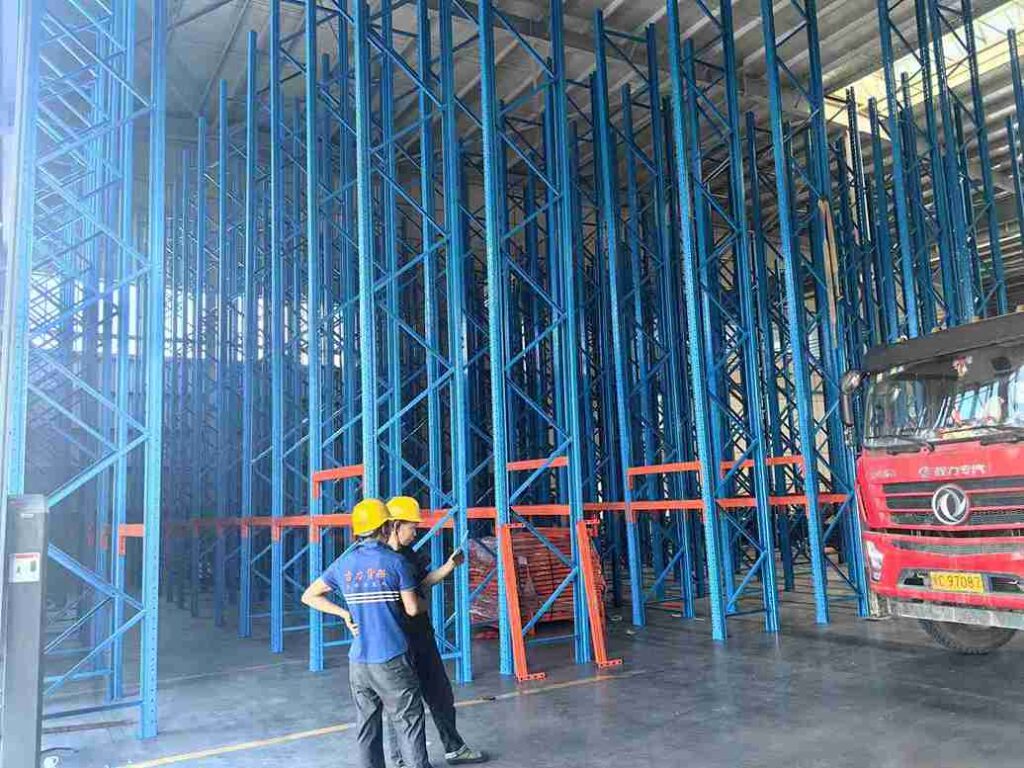
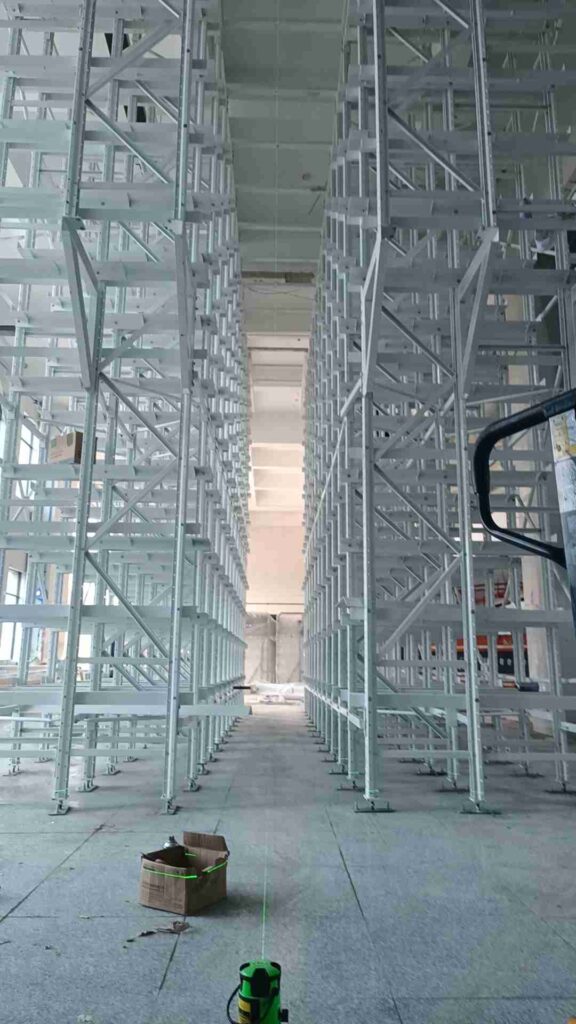
Monthly inspections delve deeper into the beam racking inspection frequency protocol. Inspectors may randomly select bays for partial unloading, allowing examination of beam end connectors and the rear faces of uprights that remain hidden during normal operations. They measure upright plumbness using laser levels or plumb bobs, documenting any deviation from vertical. They inspect beam deflection under load, comparing measurements to allowable limits specified by the manufacturer. These more intensive examinations require greater time investment but yield correspondingly greater insight into the racking system’s true condition .
The Annual Mandatory Professional Inspection
The cornerstone of any credible beam racking inspection frequency program is the annual thorough examination conducted by a technically competent person. Health and safety regulations worldwide, including those promulgated by OSHA in the United States and HSE in the United Kingdom, require this annual assessment by qualified professionals who possess specialized knowledge of storage equipment design, failure modes, and inspection methodologies .
Annual inspections within the beam racking inspection frequency framework differ fundamentally from internal checks. The external inspector brings fresh eyes, unbiased by daily familiarity with the facility. They possess certification from recognized bodies such as SEMA (Storage Equipment Manufacturers’ Association) or equivalent organizations in other regions. They apply standardized damage classification systems—typically the traffic light methodology of green, amber, and red categorizations—that provide clear guidance on required actions .
During the annual inspection, the technically competent person evaluates every component against established damage thresholds. Uprights are measured for out-of-plumb conditions that exceed design tolerances. Beams are assessed for deflection beyond allowable limits. End connectors are examined for wear that might compromise their load-holding capacity. Frame bracing is checked for deformation or loose connections. Floor fixings are verified for presence and proper torque. The resulting report provides not only a snapshot of current conditions but also trend data when compared to previous years’ findings .
The Damage Classification System and Its Relationship to Inspection Frequency
Understanding how damage is classified helps warehouse operators appreciate why beam racking inspection frequency matters and what actions different findings require. The European standard EN 15635 provides a tested methodology that has been adopted worldwide as best practice for evaluating rack damage .
Green Category Damage
Green category damage represents the lowest level of concern within the beam racking inspection frequency outcomes. These are minor imperfections that do not compromise structural integrity or load capacity. Examples include superficial scratches in the paint finish, minor cosmetic dents that do not affect the component’s cross-section, or slight surface rust that has not progressed to section loss.
When inspections identify green category damage, the appropriate response is documentation and continued monitoring through the established beam racking inspection frequency. No immediate action is required, but the damage should be noted in inspection records and observed during subsequent checks to ensure it does not progress. If the same location shows green damage repeatedly, this may indicate an area requiring additional protection or operational attention .
Amber Category Damage
Amber category damage represents a more serious condition requiring planned intervention. These findings indicate damage significant enough to potentially affect structural performance but not so severe as to demand immediate unloading. Examples include moderately bent upright flanges, beams with deflection approaching but not exceeding allowable limits, or connections showing wear that may eventually compromise safety.
The protocol for amber damage within the beam racking inspection frequency framework is clear and mandatory. The affected bay must be marked to prevent reloading once it has been emptied during normal operations. If the bay cannot be unloaded within four weeks, it must be emptied immediately regardless of operational impact. This time limit recognizes that damage, once identified, may progress and that indefinite postponement of repairs creates unacceptable risk .
Red Category Damage
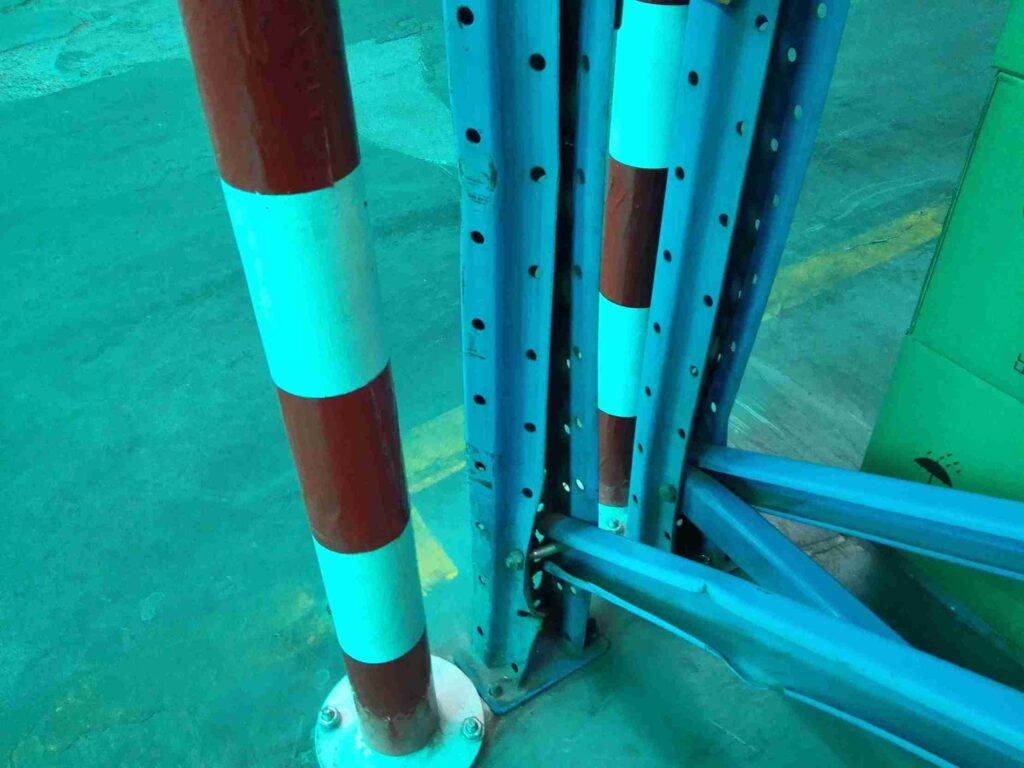
Red category damage represents the highest level of concern, requiring immediate emergency response. These findings indicate conditions where structural failure is imminent or where load capacity has been critically compromised. Examples include severely bent uprights with visible flange distortion, beams partially disengaged from end connectors, cracked welds, or missing anchor bolts.
When red category damage is discovered during any beam racking inspection frequency check, the affected area must be evacuated and unloaded immediately. No pallets may remain on the damaged components. No personnel may work in the vicinity until the situation is assessed and controlled. The damaged components must be isolated and scheduled for replacement before any reloading occurs. This zero-tolerance approach reflects the reality that red damage represents an active failure condition, not merely a future risk .
Integrating Beam Racking Inspection Frequency with Automated Warehouse Systems
Modern warehouses increasingly incorporate automation—AGVs, autonomous forklifts, conveyor systems, and automated storage and retrieval systems (AS/RS). These technologies transform beam racking inspection frequency considerations in both challenges and opportunities.
How Automated Equipment Affects Inspection Requirements
Automated guided vehicles and autonomous mobile robots follow programmed paths with precision that human operators cannot match. In theory, this should reduce impact damage. In practice, however, automation introduces new damage patterns that require adaptation of beam racking inspection frequency protocols.
When an AGV’s guidance system experiences a minor deviation—perhaps due to a shifted floor magnet or accumulated wheel wear—it may repeatedly strike the same rack location day after day. Each impact may be minor, barely noticeable to casual observation. But the cumulative effect of hundreds of low-energy impacts can cause fatigue damage that differs fundamentally from the high-energy impacts typical of manual forklift operations. Beam racking inspection frequency in automated facilities must account for this possibility, including checks for wear patterns that might indicate repetitive contact .
Additionally, the sensors and control systems that enable automation generate data that can inform beam racking inspection frequency. When an AGV reports an unexpected resistance during travel, this might indicate contact with a rack component. When a stacker crane’s positioning system requires unusual adjustments to place a load, this might signal rack movement or deformation. Integrating automation system data into inspection protocols creates opportunities for more responsive, data-driven beam racking inspection frequency decisions .
Technology-Enhanced Inspection Methodologies
Emerging technologies are transforming how facilities approach beam racking inspection frequency. Drones equipped with high-resolution cameras can inspect upper rack levels that would otherwise require specialized access equipment. Laser scanning creates three-dimensional models that can be compared over time to detect subtle deformations. IoT sensors attached to critical components provide continuous monitoring between formal inspection intervals .
Predictive maintenance technologies, initially developed for robotic systems, are increasingly applied to storage equipment within the beam racking inspection frequency framework. Vibration sensors detect impacts when they occur, alerting managers immediately rather than waiting for the next scheduled inspection. Strain gauges monitor actual loads on critical components, identifying overloading conditions before they cause damage. These technologies do not replace traditional beam racking inspection frequency but rather enhance it, providing continuous data that informs more targeted, efficient inspections .
Regulatory Requirements and Legal Implications of Inspection Frequency
Warehouse operators who underestimate the importance of beam racking inspection frequency expose themselves to significant legal and regulatory consequences. Understanding the regulatory landscape helps facilities appreciate why proper inspection programs are mandatory, not optional.
OSHA Requirements and Enforcement
The Occupational Safety and Health Administration (OSHA) in the United States does not specify exact beam racking inspection frequency in a dedicated standard. However, OSHA frequently cites the General Duty Clause—Section 5(a)(1)—which requires employers to provide workplaces free from recognized hazards. When investigating racking collapses or near-misses, OSHA inspectors evaluate whether facilities maintained appropriate inspection programs. If records show inadequate beam racking inspection frequency or failure to act on identified damage, citations and penalties follow .
OSHA also references consensus standards such as ANSI MH16.1, which specifies design, testing, and utilization requirements for industrial steel storage racks. This standard places responsibility on the owner to maintain structural integrity through regular inspections and to immediately isolate damaged portions for professional evaluation. Facilities that cannot demonstrate compliance with these recognized practices face enforcement actions regardless of whether a specific OSHA standard addresses racking directly .
Recent enforcement history demonstrates the seriousness with which OSHA treats inspection failures. Penalties for uninspected racking following collapses have exceeded six figures, with additional costs from related citations for inadequate training, poor housekeeping, and other associated violations. These financial consequences, combined with the reputational damage and operational disruption, far exceed the investment required for proper beam racking inspection frequency .
International Standards and Local Requirements
Facilities operating across Southeast Asia, the Middle East, Africa, and Latin America must navigate varying regulatory frameworks while maintaining best practices. The SEMA Code of Practice, originating in the United Kingdom, has become a de facto international standard for racking safety. SEMA recommends daily visual checks by operators, weekly inspections by supervisors, and annual thorough examinations by SEMA-approved inspectors. Many countries adopt SEMA guidelines either directly or as the basis for local regulations .
The European standard EN 15635 provides another authoritative framework for beam racking inspection frequency. This standard establishes requirements for the application and maintenance of storage equipment, including detailed damage classification and response protocols. Facilities exporting to European markets or operating under European-based corporate safety programs must demonstrate compliance with EN 15635’s inspection requirements .
In regions where local regulations may be less developed, following international best practices for beam racking inspection frequency provides multiple benefits. It demonstrates due diligence to insurers and investors. It establishes defensible standards in the event of incidents. It ensures that safety programs meet the expectations of multinational clients who require their supply chain partners to maintain world-class safety practices.
Implementing an Effective Beam Racking Inspection Program
Knowing the importance of beam racking inspection frequency is one thing; implementing an effective program is another. Warehouse managers need practical guidance for establishing systems that work in real-world conditions.
Designating Responsibility and Building Accountability
Every effective beam racking inspection frequency program begins with clear assignment of responsibility. The Person Responsible for Racking Safety (PRRS) should be identified by name, not merely by position. This individual receives training in damage recognition, maintains inspection records, coordinates responses to findings, and serves as the facility’s subject matter expert on racking conditions .
Beyond the PRRS, all personnel share responsibility for supporting the beam racking inspection frequency program. Forklift operators receive training on what damage looks like and how to report it. Supervisors understand that they must take reports seriously and act on them promptly. Management commits resources for repairs and replacements when inspections identify needs. This shared accountability creates a culture where safety is everyone’s concern, not merely a checklist exercise.
Documentation Systems and Record Retention
Proper documentation transforms inspection activities from operational tasks into legal evidence. Each inspection within the beam racking inspection frequency program should generate records that include date, inspector name, areas examined, findings identified, and actions taken. Photographs should accompany significant findings, providing visual documentation of conditions .
Record retention policies should reflect regulatory requirements and practical needs. OSHA’s statute of limitations for citations extends three years, suggesting that inspection records should be maintained for at least this period. However, facilities often benefit from longer retention, particularly for annual inspection reports that document long-term trends in racking conditions. When disputes arise about whether damage was pre-existing or newly occurring, comprehensive records prove invaluable .
Digital documentation systems offer advantages over paper-based approaches. Cloud-based platforms enable access from anywhere, facilitate photo attachment, and automate reminder generation for upcoming inspections. Some systems integrate with facility management software, creating seamless workflows from inspection finding to work order generation to repair completion tracking .
Training Requirements and Competency Development
Effective beam racking inspection frequency depends on people who know what to look for and how to respond. Training programs should address different levels of responsibility within the inspection hierarchy.
For forklift operators, training focuses on recognizing common damage types and understanding reporting procedures. Operators learn to distinguish between superficial scratches and structural damage. They understand the importance of reporting even minor impacts, knowing that today’s minor bump could become tomorrow’s major failure. They feel confident that reporting will bring constructive responses, not blame or punishment.
For the PRRS and others conducting formal inspections, training goes deeper. These individuals learn measurement techniques for assessing upright plumbness and beam deflection. They understand damage classification systems and can make informed judgments about amber versus red categorization. They know how to complete inspection documentation and how to prioritize findings for corrective action .
For management, training addresses the business case for rigorous beam racking inspection frequency. Leaders understand the cost implications of failures and the return on investment from preventive programs. They know what questions to ask about inspection findings and how to evaluate whether their facility’s program meets industry standards.
Common Inspection Findings and Their Implications
Understanding what inspections typically reveal helps warehouse operators appreciate why beam racking inspection frequency matters and how to prioritize corrective actions.
Upright Damage Patterns and Risks
Upright damage represents the most common significant finding during beam racking inspection frequency checks. Forklift impacts typically cause these injuries, striking uprights during turns or while maneuvering loads into position. The resulting damage may appear as dents, bends, or twists in the column section.
The significance of upright damage depends on location and severity. Damage near the base, where bending moments are highest, poses greater risk than similar damage higher on the column. Damage to the column flange affects load capacity more than damage to the web. Even apparently minor dents can reduce load capacity significantly if they occur at critical locations or introduce stress concentrations that promote crack propagation.
When inspections identify upright damage, the appropriate response depends on classification. Minor damage may be monitored through ongoing beam racking inspection frequency. Significant damage requires engineering evaluation to determine whether repair or replacement is needed. Severe damage demands immediate unloading and component replacement .
Beam and Connector Issues
Beams and their end connectors face different stresses than uprights. Beams support vertical loads directly, subjecting them to bending stresses that cause deflection. Over time, repeated loading and unloading can cause fatigue damage, particularly at points where beams connect to uprights.
End connectors—the components that attach beams to uprights—represent critical safety elements within the beam racking inspection frequency focus. These small pieces of metal carry the entire load from beam to frame. If safety locks are missing or damaged, beams can disengage during operation, causing immediate collapse. Inspections must verify that all safety locks are present and fully engaged on every beam end .
Beam deflection under load provides valuable information about structural condition. If beams show excessive sag, this may indicate overloading, fatigue damage, or improper design for the applied loads. Measuring deflection during beam racking inspection frequency checks and comparing results to allowable limits helps identify problems before they become critical.
Foundation and Anchorage Concerns
The connection between racking and the building floor often receives insufficient attention during beam racking inspection frequency checks. Yet anchorage failures cause a significant percentage of rack collapses, particularly in seismic regions or facilities with heavy dynamic loads.
Anchor bolts must be present at every base plate location, properly torqued, and free from corrosion or damage. Floor conditions around base plates should be examined for cracks that might indicate foundation movement or excessive loads. If spalling or deterioration is observed, the affected area requires evaluation by structural engineers .
OSHA has cited numerous facilities for inadequate rack anchorage, emphasizing that unanchored racks expose workers to struck-by and crush hazards. Following manufacturer installation instructions and applicable standards such as ANSI MH16.1 provides the feasible and acceptable methods for correcting these hazards .
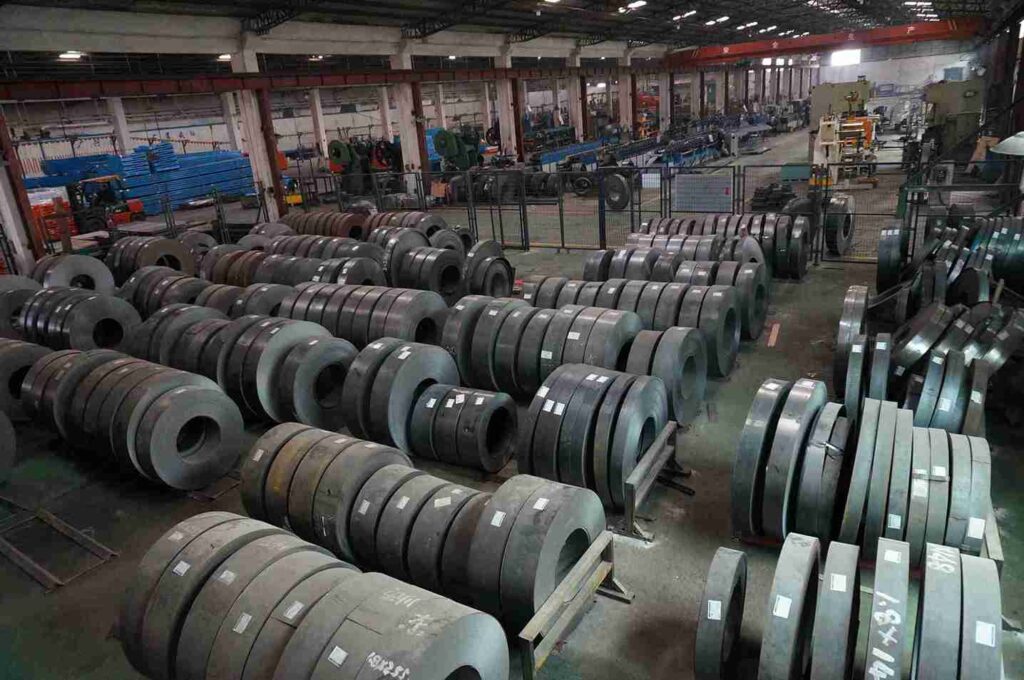
The Future of Beam Racking Inspection Frequency
As warehouses evolve toward greater automation and data integration, beam racking inspection frequency methodologies will transform accordingly.
Continuous Monitoring Technologies
Traditional beam racking inspection frequency relies on discrete inspections at scheduled intervals. Between inspections, conditions may change unnoticed. Continuous monitoring technologies address this gap by providing real-time awareness of racking conditions.
Impact sensors attached to rack components detect and record strikes as they occur, sending immediate alerts to facility management. This enables response within minutes rather than weeks, dramatically reducing the window during which damaged racks remain in service. Over time, impact data reveals patterns—specific locations, shifts, or operators associated with higher incident rates—that inform targeted interventions .
Structural health monitoring systems take continuous monitoring further, using strain gauges, accelerometers, and other sensors to track actual loads and detect developing problems. When sensors detect anomalous readings—perhaps indicating an overloaded beam or a loosening connection—the system flags the location for inspection, focusing attention where it is most needed .
Data-Driven Frequency Optimization
As facilities accumulate inspection data over years, they can optimize beam racking inspection frequency based on actual experience rather than generic recommendations. If data shows that certain areas consistently require repairs while others never show damage, inspection intervals can be adjusted accordingly. More frequent checks in high-risk zones balance with less frequent checks in stable areas, allocating inspection resources efficiently.
This data-driven approach to beam racking inspection frequency requires sophisticated record-keeping and analysis capabilities. Facilities must track not only inspection dates and findings but also operational characteristics—throughput volumes, equipment types, personnel assignments—that might correlate with damage rates. Over time, predictive models emerge that forecast likely damage based on operational parameters, enabling proactive interventions before damage occurs .
Conclusion
The question of beam racking inspection frequency lies at the heart of warehouse safety and operational excellence. Facilities that treat inspections as mere regulatory checkboxes miss the profound business value that rigorous inspection programs deliver. When properly implemented, appropriate beam racking inspection frequency prevents catastrophic failures, extends equipment life, reduces downtime, and protects the people whose labor drives warehouse productivity.
The multi-tiered approach to beam racking inspection frequency—daily operator checks, weekly supervisor inspections, monthly detailed examinations, and annual professional audits—creates redundancy that ensures no significant damage escapes detection. The damage classification system provides clear guidance on required responses, eliminating ambiguity about what constitutes acceptable versus unacceptable conditions. Integration with automated systems and emerging technologies promises to make future inspections even more effective and efficient.
For warehouse operators across Southeast Asia, the Middle East, Africa, and Latin America, the message is clear: beam racking inspection frequency is not merely a technical consideration but a strategic imperative. Facilities that embrace this reality position themselves for sustainable success in an increasingly competitive global logistics environment. Those that neglect it face risks that no operational efficiency can offset. The choice is clear, and the time to act is now.
Frequently Asked Questions About Beam Racking Inspection Frequency
1: What is the minimum acceptable beam racking inspection frequency according to international standards?
International standards including SEMA guidelines and EN 15635 require a thorough inspection by a technically competent person at least once every twelve months. However, this annual requirement represents the minimum acceptable beam racking inspection frequency and should be supplemented by more frequent internal checks—typically daily visual observations by operators and weekly formal inspections by designated safety personnel .
2: Can facilities use their own staff for annual beam racking inspections instead of hiring external consultants?
Annual inspections must be conducted by a “technically competent person” with specialized knowledge of storage equipment design, failure modes, and applicable standards. While internal staff can become technically competent through appropriate training and certification programs, many facilities choose external consultants to ensure independence and access to specialized expertise. The key requirement is competency, not necessarily external status, though most regulatory guidance recommends third-party inspectors for annual thorough examinations .
3: How should warehouse operators respond when beam racking inspection frequency identifies amber category damage?
When inspections identify amber category damage, the affected bay must be clearly marked and must not be reloaded once it has been emptied during normal operations. If the bay cannot be unloaded within four weeks of the inspection, it must be emptied immediately regardless of operational impact. Repairs should be scheduled and completed before the bay returns to service. This measured response recognizes that amber damage requires attention but does not demand the immediate emergency action required for red category findings .
4: Does beam racking inspection frequency need to increase in facilities with automated guided vehicles?
Facilities with AGVs and other automated equipment should evaluate whether their beam racking inspection frequency adequately addresses the unique damage patterns associated with automation. While AGVs typically cause fewer high-impact collisions than manual forklifts, they may produce repetitive low-energy impacts that cause fatigue damage over time. Additionally, automation system data can inform more targeted inspections. Facilities should adjust inspection frequencies based on actual damage observations rather than assuming that automation eliminates racking risks .
5: What documentation should facilities maintain regarding their beam racking inspection frequency program?
Comprehensive documentation should include records of all inspections conducted, including dates, inspector names, areas examined, findings identified, and actions taken. Photographs should accompany significant findings. Repair records should document all work performed, including replacement components and their sources. Annual inspection reports should be retained indefinitely, while daily and weekly check records should be kept for at least three years to align with OSHA citation statutes of limitations. Digital documentation systems offer advantages for organization, accessibility, and analysis of long-term trends .
If you require perfect CAD drawings and quotes for warehouse racking, please contact us. We can provide you with free warehouse racking planning and design services and quotes. Our email address is: jili@geelyracks.com