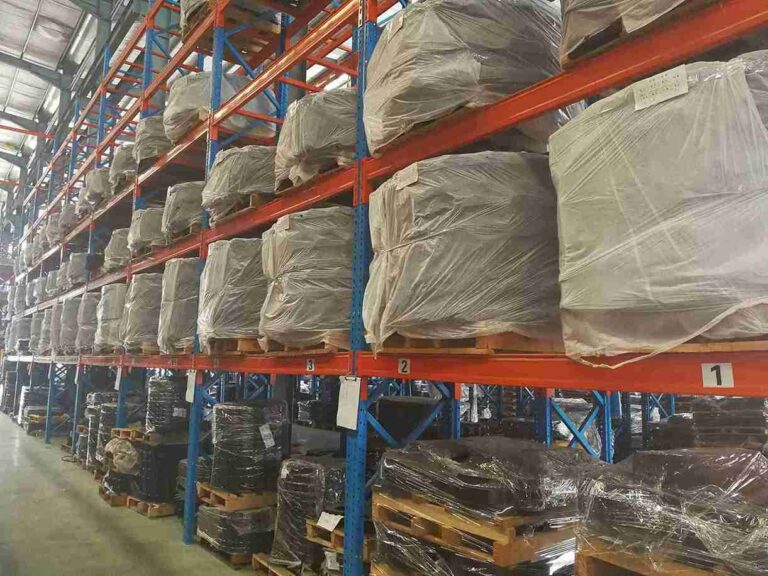
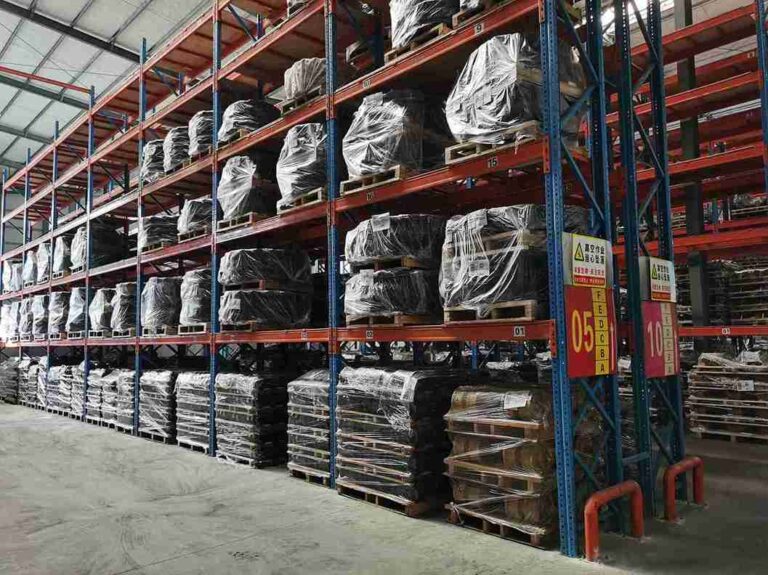
📐 "First 50 Enterprise Queries Get Custom 3D Warehouse Design" Plan


The Definitive Beam Racking Inspection Checklist: Maximize Storage Efficiency and Prevent Costly Downtime
In the fast-paced world of warehouse and logistics management, the structural integrity of storage systems is the silent bedrock upon which entire operations rest. A single overlooked crack, a misaligned beam, or a compromised anchor can cascade into catastrophic failure, resulting in millions of dollars in lost inventory, crippling operational downtime, and severe safety violations. This comprehensive guide serves as the definitive resource for implementing a rigorous beam racking inspection checklist.
Drawing from decades of industry experience and global safety standards, this article walks through the engineering principles, step-by-step protocols, and advanced strategies necessary to protect the workforce, maximize storage efficiency, and ensure the warehouse remains a profit center rather than a liability. Whether operating in the humid climates of Southeast Asia, the arid expanses of the Middle East, or the rapidly developing markets of Africa and Latin America, this guide is engineered to help build a world-class safety culture.

Why the Warehouse Cannot Survive Without a Robust Beam Racking Inspection Checklist
The question is not whether a facility can afford to conduct regular, meticulous inspections; the question is whether it can afford not to. In emerging and established markets alike, the pressure on warehouse infrastructure is intensifying. Faster turnaround times, heavier loads, and the integration of automated guided vehicles (AGVs) all place unprecedented stress on pallet racking systems. A beam racking inspection checklist is the first and most formidable line of defense against the insidious nature of structural fatigue and impact damage. Industry professionals recognize that failure to maintain proper standards can trigger catastrophic operational shutdowns, substantial regulatory penalties, and devastating workplace incidents .
The True Cost of Neglect: Beyond the Bent Beam
When conversations occur with warehouse managers across Latin America and the Middle East, the discussion often revolves around immediate operational pressures—getting product out the door. However, the long-term financial impact of neglecting a structured inspection protocol is staggering. Industry data indicates that the majority of racking failures result from undetected progressive damage, most commonly stemming from repeated forklift impacts. This damage does not announce itself with alarms. A minor dent in an upright column, if left unchecked on a beam racking inspection checklist, becomes a stress concentration point. With each subsequent load cycle, a micro-fracture propagates.
The eventual failure is sudden, violent, and devastating. Specialists dispatched to a Southeast Asian distribution center discovered that while the facility had consistently passed internal inspections using their standard beam racking inspection checklist, their methodology overlooked critical structural measurements. Multiple key upright frames demonstrated vertical misalignment exceeding safe tolerances . This deviation was generating uncontrolled stress redistribution throughout the system, creating progressive failure conditions in beam connectors and anchor points.
The operation stood perilously close to structural collapse, demonstrating how conventional checklists can inadvertently become liability instruments rather than protective measures. A properly structured beam racking inspection checklist would have identified these critical deviations before they reached dangerous levels.
Compliance as a Competitive Advantage in Global Markets
Regulatory landscapes from OSHA in the Americas to the myriad of local standards in Asia are tightening. In the UAE and across Southeast Asia, authorities are increasingly adopting international best practices like the SEMA Code of Conduct or EN 15635. A documented beam racking inspection checklist is no longer just a good idea; it is often a legal requirement for demonstrating due diligence.
Beyond compliance, however, lies competitive advantage. In the logistics hubs of Singapore and Johannesburg, a facility with a verifiable safety record and a pristine, well-maintained racking system is a preferred partner for global brands. These companies audit their supply chain partners rigorously. Presenting a comprehensive inspection history signals that the operation is professional, low-risk, and committed to operational excellence, directly impacting the ability to secure high-value contracts.
Deconstructing the Engineering: What a True Beam Racking Inspection Checklist Must Cover
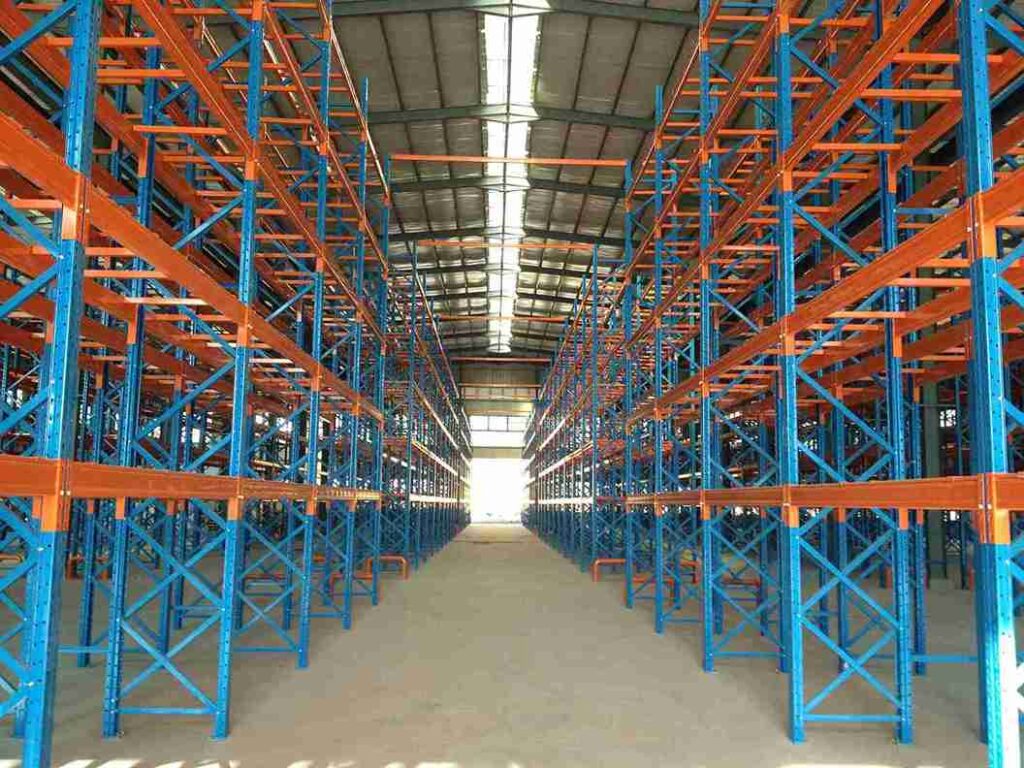
To conduct an effective inspection, one must first understand the physics at play. A racking system is not a monolithic structure; it is an engineered assembly of interdependent components. Each part has a specific job, a rated capacity, and a defined failure mode. A world-class beam racking inspection checklist scrutinizes each of these elements with the precision of a forensic engineer. The international standards governing beam racking systems—including ANSI MH16.1, FEM 10.2.02, and the UK’s SEMA guidelines—originate from fundamental principles of physics and systematic risk mitigation .
The Foundation: Upright Frames and Floor Anchoring
The vertical upright frames are the spine of the operation. They bear the cumulative weight of every beam and pallet above them. During inspections for clients transitioning from manual storage to automated stereoscopic warehouse systems, immense emphasis is placed on the condition of these frames.
Measuring Plumb and Vertical Alignment
An upright that is out of plumb—leaning even slightly—is a structural red flag. Using laser levels, the inspection should verify that frames are within the permissible tolerance, typically 0.5 inches per 10 feet of height . Deviations here indicate either a foundation issue, severe impact damage, or critical overloading. The beam racking inspection checklist must include a quantitative measurement, not just a visual pass. Maximum permissible deviation typically measures 1/240 of height, and exceeding this tolerance indicates potential foundation compromise .
Anchor Bolt Integrity and Baseplate Condition
Engineering teams have flown to sites across Indonesia and Nigeria only to find entire racking rows held in place by rusted or missing anchor bolts. This is an all-too-common and perilous oversight. Every baseplate must be securely fastened with all specified bolts properly torqued. The concrete surrounding the anchor must be inspected for cracking or spalling, which indicates that the anchor’s holding power has been compromised.
Furthermore, any makeshift leveling using wood or scrap metal is strictly prohibited by all global beam racking safety standards and must be flagged for immediate correction. During the inspection of a new warehouse pallet rack installation, engineers thoroughly examine to ensure the system complies with the relevant codes, visually assessing the anchors securing the column baseplates to the floor .
The Horizontal Lifelines: Load Beams and Connectors
If the uprights are the spine, the beams are the arms that hold revenue. These horizontal members are subjected to constant dynamic stress, and their connectors represent the single most critical safety interface in the entire system.
Beam Deflection and the “Smile” Test
Under load, all beams will deflect slightly. This is normal. However, excessive deflection—what industry professionals often call a “smile” or a “frown” in the beam profile—indicates that the beam has been overloaded past its yield point. A precise beam racking inspection checklist requires measuring this deflection. As a rule of thumb, if the vertical sag exceeds L/180 (approximately 0.53 inches for a 96-inch beam), the beam has been plastically deformed and has lost its engineered strength . It must be replaced immediately, not re-used elsewhere. The inspector checks for beam deflection and deformation, as consistent overloading will be evident here .
The Critical Role of Beam End Connectors and Safety Clips
This is where the magic—and the potential for disaster—happens. The beam end connector is the hook that locks the beam into the upright. The inspection must verify that these connectors are fully engaged in the upright’s teardrop punches or slots. One should be able to hear and feel the safety clip “click” into place. Any sign of deformation, cracking, or elongation of the holes in the connector is a critical failure. This component is engineered to fail in a specific way under catastrophic load, and any damage alters its behavior.
A missing safety clip is a moderate risk, but a deformed connector is an immediate red-tag event. Among the most common incidents identified during rack inspections are the lack of safety pins on beams, which could lead to accidental disengagement and falling load units .
The Silent Killers: Load Distribution and Pallet Condition
Perfect steel can be present, but if it is abused with poor operational practices, failure is inevitable. A comprehensive beam racking inspection checklist must extend its gaze to the loads themselves.
Understanding Uniformly Distributed Load (UDL) vs. Point Load
This is arguably the most misunderstood concept in warehouses from Karachi to Nairobi. The capacity marked on a beam (e.g., 2,500 kg) is based on the assumption of a Uniformly Distributed Load. It assumes the weight is spread evenly across the entire beam length. If heavy machinery is placed on a single pallet in the center of that beam, a point load is being created that concentrates stress and can exceed the beam’s moment capacity, leading to sudden failure long before 2,500 kg is reached. The inspection team must be trained to spot these hazardous loading patterns. Professional beam racking safety standards audits always verify that point loads are within the manufacturer’s specified limits .
Pallet Integrity and Overhang Management
A compromised pallet is a direct threat to the racking. If a pallet deck fails, the load can shift violently, creating a dangerous dynamic point load. The beam racking inspection checklist should include a spot-check of pallet condition. Furthermore, measurement for pallet overhang is essential. Most standards, including ANSI MH16.1, restrict overhang to a maximum of 3 inches (75mm) beyond the beam face . Excessive overhang creates a lever arm that pries on the beam end connectors, significantly increasing the risk of a “peel-off” failure where the beam is pulled from the upright. Standard protocols restrict overhang to 3 inches front and back and 2 inches laterally .
Implementing the Three-Tiered Inspection Hierarchy
An effective safety program is not a single event but a layered system of defenses. Based on work integrating automated conveyor systems with high-bay warehouses, a three-tiered approach to the beam racking inspection checklist protocol is advocated. This structure, endorsed by organizations like SEMA and OSHA, ensures that risks are identified at every level of operation. Authorities like the UK’s Storage Equipment Manufacturers’ Association (SEMA) and the US Occupational Safety and Health Administration (OSHA) advocate this multi-layered approach to beam racking inspection frequency .
Tier 1 – Daily Operational Checks (The Front Line)
This is the responsibility of every person on the warehouse floor, particularly forklift operators. At the start of each shift, operators should perform a brief visual scan of the aisles they will be working in. They are looking for obvious signs of fresh damage: a newly bent upright, a beam that looks dislodged, or debris on the floor indicating an impact. This step is about cultivating constant awareness, making the principles of the formal beam racking inspection checklist a part of the daily workflow .
Empowerment is key. The culture must be such that any employee can, and is encouraged to, flag a potential issue immediately without fear of reprisal for slowing down production. These daily checks are not about detailed documentation but about creating a high-frequency, human-centric sensor network across the facility. Operators should look for new, visible impacts on upright frames, especially at the base and at connection points .
Tier 2 – Scheduled Formal Inspections (The Systematic Review)
These inspections are conducted by a designated “competent person”—typically a warehouse supervisor or safety manager who has received specific training on racking systems and beam racking safety standards. The frequency depends on risk. For a high-throughput FMCG warehouse in Thailand or Brazil, this should be a weekly or monthly occurrence.
This is where a detailed beam racking inspection checklist becomes essential. The inspector systematically walks every aisle, checking for upright damage, measuring dents in the critical impact zone (0-400mm from the floor), beam condition (looking for signs of overloading or impact damage to the beam ends), connector security (spot-checking safety clips and ensuring full engagement), and housekeeping (ensuring flue spaces are clear and load notices are visible). All findings are documented, often with photographs, creating a critical historical record of the system’s health. The supervisor inspects for damaged pallets that could collapse or improperly stacked loads that place uneven stress on the beam, issues that might not be captured on a basic structural beam racking inspection checklist .
Tier 3 – Annual Expert Inspections (The Gold Standard)
This is a non-negotiable requirement for any facility serious about safety and compliance. A “technically competent person”—a certified racking inspector or a qualified structural engineer—must perform a thorough audit of the entire system at least once every 12 months. The standard EN 15635:2010 indicates that racking equipment has to be inspected on a regular basis (at least once every 12 months) by expert staff .
These experts bring specialized tools and forensic knowledge. They use ultrasonic thickness gauges to detect hidden corrosion inside steel members, torque wrenches to verify anchor bolt tension, and laser levels to check plumb with scientific precision. The output is a formal written report that serves as a legal document. This report classifies all damage according to a standardized system (often the traffic light system), prescribes remedial actions, and provides the documented proof of due diligence required for insurers and regulators. The deliverable is a formal written report that details the racking’s state, classifies any damage, and prescribes necessary corrective actions, validating the entire beam racking inspection checklist program .
The 1-2-3 Rule: Precision Measurement in Your Beam Racking Inspection Checklist
After completing a rack safety inspection, damage to uprights, braces, beams, or other pallet racking components might be identified. Assessing the extent of deformation and determining the appropriate course of action can be complex. Industry professionals recommend employing the 1-2-3 rule of thumb to establish the priority for addressing these damages .
Understanding the 1-2-3 Rule for Damage Assessment
This rule is an inspection guideline to evaluate the degree of deformation or deviation on upright elements. The name 1-2-3 refers to three distinct rack damage tolerance indicators (1/8″, 2/8″, and 3/8″) applicable to the front of the upright column, the sides of the upright column, and the braces (in any direction) .
Rack column frontal deviation should not surpass 1/8″: Start with what is easiest to see: damage to the frontal part of a rack column. The column should be examined carefully for deformation of over 1/8″ within a span of 40 inches. This guideline refers to the frontal deviation of a column towards or away from the upright braces (upright depth). The beam racking inspection checklist should also include looking for other types of damage like cracks, bulges, pinched columns, twists, and any sign of corrosion .
Rack column lateral deviation should not surpass 2/8″: Any column side or lateral deformation of over 2/8″ within a span of 40 inches to a rack column should be addressed promptly. Particular attention should be paid to damage that may be hidden behind beam connectors. This guideline refers to the lateral deformation of a column in the same direction as the aisle .
Rack brace deviation should not surpass 3/8″: A rack frame bracing consists of horizontal and diagonal members joining upright front and rear columns. The rack manufacturer carefully designs these members to stabilize the rack frame in the cross-aisle direction and support each column. Any damage to racking braces can jeopardize the stability of an upright and could degrade the structural integrity of an entire racking system. If a deformation in any direction is over 3/8″ within a span of 40 inches, it should be addressed. A brace should also be repaired or replaced immediately if it is detached or missing .
The Origin and Application of the 1-2-3 Rule
The origin of the 1-2-3 rule comes from the guideline FEM 10.2.04 (European Materials Handling Federation). It advises a similar procedure for the assessment of rack damages. Specifically, it states that a 1-meter (~40″) straight ruler should be used to assess damage. For frontal damage, the deviation should not surpass 3mm (~1/8″). For lateral damage, the deviation should not surpass 5mm (~2/8″). For brace damage, the deviation should not surpass 10mm (~3/8″). The guideline states that any damage under these conditions is not considered critical. If damage is beyond these limits, it should be immediately addressed .
Safety is everyone’s responsibility; hence, anyone can use the rule to assess damage in a warehouse. Preferably, whoever oversees pallet rack routine inspections and has a 1-meter measuring stick can use the 1-2-3 rule. This method should be used alongside a beam racking inspection checklist to make rack damage assessment as hassle-free as possible .
The Traffic Light System: Operationalizing Your Inspection Findings
An inspection is only valuable if it leads to decisive action. The industry-standard “Red Tag” or “Traffic Light” system provides a clear, unambiguous protocol for responding to damage identified by your beam racking inspection checklist. Depending on the severity, damages are classified as green, amber, or red .
Green (Minor/Cosmetic): Superficial damage like paint scratches. No reduction in structural capacity. Document and continue to monitor. The green damages do not require an action on the damaged element but it will be necessary to track them to see what their evolution is .
Yellow (Action Required): Damage that is within manufacturer’s tolerances but requires monitoring or scheduling for repair. This includes minor dents or bends. The affected location must be offloaded and assessed by a qualified engineer to determine if repair or replacement is necessary. The amber damages require the repair of the damage .
Red (Immediate Danger): Severe damage that critically compromises the structural integrity. This includes significantly bent columns, torn metal, cracked welds, dislodged beams, or failed connectors. The entire bay and any adjacent bays affected must be offloaded immediately. The area must be cordoned off and the racking cannot be used until certified repairs are completed. The red damages require the immediate discharge of the racking element damaged because of the high risk they represent .
Advanced Strategies: Integrating Automation with Your Inspection Protocol
As the industry moves toward the warehouses of the future, the relationship between storage equipment and inspection processes evolves. Specialization in creating seamless integrations between warehouse racking, AGV小车, and 自动化输送设备 means that automation changes the risk profile of the facility and offers new opportunities for data collection.
How AGVs and Forklifts Impact Racking Integrity
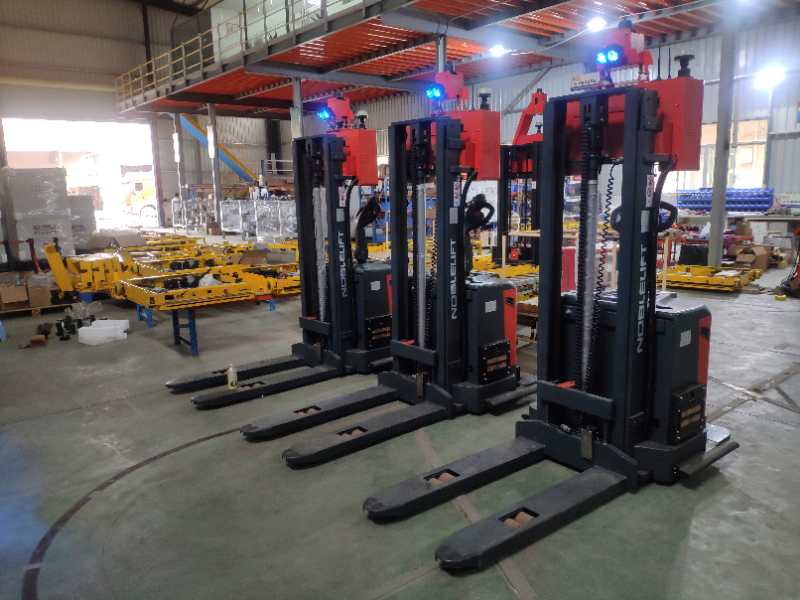
Automated Guided Vehicles (AGVs) and modern 无人叉车 offer the significant advantage of precision. Unlike human operators, their paths are consistent and controlled. This dramatically reduces the frequency of random impact damage, which is the leading cause of racking failure in manually operated warehouses. AGV and unmanned forklift implementation substantially improves compliance by eliminating manual operation variability .
However, this does not eliminate the need for a beam racking inspection checklist. If an AGV’s guidance system develops a fault or a pallet is placed slightly off, the consistent repetition of the machine can cause a unique type of damage—repeated, minor grazing in the exact same spot on an upright, which can lead to unexpected wear patterns. The inspection protocol must account for this new variable, paying close attention to areas along the AGV’s precise travel path.
The Rise of Digital Inspection Tools
Technology is transforming the inspection process itself. Digital solutions are increasingly being recommended to enhance the accuracy and efficiency of the beam racking inspection checklist.
AI-Powered Drones: For high-bay warehouses, manually inspecting top beam levels is dangerous and difficult. Drones equipped with high-resolution cameras can safely capture detailed imagery of these areas, and AI software can be trained to flag potential deformities for a human inspector to review. These tools scan hard-to-reach rack areas with 4K cameras .
Laser Scanning and Digital Twins: 3D laser scanning can create a precise digital twin of the entire racking structure. By comparing scans over time, minute shifts or progressive leaning can be detected that would be impossible to see with the naked eye, allowing for truly predictive maintenance. Laser alignment systems ensure perfect upright verticality, as even 1° misalignment weakens racks .
CMMS Integration: Digitizing the beam racking inspection checklist and integrating it with a Computerized Maintenance Management System (CMMS) ensures that no inspection is missed, all data is centrally stored, and corrective actions are automatically assigned and tracked to completion. The Damotech Platform enables warehouse operators to manage their racking assets by providing real-time access to rack inspection data, serving as a central place to keep a record and history of past inspections .
Ultrasonic Testing and Advanced Detection Methods
Ultrasonic testing detects hidden fatigue cracks using sound waves to find internal beam fractures, and is recommended for high-throughput warehouses . A magnetic thickness gauge can be used to detect hidden corrosion, especially in cold storage or high-humidity warehouses . These advanced tools take the beam racking inspection checklist beyond visual assessment and into the realm of forensic engineering.
The Financial Implications of a Robust Beam Racking Inspection Checklist
Beyond immediate safety concerns, the financial consequences of non-compliance prove devastating. Organizations face regulatory penalties, operational cessation, insurance consequences, and civil litigation exposure .
Regulatory Penalties and Operational Cessation
Organizations like OSHA and international equivalents impose severe financial sanctions for racking violations, with repeat offenses generating six-figure penalties. Auditors possess authority to halt warehouse operations until critical violations resolve, creating massive revenue disruption and contract breach liabilities .
Failed audits or incidents trigger risk reassessments by insurers, potentially multiplying premiums or prompting policy cancellation. Racking failures causing injury or property damage typically generate litigation that can threaten organizational viability. A rigorous beam racking inspection checklist is the primary defense against these financial catastrophes.
Return on Investment for Inspection Programs
The cost of implementing a comprehensive beam racking inspection checklist program is negligible compared to the business interruption caused by a single collapsed bay. Industry data suggests that following a detailed inspection guide can reduce rack-related accidents by up to 80%, extend rack lifespan by over 5 years, and avoid significant regulatory fines . This represents one of the highest-return investments in operational infrastructure.
Global Applications: Adapting the Beam Racking Inspection Checklist for Regional Challenges
For a company operating across borders, a one-dimensional understanding of compliance is a significant liability. The specific beam racking safety standards enforced in Malaysia are distinct from those in the UAE or Brazil .
Southeast Asian Considerations
In the high-humidity environments of Singapore, Malaysia, Indonesia, and Vietnam, corrosion is a relentless threat. The beam racking inspection checklist for these regions must include enhanced scrutiny of steel surfaces for rust and material thinning. Safety is governed by overarching legislation like Factories Acts, and international standards are increasingly being adopted as best practice .
Middle Eastern Challenges
In coastal regions of the Middle East, salt spray can rapidly degrade steel. The inspection frequency must be increased to monitor for connector corrosion. The dry heat of Dubai requires different considerations than the humidity of Southeast Asia, and the beam racking inspection checklist must be adapted accordingly.
Latin American and African Considerations
In seismically active zones across Latin America and in facilities adjacent to heavy machinery that induces constant vibration, the metallurgical fatigue on the racking is significantly accelerated. This reality demands a substantially higher inspection frequency conducted by experts who can identify stress fractures invisible to the naked eye . The beam racking inspection checklist for these regions must include specific seismic bracing certifications and enhanced monitoring protocols.
Building a Safety Culture Beyond the Checklist
A beam racking inspection checklist is a snapshot. It captures a single moment in time. The moment the inspection is over, the dynamic, high-velocity environment of a modern warehouse takes over again. Forklifts resume their routes, AGVs navigate their paths, and new loads are placed. The beam racking inspection checklist, by its very nature, cannot account for the evolving risks that occur between audits. It is a reactive tool in an environment that demands proactive foresight .
Training and Empowering the Workforce
Safety is everyone’s responsibility. Training the workforce on rack safety and rack damage assessment is one of the best investments a company can make to minimize unnecessary risk . If training on rack safety is desired for warehouse employees, booking a rack safety training session is an excellent option.
Effective training extends far beyond basic vehicle operation. It must include a dedicated “rack awareness” module, teaching operators to navigate aisles with the same caution they would use around pedestrians. This is a fundamental requirement in modern beam racking safety standards . The distinction between superficial examination and expert inspection frequently determines audit outcomes and operational safety levels.
Engineering Out the Risk
The most effective way to handle damage is to prevent it from happening in the first place. This begins long before the first beam racking inspection checklist is ever filed, at the design and specification stage.
Column Guards and Barrier Systems: Strategically placed concrete or steel guards protect vulnerable uprights from impact. This isn’t an optional add-on; it’s a fundamental necessity in high-traffic areas like end-of-aisle locations. Investing in high-quality protection dramatically reduces the frequency and severity of damage noted on the beam racking inspection checklist .
Wire Mesh Decking: This component serves multiple functions: it contains falling debris, improves overall safety, and acts as a secondary load-bearing surface. It adds a layer of passive protection that complements the active process of using a beam racking inspection checklist .
The Master Beam Racking Compliance Checklist for 2026
This specialized beam racking inspection checklist derives from forensic audit methodologies employed by industry specialists. The protocol progresses systematically from macro to micro analysis, ensuring comprehensive assessment coverage .
Section 1: Upright Frame Integrity – Structural Foundation Evaluation
As primary load-bearing components, upright frame integrity remains non-negotiable for system safety.
Column Vertical Alignment Assessment: Using precision laser levels, technicians verify all upright frames maintain perfect vertical orientation. Maximum permissible deviation typically measures 1/240 of height. Exceeding this tolerance indicates potential foundation compromise, impact damage, or critical overloading conditions. The beam racking inspection checklist specifically flags leaning rows as indicators of systemic failure .
Upright Frame Damage and Deformation Analysis: This evaluation stage requires surpassing conventional visual inspection through millimeter-accurate measurement. Critical Impact Zone Examination focuses on the lower 48 inches of upright frames as the most frequent impact location from material handling equipment. Dent Depth Quantification uses specialized gauges to measure deformation; depths exceeding critical tolerances typically necessitate immediate upright replacement. Structural Member Integrity documentation includes web twisting, flange deformation, or stress cracking that compromises structural capacity .
Baseplate and Anchor System Verification: The floor connection system provides essential rack stability through proper installation. Anchor Bolt Integrity requires all bolts to remain present, properly torqued, and free from corrosion or shear damage. Baseplate Condition requires plates to maintain full floor contact without bending or lifting deformation. Where leveling shims exist, maximum two welded shims per baseplate constitute the safety standard .
Section 2: Beam and Connector Inspection – Load Transfer Component Analysis
Beam End Connectors and Locking Mechanism Evaluation: This frequent failure point requires meticulous examination of every connection. Engagement Verification requires visual and physical confirmation ensuring connectors fully seat into upright slots without exposed engagement necks. Locking Function Testing requires mechanical locks to audibly engage without looseness; damaged or missing mechanisms create critical failure risks. Wear Pattern Documentation identifies elongated holes, stress fractures, or metal fatigue indicating imminent connection failure .
Beam Deflection and Deformation Measurement: Load-bearing beams require specific performance validation. Under rated capacity, vertical sag should not exceed L/180. Beams must remain free from twisting and retain designed camber characteristics .
Section 3: Load Management and Operational Safety Protocols
Even perfect racking suffers from flawed operational practices, making procedural controls essential.
Load Capacity Documentation and Verification: Every structural component requires legible, accurate load placards matching as-built engineering specifications. The beam racking inspection checklist mandates verification that cumulative upright loads never exceed design capacities .
Pallet and Load Overhang Management: Eccentric loading creates dangerous structural stresses requiring strict control. Dimensional limits restrict overhang to 3 inches front/back and 2 inches laterally. Forklift operator training and random audits ensure consistent compliance .
Column Guard Effectiveness and Limitations: While protective guards provide necessary impact protection, they can create false security. Significant guard damage should automatically trigger upright inspection, as energy transfer may have compromised structural members .
How Often Should the Beam Racking Inspection Checklist Be Used?
Formal internal inspections should occur quarterly at minimum, with comprehensive professional audits conducted annually. High-throughput facilities or those utilizing high-reach equipment should consider semi-annual professional evaluations as part of their beam racking inspection checklist protocol .
Daily Checks (5-Minute Visual Scan)
A walk through aisles for obvious damage such as bent beams or missing clips should be conducted. Issues should be reported immediately via a digital log .
Weekly and Monthly Formal Inspections
Using the beam racking inspection checklist for a full structural review requires 30-60 minutes. Findings should be documented with photos and measurements .
Annual Professional Audits
Hiring a SEMA-approved rack inspector and conducting ultrasonic testing for hidden cracks is non-negotiable for comprehensive safety .
The Seven Dynamic Factors That Dictate True Inspection Frequency
The prescribed annual inspection frequency is a starting point for a generic warehouse. A one-size-fits-all approach is inadequate. A truly resilient operation tailors its beam racking inspection checklist frequency based on a rigorous and ongoing risk assessment, considering equipment traffic intensity and type, forklift operator training and proficiency, inventory dynamics and load profile, ambient environmental conditions, system age and design, historical damage and repair records, and external forces such as seismic activity and vibration .
Common Defects and Remedial Actions
When the beam racking inspection checklist identifies damage, understanding the risk level and required action is essential.
| Defect | Risk Level | Immediate Action |
|---|---|---|
| Bent upright exceeding tolerance | High | Replace upright |
| Cracked beam end | Critical | Remove beam immediately |
| Missing safety clip | Moderate | Install new clip |
| Loose anchor bolt | High | Re-torque to specification |
| Beam deflection beyond L/180 | High | Replace beam |
| Missing load capacity placard | Moderate | Install new placard |
| Corrosion with material loss | Critical | Engineer assessment |
Conclusion
Warehouse racking is more than just metal shelving; it is the engineered skeleton of the entire supply chain. Protecting this asset through a rigorous, systematic, and well-documented inspection protocol is not an expense—it is one of the highest-return investments that can be made in operational future. By implementing the three-tiered hierarchy of daily checks, formal inspections, and annual expert audits guided by a comprehensive beam racking inspection checklist, personnel are safeguarded, inventory is protected, and the relentless uptime that defines market leadership is ensured.
From the humid ports of Southeast Asia to the sprawling distribution centers of the Middle East and the industrial hubs of Africa and Latin America, the principles of structural integrity are universal. Successful audit completion represents merely one milestone in continuous safety improvement. World-class organizations internalize the engineering principles embedded in comprehensive beam racking inspection checklist protocols to establish impregnable safety cultures. These operations recognize that each dent, misalignment, or overload condition signals broader operational vulnerabilities.
By implementing engineering-grade inspection methodologies and complementing them with progressive training and technology integration—including AGVs and automated conveyor systems—facilities achieve more than audit readiness. They establish operational future-proofing, workforce protection, and financial security. The most effective risk management strategy involves proactive implementation of rigorous beam racking inspection checklist protocols before audit contingencies arise.
Frequently Asked Questions (FAQs)
1. What specific tools are needed to properly execute a beam racking inspection checklist?
Professional execution of a beam racking inspection checklist requires several specialized tools. A 40-inch (1-meter) straightedge is essential for applying the 1-2-3 rule to measure deformation in uprights and braces . Laser levels or plumb bobs are necessary for verifying vertical alignment within the 0.5 inches per 10 feet tolerance . Torque wrenches allow spot-checking of anchor bolt tension, while ultrasonic thickness gauges detect hidden corrosion inside steel members . Inspection mirrors and high-intensity lighting help examine beam end connectors in dense configurations. For advanced programs, digital inspection software and cameras document findings for permanent records.
2. How does a beam racking inspection checklist differ for drive-in versus selective racking systems?
While both systems share fundamental components, a beam racking inspection checklist must be tailored to each rack type. For selective racking, the focus remains on beam end connectors and upright impact zones since forklifts enter aisles between rows. Drive-in racking requires additional scrutiny of rail condition and the structural integrity of the canopy, as pallets are stored deep within lanes and guides experience constant abrasion from forklift entry. Cantilever racking checklists emphasize arm deflection and base stability since loads are often long and irregular. The inspection specifics can vary depending on the type of racking system, as different types have different working components .
3. Can a beam racking inspection checklist be used to assess seismic vulnerability?
A standard beam racking inspection checklist provides baseline safety information but requires augmentation for seismic assessment in earthquake-prone regions like parts of Latin America and Central Asia. Additional checks include verifying that all seismic bracing—such as row spacers, wall ties, and baseplate anchors rated for dynamic loads—is present and undamaged . The checklist must confirm that anchor bolts meet seismic pull-out specifications and that flue spaces are maintained to allow structural movement during seismic events. Following an earthquake, an immediate specialized inspection is required before returning the system to service, as even minor ground movement can create hidden stresses.
4. What documentation should accompany a completed beam racking inspection checklist?
A completed beam racking inspection checklist should be part of a comprehensive documentation system that includes dated photographs of all identified damage, particularly for yellow and red-tagged items. The inspection report should reference specific bay locations using a consistent labeling system, making it easy to track issues over time. Professional annual audit reports should be retained indefinitely, as they serve as legal evidence of due diligence . Digital platforms that store inspection history allow comparison of findings across multiple years, revealing progressive damage trends that might otherwise go unnoticed.
5. How should new employees be trained to use a beam racking inspection checklist effectively?
Effective training for a beam racking inspection checklist should combine classroom instruction with hands-on practical exercises. New employees should first learn the engineering principles behind rack safety, understanding why each checklist item matters. They should then participate in supervised walkthroughs where experienced inspectors demonstrate how to identify damage, measure deflection, and assess connector engagement. Training should emphasize the 1-2-3 rule for damage assessment, as it provides a simple, memorable framework . Certification programs offered by organizations like SEMA provide formal qualification for those responsible for Tier 2 inspections. Regular refresher training ensures that inspection quality remains consistent as new employees join the team.
6. What is the relationship between floor condition and the findings on a beam racking inspection checklist?
Floor condition directly impacts everything recorded on a beam racking inspection checklist. Cracks, spalling, or uneven settlement in the concrete floor transfer stress directly to the upright frames, causing them to go out of plumb even without impact damage . When anchors are installed in deteriorated concrete, their pull-out strength is compromised, rendering the entire racking system unstable. The checklist should include a specific section for floor assessment around each baseplate, noting any visible deterioration. In cold storage environments, freeze-thaw cycles accelerate floor degradation, requiring more frequent inspection of this critical interface.
7. How does the integration of AGVs change the beam racking inspection checklist protocol?
When AGVs operate in a facility, the beam racking inspection checklist must adapt to new risk patterns. While AGVs reduce random impact damage through precision guidance, they can create repetitive contact in the exact same location if guidance systems drift slightly out of calibration. The checklist should therefore include measurement of clearance between AGV paths and rack uprights, verifying that design tolerances are maintained. Additionally, AGV guidance markers or tape on the floor must be inspected for wear, as degraded guidance can lead to path deviation. The predictable nature of AGV operations actually allows for more targeted inspections, focusing on the precise zones where the automated equipment operates most frequently.
If you require perfect CAD drawings and quotes for warehouse racking, please contact us. We can provide you with free warehouse racking planning and design services and quotes. Our email address is: jili@geelyracks.com