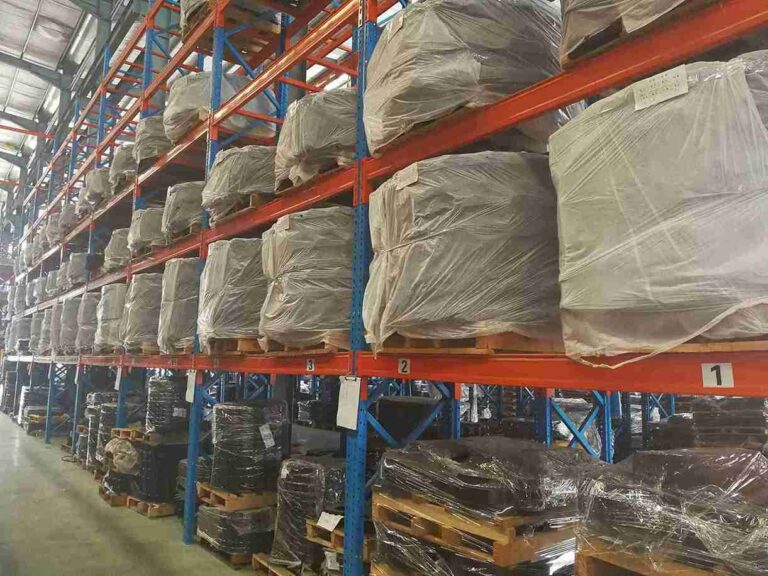
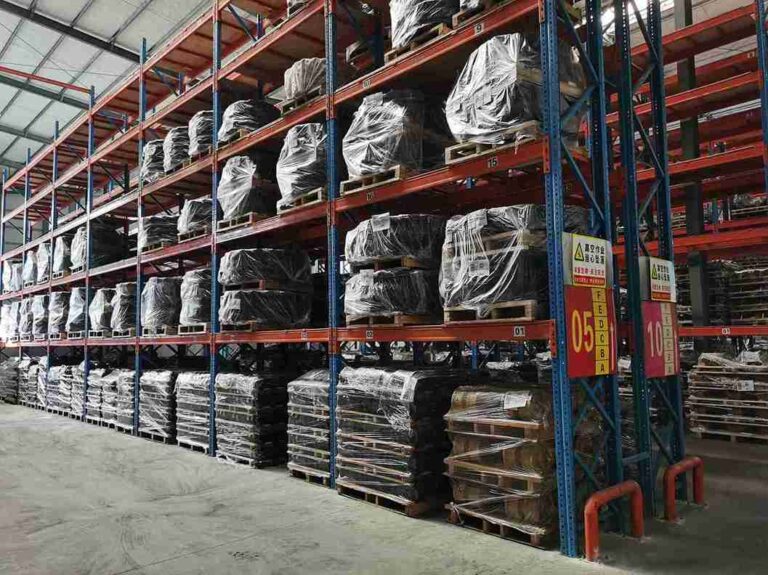
📐 "First 50 Enterprise Queries Get Custom 3D Warehouse Design" Plan


The Total Cost of Ownership Revolution: Why Beam Racking Cost-Saving Tips Must Address Lifetime Value
When procurement professionals across Southeast Asia, the Middle East, and Latin America evaluate warehouse infrastructure investments, the initial price tag inevitably dominates the conversation. This focus on upfront expenditure, while understandable given budget constraints, represents one of the most costly mistakes in modern logistics management. The reality is that purchase price typically represents only 30-40% of what facilities ultimately spend on their racking systems over a ten-year operational period . This fundamental truth elevates beam racking cost-saving tips from simple procurement guidance to strategic financial planning essential for competitive operations.

Understanding Why Initial Purchase Price Deceives Even Experienced Buyers
The psychology of procurement naturally fixates on upfront expenditure. Budget holders across Jakarta’s distribution centers, Dubai’s logistics zones, Nairobi’s industrial corridors, and São Paulo’s warehouses face relentless pressure to minimize capital outlay. Suppliers understand this dynamic well, often structuring proposals that emphasize initial cost advantages while remaining silent about long-term implications. However, sophisticated operators recognize that beam racking cost-saving tips must extend far beyond the purchase invoice to encompass the complete lifecycle of the system.
Consider two warehouses of identical size operating in competing markets. One purchases budget beam racking at a 25% discount, celebrating the immediate procurement victory. Another invests in quality-engineered systems with superior protective coatings, precision manufacturing, and automation-ready specifications. Year one favors the budget buyer’s financial statements. By year three, however, the picture shifts dramatically. The discount system shows accelerated wear at impact points, requires component replacement, and has already incurred three days of operational downtime for emergency repairs. The quality installation continues operating seamlessly, delivering consistent throughput without interruption .
When procurement teams retrospectively analyze these scenarios, they discover that beam racking cost-saving tips focused exclusively on initial price created a false economy. The discount system’s maintenance costs exceeded projections by 200%, completely negating any upfront savings while introducing operational disruptions that affected customer satisfaction and market position. This pattern repeats across emerging markets where rapid industrialization meets pressure to minimize startup costs, demonstrating that beam racking cost-saving tips must address the relationship between initial quality and long-term expenditure.
Breaking Down the Components of Beam Racking Lifecycle Expenses
To truly grasp where money flows in a racking system’s lifetime, warehouse professionals must examine each cost component individually. The purchase price covers materials, manufacturing, and initial installation. But the operational phase introduces multiple expense categories that collectively determine true investment. Beam racking cost-saving tips that ignore these downstream expenses inevitably fail to deliver expected returns, often leaving facilities with higher total costs than if they had invested more initially.
Structural maintenance encompasses all activities required to preserve load capacity and system integrity. This includes regular inspections, component straightening, protective coating renewal, and connection tightening. Facilities with high forklift traffic—common in distribution centers throughout Southeast Asia and Latin America—face accelerated structural demands as daily impacts accumulate. In these environments, beam racking cost-saving tips must emphasize preventative measures implemented from day one rather than reactive responses to accumulating damage. Industry data indicates that facilities with comprehensive maintenance programs spend 60% less on emergency repairs over ten years compared to those operating reactively .
Replacement parts represent another significant category requiring attention in any comprehensive beam racking cost-saving tips framework. Uprights, beams, bracing members, and safety locks eventually require replacement regardless of care quality. The difference lies in frequency: quality systems may need 5% annual component replacement, while poorly specified systems can exceed 15%. This variance directly impacts annual budgets, with the gap widening each year as inferior components accelerate deterioration throughout the system. When one upright fails due to corrosion, adjacent components experience increased stress, creating a cascade of replacement needs that reactive facilities rarely anticipate .
Downtime costs often escape formal accounting yet devastate operational budgets with particular severity in automated facilities. When a damaged rack section requires quarantine, that storage capacity vanishes immediately. When repairs demand aisle closures, picking productivity plummets. For third-party logistics providers serving markets from Dubai to Jakarta, every hour of rack unavailability translates directly to lost revenue. Conservative estimates suggest that unplanned downtime adds 25-35% to effective beam racking maintenance costs when lost productivity is properly accounted for . A single rack failure can cascade into seven-figure losses when product damage, worker injuries, and business interruption compound the initial structural issue.
Safety compliance expenses constitute another hidden category demanding inclusion in beam racking cost-saving tips. Regulatory bodies throughout target markets impose strict requirements for rack inspection and maintenance. OSHA in jurisdictions following US standards can levy fines up to $16,550 per serious violation . Facilities that neglect regular inspections inevitably face these penalties, often discovering that a single citation exceeds the annual maintenance budget they were trying to protect. Beyond direct fines, non-compliance creates liability exposure that threatens business continuity in ways that dwarf routine maintenance expenses.
Insurance implications further complicate the cost picture for facilities seeking comprehensive beam racking cost-saving tips. Insurers increasingly scrutinize warehouse maintenance practices when underwriting policies and adjusting claims. Facilities unable to document regular inspections and timely repairs face premium surcharges of 15-25% . In the event of a collapse attributable to known but unrepaired damage, insurers may deny claims entirely, leaving businesses to absorb catastrophic losses. This risk transforms maintenance from optional expense to essential investment in business continuity, fundamentally reshaping how sophisticated operators approach beam racking cost-saving tips.
Precision Installation: The Foundation of All Beam Racking Cost-Saving Tips
Why Installation Quality Determines Long-Term Maintenance Requirements
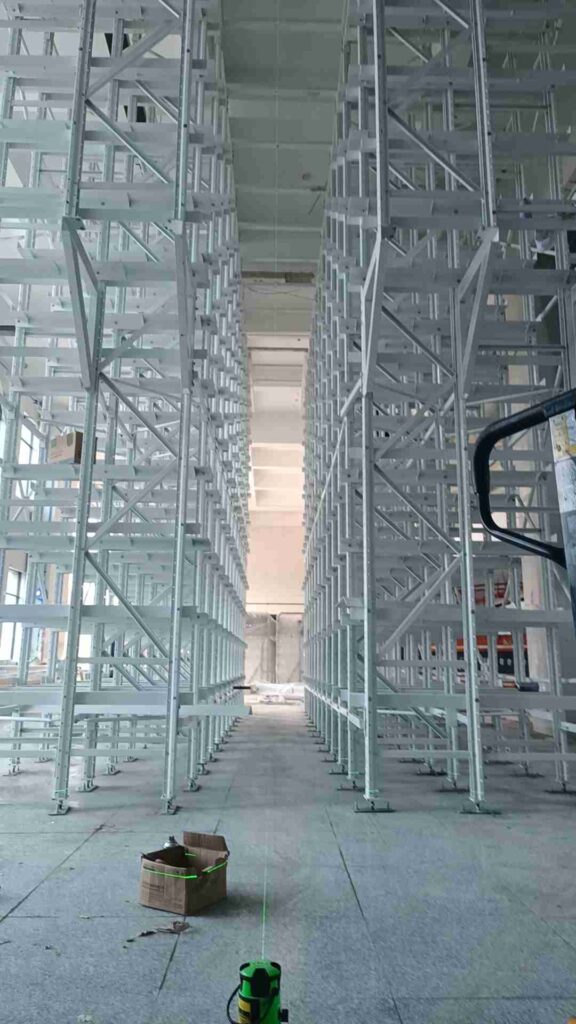
Among all beam racking cost-saving tips available to warehouse operators, none proves more consequential than investing in precision installation from qualified professionals. The relationship between installation quality and long-term maintenance requirements follows an exponential curve: small deviations during installation compound over time, creating maintenance demands that far exceed the cost of getting things right initially .
When uprights are not perfectly plumb during installation, the deviation affects every beam connection throughout that bay’s height. Loads distribute unevenly, connections experience asymmetric stress, and the entire structure becomes more vulnerable to impact damage. In automated facilities where AGVs and autonomous forklifts navigate precise paths, these initial deviations create navigation challenges that manifest as repeated vehicle timeouts, unexplained stops, and gradual wear patterns that accelerate component deterioration .
Beam racking cost-saving tips that emphasize professional installation recognize that certified installers bring not only expertise but also accountability. When facilities attempt DIY assembly to save labor costs, they accept responsibility for every connection, every anchor, every alignment decision. Professional installers carry insurance, provide warranties, and document their work to industry standards. The modest additional cost—typically 15-20% of total project expense—purchases protection against catastrophic failures that would dwarf any imagined savings .
The Critical Importance of Floor Preparation
Floor conditions represent perhaps the most overlooked element in beam racking cost-saving tips, yet they fundamentally determine system longevity and performance. Before any rack installation proceeds, floors must be evaluated for flatness, load capacity, and stability. Facilities that skip this assessment to accelerate timelines or reduce costs inevitably discover that floor issues manifest as rack problems within months of operation .
In automated warehouses where AGVs navigate precise paths, floor flatness requirements become even more stringent. Both AGVs and autonomous mobile robots (AMRs) are vulnerable to misalignment from floor irregularities. If the floor is out of specification, robots may drift off course or struggle with load placement at rack positions. Shims or adjustable footplates help maintain rack alignment when floors are not perfectly level—small adjustments that experienced installers incorporate as routine beam racking cost-saving tips .
The MNSS AutoStore implementation in Kuwait provides a compelling example of why floor preparation belongs in every beam racking cost-saving tips discussion. During installation planning, engineers discovered that the warehouse floor where the automated storage system would be installed had a slope exceeding 1%, incompatible with the precision requirements of the automation. The project required floor leveling before installation could proceed—an unexpected expense that delayed the timeline but prevented operational failures that would have plagued the facility for years . Facilities that incorporate floor assessment into initial planning avoid these surprises and maintain project schedules and budgets.
Seismic Considerations Across Target Markets
For facilities operating in earthquake-prone regions spanning Latin America’s Pacific coast, Central Asian fault zones, and Middle Eastern areas with seismic activity, beam racking cost-saving tips must incorporate appropriate bracing and anchoring from the outset. Retrofitting seismic protection after initial installation costs substantially more than incorporating it during design, and some configurations cannot be adequately reinforced after the fact .
Seismic design requirements vary significantly across target markets, making local expertise essential for effective beam racking cost-saving tips. Facilities in Mexico City face different code requirements than those in Santiago, Chile, or Istanbul, Turkey. Engaging engineers familiar with local regulations and geological conditions ensures that seismic protection meets both safety standards and budget expectations. The incremental cost of proper seismic design—typically 5-15% of total system cost—purchases protection against catastrophic collapse that would destroy inventory, injure workers, and interrupt business operations for months or years.
Material Selection Strategies: Smart Beam Racking Cost-Saving Tips for Diverse Environments
Matching Steel Specifications to Operational Demands
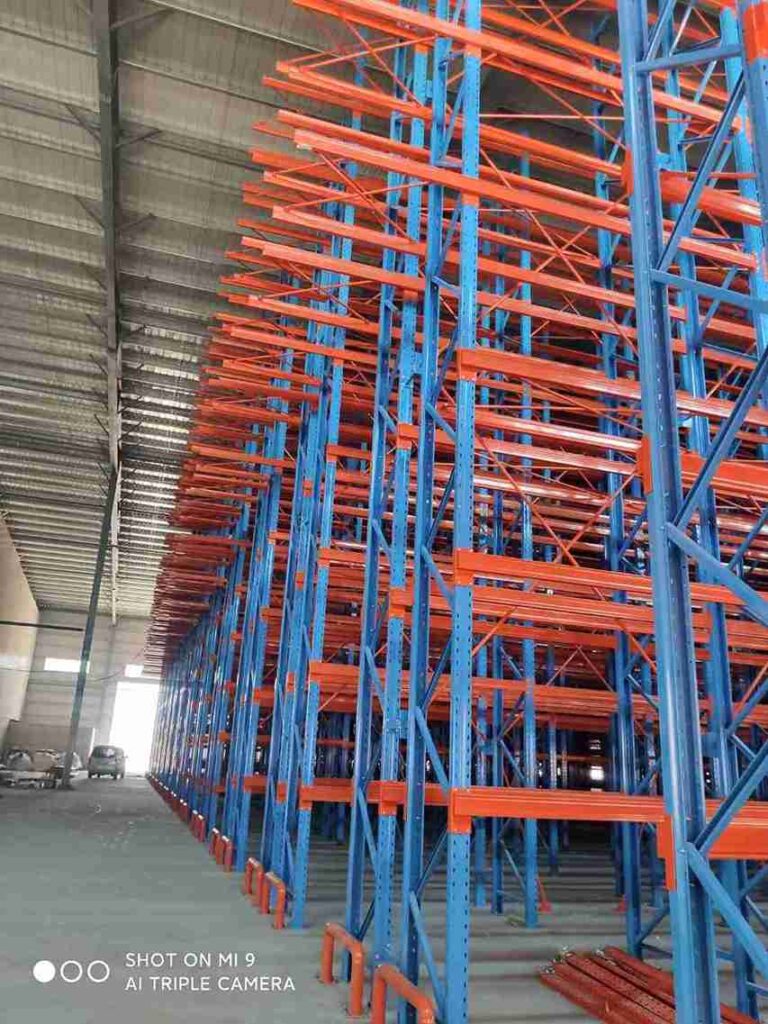
The steel specification chosen for beam racking fundamentally determines system durability, maintenance requirements, and ultimate lifespan. Yet many procurement decisions focus exclusively on gauge thickness while ignoring other material properties that prove equally important for long-term performance. Comprehensive beam racking cost-saving tips must address the full spectrum of material considerations .
Hot-rolled steel offers affordability and adequate strength for many applications, making it attractive for budget-conscious projects. However, facilities in humid environments throughout Southeast Asia and coastal Latin America may find that the modest upfront savings disappear quickly when corrosion accelerates. Cold-rolled steel provides better surface finish and tighter dimensional tolerances at slightly higher cost, often proving more economical over multi-year horizons .
For operations in particularly challenging environments, galvanized steel represents the ultimate expression of beam racking cost-saving tips applied to material selection. The hot-dip galvanizing process applies a protective zinc coating that prevents corrosion for decades, eliminating the need for repainting and dramatically reducing maintenance requirements. While galvanized systems command significant upfront premiums—typically 20-30% above standard painted options—facilities in coastal or high-humidity locations recover this investment through eliminated maintenance and extended service life .
The Load Capacity Optimization Principle
One of the most frequently overlooked beam racking cost-saving tips concerns matching load capacity to actual requirements rather than speculative future needs. Procurement teams often specify heavy-duty systems rated for 5,000+ pounds per beam level “just in case,” adding 30-50% to material costs while providing no operational benefit for facilities that never handle loads approaching these weights .
Medium-duty racking rated for 2,000-5,000 pounds per level accommodates the vast majority of warehouse applications across e-commerce, retail distribution, and general merchandise operations. For facilities handling typical pallet loads of 1,500-2,500 pounds, these systems provide ample capacity at substantially lower cost than heavy-duty alternatives. The beam racking cost-saving tips here are straightforward: analyze actual load profiles, document maximum weights, and specify capacity with appropriate safety factors but without excessive over-engineering .
Light-duty applications handling less than 2,000 pounds per level present opportunities for even greater savings. Warehouses storing lightweight, high-volume items such as apparel, consumer goods, or small parts can often utilize lighter-gauge materials that cost significantly less while providing adequate performance. The key is honest assessment of operational requirements rather than automatic specification of maximum capacity “to be safe.”
Standardization Versus Customization Economics
The choice between standard and custom beam racking configurations carries profound implications for both initial and long-term costs. Standard sizes manufactured in high volumes cost 20-30% less than custom-engineered alternatives and ship faster, install more quickly, and prove easier to modify or expand later . For facilities with conventional dimensions and typical storage requirements, beam racking cost-saving tips overwhelmingly favor standard configurations.
However, warehouses with unusual ceiling heights, non-standard bay spacing, or specialized material handling requirements may find that custom configurations ultimately prove more economical despite higher initial cost. The beam racking cost-saving tips in these situations involve calculating total cost of ownership including wasted space penalties. A custom configuration that utilizes 95% of available cubic volume may justify its premium compared to a standard system achieving only 80% utilization, particularly in markets where warehouse space commands premium prices .
The rapid growth across Middle Eastern and Southeast Asian logistics hubs creates particular urgency around this calculation. Facilities designed for today’s volumes must accommodate tomorrow’s expansion without requiring complete replacement. Modular standard systems that accept add-on components enable phased capacity increases, representing beam racking cost-saving tips that support growth without requiring full re-investment .
Maintenance Excellence: Beam Racking Cost-Saving Tips That Preserve Investment
Developing Comprehensive Inspection Protocols
Once precision beam racking is installed and automated equipment begins operation, maintenance excellence becomes the primary driver of long-term cost performance. Facilities that implement comprehensive inspection protocols consistent with industry best practices spend dramatically less on emergency repairs and replacement components than those operating reactively .
Daily inspections form the foundation of effective beam racking cost-saving tips in automated environments. Designated personnel perform focused visual scans of work areas, paying particular attention to uprights in travel paths for fresh impact marks or newly exposed metal. In automated aisles, special attention focuses on uprights at consistent heights corresponding to AGV sensor levels, as repetitive contact often occurs at predictable elevations requiring early intervention before damage accumulates .
Beam and connector integrity receives daily verification through systematic observation. Safety locks must remain engaged on all accessible levels. Beams must sit squarely on connectors with no gaps indicating partial disengagement. Loaded beams require observation for signs of sagging beyond normal deflection, which might indicate overloading or fatigue requiring engineering assessment .
Floor conditions along travel paths demand daily scanning for debris, spills, or damage that could affect AGV navigation. Around rack base plates, inspectors check for new cracks, spalling, or any indication of floor movement that might shift the rack structure and compromise the precision that automated equipment requires .
Beyond daily observation, weekly and monthly inspections within comprehensive beam racking cost-saving tips frameworks involve structured, documented examinations conducted by designated safety personnel. These inspections follow comprehensive checklists ensuring systematic coverage of all rack components and surrounding conditions. During weekly inspections, safety officers verify that load capacity placards remain visible and legible at all locations—a critical requirement for preventing overloading that can cause beam deflection affecting AGV clearances .
Monthly inspections delve deeper into maintenance protocols. Inspectors randomly select bays for partial unloading, allowing examination of beam end connectors and the rear faces of uprights that remain hidden during normal operations. They measure upright plumbness using laser levels or digital inclinometers, documenting any deviation from vertical against manufacturer specifications. They inspect beam deflection under load, comparing measurements to allowable limits—typically not exceeding 1/180th of span length for most applications .
Precision Measurement for Automation Compatibility
In automated facilities, visual inspection alone cannot provide sufficient assurance of AGV compatibility. Monthly inspections must incorporate precision measurement techniques that quantify rack geometry against the tolerances required by automated equipment. These measurements transform beam racking cost-saving tips from qualitative guidance to quantitative management .
Upright plumbness measurement using laser levels or digital inclinometers captures vertical deviation in both down-aisle and cross-aisle directions. Recorded measurements compared against baseline installation data and manufacturer tolerances reveal developing trends before they cause operational issues. For automation compatibility, many facilities now target maximum deviations of ±3mm over full upright height—significantly tighter than traditional acceptable limits .
Beam levelness verification ensures that beams remain perfectly horizontal under load using precision levels or laser distance measurement. A beam that sags unevenly can alter effective opening height, potentially causing an AGV’s forks to strike the beam above during entry or create clearance issues during retrieval attempts. Regular verification identifies developing deflection patterns before they affect automated operations .
Aisle width consistency measurement at multiple points along each automated aisle reveals variations that can confuse AGV navigation paths. Inconsistent widths may indicate rack movement, floor settlement, or cumulative impact damage requiring investigation. Early identification enables corrective action before vehicles experience repeated navigation errors .
Floor flatness assessment using digital levels or specialized profiling equipment checks for changes near rack bases and along AGV travel paths. Even minor floor deviations can accumulate over distance, causing navigation errors that manifest as apparent rack misalignment. Regular monitoring identifies developing floor issues before they affect automated equipment performance .
Documentation and Trend Analysis
Proper documentation transforms inspection data from compliance exercise into strategic management tool within any comprehensive beam racking cost-saving tips framework. Each measurement recorded in a centralized system enables trend analysis over time, revealing patterns invisible to periodic observation. When a particular upright shows progressive out-of-plumb movement across successive inspections, the trend indicates developing foundation issues or cumulative structural stress requiring intervention before failure occurs .
This data proves invaluable for troubleshooting AGV performance issues. When vehicles experience repeated stops or navigation errors in specific locations, historical measurement data reveals whether rack geometry changes correlate with problem emergence. This analytical capability transforms maintenance from reactive response to predictive management, addressing issues before they affect operations .
The documentation also supports warranty claims and insurance requirements. Facilities that maintain comprehensive inspection records demonstrate due diligence that insurers recognize through favorable premiums. When damage occurs despite maintenance efforts, documentation proves that the facility exercised reasonable care, supporting claims rather than inviting denial .
Creating a Culture of Immediate Reporting
Perhaps the most important consideration within beam racking cost-saving tips concerns not what to inspect but how to respond when issues are found. A culture of immediate reporting, where workers feel empowered and expected to flag concerns without fear of reprisal, separates world-class automated operations from those experiencing preventable failures .
When any worker identifies a potential issue, they should tag the location immediately using brightly colored damage tags that are impossible to miss. The tag should include date, observer name, and brief description of the concern. This visual marker alerts everyone passing through the area that something requires attention, even if designated safety personnel have not yet responded .
Designated safety personnel must acknowledge every report promptly, investigate thoroughly, and communicate findings back to the reporting worker. This closed-loop process reinforces the importance of vigilance and encourages continued participation in the safety program. When workers see that their observations lead to action, they remain engaged. When reports disappear into organizational voids, vigilance wanes and risks increase correspondingly .
Strategic Procurement: Advanced Beam Racking Cost-Saving Tips for Global Buyers
Volume Purchasing and Supplier Partnerships
For facilities planning significant storage capacity, volume purchasing represents one of the most straightforward beam racking cost-saving tips available. Suppliers typically offer 5-15% discounts on large orders, with deeper discounts available for committed partnerships spanning multiple projects . Facilities that consolidate purchasing across locations or phases capture these savings while building supplier relationships that yield additional benefits over time.
Beyond simple discounts, volume purchasing enables strategic inventory management that protects against price volatility and supply disruptions. Facilities that purchase complete systems for planned expansions lock in current pricing, avoiding escalation risks in volatile steel markets. When capacity additions become necessary, having standardized components in inventory eliminates lead time delays and ensures perfect compatibility with existing installations .
Strategic Use of Refurbished Equipment
Used and refurbished beam racking presents compelling opportunities within comprehensive beam racking cost-saving tips, particularly for startups, temporary facilities, or operations with constrained capital budgets. Quality used systems typically cost 30-50% less than new equivalents, enabling facilities to establish storage capacity at fraction of normal investment .
However, successful use of refurbished equipment requires rigorous inspection protocols and honest assessment of remaining service life. Buyers must examine potential purchases for structural damage, rust, bent beams, or missing components that would compromise safety or performance. Systems showing significant wear or damage, regardless of price, ultimately prove more expensive than new equipment when repair costs and reduced service life are considered .
For automated facilities, refurbished equipment presents additional considerations. The precision requirements that AGVs demand may exceed the capabilities of aged systems with accumulated wear. Facilities contemplating automation integration should carefully evaluate whether used racking can maintain the tolerances required, or whether the modest upfront savings will be overwhelmed by ongoing AGV performance issues .
Multi-Source Quoting and Negotiation Strategies
Engaging multiple suppliers before committing to purchase represents fundamental beam racking cost-saving tips that too many procurement teams neglect. Obtaining at least three to five quotes for any significant project reveals market pricing ranges, identifies competitive options, and creates negotiating leverage with preferred suppliers .
Beyond initial pricing, multi-source quoting illuminates differences in supplier capabilities, lead times, warranty terms, and after-sales support that affect total cost of ownership. A supplier offering slightly higher prices but significantly shorter lead times may prove more economical for time-sensitive projects. Another offering extended warranties and comprehensive maintenance support may deliver better long-term value despite higher upfront costs .
Seasonal timing also affects pricing in ways that informed buyers incorporate into beam racking cost-saving tips. Some suppliers offer discounts during traditional slow periods, typically fourth quarter as they seek to close annual sales targets. Trade show promotions, year-end sales events, and inventory clearance opportunities present additional savings opportunities for flexible buyers who can time purchases advantageously .
Bundling Economics
Purchasing beam racking and installation services together often yields better overall pricing than separate procurement from different providers. Suppliers offering bundled packages have incentives to optimize total project cost rather than maximizing margins on individual components, potentially reducing beam racking installation costs by 10-15% compared to disaggregated purchasing .
Beyond direct cost savings, bundled purchasing eliminates coordination risks and finger-pointing when issues arise. A single supplier responsible for both equipment and installation cannot blame installation problems on equipment quality or equipment problems on installation errors. This accountability simplifies project management and protects buyers from the delays and disputes that plague divided-responsibility projects .
Future-Proofing Through Automation-Ready Design
The Integration Imperative
For facilities across Southeast Asia’s rapidly modernizing logistics sector, the Middle East’s ambitious distribution hubs, Africa’s emerging industrial corridors, and Latin America’s e-commerce boom, future-proofing through automation-ready design represents the most strategic application of beam racking cost-saving tips. Facilities that incorporate automation considerations into initial racking design position themselves to adopt new technologies without costly retrofits or replacements .
The navigation systems and optical sensors utilized by automation as it maneuvers around or within pallet racks need consistent, precise production tolerances on both beams and uprights . When racks are weak or overloaded, structural members may bow, sag, or lean, creating conditions that make it difficult for sensors to detect and identify navigational waypoints. Inconsistencies in rack structure can also impede automation’s ability to properly and accurately place or remove loads within it .
Beam racking cost-saving tips that address automation compatibility recognize that retrofitting existing facilities for AGV integration typically costs 2-3 times more than designing for automation initially. The precision requirements, reinforced components, and specialized interfaces that automation demands are far more expensive to add later than to incorporate from the beginning .
Design Recommendations for Automation Integration
Leading industry organizations including the Rack Manufacturers Institute (RMI) have developed specific design recommendations for facilities integrating automation and pallet racks. These recommendations, grounded in decades of collective experience, provide authoritative guidance for beam racking cost-saving tips addressing automation compatibility .
Product and load characteristics must inform rack design from the outset. Dimensional information about products and loads handled—including size, shape, weight, quantity, and storage medium such as tote, carton, or pallet—determines optimal beam spacing, load capacity requirements, and clearance envelopes for automated equipment .
Inbound receiving and outbound shipping processes influence rack configuration decisions. Products arriving in unitized pallets by truckload but shipping as individual items require different automation and rack configurations than products transferred one pallet at a time from manufacturing into storage. Understanding these flows before specifying equipment prevents mismatches that necessitate expensive rework .
Inventory accessibility needs vary significantly across product categories. Fast-moving items requiring high selectivity benefit from configurations providing immediate access, while slower-moving items suit higher-density but less accessible arrangements. This selectivity-density trade-off affects both automation selection and rack design, making early analysis essential for effective beam racking cost-saving tips .
Storage system lifespan expectations should factor into total cost of ownership calculations extending beyond initial price. Anticipated productivity gains, system durability, routine maintenance requirements, and repair costs over the entire solution lifespan determine true investment. The quality of the racking system installed makes an enormous difference to the bottom line over multi-year operational horizons .
Floor Conditions as Automation Enablers
The relationship between floor quality and automation performance deserves particular emphasis within beam racking cost-saving tips for automated facilities. Both AGVs and AMRs are vulnerable to misalignment from floor irregularities. If the floor is out of specification, robots may drift off course or struggle with load placement at rack positions .
When floors are not perfectly level, shims or adjustable footplates help maintain rack alignment relative to robot travel paths. These small adjustments, while seemingly minor, make significant differences in long-term robotic performance. Facilities that address floor issues during installation avoid the cumulative navigation errors that plague operations attempting to automate on substandard surfaces .
The MNSS experience in Kuwait demonstrates why floor conditions deserve attention within any comprehensive beam racking cost-saving tips framework. The slope discovered during installation required leveling before the AutoStore system could proceed—an unexpected expense and delay that nevertheless prevented operational failures that would have undermined system performance for decades .
Early Coordination Between Stakeholders
Successful automation deployment depends critically on early coordination between rack engineers and automation suppliers. Facility owners should connect their AMR or AGV supplier with their rack engineer at project initiation, enabling design coordination that includes aisle mapping, pallet placement strategies, sensor layout, and clearance modeling .
Simulations and 3D layout tools validate designs before installation begins, saving time and preventing rework. Many rack manufacturers offer post-installation validation services including structural tolerance checking, robot route calibration, and performance verification under dynamic automated loads. Engaging these services ensures that installed systems meet the requirements of automated equipment .
For facilities uncertain about existing racking’s ability to meet automation requirements, consulting qualified manufacturers who understand these applications proves essential. All designs should follow ANSI MH16.1 and other RMI standards to ensure compliance with structural and operational requirements .
Regional Considerations: Tailored Beam Racking Cost-Saving Tips for Target Markets
Southeast Asia: Tropical Climate and Rapid Growth
For facilities across Southeast Asia’s dynamic logistics sector, beam racking cost-saving tips must address the unique challenges of tropical operating environments. High humidity accelerates corrosion, particularly in coastal facilities exposed to salt air during monsoon seasons. Temperature variations between day and night cause structural expansion and contraction that affects precision tolerances required for automated equipment .
Material selection becomes critical in these environments. Hot-dip galvanized finishes provide superior corrosion resistance compared to painted systems, justifying their upfront premium through eliminated maintenance and extended service life. Stainless steel fasteners prevent the galvanic corrosion that can compromise connections over time in humid conditions. These material choices, while adding to initial costs, prove essential for maintaining precision over decades of operation .
The rapid growth characteristic of Southeast Asian markets demands particular attention to scalability. Facilities designed for today’s throughput must accommodate tomorrow’s expansion without disrupting ongoing operations. Modular beam racking systems with standardized components enable phased capacity additions that integrate seamlessly with existing AGV fleets, representing beam racking cost-saving tips that support growth without requiring complete replacement .
Middle East: Temperature Extremes and High-Throughput Demands
Middle Eastern logistics hubs face distinct challenges from extreme temperatures and the concentration of high-throughput distribution. Summer conditions pushing warehouse interiors well above 40°C affect both beam racking materials and AGV performance. Thermal expansion must be accommodated in system design through expansion joints and slip connections that maintain structural integrity through temperature cycles .
The region’s role as a transshipment hub creates unique throughput demands. Facilities serving Middle Eastern markets often handle higher inventory turnover than comparable operations elsewhere, with faster putaway and retrieval cycles that stress both racking and automation equipment. Beam racking specified for these environments must incorporate heavier-duty components and more robust connections than standard systems .
Cold storage applications, increasingly common across Gulf Cooperation Council countries as food security initiatives expand, introduce additional considerations. Low-temperature environments affect material properties and require specialized lubricants and components for both beam racking connections and AGV mechanisms. Facilities operating at freezing temperatures must specify systems rated for these conditions, incorporating beam racking cost-saving tips that address cold-environment requirements .
Africa: Infrastructure Variability and Growth Trajectories
Across Africa’s emerging industrial corridors, beam racking cost-saving tips must address infrastructure variability that affects both installation and ongoing operations. Power quality fluctuations can impact AGV charging systems, requiring enhanced power conditioning and backup capabilities. Road conditions affecting delivery reliability may necessitate larger on-site inventory buffers, increasing beam racking capacity requirements .
Floor quality presents particular challenges in many African facilities. Concrete specifications standard in developed markets may be difficult to achieve locally, requiring enhanced beam racking base designs that accommodate greater floor variability. Adjustable footplates with broader adjustment ranges allow rack installation to proceed despite floor irregularities that would prevent standard systems from achieving required precision .
Despite these challenges, the growth trajectory across African logistics presents extraordinary opportunity. Facilities that implement properly designed beam racking and AGV integration today position themselves to capture market share as economies expand and modernize. The 18-month ROI that leading operations achieve provides capital for continued expansion, creating virtuous cycles of growth and investment .
Latin America: Economic Volatility and Operational Excellence
Latin American markets combine sophisticated logistics requirements with economic volatility demanding capital-efficient solutions. Beam racking cost-saving tips for the region emphasize strategies delivering maximum operational benefit while minimizing upfront investment—approaches aligning with capital constraints many organizations face during economic uncertainty .
Phased automation implementation proves particularly valuable in these environments. Rather than attempting comprehensive conversion simultaneously, successful Latin American facilities typically automate incrementally, beginning with highest-ROI applications and expanding as benefits fund subsequent phases. This approach aligns investment with cash flow while building organizational capability progressively .
The region’s diverse climate zones—from Andean highlands to tropical lowlands—require beam racking specifications tailored to local conditions. Facilities in coastal Brazil face corrosion challenges similar to Southeast Asia. Operations in Mexico’s northern deserts contend with temperature extremes approaching Middle Eastern conditions. Successful implementations account for these variations in material selection and design, incorporating beam racking cost-saving tips appropriate to each microclimate .
Technology Integration: Advanced Beam Racking Cost-Saving Tips for the Digital Age
AI-Optimized Layout Configurations
As beam racking and AGV integration mature, artificial intelligence is beginning to transform how facilities optimize storage configurations. Machine learning algorithms analyzing historical order patterns can predict optimal beam racking layouts, identifying slotting strategies that minimize travel distances and maximize throughput for automated equipment .
These AI systems go beyond static optimization, adapting layouts dynamically as demand patterns shift. In advanced implementations, beam racking configurations may be adjusted overnight based on forecasted next-day requirements, with AGV fleets reprogrammed automatically to match new geometries. The result is facilities that continuously evolve toward optimal configurations without human intervention, representing beam racking cost-saving tips that compound over time .
Yango’s recent introduction of AI-driven warehouse robotics at Seamless Middle East demonstrates the accelerating pace of this transformation. The company’s pick-and-place solution leverages advanced computer vision to allow any off-the-shelf stationary robot to operate with human-like capabilities, achieving up to 800 picks per hour with 99% precision across SKUs. Solutions ready for deployment across the MENA region offer substantial returns with payback periods of just two to three years .
IoT-Enabled Structural Health Monitoring
The Internet of Things is bringing unprecedented visibility to beam racking structural health through continuous monitoring that transforms maintenance from scheduled to predictive. Embedded sensors track critical connections, detecting developing issues before they affect operations. Strain gauges measure load distribution, identifying overloading conditions in real time. Vibration sensors detect distinctive signatures of developing fatigue failures .
This continuous monitoring enables facilities to address issues when sensor data indicates emerging problems—before failures occur but after issues become detectable. The result is reduced maintenance costs with improved reliability, as interventions target actual needs rather than calendar-based schedules. For facilities implementing these technologies, beam racking cost-saving tips evolve from periodic inspections to continuous optimization .
The data generated by IoT monitoring also supports warranty claims, insurance negotiations, and capital planning. Facilities with comprehensive sensor networks document every significant event affecting rack structures, creating evidence trails that protect against liability and support informed replacement decisions. This documentation transforms maintenance from cost center to strategic asset .
Digital Twins and Simulation Capabilities
The digital twin concept, introduced during initial facility assessment, continues providing value throughout operational life. As actual conditions change—whether from facility modifications, equipment upgrades, or accumulated wear—the digital twin updates to reflect current reality. This living model enables continuous simulation of proposed changes, ensuring that modifications deliver intended benefits before implementation begins .
For facilities contemplating expansion or reconfiguration, simulation capabilities prove invaluable. Engineers model proposed beam racking layout changes, simulate AGV traffic patterns under new configurations, and verify that proposed modifications will deliver expected throughput improvements—all before moving a single rack component. This capability represents advanced beam racking cost-saving tips that eliminate guesswork and prevent expensive mistakes .
The integration of digital twins with warehouse management systems creates unprecedented visibility into facility operations. Managers can visualize storage utilization in real time, identify bottlenecks before they impact throughput, and optimize slotting based on actual performance data rather than theoretical models. This visibility transforms operations from reactive to predictive, continuously improving performance without capital investment .
The Human Element: Training and Culture in Beam Racking Cost-Saving Tips
Operator Training as Cost Control
Among all beam racking cost-saving tips available to warehouse operators, none proves more cost-effective than comprehensive operator training. Facilities with certified training programs report 30% fewer impacts than those with minimal instruction . When impacts do occur in well-trained environments, they tend to be less severe because operators recognize developing situations and moderate responses accordingly.
Training programs addressing specific racking system vulnerabilities prove most effective. Operators who understand why uprights are vulnerable to impact damage, how beam connections function, and what damage patterns indicate serious problems become active participants in maintenance rather than passive causes of damage. These operators report impacts immediately rather than concealing them, enabling rapid repairs before minor damage escalates into major expense .
Refresher training at regular intervals maintains awareness as operators develop routine complacency. Facilities implementing six-month refresher courses maintain lower impact rates than those training only at hire, demonstrating that reinforcement matters as much as initial instruction. These ongoing programs represent beam racking cost-saving tips that pay dividends through reduced damage and extended system life .
Change Management for Automation Acceptance
The most successful automation deployments prioritize associate involvement at project outset. To ensure that associates utilize automation correctly and safely, facilities must make them aware of system benefits, communicate process changes clearly, and start training as early as possible. Operations that wait until automated systems are running before introducing them to associates are more likely to experience resistance to, or misuse of, the solution .
Sometimes front-line warehouse associates aren’t the only ones reluctant to accept automation. Integrating automation and pallet racking can challenge getting buy-in throughout the organization. Communicating benefits not only for operations but for the entire company proves essential for successful adoption .
Facilities that excel at change management incorporate these considerations into their beam racking cost-saving tips framework. They recognize that technology alone cannot deliver expected returns—the human element must be engaged, trained, and motivated to leverage automation effectively. This recognition transforms training from compliance exercise to strategic investment in operational excellence .
Conclusion: The Strategic Imperative of Comprehensive Beam Racking Cost-Saving Tips
The evidence presented throughout this comprehensive analysis leads to an inescapable conclusion: beam racking cost-saving tips that focus narrowly on initial purchase price inevitably fail to deliver expected returns, often leaving facilities with higher total costs than if they had invested more initially. The facilities achieving true cost optimization—the kind that doubles ROI within 18 months while positioning for future automation—take a fundamentally different approach.
These sophisticated operators recognize that beam racking cost-saving tips must address the complete system lifecycle, from initial specification through decades of operation. They invest in precision installation that prevents the geometry deviations compromising AGV performance. They select materials matched to their environmental conditions, accepting modest upfront premiums that eliminate maintenance requirements over multi-year horizons. They implement comprehensive inspection programs that identify developing issues before they cause operational disruptions. They train operators to become active participants in system preservation rather than passive causes of damage.
For facilities across Southeast Asia’s rapidly modernizing logistics sector, the Middle East’s ambitious distribution hubs, Africa’s emerging industrial corridors, and Latin America’s e-commerce boom, the message is clear: beam racking cost-saving tips that deliver measurable results require commitment to excellence at every stage. Those who embrace this comprehensive approach will define competitive standards for decades to come. Those who focus exclusively on upfront price will struggle to catch up, perpetually fighting the fires that proactive planning prevents.
The beam racking cost-saving tips are proven. The ROI is documented. The only remaining question is how quickly facilities will act on this knowledge, transforming their storage infrastructure from passive cost center to strategic competitive advantage.
Frequently Asked Questions
1. How do beam racking cost-saving tips differ for facilities planning future automation versus those remaining manual?
Facilities planning future automation must prioritize precision and consistency in ways that manual operations can tolerate but automated equipment requires. Beam racking cost-saving tips for automation-bound facilities emphasize tighter installation tolerances, reinforced components at impact points, and layout configurations that accommodate future AGV navigation paths. Manual facilities can accept greater variability and may prioritize different savings strategies, but should consider whether automation might eventually become necessary for competitive survival .
2. What percentage of total beam racking lifecycle costs typically go to maintenance versus initial purchase?
Industry data indicates that purchase price typically represents only 30-40% of what facilities spend on their racking systems over a ten-year operational period. Maintenance expenses, replacement parts, downtime costs, and safety compliance activities constitute the majority of long-term investment. This reality elevates beam racking cost-saving tips addressing operational phase economics above those focused exclusively on procurement .
3. How frequently should automated facilities perform precision measurements of rack geometry?
For automated facilities where AGVs and autonomous forklifts navigate precise paths, monthly precision measurements of upright plumbness, beam levelness, and aisle width consistency are recommended. These measurements should be documented and analyzed for trends indicating developing issues. Facilities with established stability may extend intervals to quarterly, but should increase frequency following any impact events or earthquake activity .
4. Can beam racking cost-saving tips be applied to existing facilities without replacing the entire system?
Yes, many beam racking cost-saving tips apply to existing facilities through targeted interventions. Adding column protectors at impact-prone locations reduces damage from ongoing operations. Implementing comprehensive inspection programs identifies developing issues before they escalate. Retrofitting adjustable footplates addresses minor floor irregularities affecting stability. Training programs reduce operator-caused damage. These incremental improvements extend system life and reduce total cost of ownership without requiring complete replacement .
5. What certifications should facilities look for when selecting beam racking suppliers to ensure quality?
Facilities seeking quality beam racking should prioritize suppliers with R-Mark certification from the Rack Manufacturers Institute (RMI). This voluntary program verifies through independent engineering review that manufacturers design and build rack systems meeting ANSI MH16.1 and other industry standards. ISO 9001 certification indicates quality manufacturing processes. Suppliers offering 10+ year warranties demonstrate confidence in product durability. These credentials provide assurance that beam racking cost-saving tips addressing long-term value will be supported by actual system performance .
6. How do environmental conditions in coastal Southeast Asia affect beam racking maintenance requirements?
Coastal Southeast Asian facilities face accelerated corrosion from high humidity and salt air exposure, particularly during monsoon seasons. Standard painted systems may require repainting within 3-5 years, while galvanized finishes eliminate this maintenance requirement for decades. Connection points experience galvanic corrosion between dissimilar metals unless stainless steel fasteners are specified. These environmental factors dramatically affect total cost of ownership, making material selection the most critical beam racking cost-saving tips for the region .
7. What role does floor quality play in beam racking cost-saving tips for automated warehouses?
Floor quality fundamentally determines automation performance in ways that dwarf other considerations. AGVs and AMRs require flat, level surfaces for accurate navigation and precise load placement. Floors out of specification cause navigation errors, repeated vehicle stops, and eventual component wear that affects both vehicles and racks. Floor assessment and correction, while potentially expensive, represents essential beam racking cost-saving tips for any facility contemplating automation .
If you require perfect CAD drawings and quotes for warehouse racking, please contact us. We can provide you with free warehouse racking planning and design services and quotes. Our email address is: jili@geelyracks.com