📐 "First 50 Enterprise Queries Get Custom 3D Warehouse Design" Plan


Beam Racking Cost Per Foot: 5 Strategies to Reduce Total Investment for Your Warehouse in Developing Markets
Understanding the True Economics Behind Beam Racking Cost Per Foot
When procurement professionals begin researching storage solutions, the question of beam racking cost per foot inevitably surfaces as the primary consideration. It is a natural starting point—a seemingly straightforward metric that promises to simplify comparison across suppliers and systems. However, after three decades of designing and installing warehouse storage solutions across Southeast Asia, the Middle East, Africa, and Latin America, industry veterans have learned that beam racking cost per foot is perhaps the most misunderstood and misapplied metric in the entire material handling equipment landscape.
The reality is that beam racking cost per foot quoted on a supplier’s price sheet represents only the visible tip of a much larger financial iceberg. Beneath the surface lurks a complex array of engineering requirements, installation complexities, operational implications, and long-term maintenance considerations that collectively determine the true cost of ownership. For warehouse operators in developing markets, where capital is often scarce and operational margins are tight, misunderstanding these dynamics can have devastating consequences.
This comprehensive guide draws upon extensive industry experience working with hundreds of warehouses across diverse operating environments—from the tropical humidity of Jakarta to the desert heat of Riyadh, from the rapidly modernizing logistics hubs of Vietnam to the expanding distribution networks in Nigeria and Kenya. Through this lens, the discussion examines what truly drives beam racking cost per foot, why the lowest quoted price so often leads to the highest lifetime cost, and most importantly, five proven strategies that warehouse operators can implement to reduce their total investment while maximizing long-term value.
The analysis that follows goes beyond simplistic pricing comparisons to explore the engineering economics, material science, and operational dynamics that separate genuinely cost-effective storage solutions from those that merely appear affordable on paper. For facilities managers, procurement specialists, and warehouse operators across developing markets, understanding these principles transforms beam racking cost per foot from a potentially misleading number into a meaningful component of sophisticated investment analysis.

The Fundamental Economics: Why Beam Racking Cost Per Foot Is Only the Starting Point
What That Quoted Number Actually Represents
When a supplier provides a quotation based on beam racking cost per foot, they are typically including the bare essentials: the steel uprights, the horizontal beams, the frame braces that provide structural stability, and perhaps the anchoring hardware required to secure the system to the warehouse floor. Sometimes this figure includes the cost of surface treatment—perhaps a basic powder coating or primer. Rarely does it encompass the engineering calculations that ensure the system can safely support the intended loads, the delivery logistics that transport components from factory to facility, the professional installation that transforms components into a functional storage system, or the countless other line items that will inevitably appear on the final invoice.
In the extensive experience of industry professionals who have managed warehouse projects across developing markets, the quoted beam racking cost per foot typically represents between 40% and 60% of the total project cost by the time the system is fully operational and storing product. This gap between expectation and reality catches more warehouse projects off guard than any other single factor. A facilities manager celebrates securing an attractive beam racking cost per foot, only to discover weeks or months later that the actual expenditure has ballooned far beyond the approved budget.
The remaining portion of the total investment comprises critical elements that are essential for a safe, compliant, and functional installation. Structural engineering fees cover the load calculations and seismic certifications required by local building codes—particularly important in earthquake-prone regions throughout Latin America and parts of Southeast Asia. Transportation costs vary wildly based on fuel prices, port congestion, and inland logistics infrastructure, adding unpredictability to projects in developing markets where infrastructure may be inconsistent. Import duties and customs clearance can add 15% to 30% to equipment costs in some countries, dramatically affecting the true beam racking cost per foot by the time materials arrive at the warehouse door.
Installation labor represents another significant component that is frequently underestimated or excluded entirely from initial quotes. Professional installation requires specialized expertise, and in many developing markets, skilled crews command rates that reflect their training and experience. Site preparation may include floor leveling, electrical work, or modifications to existing infrastructure. Safety accessories such as column guards, row spacers, and end-of-aisle protectors, while essential for protecting both personnel and equipment, are often presented as optional add-ons rather than included in the base beam racking cost per foot.
This disconnect between quoted and actual beam racking cost per foot has led more than one warehouse project to run out of budget halfway through installation, forcing difficult decisions about which components to postpone or eliminate entirely. The facilities manager who planned based on the per-foot number rather than the fully loaded project cost inherits not just a budget overrun, but potentially a compromised storage system that fails to deliver the expected performance or safety.
The Total Cost of Ownership Framework That Separates Sophisticated Buyers
Here is where experienced warehouse operators distinguish themselves from those who will struggle with unexpected expenses and operational disappointments: they evaluate storage investments using a Total Cost of Ownership (TCO) methodology rather than focusing narrowly on acquisition cost. The TCO framework recognizes that beam racking cost per foot is merely one input into a much broader financial equation that extends across the entire lifecycle of the system.
The TCO calculation for beam racking cost per foot encompasses multiple categories extending far beyond the initial invoice. Capital expenditure components include the initial material cost per foot, engineering and design fees, delivery and logistics expenses, installation labor and equipment rental, and permitting and inspection fees that vary by jurisdiction.
Operational expenditure components encompass annual maintenance requirements, repair costs from inevitable forklift impacts, insurance premiums that may be influenced by system safety ratings, energy costs (particularly relevant for cold storage applications), and labor efficiency impacts based on rack configuration. End-of-life considerations include salvage value if components can be reused in reconfigurations, decommissioning and removal costs when the system eventually reaches the end of its service life, and environmental disposal fees for coatings and finishes.
When this TCO framework is applied to competing options with different quoted beam racking cost per foot, surprising conclusions often emerge. A system with a 20% higher initial beam racking cost per foot may demonstrate 40% lower lifetime costs due to superior durability, reduced maintenance requirements, enhanced safety performance, and better adaptability to changing operational needs. This analytical framework elevates procurement decisions from simple price comparisons to sophisticated value assessments that align with long-term business objectives.
A regional distribution center in Thailand provided a compelling example of this principle in action. The facility received two quotes for a 15,000-pallet-position expansion. The first offered a beam racking cost per foot that was 18% lower than the second. The procurement team, focused on immediate budget constraints, initially favored the lower quote.
However, when the engineering team applied TCO analysis, they discovered that the lower-priced system used thinner steel with inferior corrosion protection, required more frequent beam replacements due to impact damage, and lacked the modularity to accommodate future automation. Over a projected 20-year lifecycle, the system with the higher initial beam racking cost per foot actually delivered a 27% lower total cost of ownership. The facility proceeded with the higher-quality system and has since reported significantly lower maintenance costs and no unplanned replacements .
Hidden Costs That Inflate Your True Beam Racking Cost Per Foot
Before examining the five strategies for reducing total investment, it is essential to identify the cost traps that catch most warehouse operators unaware. These hidden expenses lurk in every project, waiting to turn an attractive beam racking cost per foot into a budget-busting nightmare. Understanding these traps is the first step toward avoiding them.
The False Economy of Ultra-Cheap Systems
When procurement departments celebrate securing extraordinarily low beam racking cost per foot pricing, they often unknowingly inherit a cascade of hidden liabilities. The initial invoice savings evaporate quickly when confronted with operational realities. Inferior systems—if they can genuinely be called affordable—typically manifest several predictable failure modes that erode their theoretical value proposition.
Steel quality represents the most critical differentiator between genuine value and false economy. Many cut-rate systems utilize steel sourced from mills with inconsistent quality control, resulting in hidden material weaknesses that are invisible to the naked eye during initial inspection. The steel may contain higher levels of impurities that affect its structural properties. It may exhibit inconsistent hardness that leads to unpredictable performance under load. It may suffer from micro-structural defects that only manifest over time as premature fatigue, unexpected deformation, or in the worst cases, catastrophic failure during seismic events or under peak load conditions.
Genuinely cost-effective systems specify steel grades with documented mechanical properties, ensuring predictable performance throughout the operational life. Suppliers who understand the importance of material quality provide Material Test Reports confirming compliance with standards such as Q235 or Q345 equivalents, giving buyers confidence that the beam racking cost per foot they are paying reflects genuine value rather than compromised materials .
Surface protection quality similarly distinguishes genuine value from problematic alternatives. Developing markets across Southeast Asia, Latin America, and coastal Africa present some of the world’s most challenging environments for unprotected steel. Humidity routinely exceeds 80% across much of these regions for significant portions of the year, creating conditions that accelerate corrosion dramatically. Coastal facilities face salt-laden air that can compromise even robust coatings if they are not properly specified and applied.
Cheap racking systems often receive minimal surface treatment—perhaps a thin coat of low-grade paint applied over inadequately prepared surfaces. Within months of installation, rust blooms appear at cut edges and weld points where the coating has failed to provide adequate protection. Within years, section loss compromises structural integrity, reducing load capacity and creating safety hazards. By contrast, properly engineered systems incorporate comprehensive surface preparation including degreasing to remove contaminants, phosphate conversion coating to promote adhesion, and electrostatic powder application with minimum 60-micron thickness. This investment in corrosion protection ensures the system remains serviceable for decades rather than requiring premature replacement—and it adds surprisingly little to the beam racking cost per foot when specified correctly from the start .
Component Compatibility and Future Expansion Traps
Another hidden cost trap that catches many warehouse operators involves non-standard component dimensions. Some manufacturers design systems using proprietary profiles that deviate from industry norms. While this approach may reduce initial manufacturing costs and lower their quoted beam racking cost per foot, it creates devastating long-term consequences that manifest when the inevitable need for expansion or reconfiguration arises.
When warehouse expansion becomes necessary—as it inevitably does for growing enterprises—the original supplier may have changed specifications, discontinued the product line, or gone out of business entirely. The warehouse operator faces an impossible choice: replace the entire existing system at enormous expense, or operate with incompatible, potentially unsafe mixed-component configurations that violate engineering standards and create liability exposure.
Genuinely cost-effective systems embrace industry-standard dimensions and connection geometries. Upright frames utilize common perforation patterns—typically teardrop or keyhole configurations—with standardized hole spacing that has become the de facto standard across the industry. Beams employ compatible end connectors that engage securely with these frames, ensuring positive locking and predictable load transfer. This standardization ensures that components from different production runs, and even from different manufacturers, can integrate seamlessly when properly specified.
The long-term value of this compatibility cannot be overstated. It transforms the racking system from a static, one-time installation into a dynamic asset that evolves alongside the business. Facilities that have invested in standardized systems report being able to reconfigure storage layouts, add capacity, and integrate new technologies without the costly and disruptive process of replacing existing infrastructure. The modest premium that such standardization may add to initial beam racking cost per foot pays dividends repeatedly over the life of the system .
Installation Complexities That Multiply Project Costs
The installation phase represents where the gap between quoted beam racking cost per foot and actual project cost widens most dramatically. Professional installation of beam racking requires specialized expertise that directly affects the bottom line. Certified crews command rates that reflect their training and experience, and the total hours required scale with project complexity in ways that are difficult to anticipate without deep industry knowledge.
Key labor factors influencing total project cost include building access and staging areas. Limited space for material staging slows crews and increases hours as workers spend time moving materials incrementally rather than accessing them continuously for efficient installation. One facility manager who oversaw a major racking installation in Lagos recounted how inadequate staging space added 15% to their total project cost. The crew spent nearly two full days simply relocating materials to create working space—time that was billed at the same rate as actual installation work.
Aisle width precision requirements represent another factor that can significantly affect installation cost, particularly for facilities planning future automation integration. AGVs and autonomous forklifts require aisle straightness within ±2mm over 30 meters—far tighter than the standards required for manual forklift operations. Achieving this precision requires specialized measurement equipment, more frequent verification checks, and adjustment procedures that add time to the installation process. The incremental cost is modest when specified upfront but becomes prohibitive when attempted as a retrofit .
Seismic zoning requirements add another layer of complexity and cost. Facilities throughout Latin America, parts of the Middle East, and seismic zones in Southeast Asia require additional bracing, more frequent anchor points, and comprehensive documentation to demonstrate compliance with local building codes. Engineering calculations supporting seismic design add cost to the initial beam racking cost per foot, and the additional hardware and installation labor can add 15-20% to total installation costs in high-risk areas .
Mezzanine integration compounds complexity and safety requirements. Multi-level installations require coordination between structural engineers, installation crews, and often multiple trades. The sequencing of work becomes more critical, safety requirements become more stringent, and the consequences of errors become more severe. Facilities considering mezzanine levels should expect installation costs at the higher end of typical ranges and should verify that their chosen supplier has specific experience with this type of installation.
Permitting and Compliance Navigation
Throughout developing markets, regulatory requirements for warehouse racking vary significantly—and navigating them efficiently affects total project cost in ways that are often underestimated by first-time buyers. The permitting process for high-pile storage can be complex and time-consuming, with consequences for project timelines and budgets.
Seismic certification represents one of the most significant regulatory considerations. In earthquake-prone regions throughout Latin America, the Middle East, and Southeast Asia, racking systems must meet specific seismic design requirements that go well beyond basic structural integrity. Engineering calculations supporting these requirements add cost to initial beam racking cost per foot but are absolutely non-negotiable for safety compliance and legal operation. Facilities that attempt to skip proper seismic calculations or install uncertified systems face potential catastrophic losses during seismic events, as well as potential legal liability and insurance complications .
Fire code compliance introduces another layer of regulatory consideration. Local fire codes may specify requirements for sprinkler clearance, aisle widths, and material flammability that affect racking configuration. Understanding these requirements during design prevents costly modifications after installation, when moving sprinkler heads or reconfiguring rack layouts becomes exponentially more expensive. A cold storage facility in the Midwest discovered that fire suppression requirements added 8% to their total project cost because sprinkler placement necessitated modified beam configurations and additional clearances that were not anticipated during initial planning .
Inspection scheduling varies by jurisdiction but consistently affects project timelines. Some authorities require staged inspections during installation—for example, inspecting anchors before beams are installed, or verifying bracing before loading begins. Coordinating with local authorities to schedule these inspections at the right points in the installation sequence prevents delays that would extend crew time and increase total cost. Facilities managers who have been through the process recommend building inspection lead times into project schedules from the outset, particularly in jurisdictions with limited inspection resources.
The Documentation Gap
A final hidden cost that catches many warehouse operators relates to documentation—or the lack thereof. Properly engineered racking systems come with comprehensive documentation including load capacity placards for every rack section, as-built drawings reflecting the final installed configuration, engineering calculations supporting the design, and warranty information. This documentation is essential for safe operation, regulatory compliance, and future modifications.
Cut-rate suppliers often skimp on documentation, providing minimal information that leaves facilities operators guessing about critical parameters. The cost of recreating this documentation after installation—if it is even possible without destructive testing—far exceeds any savings from a lower initial beam racking cost per foot. Facilities that have learned this lesson the hard way now insist on complete documentation packages as a non-negotiable requirement in their procurement specifications .
Strategy 1: Optimize Material Selection Without Sacrificing Quality
Matching Steel Specifications to Actual Operational Requirements
The most direct way to reduce beam racking cost per foot without compromising safety or longevity is to match steel specifications precisely to actual operational requirements. This principle sounds obvious, yet industry professionals consistently encounter warehouses that are significantly over-specified for the loads they actually carry, paying for capacity they will never use.
Understanding steel gauge and its cost implications provides the foundation for this optimization strategy. The thickness of steel used in upright frames and beams directly impacts material costs. Heavier gauges require more steel and therefore cost more—but many facilities do not need the heaviest options. A warehouse storing light automotive parts or e-commerce parcels has fundamentally different requirements than one handling dense industrial raw materials. The beam racking cost per foot for light-duty applications should reflect these differences.
Working with experienced engineers, warehouse operators can specify different steel gauges for different areas of the same facility based on anticipated load patterns. High-turnover picking zones with lighter products may accommodate lighter gauges, reducing material costs where full structural capacity is unnecessary. Bulk storage areas handling heavy pallets require heavier sections to ensure safety and longevity. This zoning approach optimizes the average beam racking cost per foot across the entire facility while maintaining appropriate safety margins in each area.
A food distribution center in Vietnam provides an instructive example. The facility handles a mix of products ranging from lightweight packaged goods to heavy bulk ingredients. By working with engineering consultants to zone the warehouse based on product weights, they were able to specify lighter-gauge racking for approximately 40% of their storage positions. This optimization reduced their average beam racking cost per foot by 12% compared to a uniform specification based on their heaviest products, while maintaining full safety compliance throughout the facility.
Yield strength considerations add another dimension to material optimization. Steel grade specifications provide the first indication of material quality. Reputable manufacturers specify steel conforming to established standards such as ASTM A1011 Grade 55 or equivalent international specifications. These designations guarantee minimum yield strength—typically 55,000 psi for cold-formed applications—ensuring predictable structural performance under load.
However, higher-grade steels with enhanced yield strengths may allow facilities to use lighter gauges while maintaining equivalent load capacity. This strength-to-weight optimization can reduce beam racking cost per foot because the facility is purchasing less steel by weight while achieving the same structural performance. The key is working with suppliers who understand these trade-offs and can provide engineering calculations supporting alternative specifications. Not all applications require the highest grade steel, and not all suppliers have the engineering capability to optimize specifications for specific requirements .
Coating Strategies for Different Operating Environments
Surface protection represents another area where optimized selection reduces beam racking cost per foot without compromising longevity. The right coating strategy depends entirely on specific environmental conditions, and facilities across developing markets face widely varying challenges.
For arid inland environments like those found in parts of the Middle East and Central Asia, standard high-quality powder coatings may provide adequate protection at the lowest beam racking cost per foot. These environments lack the humidity and salt exposure that drive corrosion in coastal regions, allowing facilities to invest coating budget where it provides the greatest value. A distribution center in Riyadh, for example, can reasonably specify standard coatings that would be inadequate for a coastal facility in Jeddah.
For tropical environments throughout Southeast Asia and parts of Latin America, enhanced coating systems with greater thickness and UV stabilization justify their incremental cost through extended service life. Humidity levels that routinely exceed 80% create conditions where even small coating defects can become initiation points for corrosion. The additional investment in coating quality typically adds 5% to 8% to initial beam racking cost per foot but can extend system life by 10 to 15 years in these challenging conditions. Facilities in Jakarta, Manila, and Bangkok have consistently found that this incremental investment pays for itself many times over through delayed replacement and reduced maintenance .
For coastal facilities exposed to salt-laden air—common throughout Africa’s port cities, Southeast Asian coastal industrial zones, and littoral areas across Latin America—hot-dip galvanization may represent the most cost-effective long-term solution despite its higher initial cost. The upfront premium for galvanization is substantial, typically adding 20% to 30% to beam racking cost per foot. However, facilities that skip this protection in coastal environments often face complete system replacement within a decade due to corrosion-related section loss. A warehouse in Mombasa that installed galvanized racking 18 years ago recently reported that the system remains fully serviceable with only minor maintenance, while a neighboring facility that installed standard coated racking at the same time required complete replacement after just 11 years.
The Role of Design Optimization in Material Efficiency
Perhaps the most overlooked opportunity for reducing beam racking cost per foot lies in design optimization. Generic, copy-paste layouts inherently waste space and material. Custom-engineered designs create capacity while minimizing steel consumption through thoughtful configuration.
Optimizing bay sizes based on actual pallet dimensions can yield significant material savings. Standard bay widths may not align optimally with specific pallet footprints and inventory profiles. Adjusting bay sizes to match the actual dimensions of the pallets being stored can eliminate wasted space along beam lengths and reduce the number of upright frames required for a given storage capacity. This optimization directly lowers beam racking cost per foot by reducing the total steel required while maintaining or even increasing storage capacity.
Vertical space utilization represents another design opportunity that many facilities overlook. Throughout developing markets where industrial real estate costs are rising rapidly—in cities like Bangkok, Jakarta, Nairobi, and Dubai—failing to fully utilize available building height directly erodes profitability. Many warehouses underutilize their vertical cube, leaving meters of unused air space above their highest storage levels. Extending upright heights to fully utilize available clear height increases material costs per foot but dramatically reduces cost per pallet position—a far more meaningful metric than simple beam racking cost per foot.
A facility in Dubai demonstrated this principle when expanding their distribution center. By extending upright heights from 8 meters to 12 meters to fully utilize their building’s clear height, they increased their beam racking cost per foot by approximately 18%. However, the additional vertical capacity increased their total pallet positions by 42% within the same footprint. The cost per pallet position actually decreased by 16% despite the higher beam racking cost per foot, while also deferring the need for expensive building expansion .
Strategic Component Selection
The components that connect and protect racking systems represent another opportunity for optimizing beam racking cost per foot without compromising functionality. Row spacers, column guards, end-of-aisle protectors, and other accessories add cost but provide essential protection. The key is selecting the right level of protection for each application.
High-traffic areas with frequent forklift activity justify more robust protection, including heavy-duty column guards and reinforced end-of-aisle configurations. Low-traffic areas storing slow-moving inventory may require only basic protection. By matching protection levels to actual risk exposure, facilities can optimize their accessory investment while maintaining safety where it matters most.
Similarly, the choice between different beam types affects beam racking cost per foot and operational flexibility. Roll-formed beams offer cost-effective performance for light to medium loads up to approximately 6,000 pounds per pair. Structural steel beams provide superior durability for heavy loads exceeding 8,000 pounds per pair but come at a correspondingly higher price point. Facilities that mix load types can optimize by specifying structural beams only where needed, using roll-formed beams for lighter applications throughout the rest of the warehouse .
Strategy 2: Design for Future Automation Integration
The Automation-Ready Premium and Why It Pays for Itself
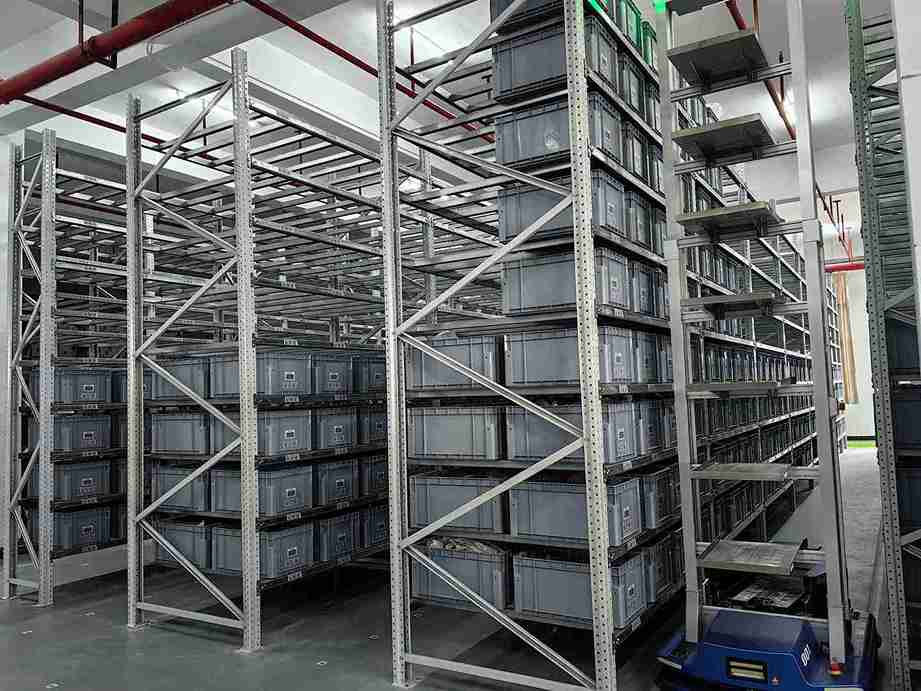
Here is where forward-thinking companies separate themselves from competitors who will struggle to modernize later. Specifying beam racking for future automation adds approximately 15% to 25% to initial beam racking cost per foot. This premium covers specific enhancements that pay enormous dividends when automation arrives—enhancements that are far more cost-effective when incorporated during initial installation rather than attempted as retrofits.
The critical insight that experienced warehouse operators have learned through hard experience is that this 15% to 25% premium represents insurance against 200% to 300% retrofit costs later. Retrofitting existing racking for automation often requires partial disassembly, floor grinding and leveling, installation of guidance infrastructure in confined spaces, and significant production downtime. These expenses dwarf the original beam racking cost per foot difference, making the automation-ready premium one of the highest-ROI investments in warehouse infrastructure .
A pharmaceutical company in Malaysia demonstrated this principle perfectly. They worked with engineering teams to design racking with future automation in mind during their initial project phase, accepting a modest increase in beam racking cost per foot to incorporate precision alignment, reinforced baseplates, and integrated guidance mounting points. When they added robotics two years later, integration required minimal structural changes. Total retrofit cost was under $50,000, and implementation took three weeks instead of the three months that would have been required for a non-automation-ready system. All because they invested slightly more in beam racking cost per foot upfront .
Industry data supports this experience, revealing that over 60% of companies that retrofit AGVs or conveyor systems into existing warehouses encounter unexpected expenses that could have been avoided during initial planning. These range from inadequate floor flatness to racking configurations that block optimal robot navigation paths. They aren’t minor inconveniences; they represent capital expenditures that dwarf the original beam racking cost per foot when viewed across the facility’s lifecycle .
Specific Design Considerations for AGV Compatibility
Autonomous Guided Vehicles (AGVs) and autonomous forklifts impose specific demands on storage infrastructure that directly influence optimal racking design and, consequently, beam racking cost per foot. Understanding these requirements during planning prevents costly field modifications that would otherwise multiply the original investment.
Precision alignment requirements represent the most fundamental consideration. AGVs require aisle straightness within ±2mm over 30 meters—far tighter than the standards required for manual forklift operations, which can tolerate significantly more variation. Achieving this precision during initial installation adds some cost through more frequent laser verification, stricter quality control checks, and enhanced anchoring requirements to prevent future movement. However, the incremental beam racking cost per foot for laser-verified installation is negligible compared to the cost of attempting to realign existing racking after years of service .
Clearance envelopes introduce another critical consideration. Manual forklifts operate with surprising flexibility—experienced operators can squeeze through tight spots and adjust on the fly when clearances are tighter than ideal. AGVs cannot. They follow programmed paths and expect consistent conditions throughout their operating environment. Beam racking for AGV environments must maintain consistent aisle widths within tight tolerances, with no encroachments from overhanging loads, damaged rack components, or variations in installation.
Navigation infrastructure requirements vary by AGV technology but consistently affect racking design. Laser-guided AGVs require reflective targets mounted at precise heights and positions throughout the facility. When integrated during initial racking installation, these targets can be incorporated into upright designs at optimal heights and spacings with minimal additional labor. The incremental beam racking cost per foot for target mounting points is negligible compared to retrofitting, which requires specialized lifts, additional drilling, and production interruptions that affect ongoing operations.
Magnetic tape or wire guidance involves embedding guidance paths in the floor. Installation during initial racking setup allows coordination between rack footings and guidance routes at minimal incremental cost. This coordination ensures that racking columns don’t block logical traffic flows—a problem that would otherwise require expensive rerouting or rack modification after installation.
Natural feature navigation using LiDAR and environment mapping requires consistent, identifiable racking geometries. Uniform beam placement and consistent upright spacing provide the reference features these systems need to orient themselves and navigate accurately. These features are easily achieved during initial installation when consistency can be built into the design and verified during installation. They are difficult to retrofit after the fact when variations have been baked into the installation .
Tracy Buck, national sales manager for Dexco, explains a nuance that many facilities overlook: sometimes vision systems with AI-powered cameras can cause AGVs to stop when encountering column arms that are scalloped instead of square because the AI doesn’t understand where the column actually starts and stops. “We really wouldn’t think about it from a human perspective because an arm is an arm is an arm,” Buck notes. “AI cameras, however, don’t always have the level of intelligence needed to differentiate between these variations.” This subtle design consideration affects beam racking cost per foot only minimally but has massive operational implications when automation is deployed .
Floor Flatness and Structural Considerations
Automation demands floor flatness specifications that exceed typical warehouse standards. AGVs and autonomous forklifts require floor flatness of Fmin 50 or higher to maintain consistent performance and prevent navigation errors. Achieving this specification requires additional floor preparation before racking installation, which adds cost to the overall project.
Addressing floor flatness during initial construction—before racking is installed—adds modest cost that can be incorporated into the overall project budget. Addressing it later requires removing racking sections, grinding floors to achieve the required flatness, and reinstalling racking—an expense that dwarfs any savings from a lower initial beam racking cost per foot. Facilities planning for automation should verify floor flatness early in the project and budget accordingly.
Reinforced baseplates represent another structural consideration for automation-ready design. Automated equipment may impose different load patterns than manual forklifts, including potentially higher point loads during acceleration, deceleration, and positioning. Specifying reinforced baseplates during initial installation adds minimal cost to beam racking cost per foot but provides flexibility for future equipment upgrades without structural modification.
The Cost of Not Planning for Automation
A consumer packaged goods manufacturer in Thailand learned this lesson the hard way. When they installed standard selective racking throughout their 200,000-square-foot facility, they celebrated the competitive beam racking cost per foot they had secured. Their procurement team had negotiated aggressively, and the initial savings looked impressive on paper.
Three years later, when they wanted to add an automated storage and retrieval system to improve throughput and reduce labor costs, they discovered that their beam spacing and aisle widths were incompatible with any available automation equipment. The retrofit cost exceeded $400,000—money that could have been completely avoided with proper planning during the initial project phase. The “savings” from their low beam racking cost per foot evaporated completely, replaced by massive unplanned expenditure and a multi-month delay in their automation timeline .
This scenario plays out across industries and regions with alarming frequency. Facilities that ignore automation readiness in their initial racking specifications consistently face higher long-term costs than those who invest modestly upfront. The accelerating adoption of warehouse automation across developing markets—driven by labor shortages, e-commerce growth, and competitive pressures—makes this consideration more relevant than ever. Facilities installing racking today should assume they will integrate some form of automation within five to seven years, making automation-ready design a wise investment despite its modest impact on beam racking cost per foot.
Strategy 3: Leverage Regional Manufacturing and Strategic Sourcing
Understanding Global Supply Chain Dynamics
For warehouses in developing markets, the beam racking cost per foot quoted by suppliers depends heavily on where and how the system is manufactured. Understanding global supply chain dynamics allows buyers to source strategically without sacrificing quality, potentially achieving significant savings while maintaining performance standards.
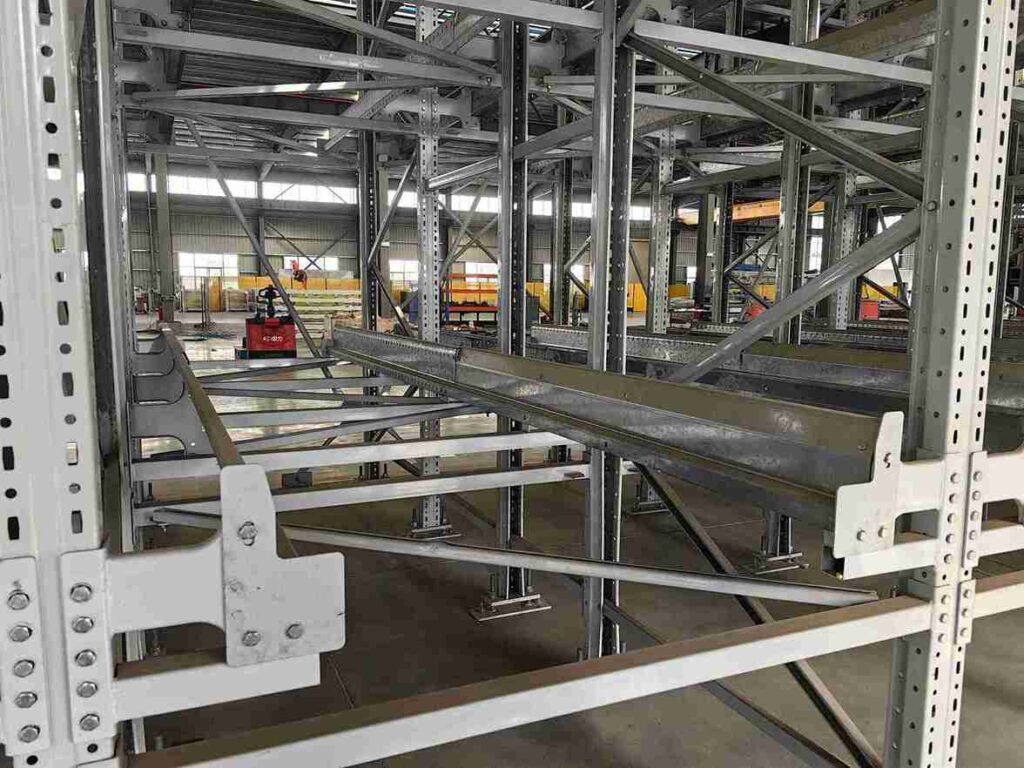
China remains the dominant force in global racking manufacturing, with production clusters in Guangxi, Qingdao, and Guangdong offering vertically integrated operations from steel processing to final assembly. These regions offer cost advantages of 20% to 30% over Western manufacturers without sacrificing structural integrity when working with quality suppliers. Coastal locations ensure efficient export logistics via major ports, with average shipping windows of 15 to 30 days to markets across Southeast Asia, the Middle East, Africa, and Latin America .
However, not all Chinese manufacturing is equal. Top-tier suppliers in these zones specialize in engineered storage solutions, adhere to international load standards, support CAD-based design integration, and offer customization across dimensions, coatings, and load capacities. They employ in-house engineering teams, maintain quality management systems, and understand the documentation requirements for international projects. Lower-tier suppliers simply bend metal and ship boxes—and their low beam racking cost per foot reflects the engineering support and quality control they omit.
The heavy duty pallet rack market, which encompasses most beam racking systems, was valued at approximately USD 795.0 million globally in 2025 and is projected to reach USD 1,165.5 million by 2035, reflecting a compound annual growth rate of 3.9%. This steady growth indicates underlying demand strength that supports pricing stability even as individual market segments experience fluctuations. Understanding these market dynamics helps buyers time their purchases strategically and negotiate from a position of knowledge .
Evaluating Suppliers Beyond Per-Foot Pricing
With thousands of potential vendors available through online platforms, filtering for reliability requires moving beyond product photos and price tags. Experienced procurement professionals adopt a multi-layered evaluation model focused on operational transparency, technical capability, and customer experience.
Operational reliability indicators that predict actual performance include on-time delivery rates consistently at or above 95%. This metric indicates that the supplier has reliable logistics processes and respects project timelines. Suppliers with strong logistics discipline protect buyers from costly delays that can disrupt operations and extend project timelines .
Response time under two hours for inquiries suggests dedicated sales engineering support and organizational responsiveness. Delayed communication during procurement often predicts delayed delivery and poor issue resolution after the sale. Suppliers who respond promptly to initial inquiries typically maintain this responsiveness throughout the relationship.
Reorder rates above 15% to 20% indicate strong customer satisfaction and minimal returns or defects. Existing customers voting with their wallets provide the most reliable quality signal available. Suppliers with high reorder rates have demonstrated that they deliver value that customers recognize and reward with repeat business .
Annual online revenue exceeding certain thresholds suggests consistent volume, financial stability, and digital maturity. While this metric must be interpreted in context, it provides useful insight into supplier scale and staying power.
Technical capability verification should include requesting Material Test Reports confirming steel grade compliance with Q235, Q345, or equivalent standards. Buyers should ask for proof of corrosion resistance through ASTM B117 salt spray testing documentation, with minimum 500 hours indicating adequate protection for most applications. Weld integrity documentation or third-party inspection reports provide additional quality assurance. Verification of pre-shipment inspection options through recognized agencies like SGS or Bureau Veritas offers independent quality confirmation .
The Pilot Order Strategy
Before committing to a full warehouse system based on quoted beam racking cost per foot, savvy buyers employ a pilot order strategy to validate supplier capabilities. This approach involves ordering a small batch representing perhaps 10 to 20 pallet positions—enough to assess quality without committing to full-scale procurement.
Upon arrival, the buyer inspects build quality, checking for consistent dimensions, clean welds, and proper surface preparation. Packaging durability is assessed to understand how components will survive longer shipping distances. Documentation accuracy is verified against order specifications. Weld points, coating uniformity, and labeling precision are examined in detail.
This small investment in validation—typically a few thousand dollars—prevents catastrophic mistakes at full scale. Buyers who have employed this strategy report occasionally discovering issues that would have been disastrous across a 10,000-pallet-position installation, including dimensional inconsistencies, coating defects, and documentation gaps. The cost of the pilot order is trivial compared to the cost of rectifying these issues at scale .
Regional Sourcing Options for Developing Markets
While China dominates global supply, regional manufacturing options exist and may offer advantages for specific markets. Understanding these options allows buyers to optimize their sourcing strategy based on their specific location and requirements.
Southeast Asia has seen significant investment in racking system production over the past decade. Countries like Vietnam, Malaysia, and Thailand have developed mature racking system industries that serve both domestic demand and export markets throughout the Asia-Pacific region. The beam racking cost per foot from these sources may be slightly higher than Chinese imports, but faster delivery, simpler logistics, and reduced working capital requirements can offset the difference for facilities within the region .
Vietnam has emerged as a particularly significant player, with production capacity expanding rapidly to serve both domestic industrial growth and export markets. Beam racking price trends in Vietnam reflect this capacity expansion—buyers are seeing competitive pricing as manufacturers compete for market share and invest in production efficiency improvements. However, procurement professionals should verify quality certifications and manufacturing standards, as rapid growth has created some variability among newer market entrants .
The Middle East, particularly Gulf Cooperation Council countries, is increasingly investing in local racking system fabrication capabilities as part of broader economic diversification initiatives. Saudi Arabia, with facilities like the Alsamaani Metal Factory producing locally and sourcing raw materials from national suppliers like SABIC, is systematically reducing dependence on imported systems while building domestic manufacturing capabilities. This localization is gradually moderating beam racking pricing while improving product availability and reducing lead times for buyers throughout the Kingdom .
Latin America has established racking industries in Brazil and Mexico serving their domestic markets. For facilities within these countries, local sourcing avoids import duties, simplifies warranty enforcement, and reduces exposure to currency fluctuations that can affect imported equipment costs. While beam racking cost per foot from these sources may be higher than Asian imports, the total landed cost often compares favorably when all factors are considered.
Indonesia presents a unique case where infrastructure limitations and logistics complexities within the archipelago can add 15% to 25% to delivered costs compared to mainland Southeast Asian markets. Smart buyers factor these internal logistics costs into their analysis and consider strategic inventory positioning to mitigate these expenses, potentially consolidating orders or coordinating with regional distributors to optimize transportation economics .
Strategy 4: Optimize Installation and Project Management
The True Cost of Installation Errors
Installation represents where the gap between quoted beam racking cost per foot and actual project cost widens most dramatically—and where poor execution creates long-term operational problems that persist for the life of the system.
Professional installation of beam racking requires specialized expertise that directly affects the bottom line. Certified crews command rates that reflect their training and experience, and the total hours required scale with project complexity in ways that are difficult to anticipate without deep industry knowledge. For a typical 10,000-pallet-position warehouse, installation requires hundreds of hours from certified crews, making labor the most variable component of total project cost .
Attempting to save money by using unskilled local labor or skipping precision alignment almost always increases total cost when viewed across the project lifecycle. Common installation errors create problems that compound over time, leading to higher maintenance costs, safety risks, and ultimately premature replacement.
Improper anchoring represents one of the most dangerous and costly installation errors. Racking systems must be securely anchored to the floor slab to resist overturning forces from seismic events, forklift impacts, and normal operational loads. Inadequate anchoring saves installation time but creates safety hazards and may violate local building codes. Fixing improperly anchored racks requires removing product, unbolting sections, drilling new holes, and reinstalling—far more expensive than doing it correctly the first time.
Misaligned rows create problems that extend throughout the life of the system. When upright frames are not perfectly aligned, beam installation becomes difficult and may result in improper engagement of safety locks. Load distribution becomes uneven, with some frames carrying more than their design load while others carry less. Future reconfiguration becomes nearly impossible as misalignments compound. Precision alignment during initial installation adds modest time but prevents decades of operational friction .
Missing safety accessories represent a false economy that inevitably proves costly. Row spacers, column guards, and end-of-aisle protectors are often omitted to reduce quoted beam racking cost per foot. This “savings” vanishes with the first forklift impact that could have been harmless with proper protection but instead damages uprights and requires expensive repair. Industry data suggests that proper racking protection can reduce damage rates by up to 90% compared to unprotected systems .
Staging and Logistics Coordination
The logistics of getting racking components from the shipping container to their final positions significantly impacts total project cost. Poor staging coordination can add 10% to 15% to installation labor costs as crews waste time moving materials rather than installing them productively.
Site readiness verification should occur before the first beam arrives. Floor flatness should meet specifications, with any required grinding or leveling completed. Column locations should be marked according to the engineered layout. Access paths should be clear and unobstructed. Every hour spent waiting for site readiness is an hour of paid crew time producing no value—directly increasing the effective beam racking cost per foot without advancing the project.
Progressive unloading strategy can significantly reduce installation labor. Rather than unloading all components into a single staging area, experienced installation managers coordinate with crews to place materials near their final positions. This reduces double-handling and accelerates installation as crews can access components immediately rather than searching through a central pile. The small additional effort during delivery pays for itself through reduced labor hours .
Weather considerations become critical for facilities with outdoor staging or incomplete building envelopes. In tropical markets with predictable rainy seasons, scheduling installation during dry periods prevents weather delays that would otherwise extend timelines and increase costs. Even in arid regions, extreme heat can affect crew productivity and coating application if not properly managed.
Phased Installation in Operating Warehouses
Installing racking in an operating warehouse adds complexity that affects both timeline and cost. Working around existing inventory, forklift traffic, and ongoing operations requires coordination overhead that extends the installation period and increases total project cost.
Phased installation plans must account for inventory relocation, temporary storage arrangements, and sequencing that maintains operational continuity. Each phase typically requires its own site preparation, material staging, and cleanup. The additional coordination and extended timeline can add 20% to 30% to installation costs compared to installing in an empty facility.
However, for facilities that cannot shut down operations, phased installation is the only viable approach. The key is building realistic timelines and budgets that account for the complexity, rather than assuming that installation in an operating facility will cost the same as installation in an empty warehouse .
Permitting and Compliance Navigation
Throughout developing markets, regulatory requirements for warehouse racking vary significantly—and navigating them efficiently affects total project cost. Experienced project managers incorporate permitting timelines and requirements into their planning from the outset.
Permitting costs typically range from 3% to 8% of total project cost, with significant variation by jurisdiction. High-cost areas like California command the upper end of this range due to rigorous review processes and higher fee structures. Facilities in other regions may experience lower costs but should still budget for permitting as a distinct line item rather than assuming it is included in beam racking cost per foot .
Plan review timelines can extend project schedules significantly, particularly for first-time submissions in demanding jurisdictions. Facilities should build buffer time into project schedules and consider engaging expeditors familiar with local processes to navigate approval workflows efficiently.
Inspection coordination after installation requires scheduling with local authorities and ensuring that all required documentation is available. Facilities that have managed this process successfully recommend building relationships with local inspectors and understanding their specific requirements before inspection day.
The Value of Professional Project Management
Perhaps the most overlooked element in successful racking installations is professional project management. A dedicated project manager coordinates scheduling, safety, quality control, and communication throughout the installation, ensuring that all elements come together as planned.
Project management costs add approximately 5% to 8% to total project cost but provide value that far exceeds this investment. Project managers anticipate potential issues before they become problems, coordinate between trades, manage change orders efficiently, and ensure that documentation is complete and accurate. Facilities that have attempted to manage complex installations without dedicated project management consistently report higher costs, longer timelines, and more post-installation issues than those that invested in professional coordination .
Strategy 5: Calculate True Return on Investment Through Operational Savings
Moving Beyond Cost Per Foot to Cost Per Pallet Position
The most sophisticated warehouse operators recognize that beam racking cost per foot is the wrong metric entirely for evaluating storage investments. What matters is cost per pallet position—and within that, cost per pallet move when operational efficiency is factored in.
A narrow focus on minimizing beam racking cost per foot often leads to designs that waste vertical space, require excessive aisles, and create inefficient travel paths. These operational penalties accumulate daily, year after year, dwarfing any initial savings from lower equipment costs.
Vertical space utilization provides a compelling example of this principle. Consider a facility with 12 meters of clear height. Specifying 8-meter uprights to reduce beam racking cost per foot wastes 4 meters of vertical space—space that has already been paid for through building construction costs or ongoing lease expenses. Extending uprights to 12 meters increases material cost per foot but reduces cost per pallet position by approximately 30% because the same floor footprint stores more product. The higher beam racking cost per foot is more than offset by the additional storage capacity created .
Aisle width optimization demonstrates a similar dynamic. Standard selective racking with wide aisles for counterbalanced forklifts typically consumes approximately 60% of floor space for aisles and only 40% for actual storage. Very narrow aisle configurations with turret trucks or AGVs flip this ratio, devoting 60% of space to storage and only 40% to aisles. The higher beam racking cost per foot for VNA-compatible systems—which require tighter tolerances and specialized components—is typically more than offset by the additional storage capacity created within the same building envelope .
System type selection dramatically affects both storage density and cost per pallet position. Selective racking offers the lowest beam racking cost per foot but also the lowest storage density. Double-deep systems improve density at moderate cost increases. Push-back and pallet flow systems offer higher density at significantly higher cost per position. Drive-in systems maximize density for suitable applications but limit selectivity. The optimal choice depends on inventory profile, throughput requirements, and the relative value of space versus equipment cost .
Labor Efficiency and Throughput Impact
In manual warehouses, operators spend 60% to 70% of their shifts walking or driving empty between tasks. This non-value-added time represents the primary target for operational improvement—and racking configuration directly impacts it through travel distances, pick face accessibility, and storage organization.
Travel distance reduction through optimized racking layouts directly reduces labor requirements permanently. Every meter of travel eliminated is a meter that never needs to be traveled again—savings that compound across shifts, days, and years. A well-designed layout that minimizes travel between receiving, storage, picking, and shipping can reduce labor hours by 15% to 25% compared to poorly organized configurations .
Pick face accessibility affects the speed of individual picks. Fast-moving SKUs placed in easily accessible racking positions—at waist height near shipping docks—reduce pick times significantly. Slotting optimization requires racking configurations that allow repositioning of beam levels to accommodate changing velocity profiles. Systems that facilitate easy beam adjustment support ongoing productivity improvements that compound over time.
Damage reduction represents another significant operational savings opportunity. Manual forklift operations inevitably result in rack impacts, product damage, and costly repairs. Well-designed racking with adequate clearance, protective guards, and clear sight lines reduces impact frequency and severity. Industry data suggests that proper racking design and protection can reduce damage rates by up to 90% compared to poorly configured systems, with corresponding reductions in repair costs, product loss, and downtime .
System Type Comparison and Selection
Different racking system types offer dramatically different performance characteristics that affect both initial cost and ongoing operations. Understanding these trade-offs is essential for selecting the optimal configuration for specific operational requirements.
Selective pallet racking, the most common configuration, offers 100% selectivity—any pallet can be accessed at any time without moving others. Storage density is relatively poor due to the aisles required for access. Beam racking cost per foot is lowest for this configuration, typically ranging from $30 to $60 for roll-formed beams and $60 to $100+ for structural steel depending on capacity requirements. Safety is generally good due to open layout and visibility, though the many aisles create collision exposure .
Double-deep racking stores pallets two deep, requiring specialized reach trucks but improving density by reducing aisle count. Selectivity is reduced—only the front pallet in each lane is directly accessible. Beam racking cost per foot is moderate, typically 15% to 25% higher than selective. This configuration works well for facilities with multiple pallets per SKU where batch picking is acceptable .
Push-back racking uses nested carts on inclined rails to store pallets up to four deep. Pallet density is good, with selectivity moderate as each lane handles a single SKU in LIFO sequence. Beam racking cost per foot is significantly higher than selective due to the moving components, typically 50% to 100% premium. Efficiency is good for batching operations, and safety is excellent with proper maintenance .
Pallet flow racking uses gravity-fed rollers to move pallets forward, enabling high-density FIFO storage ideal for perishable goods or high-volume SKUs. Beam racking cost per foot is highest among common configurations, with premiums of 100% to 200% over selective due to complex roller and brake systems. Selectivity is low—each lane on each level handles a single SKU. Safety requires careful engineering of speed controls and stops .
Drive-in racking allows forklifts to enter storage lanes, storing pallets up to 10 deep on continuous rails. Beam racking cost per foot is high, typically 100% to 150% premium over selective, but storage density is excellent for suitable applications. Selectivity is very low—only the last pallet stored in each lane is directly accessible. This configuration works only for bulk storage of identical SKUs with low turnover .
The ROI Calculation Framework
When evaluating competing proposals based on beam racking cost per foot, sophisticated buyers build comprehensive ROI models that capture operational impacts beyond simple equipment cost. This framework enables data-driven decisions that align with business objectives.
Initial investment calculation should include total material cost based on quoted per-foot pricing, engineering and design fees, delivery and logistics expenses, installation labor, and permits and inspections. This fully loaded initial cost provides the baseline for ROI analysis.
Annual operational savings projection should quantify labor reduction from optimized travel paths based on expected throughput. Productivity gains from improved pick face access should be estimated based on pick studies or industry benchmarks. Damage reduction should be calculated based on historical damage rates and expected improvement. Inventory accuracy improvements and energy savings (particularly for cold storage) should be included where applicable.
Payback period determination divides net initial investment by annual operational savings to calculate years to payback. Facilities with high throughput and labor costs may achieve payback in two to three years, while lower-volume operations may see longer payback periods that still justify investment over system life.
Using this framework, a system with higher beam racking cost per foot often demonstrates faster payback than cheaper alternatives because it generates greater operational savings through improved efficiency, reduced damage, and better space utilization. The key is quantifying those savings accurately during the planning phase rather than relying on generic assumptions .
Regional Considerations for Developing Markets
Southeast Asia: Humidity, Growth, and Labor Dynamics
Throughout Southeast Asia—from Thailand’s automotive corridors to Vietnam’s export processing zones, from Malaysia’s logistics hubs to Indonesia’s sprawling distribution networks—warehouse operators face distinctive challenges that affect optimal beam racking cost per foot calculations.
Humidity and corrosion present the most pervasive challenge across the region. Tropical humidity exceeding 80% for much of the year creates conditions where standard coatings may fail prematurely. Enhanced surface protection with greater thickness and UV stabilization justifies its incremental cost through extended service life. Facilities in Jakarta, Manila, Bangkok, and Ho Chi Minh City have consistently found that investing in premium coatings pays for itself many times over through delayed replacement and reduced maintenance .
Rapid growth characterizes most Southeast Asian markets, where warehouse construction growth rates exceed global averages. Facilities must accommodate not just current inventory but projected expansion over the system life. Racking systems with inherent modularity and standard component dimensions support this growth without requiring complete replacement. The modest premium for modular, standardized designs pays dividends when expansion time arrives .
Labor market dynamics across the region are accelerating automation adoption. Rising wages in countries like Thailand and Malaysia, combined with labor shortages in rapidly industrializing areas, are pushing facilities toward automated solutions. Facilities installing racking today should assume they will integrate AGVs or autonomous forklifts within five to seven years—making automation-ready design a wise investment despite its modest impact on beam racking cost per foot .
Middle East: Temperature Extremes and Logistics Hub Requirements
The Middle East presents distinct considerations for warehouse racking, particularly in GCC countries serving as global logistics hubs connecting Europe, Asia, and Africa.
Temperature extremes across the region affect steel expansion and contraction cycles. Facilities experience wide temperature variations between day and night, and between seasons. These thermal cycles require attention to connection details that accommodate movement without compromising structural integrity. Engineering for thermal movement adds modest cost to initial beam racking cost per foot but prevents long-term issues with loosening connections and stress concentrations.
Dust and sand present challenges for inland facilities, affecting moving components and coating durability over time. Sealed connections and robust surface treatments help maintain system integrity in these environments. Facilities should specify coatings with adequate hardness to resist abrasion from windborne particles.
Logistics efficiency drives warehouse design in the region. The Middle East’s role as a transshipment hub means warehouses often handle high throughput with rapid inventory turnover. Racking configurations must support efficient putaway and retrieval, not just static storage density. This operational requirement may justify investment in more sophisticated systems despite higher beam racking cost per foot .
Africa: Infrastructure Variability and Import Complexities
Across African markets, warehouse racking projects face unique challenges related to infrastructure and logistics that significantly affect total project cost.
Port congestion affects many African facilities relying on imported racking components. Delays at Mombasa, Lagos, Durban, and other major ports can extend project timelines significantly, with cascading effects on installation scheduling and operational planning. Working with suppliers experienced in African logistics and allowing buffer time in project schedules prevents costly crew standby charges and operational disruptions .
Infrastructure variability across the continent requires adaptable designs. Power reliability, road conditions, and local construction practices vary dramatically between and within countries. Racking designs may need to accommodate rougher floor surfaces or less precise building dimensions than standard specifications assume. Engineering for these realities adds modest cost to beam racking cost per foot but prevents installation difficulties and operational problems.
Local capability development remains a consideration in many African markets. Limited local installation expertise for complex racking systems may require bringing specialized crews from abroad or investing in training local teams. These factors affect total project cost far more than the quoted beam racking cost per foot and should be factored into planning from the outset.
Latin America: Seismic Requirements and Economic Volatility
Throughout Latin America, warehouse racking projects must address seismic risks and economic uncertainties that affect procurement and installation.
Seismic design represents the most significant technical consideration across much of the region. Much of Latin America lies in active seismic zones, requiring racking systems designed to withstand earthquake forces without collapse. Engineering calculations supporting seismic compliance add cost to initial beam racking cost per foot but are absolutely non-negotiable for safety and business continuity. Facilities that attempt to cut corners on seismic design face unacceptable risk to personnel, inventory, and operations .
Currency fluctuation affects imported equipment costs across several Latin American markets. Buyers may need to structure payments to minimize exposure or consider local manufacturing options where available. Brazil and Mexico have established racking industries serving their domestic markets, offering alternatives to imports that may provide greater price stability.
Cold storage growth driven by agricultural exports creates specialized requirements. Racking for cold storage must be designed for low-temperature operation and frequent temperature cycles, with appropriate coatings and connection details. The incremental cost for cold-capable systems is modest compared to the consequences of failure in temperature-controlled environments.
Supplier Selection: Finding Partners Who Deliver Value Beyond Price
Red Flags in Supplier Quotes
When evaluating suppliers based on beam racking cost per foot, certain warning signs should trigger deeper investigation before committing to a purchase.
Vague specifications represent the most common red flag. Suppliers who cannot or will not provide detailed specifications—steel grade, coating thickness, load capacity documentation, dimensional tolerances—are hiding something. The missing information typically relates to quality compromises that would be apparent if disclosed. Insist on complete transparency before comparing per-foot pricing.
No engineering support indicates a supplier who sells steel rather than storage solutions. Racking is an engineered structure subject to complex loads and safety requirements, not a commodity. Suppliers who cannot provide engineering calculations, CAD drawings, or design consultation lack the capabilities needed for successful projects. Their low beam racking cost per foot reflects their limited scope of supply, not genuine value.
Unrealistic lead times compared to industry norms should raise concerns. If promised delivery seems too good to be true relative to typical lead times from the region, it probably is. Unrealistic commitments often precede missed deadlines and project delays that disrupt operations and increase costs.
No verifiable references from similar projects in the region indicate limited relevant experience. Reputable suppliers serving developing markets have project histories they can share. Lack of references is a significant risk signal that should be investigated before proceeding.
Green Flags Indicating Reliable Partners
Conversely, certain characteristics distinguish suppliers who deliver value beyond competitive beam racking cost per foot.
Transparent pricing with detailed breakdowns of material, engineering, delivery, and installation components demonstrates supplier confidence and facilitates accurate comparison. Suppliers who provide comprehensive quotes have nothing to hide and expect to be evaluated on total value rather than a single number.
Design consultation investment indicates commitment to customer success. Suppliers who spend time understanding operations, inventory profiles, and growth plans before quoting add value that extends far beyond per-foot pricing. Their recommendations typically lead to better outcomes even if their quoted beam racking cost per foot is not the lowest.
Regional experience with successful projects in the target area demonstrates understanding of local conditions, regulations, and logistics challenges. Their experience translates to fewer surprises during execution and more reliable outcomes.
After-sales support questions about warranty, spare parts availability, and ongoing service indicate suppliers who view customers as long-term partners rather than one-time transactions. These suppliers will be there when issues arise, providing value that extends far beyond initial installation .
Building Long-Term Supplier Relationships
The most successful warehouse operators in developing markets treat racking suppliers as strategic partners rather than transactional vendors. Long-term relationships yield benefits that extend far beyond initial beam racking cost per foot.
Preferred pricing becomes available to consistent customers who provide repeat business across multiple projects. Suppliers value predictable revenue and reward loyalty with pricing that reflects the ongoing relationship rather than one-time transaction margins.
Design continuity improves over time as suppliers become familiar with specific operations, facilities, and preferences. Each successive project benefits from accumulated knowledge, reducing engineering time and improving outcomes.
Expedited support becomes available when issues arise—and they will. Established relationships ensure faster response when problems occur, minimizing operational disruption and resolving issues before they escalate.
Inventory availability improves for valued customers. Suppliers who understand ongoing needs may stock commonly used components, reducing lead times for expansions or repairs when they become necessary.
Conclusion: The Path to True Storage Investment Optimization
Throughout this extensive analysis, it has been demonstrated that beam racking cost per foot is merely the starting point for sophisticated storage investment analysis. The five strategies outlined—optimizing material selection, designing for automation readiness, leveraging strategic sourcing, managing installation effectively, and calculating true operational ROI—provide a comprehensive framework for reducing total investment while maximizing long-term value.
The warehouse operators who achieve the lowest lifetime costs are rarely those who secured the lowest initial quotes. Instead, they are the ones who understood their operational requirements thoroughly before specifying equipment. They invested in quality where it mattered—steel grade, coating protection, precision installation. They designed for future needs, not just current inventory. They built relationships with suppliers who provided engineering support and after-sales service. They calculated ROI based on operational savings, not just acquisition cost.
For warehouses across Southeast Asia, the Middle East, Africa, and Latin America, these principles apply equally. While local conditions vary—humidity in Jakarta differs from dust in Riyadh, seismic risk in Mexico City differs from port congestion in Lagos—the underlying economics remain consistent. Storage infrastructure represents a long-term investment that will either enable efficient operations or create daily friction for decades.
Industry experience working with hundreds of facilities across these regions reveals a consistent pattern: successful operators look beyond the quoted beam racking cost per foot to understand the complete financial picture. They invest in quality where it matters. They plan for growth and automation. They build relationships with partners who share their commitment to long-term success.
Warehouse racking investments will outlast most of the equipment inside them. They will support operations through market cycles, business expansions, and technological changes. Taking the time now to optimize that investment—using the strategies outlined in this guide—will pay dividends for decades to come.
The question is not whether a facility can afford to invest in quality storage infrastructure. The question is whether it can afford the operational penalties, safety risks, and replacement costs that come with focusing too narrowly on beam racking cost per foot.
Choose wisely. Future operations depend on it.
Frequently Asked Questions
1. How does the choice between roll-formed and structural steel beams affect long-term beam racking cost per foot?
Roll-formed beams typically cost $30 to $60 per foot and are suitable for light to medium loads up to approximately 6,000 pounds per pair. Structural steel beams range from $60 to $100+ per foot and support heavy loads from 8,000 to 30,000+ pounds per pair. While structural steel carries a 25% to 40% higher initial beam racking cost per foot, it offers superior durability, impact resistance, and longevity in demanding applications. For facilities with predominantly light loads, roll-formed beams provide better value. For operations handling heavy or abrasive materials, structural steel’s higher initial cost often translates to lower total cost of ownership through reduced damage and replacement needs .
2. What percentage of total project cost should be allocated to installation when budgeting based on beam racking cost per foot?
Installation typically represents 30% to 45% of total project cost beyond the material-only beam racking cost per foot. This includes professional crew labor, equipment rental, engineering oversight, and site preparation. For a typical 10,000-pallet-position warehouse, installation requires hundreds of hours from certified crews. Facilities with complex configurations, mezzanine integration, or stringent precision requirements for future automation should expect installation costs at the higher end of this range. Obtaining separate, detailed installation quotes rather than relying on rough percentages is essential for accurate budgeting .
3. How do import duties and local taxes affect the true beam racking cost per foot in developing markets?
Import duties vary dramatically across developing markets, from 5% to 10% in some Southeast Asian countries to 25% to 35% in parts of Africa and Latin America. These charges apply to the full landed cost, including freight and insurance, not just the material value. Value-added taxes (VAT) or goods and services taxes (GST) typically apply at rates of 10% to 20% on top of duty-paid value. Some countries offer duty exemptions for manufacturing equipment or goods used in export processing zones. Engaging a customs broker early in the planning process is recommended to understand fully loaded costs before comparing supplier quotes based solely on beam racking cost per foot .
4. What is the expected lifespan of a properly specified and maintained beam racking system?
Quality beam racking systems properly specified for their operating environment and maintained appropriately typically provide 20 to 30 years of service life. Factors affecting longevity include steel quality, coating effectiveness, operating environment, impact history, and maintenance quality. Facilities in controlled environments with minimal impacts may achieve the upper end of this range, while those in corrosive environments or with heavy impact exposure may require replacement sooner. Regular inspections, prompt repair of damage, and proper load management are essential for achieving maximum system life. Well-maintained beams can retain 50% to 70% of their value if eventually resold .
5. How frequently should beam racking systems be inspected to maintain safety and maximize lifespan?
Industry standards recommend formal inspections at least annually, with more frequent inspections for facilities with heavy forklift traffic, seismic exposure, or corrosive environments. Many facilities supplement annual professional inspections with monthly visual checks by trained operators who can identify obvious damage or concerns. Immediate inspection is required after any significant impact, seismic event, or overloading incident. Regular inspection identifies issues before they compromise safety, allows planned rather than emergency repairs, and extends system life through timely intervention. Documentation of inspections creates a maintenance history that supports warranty claims and demonstrates regulatory compliance .
If you require perfect CAD drawings and quotes for warehouse racking, please contact us. We can provide you with free warehouse racking planning and design services and quotes. Our email address is: jili@geelyracks.com