📐 "First 50 Enterprise Queries Get Custom 3D Warehouse Design" Plan


Automated Pallet Racking Guide: 5 Key Factors for ROI in Emerging Markets
In the bustling economic landscapes of Southeast Asia, the Middle East, Latin America, and Africa, the warehouse has transformed from a static storage facility into the dynamic, pulsating heart of the supply chain. The driving force behind this transformation is the strategic implementation of automated pallet racking. For decision-makers contemplating this significant leap, the central question remains: how does one accurately calculate and guarantee a robust Return on Investment?
This definitive guide delves beyond surface-level costs to explore the five critical, interconnected factors that truly determine the success and profitability of an automated pallet racking system. It provides a comprehensive framework for businesses to evaluate system integration, software intelligence, operational resilience, and total cost of ownership, ensuring their investment not only pays for itself but becomes a cornerstone of their competitive advantage in these fast-moving markets.
Beyond the Price Tag: A Deeper Look at Automated Storage ROI
A common pitfall for many businesses is evaluating an automated pallet racking system based primarily on the initial hardware quotation. This narrow focus can lead to catastrophic miscalculations, locking companies into systems with exorbitant hidden costs and lackluster performance. True ROI from automated pallet racking is a multi-faceted metric, measured not just in currency saved but in enhanced operational agility, unprecedented accuracy, and the strategic capacity to scale effortlessly. It’s about evolving the warehouse from a cost center into a profit-driving engine. In the context of emerging markets, where supply chains can be volatile and consumer demand is exploding, this holistic view of an automated pallet racking investment is not just advisable; it is essential for survival and growth.
The Integration Imperative: Your Automated Racking Doesn’t Operate in a Vacuum
The most pivotal factor influencing the success, and consequently the ROI, of any automated pallet racking installation is its seamless integration within the broader material handling ecosystem. An island of automation creates more problems than it solves. A truly synergistic system ensures that the automated pallet racking communicates and cooperates flawlessly with all other components, from the receiving dock to the shipping door.
Seamless Conveyor and AGV Interfacing
The physical handoff points between systems are critical junctures where efficiency is either gained or lost. A modern automated pallet racking system must be precisely synchronized with inbound and outbound conveyor systems. More importantly, its design must be intrinsically compatible with the operational parameters of Automated Guided Vehicles (AGVs) and unmanned forklifts. This involves meticulous planning of aisle widths, pallet positioning tolerances, and the strategic placement of navigation aids.
Even a minor miscalculation can lead to systemic bottlenecks, crippling throughput and demolishing projected ROI. Leading providers utilize advanced 3D simulation modeling to digitally prototype the entire operation, identifying and resolving these integration risks before installation commences, ensuring the automated pallet racking functions as the perfectly synchronized core of the logistics workflow.
Software: The Central Nervous System – WMS and WCS
If the physical structure of the automated pallet racking is the skeleton, then the software is the central nervous system that gives it purpose and intelligence. A robust, high-tier Warehouse Management System (WMS) is the strategic brain, governing inventory management, optimizing put-away and picking logic, and directing the overall flow of goods. However, the real-time, tactical control is managed by the Warehouse Control System (WCS).
This crucial layer of software acts as a sophisticated translator, converting the WMS’s high-level commands into precise, low-level instructions for the stacker cranes, conveyors, and AGVs interacting with the automated pallet racking. A powerful WCS manages traffic control within the aisles, dynamically prioritizes orders, and handles exceptions automatically. Investing in a proven, scalable WMS/WCS combination is a direct investment in the relentless uptime and optimized performance of the automated pallet racking system, safeguarding its long-term financial returns.
Factor 1: System Throughput & Scalability – Designing for Growth
Throughput—the volume of pallets moved per hour—is the primary performance indicator of any automated pallet racking system. Underestimating this capacity creates a critical bottleneck that strangles the entire supply chain, while overestimating it results in a stranded capital investment.
Calculating Your True Peak Capacity
Basing the design of an automated pallet racking system on average daily volumes is a fundamental error with severe consequences. In emerging markets, demand peaks driven by holidays, festivals, or sales campaigns can be exponentially higher than the norm. The entire system, from the retrieval speed of the stacker cranes to the sortation capacity of the conveyors, must be engineered to handle these peak windows efficiently. A thorough analysis of historical sales data and future growth projections is essential to dimension the automated pallet racking system correctly. This ensures that the operation remains fluid and responsive during its most demanding periods, turning potential logistical nightmares into demonstrations of superior capability.
Modular Design for Future Expansion
A static automated pallet racking system in a dynamic market is a liability. The most forward-thinking investments are built on a philosophy of modular scalability. This means the automated pallet racking structure and its controlling software are designed from the outset for future expansion. Key features include the ability to add vertical storage levels, extend aisles linearly to accommodate more pallet positions, and integrate additional automated storage and retrieval machines without a complete system overhaul. This “pay-as-you-grow” approach to automated pallet racking protects the initial capital outlay and ensures that the ROI compounds over time, as the system evolves in lockstep with the business it supports.
Factor 2: Operational Cost Savings – The Hidden Goldmine
While reducing direct labor costs is a prominent benefit, the most substantial operational savings from an automated pallet racking system often lie in less visible, yet profoundly impactful, areas.
Labor Reallocation and Error Elimination
The objective of implementing automated pallet racking is not merely to replace manpower, but to optimize human potential. By automating the repetitive, physically demanding, and often dangerous tasks of lifting and moving pallets, companies can reallocate their workforce to value-added roles such as quality control, system supervision, process engineering, and enhanced customer service. Furthermore, a well-calibrated automated pallet racking system virtually eradicates the costly errors of mis-picks and lost inventory. The financial impact of achieving near-100% order accuracy—through eliminated shipping corrections, reduced returns, and strengthened customer trust—is a massive, direct contributor to the ROI of the automated pallet racking system.
Energy Efficiency of Automated Systems
Modern automated pallet racking systems are engineered with energy conservation as a core principle. High-efficiency servo motors, regenerative drives that capture and reuse energy during deceleration, and intelligent software that powers down equipment during idle periods result in a significantly lower energy footprint compared to a warehouse reliant on a fleet of traditional forklifts. In regions experiencing rising energy costs, the reduced operational expenditure of an automated pallet racking system becomes an increasingly important component of its financial justification.
Factor 3: Storage Density and Cube Utilization – Maximizing Every Cubic Meter
With industrial real estate at a premium in many urban centers across target markets, the ability of an automated pallet racking system to maximize storage density within an existing footprint delivers one of the most immediate and calculable returns.
Going Vertical with High-Bay Racking
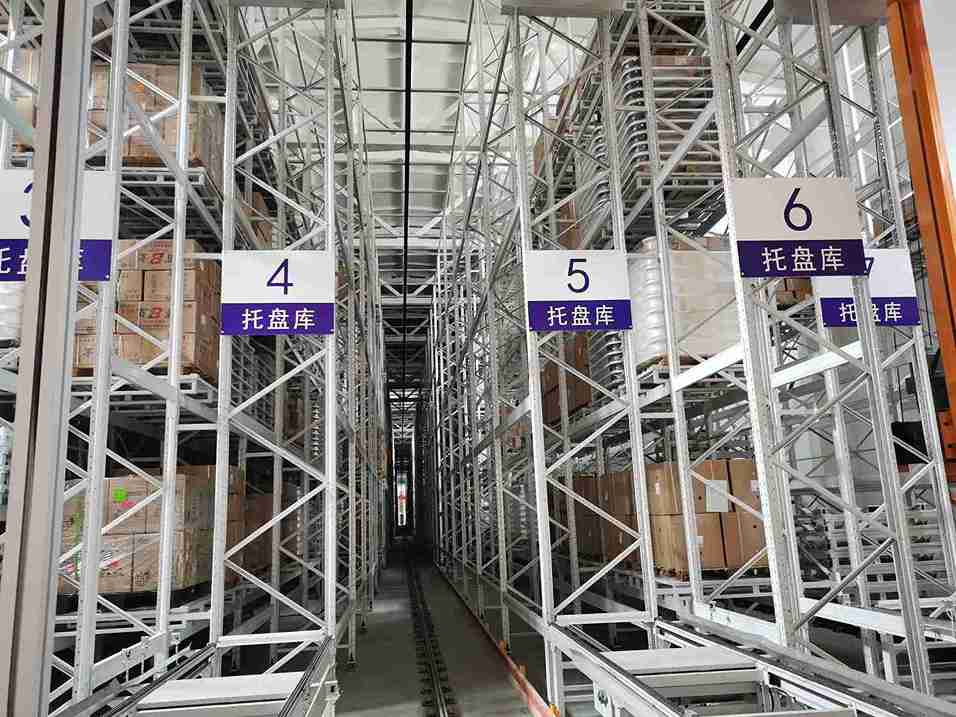
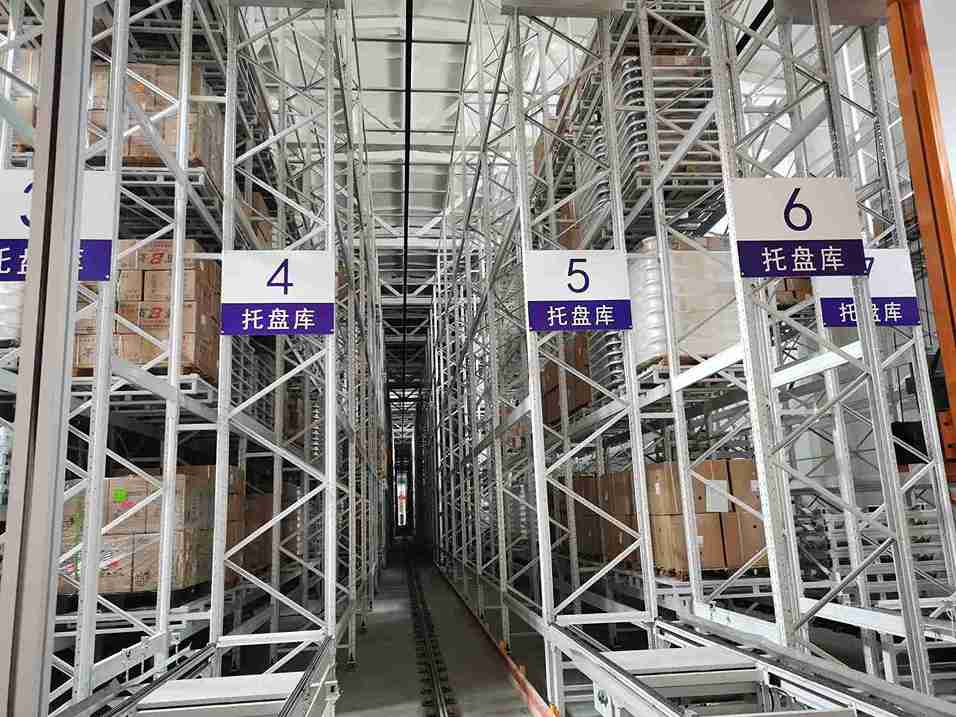
Automated pallet racking technology safely unlocks the vertical cube of a warehouse that conventional systems cannot utilize. High-bay automated pallet racking installations can extend to heights of 40 meters or more, dramatically multiplying the number of pallet positions without expanding the building’s footprint. This superior cube utilization strategy directly offsets the need for costly facility expansions or relocations, a saving that can, in many cases, justify the investment in the automated pallet racking system on its own.
Dynamic Storage vs. Fixed Slotting
Traditional warehouses often rely on fixed slotting, which inevitably leads to wasted space. Automated pallet racking, governed by a smart WMS, enables dynamic storage. In this model, the software assigns each incoming pallet to the most optimal available location based on its size and weight, continuously optimizing the storage layout. This dynamic approach to automated pallet racking management completely eliminates honeycombing and can increase the effective storage density of a facility by 20% to 40% or more, making the entire operation vastly more space-efficient and cost-effective.
Factor 4: Technology and Software – The Intelligence Behind the Iron
The structural integrity of the automated pallet racking is a given. The true differentiator in performance and long-term value is the sophistication of the technology and software that control it.
The Non-Negotiable Role of a Tier-1 WMS
Compromising on the Warehouse Management System is a false economy. A powerful, tier-1 WMS does far more than track inventory; it orchestrates the entire supply chain workflow. Integrated modules for yard management, labor management, and transportation management create a seamless flow of information and goods that radiates out from the **automated pallet racking** core. This system-wide optimization, which minimizes truck turn-times and aligns labor with workflow, is where the most significant and sustained operational gains are captured.
Data Analytics and Predictive Maintenance
A modern automated pallet racking system is a prolific generator of operational data. Sensors on the stacker cranes continuously monitor performance metrics and component health. By applying advanced data analytics, this information can be used to transition from a reactive maintenance model to a predictive one. The system can forecast when a specific component, like a motor or bearing, is likely to require service, allowing for maintenance to be scheduled during planned downtime. This proactive approach to upholding the automated pallet racking system is fundamental to achieving the 99%+ uptime required to protect the investment’s ROI and ensure uninterrupted operation.
Factor 5: Total Cost of Ownership (TCO) and Lifecycle Support
The most accurate and comprehensive method for evaluating an automated pallet racking investment is through the lens of Total Cost of Ownership, a model that accounts for all costs across the system’s entire operational life.
Initial Investment vs. Long-Term Value
TCO analysis moves beyond the initial capital expenditure for the automated pallet racking hardware and software. It incorporates crucial ongoing costs, including scheduled preventive maintenance, a strategic inventory of critical spare parts, recurring software licensing and upgrade fees, and comprehensive technical training for on-site personnel. A lower-priced automated pallet racking system that comes with high maintenance costs and frequent downtime will invariably have a higher TCO and a poorer ROI than a more robust, professionally supported system with a slightly higher initial price tag.
The Criticality of Localized Spare Parts and Service
For operations in Africa, Latin America, or Central Asia, global lead times for spare parts can be debilitating. A critical differentiator for an automated pallet racking provider is the establishment of localized service hubs and a network of in-country or in-region certified technicians. The guaranteed availability of critical spare parts and expert technical support within a defined service-level agreement is not an optional extra; it is a fundamental requirement for risk mitigation. This localized support infrastructure is essential for ensuring the projected ROI of the automated pallet racking system is not jeopardized by a single, prolonged equipment failure that halts the entire logistics operation.
Conclusion: Building a Data-Driven Case for Automation
Implementing an automated pallet racking system is a strategic decision that redefines a company’s logistical capabilities. It is a commitment to building a supply chain that is not only faster and cheaper but also more accurate, resilient, and scalable. By rigorously evaluating the project through the five key factors of System Integration, Throughput & Scalability, Holistic Operational Savings, Storage Density, and Total Cost of Ownership, businesses can construct an irrefutable, data-driven business case.
This disciplined approach enables executives to select the right technology partner—one capable of delivering a high-performance automated pallet racking solution that will drive profitability and secure a formidable competitive edge for the long term. The future of logistics in the world’s most promising markets is unequivocally automated, and the foundation of that future is a strategically implemented automated pallet racking system.
Frequently Asked Questions (FAQs)
1. How does the seismic activity in certain Southeast Asian and Latin American countries affect the design of automated pallet racking systems?
Seismic activity is a critical design consideration that fundamentally influences the engineering of an automated pallet racking system. Structural engineers use region-specific seismic data to design the racking with integrated seismic bracing, reinforced base plates, and moment-resistant connections. The entire structure, including the dynamic loads imposed by the moving stacker cranes, is analyzed to withstand calculated seismic forces, preventing collapse and protecting both the inventory and the high-value automated machinery. This non-negotiable safety requirement is a standard part of the design process for any automated pallet racking installation in a seismically active zone.
2. What are the power stability requirements, and how do you mitigate frequent power fluctuations or outages common in some developing regions?
Automated pallet racking systems are sensitive to power quality and availability. A comprehensive solution includes several layers of protection. An industrial-grade Uninterruptible Power Supply (UPS) is essential to handle brief outages, brownouts, and voltage spikes, allowing for a controlled and safe system shutdown. For facilities experiencing prolonged or frequent outages, the integration of a backup diesel or gas generator into the electrical design of the automated pallet racking system is a critical investment to maintain operational continuity and protect the hardware from damage.
3. Can an automated pallet racking system be retrofitted into an existing warehouse building, or does it require a custom-built facility?
Retrofitting an automated pallet racking system into an existing building is a common and viable project. It begins with a detailed site survey to assess critical parameters: column spacing, floor flatness and load-bearing capacity, clear ceiling height, and the integrity of the roof structure. Often, necessary modifications such as floor grinding, structural reinforcement, or upgraded electrical infrastructure are identified during this phase. A thorough feasibility study is the first step to ensuring a successful retrofit of the automated pallet racking system.
4. How do you handle the disposal or recycling of our old, traditional racking during the transition to an automated system?
Professional providers typically offer decommissioning and asset recovery services as part of the overall project scope for the new automated pallet racking system. This includes the safe and efficient dismantling of the old racking. Providers will often facilitate the resale of viable used racking on the secondary market or coordinate with certified recycling partners to process the material responsibly. This service ensures a smooth site transition and can occasionally generate a minor offset against the project cost.
5. What specific data security measures are in place for the Warehouse Management System (WMS) that will have access to our entire inventory and operational data?
Data security for the WMS controlling an automated pallet racking system is paramount. Enterprise-level WMS platforms employ robust security protocols, including role-based access control, end-to-end data encryption, regular security patching, and secure VPNs for remote access. Businesses can typically choose between on-premise server deployment or a secure, certified cloud environment, with clear agreements on data ownership, backup procedures, and disaster recovery plans to ensure the complete confidentiality and integrity of sensitive operational data.
If you require perfect CAD drawings and quotes for warehouse racking, please contact us. We can provide you with free warehouse racking planning and design services and quotes. Our email address is: jili@geelyracks.com