📐 "أول 50 استفسار مؤسسي يحصل على تصميم مستودع ثلاثي الأبعاد مخصص" الخطة
















Introduction: The Strategic Importance of Warehouse Racking Layout Design
In the competitive world of modern logistics, warehouse racking layout design isn’t just about storage—it’s a strategic advantage. A well-planned warehouse racking layout design can double storage capacity,slash operational costs, and accelerate order fulfillment. Whether managing a small distribution hub or a massive fulfillment center, businesses that master warehouse racking layout designالحصول علىcritical edge in speed, safety, and scalability.
This comprehensive guide explores the best practices,cutting-edge innovations, and proven strategies for optimizing warehouse racking layout design. From high-density storage solutionsإلىAI-driven automation, we’ll break down how to maximize every square foot while ensuring smooth, efficient operations.

1. The Fundamentals of Warehouse Racking Layout Design
1.1 What Makes a Great Warehouse Racking Layout Design?
متفوق warehouse racking layout design balances three key factors:
- Space utilization (vertical and horizontal efficiency)
- Operational workflow (minimizing travel time for pickers)
- Safety & accessibility (preventing accidents and bottlenecks)
1.2 Why Most Warehouse Racking Layout Designs Fail
Common mistakes in warehouse racking layout design include:
- Underestimating vertical space (leaving wasted overhead capacity)
- Poor aisle planning (causing congestion and slower picking)
- Mismatched racking for inventory type (using selective racking for bulk goods)
Asmart warehouse racking layout design avoids these pitfalls by tailoring storage to product flow.
2. The 7 Most Effective Warehouse Racking Layout Designs
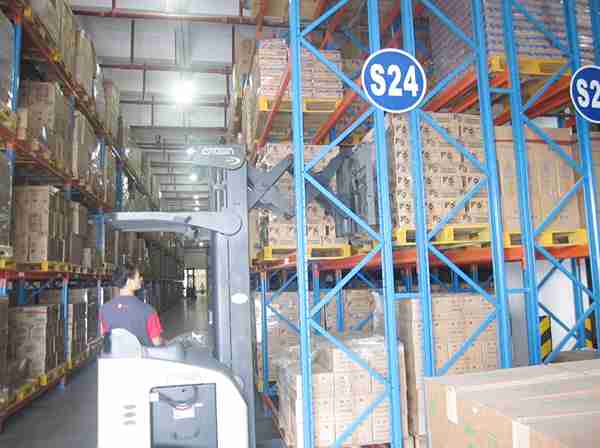
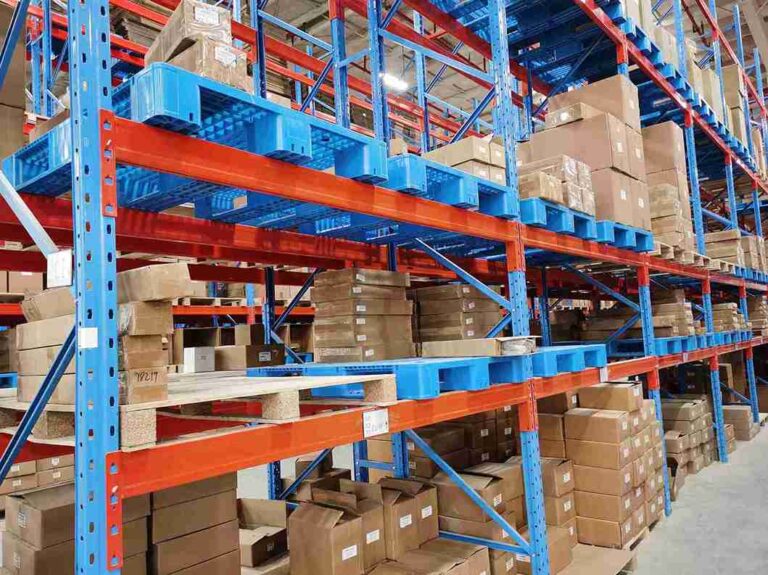
2.1 Selective Pallet Racking – The Gold Standard for Flexibility
Best for: Warehouses with high-SKU diversityوfrequent access needs.
Why it works in warehouse racking layout design:
- Direct access to every pallet (no need to move others)
- Adjustable beams (accommodates varying load sizes)
- Cost-efficient (lower upfront investment than automated systems)
Optimization tip: Use narrow-aisle forklifts to shrink aisle widths by 20-30%, increasing storage density.
2.2 Drive-In & Drive-Through Racking – High-Density Champion
Best for: Bulk storage of homogeneous products (e.g., beverages, packaged foods).
Key benefits in warehouse racking layout design:
- LIFO (Last-In, First-Out) or FIFO (First-In, First-Out) configurations
- Up to 75% more pallet positions than selective racking
- Ideal for cold storage (minimizes aisle space)
Critical consideration: Requires skilled forklift operators due to tight maneuvering.
2.3 Push-Back Racking – Dynamic Storage for Fast-Moving Goods
Best for: Medium-to-high turnover inventory needing better density than selective racking.
How it enhances warehouse racking layout design:
- Stores 2-6 pallets deep per lane
- Automatically pushes older pallets back as new ones load
- FIFO or LIFO compatible
Ideal applications: E-commerce fulfillment,pharmaceutical distribution.
2.4 Pallet Flow Racking – Gravity-Powered Efficiency
Best for: السلع القابلة للتلف,high-volume SKUs with consistent turnover.
Why it’s a game-changer in warehouse racking layout design:
- Rollers move pallets via gravity (no forklift needed for retrieval)
- Ensures perfect stock rotation (critical for expiration-sensitive items)
- Up to 60% faster picking speeds
Deployment tip: Best used in dedicated zones for fast-moving products.
2.5 Cantilever Racking – The Heavy-Duty Solution
Best for: Oversized, long, or bulky items (steel pipes, lumber, furniture).
Advantages in warehouse racking layout design:
- Open-front access (no vertical beams blocking loading)
- Customizable arm lengths (supports irregular loads)
- High weight capacity (up to 20,000 lbs per level)
Safety note: Requires proper anchoring to prevent tip-overs.
2.6 Mobile Racking – The Space-Saving Transformer
Best for: Low-turnover, high-SKU warehouses with severe space constraints.
How it revolutionizes warehouse racking layout design:
- Racks move on tracks (aisles appear only when needed)
- Increases storage by up to 80% vs. static systems
- Fully customizable for unique footprints
Best paired with: RFID tracking for easy inventory location.
2.7 Automated Storage & Retrieval Systems (AS/RS) – The Future of Warehousing
Best for: High-volume, high-speed operations with labor cost pressures.
Why AS/RS dominates modern warehouse racking layout design:
- Robotic shuttles retrieve pallets (no forklifts needed)
- Operates in ultra-narrow aisles (under 5 ft wide)
- Integrates with WMS for real-time tracking
ROI insight: Payback in 3-5 years for facilities with 100+ daily shipments.
3. Step-by-Step Guide to Optimizing Your Warehouse Racking Layout Design
3.1 Step 1: Conduct a Thorough Space & Inventory Analysis
- Map your current warehouse racking layout design (identify wasted space)
- Categorize SKUs by size, weight, and turnover rate
- Forecast future growth (avoid redesigns in 12 months)
3.2 Step 2: Choose the Right Racking Mix
- Blend selective, drive-in, and push-back systems for balanced efficiency
- Reserve prime locations (near docks) for fastest-moving items
3.3 Step 3: Optimize Aisle Widths & Travel Paths
- Standard aisles (12-13 ft): For high-traffic picking zones
- Narrow aisles (8-10 ft): For high-density storage with reach trucks
- Very narrow aisles (5-6 ft): For AS/RS or guided forklifts
3.4 Step 4: Maximize Vertical Storage (Without Sacrificing Safety)
- Utilize 85-90% of clear ceiling height
- Install mezzanines for small-item storage
- Ensure racking complies with local seismic codes
3.5 Step 5: Implement Lean Warehouse Racking Layout Design Principles
- Adopt cross-dockingإلىreduce storage time
- Use slotting algorithmsإلىminimize picker travel
- Apply ABC analysis (A-items closest to shipping)
4. Advanced Strategies for Next-Level Warehouse Racking Layout Design
4.1 AI & Machine Learning for Smarter Slotting
- Predictive analytics determine optimal pallet locations
- Dynamic repositioning based on seasonal demand shifts
4.2 Automated Guided Vehicles (AGVs) & Racking Integration
- Driverless forklifts that auto-adjust to racking configurations
- Lights-out warehousing (24/7 operations with minimal staff)
4.3 Sustainable Warehouse Racking Layout Design Trends
- Solar-powered AS/RS systems
- Recycled steel racking with modular rebuild options
5. Safety & Compliance in Warehouse Racking Layout Design
5.1 OSHA & RMI Standards Every Layout Must Meet
- Maximum allowable beam deflection (L/180)
- Upright protection guards at aisle end caps
5.2 Preventing Common Racking Failures
- Overloading symptoms (beam bowing, connector cracks)
- Anchor bolt torque checks (every 6 months)
5.3 Employee Training for Optimal Racking Use
- Forklift load center awareness
- Proper pallet overhang limits (3″ max beyond beams)
Conclusion: Transforming Warehouses Through Smarter Racking Layout Design
The difference between a chaotic, inefficient warehouse and a high-performance logistics hub lies in warehouse racking layout design. Companies that invest in data-driven, space-maximizing designs gain:
- 30-50% more storage capacity
- 20% faster order fulfillment
- Reduced labor & equipment costs
To stay competitive, continuously evaluate your warehouse racking layout design,adopt automation where viable, and prioritize safety at every turn.
FAQs: Expert Answers on Warehouse Racking Layout Design
1. How much space can I save with optimized warehouse racking layout design?
Proper warehouse racking layout design can increase storage by 40-60% versus ad-hoc setups.
2. What’s the biggest mistake in warehouse racking layout design?
Ignoring vertical space—most warehouses use less than 60% of clear height.
3. How often should we redesign our warehouse racking layout?
Every 3-5 yearsأوwhen inventory profiles shift by >25%.
4. Can small warehouses benefit from AS/RS in racking layout design?
Yes—mini-load AS/RS works for facilities as small as 10,000 sq ft.
5. What’s the #1 safety risk in warehouse racking layout design?
Improperly secured uprights cause 50% of racking collapses.